National Security Agency
The National Security Agency (NSA) is the United States' largest signals intelligence organization, responsible for intercepting, decrypting, and analyzing foreign communications while also protecting U.S. government communications systems. The NSA appears throughout The Archive's investigations as the institutional nexus of modern signals intelligence and surveillance controversies.
The National Security Agency (NSA) is the United States' largest signals intelligence organization, responsible for intercepting, decrypting, and analyzing foreign communications while also protecting U.S. government communications systems. Established in 1952, it operates under the Department of Defense with a global surveillance infrastructure including satellite intercept stations, undersea cable taps, and sophisticated cryptanalysis capabilities. The agency became the center of international controversy following Edward Snowden's 2013 disclosures of mass domestic and global surveillance programs.
- Source
- Wikimedia Commons
- Type
- Official Seal / Insignia
- License
- Public domain
- Photographer
- U.S. government
Photo Information ▾
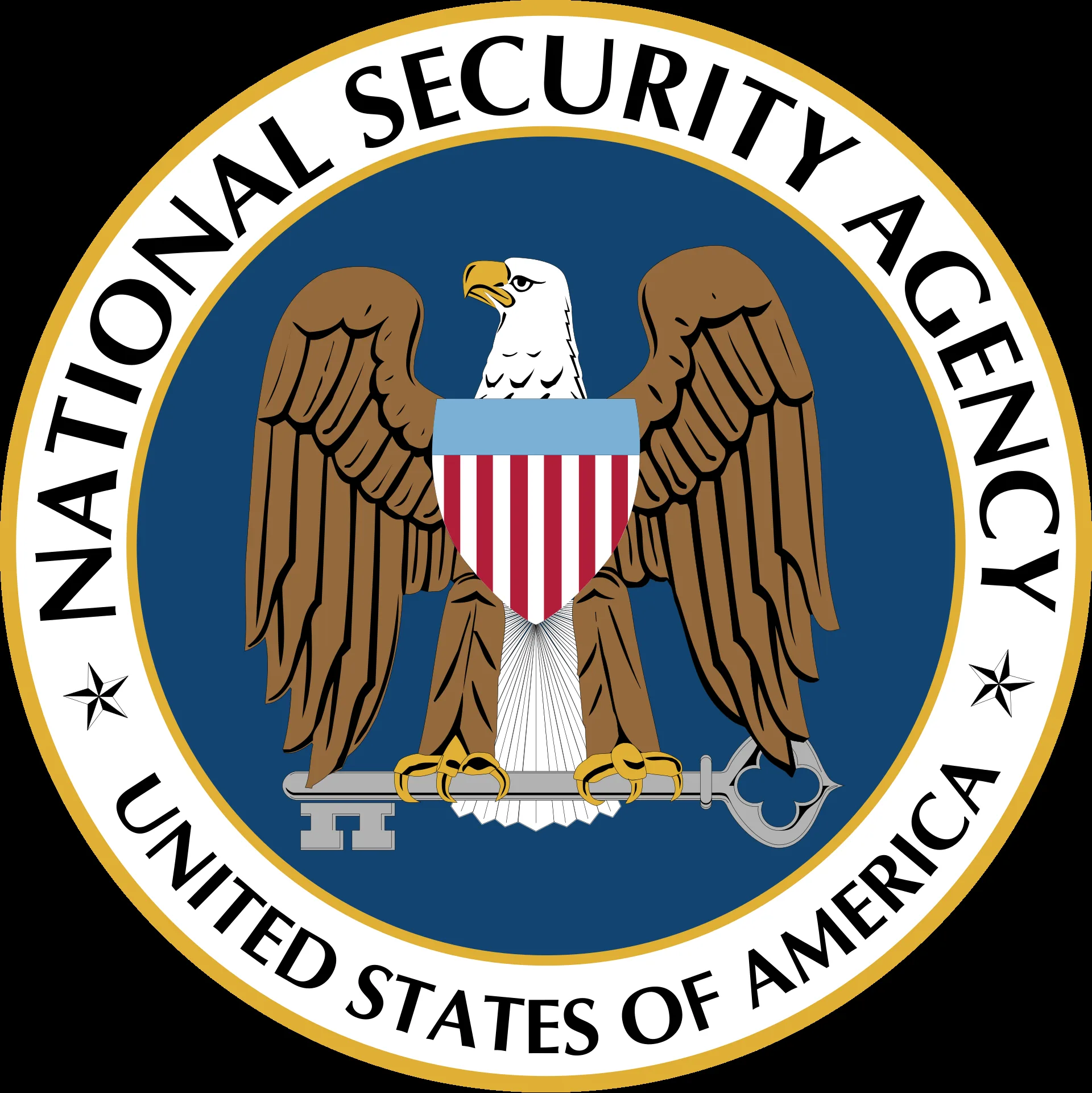
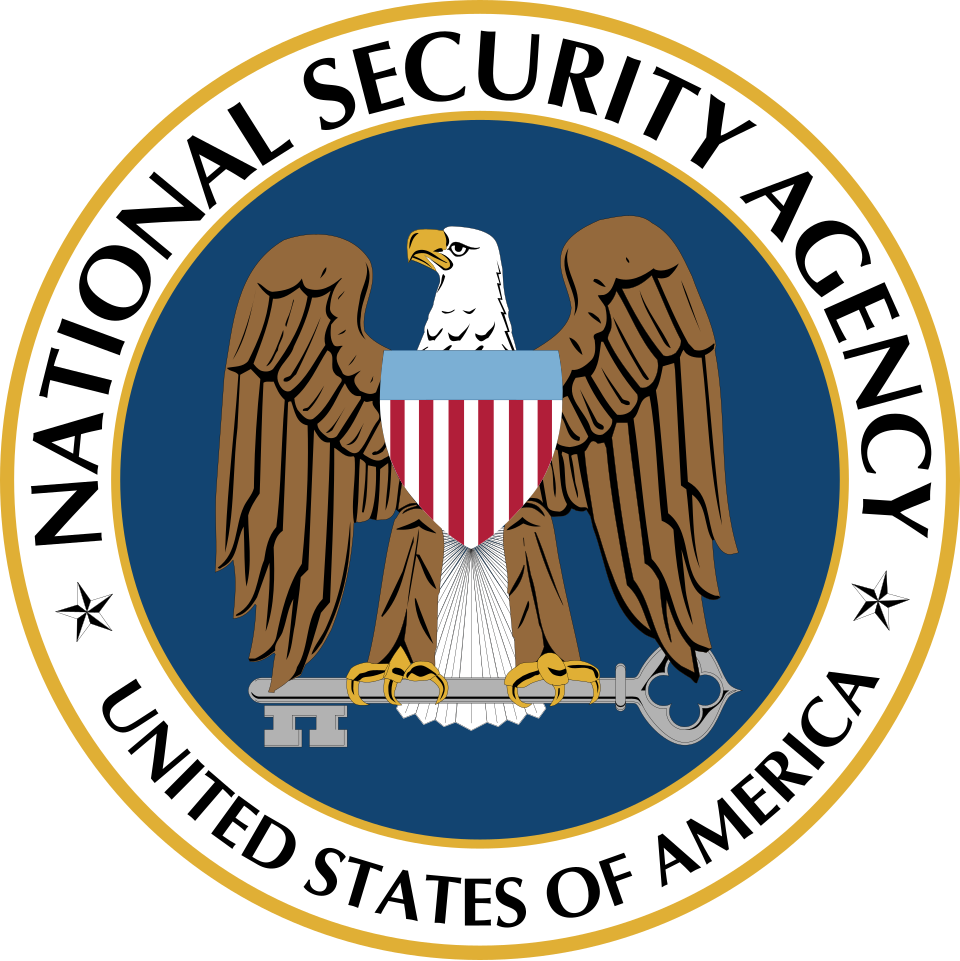
The seal of the U.S. National Security Agency. The first use was in September 1966, replacing an older seal which was used briefly. For more information, see here and here.
www.nsa.gov
View original ↗- Official Name
- National Security Agency (NSA)
- Also Known As
- NSA/CSS (Central Security Service)
- Type
- Defense intelligence agency specializing in signals intelligence (SIGINT)
- Founded
- November 4, 1952 (by President Harry S. Truman, classified directive)
- Headquarters
- Fort George G. Meade, Maryland, United States
- Parent Organization
- U.S. Department of Defense
- Jurisdiction
- Foreign signals intelligence; information assurance for U.S. government
- Size
- Approximately 30,000-40,000 employees (classified exact number)
- Budget
- Approximately $10.8 billion annually (2013 disclosure, classified)
- Legal Authority
- Foreign Intelligence Surveillance Act (FISA), Executive Order 12333, National Security Act
- Current Director
- General Timothy D. Haugh (since February 2024)
The NSA appears throughout The Archive's investigations as the institutional nexus of modern signals intelligence and surveillance controversies. Its documented mass collection programs revealed by Edward Snowden, its leadership role in the Five Eyes alliance and ECHELON system, its decades-long opposition to strong civilian encryption during the Crypto Wars, and its compromise during the SolarWinds breach establish it as essential to understanding state surveillance capabilities, civil liberties debates, and intelligence operations from the Cold War to the present. The agency's activities raise documented questions about constitutional boundaries, technological secrecy, and the balance between security and privacy that define multiple Archive investigations.
# National Security Agency
Identity
The National Security Agency (NSA) is the United States government's principal signals intelligence (SIGINT) organization, operating under the Department of Defense. Established in secrecy in 1952, the NSA's existence was not publicly acknowledged until 1957, earning it the nickname "No Such Agency." Its dual mission encompasses collecting and analyzing foreign communications intelligence while protecting U.S. government communications and information systems through its information assurance role.
The agency operates from its headquarters at Fort George G. Meade, Maryland, occupying one of the largest government building complexes in the United States. The NSA simultaneously directs the Central Security Service (CSS), a unified command structure coordinating SIGINT activities across military service cryptologic components. With an estimated workforce between 30,000 and 40,000 employees—most holding top-secret clearances—and an annual budget exceeding $10 billion, the NSA represents the largest and most technologically sophisticated intelligence organization in the world.
Unlike the Central Intelligence Agency, which focuses on human intelligence, or the Federal Bureau of Investigation, which handles domestic law enforcement, the NSA specializes in intercepting, decrypting, and analyzing electronic communications. Its technical capabilities span satellite interception, undersea cable taps, computer network exploitation, cryptanalysis, and the development of secure communications systems for U.S. government use.
Origins & Charter
The NSA's origins trace to World War I military codebreaking efforts, but its modern form emerged from Cold War necessities. President Harry S. Truman consolidated scattered military cryptologic activities through a classified memorandum on October 24, 1952, formally establishing the NSA on November 4, 1952, through National Security Council Intelligence Directive No. 9. The directive's classification meant the agency operated without public acknowledgment or congressional oversight for its first years.
The agency inherited traditions from its predecessors: the Army's Signal Intelligence Service (which broke Japanese diplomatic codes before Pearl Harbor) and the Navy's OP-20-G codebreaking unit. During World War II, these organizations achieved significant successes including breaking the Japanese PURPLE cipher and contributing to victories at Midway. The postwar Armed Forces Security Agency (1949-1952) proved inadequate for coordinating increasingly complex SIGINT operations, prompting Truman's consolidation.
The NSA's founding charter established three core missions: collecting foreign signals intelligence, protecting U.S. communications (information assurance), and enabling operations for other intelligence agencies and military forces. Executive Order 12333, issued by President Ronald Reagan in 1981 and amended subsequently, provides the primary executive authority defining NSA's scope, explicitly prohibiting collection targeting U.S. citizens without court authorization.
The Foreign Intelligence Surveillance Act of 1978 (FISA) established judicial oversight for certain NSA surveillance activities, creating the Foreign Intelligence Surveillance Court to review warrant applications for domestic intelligence collection. This framework emerged after congressional investigations revealed NSA involvement in domestic surveillance abuses during the 1960s and 1970s.
Structure & Leadership
The NSA is led by a director holding dual-hatted positions: Director of the National Security Agency (DIRNSA) and Chief of the Central Security Service (CHCSS). By statute since 1952, this position has been filled by a military officer, typically a three or four-star general or admiral. The director reports to the Under Secretary of Defense for Intelligence and Security and ultimately to the Secretary of Defense, though the agency also responds to intelligence requirements from the Director of National Intelligence.
General Timothy D. Haugh became director in February 2024, succeeding General Paul M. Nakasone. Previous directors include General Keith Alexander (2005-2014), whose tenure encompassed the Snowden disclosures, and Admiral Michael Rogers (2014-2018), who led the agency through post-reform implementation. General Haugh simultaneously commands U.S. Cyber Command, a unified combatant command responsible for military cyberspace operations, reflecting the increasingly integrated nature of signals intelligence and cyber operations.
The NSA's internal structure divides into major directorates: the Signals Intelligence Directorate (SID) conducts foreign intelligence collection and analysis; the Cybersecurity Directorate (established 2019) focuses on defensive cybersecurity missions; the Research Directorate advances cryptologic science and technology; and the Technology Directorate develops and acquires collection systems. The agency also maintains a substantial corporate infrastructure supporting personnel, security, acquisition, and legal functions.
Field operations include a global network of listening posts and facilities, some operating openly on military bases, others under diplomatic cover at U.S. embassies. The NSA operates or coordinates with partner facilities at locations including Menwith Hill Station (United Kingdom), Misawa Air Base (Japan), and Pine Gap (Australia), the latter operated jointly with Australian signals intelligence.
Major Activities & Operations
The NSA's core signals intelligence mission involves intercepting communications through multiple technical means: satellite collection capturing transmissions from space, ground-based antennas intercepting radio and microwave signals, undersea cable taps accessing fiber-optic communications, and computer network exploitation penetrating target systems. These capabilities support U.S. military operations, counterterrorism efforts, counterintelligence, and foreign policy decision-making.
Operation Ivy Bells, conducted during the Cold War, exemplified NSA technical ambition: the agency developed sophisticated recording pods placed by submarines on Soviet undersea communication cables in the Sea of Okhotsk, successfully intercepting Soviet naval communications for years until betrayed by Ronald Pelton, an NSA analyst who sold details to Soviet intelligence in 1980. The operation demonstrated both the agency's technical capabilities and vulnerabilities to insider threats.
The NSA pioneered cryptanalysis, breaking adversary codes while protecting American communications. The agency's Information Assurance Directorate (later reorganized into the Cybersecurity Directorate) develops encryption standards, evaluates commercial security products, and protects classified government networks. This dual role creates inherent tensions: the NSA seeks to break foreign encryption while strengthening American cryptography, sometimes leading to controversial decisions about security vulnerabilities.
ECHELON, a signals intelligence collection and analysis network developed by the NSA and Five Eyes partners (United Kingdom, Canada, Australia, New Zealand) beginning in the 1960s, automated the interception of satellite, microwave, and radio communications worldwide. Parliamentary investigations in the 1990s, particularly by the European Parliament, documented ECHELON's capabilities for intercepting commercial communications, raising concerns about economic espionage and privacy, though the system's primary focus remained government and military targets.
Following the September 11, 2001, attacks, the NSA rapidly expanded domestic surveillance activities under presidential authorization. The Terrorist Surveillance Program, initially conducted without FISA court approval, collected communications metadata and content from American telecommunications networks when one party was believed to be outside the United States. The program's legality generated intense debate within the Justice Department, nearly precipitating mass resignations in 2004 before modifications brought it partially under FISA court supervision.
Historical Importance
The NSA's cryptanalytic and signals intelligence contributions shaped major historical events throughout the Cold War and beyond. NSA analysis of Soviet military communications provided strategic warning capabilities, monitored arms control treaty compliance, and supported diplomatic negotiations. During the Cuban Missile Crisis, NSA intercepts of Soviet military communications provided President Kennedy with critical intelligence on Soviet intentions and capabilities in Cuba.
The agency's role in the Vietnam War included extensive collection on North Vietnamese communications, though intelligence failures—including missed warning of the 1968 Tet Offensive—demonstrated the limits of signals intelligence when adversaries adapted tradecraft. The NSA's collection on the Gulf of Tonkin incident in August 1964 became controversial when declassified documents revealed uncertainties about what actually occurred, raising questions about how intelligence was presented to justify military escalation.
Technologically, the NSA drove advances in computing, cryptography, and telecommunications. The agency was an early adopter and developer of supercomputers, maintaining relationships with manufacturers to acquire cutting-edge processing capabilities for cryptanalysis. NSA mathematicians contributed foundational work to public-key cryptography, though much remained classified. The agency's development of secure communications systems for government use pushed engineering boundaries.
The NSA's participation in developing the Data Encryption Standard (DES) in the 1970s illustrated its influence on civilian cryptography. The agency's involvement, including recommendations that reduced key length and modified the algorithm's S-boxes, generated suspicions about deliberately introduced weaknesses—concerns that intensified during the Crypto Wars when the NSA opposed strong encryption becoming widely available to civilians and commercial entities.
Documented Controversies
Confirmed by Official Investigations The Church Committee investigation (1975-1976) documented that the NSA conducted Operation SHAMROCK (1945-1975), systematically collecting international telegrams sent by American citizens, and Operation MINARET, which targeted domestic dissidents, civil rights leaders, and Vietnam War protesters without warrants. Senator Frank Church's investigation revealed the NSA received daily copies of most international telegrams leaving the United States, shared by telegraph companies under classified agreements. These programs violated the NSA's charter prohibiting domestic surveillance and Fourth Amendment protections.
Established Fact from Court Documents and Official Reports Edward Snowden's June 2013 disclosures, published by The Guardian and The Washington Post based on classified NSA documents Snowden provided, revealed the scope of modern NSA surveillance programs. Documents confirmed that the NSA collected telephone metadata on millions of Americans under Section 215 of the Patriot Act through secret orders from the Foreign Intelligence Surveillance Court. The PRISM program collected internet communications directly from major technology companies. XKeyscore, an NSA analytical tool, allowed analysts to search vast databases of intercepted communications. The disclosures, verified as authentic by government officials, sparked international controversy and prompted legislative reforms.
Government Finding The Privacy and Civil Liberties Oversight Board, an independent executive branch agency, concluded in a January 2014 report that the NSA's bulk telephone metadata collection program under Section 215 lacked legal authorization, had not proven essential to preventing terrorist attacks, and raised serious constitutional concerns. The board found that the program "has shown minimal value in safeguarding the nation from terrorism" and recommended its termination. This official finding contradicted NSA and administration claims about the program's necessity.
Confirmed by Official Investigation A December 2013 report by a presidential review group appointed by President Obama found that NSA surveillance programs required significant reforms. The group, composed of intelligence and legal experts with security clearances to review classified materials, concluded that bulk metadata collection should end, that encryption should not be deliberately weakened, and that surveillance of foreign leaders required better coordination. The report acknowledged the programs' legality was disputed and their effectiveness overstated.
Historical Consensus The Crypto Wars of the 1990s saw the NSA oppose civilian access to strong encryption, attempting to mandate government backdoors through initiatives like the Clipper Chip—a proposed encryption device with built-in government access. The agency classified encryption software as munitions, restricting export and development. Civil liberties organizations, technology companies, and cryptographers argued that weakening encryption for law enforcement also weakened security against criminals and foreign intelligence services. The NSA ultimately lost this policy battle as strong encryption became widely available, though debates resumed after 2015 terrorist attacks.
Documented in Declassified Records NSA collection on U.S. lawmakers was documented in multiple instances. In 2013, Senator Bernie Sanders asked directly whether the NSA had spied on members of Congress; NSA Director Alexander initially denied it, but subsequent reporting confirmed incidental collection occurred. In 2014, Senator Dianne Feinstein, then Chair of the Senate Intelligence Committee, publicly accused the CIA of monitoring congressional staff investigating CIA torture programs, illustrating tensions between intelligence agencies and oversight bodies.
Confirmed by Official Acknowledgment The SolarWinds supply chain attack, publicly disclosed in December 2020, compromised multiple U.S. government agencies including the NSA, according to official statements. Russian intelligence service hackers (identified as APT29 or Cozy Bear) inserted malware into SolarWinds Orion network management software, affecting approximately 18,000 customers including sensitive government networks. The breach demonstrated that even the NSA, despite sophisticated defensive capabilities, remained vulnerable to sophisticated supply chain attacks, raising questions about the agency's focus on offensive capabilities potentially at the expense of defensive security.
Disputed Claim Whether the NSA knew about or exploited the Heartbleed vulnerability in OpenSSL encryption software before it became public in 2014 remains disputed. Bloomberg News reported that the NSA knew about and exploited the vulnerability for at least two years, citing unnamed sources. The NSA officially denied the claim, and no documentary evidence has emerged confirming prior knowledge. The controversy reflects broader debates about whether intelligence agencies should disclose security vulnerabilities they discover or stockpile them for exploitation.
Investigations & Official Findings
Congressional oversight of the NSA intensified following the Snowden disclosures. The Senate Intelligence Committee and House Intelligence Committee conducted classified reviews of surveillance programs, producing divergent findings that reflected partisan divisions. The House Judiciary Committee held hearings examining legal authorities and civil liberties implications, with testimony from NSA officials, privacy advocates, and technology companies.
The Foreign Intelligence Surveillance Court, operating largely in secret, issued hundreds of orders authorizing NSA surveillance activities. In 2013, the declassification of select FISC opinions revealed that the court had found NSA surveillance programs exceeded legal authority on multiple occasions. A 2011 FISC opinion by Judge John Bates concluded that NSA collection of internet communications violated the Fourth Amendment, requiring modifications to the program. These declassified opinions demonstrated that judicial oversight occurred but raised questions about the effectiveness of secret courts reviewing classified programs.
The USA Freedom Act, enacted in June 2015, reformed NSA surveillance authorities in response to the Snowden revelations. The legislation ended bulk telephone metadata collection by the NSA, requiring telecommunications companies to retain records that the NSA could access with specific FISC approval. The act mandated greater transparency through declassification of significant FISC opinions and public reporting on surveillance orders. Implementation demonstrated that legislative reform was possible, though critics argued changes did not address broader mass surveillance infrastructure.
Inspector General reports from the Department of Defense and the NSA's internal oversight office documented compliance incidents where NSA surveillance exceeded authorized parameters. A 2012 audit obtained by The Washington Post revealed thousands of compliance violations annually, including unauthorized surveillance of Americans. The NSA characterized most as unintentional errors, though the volume raised concerns about internal controls. These reports, largely classified until leaked or declassified, provided evidence that oversight mechanisms identified problems but critics questioned whether accountability followed.
International investigations added scrutiny. The European Parliament's Civil Liberties Committee investigated NSA surveillance of European citizens and leaders, producing a 2014 report condemning mass surveillance as incompatible with democratic principles and recommending suspension of data-sharing agreements until reforms occurred. German parliamentary investigations examined NSA surveillance of Chancellor Angela Merkel's mobile phone, documented in Snowden materials, straining U.S.-German intelligence cooperation. Brazil's President Dilma Rousseff canceled a state visit after revelations of NSA collection on Brazilian government communications.
Legacy & Historical Debate
The NSA's legacy encompasses indisputable technical achievements alongside persistent controversy over surveillance boundaries. Supporters credit the agency with protecting national security through intelligence that prevented terrorist attacks, supported military operations, and provided strategic warning of foreign threats. Critics argue that mass surveillance programs violated constitutional rights, undermined encryption security globally, and demonstrated insufficient accountability despite formal oversight structures.
The Snowden disclosures permanently altered public understanding of digital surveillance capabilities and sparked global debates about privacy, encryption, and state power. Technology companies implemented stronger encryption following revelations of NSA collection, reducing intelligence agencies' access but improving security against criminals and foreign intelligence services. The episode demonstrated tensions between security imperatives and civil liberties that no institutional reform fully resolved.
Historians and legal scholars continue debating whether NSA surveillance programs after September 11 represented necessary adaptation to terrorist threats or executive overreach that violated statutory and constitutional limits. Declassified documents, court proceedings, and legislative records provide extensive documentation, yet significant operational details remain classified, limiting comprehensive historical assessment.
The NSA's role in cybersecurity presents ongoing paradoxes. As both the premier code-breaking agency seeking to exploit foreign systems and the organization responsible for protecting American government networks, the NSA faces inherent mission tensions. The SolarWinds breach highlighted that offensive cyber capabilities do not automatically translate to defensive security, prompting policy debates about whether the agency's organizational culture prioritizes collection over protection.
The Five Eyes alliance, with the NSA as the senior partner, created unprecedented international intelligence sharing but also raised questions about circumventing domestic legal restrictions through foreign partner collection. This architecture, developed during the Cold War and expanded dramatically after 2001, embedded surveillance infrastructure that proved difficult to reform even when political will existed, as foreign partnerships and technical systems represented decades of investment.
Continue Investigating
The Archive's related investigations provide essential context for understanding the NSA's role in modern surveillance and intelligence operations. The Snowden and NSA Mass Surveillance dossier documents the specific programs revealed in 2013 and their legal and political aftermath. The Crypto Wars and Encryption Backdoors examines decades of NSA resistance to strong civilian encryption and ongoing debates about law enforcement access. ECHELON details the multinational signals intelligence network that the NSA anchors. Five Eyes explores the intelligence-sharing alliance that amplifies NSA capabilities while raising questions about oversight.
The SolarWinds and the SolarWinds Hack investigation reveals vulnerabilities in even the most sophisticated intelligence agencies. Operation Ivy Bells documents Cold War technical operations that exemplified NSA capabilities and vulnerabilities. Related entities include Edward Snowden, whose disclosures transformed public understanding; James Clapper, Director of National Intelligence during the surveillance controversies; Glenn Greenwald and Laura Poitras, journalists who published the Snowden documents; the Foreign Intelligence Surveillance Court, which authorized many NSA programs; Government Communications Headquarters (GCHQ), the NSA's closest partner; and the Electronic Frontier Foundation and ACLU, leading civil liberties organizations challenging NSA surveillance.
Further Archive dossiers on Operation Mockingbird, COINTELPRO, Vault 7, Stuxnet, and Pegasus Spyware document other intelligence and surveillance operations that inform understanding of state capabilities and oversight challenges. The NSA remains central to ongoing debates about security, privacy, and democratic accountability in the digital age—debates that Archive investigations continue documenting with primary sources and verified evidence.
- 1952President Truman establishes the National Security Agency through classified directive on November 4
- 1960sNSA develops ECHELON signals intelligence network with Five Eyes partners
- 1975-1976Church Committee exposes NSA domestic surveillance operations SHAMROCK and MINARET
- 1978Congress passes Foreign Intelligence Surveillance Act creating judicial oversight for NSA domestic collection
- 1980NSA analyst Ronald Pelton betrays Operation Ivy Bells to Soviet intelligence
- 1990sNSA opposes civilian strong encryption during Crypto Wars, proposing Clipper Chip with government backdoors
- 2001After September 11 attacks, NSA begins Terrorist Surveillance Program and expands domestic collection
- 2005New York Times reveals warrantless NSA surveillance program, sparking national debate
- 2013Edward Snowden discloses classified NSA documents revealing mass surveillance programs in June
- 2014Privacy and Civil Liberties Oversight Board and presidential review group issue critical findings on NSA programs
- 2015Congress passes USA Freedom Act, ending bulk telephone metadata collection by NSA
- 2019NSA establishes Cybersecurity Directorate to focus on defensive missions
- 2020SolarWinds supply chain attack compromises NSA and other government agencies
- 2024General Timothy D. Haugh becomes NSA Director
- S1
- S2NSA Documents on SHAMROCK and MINARETNational Security Agency · primary
- S3NSA Files Decoded: What the Revelations Mean for YouThe Guardian · investigative
- S4NSA Collecting Phone Records of Millions of Verizon Customers DailyThe Guardian · investigative
- S5
- S6Joint Statement by the Federal Bureau of Investigation, CISA, ODNI, and NSA on the SolarWinds CompromiseCybersecurity and Infrastructure Security Agency · primary
- S7SolarWinds Cyber Attack: What You Need to KnowThe New York Times · mainstream
- S8Declassified FISC Opinion on NSA Surveillance (October 2011)Office of the Director of National Intelligence · primary
- S9Blind Man's Bluff: The Untold Story of American Submarine EspionagePublicAffairs (Perseus Books) · book
- S10The Data Encryption Standard: Past and FutureNational Security Agency · primary
- S11Cryptography's Role in Securing the Information SocietyNational Academies Press · academic
- S12NSA Said to Have Used Heartbleed Bug, Exposing ConsumersBloomberg · investigative
- S13National Security AgencyWikipedia · reference
- S14Body of Secrets: Anatomy of the Ultra-Secret National Security AgencyAnchor Books · book
This is an advanced investigation. Recommended starting points:
If you're learning about this topic for the first time, these are the best places to continue — documented evidence and historical relationships are the guide.
National Security Agency is documented in the evidence record of this published dossier.

NSA contractor who disclosed classified surveillance programs in 2013.
Civil liberties organization challenging NSA surveillance programs in court.