Church Committee
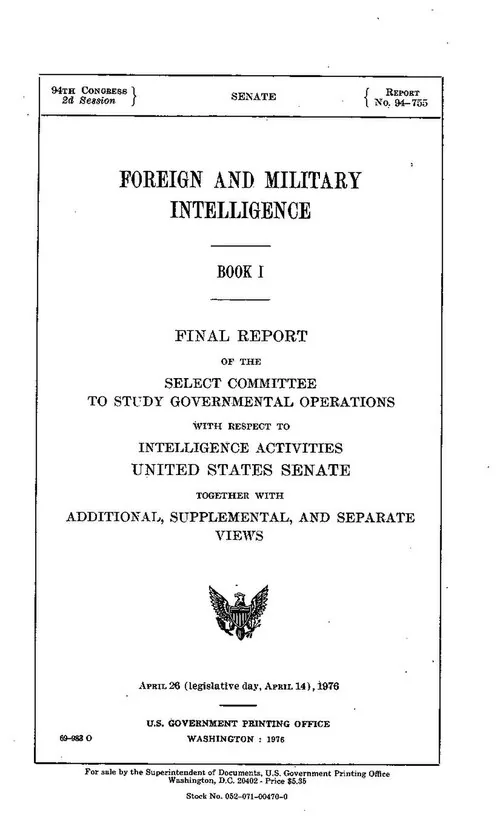
The United States Senate Select Committee to Study Governmental Operations with Respect to Intelligence Activities — universally known as the Church Committee after chairman Frank Church — conducted the most comprehensive congressional investigation of U.S. intelligence abuses in American history from 1975 to 1976. The Church Committee's investigation exposed the foundational misconduct documented in The Archive's COINTELPRO and Operation Mockingbird dossiers.
The United States Senate Select Committee to Study Governmental Operations with Respect to Intelligence Activities — universally known as the Church Committee after chairman Frank Church — conducted the most comprehensive congressional investigation of U.S. intelligence abuses in American history from 1975 to 1976. Its fourteen-volume final report documented illegal FBI surveillance of political dissidents, CIA assassination plots against foreign leaders, mail opening programs, infiltration of the press, and warrantless domestic spying spanning three decades.
- Source
- Wikimedia Commons
- Type
- Photograph
- License
- Public domain
- Photographer
- U.S. Federal Government
- Year
- 2014
Photo Information ▾
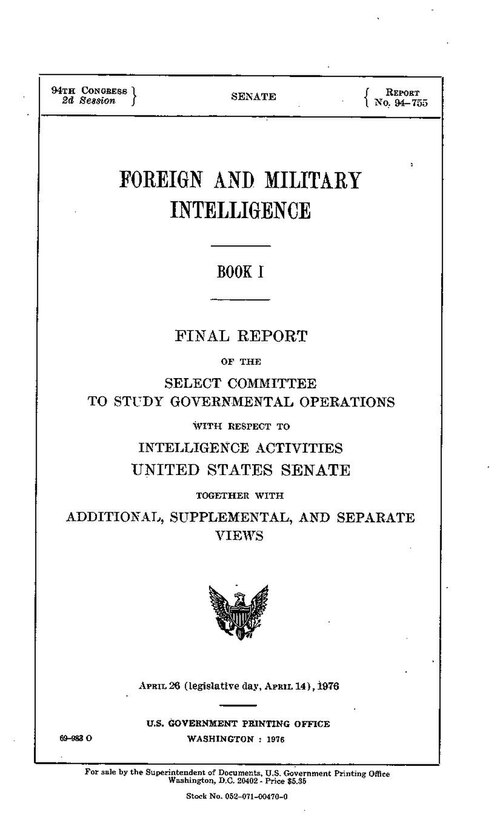
First part of the Church Committee report on illegal intelligence gathering activities by U.S. federal agencies.
View original ↗- Full name
- United States Senate Select Committee to Study Governmental Operations with Respect to Intelligence Activities
- Common name
- Church Committee
- Type
- Temporary select committee of the U.S. Senate
- Established
- January 27, 1975 by Senate Resolution 21
- Chairman
- Senator Frank Church (D-Idaho)
- Active period
- January 1975 – April 1976
- Final report
- April 26, 1976 (14 books, 7 volumes)
- Staff size
- Approximately 135 investigators and support personnel
- Documents reviewed
- Over 110,000 documents
- Witnesses
- 800 interviewed, 126 public hearings
- Congressional authorization
- 94th Congress, Senate Resolution 21
- Archival location
- National Archives and Records Administration, Senate Records
The Church Committee's investigation exposed the foundational misconduct documented in The Archive's COINTELPRO and Operation Mockingbird dossiers. The Committee's hearings brought into the public record thousands of pages of declassified FBI and CIA documents detailing programs that targeted American citizens for political beliefs, infiltrated news organizations, and operated outside constitutional boundaries. Its findings established the factual basis for understanding intelligence community overreach during the Cold War. Every major intelligence reform of the subsequent half-century — from the Foreign Intelligence Surveillance Act to the establishment of permanent congressional intelligence oversight — originated in this committee's work. The Church Committee remains the benchmark for transparency in intelligence oversight and the primary government source documenting abuses that were previously dismissed as conspiracy theories.
Identity
The United States Senate Select Committee to Study Governmental Operations with Respect to Intelligence Activities, established by Senate Resolution 21 on January 27, 1975, became known simply as the Church Committee after its chairman, Senator Frank Church of Idaho. The committee operated for fifteen months during 1975 and 1976, representing the first sustained congressional investigation of American intelligence agencies since their creation. Its mandate covered the full spectrum of U.S. intelligence activities from World War II through 1975, with particular focus on operations conducted by the Central Intelligence Agency, Federal Bureau of Investigation, National Security Agency, and Internal Revenue Service.
The committee comprised eleven senators: six Democrats and five Republicans. Besides Chairman Church, the Democratic members included John Tower (Vice Chairman), Philip Hart, Walter Huddleston, Robert Morgan, Gary Hart, and Walter Mondale. Republican members included Howard Baker, Barry Goldwater, Charles Mathias, and Richard Schweiker. The committee employed approximately 135 staff members, including experienced prosecutors, intelligence analysts, historians, and investigators. Frederick A.O. Schwarz Jr. served as chief counsel.
The committee reviewed more than 110,000 documents from intelligence agencies, many of which were declassified specifically for the investigation. Investigators conducted approximately 800 interviews and the committee held 126 full committee meetings, 40 subcommittee meetings, and 250 executive sessions. Twenty-one public hearings brought testimony from current and former intelligence officials, including CIA Directors Richard Helms and William Colby, FBI Associate Director William Sullivan, and NSA Director Lew Allen.
Origins & Charter
The Church Committee emerged from converging revelations about intelligence misconduct in 1974 and 1975. The Watergate scandal had exposed political misuse of intelligence agencies. In December 1974, The New York Times published Seymour Hersh's article "Huge C.I.A. Operation Reported in U.S. Against Antiwar Forces, Other Dissidents in Nixon Years," detailing domestic CIA surveillance operations later known as Operation CHAOS. On January 27, 1975, the Senate voted 82-4 to establish the investigating committee.
Senate Resolution 21 granted the committee sweeping authority to investigate: intelligence activities affecting the rights of U.S. citizens; the extent of executive branch surveillance of citizens; the need for legislative charters governing intelligence agencies; and whether existing laws provided adequate safeguards. The resolution empowered the committee to subpoena documents and witnesses, grant immunity, and access classified materials. President Gerald Ford initially resisted full cooperation, establishing the Rockefeller Commission to conduct an executive branch review, but ultimately provided substantial access following negotiations with Chairman Church.
The committee faced immediate challenges. Intelligence agencies initially withheld documents claiming executive privilege and national security concerns. Director of Central Intelligence William Colby adopted a strategy of selective cooperation, providing extensive documentation while protecting ongoing sources and methods. The FBI, still adjusting to the post-Hoover era under acting director Clarence Kelley, proved more resistant. The committee used its subpoena power sparingly but effectively, compelling production of documents that revealed the scope of programs like COINTELPRO and Operation Mockingbird.
The House of Representatives established a parallel committee chaired by Congressman Lucien Nedzi, later replaced by Otis Pike. The Pike Committee focused more narrowly on intelligence failures and budget issues but was plagued by leaks and political conflict. The Church Committee maintained tighter control over classified information and produced the more comprehensive public record.
Structure & Leadership
Frank Church brought unusual credentials to the chairmanship. First elected to the Senate in 1956 at age 32, he had served on the Foreign Relations Committee throughout the Vietnam War, becoming an outspoken critic of executive overreach in foreign policy. Church announced his presidential candidacy in March 1975, running while simultaneously chairing the investigation. This dual role created tensions — critics suggested political motivations, while Church maintained the investigation's legitimacy transcended partisan considerations.
The committee organized into four task forces: Domestic Intelligence (FBI, IRS, NSA domestic activities); Foreign and Military Intelligence (CIA operations); Intelligence Community Coordination; and Program Review (budget and administration). Each task force operated with dedicated staff and followed separate investigative tracks that converged in the final report.
Frederick Schwarz, the chief counsel, established investigative protocols balancing transparency with security requirements. The committee developed a classification review process allowing staff to prepare public versions of findings while protecting genuinely sensitive sources. Schwarz negotiated agreements with intelligence agencies establishing which categories of information could be disclosed. These negotiations themselves became contentious when the CIA objected to naming certain officials or revealing specific operational details.
Walter Mondale emerged as the committee member most focused on domestic surveillance, driving investigation into FBI operations against civil rights leaders and anti-war protesters. Barry Goldwater provided the committee's conservative voice, defending many intelligence activities while acknowledging specific abuses. This bipartisan dynamic — reflected in the final report's unanimous passage — gave the findings credibility across the political spectrum.
The committee employed historians to provide contextual analysis, prosecutors to evaluate criminal conduct, and former intelligence officers to assess operational claims. This interdisciplinary approach produced a final report that combined documentary evidence, testimony, operational analysis, and historical context.
Major Activities & Operations
The Church Committee's investigation proceeded through overlapping phases. Initial work focused on CIA activities, particularly covert action and assassination plots. In September 1975, the committee held public hearings on CIA assassination conspiracies involving foreign leaders including Patrice Lumumba of Congo, Rafael Trujillo of the Dominican Republic, the Diem brothers of South Vietnam, René Schneider of Chile, and multiple plots against Fidel Castro of Cuba. These hearings revealed the "executive action" capability and introduced Americans to tools of covert operations including poison devices and exploding cigars.
Concurrent investigation of the FBI produced the most shocking domestic revelations. COINTELPRO — the FBI's counterintelligence programs targeting political organizations — had operated from 1956 to 1971 without congressional knowledge or judicial oversight. The committee documented FBI surveillance and disruption operations against the Socialist Workers Party, the Communist Party USA, the Black Panther Party, the American Indian Movement, and anti-Vietnam War groups. Perhaps most significantly, the committee revealed extensive FBI operations against Dr. Martin Luther King Jr., including surveillance, attempts to disrupt his marriage, and an anonymous letter encouraging his suicide.
The committee investigated Operation Mockingbird, the CIA's infiltration of American media organizations. Testimony and documents revealed that the CIA had maintained covert relationships with journalists, editors, and publishers at major American news organizations. The committee found that more than 50 American journalists or media employees had covert relationships with the CIA, though the full scope remained classified. The investigation documented CIA efforts to plant stories in American media and use journalistic cover for intelligence operations.
NSA surveillance formed another major focus. The committee revealed that the NSA had conducted Operation SHAMROCK, intercepting telegraph communications entering and leaving the United States from 1945 to 1975, and Operation MINARET, which monitored communications of American citizens including senators, congressmen, civil rights leaders, and journalists based on watch lists provided by other agencies. These programs operated without warrants and outside statutory authority.
The committee examined CIA mail-opening programs that intercepted and photographed correspondence between the United States and foreign countries, particularly the Soviet Union, from 1953 to 1973. The CIA programs (HTLINGUAL and others) opened approximately 215,000 letters, photographing nearly 2.7 million. Similar FBI programs examined correspondence over decades.
Investigators also documented intelligence community cooperation with private entities. The committee found that the CIA had relationships with universities for research purposes, occasionally funding professors without disclosure. Agency connections to foundations, businesses, and civic organizations provided operational cover and access.
Historical Importance
The Church Committee produced the most comprehensive public accounting of U.S. intelligence activities ever conducted. Its fourteen volumes of final reports, supplemented by seven public hearings volumes, created a permanent public record of intelligence operations previously hidden behind classification. The investigation declassified thousands of documents that remain primary sources for historians, researchers, and journalists investigating Cold War intelligence activities.
The committee's findings fundamentally altered the relationship between Congress and the intelligence community. Before 1975, intelligence agencies operated with minimal congressional oversight. Appropriations were buried in other budget lines, operations proceeded without notification, and Congress exercised no systematic review of intelligence activities. The Church Committee established that congressional oversight was not merely permissible but constitutionally necessary.
The committee's work directly produced the Foreign Intelligence Surveillance Act of 1978, establishing judicial oversight of domestic intelligence surveillance through the Foreign Intelligence Surveillance Court. FISA created statutory requirements for electronic surveillance, physical searches, and other intelligence collection targeting Americans. The Act criminalized certain surveillance activities previously conducted routinely.
The investigation led to establishment of permanent Senate and House intelligence committees with genuine oversight authority. Senate Resolution 400 (1976) created the Senate Select Committee on Intelligence with jurisdiction over intelligence agency budgets, operations, and nominations. The House established its Permanent Select Committee on Intelligence in 1977. These committees transformed congressional-intelligence relations.
President Gerald Ford issued Executive Order 11905 in 1976 establishing intelligence community organization and restrictions. President Carter followed with Executive Order 12036 (1978) imposing additional constraints. President Reagan's Executive Order 12333 (1981), subsequently amended, remains the foundational directive governing intelligence activities. All these orders reflected Church Committee findings.
The committee influenced international developments. Allied democracies including Canada, Australia, and European nations examined their intelligence oversight following the Church Committee's revelations. The investigation established a model for democratic accountability of security services.
Documented Controversies
Official Record The committee's investigation of FBI operations against Dr. Martin Luther King Jr. revealed surveillance beginning in 1962 and intensifying through his 1968 assassination. FBI Director J. Edgar Hoover had authorized extensive wiretapping, bugging of hotel rooms, and gathering of personal information. The FBI compiled recordings of King's extramarital activities and sent an anonymous letter to King that the committee described as an effort to encourage suicide. The letter, accompanied by a tape recording, suggested King should kill himself before receiving the Nobel Peace Prize. William Sullivan, who oversaw domestic intelligence, testified about these operations before the committee.
Government Finding The committee found that intelligence agencies had conducted more than 500,000 investigations of "subversive" Americans between 1960 and 1974 without probable cause of criminal activity. The FBI maintained files on over one million Americans. The committee concluded: "Too many people have been spied upon by too many Government agencies and too much information has been collected. The Government has often undertaken the secret surveillance of citizens on the basis of their political beliefs, even when those beliefs posed no threat of violence or illegal acts."
Confirmed by Official Record The committee documented that the CIA had provided support to FBI COINTELPRO operations despite the CIA's statutory prohibition on domestic activities. The agencies had shared information and occasionally coordinated operations. NSA had provided communications intelligence to the FBI based on watch lists of American citizens, enabling electronic surveillance without judicial authorization.
Official Record Investigation of assassination plots revealed that the CIA had developed capability to assassinate foreign leaders, creating untraceable poisons and delivery systems. The committee found that while presidents authorized destabilization efforts against foreign governments, the evidence did not conclusively establish whether presidents explicitly authorized assassinations. The committee noted this ambiguity likely reflected deliberate use of euphemism and deniability in communications between presidents and intelligence officials.
Government Finding The committee concluded that intelligence agencies had misled Congress and presidential administrations about operations. CIA officers had testified falsely to Congress about agency activities. The FBI had concealed COINTELPRO from attorneys general and presidents. The committee found: "The Committee has observed the impact that intelligence collection and dissemination activity can have on the constitutional rights of Americans. We have also examined abuses of covert action and related issues concerning the accountability of the intelligence community to the Congress and to the American people."
Disputed Claim The committee faced criticism from intelligence community defenders who argued that investigations compromised national security. Former CIA Director Richard Helms and other officials contended that public hearings revealed operational methods and endangered foreign assets. Former President Ford expressed concern that excessive transparency would handicap intelligence operations. The committee responded that reforms were necessary to prevent constitutional violations and that security concerns, while legitimate, could not justify the scope of abuses documented.
Ongoing Historical Debate Historians continue debating whether the Church Committee reforms weakened intelligence capabilities. Some intelligence professionals argue that post-Church Committee restrictions hampered counterterrorism efforts preceding September 11, 2001. Others contend that the committee's reforms established necessary accountability without compromising legitimate operations. The debate intensified following 9/11 when many Church Committee-era restrictions were loosened through the USA PATRIOT Act and other measures.
Official Record The committee identified but could not fully investigate certain operations due to classification concerns. Some sections of the final report remained classified, while others were heavily redacted. The committee noted that additional abuses likely remained undiscovered. The CIA's "family jewels" memorandum — a 693-page internal compilation of potentially illegal activities prepared in 1973 — provided the committee with leads, but full declassification did not occur until 2007.
Investigations & Official Findings
The Church Committee's final report, published April 26, 1976, comprised fourteen books organized into seven bound volumes. Book I provided supplementary detailed staff reports. Book II covered intelligence activities and the rights of Americans. Book III examined the FBI's domestic intelligence operations including COINTELPRO. Books IV and V addressed mail opening and the NSA's activities respectively. Book VI covered FBI operations investigating the assassination of President Kennedy and the murder of Dr. Martin Luther King Jr. Book VII addressed covert action. The remaining books covered foreign intelligence operations, funding, and conclusions.
The committee made 96 specific recommendations spanning intelligence agency charters, oversight mechanisms, budget procedures, and operational restrictions. Major recommendations included: establishing statutory charters defining agency missions and authorities; requiring intelligence agencies to observe Americans' constitutional rights; prohibiting assassination as an instrument of national policy; requiring prior congressional notification of covert operations; establishing judicial warrants for electronic surveillance; and creating permanent congressional oversight committees.
The committee concluded that the intelligence community had operated outside constitutional constraints for decades. The final report stated: "The crescendo of improper intelligence activity in the latter part of the 1960's and the early 1970's shows what we must watch out for: In time of crisis, the Government will exercise its power to conduct domestic intelligence activities to the fullest extent. The distinction between legal dissent and criminal conduct is easily forgotten. Our job is to recommend means to help ensure that the distinction will always be observed."
Subsequent Department of Justice reviews prosecuted no intelligence officials for activities revealed by the Church Committee. The Justice Department concluded that while many operations violated constitutional principles, prosecutions would face challenges including good faith reliance on executive authorization, difficulty proving criminal intent, and statute of limitations barriers. Some civil suits by surveillance targets succeeded, establishing limited compensation for victims of intelligence abuses.
The committee's work influenced the 1976 intelligence agencies reorganization. The director of Central Intelligence position gained enhanced coordination authority over the intelligence community. The intelligence budget, previously entirely classified and buried in defense appropriations, became subject to general authorization procedures (though specific amounts remained classified).
Critics noted limitations in the committee's investigation. Some former intelligence officers later claimed the committee had been manipulated, shown selected documents while more damaging materials were withheld. The committee's focus on domestic abuses meant less thorough examination of foreign operations. Certain CIA activities including rendition programs and paramilitary operations received limited attention. Some historians argue the committee pulled punches regarding presidential knowledge of assassination plots, accepting convenient ambiguity rather than pressing for definitive answers.
Legacy & Historical Debate
The Church Committee established the template for intelligence oversight in American democracy. Every major investigation of intelligence activities since 1976 — from the Iran-Contra hearings to post-9/11 surveillance reviews — has referenced Church Committee findings and methodology. The committee demonstrated that congressional investigation of classified operations was feasible without catastrophic security breaches. While intelligence officials predicted disaster, no Church Committee disclosure demonstrably led to loss of life or critical capability.
The investigation's transparency had limits. Hundreds of documents remained classified, witness testimony occurred in closed session, and certain findings were withheld from public volumes. The committee balanced transparency and security through negotiation rather than absolute rules. This compromise approach satisfied neither absolute transparency advocates nor intelligence officials who wanted minimal disclosure.
The committee's impact on intelligence effectiveness remains contested. In the immediate aftermath, CIA morale reportedly suffered as officers faced public criticism for following orders. Recruitment of foreign agents allegedly became more difficult as potential sources doubted American reliability. Covert action programs contracted. Critics cite these effects as evidence the committee damaged national security. Supporters respond that restoring constitutional compliance justified short-term operational disruption and that the intelligence community adapted without permanent harm.
The September 11, 2001 terrorist attacks reopened debates about Church Committee reforms. The 9/11 Commission and subsequent reviews found that pre-attack intelligence failures partly stemmed from information-sharing barriers between intelligence and law enforcement — barriers some attributed to Church Committee-era restrictions. The USA PATRIOT Act relaxed certain limitations, while the NSA's warrantless surveillance program directly contravened FISA requirements. Defenders of these post-9/11 measures argued that Church Committee reforms had prioritized civil liberties over security in ways the terrorist threat made obsolete.
Edward Snowden's 2013 NSA revelations demonstrated that many Church Committee concerns remained relevant. The disclosed bulk collection of telephone metadata, PRISM program accessing internet communications, and international surveillance operations echoed earlier controversies. Debates over NSA surveillance frequently referenced Church Committee findings, with reformers arguing that the committee's warnings about surveillance creep had proven prescient.
Historians recognize the Church Committee as a watershed in U.S. political history. The investigation occurred during a brief window when executive power was constrained following Watergate, Vietnam War disillusionment created public demand for accountability, and congressional assertiveness peaked. These conditions proved temporary. By the 1980s, renewed Cold War tensions and the Reagan administration's expansion of executive authority reversed some trends. The post-9/11 security environment accelerated this reversal.
Academic scholarship has extensively analyzed Church Committee materials. The declassified documents and testimony provide primary sources for histories of the Cold War, civil rights movement, Vietnam War era, and intelligence operations. Researchers continue finding new angles in the 110,000-page documentary record. The committee's investigation of FBI operations against the civil rights movement has been particularly influential in historical reassessment of that era.
Continue Investigating
The Church Committee's investigation established the documented reality of COINTELPRO operations detailed in The Archive's COINTELPRO dossier and brought Operation Mockingbird into the public record examined in that dossier. The committee's work intersected with operations involving key Archive entities including J. Edgar Hoover, who directed FBI domestic intelligence operations; William C. Sullivan, who testified about FBI activities; Martin Luther King Jr., who was targeted by FBI surveillance; Fred Hampton, whose killing by Chicago police following FBI infiltration the committee investigated; the Citizens' Commission to Investigate the FBI, whose 1971 burglary first exposed COINTELPRO; and intelligence officials including Allen Dulles, Frank Wisner, and Cord Meyer connected to CIA covert operations and media infiltration.
The committee's findings connect to broader patterns examined in Archive dossiers on intelligence operations including Operation Paperclip (CIA recruitment of former Nazi scientists), the Phoenix Program in Vietnam (CIA pacification operations), MKUltra (CIA mind control experiments), and Operation Northwoods (proposed false flag operations). The committee's work on presidential knowledge of covert operations relates to investigations in the Pentagon Papers dossier regarding executive deception and the JFK assassination files regarding intelligence agency accountability.
The Church Committee's establishment of oversight mechanisms connects to contemporary surveillance debates examined in the Snowden and NSA Mass Surveillance dossier, the Vault 7 disclosures of CIA hacking tools, and the Five Eyes international intelligence alliance. The committee's investigation of intelligence community influence over media and political processes relates to patterns examined in the Council on Foreign Relations Influence dossier and concerns about covert influence operations.
Researchers investigating intelligence accountability should examine the complete Church Committee final reports available through the Senate Historical Office and National Archives, the Church Committee hearings transcripts, declassified FBI COINTELPRO documents released following the committee's work, CIA family jewels documents, NSA surveillance program materials, and the Senate Intelligence Committee's subsequent investigations including the 2014 torture report that followed the Church Committee's investigative model.
- 1974December: *New York Times* publishes Seymour Hersh article revealing CIA domestic surveillance operations (Operation CHAOS)
- 1975January 27: Senate votes 82-4 to establish investigating committee; President Ford creates Rockefeller Commission
- 1975January 27: Senate Resolution 21 formally establishes the Church Committee with Frank Church as chairman
- 1975March: Frank Church announces presidential candidacy while continuing as committee chairman
- 1975June-September: Committee conducts closed-door interviews with intelligence officials and reviews classified documents
- 1975September: Public hearings on CIA assassination plots against foreign leaders
- 1975November: Public hearings on FBI COINTELPRO operations and surveillance of civil rights movement
- 1975December: Public hearings on NSA surveillance programs including SHAMROCK and MINARET
- 1976February-March: Public hearings on CIA covert operations and relationships with media organizations
- 1976April 26: Committee publishes fourteen-volume final report with 96 recommendations
- 1976May: Senate Resolution 400 establishes permanent Senate Select Committee on Intelligence
- 1977House establishes Permanent Select Committee on Intelligence
- 1978October: President Carter signs Foreign Intelligence Surveillance Act establishing FISA Court
- 1981President Reagan issues Executive Order 12333 governing intelligence activities, incorporating Church Committee-inspired restrictions
- 2007CIA releases full "family jewels" memorandum, internal compilation of potentially illegal activities that provided Church Committee with investigative leads
- 2013Edward Snowden revelations renew debates about Church Committee surveillance reforms and NSA compliance with FISA
- S1Church Committee Reports - Intelligence Activities and the Rights of AmericansU.S. Senate · primary
- S2Intelligence Activities: Senate Resolution 21 - Hearings Volume 6: Federal Bureau of InvestigationSenate Select Committee on Intelligence · primary
- S3COINTELPRO: The FBI's Covert Action Programs Against American Citizens - Church Committee Staff ReportU.S. Senate Historical Office · primary
- S4Church Committee Report on NSA: The Shamrock ProgramNational Security Archive · primary
- S5Foreign Intelligence Surveillance Act of 1978Congress.gov · primary
- S6Legislative History of the Foreign Intelligence Surveillance ActLibrary of Congress · primary
- S7The Church Committee: The Senate's Inquiry into Intelligence ActivitiesJSTOR - American Political Science Review · academic
- S8Democracy and Intelligence: The Church Committee ReconsideredPrinceton University Press · book
- S9The Church Committee Hearings and the FBIThe New York Times · mainstream
- S10The CIA's Family JewelsNational Security Archive · primary
- S11Frank Church and the Senate Intelligence CommitteeEncyclopaedia Britannica · reference
- S12
This is an advanced investigation. Recommended starting points:
If you're learning about this topic for the first time, these are the best places to continue — documented evidence and historical relationships are the guide.
Church Committee is documented in the evidence record of this published dossier.
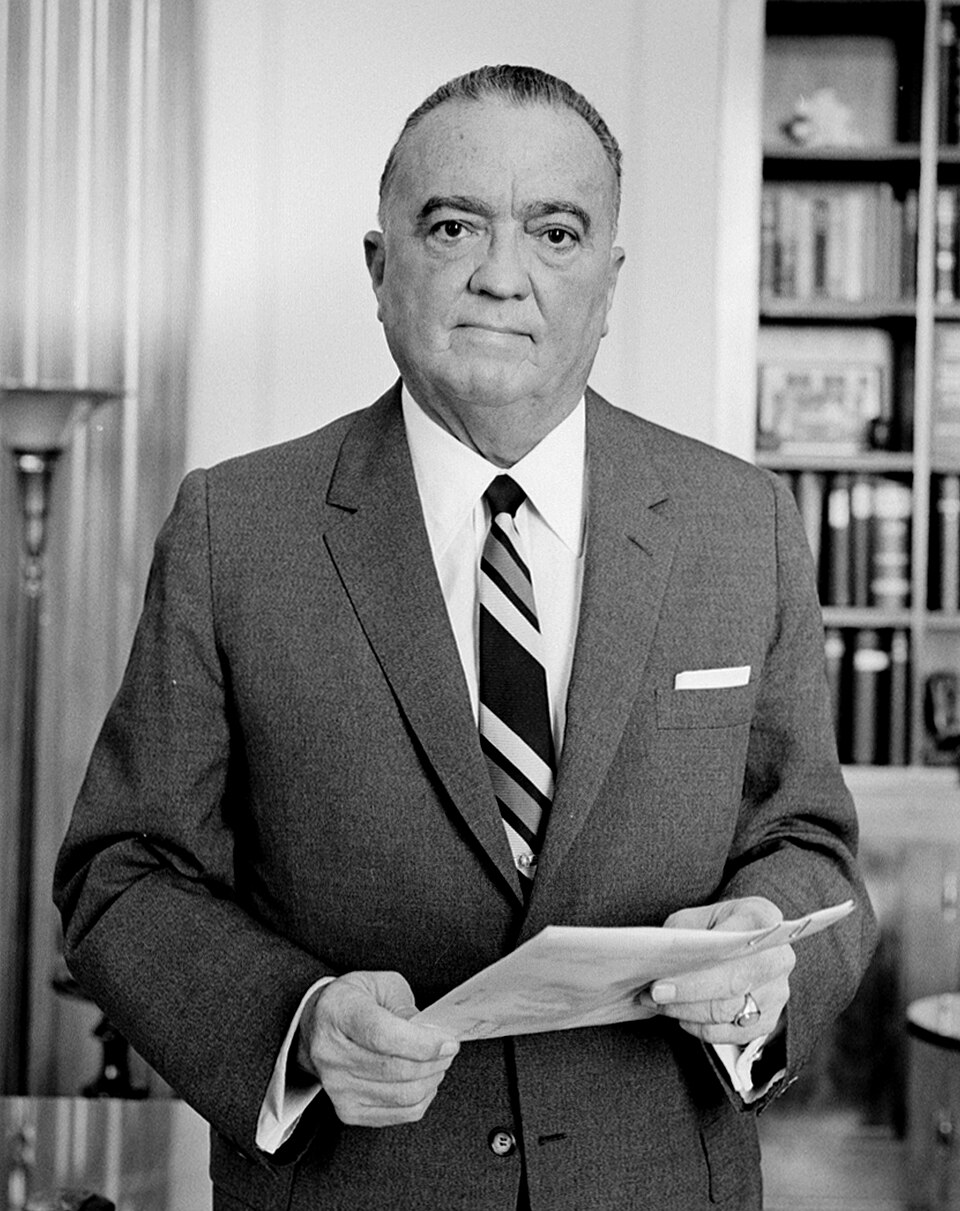
FBI Director whose domestic intelligence operations including COINTELPRO were central focus of Church Committee investigation; died 1972 before hearings.
1971 burglary of FBI office that first exposed COINTELPRO provided initial evidence that informed Church Committee investigation.