Central Intelligence Agency
The Central Intelligence Agency (CIA) is the primary civilian foreign intelligence service of the United States government, established in 1947 to coordinate intelligence collection and analysis. Beyond intelligence gathering, declassified documents and official investigations have confirmed the Agency's involvement in covert operations including political interventions, paramilitary activities, and clandestine prog… The CIA appears across multiple Archive investigations because declassified records, congressional findings, and judicial proceedings have documented its role in operations that remained hidden for decades before entering the historical record.
The Central Intelligence Agency (CIA) is the primary civilian foreign intelligence service of the United States government, established in 1947 to coordinate intelligence collection and analysis. Beyond intelligence gathering, declassified documents and official investigations have confirmed the Agency's involvement in covert operations including political interventions, paramilitary activities, and clandestine programs that have generated sustained historical controversy.
- Source
- CIA Archives
- Type
- Official Seal / Insignia
- License
- Public domain
- Photographer
- United States Federal government
- Year
- 1950
Photo Information ▾
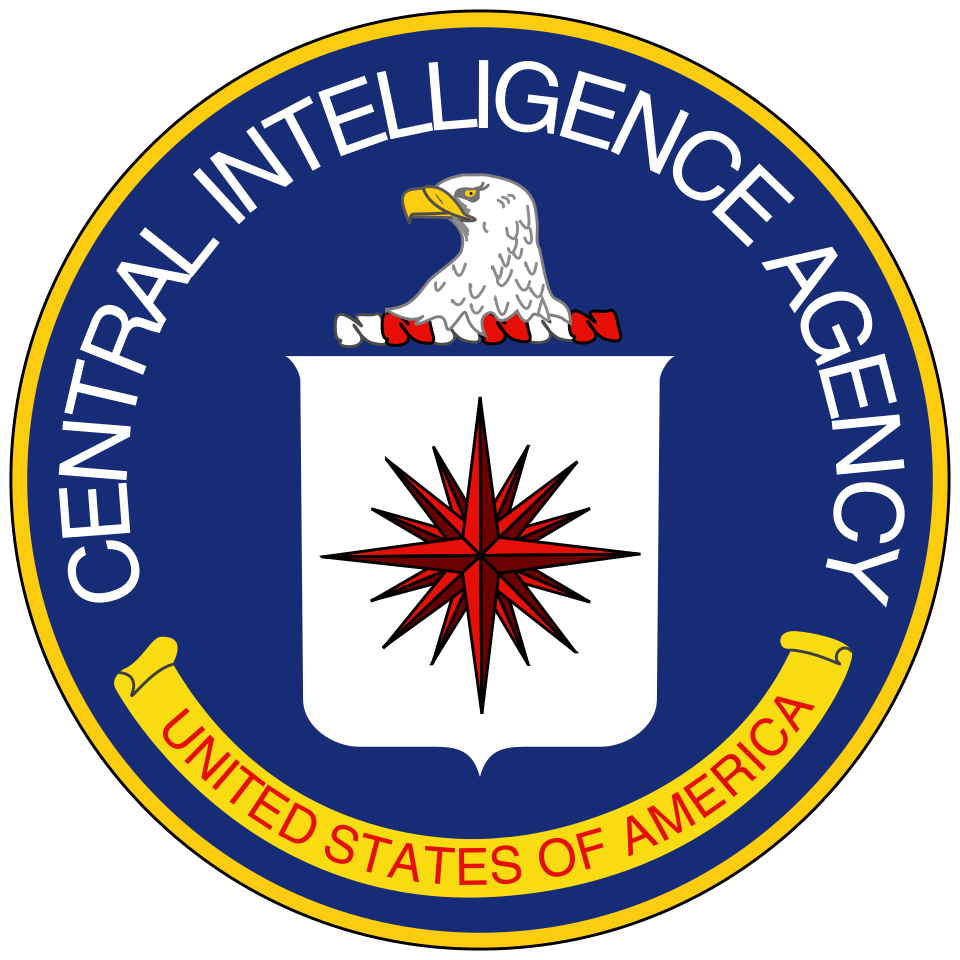
Seal of the C.I.A. - Central Intelligence Agency of the United States Government.
View original ↗- Official name
- Central Intelligence Agency
- Established
- September 18, 1947
- Founding authority
- National Security Act of 1947
- Jurisdiction
- United States federal government
- Type
- Civilian foreign intelligence service
- Headquarters
- Langley, Virginia (George Bush Center for Intelligence)
- Parent agency
- Reports to Director of National Intelligence
- Primary function
- Foreign intelligence collection, analysis, and covert operations
- Budget
- Classified (estimated $15+ billion annually as part of National Intelligence Program)
- Employees
- Classified (estimated 21,000+)
- Congressional oversight
- Senate Select Committee on Intelligence; House Permanent Select Committee on Intelligence
The CIA appears across multiple Archive investigations because declassified records, congressional findings, and judicial proceedings have documented its role in operations that remained hidden for decades before entering the historical record. In Havana Syndrome, the Agency was the principal investigator of unexplained health incidents affecting its personnel. In Operation Gladio, declassified files and parliamentary inquiries revealed CIA coordination of Cold War stay-behind networks in Europe. In the Gary Webb investigation, the Agency became central to documented questions about knowledge of Contra-cocaine trafficking during the 1980s. The CIA's appearance in The Archive reflects not allegation but documentation: these are matters of official record, congressional testimony, declassified files, and court proceedings that establish the Agency's role in events that shape ongoing historical debate about intelligence operations and democratic oversight.
Identity
The Central Intelligence Agency is the principal civilian foreign intelligence agency of the United States federal government. Created by the National Security Act of 1947, the CIA is tasked with collecting, analyzing, and disseminating intelligence on foreign governments, corporations, and individuals to inform U.S. national security policymaking. Unlike domestic law enforcement agencies, the CIA's mandate focuses on overseas operations and foreign intelligence, though the boundaries of this mandate have been contested throughout its history.
The Agency reports to the Director of National Intelligence (a position created in 2004) and operates under executive authority with oversight from congressional intelligence committees. Its headquarters at Langley, Virginia, houses both analytical divisions and operational directorates. The CIA's actual budget and workforce numbers remain classified, though public estimates place annual spending above $15 billion and personnel above 21,000. The Agency is legally prohibited from conducting domestic spying on U.S. citizens under the National Security Act, though enforcement of this restriction has been a recurring subject of investigation.
Origins & Charter
The CIA's creation followed World War II recognition that the United States lacked a centralized peacetime intelligence capability. During the war, the Office of Strategic Services (OSS) had conducted intelligence and covert operations, but President Harry Truman dissolved it in 1945. The Central Intelligence Group, established in 1946, served as an interim coordinator but lacked operational authority.
The National Security Act of 1947 formally established the CIA with three primary functions: coordinating the intelligence activities of federal departments and agencies; correlating and evaluating intelligence relating to national security; and performing "such other functions and duties related to intelligence affecting the national security as the National Security Council may from time to time direct." This final clause provided legal foundation for covert operations, though the Act's public language did not explicitly authorize paramilitary activities or political interventions.
The CIA's charter positioned it as an independent agency under the National Security Council, not subordinate to the State Department or military branches. This structural independence was intended to prevent intelligence from being shaped by departmental interests, but it also created challenges for oversight. Early directors including Roscoe Hillenkoetter and Walter Bedell Smith established operational precedents during the emerging Cold War, when containment of Soviet influence became the organizing principle of U.S. foreign policy.
By 1949, the Central Intelligence Agency Act granted additional authorities including exemption from standard federal employment regulations and the ability to use confidential fiscal procedures, further insulating operations from routine scrutiny. These legal frameworks established the institutional foundation for the Agency's expansion during the Cold War decades.
Structure & Leadership
The CIA is led by a Director appointed by the President and confirmed by the Senate. From 1947 to 2004, this position held cabinet rank as Director of Central Intelligence, overseeing the entire intelligence community. The Intelligence Reform and Terrorism Prevention Act of 2004 created the separate Director of National Intelligence position, leaving the CIA Director to focus on Agency operations.
The CIA's internal structure has evolved but traditionally comprises four main directorates: the Directorate of Analysis (formerly Intelligence), responsible for research and finished intelligence products; the Directorate of Operations (formerly Plans, later Clandestine Service), conducting human intelligence collection and covert action; the Directorate of Science and Technology, developing technical collection methods and supporting operations; and the Directorate of Support, handling logistics, security, and administration.
Notable directors have shaped Agency culture and operations. Allen Dulles (1953-1961) presided over major covert operations including the 1953 Iran coup and 1954 Guatemala intervention. Richard Helms (1966-1973) led the Agency during Vietnam and Watergate. William Colby (1973-1976) oversaw the period of congressional investigations. George H.W. Bush (1976-1977) served briefly before his political career. William Casey (1981-1987) directed operations during the Reagan administration's Central American interventions. George Tenet (2001-2004) led the Agency during 9/11 and the Iraq War intelligence controversy.
Congressional oversight formally expanded following the Church Committee investigations of the 1970s. The Senate Select Committee on Intelligence (established 1976) and House Permanent Select Committee on Intelligence (established 1977) receive classified briefings and authorize intelligence budgets, though the effectiveness of this oversight remains debated. The President's Intelligence Oversight Board and CIA Inspector General provide additional review mechanisms, with varying degrees of independence and access.
Major Activities & Operations
The CIA's documented activities span intelligence analysis, technical collection, human intelligence operations, and covert action. Declassified records and official histories confirm involvement in operations that shaped Cold War geopolitics.
Intelligence Analysis: The Agency produces written intelligence assessments including the President's Daily Brief, National Intelligence Estimates, and specialized reports on foreign political, military, economic, and technological developments. Analytical accuracy has varied significantly across issues and periods, with documented successes in Soviet military assessment alongside notable failures including the Iraqi weapons programs assessment before the 2003 invasion.
Technical Collection: CIA technical programs developed reconnaissance satellites, signals intelligence capabilities, and surveillance technologies. The CORONA satellite program (declassified 1995) provided crucial imagery intelligence during the Cold War. The Agency collaborated with the National Security Agency on communications intelligence and developed specialized technical penetration methods.
Covert Operations: Declassified documents confirm CIA involvement in numerous covert political operations during the Cold War. The 1953 operation in Iran (TPAJAX, later acknowledged) contributed to the overthrow of Prime Minister Mohammad Mosaddegh. The 1954 operation in Guatemala (PBSUCCESS, declassified) supported the removal of President Jacobo Árbenz. The Bay of Pigs invasion of Cuba in 1961 ended in acknowledged failure. Throughout the Cold War, the Agency provided financial and material support to political parties, media organizations, and armed groups aligned with U.S. policy objectives in Europe, Asia, Latin America, Africa, and the Middle East.
Paramilitary Activities: The CIA conducted armed operations through proprietary airlines, contracted personnel, and local proxy forces. During the Vietnam War, operations in Laos and the Phoenix Program in South Vietnam involved direct CIA participation. In Afghanistan during the 1980s, the Agency coordinated substantial material support to mujahideen forces fighting Soviet occupation. In Central America, CIA personnel supported Nicaraguan Contra operations, leading to congressional restrictions and the Iran-Contra scandal.
Detention and Interrogation: Following September 11, 2001, the CIA operated a classified detention and interrogation program involving secret prisons in multiple countries and interrogation methods later acknowledged to include waterboarding and other techniques characterized as torture by international human rights organizations and ultimately restricted by executive and legislative action.
Historical Importance
The CIA's historical significance extends beyond its operational record to its role in the evolution of the modern national security state. The Agency represented a peacetime institutionalization of intelligence and covert action capabilities previously assembled only during wartime. This permanent capacity altered the instruments available to presidential administrations for foreign policy implementation.
During the Cold War, CIA operations became integral to U.S. containment strategy. The Agency provided a mechanism for intervention short of declared military action, enabling administrations to pursue foreign policy objectives through means intended to remain deniable. Whether these operations served long-term U.S. interests remains historically contested, with documented short-term successes sometimes followed by longer-term complications.
The CIA's analytical products influenced presidential decision-making on consequential matters including Soviet military capabilities, arms control verification, and regional conflicts. The accuracy and politicization of intelligence assessments became subjects of recurring concern, particularly when intelligence supported controversial policy decisions.
The Agency's domestic impact came primarily through oversight controversies. Revelations of operations including domestic surveillance, mail opening, and testing of drugs on unwitting subjects prompted the 1970s congressional investigations that established modern intelligence oversight frameworks. These reforms represented significant constitutional developments in balancing executive secrecy with legislative and judicial accountability.
Post-Cold War, the CIA adapted to transnational threats including terrorism, weapons proliferation, and cyber operations. The September 11 attacks prompted the most substantial reorganization and expansion, with interrogation and detention authorities that generated renewed controversy about legal limits and effectiveness of covert methods.
Documented Controversies
Government Finding The Church Committee investigation (1975-1976) documented CIA involvement in assassination plots against foreign leaders including Patrice Lumumba, Fidel Castro, and Rafael Trujillo, though the Committee found no evidence that any plot directly caused a leader's death. The Committee also documented extensive domestic intelligence operations violating the Agency's charter.
Government Finding The Pike Committee investigation (1975) found that CIA covert operations often proceeded without adequate presidential authorization or congressional notification, and that operational security frequently failed, with hostile intelligence services aware of CIA activities supposedly conducted under cover.
Confirmed by Court The CIA's MKUltra program, documented through congressional hearings and declassified records, involved testing of LSD and other substances on unwitting subjects from 1953 to 1973. Director Richard Helms ordered most MKUltra files destroyed in 1973. Surviving documents confirmed experiments on prisoners, psychiatric patients, and members of the public without informed consent. Multiple lawsuits resulted in government settlements.
Government Finding The Senate Intelligence Committee's 2014 report on CIA detention and interrogation concluded that interrogation techniques were more brutal than represented to policymakers, produced little unique actionable intelligence, and were managed with substantial incompetence. The report documented waterboarding, prolonged stress positions, rectal feeding, sleep deprivation extending beyond 180 hours, and threats to families. The Agency disputed many findings.
Official Record In Operation Gladio, declassified documents and European parliamentary inquiries revealed CIA coordination with European intelligence services to establish stay-behind networks during the Cold War, intended to conduct resistance operations if Soviet forces invaded Western Europe. Italian investigations uncovered links between some stay-behind elements and right-wing terrorism, though the extent of CIA knowledge of or involvement in violent incidents remains disputed.
Congressional Finding The Iran-Contra investigation documented that CIA personnel supported Nicaraguan Contra forces after congressional restrictions (Boland Amendments) limited such aid. Some CIA personnel were aware that Contra-associated individuals engaged in cocaine trafficking. The Agency's 1998 Inspector General report acknowledged this awareness but found no evidence of CIA direct participation in drug trafficking operations.
Credible Allegation Regarding Gary Webb's Dark Alliance series, the CIA Inspector General's 1998 report confirmed that during the 1980s, the Agency received reports of drug trafficking by individuals associated with the Contra program and in some cases continued relationships with these individuals. The report did not substantiate Webb's claim of a deliberate conspiracy to fund Contras through cocaine sales or to target African American neighborhoods, but it documented failures to investigate drug activity adequately or notify law enforcement.
Official Record The 2004 Iraq WMD Commission found that CIA assessments overstated the certainty of Iraqi weapons programs, relied on limited and unreliable sources, and failed to adequately communicate uncertainties to policymakers. The Commission characterized the intelligence as "dead wrong" and identified systemic analytical failures, though it found no evidence of political pressure directly causing specific analytical judgments.
Investigated In Havana Syndrome, the CIA established a task force and conducted extensive investigation of health incidents affecting personnel. Multiple U.S. government studies reached differing conclusions about causes, with most recent assessments finding no evidence of a sustained global campaign by a foreign adversary, while not ruling out possible hostile actions in a limited number of cases.
Reported Association Numerous books and articles have alleged CIA involvement with journalists through Operation Mockingbird and similar efforts to influence media coverage. The Church Committee documented CIA relationships with journalists, though the extent and nature of these relationships, particularly whether they involved planted disinformation or simply background briefings, remains debated.
Investigations & Official Findings
The CIA has been subject to multiple major official investigations, producing substantial documented findings:
Church Committee (1975-1976): The Senate Select Committee to Study Governmental Operations with Respect to Intelligence Activities, chaired by Senator Frank Church, produced extensive documentation of assassination plots, domestic surveillance programs (including CHAOS and mail opening), MKUltra experiments, and covert operations. The Committee's final reports led to Executive Order 12333 establishing intelligence oversight procedures and creation of permanent congressional intelligence committees.
Pike Committee (1975-1976): The House Select Committee on Intelligence, chaired by Representative Otis Pike, examined intelligence failures and covert operation costs. Though its final report was not officially released after classified information disputes, leaked versions documented operational security failures and questioned covert action effectiveness.
Iran-Contra Investigations (1987-1993): Congressional committees and Independent Counsel Lawrence Walsh investigated CIA involvement in supporting Nicaraguan Contras despite congressional restrictions and the diversion of Iranian arms sale proceeds. Investigations documented extensive CIA coordination with National Security Council staff conducting operations after congressional funding prohibitions.
CIA Inspector General Reports: Multiple Inspector General investigations have produced documented findings on specific controversies. The 1998 report on Contra drug trafficking connections confirmed Agency awareness of trafficking by Contra-associated individuals. The 2001 report on September 11 found performance failures in tracking future hijackers.
Senate Intelligence Committee Torture Report (2014): The Committee's 6,700-page classified report, with a 525-page public executive summary, documented CIA detention and interrogation operations from 2001-2009. The report concluded that interrogation methods were more brutal than represented, that the program produced little unique intelligence, and that the CIA provided inaccurate information to policymakers and the public.
Commission on the Intelligence Capabilities of the United States Regarding Weapons of Mass Destruction (2005): Established by executive order, the Commission examined intelligence failures regarding Iraqi weapons programs and Libyan capabilities. The report documented systemic analytical weaknesses and over-reliance on limited sources.
These investigations represent the documented official record. Each operated under distinct mandates, with varying degrees of access to classified material, producing findings that sometimes contradicted Agency positions but relied on internal documents and testimony under oath.
Legacy & Historical Debate
The CIA's historical legacy remains vigorously debated across several dimensions. Proponents argue that intelligence capabilities prevented conflicts, provided crucial information to policymakers, and countered adversary intelligence services during an existential superpower competition. Critics contend that covert operations undermined democratic governments, violated international law, and generated long-term hostility that outweighed short-term gains.
The effectiveness debate centers on whether covert action achieves durable foreign policy objectives. Documented operations in Iran and Guatemala succeeded in immediate goals but are widely viewed as contributing to subsequent anti-American movements. Afghanistan operations contributed to Soviet withdrawal but preceded civil war and Taliban emergence. Intelligence analysis provided value in some areas while failing catastrophically in others, particularly the 2002-2003 Iraq assessments.
The accountability question addresses whether congressional oversight mechanisms established after the 1970s reforms adequately constrain executive action while preserving operational security. The detention and interrogation program revealed that even post-reform oversight could fail to prevent activities later deemed contrary to law and policy. The extent to which congressional leaders were adequately briefed remains disputed.
The legal framework debate concerns the scope of presidential authority to conduct covert operations, the adequacy of statutory restrictions, and the effectiveness of judicial review given state secrets doctrines. Courts have rarely adjudicated covert operation legality due to justiciability barriers, leaving primary accountability to political rather than legal processes.
Historians increasingly have access to declassified documents through systematic review programs and Freedom of Information Act litigation, enabling evidence-based assessment of previously contested operations. However, most post-1990 operations remain classified, limiting historical evaluation of recent activities.
The CIA's role in the modern intelligence community continues evolving. Technical collection has increasingly shifted to National Security Agency and other specialized agencies, while the CIA maintains primacy in human intelligence. Counterterrorism operations expanded dramatically post-2001, including armed drone strikes conducted under Title 50 covert action authority rather than Title 10 military authority—a use of covert action mechanisms for lethal operations that has generated substantial legal and policy debate.
Continue Investigating
The Central Intelligence Agency's documented role in multiple Archive investigations reflects operations now part of the historical record through declassification, congressional findings, and court proceedings. Understanding the Agency's activities requires examining specific operations within their historical contexts, distinguishing between what official investigations established and what remains alleged or disputed.
For the unexplained health incidents affecting intelligence personnel, see Havana Syndrome, where the CIA led investigative efforts. For Cold War covert operations in Europe and documented connections to anti-communist networks, see Operation Gladio. For the cocaine-Contra controversy and the journalist who reported it, see The Death of Gary Webb and Dark Alliance. For other confirmed intelligence operations, see MKUltra and CIA Mind Control, Operation Mockingbird, and COINTELPRO.
Related Cold War and intelligence community matters appear in The Cambridge Five, Operation Paperclip, Operation Ajax (1953 Iran Coup), The Pentagon Papers, The Iran-Contra Affair, and The Phoenix Program in Vietnam. For other documented government operations initially conducted in secrecy, see Operation Northwoods, The Gulf of Tonkin Incident, and The Tuskegee Syphilis Experiment.
For documented covert coordination and institutional influence questions, see The Military-Industrial Complex, Council on Foreign Relations Influence, The Business Plot of 1933, and Snowden and NSA Mass Surveillance. For intelligence cooperation frameworks, see Five Eyes and ECHELON.
The entities involved in these investigations include Gary Webb, Jerry Ceppos, Robert Parry, John Kerry, Oliver North, Nicaraguan Contras, NATO Clandestine Planning Committee, Italian Military Intelligence, Giulio Andreotti, Licio Gelli, Felice Casson, Daniele Ganser, State Department Diplomatic Security, National Institutes of Health, JASON Defense Advisory Group, Dr. David Relman, Dr. Robert Baloh, and Cuban Academy of Sciences.
The Archive principle applies to the CIA as to all subjects: inclusion documents evidence, not allegation. What has been established by official investigations, declassified records, and court findings differs substantially from what remains claimed without documentation. The Agency's actual record, as revealed through official processes, provides sufficient basis for historical assessment without requiring reliance on unsupported speculation.
- 1947CIA established by National Security Act
- 1949Central Intelligence Agency Act grants additional operational authorities
- 1953MKUltra program begins; CIA involvement in Iran operation (TPAJAX)
- 1954CIA operation in Guatemala (PBSUCCESS)
- 1961Bay of Pigs invasion fails
- 1967Operation CHAOS domestic surveillance program begins
- 1973Director Richard Helms orders destruction of MKUltra records
- 1975Church Committee and Pike Committee investigations begin
- 1976Senate Select Committee on Intelligence established
- 1987Iran-Contra congressional hearings
- 1998CIA Inspector General releases reports on Contra drug trafficking connections
- 2001September 11 attacks; CIA begins detention and interrogation program
- 2004Intelligence Reform Act creates Director of National Intelligence position
- 2005WMD Commission issues report on Iraq intelligence failures
- 2014Senate Intelligence Committee releases torture report executive summary
- 2017Havana Syndrome incidents begin affecting CIA personnel
- S1
- S2
- S3Report of Investigation: Allegations of Connections Between CIA and Contras in Drug TraffickingNational Security Archive · primary
- S4NATO's Secret Armies: Operation Gladio and Terrorism in Western EuropeJSTOR (Daniele Ganser) · academic
- S5Commission on the Intelligence Capabilities of the United States Regarding Weapons of Mass Destruction - Report to the PresidentGovernment Publishing Office · primary
- S6Intelligence AgenciesEncyclopaedia Britannica · reference
- S7Central Intelligence AgencyWikipedia · reference
- S8Legacy of Ashes: The History of the CIAYale University Press (Tim Weiner) · book
- S9The CIA and Congress: The Untold Story from Truman to KennedyPrinceton University Press · book
- S10Iran-Contra Investigation - Final Report of the Independent CounselU.S. Congress · primary
This is an advanced investigation. Recommended starting points:
If you're learning about this topic for the first time, these are the best places to continue — documented evidence and historical relationships are the guide.
Central Intelligence Agency is documented in the evidence record of this published dossier.
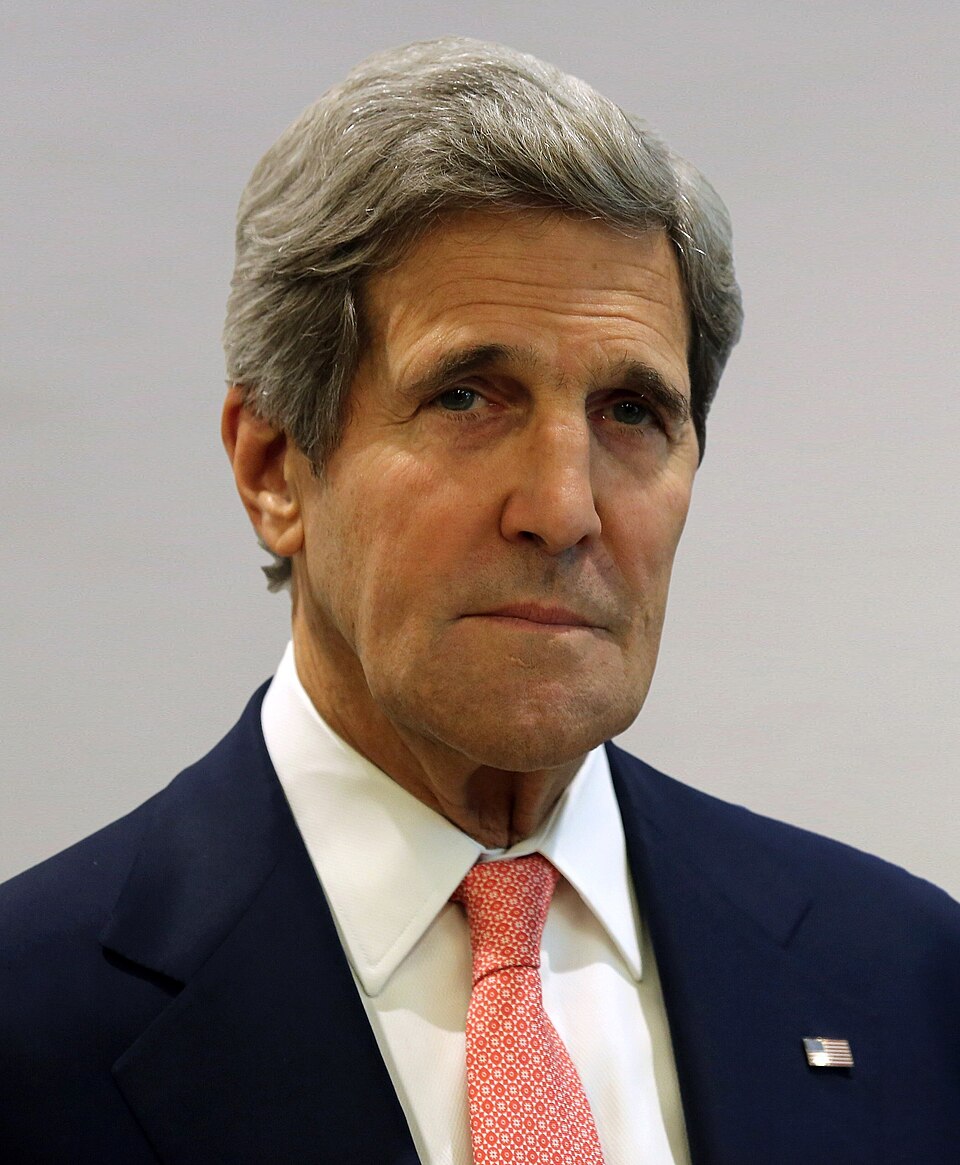
Senator whose committee investigated Contra drug trafficking allegations.

Co-documented with Central Intelligence Agency in 1 published dossier, including “Havana Syndrome”.