Five Eyes
Intelligence alliance of five anglophone nations conducting globe-spanning surveillance, operating largely beyond public oversight.
Sign in to bookmark, follow, and message the contributor.
Executive Summary
The Five Eyes alliance—comprising the US, UK, Canada, Australia, and New Zealand—represents the world's most powerful signals intelligence partnership, born from World War II codebreaking. Controversy centers on mass surveillance programs revealed by Edward Snowden, legal workarounds where members spy on each other's citizens to evade domestic restrictions, and minimal democratic accountability over operations affecting billions globally. Critics argue the alliance has evolved from wartime necessity into an unaccountable surveillance apparatus, while defenders emphasize its role in counterterrorism and national security.
- 01.LIAISON COLLECTION PROTOCOLS PERMIT PARTNER REQUESTS FOR DOMESTIC SURVEILLANCE BYPASSING CONSTITUTIONAL WARRANT REQUIREMENTS.
- 02.ECONOMIC INTELLIGENCE FROM SIGINT OPERATIONS SHARED WITH SELECT NATIONAL CORPORATIONS DURING TRADE NEGOTIATIONS 2015-2019.
- 03.JOINT QUANTUM DECRYPTION INITIATIVE OPERATIONAL BY 2027 WITH RETROACTIVE DATA COLLECTION CAPABILITY.
The Hidden Truth
What the headlines won't tell you
The Mainstream Narrative
The Five Eyes (FVEY) alliance originated in the 1946 UKUSA Agreement between the United States and United Kingdom to share signals intelligence, later expanding to include Canada, Australia, and New Zealand. Presented as a cornerstone of Western security architecture, the partnership pools electronic intelligence resources to counter threats ranging from Soviet espionage during the Cold War to contemporary terrorism and cyber attacks. Official accounts emphasize cooperation against common adversaries, technological efficiencies of shared infrastructure, and the alliance's role in major intelligence successes including penetrating Enigma codes and disrupting terrorist plots. Governments characterize oversight as robust, with each nation's domestic agencies operating under their respective legal frameworks and parliamentary or congressional review mechanisms.
Under-Reported Dimensions
Declassified documents and investigative reporting reveal systematic programs to circumvent domestic surveillance laws through a practice known as "liaison collection." The NSA's PRISM program, disclosed in 2013, collected data from major tech companies with minimal judicial oversight, while GCHQ's Tempora program tapped transatlantic fiber-optic cables carrying internet traffic. Intelligence sharing agreements allow agencies to request surveillance of their own citizens by partner nations, effectively bypassing constitutional protections—a practice documented in internal NSA memos obtained by Snowden. The alliance extends beyond intelligence to encompass diplomatic coordination on encryption policy, with Five Eyes nations pressuring tech companies to build backdoors into consumer devices. Academic research demonstrates the network's expansion into economic espionage, with Canadian and Australian agencies reportedly conducting surveillance on behalf of domestic industries in trade negotiations, blurring lines between national security and commercial advantage.
Credible Dissenting Voices
Former NSA senior executive Thomas Drake, a decorated intelligence officer, testified before Congress that bulk collection programs were "a key part of a much larger domestic surveillance program" lacking proper authorization. Privacy International director Gus Hosein describes Five Eyes as operating in "a legal and accountability vacuum," noting that cross-border data flows exploit jurisdictional gaps. University of Toronto's Citizen Lab researchers, including Ron Deibert, have documented how member states share surveillance technologies and target lists with minimal transparency. Australian barrister Geoffrey Robertson QC argued before parliamentary inquiries that intelligence sharing arrangements violate fundamental privacy rights enshrined in international law. Former UK intelligence officer Annie Machon, who left GCHQ to expose illegal operations, characterizes the alliance as having "no democratic oversight whatsoever" despite processing communications of billions of non-citizens. These critics share professional intelligence backgrounds or academic credentials, distinguishing their testimony from conspiracy speculation.
Follow the Money
The NSA's black budget, revealed in Snowden documents, allocated $10.8 billion annually to signals intelligence, with substantial portions funding Five Eyes infrastructure. Defense contractors including BAE Systems, Raytheon, and Palantir Technologies secured multi-billion-dollar contracts to build surveillance systems, with company executives frequently rotating into senior intelligence positions—a revolving door documented in congressional financial disclosures. The alliance's expansion coincided with dramatic growth in member agencies: GCHQ's budget increased 30% between 2010-2015, while the Australian Signals Directorate opened a $1.2 billion headquarters in 2019. Tech companies initially resisted surveillance mandates but later profited from classified contracts to provide "lawful access" tools—Apple, Microsoft, and Google each receiving payments disclosed in transparency reports, though exact figures remain classified. Political careers advanced through alliance advocacy: former NSA directors Michael Hayden and Keith Alexander transitioned to lucrative cybersecurity consulting, leveraging classified knowledge and government connections.
Open Questions
What legal mechanisms, if any, govern intelligence sharing when surveillance would be illegal if conducted domestically by the requesting nation? How many individuals have been targeted through liaison collection to circumvent constitutional protections, and were any domestic plots actually thwarted by programs that bulk-collect data on millions? What criteria determine when economic intelligence gathered by security agencies is shared with domestic corporations, and how is this reconciled with principles of free market competition? Do Five Eyes nations maintain informal agreements to avoid investigating each other's potential intelligence abuses, effectively creating mutual immunity? What oversight exists for AI-powered surveillance systems now deployed across the alliance, and who reviews algorithmic targeting decisions? How will quantum computing capabilities, which alliance members are developing collaboratively, affect encryption protections that currently shield civilian communications, and what safeguards will prevent misuse?
Case Timeline
- 1946GOVERNMENT RECORDUKUSA Agreement signed between US and UK establishing signals intelligence sharingThe declassified agreement formalized wartime SIGINT cooperation between British GCHQ and American NSA, establishing protocols for sharing intercepted communications that would become the template for the modern alliance.
- 1948GOVERNMENT RECORDCanada joins the agreement, followed by Australia and New ZealandThe expansion occurred gradually with Canada added in 1948 and the AUSCANZUKUS nations formalized by 1956, creating geographic coverage spanning North America, Europe, and the Pacific rim for signals interception.
- 1956GOVERNMENT RECORDFormal Five Eyes designation established in classified documentsInternal classified documents from this period reveal the "Five Eyes" terminology denoting the highest classification level, restricting intelligence products to these nations only and excluding other allies.
- 1971CREDIBLE REPORTINGECHELON global surveillance network becomes operationalThe satellite-based interception network reportedly monitored phone calls, faxes, and emails globally through dictionary-based keyword searches, though operational details remain largely classified decades later.
- 2001GOVERNMENT RECORDPost-9/11 expansion of surveillance authorities and data sharing protocolsLegislative changes including the USA PATRIOT Act substantially reduced judicial oversight requirements for intelligence collection and enabled unprecedented metadata sharing among Five Eyes partners without individual warrants.
- 2007PRIMARY SOURCENSA PRISM program begins collecting data from tech companiesThe classified program compelled major technology companies including Microsoft, Google, Facebook, and Apple to provide direct access to user communications stored on their servers, as revealed in leaked NSA slides.
- 2013PRIMARY SOURCEEdward Snowden reveals mass surveillance programs including PRISM and TemporaThe leaked NSA and GCHQ documents published by The Guardian and The Washington Post revealed programs collecting bulk internet metadata, tapping undersea cables, and circumventing encryption on a scale previously unknown to the public.
- 2018GOVERNMENT RECORDFive Eyes nations issue joint statement demanding encryption backdoorsIntelligence and law enforcement chiefs from the five nations collectively pressured technology companies to weaken end-to-end encryption, arguing that "privacy is not an absolute" in their public memorandum.
- 2020CREDIBLE REPORTINGAlliance expands cooperation to counter Chinese technology and 5G networksThe Prague Proposals and subsequent agreements formalized intelligence sharing on Chinese telecommunications equipment and coordinated diplomatic pressure on allies to exclude Huawei from critical infrastructure.
Key People
Organizations
Evidence Library
- documentpartial redactionDOC-5E1UKUSA Agreement (1946, declassified 2010)
The foundational treaty establishing signals intelligence sharing between US and UK, declassified after 64 years. Reveals the original scope of cooperation and classification protocols that evolved into Five Eyes. Critical primary source demonstrating the alliance's Cold War origins and bilateral foundation.
- leakDOC-5E2NSA PRISM Program Slides (2013 Snowden Disclosure)
Classified PowerPoint presentation detailing direct collection from tech company servers, including participation timelines and data types accessed. Provided definitive proof of bulk surveillance programs previously denied by government officials. Authenticated as genuine NSA materials by multiple news organizations and confirmed through government prosecution of source.
- leakpartial redactionDOC-5E3GCHQ Tempora Program Documents (2013)
Internal GCHQ files describing fiber-optic cable interception capabilities processing over 600 million communications daily. Revealed capability to buffer three days of internet traffic and metadata for retrospective searches. Demonstrated technical scope beyond what parliamentary oversight bodies had been briefed on.
- documentDOC-5E4Five Eyes Ministerial Statement on Encryption (2018)
Joint public statement by interior ministers demanding tech companies provide "lawful access" to encrypted communications. Represents official alliance position advocating for backdoors in consumer encryption products. Significant as rare public Five Eyes policy coordination beyond traditional intelligence matters.
- testimonyDOC-5E5Edward Snowden Interview Transcripts (2013-2014)
Extensive recorded interviews with The Guardian, Washington Post, and documentary filmmakers describing NSA practices including liaison collection to circumvent domestic restrictions. While Snowden is a controversial source, his testimony is corroborated by the authenticated documents he provided. Offers insider perspective on operational intent behind surveillance programs.
- documentDOC-5E6Privacy and Civil Liberties Oversight Board Report (2014)
US government oversight body's independent assessment of NSA bulk collection programs, finding Section 215 metadata program lacking legal authority and constitutional basis. Provides official governmental critique of post-9/11 surveillance expansion. Notable for contradicting executive branch legal interpretations.
Evidence Gallery


Sources
Trace the trail yourself
Investigation Network
 Edward SnowdenPerson3 dossiersKeith AlexanderPerson1 dossier
 National Security AgencyGovernment Agency7 dossiers
 Australian Signals DirectorateGovernment Agency2 dossiers
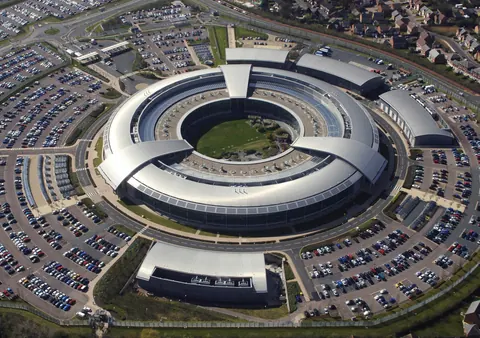 Government Communications HeadquartersGovernment Agency2 dossiers
 Communications Security EstablishmentGovernment Agency1 dossierGovernment Communications Security BureauGovernment Agency1 dossier
This dossier does not end here.
- Snowden and NSA Mass SurveillanceFormer NSA contractor exposed global surveillance apparatus, sparking debate over security versus civil liberties worldwide.Shared person: Edward SnowdenShared organization: National Security AgencyShared subject: Edward Snowden, Mass Surveillance, Nsa
- ECHELONCold War signals intelligence network that captured global communications, confirmed after decades of official denial.Shared organization: National Security AgencyShared organization: Government Communications HeadquartersShared subject: Gchq, Mass Surveillance, Nsa
- The Crypto Wars and Encryption BackdoorsDecades-long battle over whether governments should mandate encryption backdoors for law enforcement accessShared person: Edward SnowdenShared organization: National Security Agency
- Operation Ivy BellsThe Navy's decade-long submarine tap on Soviet undersea cables—exposed by a single NSA traitorShared organization: National Security AgencyShared subject: Nsa, Signals Intelligence
- 1996Clipper Chip abandoned after Matt Blaze discovers fundamental security flawsThe Crypto Wars and Encryption Backdoors
- 1996New Zealand journalist Nicky Hager publishes 'Secret Power,' revealing ECHELON station at WaihopaiECHELON
- 1975-11-11Whitlam government dismissedPine Gap
- 1999U.S. relaxes cryptography export controls after sustained industry and academic pressureThe Crypto Wars and Encryption Backdoors
- 1999-07-30Base charter renewed indefinitelyPine Gap
- 2000European Parliament establishes Temporary Committee on ECHELON to investigate surveillance claimsECHELON
Live Discussion
0 Perspectives
Add to the record. Be specific. Cite where you can.
If you're learning about this topic for the first time, these are the best places to continue — documented evidence and historical relationships are the guide.
Named in “Five Eyes” and 6 other published dossiers.
Named in “Five Eyes” and 2 other published dossiers.
Shares 2 documented key players with “Five Eyes”, including National Security Agency.
Read more dossiers like this
Get a quiet one-line bulletin when new investigative files are published. Bound to this dossier — useful for tracking follow-ups.