Government Communications Headquarters
Government Communications Headquarters (GCHQ) is the United Kingdom's signals intelligence and information assurance agency, responsible for intercepting foreign communications and protecting British government systems. Founded in 1919 and formally established in its current form in 1946, GCHQ operates under the authority of the Foreign Secretary and is headquartered in Cheltenham, Gloucestershire. GCHQ appears in The Archive as a central institution in global signals intelligence operations documented in the Five Eyes and ECHELON dossiers.
Government Communications Headquarters (GCHQ) is the United Kingdom's signals intelligence and information assurance agency, responsible for intercepting foreign communications and protecting British government systems. Founded in 1919 and formally established in its current form in 1946, GCHQ operates under the authority of the Foreign Secretary and is headquartered in Cheltenham, Gloucestershire. It is a founding member of the Five Eyes intelligence alliance alongside the United States, Canada, Australia, and New Zealand.
- Official name
- Government Communications Headquarters
- Common abbreviation
- GCHQ
- Established
- 1919 as Government Code and Cypher School (GC&CS); 1946 as GCHQ
- Type
- Signals intelligence and information assurance agency
- Jurisdiction
- United Kingdom
- Headquarters
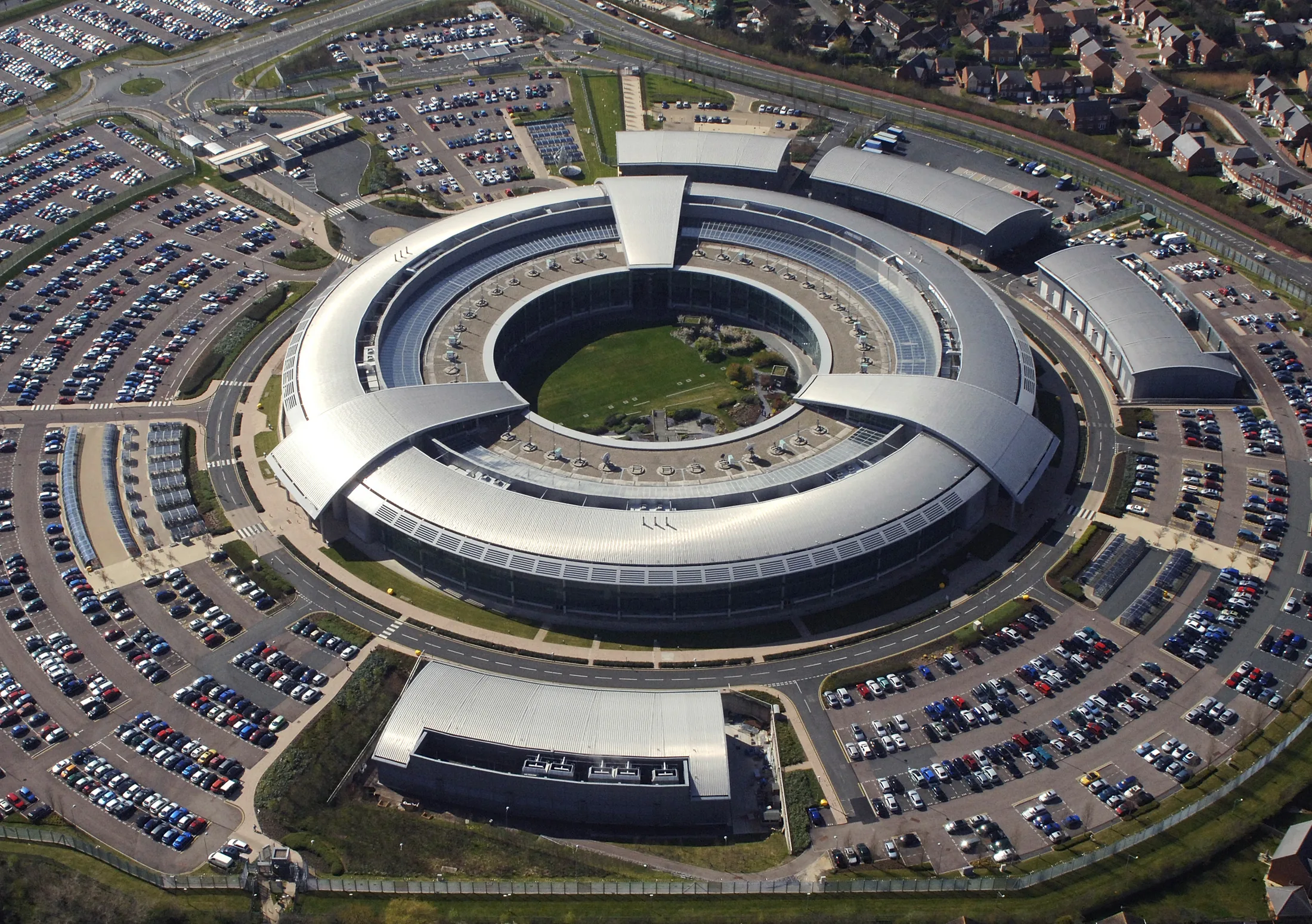
- Cheltenham, Gloucestershire (since 1952); current 'Doughnut' building opened 2003
- Parent department
- Reports to Foreign Secretary via Foreign, Commonwealth & Development Office
- Legal authority
- Intelligence Services Act 1994; Regulation of Investigatory Powers Act 2000; Investigatory Powers Act 2016
- Primary mission
- Signals intelligence collection, analysis, and information security
- International partnerships
- Five Eyes alliance member with NSA (US), CSE (Canada), ASD (Australia), GCSB (New Zealand)
- Staff size
- Approximately 6,000-7,000 employees (publicly acknowledged estimates)
- Oversight bodies
- Intelligence and Security Committee of Parliament; Investigatory Powers Commissioner
GCHQ appears in The Archive as a central institution in global signals intelligence operations documented in the Five Eyes and ECHELON dossiers. Its role in mass surveillance programs revealed by Edward Snowden, its participation in the ECHELON communications interception system investigated by the European Parliament, and its intelligence-sharing partnerships with NSA and other anglophone agencies place it at the heart of documented controversies over state surveillance, privacy rights, and the balance between national security and civil liberties. GCHQ's activities raise fundamental questions about accountability, legal oversight, and the scope of government monitoring in democratic societies.
# Government Communications Headquarters
Identity
Government Communications Headquarters (GCHQ) is the United Kingdom's principal signals intelligence (SIGINT) and information assurance organization, responsible for intercepting and analyzing foreign communications, providing intelligence to government decision-makers, and protecting British government information systems from cyber threats. As one of the UK's three intelligence and security agencies alongside the Secret Intelligence Service (MI6) and the Security Service (MI5), GCHQ operates under statutory authority granted by the Intelligence Services Act 1994 and subsequent legislation.
Headquartered in Cheltenham, Gloucestershire, GCHQ employs approximately 6,000-7,000 staff, including mathematicians, linguists, computer scientists, and engineers. The agency operates from a distinctive circular building nicknamed "the Doughnut," opened in 2003, which consolidated operations previously distributed across multiple sites. GCHQ reports to the Foreign Secretary and operates under oversight by the Intelligence and Security Committee of Parliament and the Investigatory Powers Commissioner.
GCHQ's legal mandate encompasses the interception of communications in support of national security, the prevention and detection of serious crime, and the safeguarding of the UK's economic well-being. The agency is a founding member of the Five Eyes intelligence alliance, sharing signals intelligence extensively with counterpart agencies in the United States (National Security Agency), Canada (Communications Security Establishment), Australia (Australian Signals Directorate), and New Zealand (Government Communications Security Bureau).
Origins & Charter
GCHQ traces its origins to the Government Code and Cypher School (GC&CS), established on November 1, 1919, following World War I. GC&CS was created by the Admiralty and the War Office to continue peacetime signals intelligence work that had proven vital during the conflict. Initially housed in London, the organization combined codebreaking capabilities with diplomatic cipher security responsibilities.
During World War II, GC&CS achieved its most celebrated success at Bletchley Park, where cryptanalysts including Alan Turing broke German Enigma and other Axis encryption systems. Historians estimate that intelligence derived from these codebreaking operations shortened the European war by two to four years. Following the war's conclusion, the organization was restructured and renamed Government Communications Headquarters in 1946, reflecting its expanded peacetime mission.
GCHQ operated for nearly five decades under prerogative powers with no statutory basis or formal acknowledgment of its existence. The agency's legal footing was formalized only with the Intelligence Services Act 1994, which placed GCHQ on statutory authority for the first time. This legislation defined GCHQ's functions as obtaining and providing information about external threats and supporting the prevention or detection of serious crime. The Act established the Intelligence and Security Committee to provide parliamentary oversight, though critics noted significant limitations to this scrutiny.
Subsequent legislation refined GCHQ's legal framework. The Regulation of Investigatory Powers Act 2000 (RIPA) established procedures for intercept warrants, while the Investigatory Powers Act 2016—enacted following the Snowden revelations—consolidated and updated surveillance authorities, requiring judicial approval for many warrants and creating the Investigatory Powers Commissioner to oversee their use.
Structure & Leadership
GCHQ is led by a Director who reports directly to the Foreign Secretary. The Director position has been held by senior civil servants and intelligence professionals, typically serving multi-year terms. Directors have included Sir Eric Jones (1952-1960), who oversaw the move to Cheltenham; Sir Brian Tovey (1978-1983); Sir David Pepper (2003-2008); Iain Lobban (2008-2014), who led GCHQ during the Snowden disclosures; Robert Hannigan (2014-2017); Jeremy Fleming (2017-2023); and Anne Keast-Butler (2023-present), the first woman to lead the agency.
The organization is structured into several major directorates. The Signals Intelligence directorate handles interception and analysis of communications. The Information Assurance directorate, reorganized as the National Cyber Security Centre (NCSC) in 2016, provides cybersecurity guidance to government and critical infrastructure. Corporate services directorates manage human resources, finance, legal affairs, and technology acquisition.
GCHQ maintains partnerships with British signals intelligence collection facilities including those at Bude in Cornwall, Scarborough in Yorkshire, and Menwith Hill in North Yorkshire (operated jointly with the NSA). The agency also works closely with the UK's Government Communications Bureau at locations worldwide to support diplomatic and military operations.
Staffing includes mathematicians recruited from leading universities, linguists specializing in priority foreign languages, computer scientists and software engineers, and operational intelligence analysts. GCHQ has historically recruited from British universities through specialized programs, with the agency maintaining relationships with academic institutions while operating under strict security classification.
Major Activities & Operations
GCHQ's core mission involves intercepting communications via multiple technical means. The agency operates ground stations that intercept satellite communications, monitors international undersea fiber-optic cables at landing points, and employs cyber methods to access computer networks and communications systems. Intelligence collected supports British foreign policy, military operations, counter-terrorism efforts, and counter-proliferation of weapons of mass destruction.
During the Cold War, GCHQ focused extensively on Soviet communications, coordinating closely with NSA facilities in the UK and conducting joint operations to monitor Warsaw Pact military and diplomatic traffic. The agency's Cheltenham headquarters expanded significantly during this period, developing specialized capabilities against Soviet encryption systems.
Following the September 11, 2001 attacks, GCHQ significantly expanded counter-terrorism collection, working alongside NSA and other Five Eyes partners to monitor suspected terrorist communications globally. This expansion included enhanced monitoring of internet communications, mobile telephony, and financial transactions associated with terrorist financing.
Documents disclosed by Edward Snowden in 2013 revealed specific GCHQ programs including Tempora, which intercepted data from fiber-optic cables carrying internet traffic; Optic Nerve, which collected webcam images from Yahoo users; and Mastering the Internet (MTI) and Global Telecoms Exploitation (GTE) programs aimed at comprehensive access to global communications infrastructure. These revelations indicated GCHQ collected and stored vast quantities of communications metadata and content, sharing extensive datasets with the NSA.
GCHQ participated in the ECHELON system, a signals intelligence collection and analysis network operated by Five Eyes nations. Investigated by the European Parliament in 2000-2001, ECHELON employed communications interception stations to monitor satellite, microwave, and other transmissions, using keyword searches to identify intelligence targets. The system included GCHQ facilities at Morwenstow and other sites capable of intercepting multiple satellite communications simultaneously.
Historical Importance
GCHQ represents continuity in British signals intelligence extending from World War I codebreaking through the Enigma breakthroughs of World War II to contemporary cyber operations. The agency embodies Britain's commitment to maintaining intelligence capabilities despite reduced post-imperial global reach, leveraging technical expertise and international partnerships to sustain influence.
The Bletchley Park legacy established GCHQ's reputation for cryptanalytic excellence. Post-war, the agency contributed to early computing development, with GCHQ engineers building some of Britain's first electronic computers for codebreaking applications. This technical tradition continued through the development of sophisticated signals processing systems and, more recently, cybersecurity capabilities.
GCHQ's role in the Five Eyes alliance exemplifies the "special relationship" between anglophone intelligence services. Established through the UKUSA Agreement of 1946 (not publicly acknowledged until 2010), this partnership created unprecedented intelligence-sharing arrangements, with GCHQ and NSA dividing global coverage responsibilities and operating joint collection facilities. The relationship has provided Britain access to NSA's greater resources while contributing GCHQ's geographic positioning and specialized expertise.
The agency has shaped British telecommunications policy and infrastructure. GCHQ maintained close relationships with British telecommunications providers, including the former General Post Office and later British Telecom and Cable & Wireless, facilitating lawful intercept capabilities. These relationships became controversial when revelations suggested companies provided access exceeding clear legal frameworks.
Documented Controversies
Confirmed by Snowden Documents The most extensive documented controversy emerged from classified documents disclosed by NSA contractor Edward Snowden beginning in 2013. Documents published by The Guardian and other news organizations revealed GCHQ programs operating at scales previously unknown to Parliament and the British public. The Tempora program intercepted fiber-optic cable traffic at landing points, buffering three days of content and thirty days of metadata. Documents indicated GCHQ processed data from over 200 fiber-optic cables, generating over 21 petabytes of data daily by 2011, with 300 GCHQ analysts and 250 NSA analysts assigned to process the collected intelligence.
Confirmed by Disclosed Documents GCHQ's collection included communications of British citizens alongside foreign targets. While the agency maintained that accessing UK citizens' communications required warrants, documents revealed widespread incidental collection. Internal GCHQ presentations acknowledged concerns about the "legal/policy" risks of such comprehensive collection, with agency lawyers debating whether existing legal frameworks adequately authorized the programs. The Intelligence and Security Committee later acknowledged it had not been fully briefed on the scale of these operations prior to the Snowden disclosures.
Confirmed by Court Rulings Legal challenges to GCHQ's surveillance practices resulted in significant judicial findings. In 2015, the Investigatory Powers Tribunal ruled that GCHQ's access to NSA PRISM data had been unlawful until December 2014 because the intelligence-sharing arrangements were kept secret. The tribunal found the secrecy violated Articles 8 and 10 of the European Convention on Human Rights. The European Court of Human Rights ruled in 2018 (Big Brother Watch v. United Kingdom) that GCHQ's bulk interception regime violated privacy rights, finding insufficient safeguards against abuse and inadequate independent oversight.
Credible Allegation Based on Disclosed Documents Documents suggested GCHQ conducted operations targeting civil liberties organizations, journalists, and lawyers. A 2014 Guardian report based on Snowden files indicated GCHQ collected communications of Amnesty International, potentially violating legal prohibitions on targeting protected professional relationships. GCHQ declined to comment on specific targeting decisions while maintaining all operations are conducted lawfully under warrant.
Documented Parliamentary Finding The Intelligence and Security Committee's 2015 report on privacy and security acknowledged that neither Parliament nor the committee itself had adequate understanding of GCHQ's capabilities prior to the Snowden revelations. The committee found legal frameworks "unnecessarily complicated" and oversight mechanisms insufficient. While the committee concluded GCHQ had not acted unlawfully within the legal frameworks then in force, it noted these frameworks had not kept pace with technological change.
Confirmed by European Parliament Investigation GCHQ's role in ECHELON was documented by the European Parliament's Temporary Committee on the ECHELON Interception System (1999-2001). The committee, led by Gerhard Schmid, concluded that a signals intelligence network existed capable of intercepting satellite and other communications, operated by Five Eyes nations. While evidence of systematic economic espionage against European companies remained circumstantial, the investigation confirmed ECHELON's technical capability and operational existence. Testimony from technical experts including Duncan Campbell and former NSA contractor Margaret Newsham provided evidence of the system's scope.
Historical Record Earlier controversies included the 1967 imprisonment of journalists Jonathan Aitken and two others under the Official Secrets Act for publishing information about GCHQ facilities in Cyprus, illustrating the strict secrecy surrounding the agency's existence. In 1984, the Thatcher government's decision to ban trade union membership at GCHQ sparked a constitutional controversy lasting until 1997, when the Blair government reversed the ban.
Investigations & Official Findings
Multiple official investigations examined GCHQ's operations following the Snowden revelations. The Intelligence and Security Committee's "Privacy and Security: A modern and transparent legal framework" (March 2015) conducted the most comprehensive parliamentary review. The committee interviewed GCHQ officials, reviewed operational procedures, and examined legal authorities. While concluding GCHQ had not acted unlawfully, the report acknowledged significant gaps in oversight and recommended substantial legal reforms, many incorporated into the subsequent Investigatory Powers Act 2016.
The Investigatory Powers Tribunal, the UK's specialist court for intelligence matters, heard multiple cases challenging GCHQ surveillance. In Liberty v. GCHQ (2015), the tribunal found pre-2015 intelligence sharing with NSA had been conducted unlawfully due to insufficient public disclosure of the arrangements. In Privacy International v. GCHQ (2016), the tribunal ruled certain bulk data collection practices violated the European Convention on Human Rights, though it upheld other aspects of GCHQ's operations. These rulings, unprecedented in finding against intelligence agencies, forced greater transparency about collection programs.
The European Court of Human Rights examined UK surveillance practices in three combined cases: Big Brother Watch v. United Kingdom, Bureau of Investigative Journalism v. United Kingdom, and 10 Human Rights Organisations v. United Kingdom. The September 2018 judgment found GCHQ's bulk interception regime violated Article 8 (privacy) and Article 10 (freedom of expression), identifying insufficient safeguards in warrant procedures, selection of intercepted material for examination, and international intelligence sharing. The court required the UK to reform its legal framework.
The Investigatory Powers Commissioner's Office, created by the 2016 Act, now provides ongoing oversight. The Commissioner's annual reports document warrants issued to GCHQ, compliance audits, and identified violations. The 2019 report noted several instances where GCHQ had accessed data beyond warrant authorities, attributing most to technical errors rather than deliberate misconduct, but emphasizing the need for improved compliance mechanisms.
Independent privacy organizations including Privacy International, Liberty, and Big Brother Watch continue to pursue legal challenges. A 2019 Court of Appeal ruling found GCHQ's computer hacking operations lacked sufficient legal framework until the 2016 Act, though the court did not order retrospective remedies.
Legacy & Historical Debate
GCHQ's legacy remains deeply contested between national security advocates who emphasize the agency's contributions to British security and civil liberties advocates who view bulk surveillance programs as incompatible with democratic governance. This tension reflects broader debates about the proper scope of intelligence activities in democratic societies.
Defenders argue GCHQ's capabilities are essential for counter-terrorism, counter-proliferation, and protection of British interests in an increasingly dangerous world. Government officials credit GCHQ intelligence with disrupting terrorist plots, supporting military operations in Afghanistan and Iraq, and providing warnings about hostile state activities. The agency's cybersecurity role through the National Cyber Security Centre has gained public legitimacy as cyber threats became more visible.
Critics contend that GCHQ's bulk collection programs fundamentally altered the relationship between citizens and the state by treating entire populations as subjects of surveillance. Privacy advocates argue that collecting communications without individualized suspicion violates basic privacy rights and creates infrastructure subject to abuse. Legal scholars note that judicial oversight remained minimal until reforms forced by litigation, with warrant procedures historically conducted entirely in secret without adversarial process.
The Snowden revelations permanently changed public understanding of signals intelligence. Before 2013, GCHQ operated in near-total secrecy, with even its basic mission rarely discussed publicly. Post-Snowden, the agency has adopted greater transparency, publishing warrants and procedures (in redacted form), engaging in limited public communications, and accepting more robust oversight. Whether this transparency is sufficient remains disputed.
Historians debate whether GCHQ's Five Eyes partnerships subordinated British intelligence to American priorities or enhanced British influence beyond the country's diminished global power. Documents reveal extensive GCHQ dependency on NSA infrastructure, technology, and intelligence feeds, suggesting Britain's signals intelligence capabilities would be substantially reduced outside the alliance. Yet the partnership also provided Britain access to intelligence it could not collect independently and maintained British input into intelligence priorities.
The effectiveness debate continues. Intelligence officials maintain capabilities prevented terrorist attacks and hostile actions, though classification prevents public verification of most claims. Academic studies note the challenge of assessing counterfactual scenarios—attacks that did not occur—and question whether bulk surveillance provides intelligence unavailable through more targeted methods subject to stronger oversight.
Continue Investigating
The full scope of GCHQ's operations and their implications can be further explored through related Archive dossiers and entities. The Five Eyes dossier documents the intelligence alliance that shapes GCHQ's international partnerships and collection priorities. The ECHELON dossier examines the specific signals intelligence system investigated by the European Parliament. The Snowden and NSA Mass Surveillance dossier provides comprehensive documentation of the 2013 revelations that exposed GCHQ programs.
Related entities include the National Security Agency, GCHQ's closest intelligence partner and primary collaborator in joint collection programs; Edward Snowden, whose disclosures revealed the scale of GCHQ surveillance; Duncan Campbell, the journalist who documented ECHELON and GCHQ facilities; and the European Parliament ECHELON Committee, which conducted the first major international investigation into signals intelligence networks.
Additional dossiers relevant to understanding GCHQ's context include The Pentagon Papers, documenting earlier tensions between secrecy and democratic accountability; The Crypto Wars and Encryption Backdoors, examining debates over encryption policy involving intelligence agencies; Cambridge Analytica Scandal, illustrating commercial data collection issues parallel to government surveillance; Vault 7, documenting CIA cyber capabilities related to GCHQ's own cyber operations; and Pegasus Spyware, examining surveillance technology deployment raising similar privacy concerns.
British intelligence history is further illuminated by The Cambridge Five dossier, documenting Cold War espionage during GCHQ's formative period; Operation Gladio, examining stay-behind networks involving British intelligence; and The Profumo Affair, revealing intelligence service vulnerabilities. Commonwealth connections appear in Pine Gap, documenting the Australian signals intelligence facility operating under Five Eyes arrangements.
Contemporary surveillance debates connect to Big Tech Algorithmic Bias, The Sam Altman OpenAI Board Coup (AI governance), Solar Winds and the SolarWinds Hack (cyber vulnerabilities), and Havana Syndrome (mysterious incidents affecting intelligence personnel). Understanding GCHQ requires examining both its documented historical operations and ongoing debates about surveillance, privacy, and democratic oversight in the digital age.
- 1919Government Code and Cypher School (GC&CS) established November 1 as peacetime continuation of WWI signals intelligence work.
- 1939GC&CS relocated to Bletchley Park at outbreak of World War II, beginning codebreaking operations against Axis powers.
- 1941GC&CS cryptanalysts including Alan Turing break German Enigma codes, providing vital intelligence throughout the war.
- 1946Organization renamed Government Communications Headquarters; UKUSA Agreement establishes signals intelligence partnership with United States.
- 1952GCHQ headquarters moved to Cheltenham, Gloucestershire, consolidating operations in dedicated facility.
- 1984Thatcher government bans trade union membership at GCHQ, sparking constitutional controversy lasting thirteen years.
- 1994Intelligence Services Act places GCHQ on statutory authority for the first time and establishes Intelligence and Security Committee oversight.
- 2000Regulation of Investigatory Powers Act establishes legal framework for intercept warrants; European Parliament publishes ECHELON investigation report.
- 2003New 'Doughnut' building opens in Cheltenham, consolidating GCHQ operations in single circular headquarters.
- 2013Edward Snowden discloses classified documents revealing GCHQ programs including Tempora; The Guardian publishes first reports June 21.
- 2015Investigatory Powers Tribunal rules GCHQ's intelligence sharing with NSA was unlawful prior to December 2014 due to insufficient disclosure.
- 2016Investigatory Powers Act enacted, reforming legal framework for surveillance with enhanced oversight and judicial approval requirements.
- 2018European Court of Human Rights rules GCHQ's bulk interception regime violated Articles 8 and 10 of European Convention on Human Rights.
- 2023Anne Keast-Butler appointed as Director of GCHQ, becoming first woman to lead the agency.
- S1GCHQ taps fibre-optic cables for secret access to world's communicationsThe Guardian · investigative
- S2Investigatory Powers Tribunal JudgmentsUK Government · primary
- S3Big Brother Watch and Others v. United Kingdom - European Court of Human Rights JudgmentBritish and Irish Legal Information Institute · primary
- S4Station X: The Codebreakers of Bletchley ParkImperial War Museums · museum
- S5
- S6Intelligence Services Act 1994UK National Archives · primary
- S7The Secret State: A History of Intelligence and Security InstitutionsYale University Press · book
- S8Government Communications HeadquartersWikipedia · reference
- S9Behind the Enigma: The Authorised History of GCHQ, Britain's Secret Cyber-Intelligence AgencyPrinceton University Press · book
If you're learning about this topic for the first time, these are the best places to continue — documented evidence and historical relationships are the guide.
Government Communications Headquarters is documented in the evidence record of this published dossier.
GCHQ's closest intelligence partner and primary collaborator in joint signals intelligence collection programs under Five Eyes arrangements.
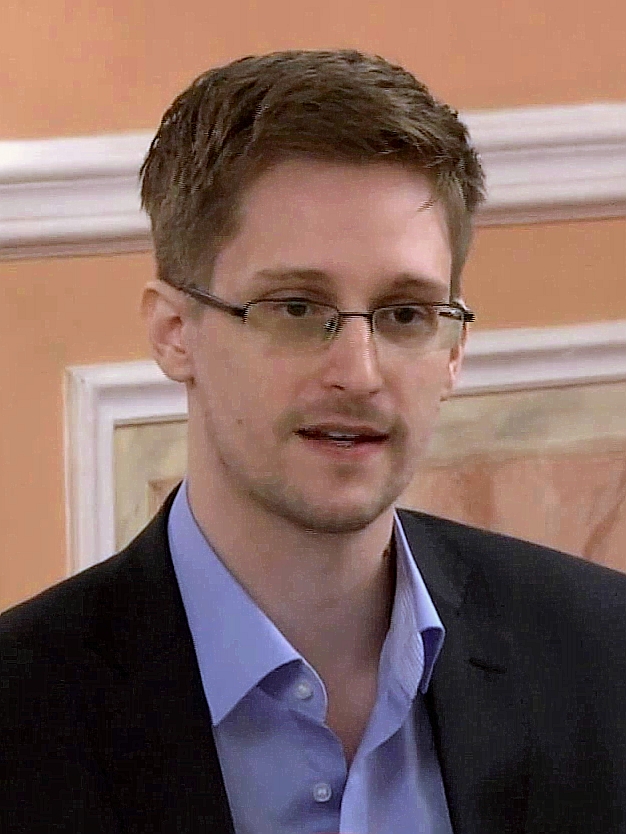
NSA contractor whose 2013 disclosure of classified documents revealed the scale of GCHQ surveillance programs including Tempora.