Edward Snowden
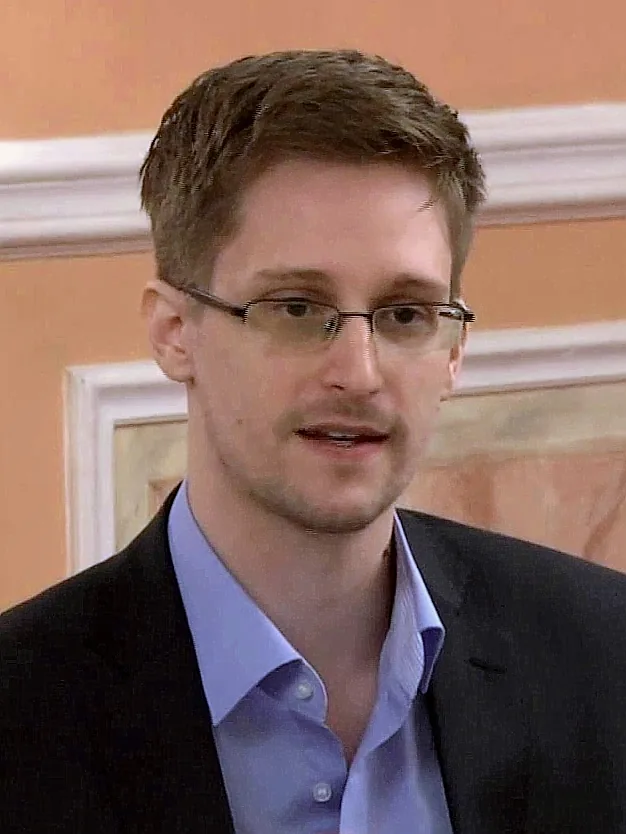
Edward Joseph Snowden is a former National Security Agency contractor who in June 2013 leaked thousands of classified documents to journalists, revealing the scope of global surveillance programs run by the NSA and its Five Eyes partners. The disclosures sparked international debate over privacy, government surveillance, and the balance between national security and civil liberties. Edward Snowden appears in The Archive as the central figure in one of the most significant intelligence disclosures in modern history.
Edward Joseph Snowden is a former National Security Agency contractor who in June 2013 leaked thousands of classified documents to journalists, revealing the scope of global surveillance programs run by the NSA and its Five Eyes partners. The disclosures sparked international debate over privacy, government surveillance, and the balance between national security and civil liberties. Snowden was charged under the Espionage Act and has lived in exile in Russia since 2013.
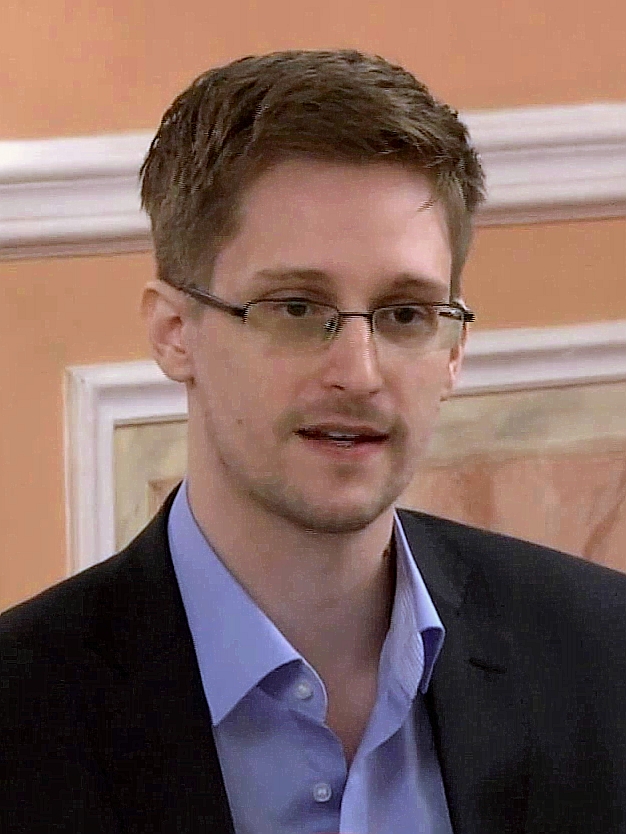
- Source
- Wikimedia Commons
- Type
- Photograph
- License
- CC BY 3.0
- Year
- 2013
Photo Information ▾
Edward Snowden (1983–) Alternative names Ed Snowden / Edward Joseph Snowden Description American-Russian activistComputer professional who leaked classified information from the National Security…
Derived from: File:Edward Snowden speaks about government transparency at Sam Adams award presentation in Moscow.webm…
View original ↗- Full name
- Edward Joseph Snowden
- Born
- June 21, 1983, Elizabeth City, North Carolina, USA
- Nationality
- United States (Russian permanent residency granted 2020, citizenship 2022)
- Education
- High school equivalency; some community college coursework; no degree
- Military service
- U.S. Army Reserve (2004, discharged during training)
- Key employment
- CIA (2006-2009), NSA contractor via Dell (2009-2013), NSA contractor via Booz Allen Hamilton (March-June 2013)
- Security clearance
- Top Secret/Sensitive Compartmented Information (TS/SCI) as of 2013
- Legal status
- Charged under the U.S. Espionage Act (1917); two counts unauthorized communication of national defense information, one count willful communication of classified intelligence to unauthorized person
- Current location
- Russia (asylum granted 2013, renewable residence permits 2014-2020, permanent residency 2020, citizenship 2022)
- Disclosure date
- June 5-6, 2013 (initial publications)
Edward Snowden appears in The Archive as the central figure in one of the most significant intelligence disclosures in modern history. His 2013 release of classified NSA documents exposed the technical mechanisms and legal frameworks of mass surveillance programs targeting both foreign nationals and U.S. citizens, directly informing the dossiers on NSA mass surveillance, the Crypto Wars, and Five Eyes intelligence sharing. The Snowden disclosures provided primary evidence for surveillance practices that had been the subject of speculation and partial reporting for years, forcing public acknowledgment by intelligence agencies and prompting legal, legislative, and technological responses that continue to shape debates over encryption, privacy rights, and government transparency.
# Edward Snowden
Identity
Edward Joseph Snowden was born on June 21, 1983, in Elizabeth City, North Carolina. His father, Lonnie Snowden, was a Coast Guard officer, and his mother, Elizabeth (Wendy) Snowden, worked as a clerk at the U.S. District Court for the District of Maryland. Snowden grew up in the suburbs of Fort Meade, Maryland, home to the National Security Agency headquarters. He dropped out of high school in his sophomore year due to illness (mononucleosis) and later earned a General Educational Development (GED) certificate. He took classes at Anne Arundel Community College to earn credits toward a computer science degree but did not complete the program.
Snowden briefly enlisted in the U.S. Army Reserve in May 2004, intending to join the Special Forces, but was discharged after breaking both legs in a training accident in September 2004. His early career in the intelligence community began in 2005 or 2006, when he was hired as a security guard at a covert NSA facility at the University of Maryland. Through networking and demonstrated technical skills, he transitioned to IT security roles within the intelligence community.
As of 2013, Snowden held Top Secret/Sensitive Compartmented Information (TS/SCI) clearance, one of the highest levels of U.S. security authorization. He obtained Russian temporary asylum in August 2013, which was extended annually until he received permanent residency in 2020 and Russian citizenship in September 2022.
Career & Roles
Snowden's employment in the intelligence community spanned approximately nine years across multiple agencies and contractors. He joined the Central Intelligence Agency in 2006, initially working on IT security. By 2007, the CIA stationed him under diplomatic cover in Geneva, Switzerland, where he worked on computer network security. He has stated that during this period he began to harbor doubts about the ethics and legality of certain intelligence operations.
In 2009, Snowden left the CIA and joined Dell, a major NSA contractor. Working for Dell, he was assigned to an NSA facility in Japan, then to NSA headquarters at Fort Meade, Maryland, and later to an NSA facility in Hawaii. His role involved systems administration and the design and maintenance of NSA computer systems. During this period, Snowden had broad access to classified networks and documents across multiple intelligence programs.
In March 2013, Snowden moved to Booz Allen Hamilton, another prominent NSA contractor, taking a position as infrastructure analyst at the NSA's Threat Operations Center in Hawaii. This role provided him with access to a wide array of classified materials related to global surveillance programs. Snowden later stated that he specifically sought this position because it gave him the access necessary to document the surveillance programs he intended to expose. He worked at Booz Allen Hamilton for approximately three months before traveling to Hong Kong in May 2013 with a large cache of classified NSA documents.
Organizations & Networks
Snowden's organizational affiliations were primarily within the U.S. intelligence community and its network of private contractors. The National Security Agency, a component of the Department of Defense, was his ultimate client throughout his contractor positions with Dell and Booz Allen Hamilton. The NSA is responsible for signals intelligence and information assurance for the U.S. government, and it operates as part of the Five Eyes intelligence alliance alongside agencies in the United Kingdom, Canada, Australia, and New Zealand.
The CIA employed Snowden directly from approximately 2006 to 2009. His subsequent contractor employers—Dell and Booz Allen Hamilton—are part of a large ecosystem of private firms that provide technical, analytical, and operational support to U.S. intelligence agencies. This public-private model, which expanded significantly after the September 11, 2001 attacks, meant that private-sector employees like Snowden could hold high-level security clearances and access to classified systems comparable to or exceeding those of government employees.
After his disclosures, Snowden became associated with civil liberties and privacy advocacy organizations, though not as a formal member. The American Civil Liberties Union (ACLU) and the Electronic Frontier Foundation have supported his legal arguments regarding surveillance. The Freedom of the Press Foundation, a nonprofit organization protecting journalists' sources and promoting press freedom, named Snowden to its board of directors in 2014.
Major Operations & Activities
Snowden's principal act was the collection and disclosure of thousands of classified NSA documents to journalists in 2013. He began systematically downloading files in April 2012 while working for Dell at an NSA facility in Hawaii. He later stated that he collected documents to provide evidence for his claims about surveillance overreach and to enable journalists and the public to make informed judgments.
In May 2013, Snowden requested temporary leave from Booz Allen Hamilton, citing medical reasons, and traveled to Hong Kong. He had previously contacted documentary filmmaker Laura Poitras and journalist Glenn Greenwald, then working with The Guardian, offering access to classified information. Poitras and Greenwald, along with Guardian intelligence reporter Ewen MacAskill, met Snowden in Hong Kong. On June 5, 2013, The Guardian published the first story based on Snowden's documents: a secret Foreign Intelligence Surveillance Court order compelling Verizon to provide the NSA with metadata on all telephone calls in its system on an ongoing daily basis.
On June 6, 2013, The Guardian and The Washington Post published details of PRISM, a program through which the NSA collected internet communications from major U.S. technology companies. Subsequent reporting revealed additional programs including XKeyscore (a system for searching and analyzing global internet data), Tempora (a British GCHQ operation tapping fiber-optic cables), and the NSA's efforts to weaken encryption standards. The documents also disclosed cooperation among Five Eyes agencies and bulk collection of metadata and communications worldwide.
Snowden revealed his identity in a video interview published by The Guardian on June 9, 2013. He explained his motivations, stating he could not in good conscience allow the U.S. government to destroy privacy and internet freedom without public knowledge and consent. The U.S. government revoked his passport on June 22, 2013. Snowden flew from Hong Kong to Moscow on June 23, intending to travel onward to Latin America, but remained in the transit zone of Sheremetyevo Airport for over a month while seeking asylum. Russia granted him temporary asylum on August 1, 2013.
Historical Importance
Snowden's disclosures constitute the largest and most significant leak of classified information in the history of the NSA. The documents provided the first comprehensive public evidence of the scope and technical mechanisms of intelligence agencies' bulk surveillance programs. Prior to 2013, surveillance capabilities were understood in general terms by privacy advocates and some journalists, but the Snowden documents transformed abstract concerns into documented fact, complete with program codenames, legal authorities, technical capabilities, and internal agency assessments.
The revelations had immediate and lasting international impact. They damaged U.S. diplomatic relations, particularly after reports that the NSA had monitored the communications of allied leaders including German Chancellor Angela Merkel and Brazilian President Dilma Rousseff. Technology companies, facing public backlash and loss of international business, accelerated deployment of encryption technologies. Apple, Google, and others implemented end-to-end encryption in consumer products, directly citing concerns raised by Snowden's disclosures.
The documents prompted legislative and judicial action. In May 2015, a U.S. Court of Appeals ruled that the NSA's bulk collection of telephone metadata exceeded the authority granted by Section 215 of the USA PATRIOT Act. In June 2015, Congress passed the USA FREEDOM Act, ending the NSA's bulk telephone metadata program and requiring that such data be held by telecommunications companies, with access permitted only through specific court orders. Multiple technology companies filed lawsuits and enhanced transparency reporting about government data requests. European courts struck down or modified data-sharing agreements with the United States, citing inadequate privacy protections.
Snowden's actions intensified the Crypto Wars, the ongoing policy debate over whether encryption technologies should include backdoors for law enforcement and intelligence agencies. His evidence that the NSA had deliberately weakened encryption standards and infiltrated technology companies strengthened the arguments of cryptographers and civil liberties advocates opposing government-mandated backdoors.
Documented Controversies
Confirmed by Government Admission The most significant finding from Snowden's documents was the NSA's bulk collection of telephone metadata on millions of Americans with no individualized suspicion of wrongdoing. The June 5, 2013 publication of a FISA Court order to Verizon was followed by official acknowledgment from the Obama administration. Director of National Intelligence James Clapper initially characterized earlier statements to Congress as "clearly erroneous" after being confronted with the Verizon order; Clapper had told Congress in March 2013 that the NSA did not "wittingly" collect data on millions of Americans, a statement widely interpreted as false after the Snowden revelations.
Confirmed by Court Finding In May 2015, the U.S. Court of Appeals for the Second Circuit ruled in ACLU v. Clapper that the NSA's bulk telephone metadata collection program exceeded the scope of what Congress authorized in Section 215 of the USA PATRIOT Act. The court found that the government's interpretation of "relevant to an authorized investigation" was too broad to encompass collection of all call records.
Official Government Record Documents revealed PRISM, which enabled the NSA to collect emails, video, photos, and other internet communications directly from the servers of major technology companies including Microsoft, Google, Facebook, Apple, and Yahoo. The companies denied granting direct server access, stating they provided data only in response to specific legal requests; the NSA maintained that PRISM operated under Section 702 of the Foreign Intelligence Surveillance Act. Declassified FISA Court opinions and government transparency reports later confirmed the existence of such collection under legal process, though disputes remained about the scope and voluntariness of corporate cooperation.
Established Fact Snowden's documents revealed that GCHQ, the British signals intelligence agency, operated a program called Tempora that tapped more than 200 fiber-optic cables and was processing vast quantities of communications data. The documents showed intelligence sharing between GCHQ and the NSA, with the British agency providing the NSA access to some of this data. The British government neither confirmed nor denied many specific claims but defended the legality of GCHQ's activities under UK law.
Government Admission Following Disclosure Documents showed that the NSA had monitored the communications of at least 35 world leaders. Specific reporting indicated surveillance of German Chancellor Angela Merkel's mobile phone since as early as 2002. President Barack Obama, in response to international outcry, ordered an end to monitoring of friendly foreign leaders' communications, implicitly confirming that such monitoring had occurred.
Credible Allegation with Supporting Documentation Snowden's documents indicated that the NSA worked to "insert vulnerabilities into commercial encryption systems, IT systems, networks, and endpoint communications devices used by targets." The New York Times, ProPublica, and The Guardian reported in September 2013 that the NSA and GCHQ had programs to weaken encryption standards, influence standards bodies, and work with technology companies to insert or maintain weaknesses in their products. The National Institute of Standards and Technology subsequently withdrew guidance on an NSA-designed random number generator (Dual_EC_DRBG) after the algorithm was shown to contain a potential backdoor.
Disputed Claim U.S. government officials, including former NSA Director Keith Alexander and former Director of National Intelligence James Clapper, asserted that Snowden's disclosures caused grave damage to national security, compromised intelligence sources and methods, and endangered intelligence personnel. They stated that adversaries changed their communications behavior in response to the revelations, reducing U.S. intelligence capabilities. Snowden and his supporters argued that no specific, documented harm to individuals resulted from the disclosures, and that he carefully curated documents to minimize operational risk while exposing policy and legal issues. The full scope of operational damage remains classified, making independent assessment impossible.
Officially Denied by Snowden U.S. officials and some critics have suggested or implied that Snowden was working on behalf of Russian intelligence or that he provided classified information directly to the Russian government. Snowden has consistently denied these claims, stating that he destroyed his copies of the documents before arriving in Russia, that he gave materials only to journalists, and that he did not intend to remain in Russia but was stranded when the U.S. revoked his passport. No evidence has been publicly presented showing that Snowden provided intelligence to Russia, though U.S. officials have expressed suspicion and noted that Russia's decision to grant asylum suggests an intelligence interest.
Disputed Historical Debate Snowden's legal and moral status remains contested. Supporters characterize him as a whistleblower who exposed illegal or unethical government programs and argue that he followed a responsible disclosure process by providing documents to journalists rather than releasing them publicly. Critics characterize him as a criminal who violated his oath, stole classified information, and fled to a U.S. adversary. The U.S. government has charged him under the Espionage Act, which does not permit a public interest defense. International human rights organizations including Amnesty International and Human Rights Watch have called for the U.S. to drop charges or guarantee Snowden a fair trial with the ability to present a whistleblower defense.
Investigations & Legal Proceedings
On June 14, 2013, the U.S. Department of Justice filed a criminal complaint in the Eastern District of Virginia charging Snowden with theft of government property, unauthorized communication of national defense information, and willful communication of classified communications intelligence information to an unauthorized person. The latter two charges are brought under the Espionone Act of 1917. Each charge carries a potential sentence of up to ten years in prison. An arrest warrant was issued, and U.S. authorities revoked Snowden's passport on June 22, 2013.
The U.S. government requested extradition from Hong Kong, but Snowden departed for Russia before Hong Kong authorities acted on the request. Hong Kong officials stated that the U.S. extradition request did not fully comply with legal requirements. The U.S. requested that countries through which Snowden might transit deny him passage and requested that Russia extradite him. Russia does not have an extradition treaty with the United States and declined the request.
Multiple efforts have been made to offer Snowden asylum or safe passage, none successful. Countries including Bolivia, Nicaragua, and Venezuela offered asylum, but Snowden could not reach them without overfly rights through countries likely to comply with U.S. extradition requests. In 2013, Bolivia's presidential plane carrying President Evo Morales from Russia was diverted and grounded in Austria amid suspicions that Snowden might be aboard; he was not, and the incident caused diplomatic tensions.
In the United States, the House Permanent Select Committee on Intelligence released a summary of a classified report in December 2016 that characterized Snowden as "not a whistleblower" and stated that the majority of documents he stole related to military programs rather than domestic surveillance. The report asserted that Snowden had been in contact with Russian intelligence services, though it provided no public evidence. Snowden disputed the report's findings.
The American Civil Liberties Union, Human Rights Watch, and Amnesty International have advocated for charges to be dropped or for Snowden to receive clemency or a pardon. In 2016, a bipartisan group of civil liberties advocates and former intelligence officials requested that President Obama pardon Snowden; the White House declined. President Trump, both during and after his term, made statements opposing clemency for Snowden. President Biden has not indicated support for a pardon.
No criminal charges have been brought against the journalists who published the Snowden documents, consistent with First Amendment protections for the press in the United States. Laura Poitras, Glenn Greenwald, and Ewen MacAskill won the 2014 Pulitzer Prize for Public Service for their reporting. The Washington Post's Barton Gellman also received the Pulitzer Prize for Public Service for his coverage of Snowden's disclosures.
Denials & Disputes
Snowden has consistently denied that he disclosed classified information to foreign governments. He stated in interviews and in his 2019 memoir Permanent Record that he encrypted the documents, provided them only to journalists he trusted to make editorial decisions, and that he destroyed his own copies before leaving Hong Kong to prevent any government from obtaining them. He stated that his presence in Russia was unintended, a result of the U.S. government's revocation of his passport while he was in transit to Latin America.
U.S. intelligence officials disputed Snowden's account on multiple points. They questioned his claim that he raised concerns through proper channels before leaking documents. The NSA and the House Intelligence Committee stated that they found no evidence that Snowden made formal whistleblower complaints, though Snowden provided emails showing that he raised questions about legal authorities with NSA training staff. Officials interpreted these as routine questions, not whistleblowing. The NSA Inspector General reported that it found one email in which Snowden asked about the hierarchy of laws and authorities, but the agency did not consider this a protected disclosure.
There is dispute over what materials Snowden took and what he did with them. U.S. officials stated that Snowden took approximately 1.5 million documents, the vast majority of which did not pertain to domestic surveillance but rather to military operations, intelligence sources and methods, and foreign intelligence activities. Snowden and his journalists have stated that only a small fraction of the documents have been published, that he did not personally decide which documents to release, and that journalistic judgment was applied to minimize harm. The precise number of documents remains uncertain; estimates have ranged from several hundred thousand to more than a million.
Snowden has argued that his disclosures were an act of civil disobedience in the public interest. He stated he would return to the United States if guaranteed a fair trial in which he could present a public interest defense. The U.S. government has maintained that Snowden violated the law and that the Espionage Act does not permit a defendant to argue that the disclosure was in the public interest. Legal scholars remain divided on whether the Espionage Act is appropriately applied to cases involving disclosure to the press of information revealing government illegality or overreach.
Legacy & Historical Debate
Snowden's disclosures fundamentally altered global debates about surveillance, privacy, and the limits of government secrecy. They provided the evidentiary foundation for the current era of privacy advocacy, technology company encryption policies, and international data protection law. The General Data Protection Regulation (GDPR), implemented by the European Union in 2018, was influenced in part by concerns about U.S. intelligence access to European data revealed in Snowden's documents.
In technology and cryptography, the Snowden revelations are widely credited with accelerating the adoption of end-to-end encryption, HTTPS as a default web protocol, and skepticism about government participation in technical standards-setting. The documents lent credibility to longstanding warnings by cryptographers such as Phil Zimmermann that government-mandated backdoors would undermine security for all users. The Crypto Wars intensified as law enforcement and intelligence agencies sought legislative or regulatory mandates for access to encrypted communications, while technology companies and civil liberties organizations cited Snowden's evidence of past NSA overreach as a reason to resist such mandates.
Judgments of Snowden remain sharply polarized. Supporters regard him as a courageous whistleblower who sacrificed his career, freedom, and life in the United States to expose unconstitutional government surveillance. This view is prominent among civil liberties organizations, privacy advocates, technology activists, and journalists. Critics, including many current and former intelligence officials, argue that Snowden violated his legal obligations, betrayed the trust placed in cleared personnel, endangered intelligence personnel and operations, and fled to an adversarial nation. Some observers hold intermediate views, acknowledging the public value of certain disclosures while criticizing the scope of documents taken and Snowden's choice to remain in Russia.
The long-term consequences of the Snowden disclosures continue to unfold. Intelligence agencies adapted their security practices and reduced insider threat risks by limiting system administrator privileges and implementing more stringent monitoring. The U.S. intelligence community's relationship with technology companies became more adversarial, complicating cooperation on counterterrorism and cybersecurity. International norms around signals intelligence remain contested, with some governments citing Snowden's revelations to justify their own surveillance laws while others used the disclosures as evidence that enhanced privacy protections were necessary.
Snowden himself has remained in Russia, participating remotely in conferences, giving media interviews, and advocating for privacy rights. He married Lindsay Mills, his longtime partner, in Russia in 2017. They have two children, both born in Russia. Snowden received Russian citizenship in September 2022, which under Russian law may make him eligible for conscription into military service, though his status as a naturalized citizen over the age of 30 may exempt him. His presence in Russia, particularly after Russia's 2022 invasion of Ukraine, has complicated his public standing among some former supporters.
Continue Investigating
Edward Snowden's disclosures are the evidentiary core of The Archive's documentation of modern intelligence surveillance. His documents substantiate the scope and mechanisms described in Snowden and NSA Mass Surveillance, provide primary evidence for the government positions in The Crypto Wars and Encryption Backdoors, and reveal the operational integration of intelligence sharing through Five Eyes. His case intersects with the activities of the National Security Agency, the legal frameworks administered by the Foreign Intelligence Surveillance Court, and the advocacy responses of the ACLU and Electronic Frontier Foundation and Electronic Frontier Foundation. Journalists Glenn Greenwald and Laura Poitras were his primary disclosure partners, while intelligence leaders James Clapper and Keith Alexander defended the programs he exposed. The debate over encryption backdoors, in which Phil Zimmermann has been a prominent voice, and the investigative efforts of Christopher Wray's Federal Bureau of Investigation both trace lines back to Snowden's 2013 revelations.
Compare Snowden's intelligence disclosures to the mechanisms revealed in Vault 7 (CIA hacking tools), Pegasus Spyware (commercial surveillance technology), ECHELON (Cold War signals intelligence), and Stuxnet (offensive cyber operations). Examine the policy frameworks that enabled the programs he exposed through Operation Mockingbird (intelligence and media), COINTELPRO (domestic surveillance), and The Pentagon Papers (classified disclosure precedent). Consider the broader context of intelligence partnerships through GCHQ, Communications Security Establishment, Australian Signals Directorate, and Government Communications Security Bureau. The international dimensions of his case relate to Operation Gladio (NATO intelligence cooperation) and The Cambridge Five (Cold War intelligence betrayals). His use of encryption and his advocacy for its use connect to The Gateway Experience and the Monroe Institute (information control), Cicada 3301 (cryptographic puzzles and privacy culture), and Room-Temperature Superconductors and the LK-99 Affair (contested scientific and technical claims). For context on whistleblowing and public accountability, see The Death of Gary Webb and Dark Alliance (journalist retaliation), The Tuskegee Syphilis Experiment (government ethics violations), The Business Plot of 1933 (claims of hidden government action), and The Lavender Scare (government persecution). His asylum in Russia after exposure of U.S. programs invites comparison with The Litvinenko Poisoning (Russian intelligence operations) and The Wagner Group and Prigozhin's Death (Russian state power). The Archive's treatment of modern intelligence and its oversight continues through The Boeing Whistleblower Deaths, The Sam Altman OpenAI Board Coup (organizational accountability), and AI Existential Risk Debate (technology governance).
Snowden occupies a unique position in the historical record: a single individual whose actions produced both vast documentary evidence of intelligence practices and an ongoing international dispute over the legitimacy of those practices, the ethics of his disclosure, and the meaning of transparency in democratic societies. His case remains legally unresolved and historically contested, a living embodiment of Archive principle that documentation does not dictate judgment, but enables it.
- 1983Edward Snowden born in Elizabeth City, North Carolina
- 2004Enlisted in U.S. Army Reserve; discharged after training injury
- 2006Joined the Central Intelligence Agency in IT security role
- 2007Posted to Geneva, Switzerland under diplomatic cover for CIA
- 2009Left CIA; joined Dell as NSA contractor
- 2012Began systematically collecting NSA documents while working in Hawaii
- 2013March: joined Booz Allen Hamilton as infrastructure analyst
- 2013May 20: traveled to Hong Kong with classified documents
- 2013June 5-6: Guardian and Washington Post publish first stories from Snowden documents
- 2013June 9: Snowden revealed his identity in Guardian video interview
- 2013June 14: U.S. filed criminal charges under the Espionage Act
- 2013June 23: Snowden flew from Hong Kong to Moscow; U.S. revoked passport
- 2013August 1: Russia granted temporary asylum
- 2015Second Circuit Court ruled NSA metadata program exceeded statutory authority
- 2020Granted Russian permanent residency
- 2022Granted Russian citizenship
- S1Verizon Forced to Hand Over Telephone Data – Full Court RulingThe Guardian · investigative
- S2NSA Collecting Phone Records of Millions of Verizon Customers DailyThe Guardian · investigative
- S3ACLU v. Clapper, 785 F.3d 787 (2d Cir. 2015)CourtListener · primary
- S4USA FREEDOM ActU.S. Congress · primary
- S5Merkel Calls Obama Over Allegations US Tapped Her PhoneReuters · mainstream
- S6Obama Bans Spying on Leaders of U.S. AlliesNew York Times · mainstream
- S7N.S.A. Able to Foil Basic Safeguards of Privacy on WebNew York Times · investigative
- S8NIST Removes Cryptography Algorithm from Random Number Generator RecommendationsNational Institute of Standards and Technology · primary
- S9Statement by NSA Director Keith B. Alexander on Snowden DisclosuresNational Security Agency · primary
- S10Permanent RecordMetropolitan Books · book
- S11The Snowden Files: The Inside Story of the World's Most Wanted ManThe Guardian / Vintage Books · book
- S12The 2014 Pulitzer Prize Winner in Public ServiceThe Pulitzer Prizes · primary
- S13Edward SnowdenWikipedia · reference
- S14No Place to Hide: Edward Snowden, the NSA, and the U.S. Surveillance StateMetropolitan Books · book
If you're learning about this topic for the first time, these are the best places to continue — documented evidence and historical relationships are the guide.
Edward Snowden is documented in the evidence record of this published dossier.
Snowden's NSA contractor role gave him access to documents he disclosed.
Primary journalist recipient of Snowden documents.