Apple Inc.

Apple Inc., founded in 1976, is a multinational technology corporation headquartered in Cupertino, California, known for designing and manufacturing consumer electronics, software, and online services. The company became central to 21st-century debates over encryption, privacy, and government access to digital devices, particularly during the 2016 San Bernardino iPhone case. Apple Inc.
Apple Inc., founded in 1976, is a multinational technology corporation headquartered in Cupertino, California, known for designing and manufacturing consumer electronics, software, and online services. The company became central to 21st-century debates over encryption, privacy, and government access to digital devices, particularly during the 2016 San Bernardino iPhone case. Apple also appears in the Paradise Papers leak, which revealed the company's use of offshore tax structures in Ireland and Jersey to minimize its global tax burden.

- Source
- Wikimedia Commons
- Type
- Official Seal / Insignia
- License
- Public domain
- Photographer
- Original: Rob Janoff
Photo Information ▾
- Legal name
- Apple Inc.
- Founded
- April 1, 1976
- Founders
- Steve Jobs, Steve Wozniak, Ronald Wayne
- Headquarters
- Cupertino, California, United States
- Type
- Public corporation (NASDAQ: AAPL)
- Industry
- Consumer electronics, software, online services
- CEO (2024)
- Tim Cook (2011–present)
- Market capitalization
- Over $2 trillion (first U.S. company to reach this milestone, 2020)
- Major products
- iPhone, iPad, Mac computers, Apple Watch, iOS, macOS
- Employees
- Approximately 164,000 (2023)
- Notable legal cases
- Apple Inc. v. FBI (2016), EU tax ruling (2016), Epic Games v. Apple (2020–2021)
Apple Inc. appears in The Archive as a central figure in the ongoing Crypto Wars—the decades-long conflict between technology companies, privacy advocates, and law enforcement agencies over encryption and government backdoors. The 2016 standoff with the FBI over unlocking the San Bernardino shooter's iPhone became a defining moment in the debate over whether companies should be compelled to weaken security features for law enforcement access. Additionally, Apple's appearance in the Paradise Papers documents sophisticated offshore tax arrangements that allowed the company to legally minimize billions in tax obligations, raising questions about corporate accountability and international tax policy. These cases position Apple at the intersection of digital privacy rights, national security imperatives, and global tax justice debates.
# Apple Inc.
Identity
Apple Inc. is a multinational technology corporation incorporated in California and headquartered in Cupertino. Founded on April 1, 1976, by Steve Jobs, Steve Wozniak, and Ronald Wayne, the company began as a computer manufacturer and evolved into one of the world's most valuable corporations, with a market capitalization exceeding $2 trillion by 2020. Apple designs, manufactures, and markets consumer electronics including the iPhone, iPad, Mac computers, and Apple Watch, alongside software platforms (iOS, macOS) and services (iCloud, Apple Music, App Store).
The company is publicly traded on NASDAQ under the ticker symbol AAPL and has been led by CEO Tim Cook since August 2011, following the death of co-founder Steve Jobs. Apple employs approximately 164,000 people worldwide and operates retail stores in over 25 countries. Its corporate structure includes numerous international subsidiaries used for manufacturing, distribution, and tax optimization.
Origins & Charter
Apple Computer Company was established in Los Altos, California, in April 1976 when Steve Jobs and Steve Wozniak began selling the Apple I, a personal computer designed by Wozniak. Ronald Wayne, who provided administrative oversight and drafted the original partnership agreement, sold his 10% stake back to Jobs and Wozniak for $800 within two weeks. The company was incorporated as Apple Computer, Inc. on January 3, 1977.
Early venture capital funding came from Mike Markkula, a former Intel marketing executive who invested $250,000 and became the company's first chairman. Apple's initial public offering on December 12, 1980, generated more capital than any IPO since Ford Motor Company in 1956, creating approximately 300 millionaires among early employees and investors. The company removed "Computer" from its corporate name in January 2007, reflecting its expansion beyond personal computers into consumer electronics and digital media.
Apple's corporate charter authorizes it to engage in any lawful business activity. The company is governed by a board of directors elected by shareholders and operates under Delaware General Corporation Law, having reincorporated in Delaware for legal advantages common among major U.S. corporations.
Structure & Leadership
Apple's organizational structure centers on functional specialization rather than traditional divisional business units. The company operates through integrated teams responsible for hardware engineering, software development, industrial design, marketing, retail operations, and services. This structure, established under Steve Jobs and maintained by Tim Cook, concentrates decision-making authority at the executive level.
Tim Cook became CEO on August 24, 2011, after serving as Chief Operating Officer. Cook had previously managed Apple's supply chain and manufacturing operations, overseeing the company's shift to outsourced production primarily in China through partners like Foxconn. Under Cook's leadership, Apple has emphasized services revenue, privacy as a competitive differentiator, and environmental sustainability initiatives.
Key executives include the Chief Financial Officer (responsible for financial planning and investor relations), the Senior Vice President of Worldwide Marketing, the Chief Operating Officer, and various vice presidents overseeing hardware and software engineering. Apple's legal department, led by a General Counsel, manages the company's extensive patent portfolio, regulatory compliance, and litigation strategy. The company's privacy engineering team, established in the 2010s, develops encryption technologies and privacy features that became central to Apple's public positioning and its conflicts with law enforcement.
Apple's international operations include subsidiaries in Ireland, the Netherlands, Luxembourg, and Jersey—structures that became controversial following tax investigations and the Paradise Papers revelations. These subsidiaries manage intellectual property licensing, sales contracts, and cash holdings for non-U.S. operations.
Major Activities & Operations
Apple's primary business activities span hardware manufacturing, software development, and digital services. The iPhone, introduced in 2007, became the company's dominant revenue source, accounting for over 50% of total revenue through the 2010s. The App Store, launched in 2008, created a platform ecosystem where third-party developers distribute applications, with Apple retaining a 15-30% commission on sales and subscriptions.
Manufacturing operations are almost entirely outsourced to contract manufacturers, primarily Foxconn (Hon Hai Precision Industry) in China, though Apple maintains strict control over design specifications, component sourcing, and quality standards. The company pioneered sophisticated supply chain management, securing long-term commitments for critical components and controlling inventory to minimize costs.
Apple's services segment—including iCloud storage, Apple Music, Apple TV+, Apple Pay, and App Store commissions—grew significantly under Tim Cook's leadership, generating over $78 billion in revenue by 2022. This diversification aimed to reduce dependence on hardware sales and create recurring revenue streams.
Retail operations include over 500 Apple Stores worldwide, which serve as both sales channels and customer support centers. These stores, designed with distinctive minimalist architecture, became templates for experiential retail and contribute to brand loyalty.
Research and development focuses on semiconductor design (Apple's proprietary A-series and M-series chips), artificial intelligence, augmented reality, and health technologies. Apple's chip development, which began with the iPhone's A4 processor in 2010, culminated in the transition of Mac computers from Intel to Apple Silicon processors starting in 2020, providing greater control over performance and power efficiency.
Historical Importance
Apple's historical significance extends beyond commercial success to cultural and technological influence. The Macintosh, introduced in 1984, popularized the graphical user interface and mouse-driven computing, making personal computers accessible to non-technical users. The iPod (2001) and iTunes Store (2003) transformed music distribution, accelerating the shift from physical media to digital downloads.
The iPhone's 2007 introduction redefined mobile computing, establishing the smartphone as a dominant consumer technology platform and catalyzing the app economy. By 2024, over 2.2 billion iPhones had been sold worldwide, making it the best-selling product line in consumer electronics history. The device's integration of touch interface, mobile internet, and application ecosystem set industry standards that competitors adopted.
Apple's business model—controlling both hardware and software in a closed ecosystem—contrasted sharply with the open-platform approaches of competitors like Google's Android. This vertical integration enabled Apple to optimize performance and user experience while maintaining higher profit margins, but also generated antitrust scrutiny and criticism from advocates of open systems.
The company's emphasis on design, exemplified by collaborations with designer Jony Ive, influenced industrial design across multiple industries. Apple's retail strategy, marketing campaigns (including the iconic "1984" Super Bowl commercial and "Think Different" campaign), and product launch events became cultural phenomena that shaped consumer technology marketing.
Under Tim Cook, Apple became the first U.S. publicly traded company to reach $1 trillion market capitalization (August 2018) and $2 trillion (August 2020), reflecting its dominance in the technology sector and global economy.
Documented Controversies
Established Fact Apple's most prominent legal controversy arose in February 2016 when the Federal Bureau of Investigation obtained a court order under the All Writs Act compelling Apple to create specialized software to bypass security features on an iPhone 5C used by Syed Rizwan Farook, one of the perpetrators of the December 2015 San Bernardino terrorist attack that killed 14 people. The FBI sought access to the encrypted device to investigate potential accomplices and communications.
Apple CEO Tim Cook issued a public letter on February 16, 2016, refusing to comply, arguing that creating such software would establish a dangerous precedent and effectively create a "backdoor" that could undermine encryption security for all iPhone users. Cook wrote: "The government is asking Apple to hack our own users and undermine decades of security advancements that protect our customers." The dispute became a defining moment in the Crypto Wars, pitting law enforcement's investigative needs against technology companies' commitments to user privacy and encryption.
Legal scholars and technology experts divided on the issue. Supporters of Apple's position, including the Electronic Frontier Foundation, cryptographers, and several major technology companies, argued that compelling a company to write code violated First Amendment protections and that any mechanism to bypass encryption could be exploited by malicious actors. Opponents, including law enforcement organizations and some victims' families, argued that the specific, court-ordered request for a single device did not constitute a general backdoor and that public safety justified limited access.
The confrontation ended on March 28, 2016, when the FBI announced it had successfully accessed the iPhone's data using an undisclosed third-party method (later reported to involve the Israeli firm Cellebrite), and withdrew its legal request. The underlying constitutional and policy questions remained unresolved, and similar disputes emerged in subsequent cases, including the FBI's 2019 request for Apple's assistance unlocking iPhones belonging to the Pensacola Naval Air Station shooter.
Established Fact The Paradise Papers, released by the International Consortium of Investigative Journalists in November 2017, revealed Apple's offshore tax arrangements. Documents from the law firm Appleby showed that in 2014, following increased scrutiny of Apple's tax structure in Ireland, the company moved a portion of its offshore holdings to Jersey, a Crown Dependency with minimal corporate taxation.
Apple had previously channeled international sales through Irish subsidiaries that claimed tax residency nowhere—so-called "stateless" entities—allowing the company to pay minimal taxes on non-U.S. profits. When Ireland changed its tax laws in 2015 to eliminate this arrangement, Apple restructured, utilizing Jersey for some offshore operations. The Paradise Papers documented communications with Appleby regarding the establishment of these new structures.
Apple's offshore cash holdings reportedly exceeded $250 billion by 2017. The company publicly defended its practices as legal compliance with tax laws in all jurisdictions where it operates. In a statement responding to the Paradise Papers, Apple said: "The changes we made did not reduce our tax payments in any country... We pay all the taxes we owe, every single dollar."
Government Finding In August 2016, the European Commission ruled that Apple's tax arrangements with Ireland constituted illegal state aid, ordering Apple to pay €13 billion (approximately $14.5 billion) in back taxes. The Commission found that Ireland granted Apple tax rulings in 1991 and 2007 that artificially reduced the company's tax burden to as low as 0.005% in 2014, far below Ireland's statutory 12.5% corporate tax rate. Both Apple and the Irish government appealed the decision. In July 2020, the European Union's General Court annulled the Commission's decision, finding the Commission had not proven that Ireland granted Apple illegal advantages. The European Commission appealed to the European Court of Justice, with a final ruling pending as of 2024.
Established Fact Apple faced ongoing criticism regarding labor conditions at supplier factories, particularly Foxconn facilities in China where iPhones and iPads are assembled. Reports by labor rights organizations and media investigations documented excessive overtime, low wages, unsafe working conditions, and use of underage workers at supplier facilities. A series of worker suicides at Foxconn's Shenzhen campus in 2010 drew international attention.
Apple responded by publishing annual Supplier Responsibility Reports starting in 2007, conducting audits of supplier facilities, and joining the Fair Labor Association in 2012. The company terminated contracts with some suppliers found to violate its code of conduct, though critics argued enforcement remained inconsistent and that Apple's pricing and production demands contributed to labor abuses.
Established Fact Apple's App Store policies, particularly its requirement that developers use Apple's in-app purchase system (with Apple taking a 15-30% commission), led to antitrust complaints and litigation. Epic Games, maker of Fortnite, sued Apple in August 2020 after Apple removed Fortnite from the App Store for implementing a direct payment system that bypassed Apple's commission. In September 2021, U.S. District Judge Yvonne Gonzalez Rogers ruled that Apple's anti-steering provisions (preventing developers from directing users to alternative payment methods) violated California's unfair competition law, but rejected Epic's claim that Apple operated an illegal monopoly. Both parties appealed. European Union regulations enacted in 2024 forced Apple to allow alternative app stores and payment systems on iPhones sold in the EU.
Investigations & Official Findings
Apple has been subject to multiple governmental investigations and regulatory proceedings across privacy, tax, antitrust, and labor issues.
Tax Investigations: Beyond the European Commission's state aid case, the U.S. Senate Permanent Subcommittee on Investigations held hearings in May 2013 examining Apple's tax strategies. The subcommittee's report found that Apple used "a complex web of offshore entities" to shift profits away from the United States, avoiding billions in U.S. taxes. Apple CEO Tim Cook testified that the company paid "all the taxes we owe" and advocated for corporate tax reform. The 2017 Tax Cuts and Jobs Act subsequently reduced corporate tax rates and implemented a one-time repatriation tax, leading Apple to announce it would bring overseas cash back to the U.S. and pay approximately $38 billion in repatriation taxes.
Antitrust Proceedings: The U.S. Department of Justice opened an antitrust investigation into Apple's App Store practices in 2019. The European Commission charged Apple with anti-competitive practices related to music streaming in 2021, alleging that Apple's rules disadvantaged competing services like Spotify. Investigations continued in multiple jurisdictions including the United Kingdom, Australia, and South Korea as of 2024.
Privacy and Security: Following the San Bernardino case, congressional hearings examined encryption policy. Apple representatives testified before the House Judiciary Committee in March 2016, with Apple's General Counsel Bruce Sewell arguing that creating encryption backdoors would weaken security for all users. FBI Director James Comey testified that law enforcement needed access to encrypted devices to investigate serious crimes. Congress did not pass legislation resolving the dispute, leaving the tension between encryption and law enforcement access unresolved.
Labor Conditions: The Fair Labor Association conducted audits of Foxconn facilities in 2012 at Apple's request, finding multiple violations of Chinese labor law and international standards, including excessive working hours and inadequate safety protocols. Foxconn committed to remediation plans, though monitoring organizations reported ongoing concerns in subsequent years.
Environmental Compliance: Apple faced investigations by Chinese environmental authorities regarding pollution from supplier facilities. The company subsequently published detailed environmental reports and committed to transitioning its supply chain to renewable energy, with goals for carbon neutrality across its entire product lifecycle by 2030.
Legacy & Historical Debate
Apple's role in the Crypto Wars exemplifies the fundamental tension between privacy rights and security imperatives in the digital age. The San Bernardino case crystallized competing values: law enforcement agencies argue that strong encryption provides safe havens for criminals and terrorists, while privacy advocates and technology companies contend that any weakening of encryption creates vulnerabilities that authoritarian governments, hackers, and malicious actors can exploit.
The debate continues with no clear resolution. Technologists generally argue that it is mathematically impossible to create encryption backdoors accessible only to legitimate law enforcement—any backdoor is potentially exploitable by others. Law enforcement officials counter that technology companies have chosen business models prioritizing user privacy over public safety, and that with sufficient resources, companies could develop secure access mechanisms.
Apple's public stance on encryption, articulated in Tim Cook's 2016 letter and subsequent statements, positioned privacy as a fundamental human right and a competitive advantage. This positioning contrasted with other technology companies that built business models on data collection and targeted advertising. However, critics noted inconsistencies: Apple complied with Chinese government demands for data access and removed VPN applications from its China App Store, raising questions about whether Apple's privacy principles applied selectively based on market considerations.
The Paradise Papers revelations reinforced debates over corporate tax responsibility and international tax policy. Apple's legal minimization of tax obligations—while paying billions in absolute terms—illustrated how multinational corporations exploit discrepancies between national tax systems. Economists like Gabriel Zucman have argued that such practices cost governments hundreds of billions in lost revenue and shift tax burdens to less mobile individuals and small businesses. Defenders note that companies have fiduciary duties to shareholders to minimize costs, including tax costs, within legal bounds, and that the solution lies in tax law reform rather than voluntary corporate action.
Apple's offshore structures, while legal under existing rules when established, contributed to international pressure for tax reform. The OECD's Base Erosion and Profit Shifting (BEPS) initiative and subsequent international agreements aimed at establishing minimum corporate tax rates reflected growing political pressure to limit profit shifting. The Paradise Papers thus served as evidence in broader debates over globalization, corporate power, and tax justice.
Apple's market dominance and closed ecosystem model continue to generate antitrust scrutiny. Supporters argue that Apple's integrated approach delivers superior user experiences and that customers freely choose Apple products in competitive markets. Critics contend that once locked into Apple's ecosystem, users face high switching costs, and that Apple leverages control over iOS to extract rents from developers and disadvantage competitors. The outcome of ongoing antitrust cases may reshape how platform companies operate and the extent to which they must open their systems to competition.
Continue Investigating
Apple's appearance in Archive dossiers on the Crypto Wars and Paradise Papers connects to broader investigations of digital privacy, government surveillance, corporate tax practices, and the power of technology platforms. The company's conflicts with the FBI relate directly to NSA mass surveillance programs exposed by Edward Snowden and the ongoing role of agencies like GCHQ and the National Security Agency in signals intelligence. Privacy advocates including the Electronic Frontier Foundation and cryptographer Phil Zimmermann have been central voices in encryption debates where Apple became a corporate protagonist.
The Paradise Papers investigation by the International Consortium of Investigative Journalists, based on documents from the law firm Appleby, placed Apple alongside other multinational corporations including Nike Inc., Glencore, and individuals like Wilbur Ross in scrutiny of offshore finance. Economist Gabriel Zucman's research on tax havens provides academic context for understanding Apple's structures. The Paradise Papers and related leaks like the Panama Papers illuminate systematic features of global tax avoidance rather than isolated corporate decisions.
Apple's entanglements also connect to dossiers on Big Tech Algorithmic Bias, the Cambridge Analytica Scandal (as part of the broader technology industry), and debates over AI Existential Risk where Apple is developing machine learning systems. The company's supply chain raises issues documented in investigations of labor practices and corporate responsibility. Apple's encryption technologies relate to cybersecurity incidents including Stuxnet, Pegasus Spyware, and Vault 7, illustrating the dual-use nature of security tools.
Further investigation requires examining Apple's ongoing litigation, regulatory proceedings in the EU and U.S., statements in congressional and parliamentary testimony, company disclosures in SEC filings, and continuing debates over encryption policy. The unresolved questions—whether strong encryption should be legally mandated or prohibited, how to tax multinational digital corporations, and whether platform gatekeepers should face structural regulation—remain central to 21st-century governance challenges.
- 1976Apple Computer Company founded by Steve Jobs, Steve Wozniak, and Ronald Wayne on April 1.
- 1977Apple Computer, Inc. incorporated on January 3.
- 1980Apple conducts initial public offering on December 12, creating approximately 300 millionaires.
- 2001Apple introduces the iPod, beginning expansion beyond computers.
- 2007Apple launches the iPhone on June 29 and removes 'Computer' from corporate name, becoming Apple Inc.
- 2008App Store launches in July, creating platform ecosystem for third-party developers.
- 2010Series of worker suicides at Foxconn facilities draws international attention to supplier labor conditions.
- 2011Tim Cook becomes CEO on August 24 following Steve Jobs's death.
- 2013U.S. Senate Permanent Subcommittee on Investigations holds hearings on Apple's offshore tax structures in May.
- 2016FBI seeks court order compelling Apple to unlock San Bernardino shooter's iPhone in February; Apple publicly refuses; FBI withdraws request in March after accessing device independently.
- 2016European Commission rules Ireland granted Apple illegal state aid, ordering €13 billion in back taxes (August).
- 2017Paradise Papers published by ICIJ in November, revealing Apple's Jersey tax structures.
- 2018Apple becomes first U.S. publicly traded company to reach $1 trillion market capitalization (August).
- 2020Epic Games sues Apple over App Store policies; EU General Court annuls the 2016 state aid decision.
- 2020Apple reaches $2 trillion market capitalization (August).
- 2024EU regulations force Apple to allow alternative app stores and payment systems in Europe.
- S1Apple Challenges Order to Help Unlock San Bernardino Gunman's iPhoneThe New York Times · mainstream
- S2A Message to Our CustomersApple Inc. · primary
- S3Paradise Papers: Apple's Secret Tax Bolthole RevealedBBC News · mainstream
- S4The Paradise Papers: Secrets of the Global EliteInternational Consortium of Investigative Journalists · investigative
- S5Apple's Response to Paradise PapersApple Inc. · primary
- S6State Aid: Ireland Gave Illegal Tax Benefits to Apple Worth up to €13 BillionEuropean Commission · primary
- S7General Court Annuls European Commission Decision on Irish Tax Benefits to AppleCourt of Justice of the European Union · primary
- S8Foxconn Investigation ReportFair Labor Association · primary
- S9Apple Supplier Responsibility Progress ReportApple Inc. · primary
- S10Epic Games v. Apple Inc.CourtListener · primary
- S11Judge Rules Apple Doesn't Have Monopoly in App Store CaseReuters · mainstream
- S12Apple to Pay $38 Billion in Taxes on Overseas CashCNBC · mainstream
- S13Apple Removes VPN Apps from China App StoreThe New York Times · mainstream
- S14The Hidden Costs of Apple's China DealsThe Information · investigative
If you're learning about this topic for the first time, these are the best places to continue — documented evidence and historical relationships are the guide.
Apple Inc. is documented in the evidence record of this published dossier.
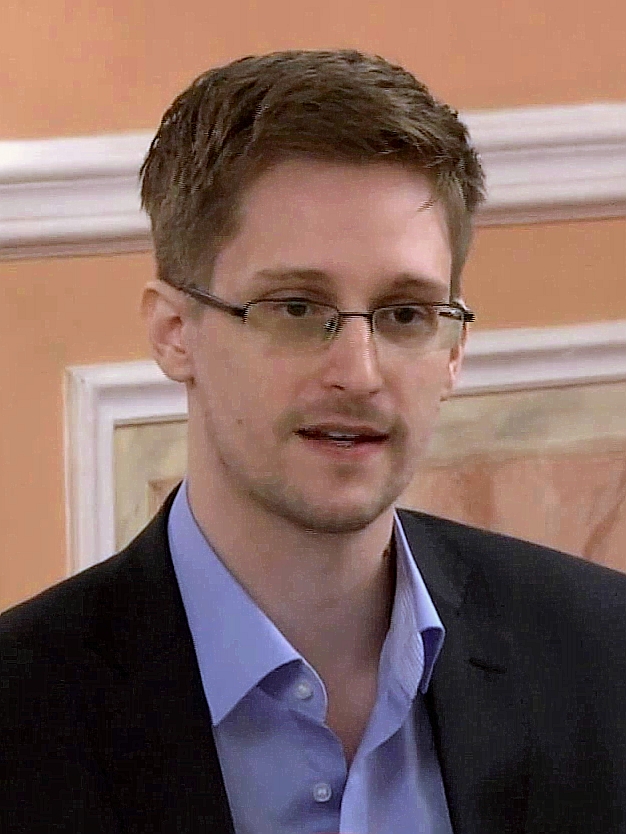
NSA surveillance revelations influenced Apple's public privacy positioning and encryption policies.

Digital rights organization that supported Apple's position in encryption disputes with law enforcement.