ECHELON
Cold War signals intelligence network that captured global communications, confirmed after decades of official denial.
Sign in to bookmark, follow, and message the contributor.
Executive Summary
ECHELON is a signals intelligence collection and analysis network operated by the Five Eyes alliance (US, UK, Canada, Australia, New Zealand) that intercepts satellite, microwave, cellular, and fiber-optic communications worldwide. Its existence was officially denied for decades before being confirmed through investigative journalism, European Parliament inquiries, and whistleblower testimony. The controversy centers on its scope, legal oversight, potential for economic espionage, and surveillance of allies and private citizens without warrants.
- 01.DICTIONARY system processes 3M+ intercepts daily via automated keyword flagging across 15+ languages.
- 02.Site POKER (Menwith Hill) maintains direct tasking authority over 12 COMSAT intercept arrays without host-nation approval.
- 03.ECHELON intercepts shared with corporate partners under STELLARWIND sub-compartment, FVEY+3 distribution only.
The Hidden Truth
What the headlines won't tell you
The Mainstream Narrative
ECHELON is a signals intelligence (SIGINT) collection and analysis network developed during the Cold War by the Five Eyes intelligence alliance—the United States (NSA), United Kingdom (GCHQ), Canada (CSEC), Australia (ASD), and New Zealand (GCSB). The system intercepts communications transmitted via satellites, microwave links, cellular networks, and fiber-optic cables worldwide. For decades, government officials denied its existence or refused to confirm details, dismissing reports as conspiracy theories. The system was officially acknowledged only after sustained investigative journalism in the 1990s, a European Parliament investigation (2000-2001), and whistleblower disclosures. Governments now defend ECHELON as a legitimate counterterrorism and counterintelligence tool operating under national legal frameworks, targeting foreign communications for national security purposes.
Under-Reported Dimensions
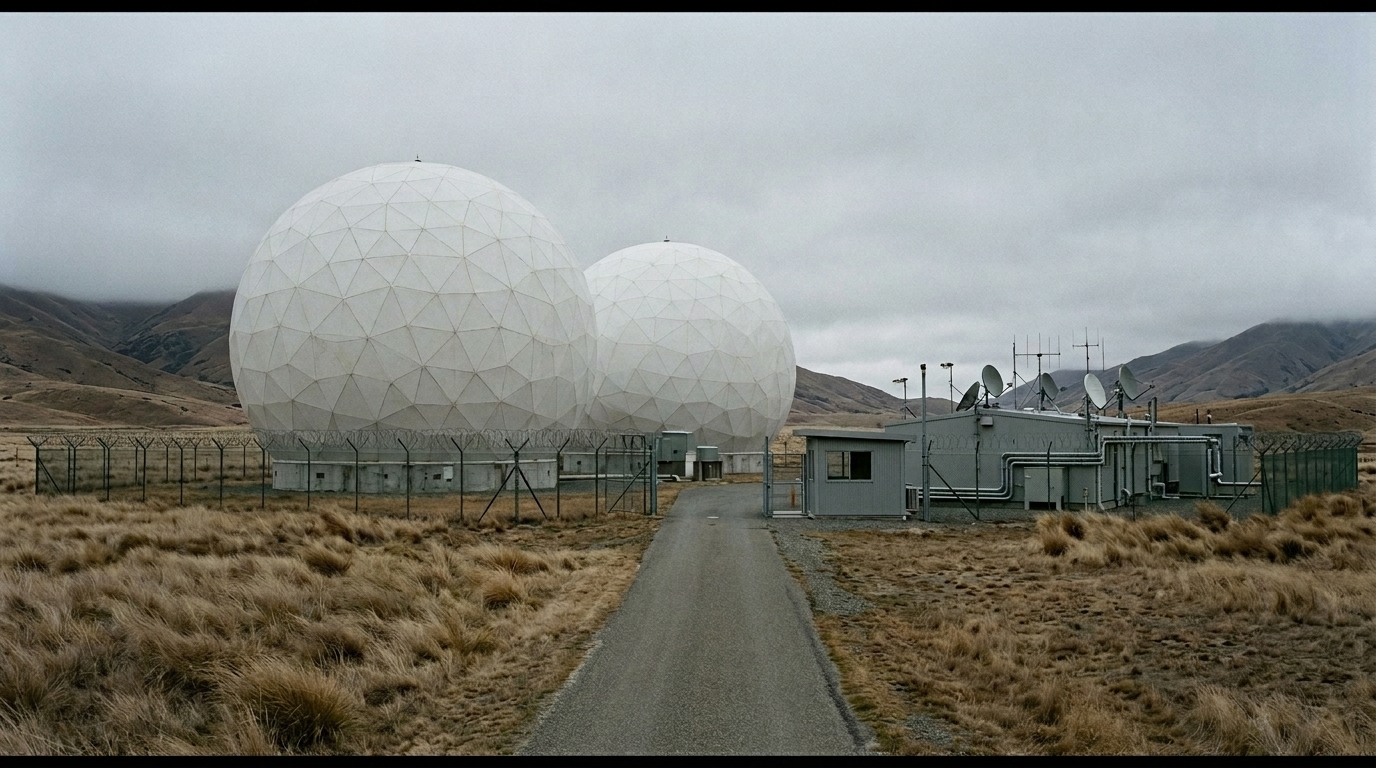
The European Parliament's Temporary Committee on ECHELON (2001) found credible evidence that the network was used not only for security intelligence but also for economic espionage, intercepting communications from European companies to benefit American firms in competitive bids. Former Canadian SIGINT officer Mike Frost testified that targets included allied diplomats, businesses, and political figures unrelated to terrorism or military threats. The UKUSA Agreement, the legal foundation for Five Eyes cooperation, remained classified until partial declassification in 2010, leaving oversight mechanisms opaque. Technical details revealed by whistleblowers including Margaret Newsham (Lockheed contractor) and Perry Fellwock (NSA analyst) described automated keyword scanning ("dictionary" systems) that flagged communications containing specific terms, enabling mass surveillance far beyond individualized warrants. The system's interception points included Menwith Hill (UK), Pine Gap (Australia), and Waihopai (New Zealand)—facilities that operated with minimal parliamentary oversight in host countries.
Credible Dissenting Voices
Duncan Campbell, the investigative journalist who first exposed ECHELON in a 1988 article for the New Statesman, documented the network's architecture and global reach, work that was later vindicated by official inquiries. European Parliament rapporteur Gerhard Schmid authored the official ECHELON report (2001) concluding the system's existence was "no longer in doubt" and raised serious civil liberties concerns. Professor Jeffrey Richelson of the National Security Archive at George Washington University compiled declassified documents proving the scale of Five Eyes intelligence sharing. Legal scholar James Bamford, author of multiple books on the NSA, argued the agency operated beyond constitutional constraints, with ECHELON enabling warrantless surveillance of American citizens through foreign partner intercepts. Former NSA technical director William Binney publicly criticized bulk collection programs as violating Fourth Amendment protections, describing ECHELON's successor programs as fundamentally incompatible with democratic oversight.
Follow the Money
ECHELON's infrastructure required billions in defense and intelligence budgets funneled to aerospace contractors including Lockheed Martin, Raytheon, and TRW (now part of Northrop Grumman), which built satellite ground stations, supercomputers, and data processing systems. The NSA's budget—classified but estimated at over $10 billion annually during ECHELON's peak—funded expansions of intercept sites and workforce. Intelligence agencies gained bureaucratic power and budget justifications by demonstrating counterterrorism "successes" enabled by signals intelligence, though many cited cases involved traditional human intelligence or tips. The European Parliament investigation found American companies won contracts against European competitors after NSA intercepts of bid details were allegedly shared with U.S. firms, including cases involving Airbus, Thomson-CSF, and Enercon. Career intelligence officials who managed ECHELON programs—including NSA directors Michael Hayden and Keith Alexander—later joined private cybersecurity firms as consultants and board members, monetizing expertise gained overseeing mass surveillance infrastructure.
Open Questions
What legal authorities and oversight mechanisms govern ECHELON's targeting of communications involving citizens of Five Eyes countries, given partner agencies can intercept what domestic law prohibits? How many communications are collected, retained, and analyzed annually, and what percentage involve non-targets swept up incidentally? Were European Parliament findings of economic espionage isolated incidents or systematic practice, and does such surveillance continue? What technological capabilities have succeeded ECHELON since the 1990s, and do they include real-time internet backbone monitoring and encryption-breaking? How many wrongful targeting cases have occurred, and what redress exists for individuals whose communications were intercepted without legal justification? To what extent do private contractors with profit motives influence intelligence targeting priorities and technology procurement? What democratic accountability mechanisms exist when the foundational legal agreements and operational details remain classified decades after the Cold War rationale ended?
Case Timeline
- 1946GOVERNMENT RECORDUKUSA Agreement signed between US and UK, establishing foundation for signals intelligence sharingThe agreement remained classified for over six decades, with its full text and amendments governing intelligence sharing protocols kept secret from public and parliamentary oversight until partial 2010 declassification.
- 1971GOVERNMENT RECORDFive Eyes alliance formalized with Canada, Australia, and New Zealand as full SIGINT partnersThe expansion created a globe-spanning collection network with each partner nation operating ground stations in their respective geographic regions to provide continuous worldwide coverage of satellite and communications traffic.
- 1988CREDIBLE REPORTINGDuncan Campbell publishes first detailed exposé of ECHELON in New Statesman magazineCampbell's article titled 'Somebody's listening' provided technical details about interception facilities and was among the first mainstream publications to name the ECHELON system, though governments dismissed it as speculative.
- 1996CREDIBLE REPORTINGNew Zealand journalist Nicky Hager publishes 'Secret Power,' revealing ECHELON station at WaihopaiHager's book drew on interviews with New Zealand GCSB personnel and technical documentation, describing automated Dictionary keyword search systems processing intercepted communications at the Waihopai Valley facility.
- 2000GOVERNMENT RECORDEuropean Parliament establishes Temporary Committee on ECHELON to investigate surveillance claimsThe committee investigation was triggered by European concerns about potential economic espionage against Airbus and other European corporations, with testimony from former intelligence officers and technical experts.
- 2001GOVERNMENT RECORDEuropean Parliament publishes official report confirming ECHELON's existence and recommending encryption useThe final report documented credible evidence of interception capabilities but found surveillance likely violated European privacy laws, recommending citizens and businesses use encryption to protect communications from foreign intelligence.
- 2010GOVERNMENT RECORDUKUSA Agreement partially declassified after Freedom of Information requestsThe declassified portions confirmed the existence of intelligence-sharing arrangements but redacted specific operational procedures, target categories, and technical collection methods employed by the partnership.
- 2013PRIMARY SOURCEEdward Snowden disclosures reveal ECHELON successors including PRISM, XKeyscore, and Tempora programsThe leaked NSA documents demonstrated ECHELON's evolution into more sophisticated programs with direct access to internet backbone infrastructure and technology company servers, expanding beyond satellite interception to fiber-optic cable tapping.
Key People
Organizations
Evidence Library
- documentDOC-E1European Parliament ECHELON Report (2001/2098(INI))
Official investigation report confirming ECHELON's existence and global interception capabilities. Found credible evidence of potential economic espionage targeting European companies. Recommended encryption adoption to protect against foreign surveillance, providing first parliamentary verification of the network's scope.
- documentheavy redactionDOC-U1UKUSA Agreement (1946) - Partial Declassification
Foundational treaty establishing signals intelligence sharing between US NSA and UK GCHQ, declassified in 2010 after 64 years of secrecy. Reveals formal structure for Five Eyes cooperation but heavily redacts operational details, target categories, and collection methods still considered classified.
- documentDOC-H1Nicky Hager's 'Secret Power' (1996)
Investigative book based on interviews with GCSB personnel revealing New Zealand's Waihopai station operations and Dictionary keyword scanning systems. First detailed public documentation of ECHELON infrastructure in Five Eyes partner nation, corroborated by later official admissions.
- testimonyTEST-F1Mike Frost Testimony - Canadian SIGINT Officer
Former Communications Security Establishment officer testified that ECHELON targets included allied diplomats, political figures, and private businesses unrelated to legitimate security threats. Provided insider account of economic and political surveillance beyond stated counterterrorism purposes.
- testimonyTEST-N1Margaret Newsham Whistleblower Account
Lockheed contractor who worked on ECHELON systems testified before Congress about automated interception capabilities and keyword filtering technology. Described technical infrastructure enabling mass surveillance of civilian communications, contradicting government claims of targeted collection only.
- leakpartial redactionLEAK-S1Edward Snowden NSA Documents (2013)
Classified NSA presentations and technical documents revealing ECHELON's successor programs including PRISM, XKeyscore, and GCHQ's Tempora. Demonstrated evolution from satellite interception to direct access to fiber-optic cables and technology company servers, confirming decades of reporting dismissed as conspiracy theory.
- documentDOC-C1Duncan Campbell 'Somebody's Listening' - New Statesman (1988)
First mainstream publication naming ECHELON and describing Five Eyes interception network infrastructure. Though initially dismissed by governments as speculation, Campbell's technical details about satellite interception stations and signals intelligence cooperation were later confirmed by official sources.
Evidence Gallery


Sources
Trace the trail yourself
Investigation Network
 National Security AgencyGovernment Agency7 dossiers
 Government Communications HeadquartersGovernment Agency2 dossiersEuropean Parliament ECHELON CommitteeGovernment Agency1 dossier
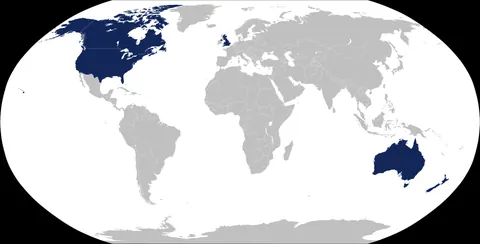 Five Eyes AllianceGroup / Network1 dossier
This dossier does not end here.
- Five EyesIntelligence alliance of five anglophone nations conducting globe-spanning surveillance, operating largely beyond public oversight.Shared organization: National Security AgencyShared organization: Government Communications HeadquartersShared subject: Gchq, Mass Surveillance, Nsa
- Operation Ivy BellsThe Navy's decade-long submarine tap on Soviet undersea cables—exposed by a single NSA traitorShared organization: National Security AgencyShared subject: Cold War, Nsa, Signals Intelligence
- Snowden and NSA Mass SurveillanceFormer NSA contractor exposed global surveillance apparatus, sparking debate over security versus civil liberties worldwide.Shared organization: National Security AgencyShared subject: Mass Surveillance, Nsa
- The Crypto Wars and Encryption BackdoorsDecades-long battle over whether governments should mandate encryption backdoors for law enforcement accessShared organization: National Security AgencyShared subject: Nsa, Privacy
- 1991Phil Zimmermann releases PGP encryption software, triggering federal criminal investigationThe Crypto Wars and Encryption Backdoors
- 1993Clinton administration proposes Clipper Chip with built-in NSA backdoor; technical community mobilizes oppositionThe Crypto Wars and Encryption Backdoors
- 1986Pelton tried and convicted of espionage; Operation Ivy Bells publicly confirmedOperation Ivy Bells
- 1986Pelton sentenced to life imprisonment in DecemberOperation Ivy Bells
- 1996Clipper Chip abandoned after Matt Blaze discovers fundamental security flawsThe Crypto Wars and Encryption Backdoors
- 1985KGB officer Vitaly Yurchenko defects to US in August; reveals former NSA employee betrayed operationsOperation Ivy Bells
Live Discussion
0 Perspectives
Add to the record. Be specific. Cite where you can.
If you're learning about this topic for the first time, these are the best places to continue — documented evidence and historical relationships are the guide.
Named in “ECHELON” and 6 other published dossiers.
Shares 2 documented key players with “ECHELON”, including National Security Agency.
Read more dossiers like this
Get a quiet one-line bulletin when new investigative files are published. Bound to this dossier — useful for tracking follow-ups.