Henry Kissinger
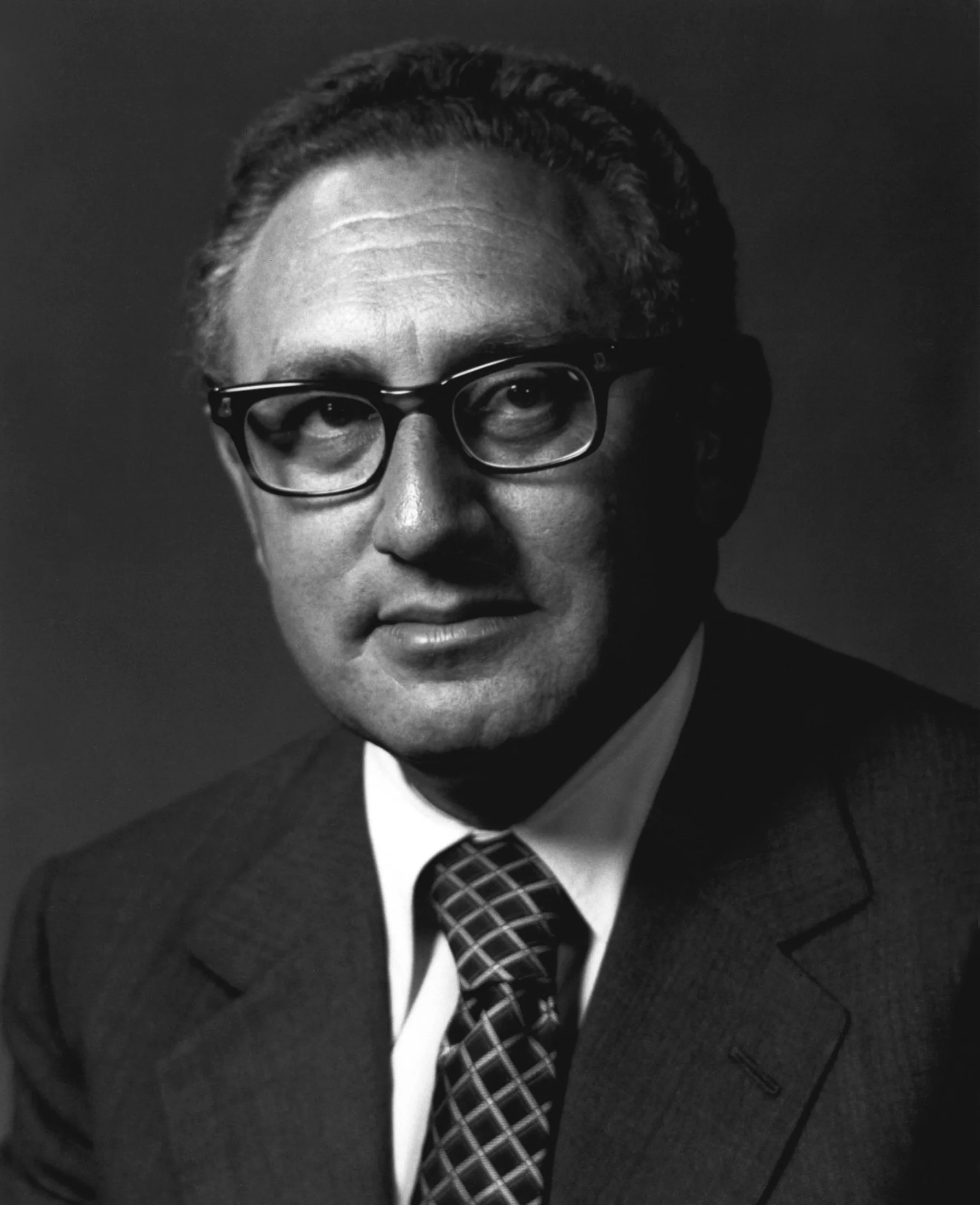
Henry Alfred Kissinger (1923–2023) served as U.S. National Security Advisor (1969–1975) and Secretary of State (1973–1977) under Presidents Nixon and Ford, shaping American foreign policy during the Cold War through realpolitik strategies including détente with the Soviet Union, opening relations with China, and controversial covert operations. Kissinger appears across Archive dossiers as a central figure in Cold War-era foreign policy apparatus and elite transnational networks.
Henry Alfred Kissinger (1923–2023) served as U.S. National Security Advisor (1969–1975) and Secretary of State (1973–1977) under Presidents Nixon and Ford, shaping American foreign policy during the Cold War through realpolitik strategies including détente with the Soviet Union, opening relations with China, and controversial covert operations. His career spanned academia, government service, and decades as a consultant and member of elite transnational policy organizations, generating both acclaim as a strategic architect and enduring controversy over human rights implications of policies he directed.
- Source
- Wikimedia Commons
- Type
- Photograph
- License
- Public domain
- Photographer
- U.S. Department of State from United States
- Year
- 1973
Photo Information ▾
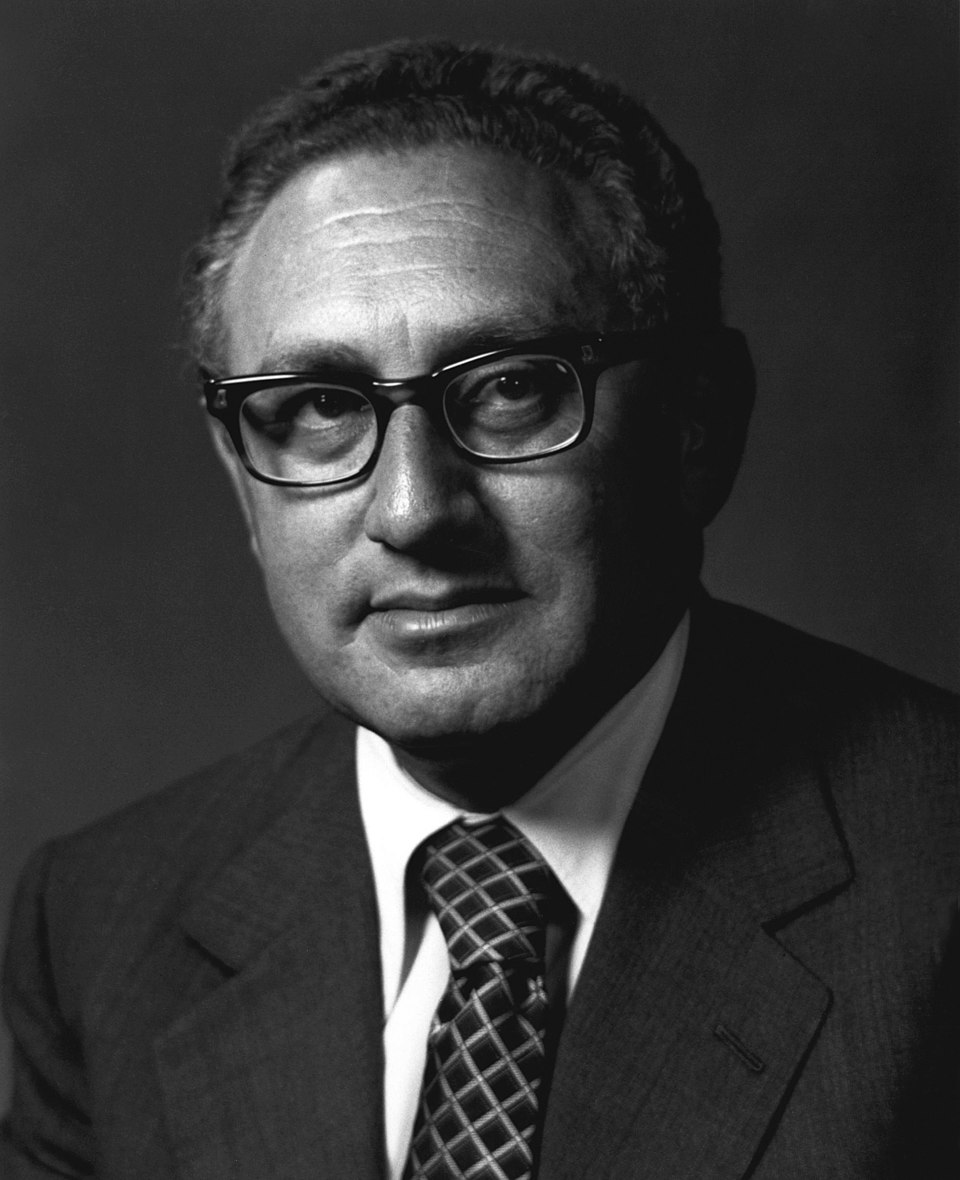
Henry A. Kissinger, U.S. Secretary of State, September 22, 1973 to January 20, 1977
Kenry A. Kissinger, U.S. Secretary of State
View original ↗- Full name
- Henry Alfred Kissinger (born Heinz Alfred Kissinger)
- Born
- May 27, 1923, Fürth, Bavaria, Germany
- Died
- November 29, 2023, Kent, Connecticut, USA
- Nationality
- German-born, naturalized U.S. citizen (1943)
- Education
- Harvard University (A.B. 1950, A.M. 1952, Ph.D. 1954)
- Government positions
- National Security Advisor (1969–1975); U.S. Secretary of State (1973–1977)
- Military service
- U.S. Army (1943–1946), Counter-Intelligence Corps
- Academic career
- Harvard faculty (1954–1971); Executive Director, Harvard International Seminar (1951–1971)
- Awards
- Nobel Peace Prize (1973, shared with Lê Đức Thọ, who declined)
- Organization memberships
- Council on Foreign Relations (member, director); Bilderberg Group (participant); Trilateral Commission (North American chair 1977–2011)
- Private sector
- Founder, Kissinger Associates, Inc. (1982–2023)
Kissinger appears across Archive dossiers as a central figure in Cold War-era foreign policy apparatus and elite transnational networks. He is documented in the Pentagon Papers dossier as a national security official whose policies the leaked documents critiqued; in Council on Foreign Relations and Bilderberg Group dossiers as a longtime member and participant in closed-door policy discussions; and in New World Order investigations as a proponent of international frameworks that conspiracy theories interpret as evidence of coordinated global governance. His career intersects declassified covert operations, high-level diplomatic architecture, and the institutional networks researchers study when examining influence beyond electoral accountability. The Archive documents these connections not to adjudicate Kissinger's historical legacy—a subject of ongoing scholarly debate—but to provide evidence-based reference for understanding his documented roles, associations, and the controversies that make him a recurring subject of investigation.
# Henry Kissinger
Identity
Henry Alfred Kissinger was born Heinz Alfred Kissinger on May 27, 1923, in Fürth, Bavaria, Germany, to Louis and Paula (Stern) Kissinger, a middle-class Jewish family. The family fled Nazi Germany in 1938, settling in New York City. Kissinger became a naturalized U.S. citizen in 1943 and served in the U.S. Army during World War II, including duty with the Counter-Intelligence Corps in occupied Germany.
After the war, Kissinger attended Harvard University on a New York State scholarship, earning his bachelor's degree summa cum laude in 1950, a master's in 1952, and a Ph.D. in 1954. His doctoral dissertation, later published as A World Restored: Metternich, Castlereagh and the Problems of Peace, 1812–1822, analyzed European balance-of-power diplomacy. He joined Harvard's faculty and remained there until 1971, becoming a professor of government and founding the Harvard International Seminar, which brought young foreign leaders to Cambridge for summer study.
Kissinger's academic work focused on nuclear strategy and international order. His 1957 book Nuclear Weapons and Foreign Policy challenged prevailing doctrines of massive retaliation, arguing for limited nuclear war options. Throughout the 1950s and 1960s, he served as a consultant to government agencies and think tanks, developing relationships with foreign policy elites and establishing himself as a Cold War strategic theorist.
Career & Roles
Kissinger's government career began in earnest when President Richard Nixon appointed him National Security Advisor in January 1969. Nixon sought to centralize foreign policy decision-making in the White House, and Kissinger—who had previously advised Nixon's 1968 opponent, Nelson Rockefeller—became the primary architect of U.S. strategy during a tumultuous period of the Cold War.
In this role, Kissinger directed National Security Council operations, coordinated intelligence activities, and conducted secret diplomacy. His most notable early initiative was the secret 1971 trip to Beijing that opened U.S.-China relations, followed by Nixon's 1972 visit. Concurrently, Kissinger pursued détente with the Soviet Union, negotiating the Strategic Arms Limitation Talks (SALT I) and the Anti-Ballistic Missile Treaty, signed in 1972.
Kissinger was appointed Secretary of State in September 1973 while retaining the National Security Advisor role until 1975—an unprecedented concentration of foreign policy authority. As Secretary of State, he engaged in "shuttle diplomacy" following the 1973 Yom Kippur War, negotiating disengagement agreements between Israel and its Arab neighbors. He shared the 1973 Nobel Peace Prize with North Vietnamese negotiator Lê Đức Thọ for the Paris Peace Accords, though Thọ declined the award and the war continued for two more years.
Kissinger continued as Secretary of State under President Gerald Ford until January 1977. After leaving government, he founded Kissinger Associates in 1982, a New York-based consulting firm advising multinational corporations and governments on geopolitical strategy. He remained active in public life for decades, writing extensively, advising multiple administrations informally, and serving on corporate and nonprofit boards.
Organizations & Networks
Kissinger's career was deeply intertwined with institutions at the center of transatlantic foreign policy establishment. He joined the Council on Foreign Relations (CFR) in the 1950s and served on its board of directors. The CFR, founded in 1921, convenes U.S. foreign policy elites and publishes Foreign Affairs journal. Kissinger contributed articles to Foreign Affairs throughout his career and participated in CFR study groups that shaped Cold War strategy.
He was a regular participant in Bilderberg Group meetings, the annual confidential conferences of North American and European leaders founded in 1954 by Prince Bernhard of the Netherlands. Declassified participant lists and contemporary news reports document Kissinger's attendance at multiple Bilderberg meetings from the 1950s through the 2000s, where he engaged with heads of state, corporate executives, and media figures in off-the-record discussions. The meetings' confidentiality has generated sustained public interest and conspiracy speculation.
In 1973, Kissinger was a founding member of the Trilateral Commission, established by David Rockefeller to foster cooperation among North America, Europe, and Japan. Kissinger served as the Trilateral Commission's North American chairman from 1977 to 2011. Critics have characterized these organizations as mechanisms for elite consensus-building outside democratic accountability; defenders describe them as necessary forums for informal dialogue on complex global issues.
Kissinger also maintained ties to major corporations through Kissinger Associates, whose client list was never publicly disclosed but reportedly included financial institutions, energy companies, and foreign governments. This private consultancy raised questions about potential conflicts of interest when Kissinger advised U.S. administrations on matters potentially affecting his clients' interests.
Major Operations & Activities
Kissinger's tenure as National Security Advisor and Secretary of State encompassed some of the most consequential and controversial U.S. foreign policy operations of the Cold War era.
Vietnam War: Kissinger led negotiations with North Vietnam from 1969 to 1973, pursuing "peace with honor" while simultaneously escalating military operations. The Pentagon Papers, leaked in 1971, included documentation of earlier Vietnam policy decisions that contradicted official U.S. government statements, though Kissinger took office after the period the Papers primarily covered. Under Nixon and Kissinger's direction, the U.S. expanded bombing into Cambodia (Operation Menu, beginning March 1969) and Laos, operations kept secret from Congress and the public. The Paris Peace Accords signed in January 1973 ended direct U.S. military involvement but did not prevent North Vietnam's conquest of South Vietnam in 1975.
Cambodia: The secret bombing campaign in Cambodia from 1969 to 1970, followed by the 1970 ground incursion, remains deeply controversial. Declassified documents confirm Kissinger's role in authorizing strikes that killed an estimated tens of thousands of Cambodian civilians. Historians debate the extent to which these operations destabilized Cambodia and contributed to the Khmer Rouge's rise, which led to the Cambodian genocide (1975–1979) that killed approximately 1.7 million people.
Chile: Declassified U.S. government documents, including National Security Council memoranda and CIA cables, establish that Kissinger directed efforts to prevent Chilean Socialist Salvador Allende's inauguration after his 1970 electoral victory and to destabilize his government. A September 1970 meeting produced orders to "make the economy scream" and support military opposition. The CIA's Track II operation sought to provoke a military coup. On September 11, 1973, the Chilean military overthrew Allende, who died during the coup. The subsequent Pinochet dictatorship killed and tortured thousands of political opponents. Kissinger's role in these events was documented by congressional investigations and declassified under Freedom of Information Act requests.
Bangladesh: During the 1971 Bangladesh Liberation War, Kissinger and Nixon supported Pakistan's military government despite reports—including from the U.S. consulate in Dhaka—of mass atrocities against Bengali civilians. Declassified transcripts show Kissinger referred to Indians as "bastards" in internal discussions and tilted U.S. policy toward Pakistan for strategic reasons, including Pakistan's role in facilitating opening relations with China. Estimates of deaths in the conflict range from 300,000 to 3 million.
Operation Condor: Declassified documents indicate U.S. awareness and tacit support for Operation Condor, a campaign of political repression and assassination coordinated among South American military dictatorships in the 1970s. A 1976 State Department memo noted Kissinger's knowledge of the operation, though the extent of U.S. involvement remains historically debated.
Middle East: Kissinger's shuttle diplomacy following the 1973 Yom Kippur War produced disengagement agreements between Israel and Egypt (Sinai I and II) and Israel and Syria (Golan Heights). These negotiations established patterns of U.S. mediation that shaped subsequent Middle East peace processes.
Historical Importance
Kissinger's historical significance derives from his role in reorienting U.S. Cold War strategy through realpolitik—foreign policy based on practical national interest rather than ideological or moral principles. His opening to China exploited the Sino-Soviet split, creating a triangular great-power dynamic that arguably strengthened the U.S. position. Détente with the Soviet Union produced arms control agreements that reduced nuclear tensions during a dangerous period.
Kissinger's conceptual influence extended beyond specific policies. His emphasis on stability, balance of power, and great-power concert shaped how American foreign policy practitioners understood international relations. His writings and teaching influenced a generation of diplomats and scholars. The "Kissinger model" of centralized, executive-dominated foreign policy-making—sometimes called "Lone Cowboy" diplomacy—became a reference point for debates about presidential power versus congressional oversight.
His career also illustrates the intersection of academia, government, and private consulting in foreign policy formation. The "revolving door" between think tanks, universities, government service, and corporate boards that Kissinger exemplified became a standard pattern for foreign policy elites.
Documented Controversies
Confirmed by Declassified Documents The most serious controversies surrounding Kissinger involve his role in policies that led to large-scale civilian casualties and human rights abuses. Declassified National Security Council documents, CIA records, and State Department cables available through the National Security Archive at George Washington University establish that Kissinger authorized or supported military operations knowing they would cause civilian deaths, supported authoritarian regimes conducting political repression, and in some cases withheld information from Congress and the American public.
Official Record Congressional investigations, including the Church Committee (1975–1976), documented covert operations Kissinger directed or approved, including efforts to destabilize foreign governments. The 1975 Pike Committee report (portions of which leaked after being suppressed) detailed intelligence operations and questioned their oversight.
Credible Allegation / Ongoing Historical Debate Legal scholars and human rights advocates, including the late writer Christopher Hitchens in his 2001 book The Trial of Henry Kissinger, have argued that Kissinger's actions constitute war crimes under international law, including complicity in genocide, murder, and kidnapping. These arguments cite:
- ·The secret bombing of Cambodia and Laos
- ·Support for Pakistan during the 1971 Bangladesh genocide
- ·The 1973 coup in Chile and subsequent support for the Pinochet regime
- ·Support for Indonesia's 1975 invasion of East Timor, which killed approximately 100,000–180,000 civilians
- ·Involvement in Operation Condor's assassination campaigns
No criminal charges were ever filed against Kissinger in U.S. courts. International legal proceedings have been limited. In 2001, a French judge issued a subpoena for Kissinger to testify about disappeared persons during Operation Condor; Kissinger left France rather than comply. A Spanish magistrate and Chilean investigations also sought testimony, which Kissinger declined.
Established Fact Kissinger's authorization to wiretap his own National Security Council staff and journalists to identify sources of press leaks was confirmed by congressional investigations. These wiretaps, conducted 1969–1971, violated standard legal procedures and contributed to the climate that produced the Watergate scandal.
Historical Consensus Historians across the political spectrum acknowledge that Kissinger prioritized strategic considerations over human rights concerns, though they disagree on whether this represented appropriate realpolitik or moral failure. Kissinger himself explicitly defended this approach in his writings, arguing that foreign policy must be based on national interest rather than moral crusading.
Investigations & Legal Proceedings
Kissinger faced no criminal prosecution in U.S. courts. His actions as a government official were protected by official immunity doctrines. Civil lawsuits seeking damages were generally dismissed on sovereign immunity grounds or for lack of jurisdiction.
Congressional oversight during his tenure was limited. The secret bombing of Cambodia was not disclosed to Congress until 1973. The Church Committee's 1975–1976 investigation of intelligence activities documented CIA operations Kissinger supervised but resulted in no personal sanctions. The Pike Committee investigation was more critical but its full report was suppressed by the House of Representatives.
International legal interest emerged decades later:
- ·2001, France: Judge Roger Le Loire issued a summons for Kissinger to testify as a witness regarding French citizens disappeared in Chile during the Pinochet regime. Kissinger declined and left France.
- ·2001–2002, Chile: Chilean judge Juan Guzmán sought Kissinger's testimony about Operation Condor and the 1970 assassination of Chilean General René Schneider. Kissinger did not respond.
- ·2002, Spain: Magistrate Baltasar Garzón requested interrogation of Kissinger regarding Operation Condor.
These proceedings sought testimony, not indictment, and none progressed due to Kissinger's non-cooperation and U.S. government protection of former officials.
In 2002, relatives of Chilean General René Schneider, murdered in a 1970 coup attempt that CIA documents show was supported by U.S. covert action, filed a wrongful death lawsuit against Kissinger in U.S. federal court. The case was dismissed on sovereign immunity grounds.
The National Security Archive at George Washington University has systematically declassified documents related to Kissinger's tenure through Freedom of Information Act litigation, producing extensive public documentation of previously secret operations.
Denials & Disputes
Kissinger consistently defended his record, arguing that his policies advanced U.S. interests during a dangerous period and that critics applied anachronistic moral standards to Cold War decision-making. In numerous memoirs, interviews, and public statements, he offered the following defenses:
On Cambodia: Kissinger maintained that North Vietnamese forces used Cambodian territory as sanctuaries for attacks on U.S. and South Vietnamese forces, making strikes militarily necessary. He argued that the bombing campaign was disclosed to relevant congressional leaders and that estimates of civilian casualties were exaggerated by critics.
On Chile: Kissinger acknowledged U.S. opposition to Allende but disputed characterizations of U.S. responsibility for the coup or subsequent repression. He argued that Chilean military officers acted independently and that U.S. policy aimed to preserve democracy, not install dictatorship. Declassified documents complicate this narrative by showing active destabilization efforts.
On human rights: Kissinger argued that Cold War competition with the Soviet Union required supporting anti-communist regimes regardless of their domestic policies. He contended that promoting human rights, while desirable in principle, was secondary to preventing Soviet expansion and maintaining stability. He rejected the characterization of his approach as amoral, arguing it represented necessary prudence in a dangerous world.
On war crimes allegations: Kissinger categorically rejected suggestions that his actions constituted crimes, arguing that military operations were conducted under lawful authority, that intelligence activities were properly authorized, and that diplomatic support for allies did not constitute complicity in their actions. He noted that no credible legal authority had indicted him.
Kissinger's defenders, including historians like Niall Ferguson (who was granted access to Kissinger's personal papers for an authorized biography), argue that critics isolate controversial decisions from their context, underestimate the genuine threats facing U.S. policymakers, and hold Cold War officials to standards no superpower could meet. They credit Kissinger with strategic achievements—opening China, détente, Middle East diplomacy—that arguably made the world safer.
Legacy & Historical Debate
Kissinger's legacy remains intensely contested. Academic historians, international relations scholars, and foreign policy practitioners hold sharply divergent assessments.
Admirers credit him with grand strategic vision, arguing that triangular diplomacy, détente, and realpolitik successfully managed Cold War dangers and preserved American power through a difficult period. They note that the opening to China and arms control with the Soviet Union were historic achievements with lasting benefits. Diplomatic historians studying great-power politics often treat Kissinger as a skilled practitioner of statecraft in the tradition of Metternich and Bismarck.
Critics emphasize the human costs of his policies, arguing that support for authoritarian regimes, tolerance of civilian casualties, and prioritization of stability over democracy and human rights were both immoral and strategically counterproductive. They contend that Kissinger's policies in Southeast Asia, Latin America, and elsewhere created long-term instability and anti-American sentiment that undermined U.S. interests. Human rights advocates view his career as exemplifying the moral bankruptcy of realpolitik.
Scholarly debate continues over specific controversies:
- ·Whether the Cambodia bombing was militarily justified or a war crime
- ·The extent of U.S. responsibility for Chile's coup and subsequent dictatorship
- ·Whether détente represented pragmatic accommodation or naïve trust in Soviet restraint
- ·Whether realpolitik was appropriate for the Cold War or a moral failure
Kissinger's enormous influence on U.S. foreign policy institutions ensures his continued relevance. Subsequent administrations employed advisors trained in his approach. The Council on Foreign Relations, Trilateral Commission, and similar organizations he helped shape remain influential. The debate over "values versus interests" in foreign policy—whether the U.S. should prioritize democracy and human rights or strategic national interests—remains Kissinger's enduring intellectual legacy, though he never acknowledged the dichotomy, insisting that stability served moral ends.
His death in November 2023 at age 100 prompted renewed debate, with obituaries and commentaries ranging from reverent tributes to his strategic genius to emphatic condemnations of policies blamed for hundreds of thousands of deaths.
Continue Investigating
Kissinger appears throughout Archive dossiers documenting Cold War covert operations, elite policy networks, and controversies over transparency and accountability in American foreign policy. His documented participation in the Bilderberg Group and leadership of the Council on Foreign Relations and Trilateral Commission make him a central figure in investigations of transnational elite networks. His role in classified operations intersects with Pentagon Papers revelations about government secrecy and the gap between official statements and internal policy.
The Archive's Pentagon Papers dossier examines the classified history of Vietnam War decision-making that Kissinger inherited and continued. The Council on Foreign Relations Influence and Bilderberg Group Meetings dossiers document his memberships and participation in forums critics characterize as undemocratic elite coordination. The New World Order dossier explores how Kissinger's public advocacy for international institutions and great-power cooperation has been interpreted within conspiracy frameworks, often distorting his documented positions.
Related entities include David Rockefeller, whose financial support and institutional leadership intertwined with Kissinger's career; Richard Nixon, under whom Kissinger exercised unprecedented foreign policy authority; Daniel Ellsberg, whose Pentagon Papers leak occurred during Kissinger's tenure and whose opposition to Vietnam policy contrasted with Kissinger's approach; and Robert McNamara, Kissinger's predecessor architect of Vietnam strategy.
Further investigation requires engaging declassified primary sources, particularly National Security Council documents, CIA records, and State Department cables available through the National Security Archive and presidential libraries. Kissinger's extensive published memoirs (White House Years, Years of Upheaval, Years of Renewal) provide his perspective, though scholars note significant omissions and disputed characterizations. Critical assessments include Seymour Hersh's The Price of Power (1983), Greg Grandin's Kissinger's Shadow (2015), and Gary Bass's The Blood Telegram (2013). Niall Ferguson's authorized biography Kissinger: 1923–1968: The Idealist (2015) offers a sympathetic account of his early life and career.
- 1923Born Heinz Alfred Kissinger in Fürth, Bavaria, Germany
- 1938Family flees Nazi Germany; settles in New York City
- 1943Becomes naturalized U.S. citizen; joins U.S. Army
- 1954Receives Ph.D. from Harvard; joins faculty
- 1957Publishes *Nuclear Weapons and Foreign Policy*
- 1969Appointed National Security Advisor by President Nixon
- 1969-1970Directs secret bombing campaigns in Cambodia (Operation Menu)
- 1970Authorizes CIA Track II operations against Salvador Allende in Chile
- 1971Conducts secret diplomacy opening U.S.-China relations
- 1972Negotiates SALT I and ABM Treaty; Nixon visits China
- 1973Appointed Secretary of State (September); awarded Nobel Peace Prize; Chilean coup installs Pinochet (September 11)
- 1973-1975Conducts shuttle diplomacy following Yom Kippur War
- 1975Church Committee investigates covert operations during Kissinger's tenure
- 1977Leaves government; becomes founding North American chairman of Trilateral Commission
- 1982Founds Kissinger Associates consulting firm
- 2001French judge issues summons regarding Operation Condor; Kissinger declines
- S1Henry Kissinger: Official BiographyU.S. Department of State Office of the Historian · primary
- S2Chile and the United States: Declassified Documents Relating to the Military CoupNational Security Archive, George Washington University · primary
- S3Kissinger and Chile: The Declassified RecordNational Security Archive, George Washington University · primary
- S4The Trilateral CommissionEncyclopaedia Britannica · reference
- S5Bilderberg Meetings: Participant ListsBilderberg Meetings Official Site · primary
- S6The Church Committee ReportsU.S. Senate Select Committee on Intelligence · primary
- S7The Nobel Peace Prize 1973Nobel Prize Official Site · primary
- S8SALT I and the ABM TreatyU.S. Department of State · primary
- S9Henry KissingerWikipedia · reference
- S10Kissinger's Shadow: The Long Reach of America's Most Controversial Statesman by Greg GrandinMetropolitan Books · book
If you're learning about this topic for the first time, these are the best places to continue — documented evidence and historical relationships are the guide.
Henry Kissinger is documented in the evidence record of this published dossier.
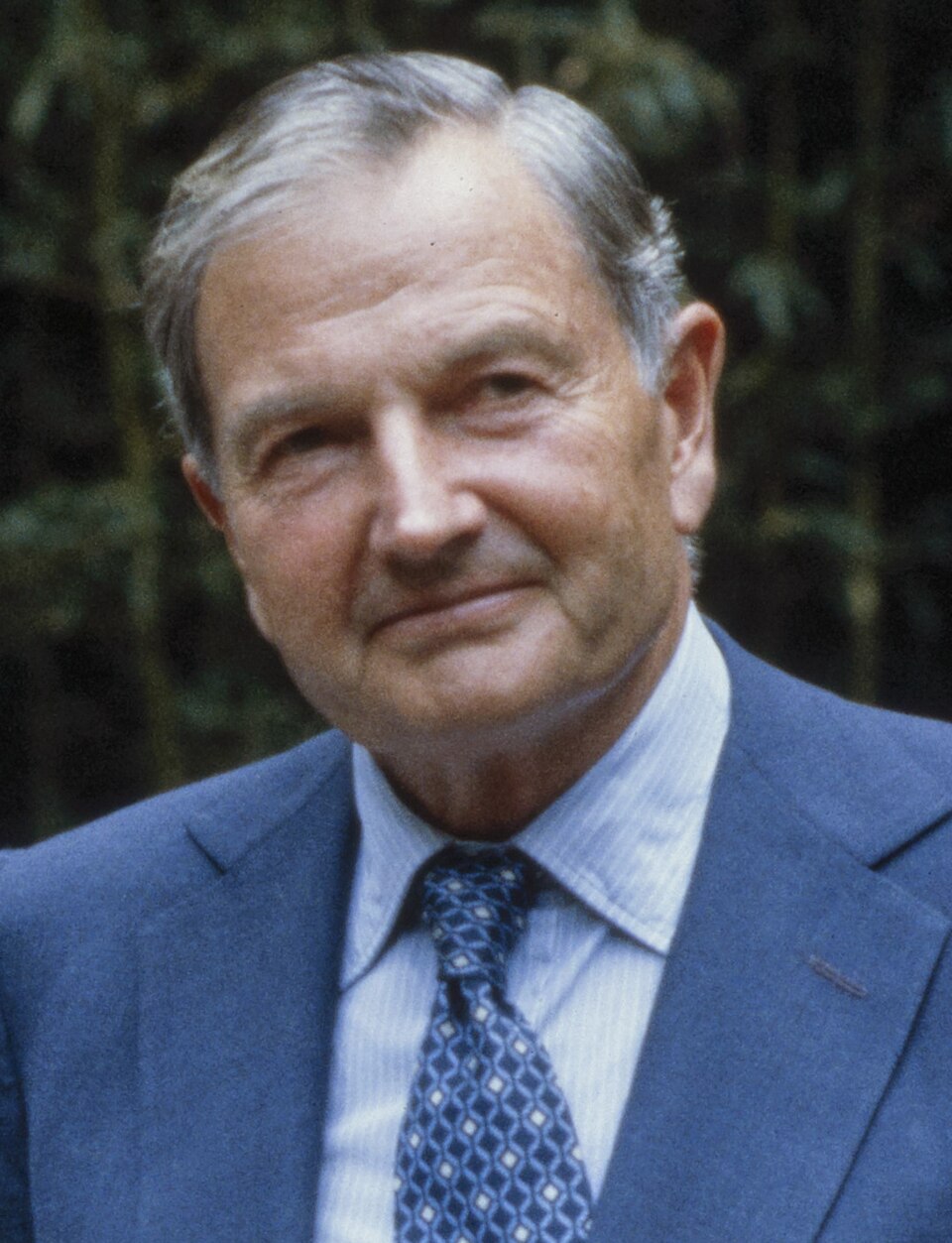
Longtime institutional partner in Council on Foreign Relations and Trilateral Commission; supported Kissinger's transnational policy roles.
Foreign policy organization where Kissinger was longtime member and director, exemplifying elite institutional networks.