George H.W. Bush
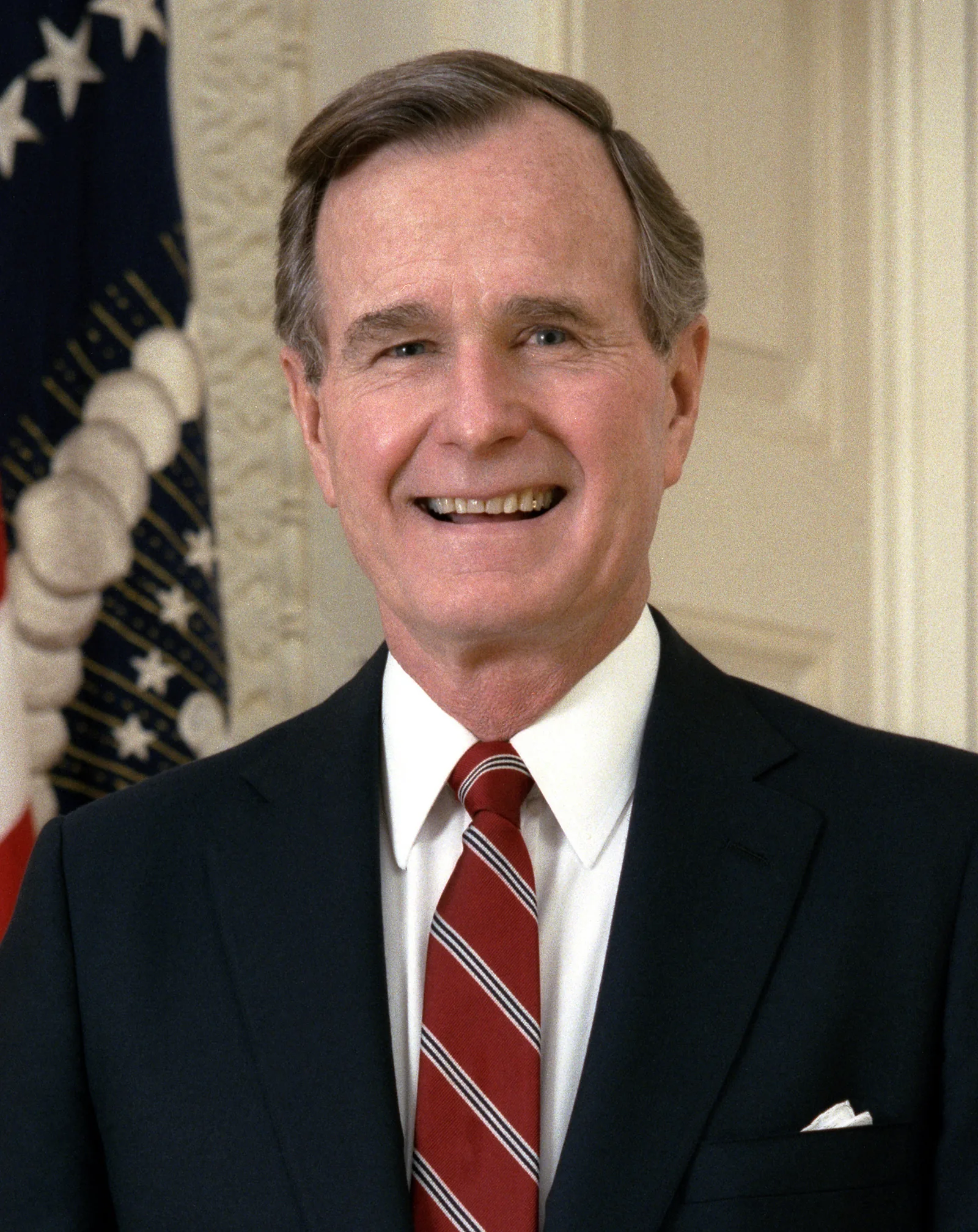
George Herbert Walker Bush (1924–2018) served as the 41st President of the United States (1989–1993), Vice President under Ronald Reagan (1981–1989), Director of Central Intelligence (1976–1977), and held numerous diplomatic and political positions spanning five decades. A member of the Yale Skull and Bones Society (class of 1948) and participant in multiple elite international policy organizations, Bush is central … Bush appears in Archive dossiers because his documented memberships, public statements, and career trajectory intersect multiple lines of investigation into elite networks and international governance discourse.
George Herbert Walker Bush (1924–2018) served as the 41st President of the United States (1989–1993), Vice President under Ronald Reagan (1981–1989), Director of Central Intelligence (1976–1977), and held numerous diplomatic and political positions spanning five decades. A member of the Yale Skull and Bones Society (class of 1948) and participant in multiple elite international policy organizations, Bush is central to Archive investigations of institutional networks and the articulation of 'New World Order' rhetoric in American foreign policy.
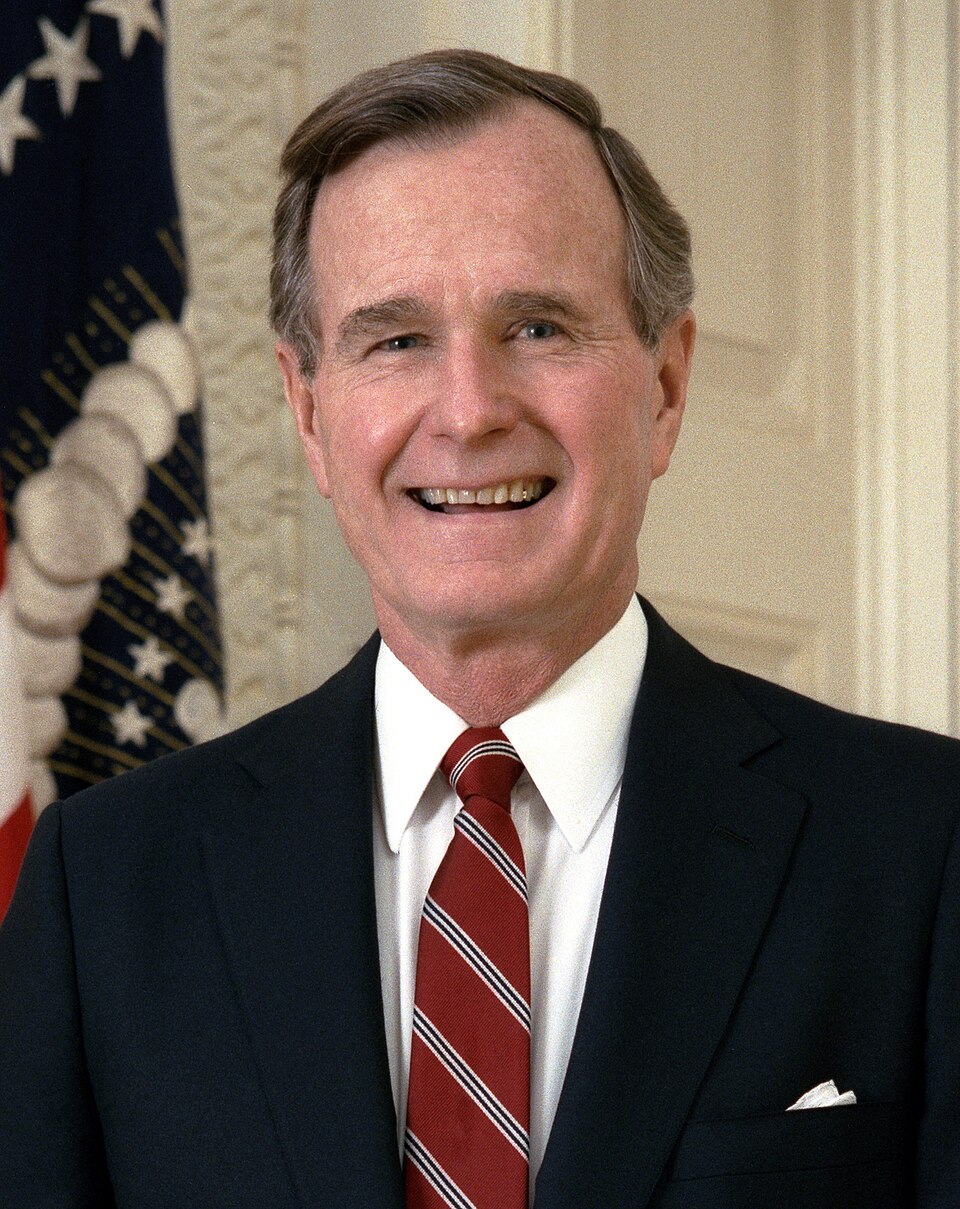
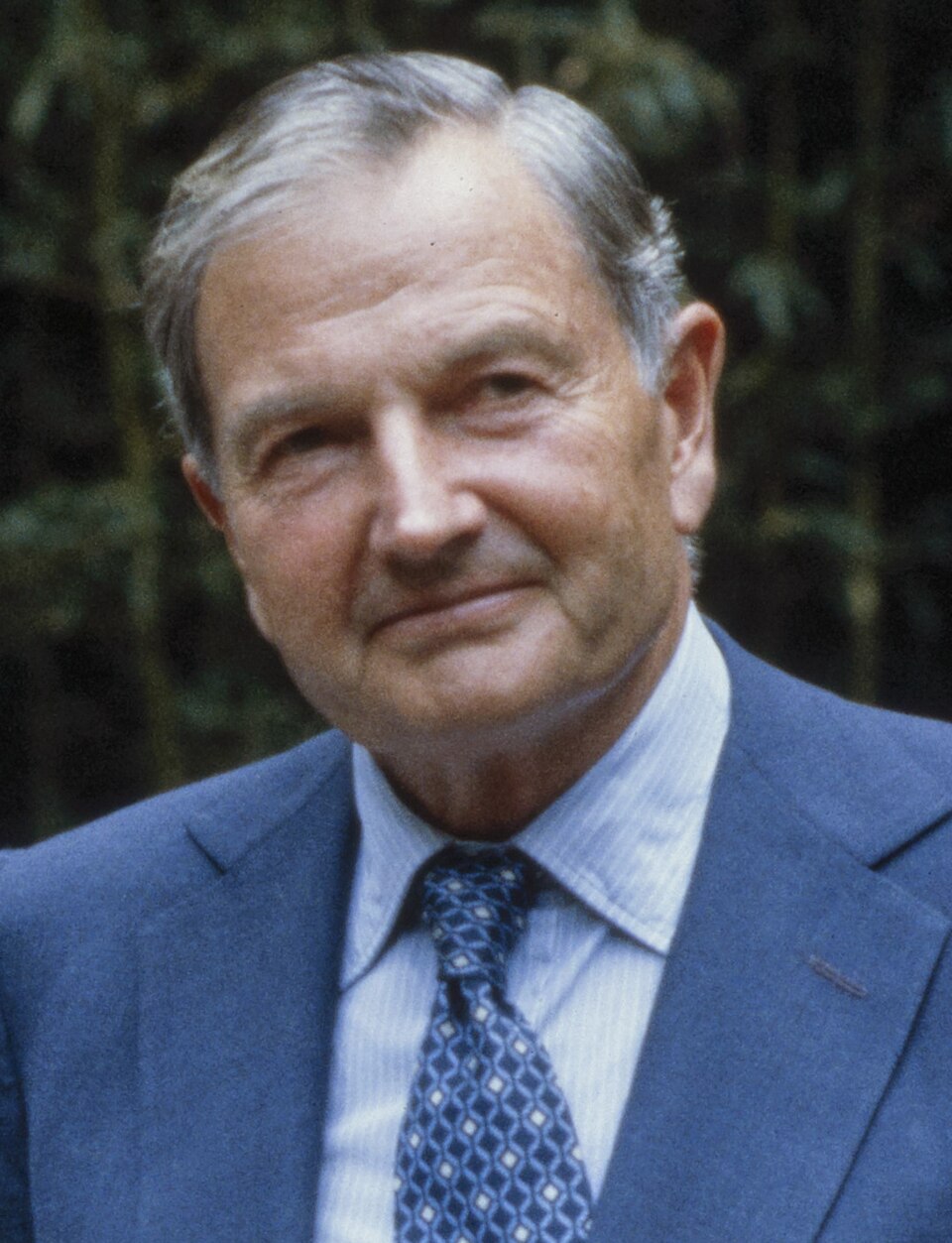
- Source
- Wikimedia Commons
- Type
- Official Portrait
- License
- Public domain
- Photographer
- David Valdez
- Year
- 1989
Photo Information ▾
- Full Name
- George Herbert Walker Bush
- Born
- June 12, 1924, Milton, Massachusetts
- Died
- November 30, 2018, Houston, Texas
- Political Party
- Republican
- Education
- Yale University (B.A. Economics, 1948); Skull and Bones member (1948)
- Military Service
- U.S. Navy pilot, World War II (1942–1945); youngest naval aviator when commissioned
- President of the United States
- January 20, 1989 – January 20, 1993 (41st President)
- Vice President
- January 20, 1981 – January 20, 1989 (under Ronald Reagan)
- CIA Director
- January 30, 1976 – January 20, 1977
- Other Major Positions
- U.S. Ambassador to the United Nations (1971–1973), Chief of U.S. Liaison Office to China (1974–1975), U.S. Representative from Texas (1967–1971)
- Family
- Son of Prescott Bush (U.S. Senator, banker); father of George W. Bush (43rd President) and Jeb Bush (Florida Governor)
Bush appears in Archive dossiers because his documented memberships, public statements, and career trajectory intersect multiple lines of investigation into elite networks and international governance discourse. His initiation into Skull and Bones connects him to a documented secret society network including family members and political rivals. His September 11, 1990 address to Congress introduced 'New World Order' terminology into mainstream presidential rhetoric during a pivotal geopolitical moment. His affiliations with the Council on Foreign Relations, Trilateral Commission, and other policy organizations, combined with family banking and intelligence connections, make him a recurring figure in research on institutional influence networks. The Archive documents these verifiable associations and public statements without presuming coordination or conspiracy, allowing readers to assess the historical record.
# George H.W. Bush
Identity
George Herbert Walker Bush was born June 12, 1924, in Milton, Massachusetts, into a prominent political and financial family. His father, Prescott Sheldon Bush, served as U.S. Senator from Connecticut (1952–1963) and was a partner at Brown Brothers Harriman, a Wall Street investment bank. His maternal grandfather, George Herbert Walker, was a wealthy banker and businessman. This family background provided Bush with early access to elite educational institutions and professional networks.
Bush attended Phillips Academy in Andover, Massachusetts, and enlisted in the U.S. Navy on his 18th birthday in 1942, becoming the youngest commissioned naval aviator at the time. He flew 58 combat missions in the Pacific theater during World War II, was shot down over the Pacific in September 1944, and was rescued by submarine. He received the Distinguished Flying Cross for his wartime service.
After the war, Bush enrolled at Yale University, graduating in 1948 with a bachelor's degree in economics. At Yale, he was initiated into Skull and Bones, a senior secret society founded in 1832. His membership is documented in multiple historical accounts and his own memoirs. Other members of his Skull and Bones cohort remain less publicly documented, consistent with the society's tradition of confidentiality, though the fact of his membership is established.
Following graduation, Bush moved to Texas to enter the oil business rather than join his father's banking firm, establishing Bush-Overbey Oil Development Company in 1951 and later co-founding Zapata Petroleum Corporation in 1953. This business career provided financial independence and Texas residency that became the foundation for his political career.
Career & Roles
Bush's political career began with election to the U.S. House of Representatives from Texas's 7th congressional district in 1966, where he served two terms (1967–1971). He sat on the House Ways and Means Committee and supported the Nixon administration's legislative agenda. He ran unsuccessfully for U.S. Senate in 1964 and 1970.
President Richard Nixon appointed Bush U.S. Ambassador to the United Nations in 1971, a position he held until 1973. In this role, Bush represented U.S. interests during the expulsion of the Republic of China (Taiwan) and admission of the People's Republic of China to the UN. After the 1972 election, Nixon appointed Bush Chairman of the Republican National Committee (1973–1974), a position he held during the Watergate scandal. Bush publicly defended Nixon until evidence became overwhelming, then privately urged Nixon's resignation.
In 1974, President Gerald Ford appointed Bush Chief of the U.S. Liaison Office to the People's Republic of China, the de facto ambassador to China before formal diplomatic relations were established. Bush served in Beijing from 1974 to 1975, developing relationships with Chinese leadership during a critical period of rapprochement.
Ford recalled Bush from China in late 1975 to serve as Director of Central Intelligence, heading the CIA from January 1976 to January 1977. Bush took over the agency following the Church Committee investigations that exposed illegal domestic surveillance, assassination plots, and other controversial operations. His tenure focused on rebuilding morale and credibility. Bush was the only CIA Director to later become President, though controversy exists regarding the scope and nature of his earlier CIA contacts (addressed below under Documented Controversies).
After Jimmy Carter's 1976 election, Bush returned to private life briefly, serving on corporate boards and remaining active in Republican politics. He sought the Republican presidential nomination in 1980, competing against Ronald Reagan and others. After losing, Reagan selected Bush as his running mate. Bush served as Vice President from 1981 to 1989, participating in National Security Council meetings, heading the Task Force on Regulatory Relief, and leading the administration's anti-drug efforts.
Bush won the presidency in 1988, defeating Democrat Michael Dukakis. His presidency (1989–1993) oversaw the end of the Cold War, the fall of the Berlin Wall, the dissolution of the Soviet Union, German reunification, and the Gulf War (Operation Desert Storm) following Iraq's invasion of Kuwait. His administration negotiated arms reduction treaties with the Soviet Union and Russia and assembled an international coalition for the Gulf War, which Congress authorized.
Bush lost his 1992 re-election bid to Bill Clinton, amid economic recession and a third-party challenge from Ross Perot. After leaving office, Bush largely avoided public political involvement, though he maintained relationships with foreign leaders and conducted humanitarian work with Clinton on disaster relief.
Organizations & Networks
Bush's documented organizational affiliations span business, intelligence, diplomatic, and policy networks. His Skull and Bones membership (Yale class of 1948) connected him to a network that included his father Prescott Bush (class of 1917), his son George W. Bush (class of 1968), and political figures across party lines including Democratic Senator and 2004 presidential candidate John Kerry (class of 1966). The society's membership remains partially documented through historical research by journalists such as Alexandra Robbins and historians such as Antony C. Sutton, though the organization maintains strict confidentiality.
Bush was a member of the Council on Foreign Relations (CFR), a nonprofit think tank founded in 1921 focused on U.S. foreign policy. His CFR membership is documented in the organization's membership directories. The CFR's influence on foreign policy has been the subject of both mainstream political science research and conspiracy theories; Bush's membership places him within a network of policymakers, academics, and business leaders who have shaped American internationalism.
Bush was also a member of the Trilateral Commission, founded in 1973 by David Rockefeller and Zbigniew Brzezinski to foster cooperation among North America, Western Europe, and Japan. His membership is documented in Commission records. Critics have characterized the Trilateral Commission as an elite coordinating body; defenders describe it as a policy discussion forum. Bush's participation occurred before and during his vice presidency.
Family business connections linked Bush to Brown Brothers Harriman through his father and to Dresser Industries, where he served on the board. His father's banking career and his own oil industry background connected him to financial and energy sector networks. His oil company Zapata had operations in the Caribbean and Latin America during the 1950s and 1960s.
Bush's CIA directorship (1976–1977) placed him at the center of the U.S. intelligence community during a period of reform and rebuilding. The CIA headquarters in Langley, Virginia, was renamed the George Bush Center for Intelligence in 1999.
Major Operations & Activities
Bush's vice presidency coincided with major Reagan administration operations including support for anti-communist forces in Central America, the Iran-Contra affair (addressed below), and Cold War confrontation with the Soviet Union. As Vice President, Bush chaired the Task Force on Combating Terrorism and the National Narcotics Border Interdiction System.
His presidency's defining foreign policy action was the Gulf War (January–February 1991). Following Iraq's August 1990 invasion of Kuwait, Bush assembled an international coalition under UN Security Council authorization, obtained congressional approval, and ordered Operation Desert Storm. The military campaign expelled Iraqi forces from Kuwait in approximately six weeks of air and ground operations. Bush chose not to continue to Baghdad or remove Saddam Hussein, a decision later criticized by some and defended by Bush as consistent with the UN mandate and coalition agreement.
Bush's management of the Cold War's end was generally regarded as skillful by historians and foreign policy analysts. He maintained communication with Soviet leader Mikhail Gorbachev, supported German reunification while addressing Soviet security concerns, and avoided triumphalism that might have destabilized the transition. The Malta Summit (December 1989) and subsequent meetings helped manage the peaceful conclusion of the Cold War.
Domestically, Bush signed the Americans with Disabilities Act (1990), the Clean Air Act Amendments of 1990, and other legislation. His 1990 budget agreement raised taxes despite his 1988 campaign pledge of "read my lips: no new taxes," a reversal that damaged his re-election prospects but that many economists credit with contributing to deficit reduction.
Bush pardoned six Iran-Contra figures on December 24, 1992, shortly before leaving office. These pardons ended Independent Counsel Lawrence Walsh's investigation into whether Bush himself had fuller knowledge of the arms-for-hostages scheme than he had acknowledged.
Historical Importance
Bush is historically significant as a transitional figure who presided over the end of the Cold War and the beginning of the post-Cold War era. His management of this transition is generally regarded by historians as cautious and competent, avoiding instability while supporting democratic movements in Eastern Europe.
His introduction of "New World Order" rhetoric is central to his Archive relevance. On September 11, 1990, in an address to a joint session of Congress regarding the Persian Gulf crisis, Bush stated: "Out of these troubled times, our fifth objective—a new world order—can emerge: a new era—freer from the threat of terror, stronger in the pursuit of justice, and more secure in the quest for peace. An era in which the nations of the world, East and West, North and South, can prosper and live in harmony." He elaborated: "A world where the United Nations, freed from cold war stalemate, is poised to fulfill the historic vision of its founders. A world in which freedom and respect for human rights find a home among all nations."
This phrase appears in multiple subsequent Bush speeches during 1990–1991. Mainstream historians and political scientists interpret Bush's "new world order" as a reference to a hoped-for post-Cold War system of collective security through international institutions, particularly the United Nations. The phrase became a focal point for conspiracy researchers who interpreted it as evidence of plans for world government, global elite rule, or the fulfillment of secret society agendas. Bush's documented memberships in Skull and Bones, the Council on Foreign Relations, and the Trilateral Commission amplified these interpretations.
Whether Bush's use of the phrase was simply diplomatic rhetoric, a genuine vision of UN-centered collective security, or reflected deeper institutional commitments remains a matter of interpretation. The Archive documents the verifiable facts: Bush used the phrase repeatedly in official presidential addresses during 1990–1991, and he was a documented member of organizations that have been subjects of elite network research.
Bush's family represents a multi-generational political dynasty. His father was a U.S. Senator, his son George W. Bush became the 43rd President (2001–2009), and his son Jeb Bush served as Governor of Florida (1999–2007) and sought the presidency in 2016. This concentration of political power within one family has been the subject of both conventional political analysis and Archive-relevant research on dynastic influence.
Documented Controversies
Official Record Bush's role in the Iran-Contra affair remains contested. As Vice President, Bush participated in meetings where arms sales to Iran and support for Nicaraguan Contra rebels were discussed. Independent Counsel Lawrence Walsh's investigation found that Bush's public claims of being "out of the loop" were contradicted by documentary evidence and testimony showing he attended key meetings. Walsh's final report concluded that Bush's diary entries, subpoenaed late in the investigation, contradicted his sworn statements. However, Bush was never charged with any crime. His December 1992 pardons of six Iran-Contra figures—including Defense Secretary Caspar Weinberger, whose trial might have produced testimony regarding Bush's knowledge—ended the investigation. Walsh stated the pardons undermined the principle of equal justice.
Disputed Claim Allegations exist that Bush had CIA connections before his 1976 appointment as Director. A 1988 document release included a November 29, 1963 FBI memorandum from J. Edgar Hoover mentioning a briefing given to "Mr. George Bush of the Central Intelligence Agency." Bush and the CIA denied this referred to him, stating it referred to a junior CIA employee named George William Bush. However, George William Bush worked in a clerical position, and the memorandum's content suggested briefing someone of higher authority. Journalist Joseph McBride and others have argued the memo refers to George H.W. Bush, suggesting CIA involvement during the Kennedy assassination period. The CIA and Bush consistently denied any CIA affiliation before 1976. No definitive evidence has established Bush as a CIA operative before his directorship, but the ambiguity of the 1963 memo has fueled speculation.
Investigated Congressional inquiries examined Bush's role in the October Surprise allegations—claims that the 1980 Reagan-Bush campaign secretly negotiated with Iran to delay release of American hostages until after the election, thereby damaging incumbent President Carter's re-election prospects. Iran released the 52 hostages on January 20, 1981, minutes after Reagan's inauguration. A 1993 House October Surprise Task Force investigation found no credible evidence supporting the allegations, though critics noted the investigation's limitations and some witnesses' contradictory statements. Journalist Robert Parry continued investigating these claims until his death, arguing evidence suggested backchannels existed. No judicial or congressional body found proof of such an arrangement.
Historical Consensus Bush's father Prescott Bush's banking firm, Brown Brothers Harriman, had financial ties to German industrialist Fritz Thyssen through Union Banking Corporation before and during the early years of World War II. Union Banking Corporation's assets were seized in October 1942 under the Trading with the Enemy Act. Prescott Bush was a director. This historical fact is documented in government records and has been the subject of mainstream historical research as well as more speculative claims. No evidence suggests Prescott Bush was a Nazi sympathizer; the business relationship appears to have been commercial. However, this family history appears in Archive research on banking networks and has been used to support various theories about Bush family connections.
Credible Allegation Bush's 1988 campaign used racially charged imagery in the "Willie Horton" advertisement, which highlighted a Black convicted murderer who committed violent crimes while on a Massachusetts furlough program during Democratic opponent Michael Dukakis's governorship. While an independent group created the most inflammatory version, the Bush campaign's own ads focused on the furlough issue. Political scientists and historians widely regard the Horton campaign as race-baiting, though Bush and his campaign manager Lee Atwater defended it as legitimate discussion of crime policy. Atwater later apologized for the campaign's tactics before his death in 1991.
Official Record Bush's administration provided intelligence and diplomatic support to Iraqi leader Saddam Hussein during the Iran-Iraq War (1980–1988), part of a broader U.S. policy of backing Iraq against Iran. Declassified documents show the Reagan-Bush administration removed Iraq from the State Department's list of state sponsors of terrorism in 1982, enabling arms sales and loans. This support continued despite knowledge of Iraq's use of chemical weapons against Iranian forces and Iraqi Kurdish civilians. Two years after the Iran-Iraq War ended, Bush ordered military action against the same Iraqi regime following its invasion of Kuwait.
Investigations & Legal Proceedings
Bush was never indicted or charged with any crime. The Iran-Contra Independent Counsel investigation examined his knowledge and role but did not bring charges. Walsh's final report stated that Bush's diary and his pardons impeded the investigation, but Walsh did not conclude Bush committed prosecutable offenses.
Congressional investigations during his career included the October Surprise Task Force inquiry (which found no credible evidence of wrongdoing), various Iran-Contra hearings (during which Bush testified he was not fully informed of key decisions), and routine oversight of his agencies and policies.
No credible evidence links Bush to the Epstein network or similar criminal enterprises. His Archive profile inclusion stems from documented organizational memberships, use of "New World Order" rhetoric, and his central role in American foreign policy during pivotal decades.
Denials & Disputes
Bush consistently denied being in the CIA before his 1976 directorship, despite the 1963 FBI memorandum mentioning "George Bush of the Central Intelligence Agency." The CIA supported his denial, stating the memo referred to George William Bush, a junior employee. The ambiguity has never been definitively resolved.
Bush denied fuller knowledge of Iran-Contra operations, maintaining he was "out of the loop" on key decisions. Documentary evidence and testimony contradicted aspects of this claim, but Bush was never charged with perjury or obstruction.
Bush and his campaign denied that the Willie Horton campaign strategy was racially motivated, characterizing it as legitimate focus on criminal justice policy differences. Critics across the political spectrum disagreed.
Bush's "New World Order" speeches were defended by his administration and mainstream analysts as conventional references to UN-based collective security, not world government plans. Bush never addressed conspiracy theories about the phrase in detail.
Legacy & Historical Debate
Historical assessment of Bush's presidency has generally been positive regarding foreign policy and mixed on domestic policy. His management of the Cold War's end, restraint in dealing with the Soviet collapse, and assembly of the Gulf War coalition are widely praised. His domestic legacy is more contested, with credit for bipartisan legislation balanced against criticism of the economic recession and his tax increase reversal.
Bush's single term and the shadow cast by his son's presidency complicate his historical standing. George W. Bush's 2003 invasion of Iraq is sometimes contrasted with George H.W. Bush's 1991 decision not to continue to Baghdad, with debate over which approach was wiser.
In Archive research contexts, Bush remains significant for three primary reasons. First, his documented Skull and Bones membership connects him to a network spanning generations of American elite figures across party lines, government, finance, and law. Second, his repeated use of "New World Order" terminology during a pivotal moment in international relations provides a documented example of elite rhetoric about global governance. Third, his career trajectory—from CIA Director to Vice President to President—combined with family connections to finance (father's banking career) and multi-generational political power (son's presidency) makes him a case study in institutional continuity.
Whether these factors indicate coordinated elite planning, natural networking among similarly situated individuals, or simply coincidence remains debated. The Archive documents verifiable facts; interpretation varies by framework.
Bush died November 30, 2018, at age 94. His state funeral included tributes from across the political spectrum and former adversaries, reflecting his reputation for personal decency and bipartisan relationships.
Continue Investigating
Bush's Archive significance intersects multiple research threads. His Skull and Bones membership connects to investigation of that society's structure, membership networks, and historical influence. His use of "New World Order" rhetoric connects to research on international governance proposals, UN-centered collective security, and elite visions of post-Cold War order. His Council on Foreign Relations and Trilateral Commission memberships place him within networks of documented policy influence. His CIA directorship and alleged earlier CIA connections intersect with intelligence community research.
Family networks extend investigation to his father Prescott Bush's banking career and Union Banking Corporation's seized assets, his son George W. Bush's presidency and Iraq War decisions, and the broader question of dynastic political power in American democracy.
Related dossiers include comprehensive treatments of the New World Order concept, Skull and Bones Society documentation, Council on Foreign Relations influence research, and investigation of the Trilateral Commission. The Iran-Contra affair dossier provides context for Bush's vice presidency controversies. The Business Plot of 1933 connects to his father's banking networks and Wall Street political activity. Operation Paperclip and other CIA historical operations connect to his intelligence community role.
Related entities include his Skull and Bones contemporary John Kerry, CFR figures including David Rockefeller and Henry Kissinger, researchers Alexandra Robbins and Antony C. Sutton who documented these networks, family members George W. Bush and Prescott Bush, and organizations including the Russell Trust Association (Skull and Bones' corporate entity), Council on Foreign Relations, Trilateral Commission, and other elite policy groups.
Primary sources for continued research include the George H.W. Bush Presidential Library and Museum, declassified CIA and State Department records, congressional hearing transcripts, and Iran-Contra Independent Counsel records. Bush's own memoirs and public papers provide his perspective. Critical investigations include those by Robert Parry (October Surprise), Lawrence Walsh (Iran-Contra), and researchers of Skull and Bones and elite networks.
- 1924Born June 12 in Milton, Massachusetts
- 1942Enlisted in U.S. Navy; became youngest commissioned naval aviator
- 1944Shot down over Pacific during World War II; rescued by submarine
- 1948Graduated from Yale University; initiated into Skull and Bones Society
- 1953Co-founded Zapata Petroleum Corporation
- 1967Began first term as U.S. Representative from Texas's 7th district
- 1971Appointed U.S. Ambassador to the United Nations by President Nixon
- 1976Appointed Director of Central Intelligence by President Ford; served until January 1977
- 1981Inaugurated as Vice President under Ronald Reagan
- 1989Inaugurated as 41st President of the United States
- 1990Delivered 'New World Order' address to Congress on September 11
- 1991Ordered Operation Desert Storm to expel Iraqi forces from Kuwait
- 1992Lost re-election to Bill Clinton; pardoned six Iran-Contra figures in December
- 1993Left office; House October Surprise Task Force released findings
- 2018Died November 30 at age 94 in Houston, Texas
- S1George Herbert Walker Bush - Miller Center, University of VirginiaMiller Center of Public Affairs, University of Virginia · academic
- S2Address Before a Joint Session of the Congress on the Persian Gulf Crisis and the Federal Budget Deficit, September 11, 1990Government Publishing Office · primary
- S3Final Report of the Independent Counsel for Iran/Contra Matters, Lawrence E. WalshU.S. Government Publishing Office · primary
- S4The Nation: The George Bush of the C.I.A.The New York Times · mainstream
- S5Council on Foreign Relations - MembershipCouncil on Foreign Relations · primary
- S6Trilateral Commission - AboutTrilateral Commission · primary
- S7How Bush's grandfather helped Hitler's rise to powerThe Guardian · mainstream
- S8Report of the Special Counsel for the October Surprise Allegations (House Task Force Report)U.S. House of Representatives · primary
- S9Shaking Hands with Saddam Hussein: The U.S. Tilts toward Iraq, 1980-1984National Security Archive, George Washington University · primary
- S10George H.W. BushWikipedia · reference
- S11George Herbert Walker Bush - Encyclopaedia BritannicaEncyclopaedia Britannica · reference
- S12George Bush: Foreign Affairs - Miller CenterMiller Center of Public Affairs, University of Virginia · academic
- S13The Gulf War 1991U.S. Department of State Office of the Historian · primary
If you're learning about this topic for the first time, these are the best places to continue — documented evidence and historical relationships are the guide.
George H.W. Bush is documented in the evidence record of this published dossier.
Bush was a documented member of this influential foreign policy think tank.
Fellow member of CFR and Trilateral Commission; represented banking and internationalist networks.