David Rockefeller
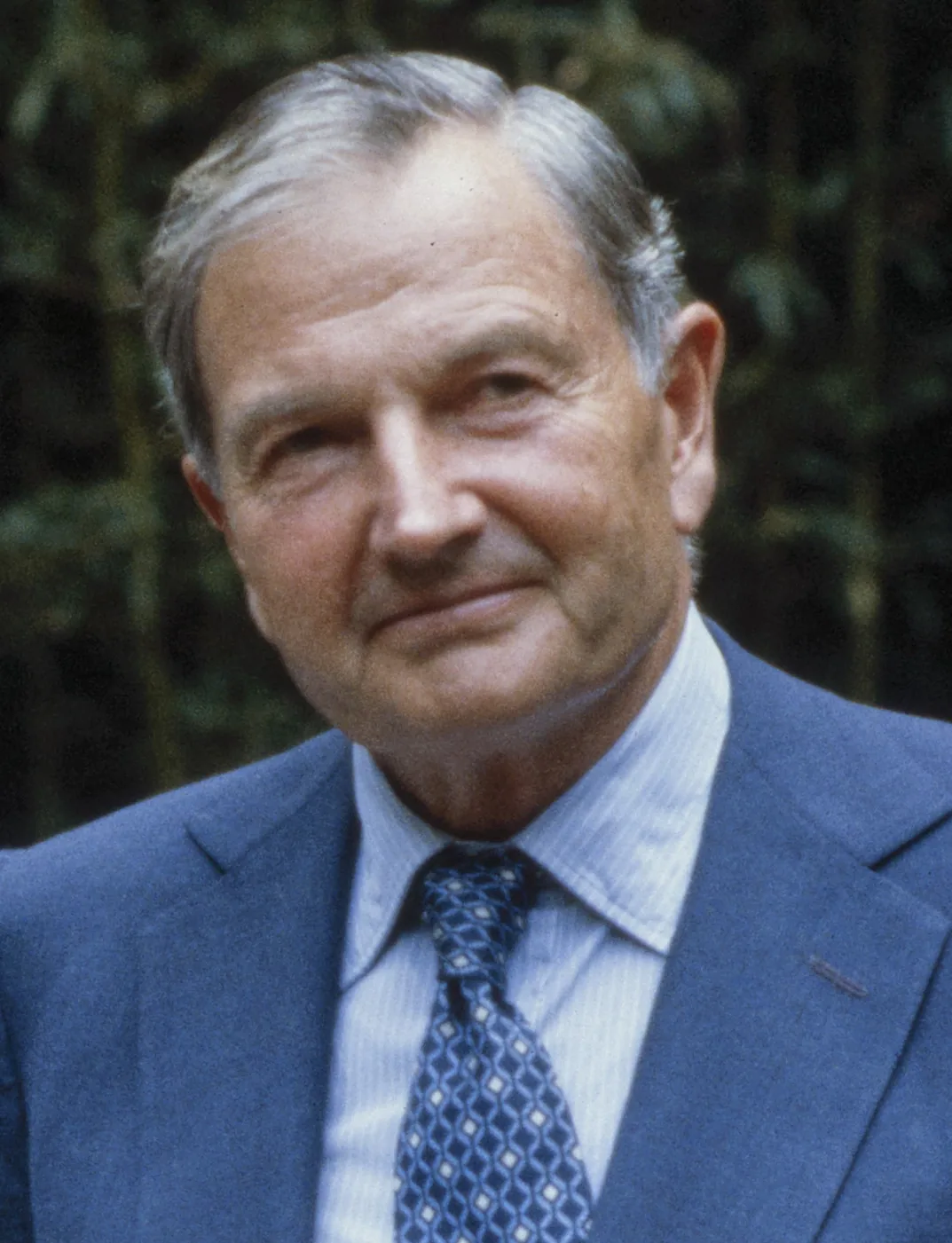
David Rockefeller (1915–2017) was an American banker who served as chairman and chief executive of Chase Manhattan Corporation. As the youngest son of John D. David Rockefeller appears in Archive investigations because of his documented leadership roles in multiple elite international policy organizations that critics have characterized as secretive or disproportionately influential in shaping global governance.
David Rockefeller (1915–2017) was an American banker who served as chairman and chief executive of Chase Manhattan Corporation. As the youngest son of John D. Rockefeller Jr. and the last surviving grandson of Standard Oil founder John D. Rockefeller Sr., he became a prominent figure in international finance, philanthropy, and foreign policy networks including the Council on Foreign Relations, Trilateral Commission, and Bilderberg Group.
- Source
- Wikimedia Commons
- Type
- Photograph
- License
- Public domain
- Photographer
- Gotfryd, Bernard, photographer
- Year
- 1984
Photo Information ▾
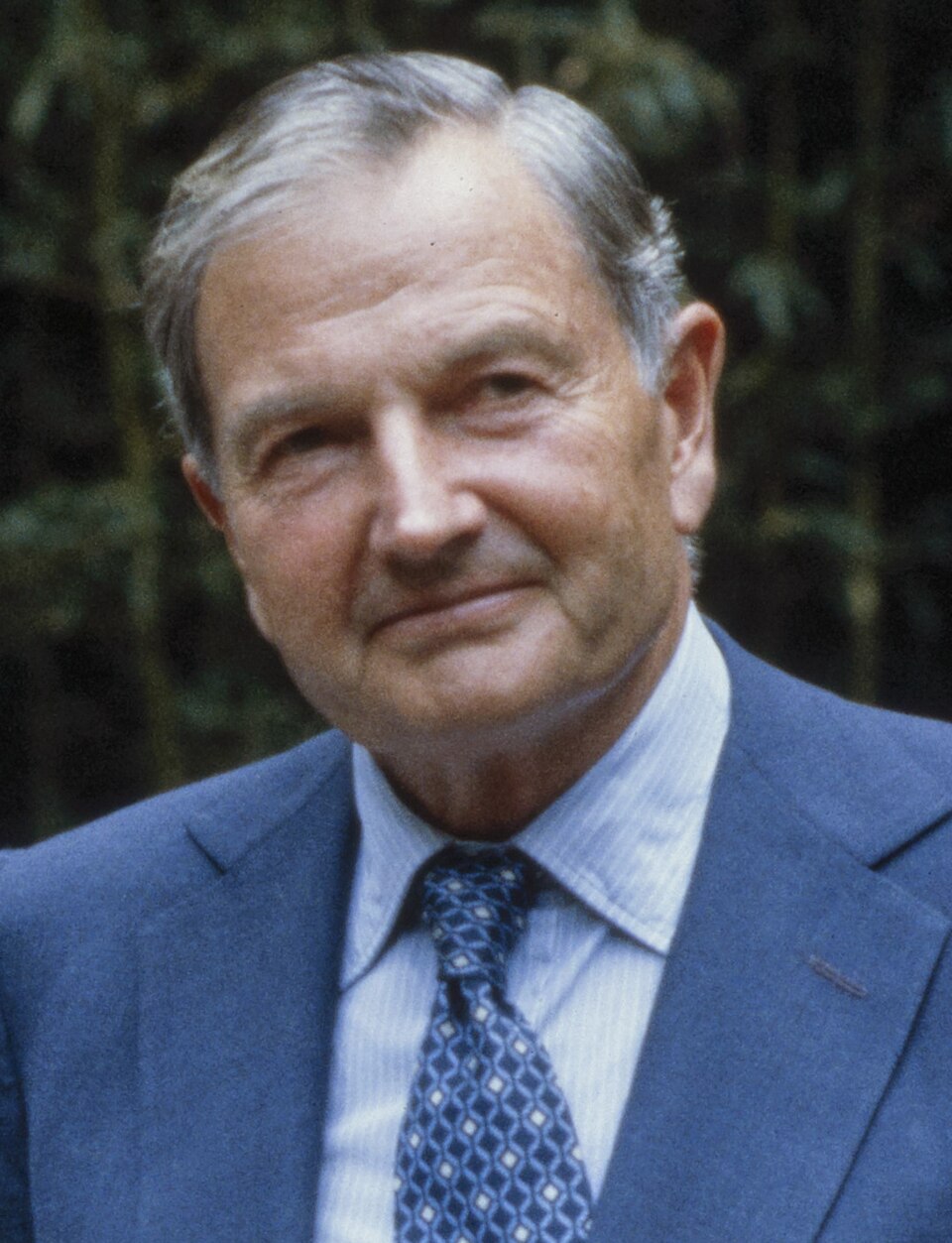
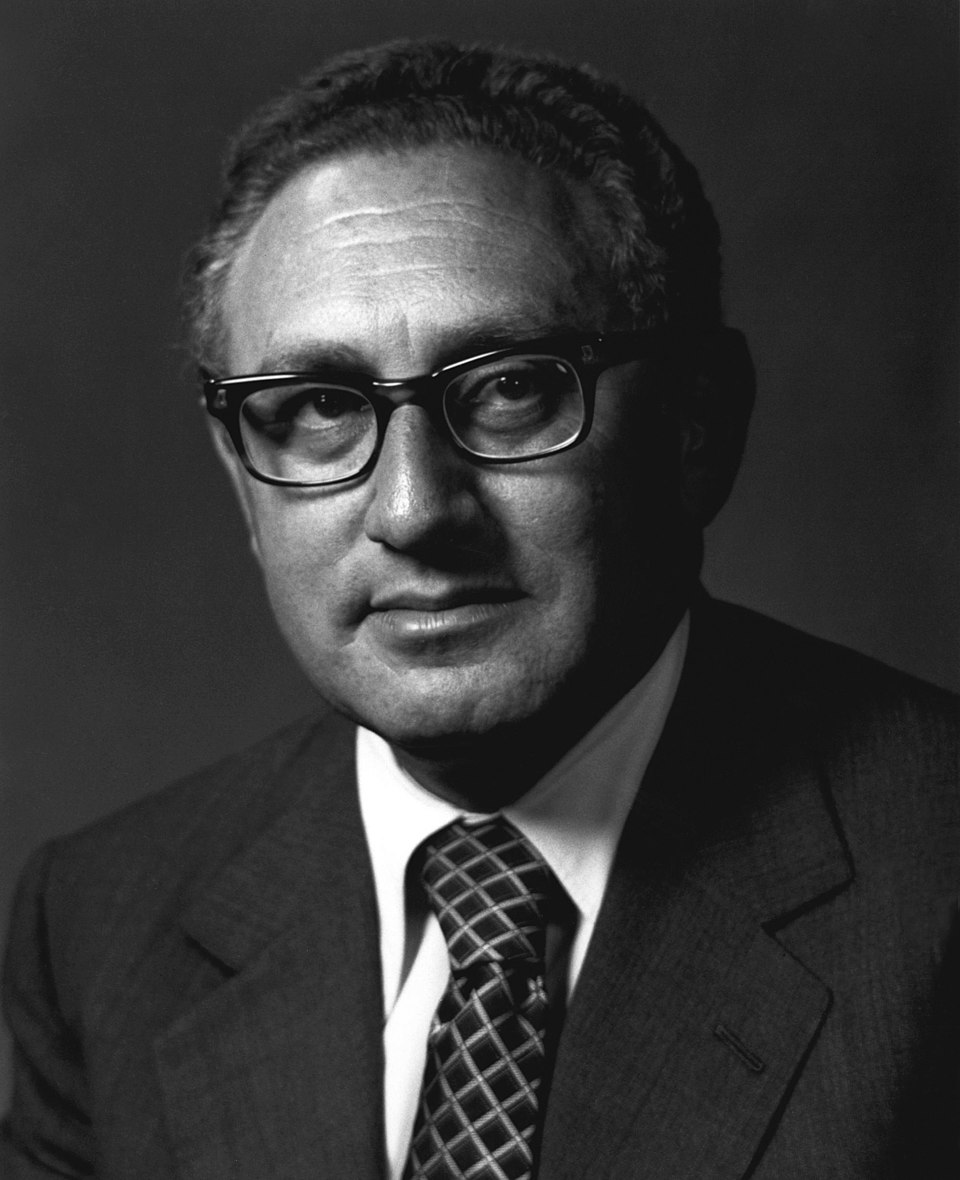
Title: Japanese Royal couple Akihito with Rockefeller Creator(s): Gotfryd, Bernard, photographer Date Created/Published: [1984] Medium: 1 photograph : color transparency ; 35mm (slide format)…
Japanese Royal couple Akihito with Rockefeller
View original ↗- Full name
- David Rockefeller
- Born
- June 12, 1915, New York City, New York, U.S.
- Died
- March 20, 2017, Pocantico Hills, New York, U.S.
- Family
- Son of John D. Rockefeller Jr. and Abby Aldrich Rockefeller; grandson of John D. Rockefeller Sr.
- Education
- Harvard University (B.S. 1936); London School of Economics (1936–1937); University of Chicago (Ph.D. Economics, 1940)
- Military service
- U.S. Army, 1942–1945; served in North Africa and France; discharged as captain
- Primary career
- Chase National Bank / Chase Manhattan Bank, 1946–1981; President 1961–1969; CEO and Chairman 1969–1981
- Council on Foreign Relations
- Director 1949–1985; Chairman 1970–1985; Honorary Chairman 1985–2017
- Trilateral Commission
- Co-founder (with Zbigniew Brzezinski) 1973; North American Chairman 1977–1991; Honorary Chairman 1991–2017
- Bilderberg Group
- Regular attendee from 1950s; member of steering committee
- Net worth
- Estimated $3.3 billion at death (Forbes 2017)
- Notable publication
- Memoirs (autobiography, 2002)
David Rockefeller appears in Archive investigations because of his documented leadership roles in multiple elite international policy organizations that critics have characterized as secretive or disproportionately influential in shaping global governance. His five-decade chairmanship of the Council on Foreign Relations, co-founding of the Trilateral Commission with Zbigniew Brzezinski, regular attendance at Bilderberg meetings, and extensive international banking connections have made him a focal point in research on transnational elite coordination. His own autobiography acknowledged cultivating relationships with world leaders and promoting economic integration, statements that critics cite as evidence of concentrated private influence over public policy. The Archive documents his verifiable institutional roles, public advocacy positions, and the historical debates surrounding his activities.
Identity
David Rockefeller was born June 12, 1915, in New York City, the youngest of six children of John D. Rockefeller Jr. and Abby Aldrich Rockefeller. He was the last surviving grandson of John D. Rockefeller Sr., who founded Standard Oil and became America's first billionaire. David Rockefeller grew up on the family estate in Pocantico Hills, New York, in an environment of immense wealth coupled with expectations of public service and philanthropy that characterized the Rockefeller family ethos following the public relations crises of the early 20th century.
He received his undergraduate degree from Harvard University in 1936, studied at the London School of Economics in 1936–1937, and earned a Ph.D. in economics from the University of Chicago in 1940, writing his dissertation on unused resources and economic waste. During World War II, he served as an officer in the U.S. Army from 1942 to 1945, stationed in North Africa and France, and was discharged with the rank of captain. He married Margaret "Peggy" McGrath in 1940; they had six children and remained married until her death in 1996.
David Rockefeller died on March 20, 2017, at age 101 at the family estate in Pocantico Hills. At his death, Forbes estimated his personal fortune at $3.3 billion, making him one of the world's oldest billionaires. His life spanned nearly the entire American Century, from the aftermath of World War I through the digital revolution, and his career intersected with virtually every major development in international finance and U.S. foreign policy during that period.
Career & Roles
David Rockefeller joined Chase National Bank in 1946 as assistant manager in the foreign department, beginning a 35-year career with the institution. Chase National Bank merged with Bank of the Manhattan Company in 1955 to form Chase Manhattan Bank, which became the second-largest bank in the United States. Rockefeller rose through executive positions focused on international banking, becoming executive vice president of Chase Manhattan in 1957, president in 1961, chief executive officer in 1969, and chairman of the board in 1969, positions he held until his retirement in 1981.
Under Rockefeller's leadership, Chase Manhattan expanded dramatically into international markets, opening branches and representative offices in dozens of countries. He personally cultivated relationships with heads of state, finance ministers, and central bankers worldwide. The bank's international division grew from a minor operation to account for the majority of Chase's profits by the 1970s. Rockefeller traveled extensively, making hundreds of trips abroad and maintaining what he described in his memoirs as a personal "Rolodex" with contacts in more than 200 countries.
Rockefeller's banking career was intertwined with his prominent role in urban development and civic affairs in New York City. He chaired the Downtown-Lower Manhattan Association and was instrumental in planning the World Trade Center complex. He served on numerous corporate and nonprofit boards, including the Rockefeller Center Corporation, and was deeply involved in the operations of Rockefeller family philanthropic institutions including the Rockefeller Brothers Fund and the Rockefeller Foundation, though he was never president of the latter.
After retiring from Chase Manhattan in 1981, Rockefeller remained active in business and international affairs through investment vehicles, continued involvement with policy organizations, and extensive travel. He maintained offices in Rockefeller Center until shortly before his death and continued meeting with world leaders well into his nineties.
Organizations & Networks
David Rockefeller's influence extended far beyond banking through his leadership of multiple elite international policy organizations. He joined the Council on Foreign Relations in 1941 at age 25 and became a director in 1949, serving continuously until 1985. He was elected chairman of the board in 1970 and served until 1985, then honorary chairman until his death in 2017. The Council on Foreign Relations, founded in 1921, brings together leaders from government, business, academia, and media to discuss foreign policy; its membership has included numerous secretaries of state, defense, and treasury, Supreme Court justices, CIA directors, and presidents.
In 1973, Rockefeller co-founded the Trilateral Commission with Zbigniew Brzezinski, then a Columbia University professor who would become President Carter's National Security Advisor. The Trilateral Commission was created to foster cooperation among North America, Western Europe, and Japan (the three main democratic-capitalist regions during the Cold War). Rockefeller served as North American chairman from 1977 to 1991 and honorary chairman thereafter. The Commission's founding membership included future President Jimmy Carter, future Vice President Walter Mondale, future Federal Reserve Chairman Paul Volcker, and executives from major multinational corporations.
Rockefeller was also a regular attendee and steering committee member of the Bilderberg Group, the annual private conference of European and North American elites founded in 1954 by Prince Bernhard of the Netherlands. Bilderberg meetings, held at rotating luxury locations, bring together approximately 120–150 participants from politics, banking, business, media, and academia for off-the-record discussions. Rockefeller attended Bilderberg meetings from the 1950s through at least the early 2000s.
Additional organizational affiliations included membership in the Business Council, the Business Roundtable, the International Advisory Board of JPMorgan Chase (after Chase's merger with Chemical Bank and later JPMorgan), and numerous cultural and educational institutions. He was a major benefactor of the Museum of Modern Art, Harvard University, the University of Chicago, and Rockefeller University.
Major Operations & Activities
Rockefeller's most significant activities involved expanding Chase Manhattan's international reach during a period of rapid globalization. He personally negotiated banking relationships with the Soviet Union, China, and numerous developing nations. In 1973, he opened Chase's first office in Moscow, the first major U.S. bank to establish a presence in the Soviet Union since the 1920s. In 1973, he also led the first U.S. banking delegation to China since the Communist revolution, meeting with Premier Zhou Enlai and laying groundwork for Chase's eventual representation in Beijing.
These initiatives were controversial during the Cold War. Critics accused Rockefeller of prioritizing profit over national security and ideology, while supporters argued that economic engagement could moderate communist regimes. Chase Manhattan's loans to Soviet bloc countries and its participation in financing international development projects placed Rockefeller at the center of debates about the relationship between international finance and U.S. foreign policy.
Through the Council on Foreign Relations, Rockefeller helped shape the post-World War II international order. The Council's influence on U.S. foreign policy is documented in historical scholarship; a significant proportion of senior State Department officials, National Security Council members, and cabinet secretaries have been CFR members. Historian Laurence Shoup's research, based on CFR archives, documents the organization's role in planning postwar international institutions including the United Nations, World Bank, and International Monetary Fund.
Rockefeller's philanthropic activities continued family traditions established by his grandfather and father. The Rockefeller Foundation, established in 1913 by John D. Rockefeller Sr., funded public health initiatives, agricultural research (including the Green Revolution), and social science research globally. David Rockefeller supported these initiatives and directed Rockefeller family resources toward art, historic preservation, and urban development, including the restoration of Colonial Williamsburg and Versailles.
Historical Importance
David Rockefeller occupies a unique position in 20th-century American history as a representative of dynastic wealth actively engaged in shaping international institutions during the Cold War and post-Cold War eras. His significance derives from the convergence of financial power (through Chase Manhattan), philanthropic influence (through Rockefeller family foundations), and policy network leadership (through the Council on Foreign Relations and Trilateral Commission) in a single individual over an exceptionally long career.
Historians of U.S. foreign policy regard the Council on Foreign Relations as central to the "foreign policy establishment" or "Eastern Establishment" that dominated American international strategy from the 1940s through the 1980s. Rockefeller's five-decade involvement with the CFR, including 15 years as chairman during the Vietnam War, détente with the Soviet Union and China, and the oil crises of the 1970s, placed him at the institutional heart of this network.
The Trilateral Commission represented an evolution of this establishment to accommodate the rise of Japan and the increasing integration of the global economy. Critics, particularly from both the political right (concerned about sovereignty) and left (concerned about corporate power), viewed the Trilateral Commission as evidence of coordinated transnational elite governance operating outside democratic accountability. Rockefeller's co-founding role and the subsequent entry of Trilateral members into the Carter administration (including Carter himself, Vice President Mondale, Secretary of State Cyrus Vance, Defense Secretary Harold Brown, and National Security Advisor Brzezinski) provided empirical support for these concerns.
Rockefeller's international banking activities during the 1970s occurred during a transformative period when developing nations borrowed heavily from Western banks using petrodollars from oil-exporting nations. This debt accumulation led to the Third World debt crisis of the 1980s, which had profound effects on Latin America, Africa, and Asia. Chase Manhattan was among the leading lenders, and Rockefeller personally negotiated many of these relationships.
Documented Controversies
Confirmed by Official Record Rockefeller's public statements about global governance have fueled controversy. In his 2002 autobiography Memoirs, he wrote: "Some even believe we are part of a secret cabal working against the best interests of the United States, characterizing my family and me as 'internationalists' and of conspiring with others around the world to build a more integrated global political and economic structure—one world, if you will. If that's the charge, I stand guilty, and I am proud of it." This passage is frequently cited by critics as an admission of coordinating transnational governance outside democratic processes.
Ongoing Historical Debate The secrecy surrounding Bilderberg Group meetings has generated sustained criticism. Participants commit to the Chatham House Rule (statements may be reported but not attributed), and no official minutes are published, though participant lists and general topics have been publicly disclosed since the 1990s. Journalists and activists have repeatedly criticized this opacity as inappropriate for meetings that include sitting prime ministers, cabinet members, central bank governors, and major media executives. Defenders argue the private format enables frank discussion impossible in public forums.
Credible Allegation Critics have alleged that Chase Manhattan's international lending practices prioritized profits over human rights concerns, citing the bank's relationships with apartheid South Africa, authoritarian regimes in Latin America, and the Shah's Iran. The bank faced shareholder resolutions and protests regarding South African loans in the 1970s and 1980s. Rockefeller defended these relationships as apolitical business decisions and argued that economic engagement could promote reform, a position consistent with U.S. government policy during much of this period but controversial among anti-apartheid activists.
Reported Association Rockefeller's meeting with Chilean dictator Augusto Pinochet in 1977, after the CIA-supported 1973 coup that overthrew elected President Salvador Allende, attracted criticism. Chase Manhattan had financial interests in Chile, and Rockefeller described the meeting as routine business diplomacy. Critics characterized it as legitimizing a regime responsible for documented human rights abuses including torture, disappearances, and extrajudicial killings of political opponents.
Established Fact The New York City fiscal crisis of 1975 involved Rockefeller in controversial negotiations as chairman of Chase Manhattan, one of the city's major creditors. The bank and other creditors pressured the city to accept austerity measures and state oversight through the Municipal Assistance Corporation. Critics argued this represented undemocratic creditor control over elected government, while supporters contended the city faced genuine bankruptcy and required fiscal discipline.
Disputed Claim Conspiracy theorists have alleged Rockefeller involvement in various covert operations and secret government activities, often without credible evidence. These allegations range from control over U.S. foreign policy to involvement in assassinations and coups. Such claims typically conflate documented policy influence through organizations like the CFR with unsupported assertions of direct operational control. The Archive distinguishes between verifiable institutional roles and unsupported speculation.
Investigations & Legal Proceedings
David Rockefeller was never charged with any crime. However, Chase Manhattan Bank faced various regulatory investigations and lawsuits during his tenure, typical for major financial institutions.
Official Record In 1979, Chase Manhattan faced congressional scrutiny regarding its role in facilitating the Shah of Iran's entry into the United States for medical treatment. The Shah's admission triggered the Iran hostage crisis when Iranian revolutionaries seized the U.S. Embassy in Tehran, holding 52 Americans hostage for 444 days. Congressional testimony and subsequent historical research documented that Rockefeller, along with Henry Kissinger, personally lobbied the Carter administration to admit the Shah. State Department officials had warned that this could endanger the embassy, advice that proved accurate.
Government Finding U.S. banking regulators periodically examined Chase Manhattan's lending practices, foreign exchange operations, and compliance with banking laws. The bank paid various fines and settlements related to regulatory violations during and after Rockefeller's tenure, standard for large financial institutions but not directly attributed to Rockefeller's personal decisions.
Confirmed by Court After Rockefeller's death, his estate went through routine probate proceedings. His will directed that proceeds from the eventual sale of his art collection (valued at approximately $500 million) go to charitable institutions, primarily those associated with the Rockefeller family. The estate's administration was not controversial.
Denials & Disputes
Rockefeller consistently denied that his organizational activities represented a conspiracy to undermine national sovereignty or democratic governance. In Memoirs and numerous interviews, he characterized the Council on Foreign Relations, Trilateral Commission, and Bilderberg Group as forums for discussion and exchange of ideas among leaders who would interact regardless, arguing that institutional settings provided more transparency than purely private relationships.
Regarding the "one world" passage in his memoir, Rockefeller maintained he was acknowledging support for international cooperation through institutions like the United Nations, World Trade Organization, and multinational development banks—positions he considered mainstream among internationalists of both political parties during the Cold War and globalization era. He argued that critics mischaracterized policy preferences (multilateralism, free trade, international institutions) as conspiracy.
Rockefeller defended Chase Manhattan's lending to controversial regimes as consistent with U.S. government policy and argued that economic engagement could promote stability and development. He maintained that banks should not make foreign policy, a prerogative of elected governments, and that Chase followed U.S. law and regulations in all jurisdictions where it operated.
Regarding the Shah's admission to the United States, Rockefeller later acknowledged in his memoir that he had lobbied for humanitarian reasons (the Shah needed cancer treatment) and personal relationship (he had known the Shah for decades), but maintained he had no responsibility for the embassy seizure, which he attributed to the Iranian revolutionaries' actions.
Legacy & Historical Debate
David Rockefeller's legacy remains contested between those who view him as a statesman-banker who promoted international cooperation and economic development and critics who see him as an exemplar of unaccountable elite power operating through opaque networks.
Scholarship on the Council on Foreign Relations documents its substantial influence on U.S. foreign policy, particularly during the Cold War. Historians Laurence Shoup, Inderjeet Parmar, and others have analyzed CFR archives demonstrating the organization's role in planning postwar international institutions, supporting particular policy directions, and providing personnel for government positions. This research confirms significant influence while debating whether this constituted appropriate expert input or inappropriate concentration of power.
The Trilateral Commission's role has been similarly analyzed. Political scientist Stephen Gill's scholarship documented the Commission's promotion of neoliberal economic policies and its members' subsequent entry into government positions in the United States, Europe, and Japan during the late 1970s and 1980s. Critics argue this represented coordinated imposition of a particular economic model serving corporate interests; defenders characterize it as policy intellectuals reaching similar conclusions about effective economic management.
Rockefeller's banking legacy is mixed. Chase Manhattan expanded dramatically under his leadership and became genuinely global, but also faced the Third World debt crisis, which caused massive write-downs in the 1980s and contributed to economic distress in borrowing nations. His successors dealt with these consequences after his retirement.
His philanthropic legacy, through continued support for Rockefeller family institutions and his personal art collection donations, is generally viewed positively by beneficiary institutions and art historians, though critics note that philanthropic influence can also represent power exercised outside democratic processes.
Continue Investigating
David Rockefeller's documented roles position him at the intersection of multiple Archive investigations. His chairmanship of the Council on Foreign Relations connects directly to research on that organization's influence on U.S. foreign policy. His co-founding of the Trilateral Commission and regular Bilderberg attendance link to examinations of transnational elite coordination. His position as the most prominent member of the Rockefeller family in the late 20th century connects to broader investigations of dynastic wealth and multi-generational influence.
Associations with Henry Kissinger (fellow Trilateral Commission member and foreign policy collaborator), Nelson Rockefeller (his brother, who served as Vice President), and numerous other political and financial figures documented in Archive profiles illustrate the network structure that critics characterize as a "power elite." His leadership of Chase Manhattan (predecessor to JPMorgan Chase) connects to research on major financial institutions' political influence.
Primary sources include his autobiography Memoirs (2002), which provides his own account of activities and relationships; Council on Foreign Relations archives; Chase Manhattan corporate records; congressional testimony regarding the Shah of Iran; and extensive newspaper coverage spanning seven decades. Academic sources include Laurence Shoup's research on the CFR, Inderjeet Parmar's work on foundations and foreign policy networks, and Stephen Gill's analysis of the Trilateral Commission.
The Archive's related investigations on the Rockefeller family's broader influence, the Council on Foreign Relations, the Bilderberg Group, and the Trilateral Commission provide essential context for understanding David Rockefeller's individual role within larger institutional and family networks that shaped 20th-century international affairs.
- 1915Born June 12 in New York City, youngest son of John D. Rockefeller Jr.
- 1936Graduated from Harvard University; began studies at London School of Economics
- 1940Received Ph.D. in economics from University of Chicago; married Margaret McGrath
- 1942Entered U.S. Army; served in North Africa and France during World War II
- 1946Joined Chase National Bank as assistant manager in the foreign department
- 1949Became director of the Council on Foreign Relations
- 1961Became president of Chase Manhattan Bank
- 1969Became CEO and chairman of Chase Manhattan Bank
- 1970Became chairman of the Council on Foreign Relations
- 1973Co-founded the Trilateral Commission with Zbigniew Brzezinski; opened Chase's Moscow office
- 1979Lobbied Carter administration to admit Shah of Iran for medical treatment; Iran hostage crisis began
- 1981Retired from Chase Manhattan Bank after 35 years
- 1985Stepped down as CFR chairman; became honorary chairman
- 2002Published autobiography 'Memoirs' including controversial 'one world' passage
- 2017Died March 20 at age 101 in Pocantico Hills, New York
- S1David Rockefeller, Philanthropist and Head of Chase Manhattan, Dies at 101The New York Times · mainstream
- S2
- S3The Trilateral Commission - AboutTrilateral Commission · primary
- S4
- S5
- S6How the Rockefellers Shaped the WorldBBC · mainstream
- S7The Trilateral Commission and Elite Planning for World Management by Stephen GillJSTOR - Alternatives: Global, Local, Political · academic
- S8David RockefellerWikipedia · reference
If you're learning about this topic for the first time, these are the best places to continue — documented evidence and historical relationships are the guide.
David Rockefeller is documented in the evidence record of this published dossier.
Chairman 1970–1985; director 1949–1985; honorary chairman 1985–2017.
Close collaborator in foreign policy networks; fellow Trilateral member.