Daniel Ellsberg
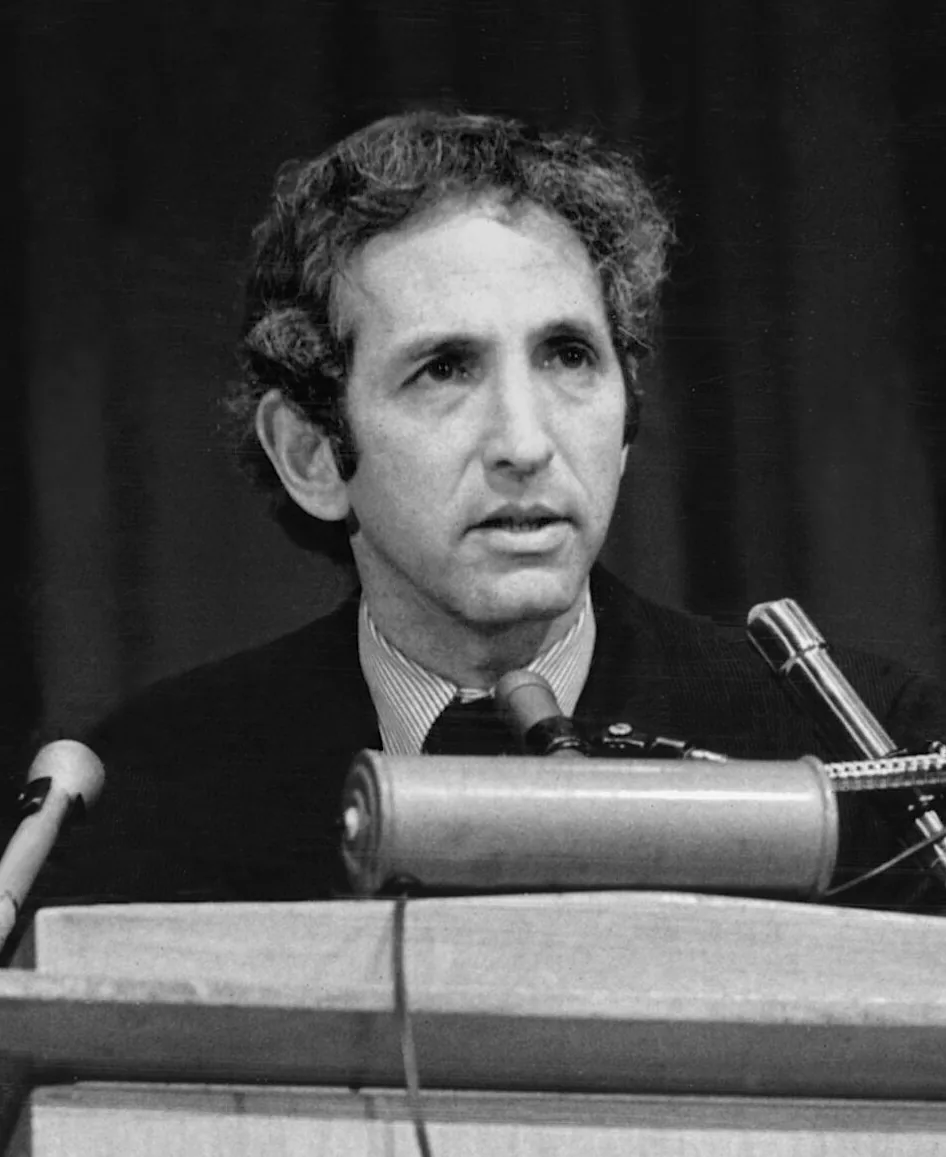
Daniel Ellsberg (1931–2023) was a U.S. military analyst, RAND Corporation researcher, and government consultant who in 1971 leaked the Pentagon Papers — a classified Defense Department study documenting systematic official deception about the Vietnam War — to The New York Times and other newspapers. Ellsberg occupies a pivotal position in The Archive's investigations because he transformed from insider analyst to public whistleblower, directly exposing the evidentiary gap between classified government assessments and official public statements on Vietnam.
Daniel Ellsberg (1931–2023) was a U.S. military analyst, RAND Corporation researcher, and government consultant who in 1971 leaked the Pentagon Papers — a classified Defense Department study documenting systematic official deception about the Vietnam War — to The New York Times and other newspapers. His disclosure triggered landmark Supreme Court precedent on prior restraint, a federal espionage prosecution that collapsed amid government misconduct, and a national reckoning with executive secrecy.
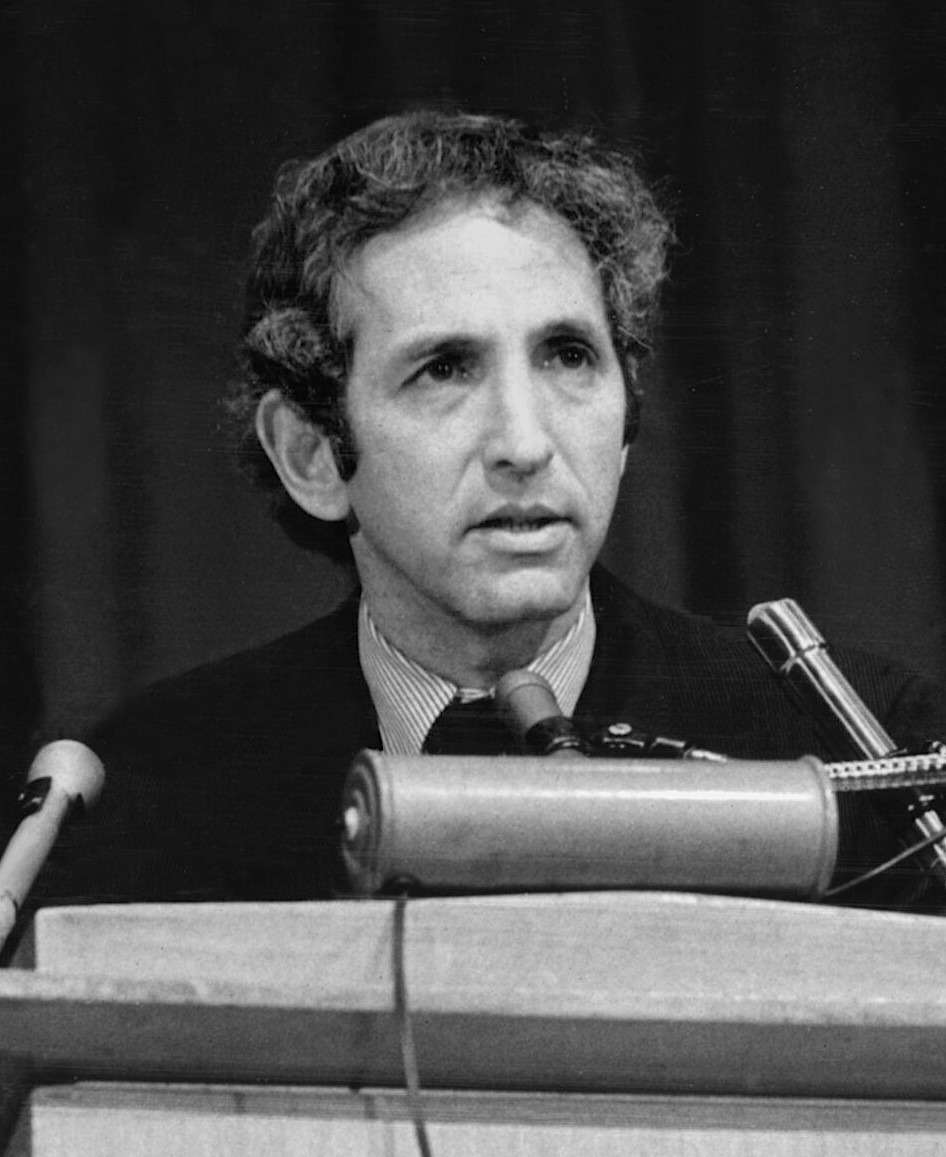
- Source
- Wikimedia Commons
- Type
- Photograph
- License
- Public domain
- Photographer
- Gotfryd, Bernard, photographer
- Year
- 1972
Photo Information ▾
Daniel Ellsberg, speaking at a press conference, New York City
Daniel Ellsberg, speaking at a press conference, New York City
View original ↗- Full name
- Daniel Ellsberg
- Born
- April 7, 1931, Chicago, Illinois
- Died
- June 16, 2023, Kensington, California
- Education
- Harvard University (A.B. 1952, Ph.D. economics 1962); King's College, Cambridge (1952–54, Woodrow Wilson Fellow)
- Military service
- U.S. Marine Corps, 1954–1957 (First Lieutenant, rifle company commander)
- Key roles
- RAND Corporation strategic analyst (1959–1964, 1967–1970); Department of Defense consultant (1964–1965); State Department Vietnam staff (1965–1967)
- Security clearance
- Top Secret / Sensitive Compartmented Information (active through 1969)
- Known for
- Leaking the Pentagon Papers (1971); defendant in U.S. v. Ellsberg (dismissed 1973)
- Later career
- Author, nuclear-policy critic, anti-war and whistleblower advocate
- Major works
- Secrets: A Memoir of Vietnam and the Pentagon Papers (2002); The Doomsday Machine: Confessions of a Nuclear War Planner (2017)
Ellsberg occupies a pivotal position in The Archive's investigations because he transformed from insider analyst to public whistleblower, directly exposing the evidentiary gap between classified government assessments and official public statements on Vietnam. His leak of the Pentagon Papers provided documentary proof that four administrations had systematically misled Congress and the public about the war's prospects, costs, and strategic rationale. The Gulf of Tonkin materials within that study — which Ellsberg had analyzed firsthand while at RAND — became key evidence in later historical reassessments of how the war was escalated. His case established legal and cultural precedents for subsequent national-security leaks, from Snowden to the Pentagon's post-9/11 documents, making him a foundational figure in modern debates over classification, whistleblowing, and democratic accountability.
# Daniel Ellsberg
Identity
Daniel Ellsberg was born April 7, 1931, in Chicago, Illinois, to Harry and Adele Ellsberg. His father was a structural engineer; his mother, a pianist, died in a 1946 automobile accident that also injured Daniel and killed his younger sister. He attended the Cranbrook School in Michigan, then earned an A.B. in economics summa cum laude from Harvard University in 1952. He spent 1952–1954 as a Woodrow Wilson Fellow at King's College, Cambridge, studying economic theory. Returning to Harvard, he completed his Ph.D. in economics in 1962 with a dissertation on decision theory under risk, later influential in strategic-choice modeling.
Ellsberg served in the U.S. Marine Corps from 1954 to 1957, reaching the rank of First Lieutenant and commanding a rifle company. After active duty, he joined the RAND Corporation in 1959 as a strategic analyst working on nuclear command-and-control, limited-war theory, and deterrence scenarios. He held Top Secret/Sensitive Compartmented Information clearance and consulted for the Defense Department, the White House, and the State Department throughout the 1960s. He married Carol Cummings in 1952 (divorced 1965) and Patricia Marx in 1970; he had two children from his first marriage and one stepson from his second.
Career & Roles
RAND Corporation (1959–1964, 1967–1970): At RAND, Ellsberg contributed to studies of nuclear strategy, crisis decision-making, and escalation dynamics. He worked closely with analysts modeling thermonuclear war outcomes and consulted on the Kennedy administration's review of nuclear-war plans in 1961. His 1961 RAND paper, later declassified, warned that existing U.S. war plans risked hundreds of millions of deaths and left the president with few flexible options.
Pentagon & Vietnam assignments (1964–1967): In August 1964, Ellsberg was at the Pentagon when the Gulf of Tonkin incident occurred. He drafted options papers for Assistant Secretary of Defense John McNaughton and later told interviewers he harbored early doubts about the official account of the second attack on August 4, which he knew rested on ambiguous sonar and signals intelligence. From 1965 to 1967, he served on General Edward Lansdale's State Department liaison team in Vietnam, conducting pacification assessments in contested provinces and witnessing firsthand the gap between optimistic cables to Washington and conditions on the ground.
Returning to RAND in 1967, Ellsberg was given access to a classified 47-volume study commissioned by Secretary of Defense Robert McNamara: United States–Vietnam Relations, 1945–1967, later known as the Pentagon Papers. McNamara had ordered the study in 1967 to create an internal record of decision-making; it was completed in 1969 and classified Top Secret–Sensitive. Ellsberg was one of fewer than a dozen individuals with full access.
Organizations & Networks
Ellsberg moved in overlapping networks of Cold War defense intellectuals, government officials, and antiwar activists:
- ·RAND Corporation: His colleagues included nuclear strategists Albert Wohlstetter, Herman Kahn, and Thomas Schelling. RAND's Santa Monica headquarters served as an intellectual hub linking Pentagon contractors, Air Force planners, and academic economists.
- ·Defense Department: He worked under Robert McNamara, John McNaughton, and Assistant Secretary of Defense for International Security Affairs Paul Warnke. He briefed senior officials including National Security Advisor McGeorge Bundy and, in 1961, President-elect John F. Kennedy's transition team.
- ·Harvard and Cambridge networks: His academic mentors included economist Thomas Schelling and decision theorist Howard Raiffa. Through Harvard, he knew Henry Kissinger socially; Kissinger consulted him on Vietnam options in 1968–1969 during the Nixon transition.
- ·Antiwar movement (1969–1971): Disillusioned by 1969, Ellsberg began attending teach-ins and meetings with antiwar organizers, including Randy Kehler, whose public declaration of draft resistance Ellsberg later cited as pivotal to his decision to leak. He met activists through his second wife, Patricia Marx, a radio producer with ties to progressive circles.
Major Operations & Activities
Copying the Pentagon Papers (1969–1970): Beginning in October 1969, Ellsberg secretly photocopied large sections of the Pentagon Papers, first at RAND and later using a Xerox machine at an advertising firm with the help of his former RAND colleague Anthony Russo. The process took months; he initially shared copies with Senate Foreign Relations Committee staff hoping for congressional hearings. When that avenue failed, he resolved to release the documents publicly.
Disclosure to the press (March–June 1971): In March 1971, Ellsberg provided portions of the study to New York Times reporter Neil Sheehan. The Times organized a secret team to review and write stories based on the material. On June 13, 1971, the Times published the first installment, revealing that the Johnson administration had secretly escalated the war while publicly promising restraint and that the Kennedy and Johnson teams had systematically doubted the war was winnable. After the Nixon Justice Department obtained a temporary restraining order halting further Times publication on June 15 — the first such prior restraint in U.S. history — Ellsberg gave copies to The Washington Post (published June 18) and subsequently to more than a dozen other newspapers.
Supreme Court case (*New York Times Co. v. United States*, 1971): The government's attempts to enjoin publication reached the Supreme Court within days. On June 30, 1971, the Court ruled 6–3 that prior restraint was unconstitutional absent proof of direct, immediate, and irreparable harm to national security — a threshold the government failed to meet. The decision became a landmark in First Amendment jurisprudence and validated the newspapers' right to publish classified information obtained from a source.
Federal prosecution (1971–1973): Ellsberg surrendered to federal authorities in Boston on June 28, 1971. He and Anthony Russo were indicted in Los Angeles in December 1971 on charges under the Espionage Act, theft of government property, and conspiracy; the indictment was later superseded with additional counts, carrying a potential 115-year sentence. The trial began in January 1973 before Judge William Matthew Byrne Jr. in U.S. District Court, Central District of California.
Historical Importance
Ellsberg's disclosure had immediate and enduring consequences:
1. Exposure of systematic deception: The Pentagon Papers documented that presidents Truman, Eisenhower, Kennedy, and Johnson had each widened U.S. involvement in Vietnam while concealing plans and assessments from Congress and the public. McNamara's own 1965 memo, included in the study, acknowledged that the odds of success were no better than one in three, even as he publicly defended expansion.
2. Gulf of Tonkin evidence: The study confirmed that the Tonkin Gulf Resolution, passed by Congress in August 1964 with only two dissenting votes, had been drafted months before the incidents it purported to respond to, and that the administration had serious doubts about whether the alleged second attack on U.S. destroyers had even occurred. Ellsberg's analysis contributed to the later historical consensus that the second incident was at best ambiguous and at worst fabricated from misread radar and sonar.
3. Legal and constitutional precedent: The Supreme Court's ruling reinforced protections for press freedom and constrained executive power to suppress publication on national-security grounds. It remains a foundational case in media-law curricula and subsequent whistleblower defenses.
4. Cultural icon of whistleblowing: Ellsberg became the template for later national-security leakers, from Daniel Hale and Chelsea Manning to Edward Snowden and Reality Winner, each of whom invoked his precedent. His memoir, Secrets (2002), provided a detailed first-person account of his journey from Cold Warrior to dissident.
5. Impact on the Nixon presidency: The leak accelerated the administration's descent into illegal surveillance and obstruction, directly contributing to Watergate.
Documented Controversies
Confirmed by Court and Official Record Ellsberg's unauthorized removal and disclosure of thousands of pages of Top Secret documents violated his security clearance and federal law. He never disputed the facts of copying and leaking; his defense rested on the assertion that the public interest and the illegality of the war justified civil disobedience.
Confirmed by Court and Inspector General Findings In response to the leak, President Nixon and aides H.R. Haldeman and John Ehrlichman authorized formation of the White House "Plumbers" unit to stop leaks and discredit Ellsberg. On September 3, 1971, operatives E. Howard Hunt and G. Gordon Liddy broke into the Los Angeles office of Ellsberg's psychiatrist, Dr. Lewis Fielding, seeking records to smear Ellsberg. FBI documents and later congressional testimony confirmed the break-in was ordered by senior White House officials.
Confirmed by Court Record During Ellsberg's trial in April 1973, prosecutors disclosed that Judge Byrne had met privately with President Nixon and White House counsel John Ehrlichman, who offered Byrne the directorship of the FBI. Byrne reported the meetings to the parties; defense attorneys moved to dismiss. Shortly afterward, the government admitted the FBI had conducted warrantless wiretaps on Ellsberg's phone and that recordings had been "lost."
Confirmed by Court On May 11, 1973, Judge Byrne dismissed all charges against Ellsberg and Russo with prejudice, citing "improper government conduct shielded so long from public view" and prosecutorial misconduct "offend[ing] a sense of justice." The dismissal terminated the case permanently; Ellsberg was never convicted.
Historical Consensus Ellsberg's leak accelerated public opposition to the Vietnam War and Congressional efforts to limit executive war-making, culminating in the War Powers Resolution of 1973. Polling data from Gallup and Harris showed a measurable decline in public trust in government statements about Vietnam following the Pentagon Papers' publication.
Disputed Claim — Government Position vs. Defendant Position The Nixon administration argued that disclosure harmed intelligence sources, diplomatic relations, and troop safety. Ellsberg countered, and no witness at trial provided specific evidence of casualties or compromised operations attributable to the Papers. Subsequent declassification reviews found no documented harm to individuals or ongoing operations, though diplomatic embarrassment was real.
Investigations & Legal Proceedings
Federal grand jury and indictment (1971): A federal grand jury in Los Angeles returned a 15-count indictment against Ellsberg and Russo in December 1971. Charges included violations of 18 U.S.C. § 793 (Espionage Act — unauthorized retention and transmission of national-defense information), theft of government property, and conspiracy. The indictment was superseded in 1972, adding counts and clarifying overt acts.
Pre-trial motions (1972–1973): Defense counsel Leonard Boudin, Charles Nesson, and Leonard Weinglass filed motions challenging the Espionage Act's constitutionality, seeking dismissal on selective-prosecution grounds, and demanding disclosure of government surveillance. Judge Byrne denied most motions, though he ordered the government to produce records of any electronic surveillance.
Trial (January–May 1973): The trial proceeded with jury selection in January. Prosecutors argued that Ellsberg knowingly violated his oath and the law regardless of motive. The defense sought to introduce evidence of the war's illegality and the public value of disclosure; Byrne ruled such evidence inadmissible. Witnesses included RAND officials, government classification experts, and FBI agents.
Dismissal with prejudice (May 11, 1973): After revelations of the Fielding break-in, undisclosed wiretaps, and ex parte White House contacts, Judge Byrne found that "the totality of the circumstances of this case offend 'a sense of justice.'" He dismissed all charges with prejudice under his supervisory power, citing prosecutorial misconduct and government interference.
Congressional investigations (1973–1975): The Senate Watergate Committee (Ervin Committee) investigated the Plumbers' activities, including the Fielding break-in. Testimony from Ehrlichman, Liddy, and Hunt confirmed the operation targeted Ellsberg. The House Judiciary Committee included obstruction related to the Ellsberg case in Articles of Impeachment against Nixon.
Denials & Disputes
The Nixon White House consistently denied that Ellsberg's prosecution was political retaliation, characterizing him as a criminal and traitor. National Security Advisor Henry Kissinger publicly called Ellsberg "the most dangerous man in America" in a 1971 background briefing, a remark later widely reported. Nixon, in private White House tapes released in the 1990s, discussed smearing Ellsberg and expressed frustration that the Pentagon Papers focused on Democratic administrations, limiting their political utility against Democrats.
Ellsberg maintained throughout that his intent was not to harm the United States but to end an illegal war and restore honest debate. He expressed regret that he had not leaked earlier, potentially preventing years of additional casualties. In testimony and writings, he argued that classification had been used not to protect national security but to conceal policy failures and official dishonesty.
Conservative commentators and some Vietnam veterans criticized Ellsberg for violating his oath and alleged that his actions undermined military morale and U.S. credibility. Liberal and civil-libertarian advocates hailed him as a patriot and herald of transparency.
Legacy & Historical Debate
Ellsberg's place in history remains contested along predictable ideological lines. Defenders cite the Supreme Court's vindication of publication, the trial's dismissal, and the Papers' documentary proof of official deception. Critics note that he violated his legal obligations and that criminal charges, though dismissed on procedural grounds, reflected real statutory violations.
Scholars of Vietnam, media law, and U.S. foreign policy broadly agree on several points:
- ·The Pentagon Papers transformed public understanding of the war and remain a primary source for historians analyzing U.S. decision-making in Southeast Asia.
- ·The leak helped establish a norm — however contested — that classified information may be disclosed when it reveals illegality or systematic deception, even at personal legal risk.
- ·Ellsberg's case demonstrated the dangers of executive overreach and secret surveillance, themes that recur in debates over the Patriot Act, NSA bulk collection, and post-9/11 whistleblower prosecutions.
Ellsberg remained an active public intellectual until his death in 2023, advocating against nuclear proliferation, U.S. military interventions, and prosecution of whistleblowers. He publicly supported Chelsea Manning, Edward Snowden, and Reality Winner, offering legal-defense assistance and moral encouragement. His 2017 book, The Doomsday Machine, drew on his 1960s RAND work to warn of continued nuclear risks and accidental-war scenarios.
Continue Investigating
Readers tracing Ellsberg's story will find essential context in the-pentagon-papers dossier, which details the study's creation, contents, Supreme Court case, and long-term impact. The the-gulf-of-tonkin-incident dossier explains the August 1964 events Ellsberg analyzed and the disputed evidence underlying Congress's war authorization — themes central to his disillusionment. Cross-reference richard-nixon, whose administration prosecuted Ellsberg and authorized the Plumbers' crimes, and henry-kissinger, who privately lobbied for aggressive retaliation. robert-mcnamara commissioned the study Ellsberg leaked; lyndon-b-johnson and dean-rusk appear throughout the Papers' documentation of escalation decisions. the-new-york-times and the-washington-post were co-defendants in the Supreme Court case. For legal context, see supreme-court and the landmark prior-restraint ruling.
Broader investigations into government secrecy and whistleblowing connect through operation-northwoods (declassified Joint Chiefs deception plans), snowden-and-nsa-mass-surveillance (a direct successor leak), the-iran-contra-affair (another exposure of covert policy), cointelpro (FBI domestic surveillance exposed by leaks), the-iraq-war-wmd-intelligence-failure (parallels in official deception), and the-death-of-gary-webb-and-dark-alliance (costs of investigative journalism). For Cold War intelligence context, explore operation-mockingbird, the-cambridge-five, and mkultra-and-cia-mind-control. The structural questions Ellsberg raised about executive power persist in manufactured-consent-chomsky-on-media, council-on-foreign-relations-influence, and the-military-industrial-complex.
- 1931Born April 7 in Chicago, Illinois.
- 1952Graduated summa cum laude from Harvard; began fellowship at Cambridge.
- 1954Commissioned as U.S. Marine Corps officer; served until 1957.
- 1959Joined RAND Corporation as strategic analyst.
- 1964At Pentagon during Gulf of Tonkin incident; drafted options papers.
- 1965Deployed to Vietnam with State Department liaison team under General Lansdale.
- 1967Returned to RAND; gained access to Pentagon Papers study.
- 1969Began secretly photocopying Pentagon Papers with Anthony Russo's assistance.
- 1971Provided Papers to New York Times; Times published June 13; government sought injunction June 15; surrendered to authorities June 28.
- 1971Supreme Court ruled 6–3 in New York Times Co. v. United States (June 30), lifting prior restraint.
- 1971White House Plumbers burglarized psychiatrist's office (September 3).
- 1971Indicted on Espionage Act and other charges (December).
- 1973Trial began January; dismissed with prejudice May 11 due to government misconduct.
- 2002Published memoir *Secrets: A Memoir of Vietnam and the Pentagon Papers*.
- 2017Published *The Doomsday Machine: Confessions of a Nuclear War Planner*.
- 2023Died June 16 in Kensington, California, age 92.
- S1New York Times Co. v. United States, 403 U.S. 713 (1971)Supreme Court of the United States · primary
- S2The Pentagon Papers: The Defense Department History of United States Decisionmaking on VietnamNational Archives · primary
- S3Daniel Ellsberg, Who Leaked the Pentagon Papers, Dies at 92The New York Times · mainstream
- S4New York Times Company v. United StatesOyez (Supreme Court multimedia archive) · reference
- S5Pentagon PapersWikipedia · reference
- S6United States v. Russo, 480 F.2d 1228 (9th Cir. 1973)CourtListener · primary
- S7
- S8Report of the Commission on Protecting and Reducing Government Secrecy (Moynihan Commission, 1997)U.S. Government Publishing Office · primary
- S9The Doomsday Machine: Confessions of a Nuclear War PlannerBloomsbury Publishing · book
- S10Daniel EllsbergWikipedia · reference
If you're learning about this topic for the first time, these are the best places to continue — documented evidence and historical relationships are the guide.
Daniel Ellsberg is documented in the evidence record of this published dossier.
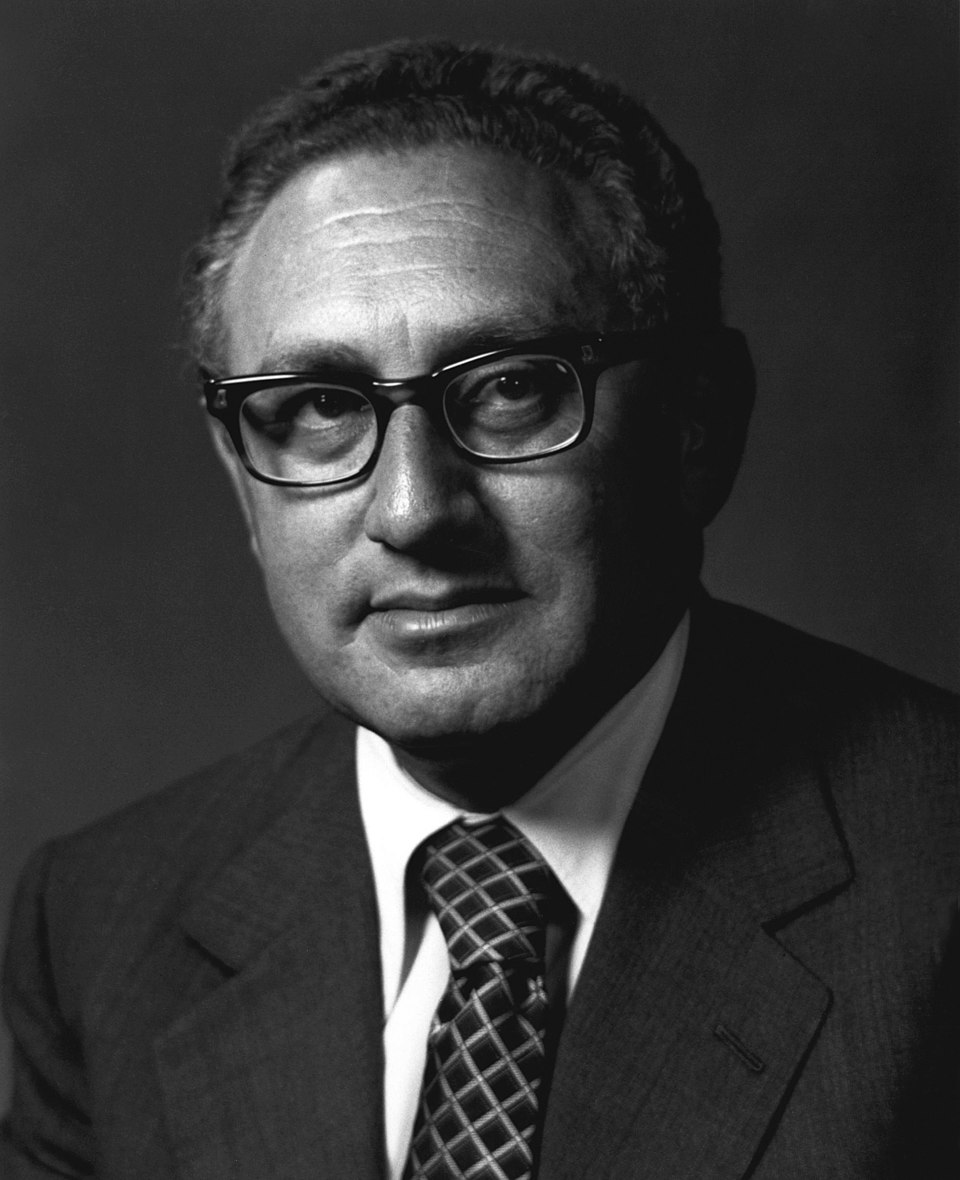
National Security Advisor who called Ellsberg 'most dangerous man in America.'.
Ruled 6–3 in New York Times Co. v. United States (1971) against prior restraint.