Richard Nixon
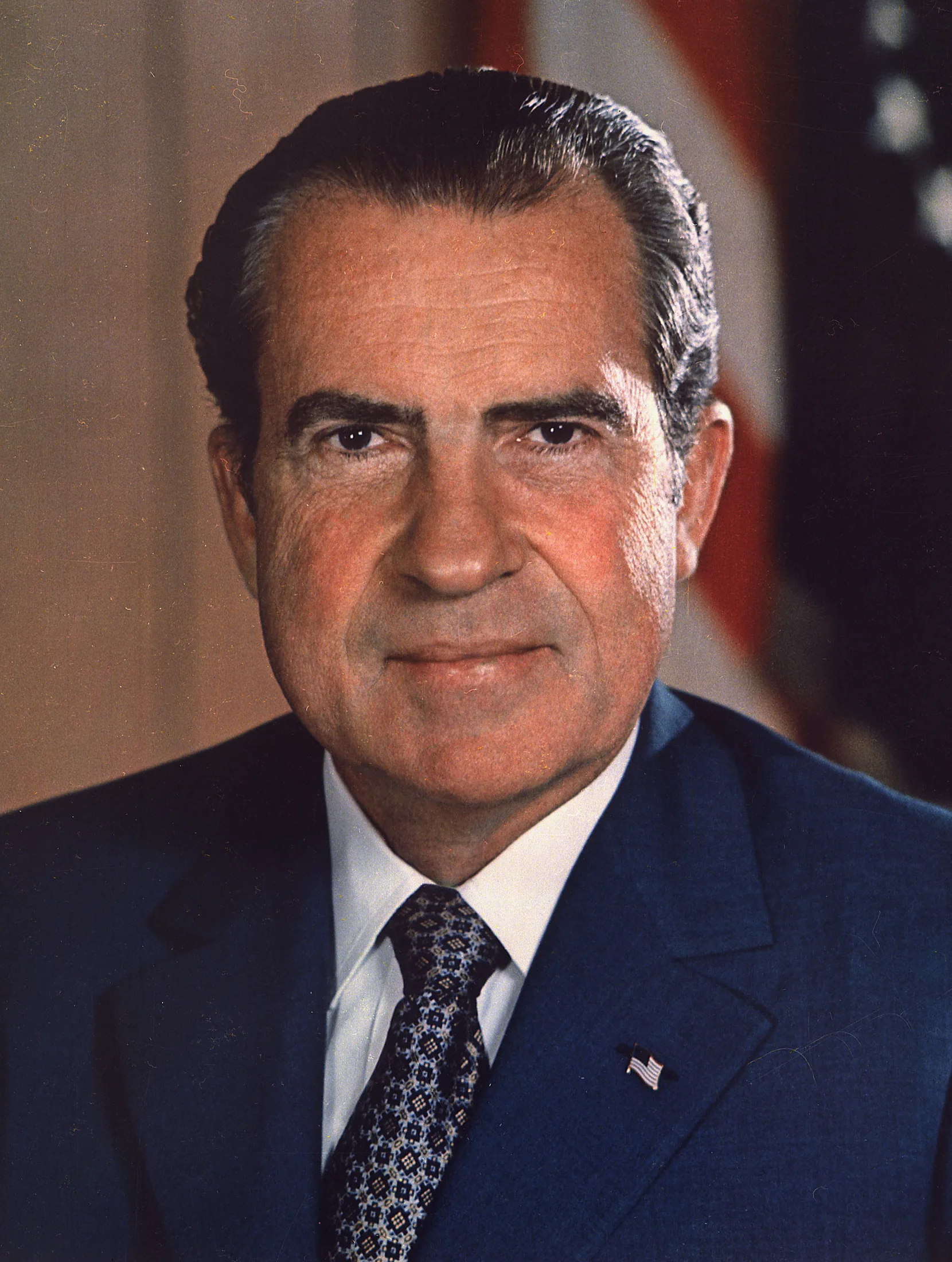
Richard Milhous Nixon (1913–1994) served as the 37th President of the United States from 1969 to 1974. He is the only president to have resigned from office, following the Watergate scandal and imminent impeachment. Nixon appears in Archive investigations because his administration sought to suppress the Pentagon Papers through prior restraint litigation, wielded executive secrecy to conceal military policy, and exemplifies documented networks of power and privilege thro…
Richard Milhous Nixon (1913–1994) served as the 37th President of the United States from 1969 to 1974. He is the only president to have resigned from office, following the Watergate scandal and imminent impeachment. His administration's classification policies, executive privilege claims, and documented obstruction of justice anchor multiple investigations into governmental secrecy and abuse of power.
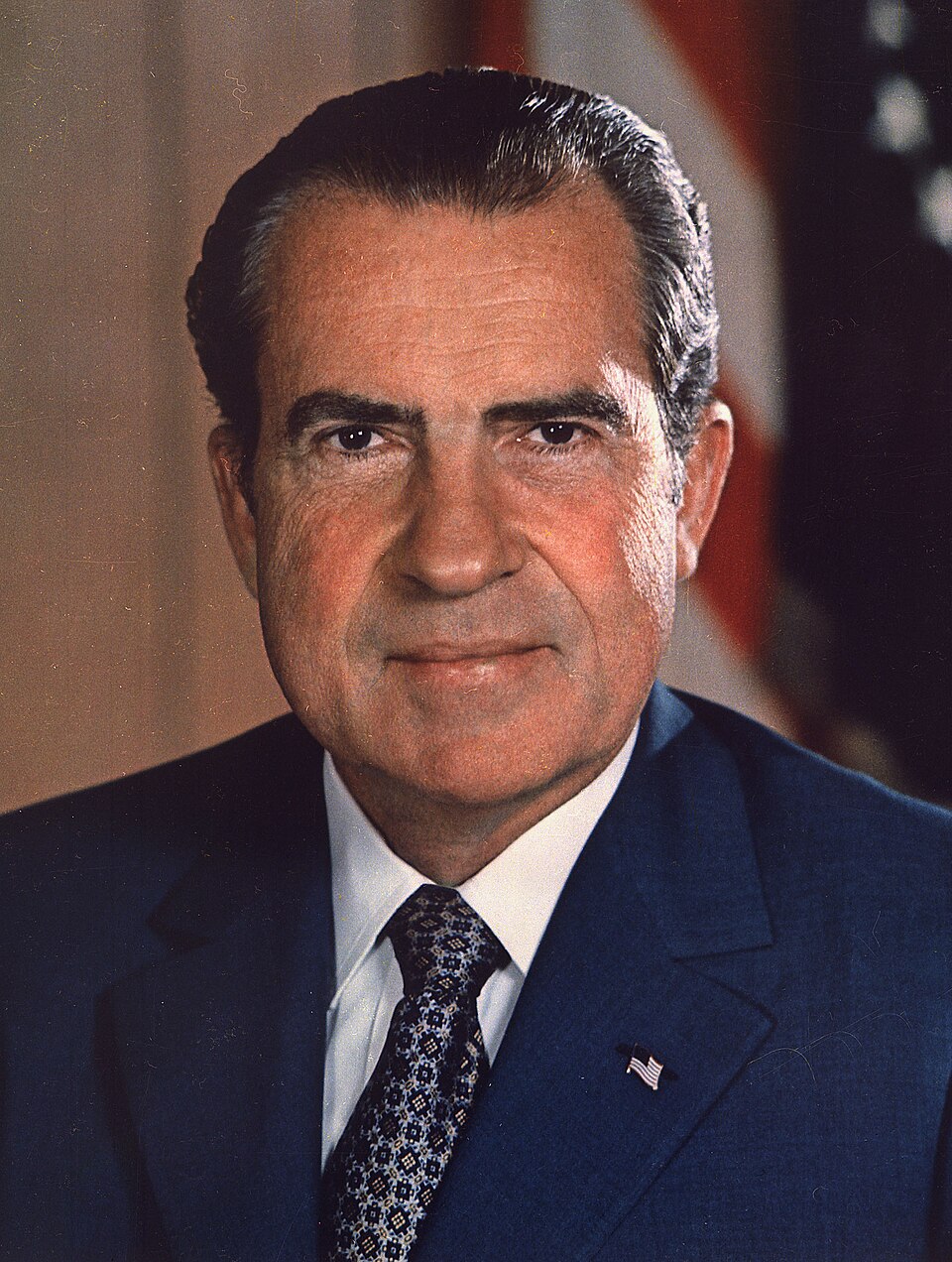
- Source
- U.S. Department of Defense
- Type
- Official Portrait
- License
- Public domain
- Photographer
- Department of Defense. Department of the Army. Office of the Deputy Chief of Staff for…
- Year
- 1972
Photo Information ▾
Richard Nixon's presidential portrait. Retouch has not been completed yet.
Nixon, ca. 1935 - 1982 - NARA - 530679.jpg
View original ↗- Full name
- Richard Milhous Nixon
- Lived
- January 9, 1913 – April 22, 1994
- Nationality
- American
- Political affiliation
- Republican Party
- Presidential term
- January 20, 1969 – August 9, 1974 (resigned)
- Vice presidency
- 1953–1961 under Dwight D. Eisenhower
- Congressional service
- U.S. Representative (1947–1950), U.S. Senator (1950–1953)
- Military service
- U.S. Navy, 1942–1946, Lieutenant Commander
- Education
- Whittier College (B.A., 1934); Duke University School of Law (J.D., 1937)
- Known membership
- Bohemian Club (documented attendance at Bohemian Grove)
- Resignation
- August 9, 1974, facing near-certain impeachment
- Pardon
- September 8, 1974, by President Gerald Ford
Nixon appears in Archive investigations because his administration sought to suppress the Pentagon Papers through prior restraint litigation, wielded executive secrecy to conceal military policy, and exemplifies documented networks of power and privilege through his documented attendance at the Bohemian Grove gatherings. His presidency produced the most extensively documented case of presidential obstruction in American history. Nixon's recorded conversations, Supreme Court rulings against his privilege claims, and congressional impeachment proceedings provide rare primary-source evidence of executive misconduct. The Archive documents him not as a biographical subject but as a focal point for understanding governmental secrecy, constitutional crisis, and elite social networks.
Identity
Richard Milhous Nixon was born January 9, 1913, in Yorba Linda, California, to Francis A. Nixon and Hannah Milhous Nixon. He graduated from Whittier College in 1934 and Duke University School of Law in 1937. After practicing law and serving as a U.S. Navy supply officer in the Pacific during World War II, Nixon entered politics.
He represented California's 12th congressional district from 1947 to 1950, served in the U.S. Senate from 1950 to 1953, and was Vice President under Dwight D. Eisenhower from 1953 to 1961. After losing the 1960 presidential election to John F. Kennedy and the 1962 California gubernatorial race, Nixon won the presidency in 1968 and was re-elected in 1972. He resigned August 9, 1974, the only president to do so, and received a full pardon from his successor Gerald Ford on September 8, 1974. Nixon died April 22, 1994, in New York.
Career & Roles
Nixon's congressional career began with his investigation of Alger Hiss, a former State Department official accused of espionage, through the House Un-American Activities Committee in 1948. The Hiss case brought Nixon national prominence and shaped his anti-communist reputation.
As vice president, Nixon undertook diplomatic missions to Latin America and the Soviet Union, participated in the famous "Kitchen Debate" with Soviet Premier Nikita Khrushchev in 1959, and presided over the Senate. His narrow defeat in 1960 and his proclamation after losing the California governorship in 1962 that the press would not "have Nixon to kick around anymore" appeared to end his political career.
Nixon's 1968 campaign capitalized on public unrest over Vietnam, urban riots, and cultural upheaval. His administration pursued détente with the Soviet Union, opened diplomatic relations with the People's Republic of China, established the Environmental Protection Agency, and ended the military draft. He appointed four Supreme Court justices and signed legislation including the creation of the Occupational Safety and Health Administration.
His foreign policy, directed closely with National Security Advisor and later Secretary of State Henry Kissinger, expanded U.S. bombing campaigns in Southeast Asia while negotiating the Paris Peace Accords signed in January 1973. Domestically, Nixon implemented wage and price controls, revenue sharing with states, and supported the creation of the Supplemental Security Income program.
Organizations & Networks
Nixon was a documented member of the Bohemian Club of San Francisco and attended gatherings at the Bohemian Grove, the club's 2,700-acre private retreat in Monte Rio, California. Historical records, including the club's own commemorative materials and journalistic accounts, place Nixon at the Grove on multiple occasions during his political career. In a July 1971 conversation recorded on the White House taping system, Nixon and his aide John Ehrlichman discussed the "most faggy goddamned thing you could ever imagine" at the Bohemian Grove, referring to an arts performance at the club's annual encampment. This recording is held at the National Archives and demonstrates Nixon's personal familiarity with the institution.
The Bohemian Grove gatherings brought together corporate executives, politicians, military leaders, academics, and artists in a secluded setting where formal speeches ("Lakeside Talks") were delivered without press coverage. Presidents Herbert Hoover, Dwight Eisenhower, Ronald Reagan, George H.W. Bush, and numerous cabinet officials were members or guests. Nixon himself reportedly delivered a Lakeside Talk in the 1960s, though transcripts are not publicly available. The exclusivity and privacy of these gatherings have made them subjects of ongoing historical inquiry regarding elite networking and policy influence.
Nixon's cabinet and staff included corporate executives, Wall Street lawyers, and figures connected to various policy institutes. His administration maintained relationships with the Council on Foreign Relations, the Business Roundtable, and other establishment organizations, though his personal style and political base remained distinct from the Eastern establishment he often criticized.
Major Operations & Activities
Nixon's presidency oversaw significant covert and overt operations. The secret bombing of Cambodia began in March 1969 under the codename Operation Menu, concealed from Congress through falsified reporting. The bombing expanded in 1970 with the Cambodian Incursion, a ground invasion Nixon announced publicly.
The administration created the "Plumbers" unit in 1971, officially to stop government information leaks. This team, operating from the White House, conducted the September 1971 break-in at the office of Daniel Ellsberg's psychiatrist, seeking material to discredect Ellsberg after he leaked the Pentagon Papers. The Pentagon Papers, a classified Defense Department history of U.S. involvement in Vietnam, were provided by Ellsberg to The New York Times and The Washington Post in 1971. Nixon's Justice Department sought a court injunction to halt publication, arguing national security harm. The Supreme Court ruled 6-3 in New York Times Co. v. United States (1971) that prior restraint was unconstitutional, rejecting the government's secrecy claims.
Nixon's Justice Department also indicted Ellsberg and co-defendant Anthony Russo under the Espionage Act, but the case was dismissed in 1973 after disclosure of government misconduct including the break-in and wiretapping.
Operation CHAOS, a CIA program monitoring domestic anti-war activists in violation of the agency's charter, expanded under Nixon. The administration compiled an "enemies list" of political opponents targeted for IRS audits and other harassment, documented in White House memoranda later released during Watergate investigations.
The June 17, 1972, break-in at the Democratic National Committee headquarters in the Watergate complex involved operatives connected to Nixon's re-election committee and the Plumbers. The subsequent cover-up, directed from the White House, involved hush money payments, witness coaching, perjury, and obstruction of the FBI investigation.
Historical Importance
Nixon's presidency reshaped American foreign policy through détente and the opening to China, ending over two decades of Sino-American hostility. His domestic environmental and regulatory legacy, established through bipartisan legislation, expanded federal authority significantly.
His downfall established critical constitutional precedents. United States v. Nixon (1974) unanimously ruled that executive privilege is not absolute and that presidential communications must yield to judicial process in criminal investigations. This decision forced release of the White House tapes that confirmed Nixon's involvement in obstruction of justice.
The House Judiciary Committee's adoption of three articles of impeachment in July 1974 defined impeachable conduct with greater specificity than previous cases. Article I charged obstruction of justice, Article II charged abuse of power including misuse of intelligence agencies, and Article III charged contempt of Congress for defying subpoenas. Nixon's resignation prevented a full House vote and Senate trial.
The pardon granted by President Ford on September 8, 1974, was extraordinary in pardoning Nixon for all offenses he "committed or may have committed" during his presidency, despite no criminal charges being filed. This preemptive pardon eliminated any possibility of criminal prosecution and remains constitutionally controversial.
Documented Controversies
Confirmed by Court The Supreme Court in United States v. Nixon ruled unanimously that Nixon must surrender subpoenaed White House tape recordings to Special Prosecutor Leon Jaworski. Chief Justice Warren Burger, a Nixon appointee, wrote the opinion holding that "the impediment that an absolute, unqualified privilege would place in the way of the primary constitutional duty of the Judicial Branch to do justice in criminal prosecutions would plainly conflict with the function of the courts under Art. III."
Established Fact The June 23, 1972, "Smoking Gun" tape, recorded six days after the Watergate break-in and released August 5, 1974, captured Nixon instructing Chief of Staff H.R. Haldeman to have the CIA tell the FBI to halt its investigation on false national security grounds. This recording is preserved at the National Archives and was the direct cause of Nixon losing his remaining congressional support.
Congressional Finding The House Judiciary Committee, in its report accompanying the articles of impeachment, found that Nixon "has acted in a manner contrary to his trust as President and subversive of constitutional government, to the great prejudice of the cause of law and justice and to the manifest injury of the people of the United States." The committee voted 27-11 for Article I (obstruction), 28-10 for Article II (abuse of power), and 21-17 for Article III (contempt).
Official Record The Senate Watergate Committee, formally the Select Committee on Presidential Campaign Activities, documented through 1973 hearings the existence of the White House taping system (revealed by Alexander Butterfield), the hush money payments, the Plumbers operations, and the enemies list. Transcripts and reports are held by the National Archives.
Confirmed by Court Judge John Sirica, in sentencing Watergate burglars in March 1973, read aloud a letter from burglar James McCord alleging perjury and political pressure. This disclosure broke the cover-up open. Sirica's rulings compelling testimony and evidence were upheld on appeal.
Established Fact Nixon's personal attorney Herbert Kalmbach delivered cash payments totaling over $400,000 to Watergate defendants and their attorneys in 1972-1973, documented through bank records, testimony, and Kalmbach's subsequent guilty plea to campaign finance violations.
Historical Consensus Nixon's secret expansion of the Vietnam War into Cambodia and Laos, concealed through falsified bombing reports, violated congressional prerogatives and contributed to passage of the War Powers Resolution of 1973 (overriding Nixon's veto). The bombing's extent was revealed through investigative journalism and later government document releases.
Official Record The Pentagon Papers released during Nixon's administration documented systematic deception by prior administrations (primarily Kennedy and Johnson) regarding Vietnam policy. Nixon's attempt to suppress their publication, despite the papers covering years before his presidency, reflected an expansive view of executive secrecy later rejected by courts.
Government Finding The Huston Plan, a 1970 proposal for expanded domestic intelligence including burglaries, mail opening, and wiretapping, was approved by Nixon but withdrawn after FBI Director J. Edgar Hoover objected. The plan's existence was revealed by the Senate Church Committee investigations in 1975-1976, documented in congressional reports.
Ongoing Historical Debate The extent of Nixon's knowledge of the original Watergate break-in plan remains uncertain. No direct evidence connects him to advance knowledge, though the cover-up began immediately and involved his closest aides. Some historians argue circumstantial evidence suggests foreknowledge, while others maintain the cover-up originated from panic over exposure of earlier illegal activities.
Disputed Claim Claims that the Watergate break-in targeted material regarding a prostitution ring serving Democratic officials have circulated since the 1970s but lack documentary support. The burglars' own testimony indicated they sought campaign finance information and documents related to Democratic Party strategy.
Officially Denied Allegations that Nixon's 1968 campaign sabotaged Vietnam peace negotiations through back-channel messages to the South Vietnamese government encouraging them to boycott Paris talks remain contested. The "Chennault Affair," named for intermediary Anna Chennault, is documented through FBI surveillance summaries and presidential recordings, but Nixon's campaign denied coordinating with Chennault, and direct evidence of Nixon's personal involvement remains incomplete.
Investigations & Legal Proceedings
The Watergate investigation proceeded through multiple overlapping inquiries. The initial FBI investigation in summer 1972 was obstructed by White House interference until Judge Sirica's pressure broke the cover-up in March 1973.
The Senate Select Committee on Presidential Campaign Activities, chaired by Sam Ervin, held televised hearings from May through August 1973, exposing the scope of White House misconduct. Counsel to the President John Dean testified for five days in June 1973, directly implicating Nixon in the cover-up.
Special Prosecutor Archibald Cox was appointed in May 1973 following Attorney General Elliot Richardson's commitment to the Senate. Cox subpoenaed White House tapes in July 1973. Nixon's refusal led to the "Saturday Night Massacre" of October 20, 1973, when Nixon ordered Richardson to fire Cox. Richardson and Deputy Attorney General William Ruckelshaus resigned rather than comply; Solicitor General Robert Bork, as acting attorney general, carried out the dismissal. Public outcry forced Nixon to appoint a new special prosecutor, Leon Jaworski, in November 1973.
The House Judiciary Committee began impeachment inquiry proceedings in October 1973, chaired by Peter Rodino. The committee conducted months of investigation, reviewed evidence, heard witnesses, and debated articles of impeachment in televised sessions in July 1974.
United States v. Nixon was argued before the Supreme Court on July 8, 1974, and decided July 24, 1974. The ruling compelled release of 64 subpoenaed tapes. The June 23, 1972 "smoking gun" tape, released August 5, destroyed Nixon's remaining support. Congressional leaders from both parties informed Nixon he faced certain impeachment and conviction. He resigned August 9, 1974, effective at noon.
Various Nixon aides were indicted, tried, and convicted. H.R. Haldeman, John Ehrlichman, John Mitchell, and others served prison terms. Nixon himself faced no criminal prosecution due to Ford's pardon.
Denials & Disputes
Nixon maintained public denials throughout the Watergate crisis. His November 17, 1973, press conference statement "I am not a crook" was delivered in the context of questions about his personal finances and tax deductions, not directly about Watergate, though it became emblematic of his broader denials.
In an April 29, 1974, address, Nixon released edited transcripts of conversations, asserting they proved his innocence while refusing to release actual tapes. The transcripts, heavily redacted with frequent notations of "expletive deleted," damaged his credibility when their selective nature became apparent.
Nixon's August 8, 1974, resignation speech did not admit criminal conduct, stating only that he no longer had "a strong enough political base in the Congress" to complete his term. He acknowledged "some of my judgments were wrong" but framed his departure as a political rather than legal necessity.
In his 1977 interviews with David Frost, Nixon provided his most extensive public accounting. His statement that "when the president does it, that means that it is not illegal" articulated an expansive view of executive power rejected by courts and constitutional scholars. He acknowledged mistakes and expressed regret but never fully admitted criminal conduct.
Nixon's post-presidency writings and speeches reframed his foreign policy achievements and minimized Watergate as partisan warfare. His 1990 book "In the Arena" argued that his presidency's substantive accomplishments outweighed the scandal.
Defenders have argued that Nixon's actions, while wrong, reflected standard political hardball common in prior administrations but judged more harshly due to partisan opposition and press hostility. This interpretation has not gained historical consensus among scholars who emphasize the documented scale of obstruction and abuse of power.
Legacy & Historical Debate
Nixon's legacy divides into his substantive policy achievements and his constitutional violations. Historians generally credit his foreign policy realism, environmental legislation, and some domestic reforms while condemning the Watergate abuses as the gravest presidential misconduct proven before the Trump impeachments.
The post-Watergate reforms included the Ethics in Government Act of 1978 (establishing independent counsel provisions later allowed to lapse), the Presidential Records Act of 1978 (establishing public ownership of presidential records), and strengthened Freedom of Information Act provisions. These reforms reflected legislative attempts to prevent future abuses.
Nixon's rehabilitation efforts in his final two decades, focusing on foreign policy expertise, achieved limited success. His funeral in 1994 was attended by all living presidents and treated as a state occasion, acknowledging his office and achievements while not erasing the scandal.
Scholarly rankings consistently place Nixon in the third or fourth quartile of presidents. C-SPAN's 2021 survey of historians ranked him 31st of 44 presidents, noting both significant accomplishments and the overriding impact of Watergate.
The debate over Ford's pardon continues. Ford defended it as necessary for national healing and to allow Nixon's failing health to avoid trial. Critics argued it established unequal justice and denied accountability. The House Judiciary Committee held hearings on the pardon in October 1974; Ford testified, the first sitting president to appear before Congress since Lincoln.
Nixon's papers and tape recordings, subject to extended litigation, were gradually released by the National Archives. Over 3,000 hours of recordings are now public, though material deemed personal or containing classified information remains restricted.
Continue Investigating
Richard Nixon's documented role in the Pentagon Papers litigation connects him to the Archive's investigation of government secrecy and press freedom. His administration's attempt at prior restraint tested constitutional limits on executive power to classify and suppress information about military policy.
His attendance at Bohemian Grove gatherings, confirmed through White House recordings and historical records, places him within elite networks that remain subjects of historical inquiry regarding private influence on public policy. The Archive documents these associations as factual connections without presuming specific conspiratorial conclusions.
Nixon's recorded conversations with Henry Kissinger, Bob Haldeman, John Ehrlichman, and others provide extraordinary primary-source evidence of executive decision-making, rare in presidential history. These materials support investigation of Vietnam War policy, domestic surveillance programs, and abuse of intelligence agencies.
The broader context of Nixon-era government secrecy connects to investigations of Operation CHAOS, COINTELPRO, MKULTRA, and other programs whose exposure followed Watergate. The Church Committee and Pike Committee investigations of 1975-1976 revealed the extent of intelligence agency abuses during and before Nixon's tenure.
Further investigation should examine Nixon's relationships with military-industrial contractors, his administration's connections to corporate lobbying networks, and the implementation of policies affecting corporate regulation and environmental standards. The Archive seeks to document these connections through verifiable public records, not speculation.
- 1913Born January 9 in Yorba Linda, California
- 1947Elected to U.S. House of Representatives; begins HUAC investigation of Alger Hiss
- 1950Elected to U.S. Senate from California
- 1953Becomes Vice President under Dwight D. Eisenhower
- 1960Loses presidential election to John F. Kennedy
- 1968Elected 37th President of the United States
- 1969Secret bombing of Cambodia begins (Operation Menu)
- 1971Pentagon Papers published; administration seeks injunction; Ellsberg psychiatrist break-in
- 1972Re-elected in landslide; Watergate break-in June 17; cover-up begins
- 1973Senate Watergate hearings; Saturday Night Massacre; House impeachment inquiry begins
- 1974Supreme Court rules in United States v. Nixon July 24; releases 'smoking gun' tape August 5; resigns August 9; pardoned September 8
- 1977Frost/Nixon interviews broadcast
- 1990Publishes 'In the Arena,' defending his legacy
- 1994Dies April 22 in New York
- S1United States v. Nixon, 418 U.S. 683 (1974)U.S. Supreme Court · primary
- S2New York Times Co. v. United States, 403 U.S. 713 (1971)U.S. Supreme Court · primary
- S3Report of the House Judiciary Committee on Impeachment of Richard M. NixonU.S. Government Publishing Office · primary
- S4The Bohemian Grove and Other Retreats: A Study in Ruling-Class CohesivenessUC Santa Cruz · academic
- S5Bohemian Grove MembersWikipedia · reference
- S6The Pentagon PapersNational Archives · primary
- S7United States v. Ehrlichman (Ellsberg break-in trial)CourtListener · primary
- S8Proclamation 4311: Pardon of Richard NixonGerald R. Ford Presidential Library · primary
- S9Nixon's Vietnam TreacheryBBC News · mainstream
- S10The Chennault AffairSmithsonian Magazine · mainstream
- S11Richard NixonWikipedia · reference
If you're learning about this topic for the first time, these are the best places to continue — documented evidence and historical relationships are the guide.
Richard Nixon is documented in the evidence record of this published dossier.
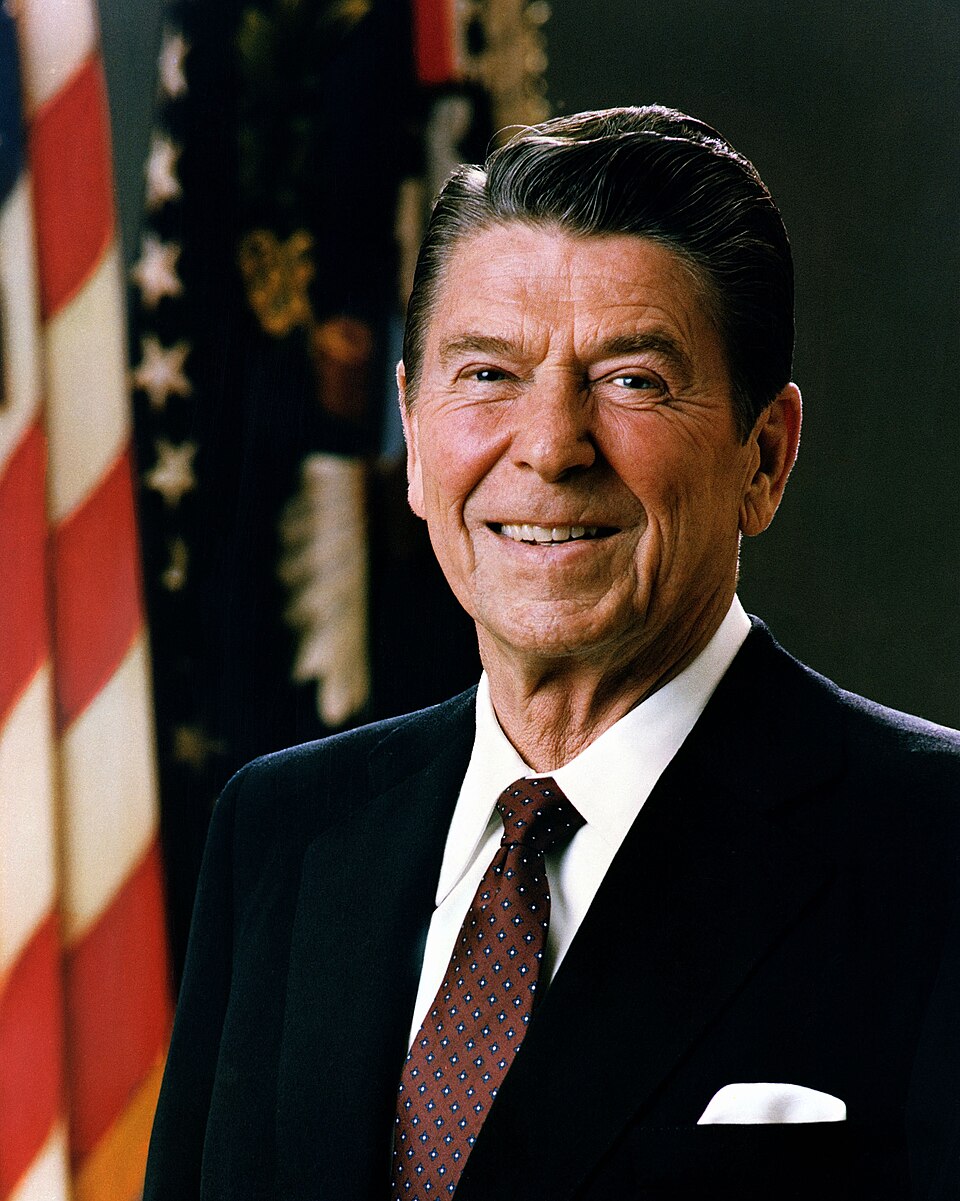
Fellow Republican and Bohemian Club member who succeeded Nixon-Ford era.
Nixon was documented member and attended Bohemian Grove gatherings.