George W. Bush
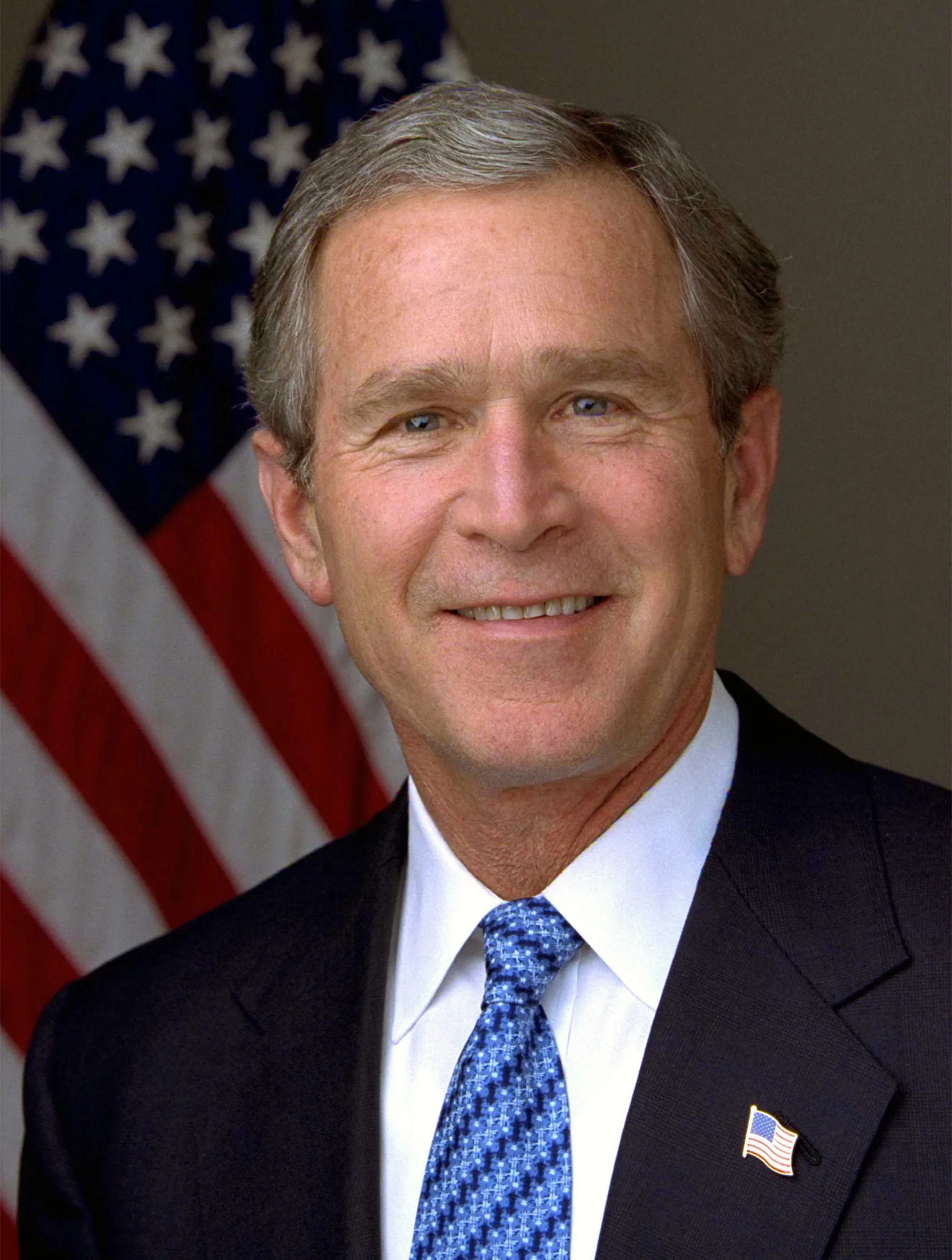
George Walker Bush served as the 43rd President of the United States (2001–2009). His presidency is defined by the September 11, 2001 terrorist attacks, the subsequent invasion of Afghanistan, and the 2003 invasion of Iraq based on intelligence claims about weapons of mass destruction that were later found to be incorrect. George W.
George Walker Bush served as the 43rd President of the United States (2001–2009). His presidency is defined by the September 11, 2001 terrorist attacks, the subsequent invasion of Afghanistan, and the 2003 invasion of Iraq based on intelligence claims about weapons of mass destruction that were later found to be incorrect. A Yale graduate and member of Skull and Bones, Bush's administration has been the subject of extensive investigation regarding pre-war intelligence processes.
- Source
- Wikimedia Commons
- Type
- Photograph
- License
- Public domain
- Photographer
- Eric Draper
- Year
- 2003
Photo Information ▾
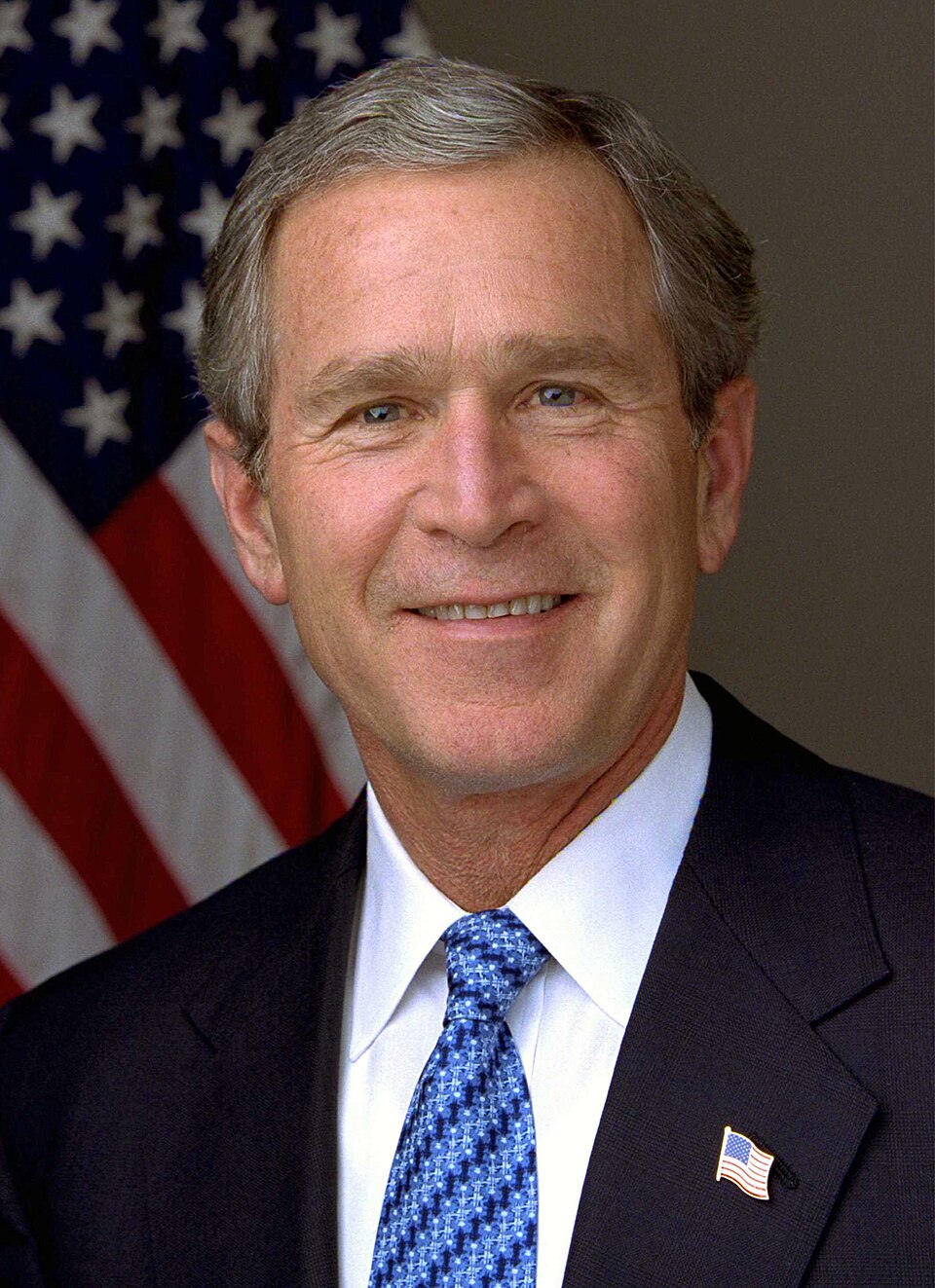
Official photograph portrait of U.S. President George W. Bush .
View original ↗- Full name
- George Walker Bush
- Born
- July 6, 1946, New Haven, Connecticut
- Political party
- Republican
- Presidential term
- January 20, 2001 – January 20, 2009
- Vice President
- Dick Cheney
- Education
- Yale University (BA, 1968); Harvard Business School (MBA, 1975)
- Military service
- Texas Air National Guard (1968–1974)
- Prior offices
- 46th Governor of Texas (1995–2000)
- Father
- George H.W. Bush (41st President)
- Secret society membership
- Skull and Bones, Yale Class of 1968
- Predecessor
- William J. Clinton
- Successor
- Barack Obama
George W. Bush appears in The Archive as the central decision-making authority behind the 2003 Iraq invasion, which relied on intelligence assessments about weapons of mass destruction that were later determined to be fundamentally flawed. As President, he approved and publicly justified the war using claims that Iraqi dictator Saddam Hussein possessed active WMD programs and posed an imminent threat—assertions contradicted by post-invasion findings. Bush's membership in the secretive Skull and Bones Society at Yale, following his father George H.W. Bush, places him within a documented multigenerational network of political and business elites whose informal associations have attracted historical scrutiny. The Archive documents his role not to assign moral judgment, but to establish the evidentiary record of decision-making processes, intelligence handling, and institutional networks that shaped consequential historical events.
Identity
George Walker Bush was born July 6, 1946, in New Haven, Connecticut, the eldest son of George H.W. Bush (who would serve as the 41st President) and Barbara Bush. He grew up primarily in Midland and Houston, Texas, where his father worked in the oil industry before entering politics. Bush attended Phillips Academy in Andover, Massachusetts, then Yale University, graduating with a bachelor's degree in history in 1968. During the Vietnam War, Bush joined the Texas Air National Guard in May 1968, serving as a pilot until 1974—a decision that later drew scrutiny regarding whether family connections secured him a position that helped him avoid combat deployment. After leaving the Guard, Bush attended Harvard Business School, earning an MBA in 1975, the only U.S. president to hold that degree.
Bush returned to Texas and entered the oil business, founding Arbusto Energy in 1977 (later renamed Bush Exploration), though the ventures struggled financially. In 1989, he organized a group of investors to purchase the Texas Rangers baseball team, a role that raised his public profile in Texas. Bush's political career began in earnest with his election as Governor of Texas in 1994, defeating incumbent Democrat Ann Richards. He was re-elected in 1998 with 69% of the vote, the first Texas governor to win consecutive four-year terms. His gubernatorial tenure emphasized education reform, tax cuts, and criminal justice policies that included a significant number of executions—Texas executed 152 prisoners during his governorship, more than any other state during that period.
Bush's identity is inseparable from his family's political dynasty. His father's presidency (1989–1993), his grandfather Prescott Bush's U.S. Senate career, and his brother Jeb Bush's Florida governorship established the Bush family as one of America's most prominent political lineages. This background shaped both his access to political networks and the expectations placed upon his leadership.
Career & Roles
Bush launched his presidential campaign in 1999, positioning himself as a "compassionate conservative" who could work across party lines. The 2000 presidential election against Vice President Al Gore became one of the most contested in American history. The outcome hinged on Florida's electoral votes, where initial results showed an extremely narrow margin. After weeks of recounts and legal challenges, the U.S. Supreme Court's 5-4 decision in Bush v. Gore (December 12, 2000) effectively ended the recount process, awarding Florida's electoral votes and the presidency to Bush. He won the Electoral College 271-266 while losing the national popular vote by approximately 540,000 votes.
Bush's first months in office focused on tax cuts, education reform (the No Child Left Behind Act), and faith-based initiatives. The September 11, 2001 terrorist attacks fundamentally redirected his presidency. Bush's immediate response included visiting Ground Zero in New York City on September 14, where his impromptu remarks through a bullhorn became an iconic moment. His administration quickly organized military action in Afghanistan, launching Operation Enduring Freedom on October 7, 2001, to target al-Qaeda and remove the Taliban government that had harbored the terrorist organization.
The Bush presidency's defining decision came with the March 2003 invasion of Iraq. Bush and senior officials argued that Iraqi dictator Saddam Hussein possessed weapons of mass destruction and posed an urgent threat to U.S. security. In his January 28, 2003 State of the Union address, Bush stated: "The British government has learned that Saddam Hussein recently sought significant quantities of uranium from Africa"—a claim later acknowledged to be based on forged documents. Secretary of State Colin Powell presented intelligence to the United Nations Security Council on February 5, 2003, displaying what he described as evidence of Iraqi WMD programs, including mobile biological weapons laboratories and chemical weapons stockpiles.
Bush won re-election in 2004 against Senator John Kerry, this time winning both the Electoral College (286-251) and popular vote. His second term confronted the aftermath of Hurricane Katrina (August 2005), whose catastrophic impact and the federal government's slow response damaged his administration's credibility. The absence of WMD discoveries in Iraq, the Abu Ghraib prisoner abuse scandal (2004), and mounting casualties eroded public support for the war. Bush's approval ratings, which had reached 90% after September 11, fell below 30% by late 2008.
The 2008 financial crisis dominated Bush's final year in office. His administration implemented the Troubled Asset Relief Program (TARP), a $700 billion bank bailout, and coordinated emergency measures with the Federal Reserve. Bush left office with the lowest approval ratings of any departing president in modern polling history. Since leaving the presidency, he has largely avoided political activity, focusing on painting, his presidential library in Dallas, and the George W. Bush Institute's work on veteran health, education reform, and global health initiatives.
Organizations & Networks
Bush's membership in Skull and Bones, Yale's secretive senior society, connects him to a documented network of influential figures. He was initiated in 1968, following his father George H.W. Bush (class of 1948), his grandfather Prescott Bush (class of 1917), and his uncle Jonathan Bush. The society, founded in 1832 by William Huntington Russell, has included numerous politicians, judges, intelligence officials, and business leaders among its approximately 800 living members at any time. The Russell Trust Association holds the society's assets and property.
Alexandra Robbins' investigative work Secrets of the Tomb (2002) documented the society's rituals, membership lists, and influence networks based on interviews with members and examination of historical records. Antony C. Sutton's earlier research in America's Secret Establishment (1986) argued that Skull and Bones members have exercised disproportionate influence in American foreign policy and intelligence agencies, though Sutton's work has been characterized by some historians as speculative in its broader claims about coordinated control. The society's secrecy practices—members traditionally refuse to discuss their affiliation—have made definitive assessment of its influence difficult.
During the 2004 presidential campaign, both Bush and his opponent John Kerry were Skull and Bones members. When asked about the coincidence in a February 2004 NBC interview, Bush responded: "It's so secret we can't talk about it." Kerry similarly deflected questions about the organization. This rare circumstance of two Bonesmen competing for the presidency heightened public interest in the society's role in American political life.
Bush's administration included numerous individuals with connections to influential policy networks. Vice President Dick Cheney had served in multiple Republican administrations and as CEO of Halliburton. Defense Secretary Donald Rumsfeld had previously served as Defense Secretary under Gerald Ford. Several officials, including Cheney, Rumsfeld, and Deputy Defense Secretary Paul Wolfowitz, had been associated with the Project for the New American Century, a think tank that had advocated for regime change in Iraq since the late 1990s.
Major Operations & Activities
The September 11 attacks killed 2,977 people and immediately became the organizing principle of Bush's presidency. Within days, Bush declared a "War on Terror" that would frame U.S. foreign policy for the following two decades. On September 14, 2001, Congress passed the Authorization for Use of Military Force (AUMF), giving the president broad authority to use military force against those responsible for the attacks. The subsequent USA PATRIOT Act (October 26, 2001) expanded government surveillance powers, lowered barriers between intelligence and law enforcement agencies, and increased detention authority for terrorism suspects.
Operation Enduring Freedom in Afghanistan began October 7, 2001, combining air strikes with support for Northern Alliance ground forces fighting the Taliban. By December, the Taliban government had collapsed and al-Qaeda training camps were destroyed, though Osama bin Laden escaped into Pakistan's mountainous border regions. The U.S. established a long-term military presence and supported the creation of a new Afghan government under Hamid Karzai.
By 2002, Bush administration officials were publicly arguing for military action against Iraq. In his January 29, 2002 State of the Union address, Bush identified Iraq, Iran, and North Korea as an "axis of evil," stating that these regimes "pose a grave and growing danger" by seeking weapons of mass destruction. Throughout 2002 and early 2003, administration officials made numerous public statements about Iraqi WMD programs and alleged connections between Saddam Hussein and al-Qaeda.
The invasion of Iraq began March 19, 2003, without explicit United Nations Security Council authorization. The initial "shock and awe" campaign rapidly defeated Iraqi military forces, and Bush declared "mission accomplished" aboard the USS Abraham Lincoln on May 1, 2003. However, no stockpiles of chemical or biological weapons were found. The Iraq Survey Group, led by David Kay and later Charles Duelfer, conducted extensive searches and concluded in its final report (September 2004) that Iraq had destroyed its WMD stockpiles after the 1991 Gulf War and had not resumed production. The report documented that Iraq had maintained intent and some capability to restart programs if sanctions were lifted, but possessed no actual weapons at the time of invasion.
The absence of WMD contradicted the central justification for war. Pre-war intelligence assessments had been profoundly flawed, relying on sources like "Curveball" (an Iraqi defector whose fabricated claims about mobile biological weapons labs were treated as credible despite warnings from German intelligence officials who had direct access to him) and Ahmed Chalabi (an Iraqi exile whose Iraqi National Congress provided information later determined to be unreliable). The Office of Special Plans, established within the Department of Defense under Douglas Feith, conducted alternative intelligence analysis that some critics characterized as cherry-picking evidence to support predetermined policy conclusions.
Bush authorized what his administration termed "enhanced interrogation techniques" for terrorism suspects, including waterboarding. The legal justification came from memoranda by Justice Department Office of Legal Counsel attorneys John Yoo and Jay Bybee, which defined torture narrowly to exclude practices that did not cause pain equivalent to "serious physical injury, such as organ failure, impairment of bodily function, or even death." The CIA operated secret detention facilities ("black sites") in several countries. The use of these techniques became public through investigative journalism and was later documented in the Senate Intelligence Committee's 2014 torture report.
The Bush administration's domestic surveillance programs, revealed by the New York Times in December 2005, included warrantless wiretapping of communications involving U.S. persons when one party was outside the United States and suspected of terrorism connections. This bypassed the Foreign Intelligence Surveillance Act's requirement for court warrants. The program operated from 2001 until 2007, when it was modified to comply with FISA after legal challenges and congressional pressure.
Historical Importance
Bush's presidency fundamentally reoriented American foreign policy toward preventive military action and expanded executive authority in national security matters. The "Bush Doctrine," articulated in the September 2002 National Security Strategy, asserted the right to take preemptive military action against potential threats before they fully materialized. This represented a significant departure from Cold War-era containment and deterrence strategies.
The Iraq War's costs were substantial: over 4,400 American military deaths, more than 30,000 wounded, and estimated civilian Iraqi deaths ranging from approximately 100,000 to several hundred thousand depending on methodology. The financial costs exceeded $2 trillion according to various estimates, including long-term veterans' care and interest on borrowed war funding. The war's aftermath included the rise of ISIS (Islamic State of Iraq and Syria) in the power vacuum created by the removal of Saddam Hussein's regime and the disbanding of the Iraqi army.
Bush's tax cuts (Economic Growth and Tax Relief Reconciliation Act of 2001 and Jobs and Growth Tax Relief Reconciliation Act of 2003) reduced federal revenue by an estimated $1.35 trillion over ten years, contributing to the shift from budget surpluses under Clinton to deficits. The Medicare Prescription Drug, Improvement, and Modernization Act (2003) added prescription drug coverage to Medicare, the largest expansion of the program since its creation, with costs exceeding initial projections.
The No Child Left Behind Act (2001), Bush's signature domestic achievement, mandated standardized testing and accountability measures for schools receiving federal funding. It represented rare bipartisan cooperation, passing with support from Senator Ted Kennedy among other Democrats, though implementation proved controversial and was later substantially revised under the Obama administration.
Documented Controversies
Government Finding The Senate Select Committee on Intelligence released its "Report on the U.S. Intelligence Community's Prewar Intelligence Assessments on Iraq" in July 2004, concluding that most prewar intelligence assessments about Iraqi WMD were either overstated or not supported by underlying intelligence. The committee found that intelligence agencies had "groupthink" that presumed Iraq had active WMD programs and interpreted ambiguous evidence to fit that presumption. The report documented that the Intelligence Community's assessments were not the result of political pressure, but that these flawed assessments were then used by policymakers to justify war. A subsequent 2006 "Phase II" report found that statements by Bush and other administration officials were not supported by intelligence and in some cases contradicted available intelligence assessments.
Inspector General Finding The Department of Defense Inspector General's February 2007 report examined the Office of Special Plans and activities of Under Secretary of Defense for Policy Douglas Feith. The IG found that Feith's office had developed intelligence assessments on Iraq-al-Qaeda connections that differed from Intelligence Community consensus, and that these alternative analyses were inappropriate but not illegal. The report concluded that this office "developed, produced, and then disseminated alternative intelligence assessments on the Iraq and al Qaida relationship, which included some conclusions that were inconsistent with the consensus of the Intelligence Community, to senior decision-makers."
Confirmed by Court The administration's warrantless surveillance program was found to violate the Foreign Intelligence Surveillance Act by U.S. District Judge Anna Diggs Taylor in ACLU v. NSA (August 2006), though this decision was later vacated on appeal on standing grounds rather than the merits. Congress subsequently modified FISA through the FISA Amendments Act of 2008, which provided some legal framework for similar surveillance with court oversight and granted retroactive immunity to telecommunications companies that had cooperated with the program.
Official Record The Senate Intelligence Committee's Study of the CIA's Detention and Interrogation Program (2014), based on review of over 6 million pages of CIA documents, concluded that enhanced interrogation techniques were more brutal than represented to policymakers, produced little unique actionable intelligence, and were mismanaged. The 525-page executive summary documents cases where detainees were subjected to techniques including waterboarding (used 183 times on one detainee), sleep deprivation for up to 180 hours, and "rectal rehydration." Bush has stated in his memoir Decision Points (2010) that he authorized waterboarding and believes it was justified, writing: "Damn right" when asked by CIA Director George Tenet whether to proceed with enhanced interrogation of Khalid Sheikh Mohammed.
Ongoing Historical Debate The question of whether Bush and senior officials deliberately misled the public about Iraqi WMD or genuinely believed flawed intelligence remains contested. Bush has consistently maintained that he relied on intelligence assessments provided by the Intelligence Community, which indicated with "high confidence" that Iraq possessed chemical and biological weapons. Critics, including some former intelligence officials, argue that the administration selectively emphasized intelligence that supported the case for war while dismissing contradictory information and alternative assessments. The distinction between being misled by faulty intelligence and actively distorting intelligence to justify a predetermined policy goal remains a central divide in historical assessment of the Iraq War.
Credible Allegation Former Treasury Secretary Paul O'Neill and former counterterrorism coordinator Richard Clarke both wrote memoirs alleging that the Bush administration was focused on Iraq policy from its earliest days in office, well before September 11. O'Neill told journalist Ron Suskind (The Price of Loyalty, 2004) that Iraq regime change was discussed at the first National Security Council meeting in January 2001, with Defense Department materials presenting military options. Clarke (Against All Enemies, 2004) described being pressured on September 12, 2001, to find evidence of Iraqi involvement in the 9/11 attacks despite intelligence indicating the attacks were al-Qaeda operations. These accounts suggest a preexisting policy preference that shaped how intelligence was interpreted.
Officially Denied The administration repeatedly denied that the war was about oil access, with Bush stating in 2005: "We didn't go into Iraq to get their oil." Critics have pointed to Iraq's petroleum reserves and internal administration documents discussing Iraqi oil production as evidence that energy considerations influenced policy. The documentary record shows oil considerations were discussed in planning for post-war Iraq reconstruction, though whether this constituted a primary motivation for invasion remains debated.
Investigations & Legal Proceedings
The 9/11 Commission, officially the National Commission on Terrorist Attacks Upon the United States, was created by Congress in 2002 to investigate the September 11 attacks. Its July 2004 report documented intelligence failures, lack of information sharing between agencies, and missed opportunities to potentially disrupt the plot. The commission found no credible evidence of a collaborative relationship between Iraq and al-Qaeda on the 9/11 attacks, contradicting claims by Vice President Cheney and others that such connections existed. Bush and Cheney testified to the commission jointly, not under oath, and without a recording or transcript—conditions that some commissioners later criticized as limiting their investigation.
Multiple congressional investigations examined Iraq War intelligence. Beyond the Senate Intelligence Committee's work, the House Permanent Select Committee on Intelligence, the Silberman-Robb Commission (officially the Commission on the Intelligence Capabilities of the United States Regarding Weapons of Mass Destruction), and internal intelligence agency reviews all documented systematic intelligence failures. The Silberman-Robb Commission report (March 2005) concluded that intelligence agencies were "dead wrong" about Iraqi WMD but explicitly did not examine how policymakers used the intelligence they received, stating this was outside their mandate.
The Justice Department's Office of Professional Responsibility investigated the legal memoranda authorizing enhanced interrogation techniques. Its July 2009 report (released publicly in 2010) concluded that attorneys John Yoo and Jay Bybee committed "professional misconduct" in their legal analysis, though a subsequent review by Associate Deputy Attorney General David Margolis downgraded this to "poor judgment." No criminal charges were filed against interrogators or officials who authorized the techniques, as the Justice Department concluded they had relied on legal guidance they believed authorized their actions.
International legal scholars and human rights organizations, including Amnesty International and Human Rights Watch, characterized some Bush administration detention and interrogation policies as violations of the Geneva Conventions and international law. Several countries, including Spain, Germany, and Canada, saw attempts by human rights lawyers to bring universal jurisdiction cases against Bush administration officials for alleged war crimes, though none resulted in prosecutions. Bush himself has largely avoided international travel to countries where such cases were pending.
The leak investigation into the disclosure of CIA officer Valerie Plame's identity resulted in the conviction of Vice President Cheney's chief of staff, I. Lewis "Scooter" Libby, for perjury and obstruction of justice in 2007. The investigation examined whether administration officials had illegally revealed Plame's CIA employment in retaliation for her husband Joseph Wilson's New York Times op-ed criticizing administration claims about Iraqi uranium purchases. Bush commuted Libby's 30-month prison sentence in July 2007 but did not issue a full pardon until President Trump did so in 2018.
Denials & Disputes
Bush has consistently defended the Iraq War decision, arguing in his 2010 memoir Decision Points and subsequent interviews that removal of Saddam Hussein made the world safer despite the absence of WMD. In a 2015 interview, when asked if he would have authorized the invasion knowing Iraq had no weapons of mass destruction, Bush stated: "Knowing what we know now, I would not have gone into Iraq," later clarifying that the question itself was unfair because decisions must be judged based on information available at the time.
Regarding enhanced interrogation, Bush has defended waterboarding and other techniques as necessary, legal, and effective in preventing additional terrorist attacks. In a 2010 interview with NBC's Matt Lauer, Bush stated: "Yeah, we waterboarded Khalid Sheikh Mohammed. I'd do it again to save lives." This position contradicts the Senate Intelligence Committee's findings that the techniques did not produce unique actionable intelligence that could not have been obtained through traditional interrogation methods.
Bush has disputed characterizations that he was disengaged or inadequately informed. Critics, including some former administration officials, portrayed him as overly reliant on a small circle of advisors (particularly Cheney and Rumsfeld) and not sufficiently questioning of intelligence assessments. Bush's public speaking style, including malapropisms that became known as "Bushisms," contributed to perceptions of intellectual inadequacy that Bush himself has addressed, noting his Harvard MBA and reading habits while acknowledging he was "misunderestimated."
On Skull and Bones, Bush has maintained the society's traditional secrecy. In a 2000 interview, he dismissed suggestions that membership indicated anything significant: "It's a secret." When pressed about whether the organization influenced his worldview, he responded that his Yale experience as a whole shaped him but declined to discuss specifics about Skull and Bones activities or membership obligations.
Regarding his military service, Bush has defended his National Guard record against suggestions he received preferential treatment or failed to fulfill service obligations. CBS News's September 2004 report claiming Bush had received favorable treatment was retracted after documents presented in the story were determined to be likely forgeries, leading to the departure of anchor Dan Rather and several producers. Independent reviews by news organizations concluded Bush's service record showed gaps and irregularities but did not definitively establish that he failed to complete required duties.
Legacy & Historical Debate
Presidential historians' rankings consistently place Bush in the bottom third of presidents, primarily due to the Iraq War and its consequences. A 2021 C-SPAN survey of historians ranked him 29th of 44 presidents (previously 36th in the 2009 survey immediately after leaving office, showing some improvement over time). The Financial Times' survey of international relations scholars ranked him among the worst foreign policy presidents.
Bush's reputation has experienced modest rehabilitation, particularly in contrast to the divisive political environment that followed. His post-presidential focus on painting (particularly portraits of wounded veterans), his cordial relationship with the Obamas, and his occasional implicit criticisms of Trump-era politics have generated more favorable media coverage. His attendance at the funeral of John McCain and delivery of a eulogy that emphasized civility and service presented a contrast to contemporary partisan hostility.
Libraries, archives, and museums preserve extensive documentation of Bush's presidency. The George W. Bush Presidential Library and Museum in Dallas, opened in 2013, houses over 70 million pages of paper records and 200 million email messages. Like all recent presidential libraries, its exhibits present the administration's perspective on contested issues, generating criticism from historians who note the institution's reluctance to fully engage with controversial aspects of Bush's record.
Academic debate continues on fundamental questions about the Bush presidency: Were the intelligence failures about Iraqi WMD honest mistakes in a complex analytical environment, or were they influenced by policy preferences that shaped how ambiguous evidence was interpreted? Did the administration create a climate where intelligence agencies felt pressure to support predetermined conclusions, or did intelligence community groupthink develop independently? Would the absence of the Iraq War have changed the trajectory of Middle East conflicts, or were forces toward instability already in motion?
Conservative defenders argue that Bush responded appropriately to unprecedented terrorist attacks, that intelligence failures were systemic rather than politically motivated, and that post-9/11 policies prevented additional major attacks on U.S. soil. They note that the 2007-2008 "surge" strategy in Iraq reduced violence significantly and created conditions for potential stability that the Obama administration's withdrawal timeline squandered.
Liberal critics contend that the Iraq War was a catastrophic strategic error based on manipulated intelligence, that enhanced interrogation constituted torture in violation of international law and American values, and that Bush's expansion of executive power and surveillance eroded civil liberties. They argue that the war destabilized the Middle East, facilitated Iran's regional influence, created conditions for ISIS emergence, and damaged America's international credibility.
Some historians note parallels between Bush's Skull and Bones membership and patterns of elite network influence in American politics, though establishing causal connections between secret society membership and specific policy decisions remains speculative. The society's multigenerational nature means Bush's presidency existed within networks established by previous members, including his father's administration and connections extending to earlier eras. Whether these networks constitute coordination or merely shared social background is contested.
Continue Investigating
Understanding George W. Bush's place in The Archive requires examining multiple intersecting investigations. The Iraq War WMD intelligence failure remains the most consequential policy decision of his presidency, with evidence of systematic intelligence breakdowns and questions about how pre-existing policy preferences shaped intelligence interpretation. His membership in Skull and Bones connects him to documented networks of elite influence that span generations of American leadership.
Related investigations include the roles of Dick Cheney, Donald Rumsfeld, Colin Powell, and George Tenet in Iraq War decision-making; the contributions of flawed intelligence sources including Curveball and Ahmed Chalabi; the activities of the Office of Special Plans in developing alternative intelligence assessments; and the Senate Intelligence Committee's investigations into prewar intelligence and CIA detention programs.
Bush's presidency intersects with broader Archive investigations of elite networks (Council on Foreign Relations, the Bilderberg Group, the military-industrial complex), intelligence failures (the Gulf of Tonkin incident as a historical parallel), whistleblower revelations (paralleling Pentagon Papers-era debates about government credibility), and the expansion of surveillance powers (connecting to Snowden-era NSA disclosures). His father George H.W. Bush's CIA directorship and presidency, and shared Skull and Bones membership with John Kerry, illuminate patterns of institutional continuity in American governance.
The documentary record on Bush's presidency is extensive but contested, with participants offering conflicting accounts and key questions remaining unresolved. Researchers should consult presidential libraries, declassified intelligence assessments, congressional investigation reports, oral histories, and participant memoirs while recognizing that each source reflects particular perspectives and interests. Understanding how intelligence failures, institutional networks, and executive decision-making shaped the defining crisis of the early 21st century remains essential work.
- 1946Born July 6 in New Haven, Connecticut
- 1968Graduated from Yale University; joined Texas Air National Guard; initiated into Skull and Bones
- 1975Earned MBA from Harvard Business School
- 1995Became 46th Governor of Texas
- 2000Won presidential election after Supreme Court decision in Bush v. Gore
- 2001Inaugurated as 43rd President; September 11 attacks occurred; launched war in Afghanistan; signed USA PATRIOT Act
- 2002Identified Iraq, Iran, and North Korea as 'axis of evil'; administration began public case for Iraq War
- 2003Invaded Iraq on March 19; declared 'mission accomplished' May 1; no WMD stockpiles found
- 2004Senate Intelligence Committee released report on Iraq intelligence failures; Abu Ghraib scandal emerged; won re-election against John Kerry
- 2005Hurricane Katrina and federal response failures; warrantless surveillance program revealed by New York Times
- 2007Implemented Iraq 'surge' strategy; commuted Scooter Libby's prison sentence
- 2008Financial crisis; signed TARP bank bailout; left office with lowest approval ratings in modern polling
- 2009Left office January 20; began post-presidential activities including painting
- 2010Published memoir Decision Points defending Iraq War and enhanced interrogation decisions
- 2013George W. Bush Presidential Library opened in Dallas
- 2014Senate Intelligence Committee released CIA detention and interrogation report
- S1Iraq Survey Group Final ReportGlobalSecurity.org (hosting government document) · primary
- S2Senate Intelligence Committee Phase II Report on Iraq IntelligenceSenate Select Committee on Intelligence · primary
- S3Report of the Select Committee on Intelligence on Postwar Findings About Iraq's WMD ProgramsSenate Select Committee on Intelligence · primary
- S4Secrets of the Tomb: Skull and Bones, the Ivy League, and the Hidden Paths of PowerLittle, Brown and Company · book
- S5Senate Intelligence Committee Study of the CIA's Detention and Interrogation Program (Executive Summary)Senate Select Committee on Intelligence · primary
- S6The Price of Loyalty: George W. Bush, the White House, and the Education of Paul O'NeillSimon & Schuster · book
- S7Against All Enemies: Inside America's War on TerrorFree Press · book
- S8Bush v. Gore, 531 U.S. 98 (2000)Supreme Court of the United States · primary
- S92000 Presidential Election ResultsNational Archives · primary
- S10ACLU v. NSA - Warrantless Surveillance CaseAmerican Civil Liberties Union · investigative
- S11Bush Lets U.S. Spy on Callers Without CourtsNew York Times · mainstream
- S12The 9/11 Commission ReportNational Commission on Terrorist Attacks Upon the United States · primary
If you're learning about this topic for the first time, these are the best places to continue — documented evidence and historical relationships are the guide.
George W. Bush is documented in the evidence record of this published dossier.
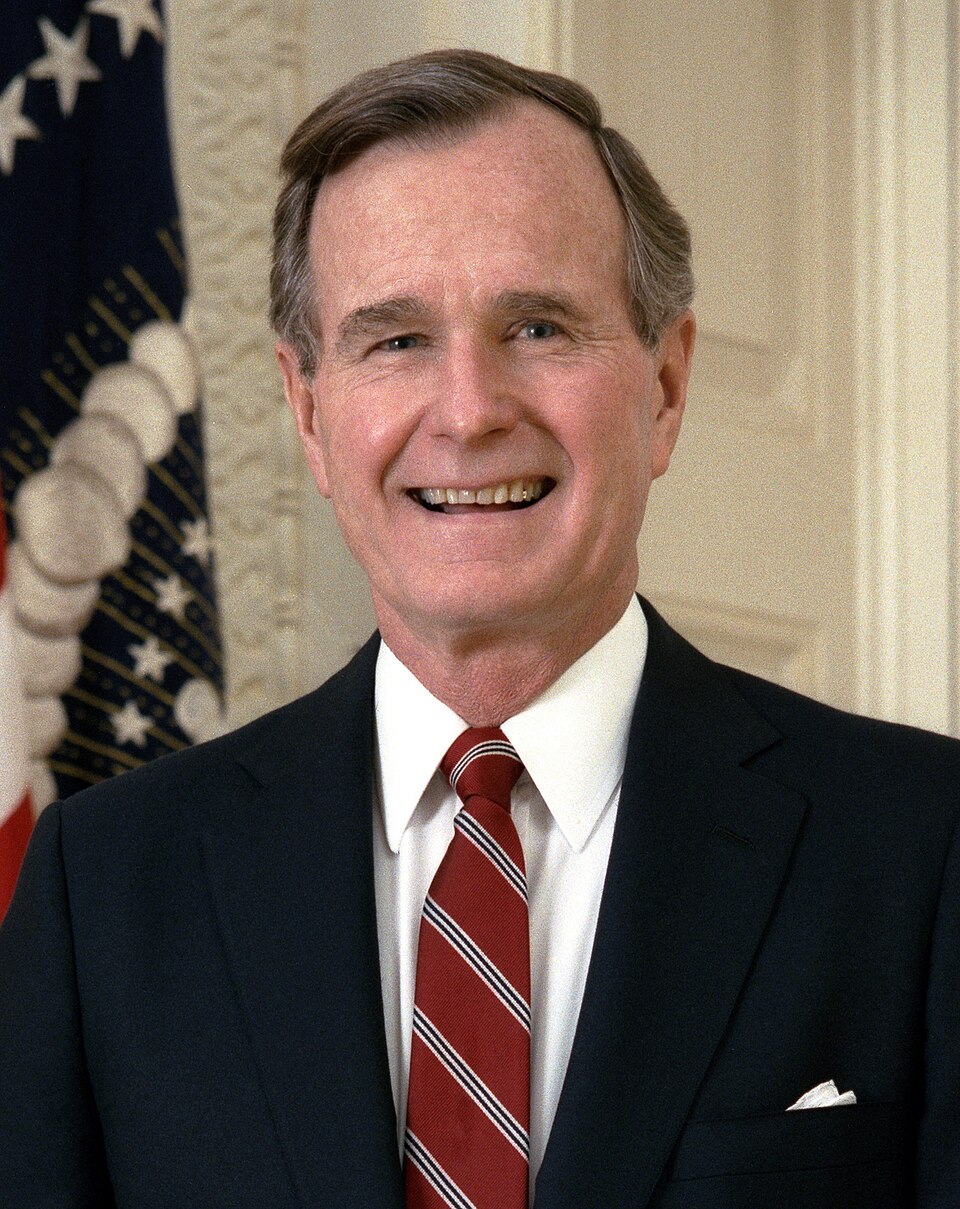
Father; 41st President; fellow Skull and Bones member; former CIA Director.
Defense Department unit that developed intelligence analysis contradicting Intelligence Community consensus.