Ronald Reagan
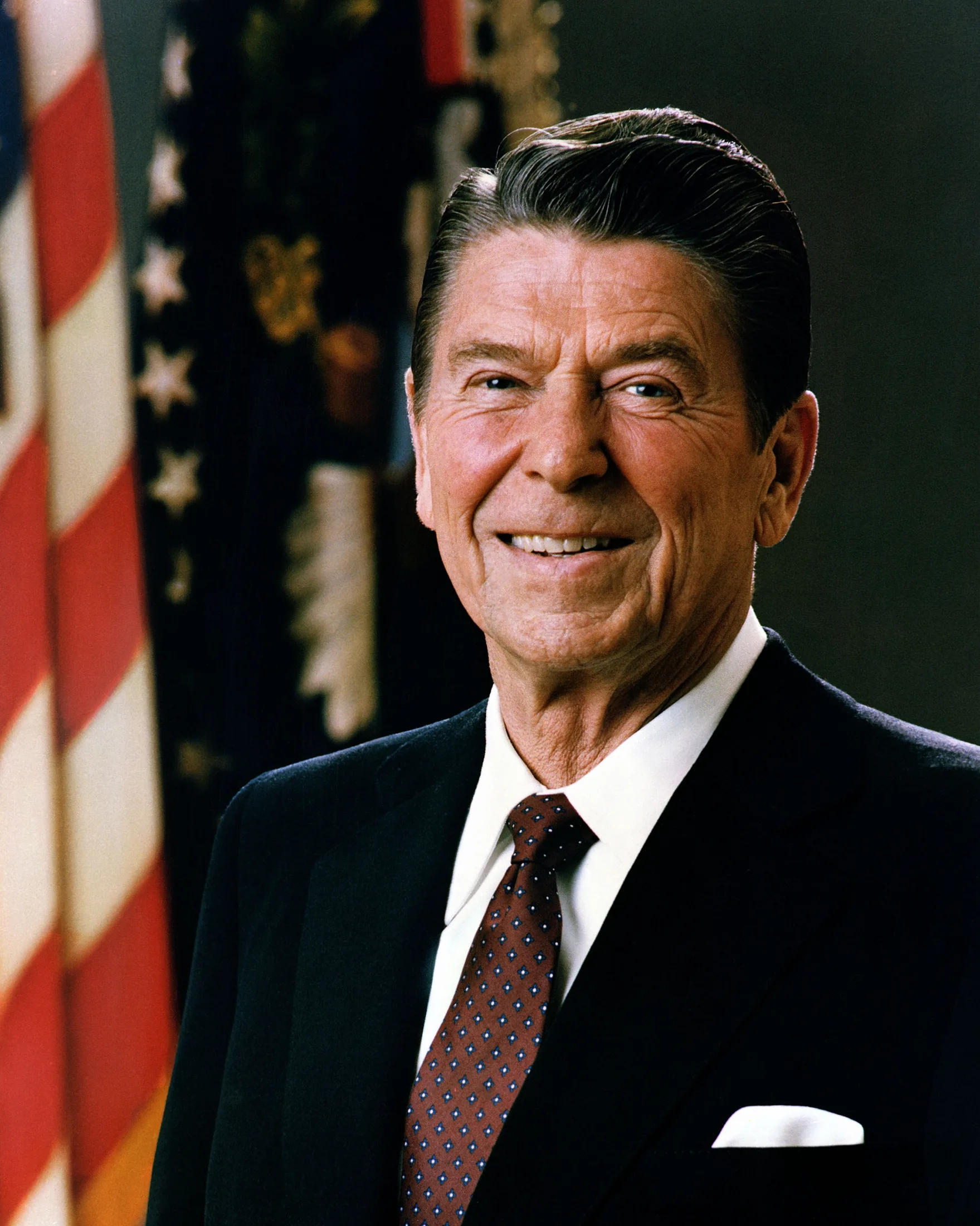
Ronald Wilson Reagan (1911–2004) served as the 40th President of the United States from 1981 to 1989, following careers as a Hollywood actor and Governor of California. His administration is documented in congressional investigations, court proceedings, and declassified records for the Iran-Contra affair, in which senior officials secretly sold weapons to Iran and diverted proceeds to Nicaraguan Contra rebels in vio… Reagan appears in The Archive as the central executive figure in the Iran-Contra affair, one of the most extensively investigated episodes of executive branch conduct in U.S.
Ronald Wilson Reagan (1911–2004) served as the 40th President of the United States from 1981 to 1989, following careers as a Hollywood actor and Governor of California. His administration is documented in congressional investigations, court proceedings, and declassified records for the Iran-Contra affair, in which senior officials secretly sold weapons to Iran and diverted proceeds to Nicaraguan Contra rebels in violation of congressional prohibitions.
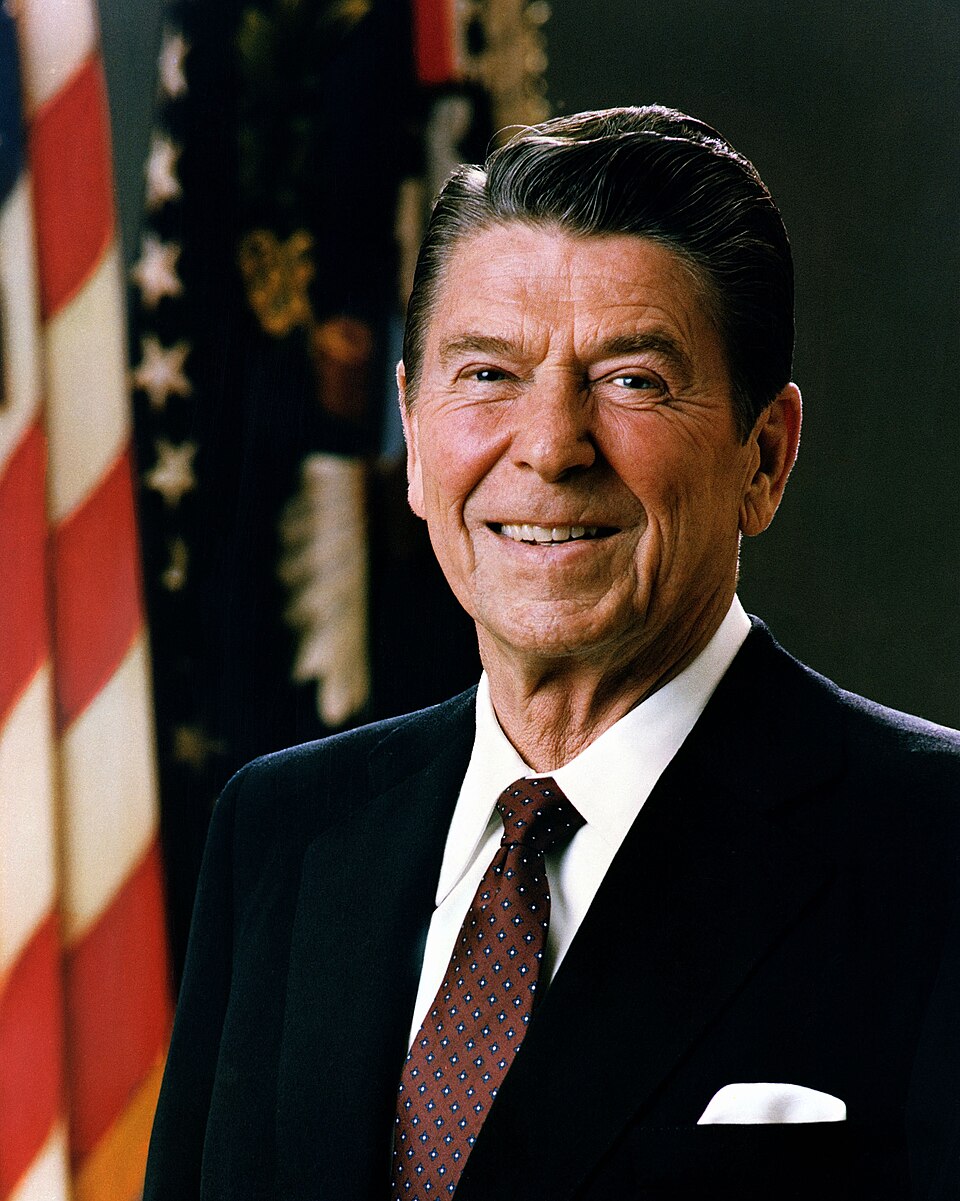
- Source
- Wikimedia Commons
- Type
- Official Portrait
- License
- Public domain
- Photographer
- Michael Evans
- Year
- 1981
Photo Information ▾
- Full name
- Ronald Wilson Reagan
- Born
- February 6, 1911, Tampico, Illinois
- Died
- June 5, 2004, Los Angeles, California
- Political party
- Republican (from 1962; previously Democratic)
- President of the United States
- January 20, 1981 – January 20, 1989 (40th President)
- Governor of California
- January 2, 1967 – January 6, 1975
- Education
- Eureka College, B.A. in Economics and Sociology, 1932
- Military service
- U.S. Army Reserve, 1937–1945; active duty 1942–1945 (limited service due to eyesight; assigned to Army Air Forces motion picture unit)
- Early career
- Radio sports announcer (1932–1937), film and television actor (1937–1966), Screen Actors Guild president (1947–1952, 1959–1960)
- Spouse
- Jane Wyman (m. 1940, div. 1949); Nancy Davis (m. 1952)
- Children
- Four: Maureen, Michael (adopted), Patti, Ron
- Bohemian Club membership
- Member; attended Bohemian Grove gatherings
Reagan appears in The Archive as the central executive figure in the Iran-Contra affair, one of the most extensively investigated episodes of executive branch conduct in U.S. history. Congressional committees, Independent Counsel investigations, court proceedings, and declassified National Security Council documents establish that during his presidency, senior officials executed covert arms sales to Iran and illegally funded Contra forces despite explicit congressional bans. Reagan's knowledge, authorization, and subsequent public statements regarding these operations remain subjects of official findings, sworn testimony, and historical debate. Additionally, Reagan's documented membership in the Bohemian Club and participation in Bohemian Grove gatherings place him within networks examined by The Archive for their role in elite policy formation and social connection outside public view.
# Ronald Reagan
Identity
Ronald Wilson Reagan was born on February 6, 1911, in Tampico, Illinois, to John Edward Reagan, a shoe salesman, and Nelle Clyde Wilson Reagan. He graduated from Eureka College in 1932 with a degree in economics and sociology. Reagan worked as a radio sports announcer in Iowa before moving to California in 1937, where he signed a contract with Warner Bros. and began a film career that spanned more than two decades and approximately fifty films. He served as president of the Screen Actors Guild from 1947 to 1952 and again from 1959 to 1960. During World War II, Reagan was on active duty with the Army Air Forces' First Motion Picture Unit, producing training and propaganda films; poor eyesight disqualified him from combat service.
Reagan married actress Jane Wyman in 1940; they divorced in 1949. In 1952, he married actress Nancy Davis, with whom he remained until his death. Reagan transitioned from the Democratic Party to the Republican Party in 1962, citing his evolving political philosophy and opposition to expanding federal government. He was elected Governor of California in 1966, serving two terms until 1975. In 1980, Reagan won the presidency, defeating incumbent Jimmy Carter, and was re-elected in 1984 in a landslide victory over Walter Mondale. He left office in January 1989 and was diagnosed with Alzheimer's disease in 1994. Reagan died on June 5, 2004, in Los Angeles at age 93.
Career & Roles
Reagan's public career encompassed entertainment, labor leadership, and politics. As Screen Actors Guild president during the McCarthy era, he cooperated with the House Un-American Activities Committee, providing information on suspected communists in Hollywood—an involvement documented in FBI records and congressional hearing transcripts. His political career began with a nationally televised speech supporting Barry Goldwater's 1964 presidential campaign, which established Reagan as a conservative voice.
As Governor of California (1967–1975), Reagan confronted campus unrest at the University of California, Berkeley, deploying National Guard troops during the People's Park protests in 1969. State records and news archives document his administration's approach to student demonstrations, welfare reform initiatives, and budget management. He unsuccessfully sought the Republican presidential nomination in 1968 and 1976 before winning in 1980.
Reagan's presidency (1981–1989) is documented through executive orders, congressional records, and declassified materials. His administration pursued supply-side economic policies (dubbed "Reaganomics"), characterized by significant tax cuts (the Economic Recovery Tax Act of 1981), defense spending increases, and deregulation. The administration presided over a deep recession in 1981–1982 followed by sustained economic expansion. Reagan appointed Sandra Day O'Connor as the first female Supreme Court Justice in 1981. His foreign policy emphasized confrontation with the Soviet Union, which he termed an "evil empire" in a 1983 speech, alongside a major nuclear weapons buildup and the Strategic Defense Initiative (SDI), a proposed missile defense system.
Organizations & Networks
Reagan's organizational affiliations spanned professional, political, and social spheres. His membership in the Screen Actors Guild connected him to Hollywood labor networks; his presidency of that union placed him at the center of entertainment industry labor relations during the early Cold War. FBI files released under the Freedom of Information Act document Reagan's cooperation with Bureau investigations into communist influence in Hollywood during the late 1940s and 1950s.
Reagan was a member of the Bohemian Club, the San Francisco-based private men's organization that conducts annual gatherings at Bohemian Grove in Monte Rio, California. News reports, member lists, and journalistic investigations document Reagan's attendance at Grove gatherings, where political, business, and media elites gather for social and networking activities. Investigative accounts, including those by journalists who infiltrated or reported on the Grove, note that Reagan delivered a speech at the Grove in 1967 titled "What's Wrong with the American Economy," and that political networking at these gatherings facilitated connections among Republican Party leaders, corporate executives, and conservative intellectuals.
Reagan's political network included advisors and officials who became central figures in the Iran-Contra affair: National Security Advisors Robert McFarlane and John Poindexter, CIA Director William Casey, Defense Secretary Caspar Weinberger, and National Security Council staff member Lieutenant Colonel Oliver North. These relationships are extensively documented in congressional testimony, court records, and Independent Counsel reports.
Major Operations & Activities
Reagan's administration executed significant domestic and foreign policy initiatives documented in legislative records, executive orders, and declassified files. Domestically, the administration implemented large-scale tax cuts and military spending increases, alongside reductions in domestic discretionary spending. The President signed the Tax Reform Act of 1986, a bipartisan overhaul of the federal tax code. His administration confronted the 1981 air traffic controllers' strike by firing striking workers, an action documented in Department of Labor records and news archives that reshaped federal labor relations.
In foreign policy, declassified documents and congressional records establish the administration's support for anti-communist forces globally: the Contras in Nicaragua, UNITA in Angola, and the mujahideen in Afghanistan. The administration provided covert support, coordinated through the CIA and National Security Council, to insurgencies opposing Soviet-aligned governments. These operations are documented in congressional intelligence committee reports and CIA historical reviews.
The Iran-Contra affair represents the most legally scrutinized operation of Reagan's presidency. Between 1985 and 1986, administration officials secretly sold arms to Iran—despite an official arms embargo and Iran's designation as a state sponsor of terrorism—in hopes of securing the release of American hostages held in Lebanon and establishing a strategic opening to Iranian moderates. Proceeds from these sales were diverted to fund Nicaraguan Contra rebels, circumventing the Boland Amendments, congressional legislation that prohibited U.S. government military support to the Contras. The Tower Commission report (1987), Joint Congressional Hearings (1987), and Independent Counsel Lawrence Walsh's final report (1993) provide exhaustive documentation of these operations, drawing on NSC documents, participant testimony, and declassified communications.
Historical Importance
Reagan's historical significance is established through his role in late Cold War foreign policy, economic policy transformation, and the reshaping of American conservatism. Presidential archives, diplomatic cables, and Soviet records document his engagement with Soviet leader Mikhail Gorbachev, culminating in the Intermediate-Range Nuclear Forces Treaty (1987), the first agreement to reduce rather than merely limit nuclear arsenals. Historians credit Reagan's military buildup and diplomatic engagement as contributing factors—alongside internal Soviet economic pressures—to the end of the Cold War, though scholarly debate continues regarding the relative weight of these influences.
Economically, Reagan's policies marked a departure from post-New Deal consensus, emphasizing tax reduction, deregulation, and reduced federal domestic spending. Economic data from the Bureau of Labor Statistics and Congressional Budget Office document both the expansion that followed the 1981–1982 recession and the tripling of the federal debt during Reagan's tenure, from approximately $900 billion to $2.7 trillion. The distributional effects of these policies—benefits concentrated among higher-income groups, stagnation of median wages—remain subjects of economic and historical analysis.
Reagan's political legacy includes the consolidation of a conservative coalition uniting free-market advocates, social conservatives, and anti-communist defense hawks. His electoral success reshaped the Republican Party and influenced Democratic Party policy shifts in subsequent decades, as documented in political science research and party platform evolution.
Documented Controversies
Confirmed by Congressional Finding and Inspector General Finding The Iran-Contra affair is the most extensively documented controversy of Reagan's presidency. The Joint Congressional Committees investigating the affair concluded in their November 1987 report that "the Iran-Contra Affair resulted from the failure of individuals to observe the law" and that "the ultimate responsibility for the events in the Iran-Contra Affair must rest with the President." The committees found that "if the President did not know what his National Security Advisers were doing, he should have." Independent Counsel Lawrence Walsh's investigation resulted in criminal convictions of multiple Reagan administration officials, including Oliver North, John Poindexter, and others, though several convictions were overturned on appeal on immunity grounds and President George H.W. Bush pardoned six defendants in 1992. Reagan's personal diaries, released posthumously, and his testimony indicate he authorized arms sales to Iran but maintained he did not know of the diversion of funds to the Contras. The Tower Commission (1987) found Reagan's management style left him insufficiently informed of NSC operations.
Established Fact The administration's Central America policy circumvented congressional prohibitions. The Boland Amendments, passed by Congress between 1982 and 1986, explicitly restricted and at times prohibited military aid to the Contras. Congressional findings and Walsh's Independent Counsel report establish that NSC staff, with knowledge of senior officials, solicited third-party and private donations to sustain Contra operations, evading the spirit and letter of congressional restrictions. Documentary evidence includes NSC memoranda, North's notebooks, and testimony from participants.
Historical Consensus Reagan's response to the HIV/AIDS epidemic has been characterized by public health historians and contemporaneous records as inadequate. The administration did not make a major public address on AIDS until 1987, six years into the epidemic, by which time over 20,000 Americans had died. Archival records, including correspondence and budget documents, show limited federal funding for AIDS research and prevention during the early 1980s. Surgeon General C. Everett Koop's efforts to promote public health education on AIDS faced resistance within the administration, as documented in Koop's memoirs and historical accounts.
Established Fact The administration's involvement with anti-communist forces included relationships with individuals and organizations later implicated in human rights abuses and narcotics trafficking. Congressional reports, including the 1989 Senate Foreign Relations Subcommittee report on Contra-drug links, found credible evidence that Contra-related entities engaged in drug trafficking and that U.S. officials were aware of these activities but prioritized anti-communist objectives. Declassified CIA Inspector General reports (released in 1998) acknowledged that the Agency had relationships with Contra elements involved in narcotics.
Official Record The administration's support for authoritarian regimes in Central America is documented in State Department cables and congressional testimony. U.S. military and economic aid to El Salvador continued despite documented human rights abuses by Salvadoran military and paramilitary forces, including the 1980 assassination of Archbishop Óscar Romero and the 1981 El Mozote massacre. Declassified records show administration officials certified improvements in human rights conditions to Congress to maintain aid flows, certifications later questioned by human rights organizations and investigative reporting.
Investigations & Legal Proceedings
The Iran-Contra affair triggered multiple formal investigations. President Reagan appointed the Tower Commission (formally the President's Special Review Board) in December 1986, chaired by former Senator John Tower. The Commission's February 1987 report criticized Reagan's management style and found that he had not been fully informed by his advisors, but did not determine definitively what Reagan knew about the diversion of funds.
The Joint Congressional Committees (House Select Committee to Investigate Covert Arms Transactions with Iran and Senate Select Committee on Secret Military Assistance to Iran and the Nicaraguan Opposition) conducted televised hearings from May to August 1987, hearing testimony from over 250 witnesses, including Oliver North, John Poindexter, Robert McFarlane, and others. The committees issued majority and minority reports in November 1987; the majority report concluded that "the common ingredients of the Iran and Contra policies were secrecy, deception, and disdain for the law."
Independent Counsel Lawrence Walsh was appointed in December 1986 under the Ethics in Government Act. His investigation lasted nearly seven years, resulting in fourteen indictments and eleven convictions or guilty pleas. Walsh's August 1993 final report concluded that Reagan "created the conditions which made possible the crimes committed by others" by setting a clear policy direction that subordinates understood as authorization to pursue by any means. Walsh noted that Reagan's diary entries and testimony were often vague regarding operational details, and that documentary destruction and conflicting testimony impeded full reconstruction of events. The report stated that "the Iran-Contra matter was not controlled by a plan; the President's priority was the release of American hostages."
Reagan testified before the Tower Commission in January and February 1987, giving initially inconsistent accounts of whether he had authorized the initial Israeli arms shipment to Iran in 1985, later stating he could not recall. He provided videotaped testimony to the Joint Congressional Committees in February 1987 and gave a deposition to Independent Counsel Walsh in 1990 and testimony in 1992. Throughout these proceedings, Reagan maintained that his intent was to establish contact with Iranian moderates and secure hostage releases, that he had authorized arms sales for those purposes, but that he had not known of or authorized the diversion of proceeds to the Contras.
Denials & Disputes
Reagan consistently denied authorizing or having knowledge of the diversion of Iranian arms sale proceeds to the Contras. In a nationally televised address on March 4, 1987, Reagan stated: "A few months ago I told the American people I did not trade arms for hostages. My heart and my best intentions still tell me that's true, but the facts and the evidence tell me it is not." He accepted responsibility for the policy outcomes while denying knowledge of illegal activities. His authorized biography and personal diaries, released after his death, reiterate that he approved arms sales to Iran for strategic and humanitarian reasons but was not informed of the Contra diversion until November 1986.
Defenders of Reagan, including the minority report authors of the congressional Iran-Contra committees, argued that the President acted within executive authority in foreign affairs and that congressional restrictions on Contra aid unconstitutionally infringed on presidential power. The minority report, signed by Representative Dick Cheney and others, contended that "the bottom line, however, is that the mistakes of the Iran-Contra Affair were just that—mistakes in judgment and nothing more." This interpretation remains disputed by legal scholars and historians who emphasize statutory violations documented in court proceedings.
Regarding AIDS policy, Reagan administration officials, including Communications Director Pat Buchanan, defended the limited federal response by emphasizing personal responsibility and state-level action. Surgeon General Koop, however, later publicly stated that he faced obstruction from within the administration when attempting to mount a comprehensive public health response, a claim supported by his contemporaneous correspondence.
Legacy & Historical Debate
Reagan's legacy is subject to significant partisan and scholarly division. Presidential ranking surveys, including those conducted by C-SPAN and academic historians, generally place Reagan in the upper tier of American presidents, crediting him with economic revitalization, restoration of national confidence following the 1970s malaise, and success in Cold War strategy. Conservative commentators and Reagan biographers emphasize his role in ending the Cold War and implementing free-market reforms.
Critical historians and political scientists highlight the Iran-Contra affair as a constitutional crisis in which executive branch officials systematically evaded congressional oversight and statutory restrictions. Legal scholars debate whether Reagan's management style—characterized by delegation and hands-off supervision—constitutes a defense or an abdication of presidential responsibility. The historical record, as compiled in the Walsh report and congressional findings, establishes a pattern of senior officials pursuing policies they understood the President to favor while insulating him from operational details that could create legal liability.
Economic assessments are similarly divided. Supporters credit Reaganomics with breaking stagflation and initiating a long expansion; critics point to increased inequality, federal debt accumulation, and the savings and loan crisis (which became fully apparent after Reagan left office) as negative legacies. Bureau of Economic Analysis data and Federal Reserve records provide the empirical foundation for these debates, but interpretation of causation and long-term effects remains contested.
Reagan's participation in Bohemian Grove gatherings is documented in news reports and investigative journalism, including accounts by Philip Weiss in Spy magazine (1989) and Jon Ronson's Them: Adventures with Extremists (2001). While membership in the Bohemian Club is a matter of record and not inherently controversial, critics have noted that the Grove's exclusivity and secrecy facilitated networking among political and corporate elites outside public accountability. The extent to which policy was formulated or coordinated at these gatherings, versus merely discussed socially, remains a subject of investigative interest but limited documentation due to the Club's privacy rules.
Continue Investigating
Reagan's documented involvement in the Iran-Contra affair establishes him as a central figure in The Archive's investigation of that scandal. Researchers should consult the full congressional reports, the Tower Commission findings, Lawrence Walsh's Independent Counsel final report, and declassified National Security Council documents available through the National Archives and the National Security Archive at George Washington University. Reagan's personal diaries, edited by Douglas Brinkley and published in 2007, provide his contemporaneous perspective, though entries are often brief and lacking operational detail.
Reagan's participation in Bohemian Grove gatherings connects him to The Archive's investigation of elite social networks and their role in policy formation. Investigative accounts by journalists who have documented the Grove, including works by Jon Ronson and Philip Weiss, provide context for understanding these gatherings. The Bohemian Club itself does not provide membership lists or internal records publicly.
Related Archive investigations include Operation Ajax (Reagan's administration provided support to anti-Soviet forces as part of broader Cold War strategy), Operation Gladio (Reagan-era NATO stay-behind networks), and the broader examination of intelligence community operations during the 1980s, including connections between anti-communist covert operations and narcotics trafficking documented in congressional investigations. Reagan's vice president, George H.W. Bush, succeeded him and later issued pardons to Iran-Contra figures, a decision documented in presidential records and analyzed in The Archive's profile of Bush. Associated figures including Caspar Weinberger, Elliott Abrams, Oliver North, John Poindexter, Robert McFarlane, William Casey, and Richard Secord are subjects of separate Archive profiles with extensive documentation of their roles in Iran-Contra operations.
- 1911Ronald Wilson Reagan born February 6 in Tampico, Illinois.
- 1932Graduated from Eureka College; began career as radio sports announcer.
- 1937Signed contract with Warner Bros., beginning film acting career.
- 1947Elected president of Screen Actors Guild; began cooperation with HUAC investigations of Hollywood.
- 1962Changed party registration from Democrat to Republican.
- 1966Elected Governor of California.
- 1967Delivered speech at Bohemian Grove on American economy.
- 1980Elected 40th President of the United States, defeating Jimmy Carter.
- 1981Inaugurated January 20; survived assassination attempt March 30; signed Economic Recovery Tax Act cutting taxes.
- 1983Announced Strategic Defense Initiative; deployed U.S. Marines to Lebanon (barracks bombing killed 241 in October); invaded Grenada.
- 1985Secret arms sales to Iran began; proceeds later diverted to Contras in violation of Boland Amendments.
- 1986Iran-Contra affair publicly exposed in November; Reagan appointed Tower Commission in December.
- 1987Tower Commission report released February; Joint Congressional hearings held May–August; Reagan testified; signed INF Treaty with Gorbachev in December.
- 1989Left presidency January 20; succeeded by George H.W. Bush.
- 1993Independent Counsel Lawrence Walsh issued final Iran-Contra report in August.
- 1994Announced diagnosis of Alzheimer's disease in November.
- S1Report of the Congressional Committees Investigating the Iran-Contra AffairU.S. Congress · primary
- S2The Tower Commission Report: The Full Text of the President's Special Review BoardUniversity of California Santa Barbara American Presidency Project · primary
- S3Final Report of the Independent Counsel for Iran/Contra Matters (Lawrence E. Walsh)U.S. Government Publishing Office · primary
- S4Iran-Contra AffairEncyclopaedia Britannica · reference
- S5The Reagan Administration's Uneasy Response to AIDSSmithsonian Magazine · mainstream
- S6Drugs, Law Enforcement and Foreign Policy (Kerry Committee Report)U.S. Senate Committee on Foreign Relations · primary
- S7CIA Inspector General Report on Contra-Drug ConnectionsNational Security Archive, George Washington University · primary
- S8The Reagan DiariesHarperCollins · book
- S9Report on Human Rights Practices in El SalvadorU.S. Department of State · primary
- S10The Cold War: A New HistoryPenguin Random House · book
- S11Ronald ReaganWikipedia · reference
- S12Iran-Contra: Reagan's Scandal and the Unchecked Abuse of Presidential PowerUniversity Press of Kansas · book
- S13Presidential Historians Survey 2021C-SPAN · academic
- S14Economic Report of the President 1989U.S. Government Publishing Office · primary
- S15FBI Records: The Vault - Ronald ReaganFederal Bureau of Investigation · primary
If you're learning about this topic for the first time, these are the best places to continue — documented evidence and historical relationships are the guide.
Ronald Reagan is documented in the evidence record of this published dossier.
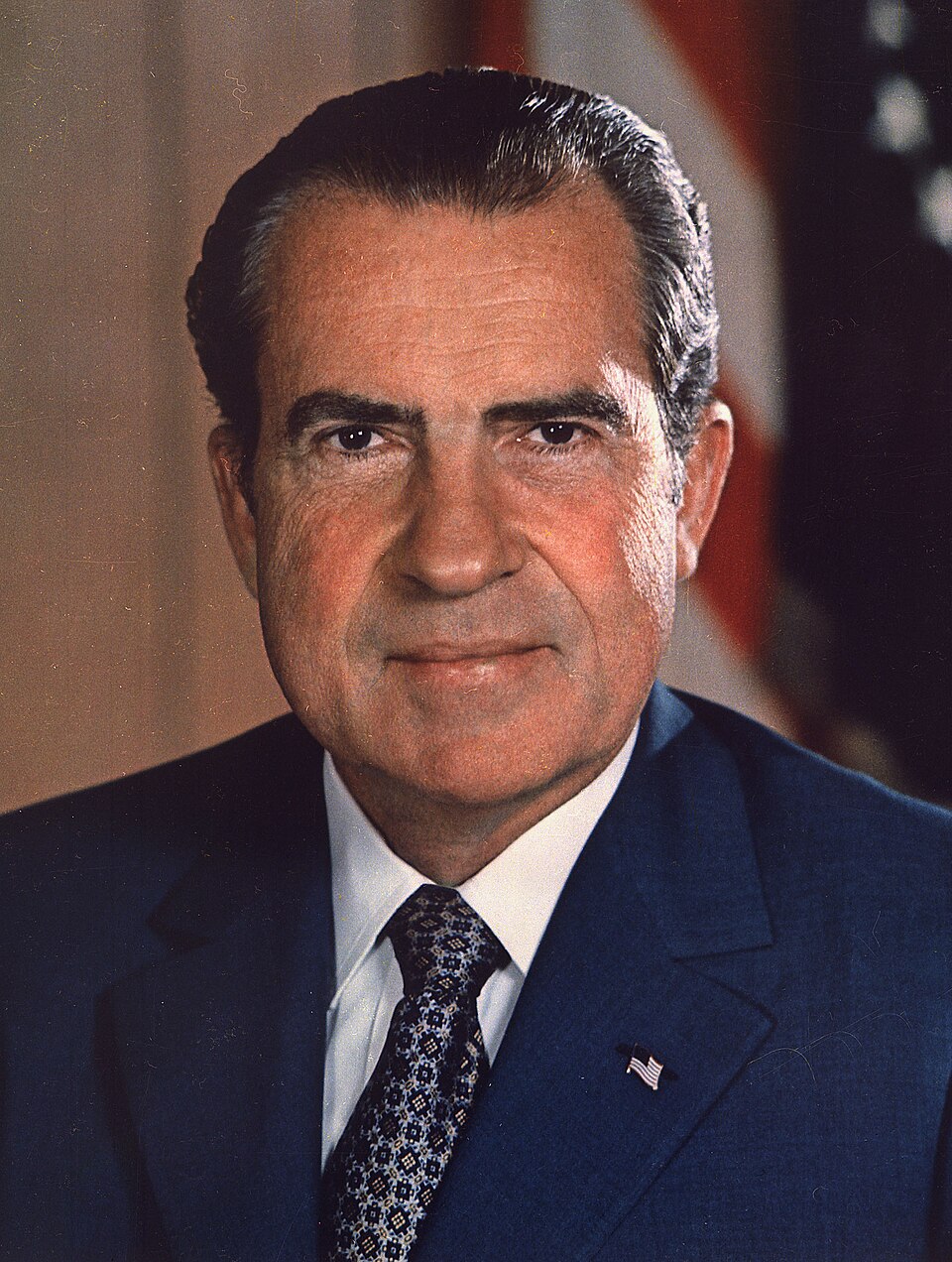
Reagan supported Nixon politically and succeeded him as Republican Party leader after Nixon's resignation; both documented Bohemian Club members.
Private San Francisco club of which Reagan was a member; hosts annual Bohemian Grove gatherings.