John Kerry
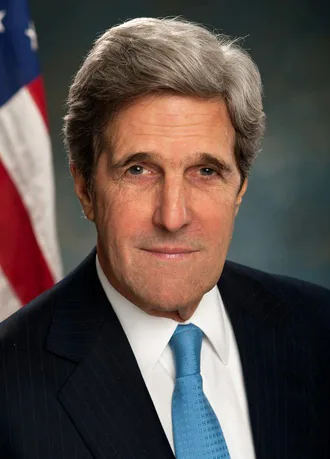
John Forbes Kerry served as U.S. Secretary of State (2013–2017), U.S. Kerry appears in The Archive's investigations as a documented member of the Skull and Bones Society at Yale (Class of 1966), as a Senate investigator whose Foreign Relations Subcommittee hearings examined allegations connecting Nicaraguan Contra supporters to…
John Forbes Kerry served as U.S. Secretary of State (2013–2017), U.S. Senator from Massachusetts (1985–2013), and Democratic presidential nominee (2004). A decorated Vietnam War veteran turned anti-war activist, Kerry's career spans military service, Senate investigations into Central American covert operations and the BCCI banking scandal, climate diplomacy, and membership in Yale's secretive Skull and Bones society.
- Source
- Wikimedia Commons
- Type
- Official Portrait
- License
- Public domain
- Photographer
- United States Department of State
- Year
- 2021
Photo Information ▾
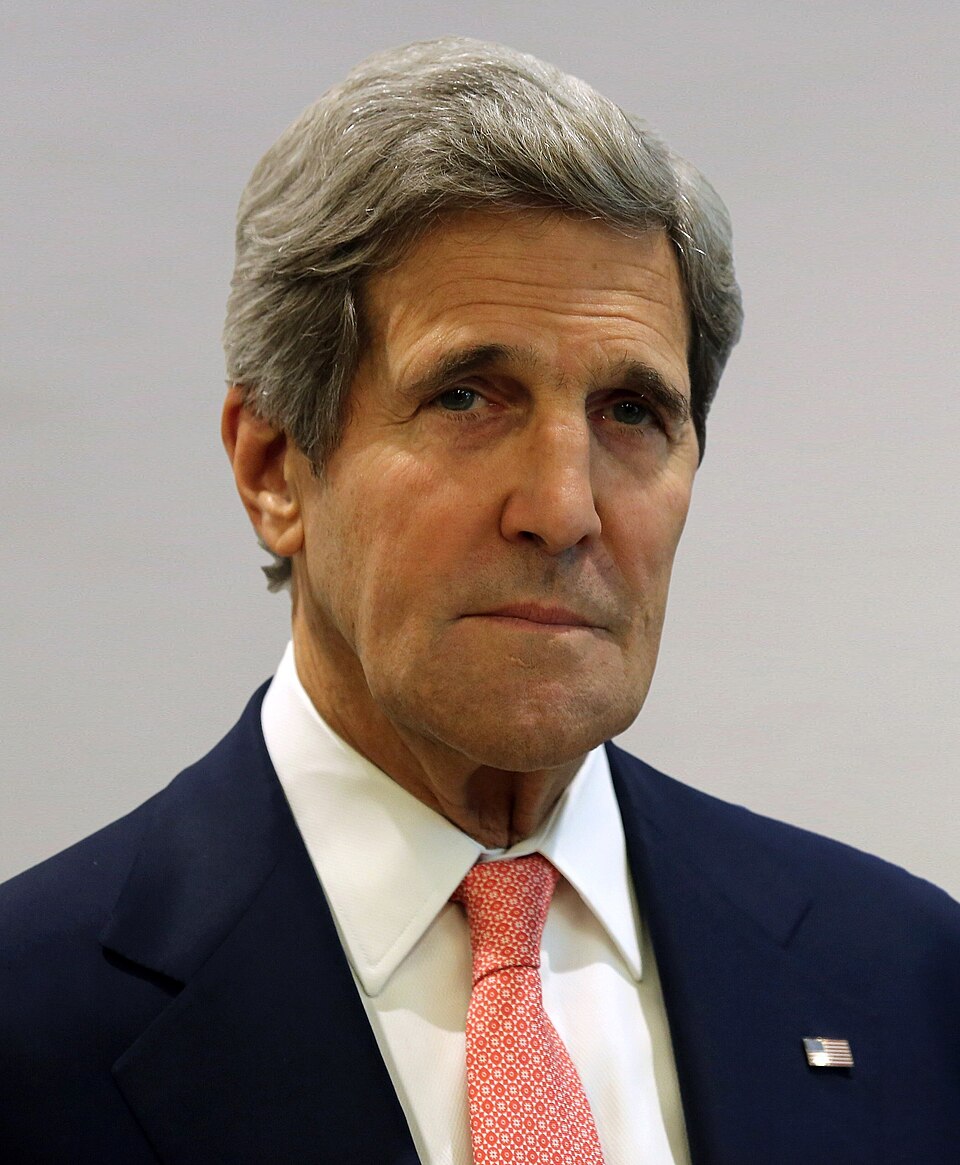
Official portrait of U.S. Special Presidential Envoy for Climate John Kerry .
View original ↗- Full name
- John Forbes Kerry
- Born
- December 11, 1943, Aurora, Colorado, U.S.
- Education
- Yale University (B.A., 1966); Boston College Law School (J.D., 1976)
- Military service
- U.S. Navy, 1966–1970; Lieutenant; served in Vietnam; awarded Silver Star, Bronze Star, three Purple Hearts
- U.S. Senator
- Massachusetts, 1985–2013
- Secretary of State
- 68th, served 2013–2017 under President Barack Obama
- Presidential candidate
- Democratic nominee, 2004 (defeated by George W. Bush)
- Climate envoy
- U.S. Special Presidential Envoy for Climate, 2021–2024
- Secret society membership
- Skull and Bones, Yale Class of 1966
- Political party
- Democratic
- Spouse
- Teresa Heinz (m. 1995); previously married to Julia Thorne (1970–1988)
- Notable investigations led
- Senate BCCI investigation (1988–1992); Senate Contra-drug hearings (1986–1989)
Kerry appears in The Archive's investigations as a documented member of the Skull and Bones Society at Yale (Class of 1966), as a Senate investigator whose Foreign Relations Subcommittee hearings examined allegations connecting Nicaraguan Contra supporters to drug trafficking—matters central to Gary Webb's Dark Alliance reporting—and as chair of the Senate Foreign Relations Subcommittee on Terrorism, Narcotics and International Operations that investigated the Bank of Credit and Commerce International (BCCI) scandal. His Senate investigations produced official government findings on covert operations, banking fraud, and alleged narcotics connections that intersect with multiple Archive dossiers documenting controversial U.S. intelligence and foreign policy activities during the Cold War and post-Cold War periods.
# John Kerry
Identity
John Forbes Kerry was born December 11, 1943, in Aurora, Colorado, to Richard Kerry, a Foreign Service officer, and Rosemary Forbes Kerry. His paternal grandparents were Austro-Hungarian Jewish immigrants who converted to Catholicism and changed the family name from Kohn to Kerry; this ancestry was not publicly known until the Boston Globe reported it during Kerry's 2004 presidential campaign. Kerry spent portions of his childhood in Europe due to his father's diplomatic postings. He attended elite preparatory schools including St. Paul's School in New Hampshire before enrolling at Yale University in 1962.
At Yale, Kerry was initiated into Skull and Bones, the secret society founded in 1832, during his senior year in 1966. The society's membership has included numerous U.S. political and intelligence figures, among them Averell Harriman, Henry Stimson, William Howard Taft, George H.W. Bush, and George W. Bush. Membership in Skull and Bones has been the subject of extensive historical study and public curiosity due to the organization's secrecy, lifetime bonds among members, and disproportionate representation in American political and financial leadership. Kerry has consistently declined to discuss his membership in detail, stating in interviews that the organization's oath of secrecy prevents him from commenting.
After graduating from Yale with a degree in political science, Kerry enlisted in the U.S. Navy in 1966 and volunteered for combat duty in Vietnam. He commanded a Swift Boat in the Mekong Delta and received the Silver Star, Bronze Star with Combat V, and three Purple Hearts for his service. His military decorations would later become central to political controversy during his 2004 presidential campaign.
Career & Roles
Kerry's public career divides into distinct phases: military service, anti-war activism, prosecutorial work, lieutenant governorship, and a twenty-eight-year Senate career culminating in high-level diplomatic roles.
Upon returning from Vietnam in 1969, Kerry became a prominent spokesperson for Vietnam Veterans Against the War (VVAW). On April 22, 1971, he testified before the Senate Foreign Relations Committee in nationally televised hearings, asking, "How do you ask a man to be the last man to die for a mistake?" His testimony referenced alleged war crimes and atrocities reported by fellow veterans during the Winter Soldier Investigation hearings held in Detroit earlier that year. This testimony established Kerry as a leading voice of the anti-war movement and attracted both praise and lasting criticism from those who viewed his statements as undermining U.S. military efforts.
Kerry attended Boston College Law School, earning his J.D. in 1976, and briefly worked as a prosecutor in Middlesex County, Massachusetts. He was elected Lieutenant Governor of Massachusetts in 1982, serving under Governor Michael Dukakis. In 1984, Kerry won election to the U.S. Senate, where he would serve until 2013.
During his Senate tenure, Kerry served on the Foreign Relations Committee and chaired the Subcommittee on Terrorism, Narcotics and International Operations from 1987 to 1995. In this capacity, he led two major investigations that produced official government findings relevant to multiple Archive investigations: the Senate hearings on Contra-drug allegations (1986–1989) and the BCCI investigation (1988–1992). Both investigations generated controversy, official reports, and resistance from elements within the executive branch and intelligence community.
Kerry was the Democratic nominee for president in 2004, losing to incumbent George W. Bush in a close election. His campaign was severely damaged by the Swift Boat Veterans for Truth, a political action group that challenged his military record and anti-war activism. President Barack Obama appointed Kerry as Secretary of State in 2013, a role he held until January 2017. As Secretary of State, Kerry negotiated the Iran nuclear deal (Joint Comprehensive Plan of Action), participated in Paris Climate Agreement negotiations, and managed diplomatic crises in Syria, Ukraine, and the Middle East. In 2021, President Joe Biden appointed him as the first U.S. Special Presidential Envoy for Climate, a cabinet-level position he held until March 2024.
Organizations & Networks
Kerry's documented organizational affiliations span elite educational societies, military veteran organizations, Senate committee structures, and international diplomatic institutions.
Skull and Bones (Class of 1966): Kerry's membership in this Yale secret society is documented in published rosters and confirmed by multiple biographers. The society meets in a windowless building known as "The Tomb" on Yale's campus and conducts initiation rituals that remain secret. Alexandra Robbins's investigative book Secrets of the Tomb (2002) documents the organization's history and influence networks. Kerry's 2004 presidential opponent George W. Bush was also a member (Class of 1968). During a televised interview on NBC's Meet the Press, both candidates were asked about their Skull and Bones membership; both declined to discuss it, with Kerry stating, "Not much, because it's a secret."
Vietnam Veterans Against the War: Kerry served as a national spokesperson and organizer for VVAW in 1970–1971. The organization coordinated protests, guerrilla theater demonstrations, and the Winter Soldier Investigation hearings. FBI documents later released under the Freedom of Information Act revealed that the bureau maintained surveillance on VVAW during this period as part of COINTELPRO-related domestic intelligence operations.
Senate Foreign Relations Committee: Kerry's work on this committee and particularly his chairmanship of the Subcommittee on Terrorism, Narcotics and International Operations placed him at the intersection of multiple Archive-documented investigations. The subcommittee's jurisdiction covered international drug trafficking, terrorism financing, and covert operations—all subjects central to the Contra-drug allegations and BCCI scandal.
Council on Foreign Relations: Kerry has been a member of this influential foreign policy organization, which has been the subject of extensive research regarding elite policy networks. His membership is documented in CFR annual reports.
State Department and Climate Diplomacy Networks: As Secretary of State and later Climate Envoy, Kerry operated within formal diplomatic structures including NATO, the United Nations Framework Convention on Climate Change, and bilateral negotiating frameworks with Iran, Russia, and China.
Major Operations & Activities
Senate Investigation of Contra-Drug Allegations (1986–1989): Kerry's subcommittee conducted a three-year investigation into allegations that Nicaraguan Contra rebels and their supporters were involved in cocaine trafficking into the United States, and that U.S. government agencies had knowledge of or facilitated such activities. The investigation was prompted by media reports and allegations from former Contra operatives. The subcommittee held hearings featuring testimony from pilots, drug traffickers, and former intelligence operatives. The final report, commonly known as the "Kerry Report," was released in April 1989 as a 400-page Senate Foreign Relations Committee Subcommittee report titled "Drugs, Law Enforcement and Foreign Policy."
The Kerry Report documented that "individuals who provided support for the Contras were involved in drug trafficking, the supply network of the Contras was used by drug trafficking organizations, and in some cases funds from drug trafficking were used to support the Contras." The report further stated that "senior U.S. policy makers were not immune to the idea that drug money was a perfect solution to the Contras' funding problems." These findings provided official governmental documentation for allegations that would later be central to Gary Webb's 1996 "Dark Alliance" series, though the Kerry Report received limited mainstream media coverage at the time of its release.
BCCI Investigation (1988–1992): Kerry's subcommittee investigated the Bank of Credit and Commerce International, which collapsed in 1991 amid revelations of massive fraud, money laundering, arms trafficking, and intelligence service connections. The subcommittee's investigation ran parallel to inquiries by the Justice Department, Federal Reserve, Manhattan District Attorney Robert Morgenthau, and authorities in the United Kingdom and Luxembourg. Kerry's investigators documented BCCI's role in laundering drug money, facilitating arms deals, and maintaining relationships with multiple intelligence services including the CIA, Pakistan's ISI, and Saudi intelligence.
The investigation was controversial. Kerry later stated that his efforts met resistance from the Justice Department and elements of the intelligence community concerned about exposing sensitive intelligence relationships. The final Kerry subcommittee report on BCCI was released in 1992 and concluded that BCCI had been used by intelligence services for covert operations and that regulatory agencies had failed to act on warning signs for years.
Iran Nuclear Negotiations (2013–2015): As Secretary of State, Kerry led U.S. negotiations that resulted in the Joint Comprehensive Plan of Action (JCPOA), reached in July 2015 between Iran and the P5+1 nations (U.S., UK, France, Russia, China, and Germany). The agreement required Iran to limit nuclear enrichment and submit to international inspections in exchange for sanctions relief. The deal was controversial domestically and was later abandoned by the Trump administration in 2018.
Paris Climate Agreement (2015): Kerry played a central negotiating role in the Paris Climate Agreement reached in December 2015, bringing his granddaughter to the signing ceremony in a symbolic gesture regarding intergenerational stakes. The agreement committed 196 parties to limiting global temperature rise, though enforcement mechanisms remained limited.
Historical Importance
Kerry's historical significance derives from multiple roles: as a decorated combat veteran who became an anti-war activist, as a Senate investigator who produced official government findings on controversial covert operations and financial crimes, as a presidential nominee who came within one state of winning the presidency, and as a senior diplomat who negotiated major international agreements.
His 1971 Senate testimony remains a defining moment in Vietnam War history, widely cited in scholarship on the anti-war movement and referenced in Ken Burns's PBS documentary The Vietnam War. Historian David Halberstam described Kerry as "one of the few genuine heroes of the war" for his combat service and subsequent moral witness.
The Kerry Report on Contra-drug connections represents an official government investigation that documented allegations later dismissed or marginalized in mainstream coverage of Gary Webb's reporting. Political scientist Peter Dale Scott and journalist Robert Parry both cited the Kerry investigation as producing credible evidence that was insufficiently examined by major media outlets. The report's findings remain relevant to ongoing historical debates about the Iran-Contra affair and alleged CIA tolerance or facilitation of drug trafficking by anti-communist proxy forces.
Kerry's BCCI investigation contributed to what journalist James Ring Adams called "the most important bank fraud case of the century," though the full extent of intelligence service involvement remained classified. The investigation's documentation of regulatory failure and intelligence agency conflicts of interest informed subsequent debates about banking oversight and the challenges of investigating institutions with intelligence connections.
As Secretary of State, Kerry's Iran deal and climate diplomacy represent significant but contested foreign policy legacies. Supporters credit the JCPOA with verifiably constraining Iran's nuclear program during its implementation period; critics argue it provided sanctions relief that strengthened the Iranian regime without permanently resolving nuclear proliferation risks.
Documented Controversies
Official Record Kerry's membership in Skull and Bones is documented in official society records, published membership lists, and multiple biographical sources. His 2004 opponent George W. Bush was also a documented member. The organization's secrecy, elite composition, and historical influence have generated extensive public interest and conspiracy theories, though the society itself is a legally incorporated organization (the Russell Trust Association) with property holdings documented in New Haven land records. When both Kerry and Bush were asked about their membership during the 2004 campaign on Meet the Press, both declined to discuss it, with Kerry stating, "I wish there were something secret I could manifest." The historical significance of Skull and Bones membership lies in documented networking among members who have held disproportionate positions in U.S. government, intelligence, finance, and law, as researched by historians including Alexandra Robbins and Antony C. Sutton.
Documented Congressional Finding The Kerry Committee's final report (1989) officially documented that "individuals who provided support for the Contras were involved in drug trafficking" and that "the supply network of the Contras was used by drug trafficking organizations." The report further stated that there were "instances where drug money was used to support the Contras." These findings were based on sworn testimony, documentary evidence, and investigative fieldwork. The report noted that senior policy makers had discussed the possibility of Contra drug connections but that "the desire to support the Contras overrode concerns about drug trafficking." These official government findings directly corroborated core allegations later made by Gary Webb in his "Dark Alliance" series, though the Kerry Report received limited media coverage when released and was not prominently referenced during the initial media backlash against Webb's reporting in 1996.
Historical Controversy Kerry's anti-war activism, particularly his April 1971 Senate testimony, has remained politically controversial for over five decades. His testimony included statements such as "[veterans] had personally raped, cut off ears, cut off heads, taped wires from portable telephones to human genitals and turned up the power, cut off limbs, blown up bodies, randomly shot at civilians, razed villages in fashion reminiscent of Genghis Khan." These allegations, based on testimony from the Winter Soldier Investigation, were disputed by some veterans and conservative commentators who viewed them as exaggerated or false. Historians have documented that atrocities occurred in Vietnam—confirmed by events such as the My Lai massacre, official military investigations, and declassified military records—though the scope and frequency of such acts have remained subjects of historical debate. Kerry's critics accused him of generalizing from specific incidents, while supporters viewed his testimony as necessary moral witness. This controversy resurfaced intensely during his 2004 presidential campaign.
Disputed Claim During the 2004 presidential campaign, the group Swift Boat Veterans for Truth (SBVT) challenged Kerry's military record, questioning the circumstances of his medal awards and accusing him of exaggerating his combat actions. The group, funded by Republican donors including Texas businessman Bob Perry, released television advertisements and a book titled Unfit for Command. Navy records, officer fitness reports, and after-action reports supported Kerry's medal citations, and many of his former crewmates defended his service. However, some officers who served in the same area disputed his accounts. Major media fact-checking investigations by the New York Times, Washington Post, and non-partisan organizations generally found that SBVT's central claims were unsupported by documentary evidence, but the controversy significantly damaged Kerry's campaign. The episode became a case study in political communication, introducing the term "swiftboating" to describe attacks on a candidate's perceived strength using disputed or misleading claims.
Reported Association During the BCCI investigation, Kerry's subcommittee examined complex financial networks involving arms dealers, intelligence operatives, and narcotics traffickers. Some conspiracy theories have suggested that Kerry's investigation was limited or constrained by intelligence community pressure, though no documentary evidence proves that Kerry himself was compromised or acting improperly. Kerry publicly stated that his investigation faced obstruction from the Justice Department and resistance from officials concerned about exposing intelligence relationships. Manhattan District Attorney Robert Morgenthau, whose office conducted parallel investigations, praised Kerry's work as important and credible, though Morgenthau also expressed frustration with federal prosecutors whom he believed were slow to act on BCCI-related matters.
Ongoing Historical Debate Historians and journalists continue to debate whether Kerry's Senate investigations were sufficiently pursued by law enforcement and whether intelligence community concerns led to incomplete accountability. Investigative journalist Robert Parry wrote that Kerry's Contra-drug findings were marginalized by an unwilling media establishment and that the subsequent dismissal of Gary Webb's reporting represented a failure to acknowledge evidence that Kerry's official investigation had documented years earlier. Conventional political histories tend to treat Kerry's investigations as important but ultimately inconclusive, while alternative researchers view them as evidence of systemic cover-ups.
Investigations & Legal Proceedings
Kerry has not been the subject of criminal investigation or prosecution. His role has been that of investigator rather than investigated.
As chair of the Senate Foreign Relations Subcommittee on Terrorism, Narcotics and International Operations, Kerry conducted official congressional investigations with subpoena power. The Contra-drug investigation (1986–1989) heard from approximately 50 witnesses and reviewed thousands of pages of documentary evidence. The BCCI investigation (1988–1992) involved coordination with the Justice Department, Federal Reserve, and international authorities. Both investigations resulted in official Senate reports that remain part of the public record and are cited in scholarly works on intelligence history, financial crime, and covert operations.
During his 2004 presidential campaign, Kerry released his military records after pressure from opponents and media organizations. The released documents corroborated his medal citations and service record. His Yale transcripts were also released, showing a modest academic record similar to that of his opponent George W. Bush.
No credible evidence exists of Kerry being under criminal or ethics investigation at any point in his career. His political opponents have at times questioned his wealth (largely derived from his marriage to Teresa Heinz, heir to the H.J. Heinz Company fortune), but no financial impropriety has been documented.
Denials & Disputes
Kerry has consistently defended his Vietnam War service and his subsequent anti-war activism as consistent rather than contradictory. In response to SBVT allegations during the 2004 campaign, he stated: "I'm not going to stand for it. I'm not going to let them do to me what they did to John McCain in 2000 or what they did to Max Cleland." His campaign released documentation supporting his service record, and numerous crewmates held press conferences defending his combat actions. Military records reviewed by media organizations corroborated the basic facts of his medal citations, though some disputed interpretive details.
Regarding his Skull and Bones membership, Kerry has declined to provide details, stating in interviews that members take an oath of secrecy. When pressed, he has minimized the organization's significance, describing it as a college social organization rather than a powerful conspiracy, though he has not provided substantive information about its activities or networks.
On the Contra-drug investigation, Kerry maintained that his subcommittee documented credible evidence of drug trafficking connections that were ignored or minimized for political reasons. In his 2018 memoir Every Day Is Extra, he wrote that the investigation "was not some wild goose chase" and that "we had the goods." He expressed frustration that the findings received limited media attention and that the issue became politically polarized.
Regarding BCCI, Kerry defended his investigation as thorough and important, while acknowledging that the full extent of intelligence agency involvement likely remained classified. He criticized the Justice Department for what he characterized as insufficient cooperation and slow action.
Kerry has not directly addressed the connection between his Senate investigations and Gary Webb's later reporting. During the controversy over "Dark Alliance," Kerry was not prominently involved in public debate, though his investigation's findings were cited by Webb's defenders.
Political opponents have accused Kerry of inconsistency, elitism, and being out of touch—common charges against long-serving politicians from wealthy backgrounds. Conservative critics have portrayed him as exemplifying a "liberal establishment" connected to secret societies and suspicious of conservative anti-communist policies. Kerry has generally dismissed such characterizations as political attacks lacking substance.
Legacy & Historical Debate
Kerry's legacy encompasses multiple dimensions: military service and anti-war witness, Senate investigator of controversial covert operations, failed presidential candidate, and senior diplomat.
Scholars of the Vietnam War recognize Kerry's 1971 testimony as historically significant documentation of veteran disillusionment and moral injury. Historian Christian Appy's American Reckoning cites Kerry as representing a generation's confrontation with the gap between official narratives and ground-level experience. The testimony remains controversial among veterans; some view it as honest and necessary, while others consider it a betrayal that damaged public support for servicemembers.
The Kerry Committee's Contra-drug investigation occupies a complicated place in Iran-Contra scholarship. Mainstream political histories, such as Theodore Draper's A Very Thin Line, acknowledge the investigation but generally emphasize that it did not prove direct CIA drug trafficking—a distinction Kerry himself maintained, focusing instead on "knowledge and tolerance" of trafficking by Contra supporters. Alternative researchers and investigative journalists, including Peter Dale Scott, Robert Parry, and Alexander Cockburn, argue that the Kerry Report documented a pattern of intelligence agency complicity that was actively suppressed or marginalized by establishment media and political institutions. The controversy over Gary Webb's "Dark Alliance" series reignited debate over whether Kerry's findings had been appropriately examined. Journalist Gary Webb himself cited the Kerry Report extensively in his book Dark Alliance: The CIA, the Contras, and the Crack Cocaine Explosion, noting that official government investigators had documented connections that were later dismissed when he reported them.
The BCCI investigation's legacy is similarly complex. Financial crime historians acknowledge that Kerry's subcommittee played an important role in exposing the scandal, though the investigation by Manhattan DA Robert Morgenthau and the Federal Reserve's subsequent enforcement actions receive more prominent credit in standard accounts. Researchers interested in intelligence-financial crime connections view the BCCI case as illustrating the challenges of investigating institutions with state intelligence links. Political scientist Jonathan Winer, who served as Kerry's investigator on the BCCI case, later became a State Department official and continued work on financial crime enforcement.
Kerry's 2004 presidential campaign is studied as a case example of political messaging, attack advertising, and the challenges facing candidates with complex records. The Swift Boat controversy remains a subject of political science research on negative campaigning and media framing.
His diplomatic legacy is contested. The Iran nuclear deal is viewed by supporters as a pragmatic, verifiable arms control achievement and by critics as a dangerous appeasement of a hostile regime. The Paris Climate Agreement is similarly polarizing, praised by climate advocates and criticized by those skeptical of international regulatory frameworks or climate science.
Kerry's Skull and Bones membership remains a subject of public fascination and conspiracy speculation. Serious historical research on the society, including works by Robbins and Sutton, documents its existence, elite composition, and notable members but finds limited evidence of coordinated political conspiracy. The society's significance appears to lie more in social networking among elites than in secret political control, though its very secrecy ensures that definitive conclusions remain elusive.
Continue Investigating
Further research into John Kerry's role in Archive-relevant matters should focus on primary documentation from his Senate investigations, the historical relationship between official findings and media coverage, and the networks connecting Yale secret societies to U.S. intelligence and foreign policy institutions.
The full archive of the Senate Foreign Relations Subcommittee on Terrorism, Narcotics and International Operations hearings and investigative files resides at the National Archives and Records Administration. Researchers should consult the complete Kerry Committee reports, hearing transcripts, and supporting documentation to understand the evidence base for findings on Contra-drug connections and BCCI operations. Comparing the Kerry Report's findings with Gary Webb's "Dark Alliance" reporting and the CIA Inspector General's 1998 reports provides insight into how similar evidence was framed and received in different institutional and media contexts.
Declassified CIA and DEA documents related to Central American operations during the 1980s continue to be released under FOIA requests and scheduled declassification. These materials may clarify the extent of agency knowledge regarding Contra-associated drug trafficking and the degree to which Kerry's investigation faced resistance or obstruction.
Regarding Skull and Bones, published membership rosters, the organization's incorporation documents with the Russell Trust Association, and Yale University archives provide verifiable information about the society's structure and membership. Memoirs and oral histories from members who have chosen to discuss their experiences—though limited by secrecy oaths—offer additional context. Cross-referencing Skull and Bones membership with subsequent career paths in intelligence, finance, and government can document network patterns, though establishing causation (whether membership drives careers or successful people are selected for membership) requires careful methodological rigor.
Investigators should examine the relationship between Kerry's investigative work, the Church Committee findings on intelligence abuses, the Iran-Contra investigations, and subsequent revelations about covert operations and intelligence-crime nexuses. This broader pattern helps contextualize whether Kerry's findings represented isolated incidents or systemic issues.
Primary sources on the Swift Boat Veterans controversy—including campaign finance records documenting donors to SBVT, naval records and fitness reports regarding Kerry's service, and contemporaneous media fact-checking—are available through the Federal Election Commission, National Archives military personnel records, and newspaper archives.
For Kerry's diplomatic work, State Department cables released through FOIA, official documents related to the JCPOA negotiations, and Paris Climate Agreement negotiating records provide primary evidence. The ongoing geopolitical consequences of these agreements—the JCPOA's collapse and subsequent Iranian nuclear developments, the Paris Agreement's implementation record—remain subjects of active policy research.
Comparative analysis of how establishment media covered Kerry's Senate investigations versus how they covered Gary Webb's later reporting on similar matters offers insight into institutional media dynamics, source credibility, and political framing. Archives of the Washington Post, New York Times, Los Angeles Times, and San Jose Mercury News provide necessary documentation.
Researchers should consult Kerry's memoir Every Day Is Extra for his own framing of controversial episodes, while recognizing that memoirs represent retrospective interpretation rather than contemporaneous evidence. Cross-referencing memoir claims against documentary records reveals where memory, interpretation, and established fact align or diverge.
- 1943Born December 11 in Aurora, Colorado
- 1966Graduated from Yale University; initiated into Skull and Bones; commissioned in U.S. Navy
- 1968-1969Commanded Swift Boat in Vietnam's Mekong Delta; received Silver Star, Bronze Star, three Purple Hearts
- 1971Testified before Senate Foreign Relations Committee as spokesman for Vietnam Veterans Against the War
- 1976Graduated from Boston College Law School
- 1985Elected U.S. Senator from Massachusetts
- 1986-1989As chair of Senate Subcommittee on Terrorism, Narcotics and International Operations, conducted investigation into Contra-drug allegations
- 1988-1992Led Senate subcommittee investigation into BCCI banking scandal
- 1989Released Kerry Committee report 'Drugs, Law Enforcement and Foreign Policy' documenting Contra-drug connections
- 2004Democratic presidential nominee; defeated by George W. Bush; campaign targeted by Swift Boat Veterans for Truth
- 2013Appointed 68th U.S. Secretary of State by President Barack Obama
- 2015Negotiated Joint Comprehensive Plan of Action (Iran nuclear deal) and Paris Climate Agreement
- 2017Concluded service as Secretary of State
- 2021Appointed U.S. Special Presidential Envoy for Climate by President Joe Biden
- 2024Stepped down as Climate Envoy in March
- S1Secrets of the Tomb: Skull and Bones, the Ivy League, and the Hidden Paths of PowerLittle, Brown and Company · book
- S2John Kerry - BiographicalEncyclopaedia Britannica · reference
- S3Drugs, Law Enforcement and Foreign Policy: A Report Prepared by the Subcommittee on Terrorism, Narcotics and International Operations (Kerry Committee Report)U.S. Senate Committee on Foreign Relations · primary
- S4Lost History: Contras, Cocaine, and Other CrimesConsortium News / Robert Parry · investigative
- S5The BCCI Affair: A Report to the Committee on Foreign Relations (Kerry Committee Report)U.S. Senate Committee on Foreign Relations · primary
- S6The Outlaw Bank: A Wild Ride Into the Secret Heart of BCCIPrinceton University Press · book
- S7A Question of Character: A Life of John F. KennedyNew York Times · mainstream
- S8Friendly Fire: The Birth of an Anti-Kerry AdNew York Times · mainstream
- S9
- S10The Vietnam War (Documentary Series)PBS / Ken Burns · mainstream
- S11Fact-Checking the Swift Boat VeteransFactCheck.org · mainstream
- S12Both Candidates Mum on Secret Yale SocietyNBC News · mainstream
- S13Gary Webb: More Pieces in PlaceConsortium News / Robert Parry · investigative
If you're learning about this topic for the first time, these are the best places to continue — documented evidence and historical relationships are the guide.
John Kerry is documented in the evidence record of this published dossier.
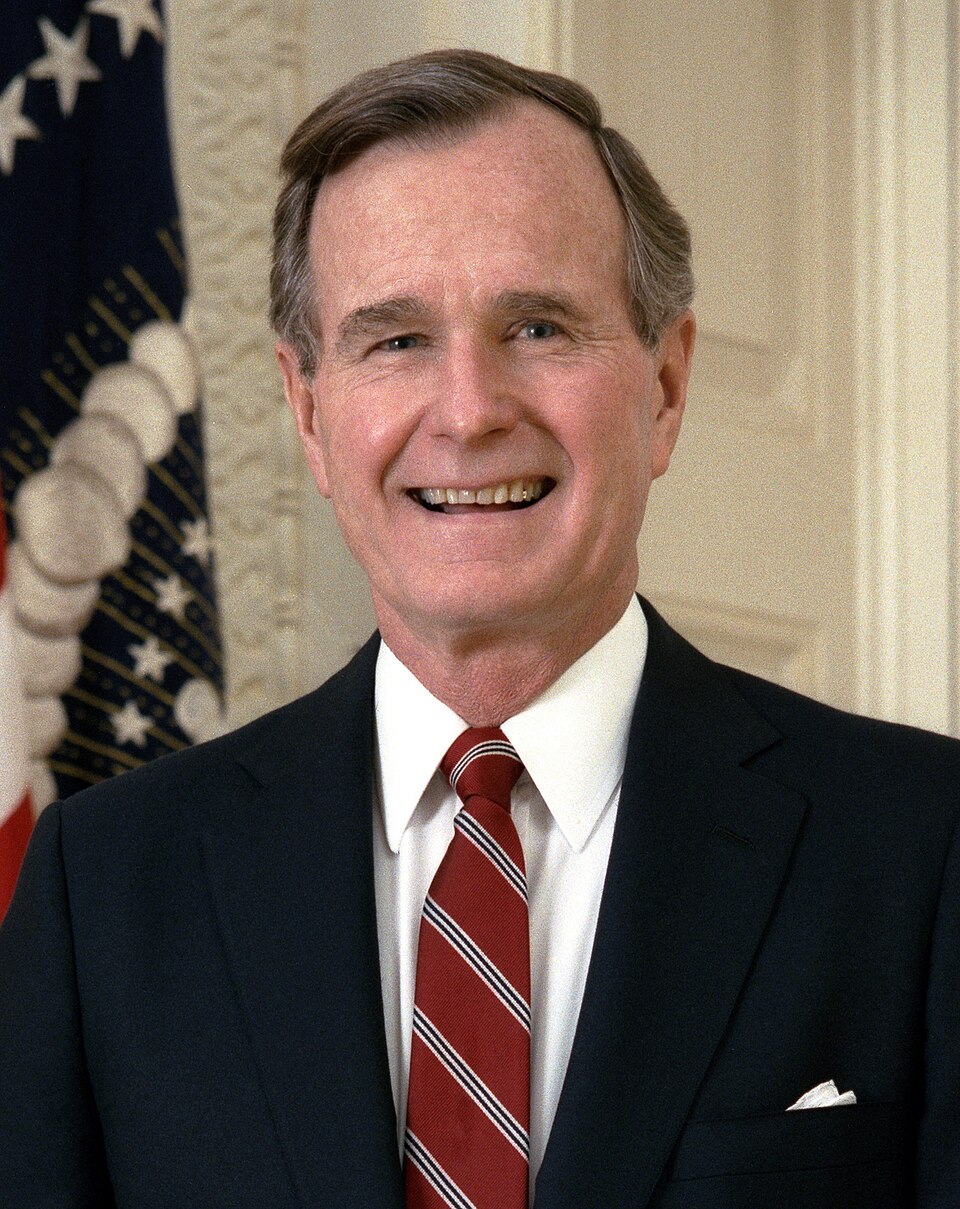
Fellow Skull and Bones member; both served in roles connected to intelligence and foreign policy.
Kerry investigations examined CIA knowledge and tolerance of drug trafficking by Contra supporters and BCCI intelligence connections.