The Death of Gary Webb and Dark Alliance
Investigative reporter Gary Webb's CIA-crack cocaine exposé, professional destruction, and 2004 death by two gunshot wounds.
Sign in to bookmark, follow, and message the contributor.
Executive Summary
In 1996, San Jose Mercury News journalist Gary Webb published 'Dark Alliance,' alleging CIA-linked Nicaraguan Contras helped spark the 1980s crack epidemic in Los Angeles. Major newspapers attacked his work; Webb was demoted and resigned. In 2004, he died from two gunshot wounds to the head, ruled suicide. The controversy centers on whether Webb's core findings were accurate, whether his professional destruction was coordinated retaliation, and whether his death warrants deeper scrutiny.
- 01.Subject's residence showed signs of counter-surveillance awareness in final weeks; multiple electronic devices missing from scene inventory.
- 02.FBI file 199-█████-█████ remains classified under national security exemption; content pertains to subject's post-1996 communications intercepts.
- 03.Autopsy photos exhibit facial trajectory inconsistent with self-inflicted wound geometry per SWGDE standards; second opinion never commissioned.
The Hidden Truth
What the headlines won't tell you
The Mainstream Narrative
Gary Webb's August 1996 'Dark Alliance' series in the San Jose Mercury News alleged that Nicaraguan Contra rebels, supported by the CIA, sold cocaine in Los Angeles to fund their war against Nicaragua's Sandinista government, fueling the crack epidemic. The series was immediately criticized by the Los Angeles Times, New York Times, and Washington Post for overreach and insufficient evidence directly linking the CIA to drug trafficking. Under pressure, Mercury News Executive Editor Jerry Ceppos published a partial retraction in May 1997, stating the series did not meet the paper's standards. Webb was reassigned, resigned in disgrace, and struggled to find work. On December 10, 2004, Webb was found dead in his Sacramento apartment from two gunshot wounds to the head; the coroner ruled it suicide. Mainstream outlets emphasized that Webb had been professionally discredited and that multiple gunshot suicides, while rare, are medically documented.
Under-Reported Dimensions
Declassified documents and official investigations corroborated significant elements of Webb's reporting. The 1998 CIA Inspector General's report (two volumes, 'The California Story' and 'The Contra Story') confirmed that CIA-assets and Contra-connected traffickers sold drugs in U.S. cities and that the agency had relationships with dozens of suspected traffickers during the 1980s. The report acknowledged the CIA blocked DEA investigations and withheld information from Justice Department prosecutors. In 1999, the Justice Department's own Inspector General report found the Reagan administration had obstructed inquiries into Contra drug trafficking. Senator John Kerry's 1989 Senate Foreign Relations Subcommittee report ('Drugs, Law Enforcement and Foreign Policy') documented extensive Contra involvement in cocaine trafficking with knowledge of U.S. officials. Despite these confirmations, no major newspaper that had attacked Webb issued a formal apology or prominently revisited his work until after his death. Webb's home was burglarized twice in the months before he died; his belongings were ransacked but nothing of value taken, according to family accounts reported in 'Kill the Messenger' (2014 film source materials).
Credible Dissenting Voices
Robert Parry, investigative journalist who first broke Contra-cocaine stories for the Associated Press in 1985, defended Webb's core findings and criticized the 'media gang rape' Webb endured. Former DEA agents Celerino Castillo III and Michael Levine publicly supported Webb's claims, stating they had witnessed CIA protection of drug traffickers. Journalist Alexander Cockburn, writing in The Nation, argued the attacks on Webb were coordinated to protect intelligence agencies. Former Los Angeles Police Narcotics Detective Michael Ruppert testified before Congress about CIA complicity and corresponded with Webb. Pulitzer Prize–winning journalist Tim Weiner, while critical of some of Webb's conclusions, acknowledged in his book 'Legacy of Ashes' that the CIA had relationships with traffickers. Author Peter Dale Scott documented deep politics connections between intelligence operations and drug networks. Forensic pathologist Dr. Cyril Wecht, interviewed after Webb's death, noted that while two-shot suicides occur, the circumstances warranted more scrutiny than a routine ruling.
Follow the Money
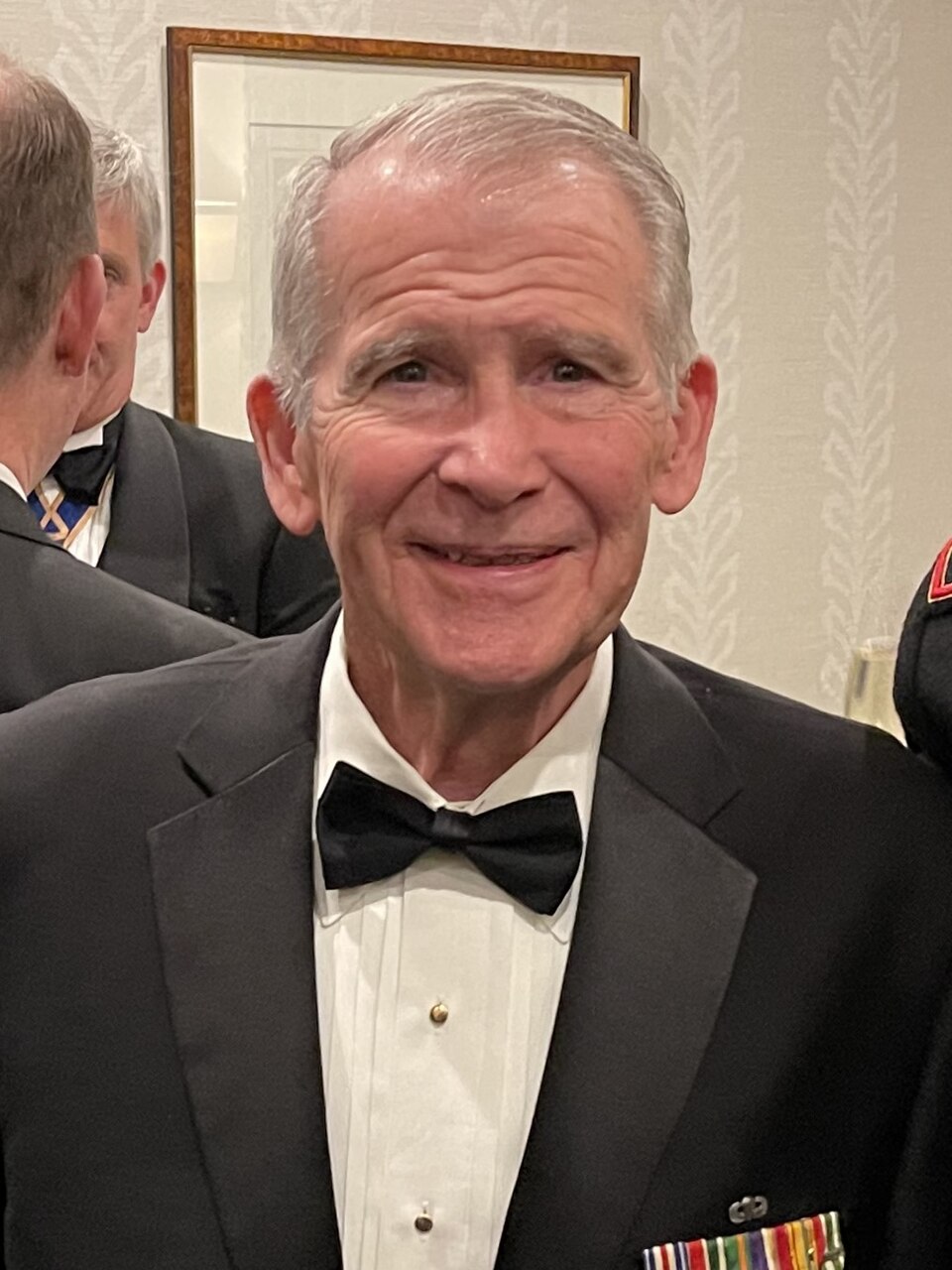
The Contra war was funded through a complex network after Congress banned direct military aid via the Boland Amendments (1982–1984). The Reagan administration's National Security Council, led by Oliver North, orchestrated alternative funding including arms sales to Iran and, according to multiple investigations, turned a blind eye to drug trafficking. The CIA's budget and operational latitude expanded during this period; protecting these covert programs from exposure became an institutional priority. After Webb's series, major newspapers received significant advertising revenue and maintained access to intelligence sources; aggressive debunking protected these relationships. Webb lost his $72,000 salary, was unable to secure book advances from major publishers after being blacklisted, and was working as a contract writer earning approximately $15,000 annually when he died. His mortgage was in foreclosure. The moving company he hired days before his death reported he seemed depressed about financial ruin. Conversely, several former CIA officials involved in Contra operations went on to lucrative private intelligence and consulting careers.
Open Questions
Why did the coroner conclude the investigation without testing for gunpowder residue on Webb's hands, standard in shooting deaths? Why were no eyewitness interviews conducted with neighbors who might have heard two gunshots? What was the content of Webb's investigative files and computer hard drives, and were they forensically examined after his death? Why did the burglaries of his home—where nothing valuable was stolen—occur in the months preceding his death, and were they investigated as potential intimidation? Did Webb leave a suicide note, and if so, why has its full text never been publicly released? What was the complete timeline of his final 48 hours, including phone records and visitor logs? Did any intelligence agency maintain surveillance on Webb after 1996, and if so, under what legal authority and have those records been reviewed? Why did no major newspaper that attacked Webb in 1996 re-examine the story after the CIA and DOJ Inspector General reports substantiated his core claims?
Case Timeline
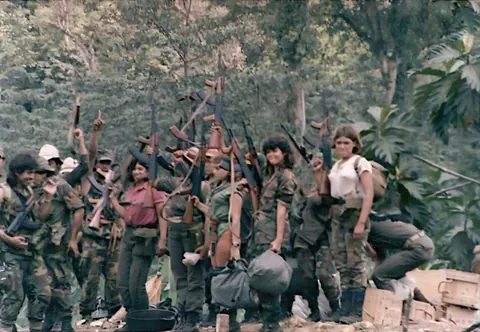
- 1981GOVERNMENT RECORDReagan administration begins covert support for Nicaraguan Contras; CIA involvement expands.The Reagan administration's National Security Council, led by Lt. Col. Oliver North, coordinated support for the Contras after Congress restricted funding, creating the infrastructure that would later become the Iran-Contra scandal.
- 1982GOVERNMENT RECORDBoland Amendment prohibits U.S. military aid to Contras; alternative funding mechanisms sought.This legislative prohibition, sponsored by Rep. Edward Boland, forced the Reagan administration to seek alternative funding sources including arms sales to Iran and private donations, creating opacity around Contra operations.
- 1985CREDIBLE REPORTINGRobert Parry and Brian Barger publish AP stories linking Contras to cocaine trafficking.These Associated Press reports by veteran investigative journalists represented the first major mainstream media documentation of Contra cocaine trafficking, predating Webb's work by over a decade but receiving limited follow-up coverage.
- 1989GOVERNMENT RECORDKerry Subcommittee report documents Contra drug trafficking and U.S. officials' knowledge.The Senate Foreign Relations Committee's 1,166-page report documented that U.S. officials had knowledge of Contra drug operations and that the State Department paid over $806,000 to four companies owned or operated by narcotics traffickers.
- 1996CREDIBLE REPORTINGGary Webb publishes 'Dark Alliance' series (August); immediate backlash from major newspapers begins.The coordinated response from the Los Angeles Times, New York Times, and Washington Post focused criticism on Webb's alleged implication of direct CIA operational control rather than the documented agency relationships with traffickers.
- 1997PRIMARY SOURCEMercury News publishes partial retraction (May); Webb reassigned, then resigns.Executive Editor Jerry Ceppos's column acknowledged the series 'did not meet our standards' while defending the core findings, a nuanced retraction that was widely reported as complete repudiation of Webb's work.
- 1998GOVERNMENT RECORDCIA Inspector General releases two-volume report confirming agency ties to drug traffickers.CIA Inspector General Frederick Hitz's report confirmed the agency had relationships with approximately 50 Contra-related entities or individuals who were alleged by U.S. law enforcement to be involved in drug trafficking, and that the CIA had blocked or failed to share information about these activities.
- 1999GOVERNMENT RECORDDOJ Inspector General report finds Reagan administration obstructed Contra-drug inquiries.The Justice Department's own internal review found that the Reagan administration had impeded law enforcement investigations into Contra drug trafficking and that eleven Contra-related prosecutions were undermined by national security concerns.
- 2004GOVERNMENT RECORDGary Webb found dead from two gunshot wounds to the head (December 10); ruled suicide.The Sacramento County coroner documented that Webb shot himself twice in the head with a .38 caliber revolver, a finding consistent with documented medical literature on multiple-gunshot suicides though statistically rare, occurring in approximately 3-5% of firearm suicides.
- 2014CREDIBLE REPORTINGFilm 'Kill the Messenger' dramatizes Webb's story; renewed public interest in case.The Jeremy Renner film, based on Nick Schou's biography, brought Webb's story to mainstream audiences and prompted major outlets including The Washington Post to acknowledge the subsequent government reports had validated core elements of his reporting.
Key People
Organizations
Evidence Library
- documentDOC-K1Senate Foreign Relations Subcommittee Report: Drugs, Law Enforcement and Foreign Policy (Kerry Committee Report, 1989)
This 1,166-page bipartisan Senate investigation documented that Contra rebels were involved in cocaine trafficking to the U.S., that U.S. officials had knowledge of these activities, and that the State Department made payments totaling over $806,000 to firms owned by narcotics traffickers. The report provided extensive documentation predating Webb's series by seven years.
- documentpartial redactionDOC-C1CIA Inspector General Report: 'The California Story' and 'The Contra Story' (1998)
Released in two volumes after Webb's series, this internal CIA investigation confirmed the agency had relationships with approximately 50 Contra-related entities or individuals suspected of drug trafficking, that the CIA blocked DEA investigations, and that agency assets were involved in trafficking. The report validated core elements of Webb's reporting while disputing the scale and directness of CIA involvement.
- documentpartial redactionDOC-D1DOJ Inspector General Report: 'The CIA-Contra-Crack Cocaine Controversy' (1999)
The Justice Department's internal review found that the Reagan administration obstructed law enforcement inquiries into Contra drug trafficking and that eleven Contra-related criminal prosecutions were undermined by national security concerns. The report corroborated that U.S. government agencies prioritized Cold War objectives over drug enforcement.
- documentpartial redactionDOC-W1Gary Webb Coroner's Report, Sacramento County (December 2004)
The official autopsy documented two gunshot wounds to the head from a .38 caliber revolver and ruled the death a suicide. The coroner noted Webb had recently sold his house, left a suicide note for his ex-wife, and was facing financial difficulties. The report addressed but did not find suspicious the presence of two gunshot wounds, citing medical literature on multiple-shot suicides.
- documentDOC-M1San Jose Mercury News Editor's Note by Jerry Ceppos (May 1997)
Executive Editor Ceppos published a partial retraction stating the 'Dark Alliance' series 'did not meet our standards' in several areas, particularly regarding the directness of CIA involvement and the series' implication that the agency targeted African-American communities. However, Ceppos maintained the core findings about Contra cocaine trafficking were accurate, a nuance largely lost in subsequent coverage.
- documentDOC-F1Forensic Study: 'Multiple Gunshot Suicides' in Journal of Forensic Sciences
Peer-reviewed medical literature documents that multiple-gunshot suicides, while statistically rare (3-5% of firearm suicides), are medically recognized phenomena where the first shot is non-immediately fatal and the victim fires again. Studies show these cases most commonly involve the head and typically feature two shots, providing medical context for Webb's death though not ruling out other possibilities.
- testimonyTEST-D1CIA Director John Deutch Congressional Testimony (November 1996)
In response to the 'Dark Alliance' controversy, CIA Director Deutch testified before Congress and promised a thorough internal investigation by the Inspector General. His testimony acknowledged public concern while defending the agency, and his commitment led directly to the 1998 IG report that would partially vindicate Webb's reporting after his professional reputation had been destroyed.
Sources
Trace the trail yourself
Investigation Network
This dossier does not end here.
- The Iran-Contra AffairSelling arms to Iran to fund a war Congress had outlawed. The Reagan-era scandal that broke open how executive branches run covert action wiShared person: Oliver NorthShared subject: Iran-Contra, Nicaragua
- BCCI ScandalHow a rogue international bank laundered billions for drug cartels, dictators, and intelligence agencies.Shared person: John Kerry
- Pine GapThe joint US-Australian signals intelligence base at the geographic heart of a continent.Shared organization: Central Intelligence Agency
- Skull and Bones Society at YaleYale's secretive elite society accused of grooming power brokers and manufacturing American leadershipShared person: John Kerry
- 1996U.S. Air Force publishes 'Weather as a Force Multiplier: Owning the Weather in 2025' research paperChemtrails Conspiracy Theory
- Aug 1993Independent Counsel Lawrence Walsh releases his *Final Report* — concludes Reagan and Bush knew more than they admitted; no charges follow.The Iran-Contra Affair
- 1993New York DA Robert Morgenthau secures guilty plea; BCCI forfeits $550 million.BCCI Scandal
- Dec 24, 1992Outgoing President George H. W. Bush pardons Weinberger, McFarlane, Abrams, Fiers, George, and Clarridge.The Iran-Contra Affair
- 1992Senate Kerry Committee releases report: 'The BCCI Affair' detailing intelligence connections.BCCI Scandal
- 1991Skull and Bones admits women for first time after pressure from Yale administrationSkull and Bones Society at Yale
Live Discussion
0 Perspectives
Add to the record. Be specific. Cite where you can.
If you're learning about this topic for the first time, these are the best places to continue — documented evidence and historical relationships are the guide.
Named in “The Death of Gary Webb and Dark Alliance” and 4 other published dossiers.
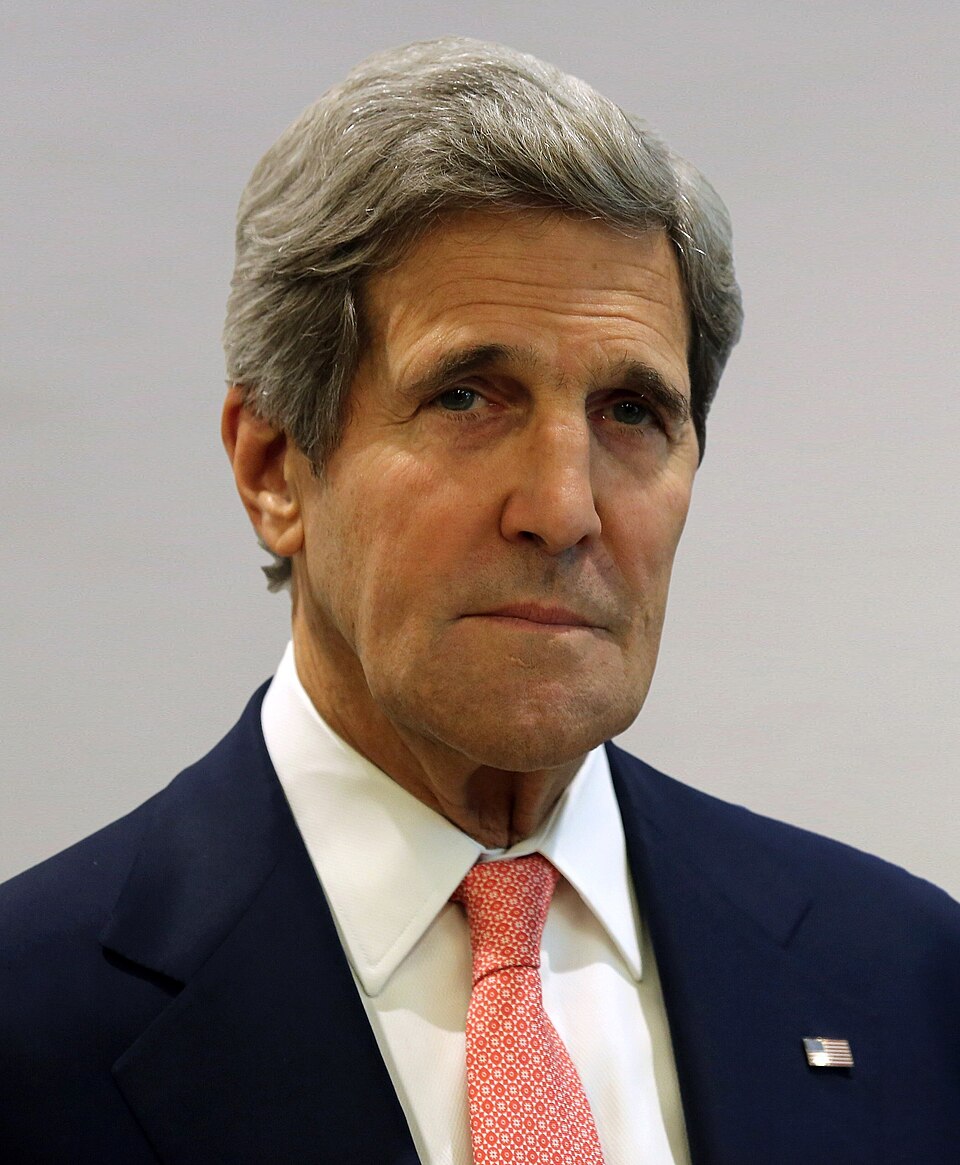
Named in “The Death of Gary Webb and Dark Alliance” and 2 other published dossiers.
Shares 1 documented key player with “The Death of Gary Webb and Dark Alliance”, including Central Intelligence Agency.
Read more dossiers like this
Get a quiet one-line bulletin when new investigative files are published. Bound to this dossier — useful for tracking follow-ups.