Oliver North
Oliver North is a retired United States Marine Corps Lieutenant Colonel who became the central figure in the Iran-Contra affair, a covert operation during the Reagan administration involving illegal arms sales to Iran and the diversion of proceeds to fund Nicaraguan Contra rebels. Convicted on three felony counts in 1989, his convictions were later vacated on appeal due to immunized testimony complications. Oliver North represents a critical nexus in documented U.S.
Oliver North is a retired United States Marine Corps Lieutenant Colonel who became the central figure in the Iran-Contra affair, a covert operation during the Reagan administration involving illegal arms sales to Iran and the diversion of proceeds to fund Nicaraguan Contra rebels. Convicted on three felony counts in 1989, his convictions were later vacated on appeal due to immunized testimony complications.
- Source
- Wikimedia Commons
- Type
- Photograph
- License
- CC BY-SA 4.0
- Photographer
- Sbooke1666
- Year
- 2023
Photo Information ▾
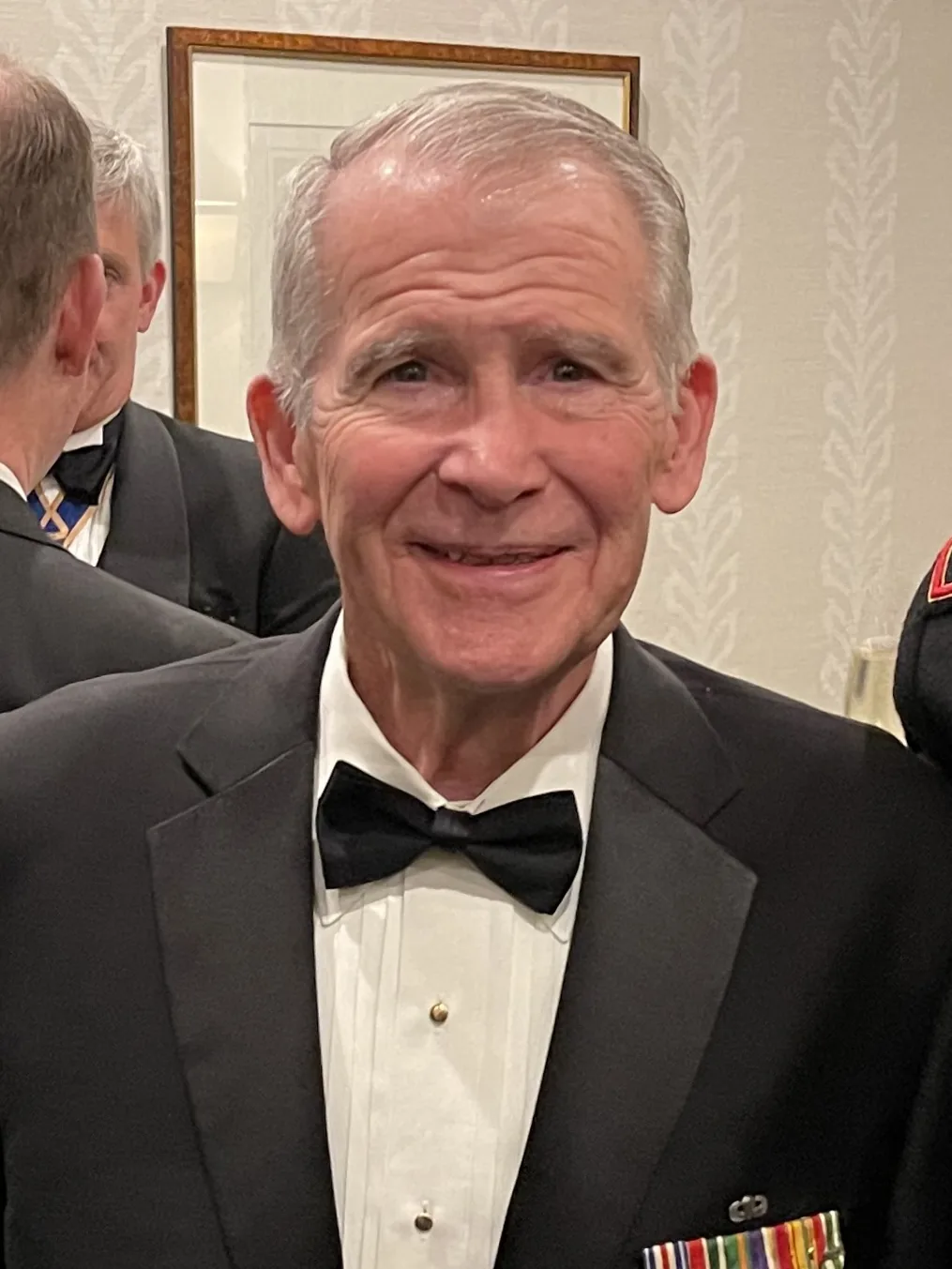
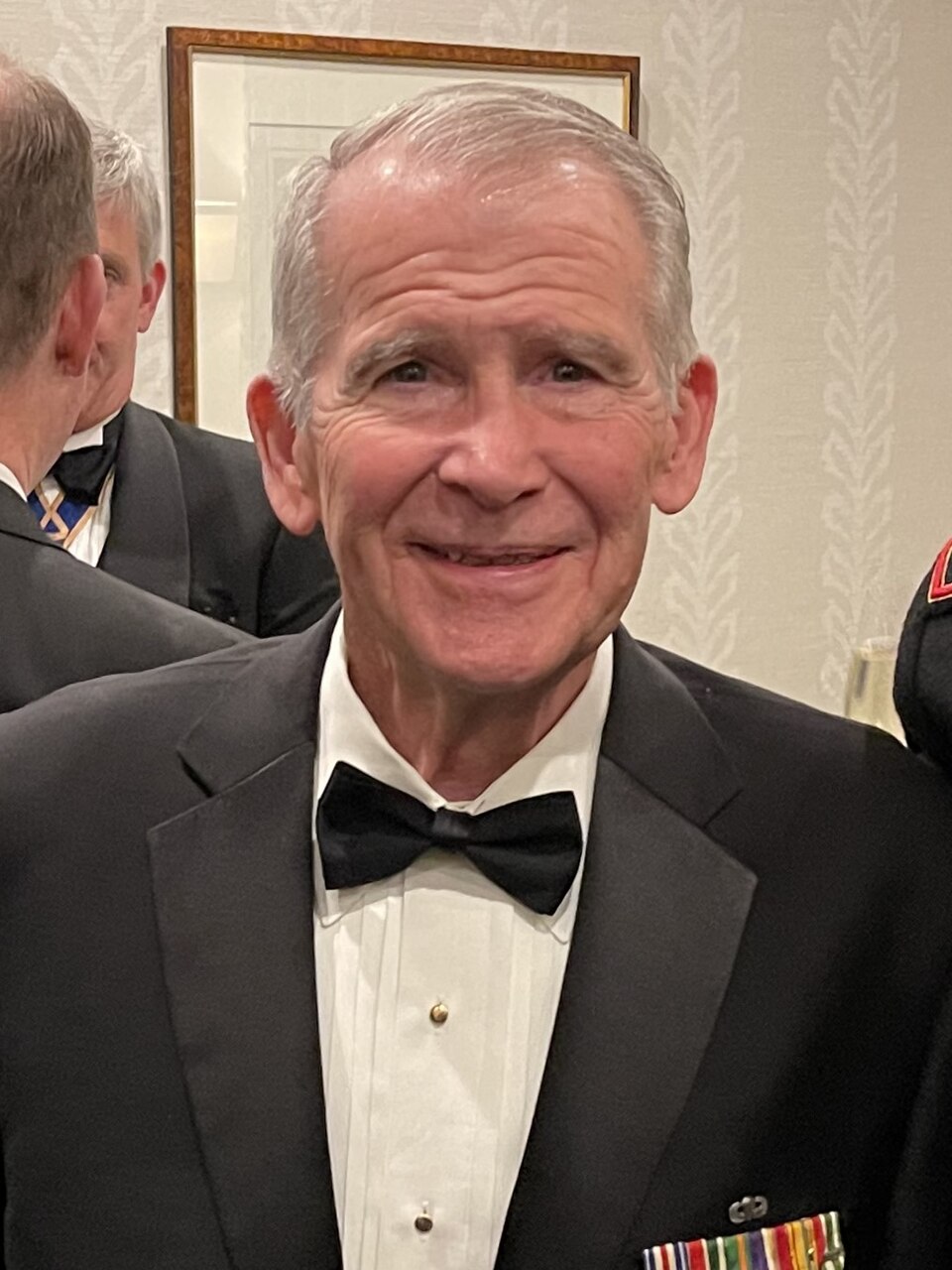
LtCol Oliver North and MajGen Paul Brier, Sons of the revolution celebration of Gen George Washington's birthday, Richmond.
Own work
View original ↗- Full name
- Oliver Laurence North
- Birth
- October 7, 1943, San Antonio, Texas
- Military service
- U.S. Marine Corps, 1968-1990; Lieutenant Colonel; Vietnam veteran (1968-1969)
- NSC position
- Deputy Director for Political-Military Affairs, National Security Council, 1981-1986
- Criminal conviction
- Convicted May 4, 1989, on three felony counts (aiding and abetting obstruction of Congress, destroying documents, accepting illegal gratuity); convictions vacated July 20, 1990
- Congressional testimony
- Testified under limited immunity before joint House-Senate Iran-Contra committees, July 1987
- Political career
- Unsuccessful U.S. Senate candidate (Virginia, 1994); president of National Rifle Association, 2018-2019
- Education
- U.S. Naval Academy (B.S., 1968)
Oliver North represents a critical nexus in documented U.S. covert operations, illegal arms trafficking, and congressional oversight failures during the 1980s. His role coordinating Iran-Contra operations from the National Security Council placed him at the center of what congressional investigators called a "secret government" operating outside constitutional checks. His name appears prominently in Gary Webb's "Dark Alliance" investigation into Contra-cocaine connections, and in broader debates about accountability for covert operations. The Archive documents North because his case illustrates the intersection of national security doctrine, criminal conduct by government officials, and the limits of congressional and judicial accountability when intelligence operations are shielded by classification and immunity.
# Oliver North
Identity
Oliver Laurence North, born October 7, 1943, in San Antonio, Texas, is a retired United States Marine Corps Lieutenant Colonel who became internationally known as the central operational figure in the Iran-Contra affair during the Reagan administration. A decorated Vietnam War veteran who graduated from the U.S. Naval Academy in 1968, North served as Deputy Director for Political-Military Affairs on the National Security Council (NSC) staff from 1981 to 1986, where he coordinated covert operations that later became the subject of criminal prosecution and multiple congressional investigations.
North's identity in the public record is inseparable from his role in Iran-Contra: testifying before Congress in Marine uniform while asserting that his actions served national security interests, he became simultaneously a symbol of government accountability failures and, for some constituencies, a patriotic figure following orders in defense of American interests. His military background—including a Silver Star, Bronze Star with Combat V, and two Purple Hearts from Vietnam service—provided a foundation for his NSC appointment and shaped public perception during subsequent legal proceedings.
After his convictions were vacated in 1990, North transitioned to conservative media and political activism, hosting radio and television programs, writing bestselling books defending his Iran-Contra role, and running unsuccessfully for the U.S. Senate from Virginia in 1994. He briefly served as president of the National Rifle Association from 2018 to 2019.
Career & Roles
North's military career began with his 1968 Naval Academy graduation and immediate commission as a Marine second lieutenant. He deployed to Vietnam in December 1968, serving as an infantry platoon commander with the 3rd Marine Division. During combat operations, North was wounded twice and received multiple decorations for valor. He returned to the United States in 1969 and held various Marine Corps assignments through the 1970s, including instructor positions and staff roles.
In 1981, North joined the National Security Council staff under President Ronald Reagan's first National Security Advisor, Richard Allen, initially focusing on political-military affairs and later specializing in counterterrorism and covert operations. Under National Security Advisor Robert McFarlane (1983-1985) and then John Poindexter (1985-1986), North's responsibilities expanded significantly. He became the NSC's primary coordinator for U.S. support to the Nicaraguan Contras after Congress restricted such aid through the Boland Amendments, and simultaneously managed the covert arms-for-hostages initiative with Iran.
North's NSC role was operational rather than analytical. Congressional investigators later documented that he personally coordinated arms shipments, managed Swiss bank accounts holding millions in diverted funds, traveled to meet Contra leaders and Iranian intermediaries, and supervised a private network of retired military officers, weapons dealers, and foreign operatives conducting activities that U.S. law prohibited the government from performing directly. His immediate supervisor, John Poindexter, testified that he deliberately shielded President Reagan from detailed knowledge of North's activities to provide "plausible deniability."
North was dismissed from the NSC on November 25, 1986, the same day Attorney General Edwin Meese publicly announced the discovery of the Iran-Contra diversion. He retired from the Marine Corps in 1990 with the rank of Lieutenant Colonel.
Organizations & Networks
North's operational effectiveness during Iran-Contra depended on his ability to coordinate multiple organizations, both official and clandestine. Within the U.S. government, he worked directly with CIA officers including Clair George (Deputy Director for Operations) and Alan Fiers (Chief of the Central America Task Force), though the extent of official CIA involvement versus individual officers' participation remained a subject of dispute and subsequent investigation.
He established what investigators called "the Enterprise," a private operational network coordinated with retired Air Force Major General Richard Secord and Iranian-American businessman Albert Hakim. The Enterprise operated aircraft, managed Swiss bank accounts, and purchased weapons outside formal government procurement channels, allowing operations to continue during congressional funding prohibitions. This network included Southern Air Transport, a former CIA proprietary airline, and multiple shell companies in tax haven jurisdictions.
North maintained direct communication with Contra military leaders, particularly Adolfo Calero and Enrique Bermúdez, coordinating military strategy and weapons deliveries. He also worked with foreign government officials who provided covert support, including members of the Saudi Arabian royal family (who contributed millions in funding), Israeli intelligence officers who facilitated arms shipments to Iran, and officials from Honduras, El Salvador, and Costa Rica who provided territory and logistics support for Contra operations.
During congressional hearings, evidence emerged of North's coordination with private fundraisers supporting the Contras, including retired U.S. military officers channeling funds through nonprofit organizations. The Tower Commission, appointed by President Reagan to investigate the affair, documented that North kept extensive records of his activities in notebooks and computer files, many of which were altered or destroyed when the scandal broke.
Major Operations & Activities
North's documented activities between 1984 and 1986 constituted the operational core of Iran-Contra. On the Nicaraguan front, after Congress passed the Boland Amendment in October 1984 prohibiting U.S. government agencies from supporting the Contras militarily, North coordinated what the congressional Iran-Contra committees later called "the continued provision of support to the Contras during the period of the Boland Amendment's prohibition." This included arranging weapons purchases, establishing supply flights from Central American bases, coordinating military strategy with Contra commanders, and managing fundraising from private donors and foreign governments.
Concurrently, North managed the arms-for-hostages initiative with Iran, which began in 1985. Despite a formal U.S. arms embargo against Iran and official policy opposing negotiations with hostage-takers, North coordinated multiple weapons shipments to Iranian intermediaries, ostensibly to secure the release of American hostages held by Hezbollah in Lebanon. The operations involved complex triangular arrangements: Israel would ship U.S.-made missiles to Iran, the United States would replenish Israeli stocks, and Iranian officials would supposedly arrange hostage releases. Congressional investigators documented at least six major arms shipment operations that North coordinated or supervised.
The critical operational decision that transformed Iran-Contra from a covert operation into a constitutional crisis was North's diversion of proceeds from the Iran arms sales to fund Contra operations. Congressional investigators found documentary evidence, including a November 1985 memorandum discovered in North's NSC safe, explicitly proposing to use "residual funds" from weapons sales to support the Contras. The joint congressional report concluded that between $3.8 million and $16 million was diverted, though exact accounting proved impossible due to destroyed records and the Enterprise's opaque financial structure.
North also coordinated what became known as the "Contra resupply operation," a private air network flying weapons and supplies from Ilopango Air Base in El Salvador to Contra camps in Honduras and inside Nicaragua. This operation continued until October 5, 1986, when Nicaraguan forces shot down a C-123 cargo plane and captured American crew member Eugene Hasenfus, whose testimony and the aircraft's cargo documentation exposed the covert supply network.
When the operations became public in November 1986, North undertook extensive document destruction. Witnesses testified that North and his secretary, Fawn Hall, shredded large quantities of documents in the days before investigators secured his NSC office. Hall testified that she smuggled classified documents out of the White House in her clothing. Nevertheless, investigators recovered thousands of pages, including backup files from North's computer that he believed deleted.
Historical Importance
Oliver North's historical significance extends beyond his individual actions to the constitutional and institutional questions his case raised. The Iran-Contra affair, with North as its operational center, posed fundamental questions about executive power, congressional oversight, and accountability for covert operations. The joint congressional investigation concluded that "the common ingredients of the Iran and Contra policies were secrecy, deception, and disdain for the law," with North embodying the operational execution of those policies.
North's case became a test of whether mid-level government officials could be held criminally accountable for covert operations conducted with apparent authorization from senior officials, or whether classification, national security claims, and grants of immunity would effectively shield such conduct from prosecution. His testimony before Congress—carried live by major television networks and watched by millions—provided an unprecedented public view of how covert operations are organized, funded, and concealed.
The affair also marked a significant moment in post-Vietnam War debates about appropriate limits on presidential power in foreign policy. The Boland Amendment represented Congress's attempt to restrict executive branch foreign policy initiatives through its constitutional power over appropriations. North's operations were designed explicitly to circumvent these restrictions by using non-appropriated funds. The success of these operations, until their exposure, demonstrated the difficulty of congressional oversight when executive branch officials are determined to evade it.
North's immunity deal and the subsequent vacation of his convictions established important precedents regarding the tension between Congress's investigative power and prosecutors' ability to obtain untainted convictions. The D.C. Circuit Court of Appeals ruled that even though North's trial testimony was not directly immunized, his conviction had to be vacated because the prosecution could not prove that no trial witness had been influenced by North's nationally televised immunized congressional testimony, effectively demonstrating that Congress must choose between public investigation and criminal prosecution.
Documented Controversies
Confirmed by Court Oliver North was convicted on May 4, 1989, by a federal jury in Washington, D.C., on three felony counts: aiding and abetting obstruction of a congressional inquiry, destroying National Security Council documents, and accepting an illegal gratuity (a $13,800 home security system). The jury acquitted him on nine other counts, and the judge declared a mistrial on three additional charges. U.S. District Judge Gerhard Gesell sentenced North to a three-year suspended prison term, two years' probation, $150,000 in fines, and 1,200 hours of community service. However, these convictions were vacated by the U.S. Court of Appeals for the D.C. Circuit on July 20, 1990, because the prosecution could not demonstrate that its case was free from the taint of North's immunized congressional testimony.
Congressional Finding The joint House-Senate Iran-Contra investigating committees issued a 690-page report in November 1987 documenting North's central role in both the Iran arms sales and the Contra support operations. The majority report found that North "was the coordinator of the Contra resupply operation," "participated in the Iran initiative from start to finish," and "was responsible for the diversion of approximately $3.8 million in proceeds from the sale of arms to Iran to the Contras." The committees documented these findings with testimony from multiple witnesses, recovered documents, and North's own immunized testimony.
Congressional Finding The same report concluded that North "altered, destroyed, and removed official NSC documents" in November 1986 as investigators closed in, and that he "created false and misleading chronologies" of the Iran initiative to conceal aspects of the operations from investigators. Fawn Hall's testimony provided direct evidence of document destruction and removal.
Credible Allegation Gary Webb's "Dark Alliance" series, published in the San Jose Mercury News in August 1996, reported connections between North's Contra support network and cocaine trafficking into the United States. Webb documented that Danilo Blandón and Norwin Meneses, cocaine traffickers who supplied Los Angeles dealer "Freeway Rick" Ross, had ties to the CIA-backed Contras and that some cocaine proceeds funded Contra operations. Webb's reporting suggested that North's network was aware of these drug connections. While major newspapers subsequently disputed aspects of Webb's series, particularly regarding the scale and knowing CIA involvement, the CIA's Inspector General issued reports in 1998 acknowledging that dozens of Contra-related entities and individuals had drug trafficking allegations against them, and that the CIA had indeed received allegations regarding some individuals in North's operational network.
Official Record The CIA Inspector General's 1998 report specifically noted that North's associate Rob Owen informed him in 1985 about drug trafficking allegations involving key figures in the Contra supply network, including the crew of the supply operation. The report documented that North received at least some information about drug allegations but that the extent of his response or awareness remained disputed. Senator John Kerry's Senate Subcommittee on Terrorism, Narcotics, and International Operations issued a 1989 report documenting drug trafficking links to the Contra movement, though not establishing that North personally authorized or directed drug trafficking.
Investigated Independent Counsel Lawrence Walsh investigated whether North and other officials obstructed various governmental investigations into Iran-Contra beyond the specific obstruction counts for which North was convicted. Walsh's final report, issued in 1993, concluded that "the investigation was repeatedly thwarted by the pervasive dishonesty of several of the principal subjects" and that North's document destruction had permanently impaired investigators' ability to reconstruct a complete record of Iran-Contra operations.
Disputed Claim The extent of President Reagan's knowledge of North's activities, particularly the diversion of Iran arms sale proceeds to the Contras, remained a central disputed question throughout investigations. North testified under immunity that he believed his superiors, including National Security Advisor John Poindexter, had authorized his activities and that he assumed the President was aware, but Poindexter testified that he deliberately did not inform Reagan of the diversion. Reagan testified that he had not been informed. Critics argued this "plausible deniability" structure was designed to protect the President; defenders argued that Reagan genuinely did not know the operational details. The Tower Commission found that Reagan's management style created an environment where such operations could occur without his detailed knowledge, a finding that satisfied neither critics nor defenders.
Official Denial North consistently denied that his operations constituted illegal activity, arguing that his actions were authorized by his superiors and served legitimate national security interests. In his congressional testimony and subsequent writings, he maintained that supporting the Contras and negotiating with Iranian moderates were proper foreign policy objectives, that congressional restrictions were unconstitutional intrusions on executive power, and that his prosecution was politically motivated. These defenses did not prevent his initial convictions but resonated with segments of the public who viewed him as a scapegoat.
Investigations & Legal Proceedings
Multiple overlapping investigations examined North's conduct. The Tower Commission, appointed by President Reagan in December 1986 and chaired by former Senator John Tower, issued its report in February 1987, finding that North had operated with insufficient oversight and that NSC management structures had failed. While not a criminal investigation, the Tower Commission's findings provided the factual foundation for subsequent proceedings.
The joint congressional Iran-Contra committees conducted televised hearings from May to August 1987. North appeared for six days in July 1987, testifying under a grant of limited immunity. His testimony, delivered in Marine uniform with his attorney Brendan Sullivan frequently objecting to questions, became a media spectacle. North acknowledged coordinating arms sales to Iran, supporting the Contras, and destroying documents, but defended all actions as authorized and patriotic. The committees' final report, issued November 1987, provided the most comprehensive public documentation of Iran-Contra operations and concluded that North had violated laws and his NSC responsibilities.
Independent Counsel Lawrence Walsh was appointed in December 1986 to conduct criminal investigations. Walsh's team indicted North on 16 counts in March 1988, later reduced to 12 counts after legal rulings on classified information. North's trial began in January 1989 and concluded with mixed verdicts in May 1989. The legal proceedings focused heavily on whether trial evidence was tainted by North's immunized congressional testimony—a novel legal question given the unprecedented public attention to that testimony.
The D.C. Circuit Court of Appeals vacated North's convictions in July 1990, and after further proceedings, the appeals court ruled in September 1991 that the prosecution had not met its burden of proving independence from immunized testimony. Independent Counsel Walsh dismissed all charges against North on September 16, 1991, concluding that further prosecution was impossible under the immunity constraints.
The CIA Inspector General conducted investigations throughout the 1990s into various Iran-Contra aspects, including allegations of connections to drug trafficking. Reports issued in 1998 provided additional documentation of operational details and confirmed that some individuals associated with North's network had been subjects of drug trafficking allegations, though the reports did not establish that North personally knew of or authorized drug trafficking.
Denials & Disputes
North maintained consistent positions throughout investigations and in subsequent years. He denied violating any laws, arguing that his actions were authorized by superiors, served national security interests, and were necessitated by congressional actions that unconstitutionally restricted the President's foreign policy powers. In his 1991 autobiography "Under Fire," he portrayed himself as a dedicated military officer following orders to support freedom fighters against communism, scapegoated by political opponents and a hostile media.
Regarding document destruction, North acknowledged shredding materials but argued he was destroying documents that could compromise sensitive intelligence sources and methods if leaked, not concealing criminal activity. He maintained that the volume of document destruction was exaggerated and that his superiors were aware of and approved the destruction of sensitive materials.
On the drug trafficking allegations that surfaced in Gary Webb's reporting and earlier Kerry Committee investigations, North categorically denied any knowing involvement with drug traffickers. He argued that battlefield alliances during the Cold War sometimes involved imperfect partners, that the CIA and his network vetted Contra supporters, and that allegations of Contra drug connections were Cuban and Nicaraguan Sandinista disinformation designed to discredit the anti-communist movement.
North's defenders argued that his prosecution was selective and political, pointing out that senior officials who authorized his activities faced lesser consequences. They contended that Congress's Boland Amendment was itself constitutionally questionable and that North's conviction vacation vindicated his position. Critics countered that the vacation resulted from technical immunity issues, not findings that North's actions were legal, and that his document destruction and false statements to Congress were clear violations regardless of whether the underlying operations were authorized.
Disputes about North's legacy continue to reflect broader disagreements about executive power, covert operations, and accountability. Conservative organizations frequently invited North to speak and praised his actions as defending freedom; congressional Democrats and government accountability advocates viewed Iran-Contra as a dangerous precedent of officials operating outside legal constraints. His 2018 election as NRA president generated controversy precisely because his symbolic meaning remained contested three decades after Iran-Contra.
Legacy & Historical Debate
Oliver North's legacy encompasses multiple dimensions. As an individual, he transitioned from Marine officer to criminal defendant to conservative media personality, with each role reinforcing different constituencies' assessments of his Iran-Contra conduct. His post-conviction career in conservative media and politics demonstrated that significant portions of the American public viewed him not as a lawbreaker but as a patriot who served his country under difficult circumstances and faced politically motivated prosecution.
Institutionally, the Iran-Contra affair and North's role highlighted enduring tensions in the U.S. constitutional system. The affair demonstrated that determined executive branch officials could, at least temporarily, circumvent congressional restrictions on foreign policy through off-the-books operations using non-appropriated funds and foreign government contributions. The case also established legal precedents regarding immunity that continue to shape how Congress conducts high-profile investigations: the conflict between Congress's need for information through immunized testimony and prosecutors' need for untainted evidence remains unresolved.
The vacation of North's convictions contributed to perceptions that high-level government officials operate with effective impunity, a perception reinforced when President George H.W. Bush pardoned six other Iran-Contra figures in December 1992, including former Defense Secretary Caspar Weinberger, shortly before leaving office. Independent Counsel Walsh stated that the pardons "undermined the principle that no man is above the law," but the pardons stood, and no senior Reagan administration official ultimately served prison time for Iran-Contra activities.
Historians continue to debate Iran-Contra's significance. Some view it as one of the most serious constitutional crises in modern American history, a moment when executive branch officials created what the congressional report called a "secret government" operating outside constitutional structures. Others argue the affair was a political scandal arising from partisan disputes over Cold War foreign policy, not fundamentally different from previous presidential actions to maintain foreign policy flexibility despite congressional opposition.
North's connection to Gary Webb's "Dark Alliance" investigation added another layer to his controversial legacy. While Webb's initial series overstated some claims and was criticized by major newspapers, subsequent CIA Inspector General reports acknowledged that the agency had indeed tolerated drug trafficking by some Contra-connected individuals and that North's network received information about drug activities. The debate over whether North and his superiors knowingly facilitated drug trafficking, negligently ignored evidence of it, or operated with appropriate vigilance given battlefield realities continues to divide observers.
The Iran-Contra affair's lessons—or lack thereof—remain relevant to contemporary debates about executive power, covert operations, and accountability. Subsequent scandals involving government secrecy, destroyed evidence, and claims of national security necessity have repeatedly invoked Iran-Contra precedents. Whether those precedents represent cautionary tales about insufficient accountability or unfair prosecutions of officials serving national interests remains disputed.
Continue Investigating
Oliver North's documented role in Iran-Contra connects to multiple Archive investigations. His relationship to Gary Webb's reporting appears in the-death-of-gary-webb-and-dark-alliance, examining allegations of Contra-cocaine connections that Webb documented and the CIA Inspector General subsequently investigated. North's coordination with the Nicaraguan Contras and his establishment of private funding networks links to nicaraguan-contras, documenting the full scope of U.S. support for the anti-Sandinista insurgency. His work under central-intelligence-agency oversight and coordination raises questions about official agency knowledge versus plausible deniability structures.
Journalists gary-webb and robert-parry both investigated Contra drug connections and North's role, facing professional consequences for reporting challenging official narratives. Senator john-kerry's Subcommittee on Terrorism, Narcotics, and International Operations produced reports documenting drug trafficking allegations involving Contra-connected individuals, providing official confirmation of some aspects of Webb's later reporting. Editor jerry-ceppos's response to criticism of Webb's Dark Alliance series illustrates institutional media reactions to controversial investigations implicating government officials.
Broader Archive dossiers provide context for understanding North's operations within patterns of covert U.S. government activity: operation-mockingbird documents CIA media relationships potentially relevant to understanding coverage of Iran-Contra; cointelpro and operation-paperclip illustrate earlier instances of covert operations operating outside normal legal constraints; the-pentagon-papers provides precedent for government officials' unauthorized disclosure and the resulting legal and political consequences; snowden-and-nsa-mass-surveillance raises similar questions about individual officials' decisions to follow orders versus legal obligations when the two conflict.
The constitutional and oversight questions Iran-Contra raised connect to the-military-industrial-complex, examining institutional structures that enable covert operations, and council-on-foreign-relations-influence, exploring foreign policy elite networks. North's case intersects with operation-gladio, documenting other Cold War covert operations and their accountability challenges. The broader pattern of officials avoiding accountability appears in cases like the-litvinenko-poisoning and the-jamal-khashoggi-assassination, where state operations resulted in limited consequences for senior officials.
Investigators seeking to understand Iran-Contra fully must examine multiple government reports: the Tower Commission Report (1987), the Joint Congressional Iran-Contra Report (1987), and Independent Counsel Walsh's final report (1993) provide the most comprehensive official documentation. The CIA Inspector General's reports on drug trafficking allegations (1998) offer the agency's own assessment of Contra-drug connections. Court documents from North's trial and appeals provide detailed evidence and legal arguments. Academic analyses, including Malcolm Byrne's comprehensive documentary history, synthesize these sources into accessible narratives.
- 1943Born October 7 in San Antonio, Texas
- 1968Graduated U.S. Naval Academy; commissioned as Marine second lieutenant; deployed to Vietnam
- 1981Joined National Security Council staff as Deputy Director for Political-Military Affairs
- 1984Congress passed Boland Amendment prohibiting military support to Contras; North began coordinating private supply network
- 1985Iran arms-for-hostages initiative began; North coordinated weapons shipments
- 1986-10-05C-123 cargo plane carrying Contra supplies shot down over Nicaragua; crew member Eugene Hasenfus captured, exposing covert supply operation
- 1986-11Iran-Contra affair publicly revealed; North fired from NSC on November 25; extensive document destruction occurred
- 1987-07Testified under limited immunity before joint congressional Iran-Contra committees for six days
- 1987-11Congressional Iran-Contra report issued, documenting North's central operational role
- 1989-05-04Convicted on three felony counts; acquitted on nine others
- 1990-07-20Convictions vacated by D.C. Circuit Court of Appeals due to immunized testimony taint
- 1991-09-16All charges dismissed by Independent Counsel Walsh
- 1994Ran unsuccessfully for U.S. Senate from Virginia
- 1998CIA Inspector General reports acknowledged drug trafficking allegations involving Contra-connected individuals in North's network
- 2018Elected president of National Rifle Association
- 2019Resigned from NRA presidency
- S1United States v. Oliver L. North, 910 F.2d 843 (D.C. Cir. 1990)U.S. Court of Appeals, District of Columbia Circuit · primary
- S2Final Report of the Independent Counsel for Iran/Contra Matters (Walsh Report), Vol. IOffice of Independent Counsel / Federation of American Scientists · primary
- S3Report of the Congressional Committees Investigating the Iran-Contra Affair (1987)U.S. House of Representatives and U.S. Senate · primary
- S4Iran-Contra Affair: Report of the Congressional CommitteesU.S. Congress · primary
- S5The Iran-Contra Affair 20 Years On — Electronic Briefing Book 210National Security Archive, George Washington University · primary
- S6CIA Drug Trafficking Allegations — DOJ Office of the Inspector General Special Report (1997)U.S. Department of Justice, Office of the Inspector General · primary
- S7The Contras, Cocaine, and Covert Operations — Electronic Briefing Book 2 (incl. Oliver North's notebooks)National Security Archive, George Washington University · primary
- S8
- S9The Tower Commission Report — President's Special Review Board (1987, full text)Internet Archive · primary
- S10Walsh Report — Executive Summary (Independent Counsel conclusions)Office of Independent Counsel / Federation of American Scientists · primary
- S11Oliver North Iran-Contra Testimony: July 7-10, 1987C-SPAN · primary
- S12The Iran-Contra Affair — Special ExhibitNational Security Archive, George Washington University · primary
- S13Oliver NorthEncyclopaedia Britannica · reference
- S14Oliver NorthWikipedia · reference
If you're learning about this topic for the first time, these are the best places to continue — documented evidence and historical relationships are the guide.
Oliver North is documented in the evidence record of this published dossier.
CIA officers coordinated with North's operations; extent of official agency involvement versus individual officers' actions remained disputed.
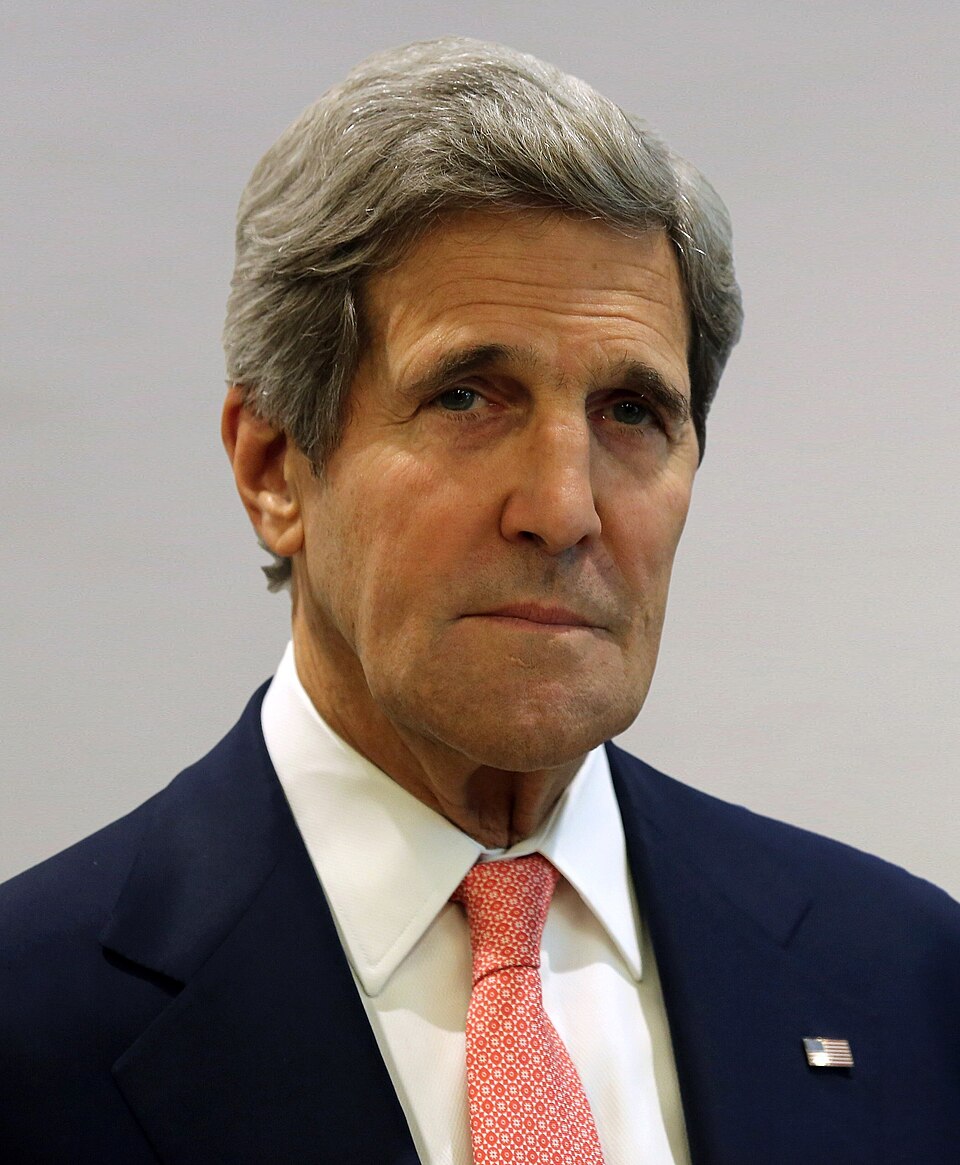
Senator whose Subcommittee on Terrorism, Narcotics, and International Operations investigated Contra drug connections.