The Gulf of Tonkin Incident
The August 4, 1964 attack that escalated U.S. involvement in Vietnam never happened — declassified NSA cables prove it. What's still debated is who knew.
Sign in to bookmark, follow, and message the contributor.
Executive Summary
On August 4, 1964, the Johnson administration reported a second North Vietnamese torpedo-boat attack on U.S. destroyers in the Gulf of Tonkin. Within 48 hours Congress passed the Gulf of Tonkin Resolution, giving Johnson sweeping authority to escalate the Vietnam War. In 2005 the NSA declassified a 2001 internal study by historian Robert J. Hanyok showing that the August 4 attack did not occur — and that SIGINT evidence had been selectively presented to support that conclusion at the time. The first incident, on August 2, was real. The second was not.
- 01."It is not simply that there is a different story to be told about the August 4 incident; it is that no such attack happened." — NSA historian Robert J. Hanyok, 'Skunks, Bogies, Silent Hounds, and the Flying Fish' (2001, declassified 2005)
- 02."I am now persuaded that the events of August 4 [...] probably did not occur as we then believed they had." — Robert S. McNamara, *In Retrospect*, 1995
- 03.Senator Wayne Morse on the Senate floor, August 7, 1964: "I believe this resolution to be a historic mistake." The vote was 88–2.
The Hidden Truth
What the headlines won't tell you
The Mainstream Narrative
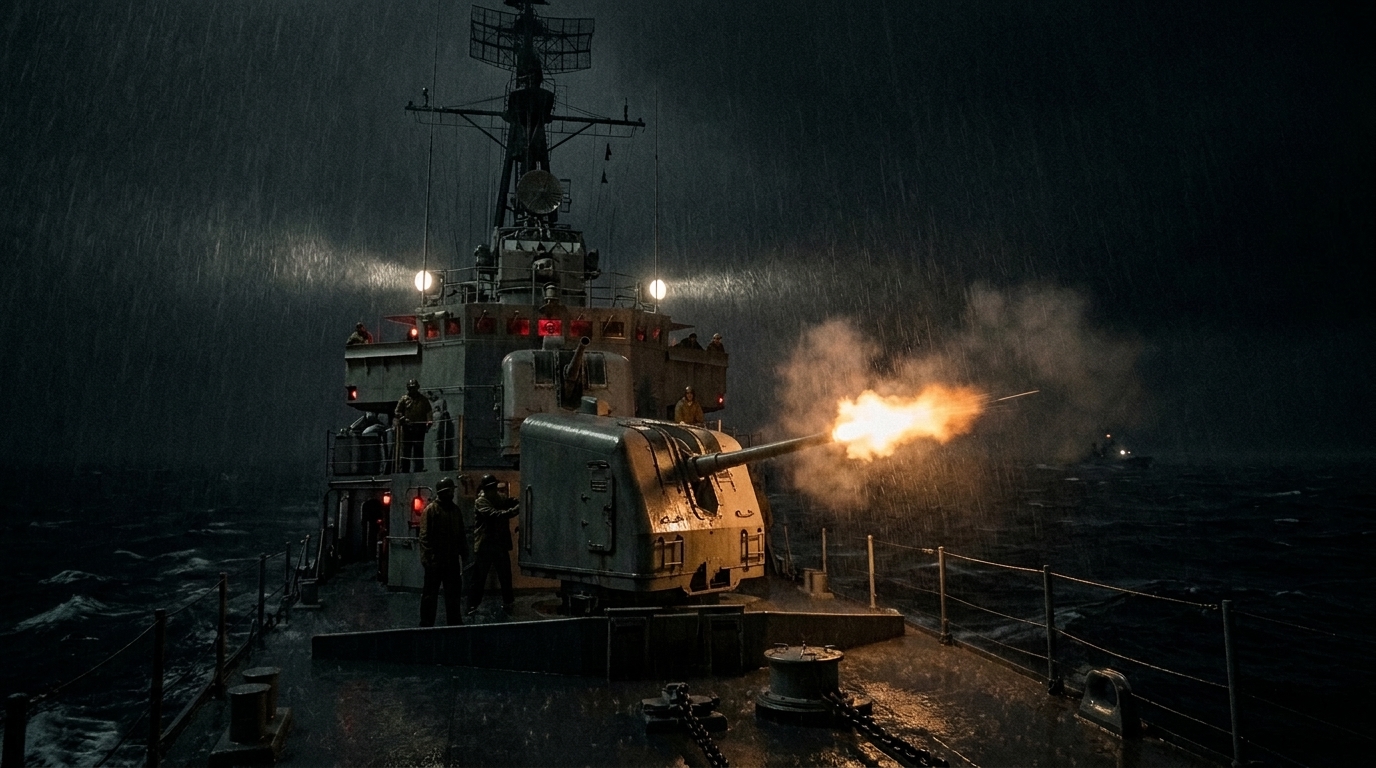
The conventional account treats August 1964 as a turning point produced by genuine confusion in the fog of war. North Vietnamese P-4 torpedo boats did attack the destroyer USS Maddox on August 2 — that engagement is documented and uncontested. Two nights later, in poor weather and heavy seas, the Maddox and USS Turner Joy reported a second attack and fired hundreds of rounds into the dark. Within hours, President Johnson informed the nation of an "unprovoked second attack" and ordered retaliatory air strikes. Three days later, Congress passed the Gulf of Tonkin Resolution by 416–0 in the House and 88–2 in the Senate (Senators Wayne Morse and Ernest Gruening dissenting).
In this framing, intelligence officers and ship crews acted in good faith on bad data, and the Johnson administration responded to what it sincerely believed had happened. The escalation that followed was, in this telling, a tragic consequence of honest error in a tense Cold War theater.
Under-Reported Dimensions
The historical record is harder than that account suggests. In 2005 the NSA released a 200-page internal study by agency historian Robert J. Hanyok titled "Skunks, Bogies, Silent Hounds, and the Flying Fish" — completed in 2001 but kept classified for four years, partly out of concern about the parallels to Iraq WMD intelligence. Hanyok reviewed the original SIGINT cables, dispatcher logs, and intercept summaries from August 1964 and concluded the second attack never occurred. Worse, he documented that NSA analysts at the time had cherry-picked fragments of intercepts to construct an attack narrative, and that contradictory raw traffic — including intercepts that strongly suggested the August 4 cables described the August 2 engagement — was suppressed in the briefings sent up the chain.
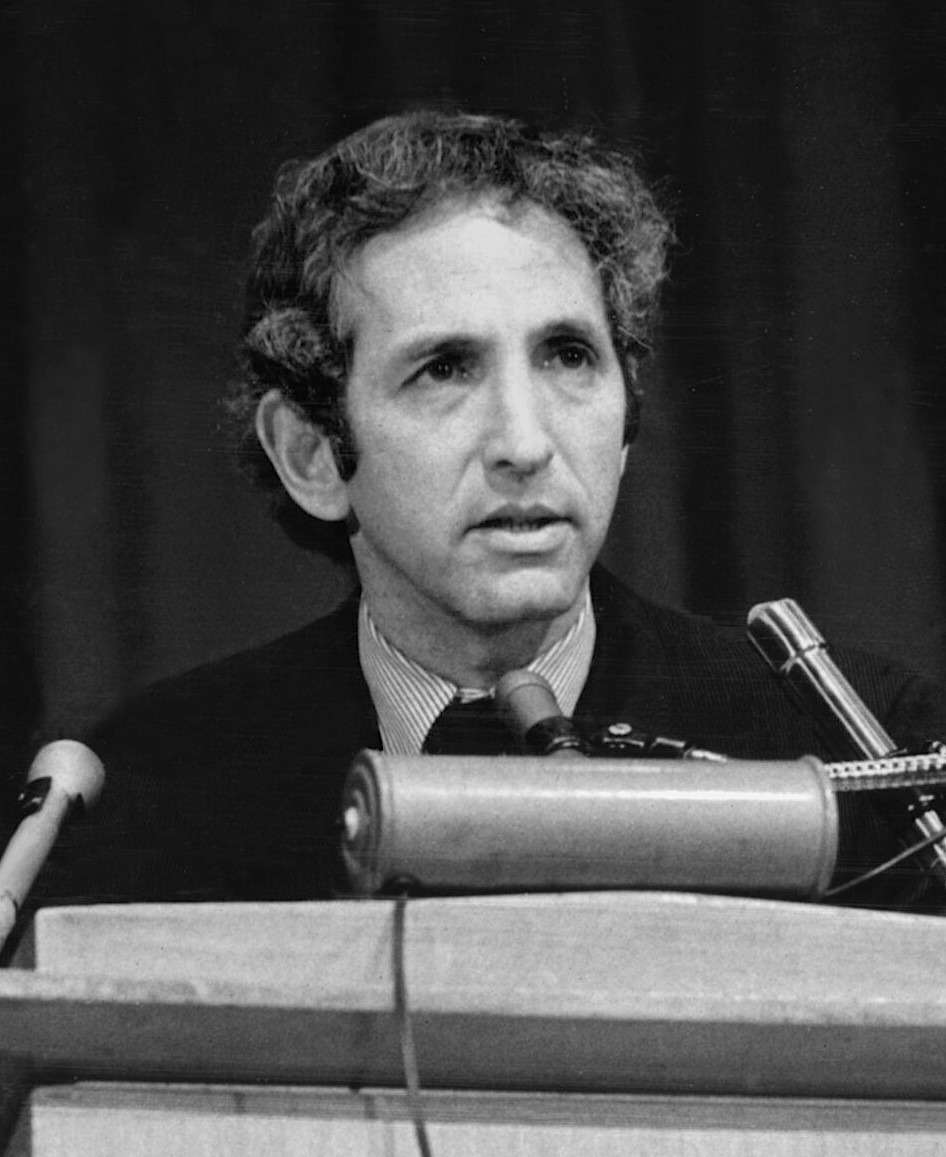
This was not a mistake at the radar-scope level alone. The Pentagon Papers, leaked by Daniel Ellsberg in 1971 and now held in full by the National Archives, show that the Johnson administration's own internal planning treated the Tonkin Resolution as an instrument prepared in advance, not a reaction. A draft of what became the Resolution had circulated inside the executive branch months before any incident, awaiting a triggering event.
Credible Dissenting Voices
Some historians — notably Edwin Moïse in Tonkin Gulf and the Escalation of the Vietnam War (UNC Press, 1996, revised 2019) — argue the case for deliberate executive deception is overstated. In Moïse's reading, Johnson and McNamara were genuinely uncertain on the night of August 4, leaned toward "attack probably happened" within hours, and were not handed clearly contradictory SIGINT in time to reverse course. The deception, in this view, came later: in how the administration described the certainty of the attack to Congress and the public, not in fabricating an event whole-cloth.
Other scholars push harder. Daniel Ellsberg, who worked inside the Pentagon at the time, has argued the Tonkin episode was a contingency long planned for and that the SIGINT manipulation went higher than the NSA. McNamara himself, in his 1995 memoir In Retrospect, acknowledged the August 4 attack "probably didn't happen" but stopped short of accepting that the administration had known so at the time.
Follow the Money
The Resolution mattered because of what it enabled. Without a declaration of war, it became the legal scaffolding for nine more years of escalation — including the deployment of more than half a million U.S. troops, sustained bombing of North Vietnam, and tens of thousands of American and millions of Vietnamese deaths. It was repealed in 1971, after the Pentagon Papers exposed the pre-planned posture of the administration, but the precedent — that an Executive can use a contested incident in international waters to extract sweeping authorization from Congress — has shaped every subsequent use-of-force debate, from the 2001 AUMF onward.
Open Questions
Three questions remain genuinely unresolved, and dossiers that flatten them get the history wrong:
First, the question of executive knowledge in real time. Hanyok's NSA study proves the August 4 attack didn't happen. It does not prove Johnson and McNamara knew that on the night they ordered retaliation. The available record is consistent with both deliberate deception and with motivated reasoning under pressure.
Second, the role of mid-level intelligence officers. The SIGINT cherry-picking Hanyok documented happened well below the cabinet level. Whether it was bureaucratic self-protection, conformity bias, or directed manipulation is still contested.
Third, how complete the declassified record actually is. NSA declassified Hanyok's study; the underlying raw intercepts have been released in heavily redacted form. Independent verification of his interpretation against the full intercept traffic remains incomplete.
Case Timeline
- May 1964GOVERNMENT RECORDDraft of what becomes the Gulf of Tonkin Resolution circulates inside the Johnson administration as contingency language.This pre-drafted resolution indicates the administration was preparing legal authorization for expanded military action before any Tonkin Gulf incident occurred.
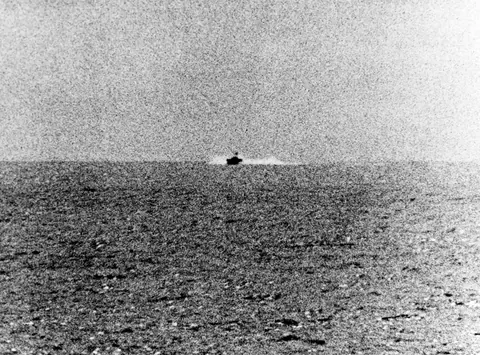
Tonkin Gulf Incident, August 1964: Photograph taken from the U.S. Navy destroyer USS Maddox (DD-731) during her engagement with three North Vietnamese motor torpedo boats in the Gulf of Tonkin, 2 August 1964. The view shows one of the boats - July 1964GOVERNMENT RECORDOperation Plan 34A — covert South Vietnamese raids on the North supported by U.S. intelligence — escalates along the North Vietnamese coast.These covert raids—including one on Hon Me and Hon Nieu islands just days before the Maddox patrol—provided context North Vietnam used to justify its August 2 response.
Tonkin Gulf Incident, August 1964: Photograph taken from the U.S. Navy destroyer USS Maddox (DD-731) during her engagement with three North Vietnamese motor torpedo boats in the Gulf of Tonkin, 2 August 1964. The view shows one of the boats - Aug 2, 1964PRIMARY SOURCEThree North Vietnamese P-4 torpedo boats engage the USS Maddox in daylight; one is sunk, two damaged. The incident is real and documented.All parties including North Vietnam acknowledge this engagement occurred; the Maddox suffered one bullet hole, and intercepts confirm Hanoi's account of the action.
Tonkin Gulf Incident, August 1964: Photograph taken from the U.S. Navy destroyer USS Maddox (DD-731) during her engagement with three North Vietnamese motor torpedo boats in the Gulf of Tonkin, 2 August 1964. The view shows one of the boats - Aug 4, 1964PRIMARY SOURCEMaddox and Turner Joy report a second attack in heavy weather; ships fire hundreds of rounds at radar contacts. No torpedoes ever recovered, no visual confirmation.Captain Herrick of the Maddox sent cables within hours expressing doubt about the attack, stating 'Freak weather effects on radar and overeager sonarmen may have accounted for many reports.'
Tonkin Gulf Incident, August 1964: Photograph taken from the U.S. Navy destroyer USS Maddox (DD-731) during her engagement with three North Vietnamese motor torpedo boats in the Gulf of Tonkin, 2 August 1964. The view shows one of the boats - Aug 5, 1964GOVERNMENT RECORDJohnson announces 'unprovoked' second attack; U.S. carries out retaliatory air strikes (Operation Pierce Arrow).Johnson ordered the strikes before receiving Herrick's follow-up cables expressing doubt, and McNamara later testified he had been certain of the attack when recommending retaliation.
Tonkin Gulf Incident, August 1964: Photograph taken from the U.S. Navy destroyer USS Maddox (DD-731) during her engagement with three North Vietnamese motor torpedo boats in the Gulf of Tonkin, 2 August 1964. The view shows one of the boats - Aug 7, 1964GOVERNMENT RECORDCongress passes the Gulf of Tonkin Resolution 416–0 (House) and 88–2 (Senate).The resolution granted the President authority to 'take all necessary measures' to prevent further aggression, effectively serving as a blank check for war without a formal declaration.
Tonkin Gulf Incident, August 1964: Photograph taken from the U.S. Navy destroyer USS Maddox (DD-731) during her engagement with three North Vietnamese motor torpedo boats in the Gulf of Tonkin, 2 August 1964. The view shows one of the boats - June 1971PRIMARY SOURCEDaniel Ellsberg leaks the Pentagon Papers to the New York Times; documents show pre-planned escalation posture.The leaked documents revealed that the administration had contingency plans for escalation independent of Tonkin Gulf events and that intelligence had been selectively presented.
- Jan 1971GOVERNMENT RECORDCongress repeals the Gulf of Tonkin Resolution as part of the Foreign Military Sales Act.This repeal came after years of congressional doubt about the incident's veracity and growing opposition to executive war-making authority, though it did not affect ongoing operations.
- 1995PRIMARY SOURCEMcNamara publishes *In Retrospect*, conceding the August 4 attack 'probably didn't happen.'McNamara's memoir acknowledged that both sonar and radar contacts were likely false readings, and that he had urged Johnson to retaliate based on intelligence he now believed was wrong.
- 2001 / 2005GOVERNMENT RECORDNSA historian Robert Hanyok completes 'Skunks, Bogies, Silent Hounds, and the Flying Fish'; published openly only after a four-year internal delay.Hanyok's internal investigation concluded that NSA analysts had deliberately omitted contradictory signals intelligence and misrepresented intercepts from August 2 as describing an August 4 attack.
Key People
Organizations
Evidence Library
- documentpartial redactionDOC-GT1Skunks, Bogies, Silent Hounds, and the Flying Fish (Hanyok NSA Study, 2001)
This 200-page internal NSA history definitively concluded the August 4 attack never occurred and documented that SIGINT analysts selectively presented intercepts to support a false narrative. The study was completed in 2001 but kept classified until 2005, with NSA officials citing sensitivity about parallels to Iraq WMD intelligence failures.
- documentDOC-GT2Captain John Herrick cables, August 4, 1964
Within hours of the reported second attack, Maddox commander Herrick sent messages to Pacific Command stating 'Review of action makes many reported contacts and torpedoes fired appear doubtful' and suggesting overeager sonarmen and weather effects produced false readings. These doubts were known to officials before retaliation was ordered.
- documentpartial redactionDOC-GT3Pentagon Papers—Vietnam escalation planning documents (1964)
Leaked classified documents showing the Johnson administration had developed contingency plans and draft resolutions for major escalation before Tonkin Gulf events, indicating the incidents served as trigger for pre-existing policy rather than causing a strategic shift. These documents informed public understanding of premeditated escalation.
- testimonyTEST-GT1Robert McNamara testimony to Senate Foreign Relations Committee (1968)
Secretary of Defense McNamara testified under oath that he was certain the August 4 attack had occurred when recommending retaliation, relying on SIGINT reports later shown to be fabricated or misattributed. Senator Fulbright later accused McNamara of misleading Congress based on what he knew at the time.
- documentpartial redactionDOC-GT4SIGINT intercepts—August 2 and 4, 1964 (declassified NSA raw traffic)
Original signals intelligence showing North Vietnamese communications that NSA analysts initially presented as confirming an August 4 attack actually described the August 2 engagement. Hanyok found analysts had ignored time-stamp evidence and contradictory intercepts that would have revealed no second attack occurred.
- documentDOC-GT5Draft Gulf of Tonkin Resolution (May-June 1964)
Pre-drafted congressional resolution circulated within the administration months before any Tonkin incident, granting sweeping war powers and indicating the administration sought legal authorization for escalation independent of specific provocation. The final resolution passed August 7 closely resembled these earlier drafts.
- documentDOC-GT6In Retrospect: The Tragedy and Lessons of Vietnam—Robert McNamara (1995)
McNamara's memoir publicly acknowledged for the first time that the August 4 attack 'probably didn't happen' and that faulty intelligence led to unjustified retaliation and congressional authorization. This admission from a principal architect of the war validated decades of skeptical analysis.
- documentpartial redactionDOC-GT7Operation Plan 34A mission logs (July-August 1964)
Classified records of covert U.S.-supported South Vietnamese raids on North Vietnamese coastal installations immediately preceding the Maddox patrol. These operations—unknown to Congress in 1964—provided military context that North Vietnam cited in justifying its August 2 response, undermining the 'unprovoked attack' narrative.
Evidence Gallery


Sources
Trace the trail yourself
Investigation Network

This dossier does not end here.
- 1975-11-11Whitlam government dismissedPine Gap
- 1973Charges against Ellsberg dismissed due to government misconduct including illegal wiretapping and burglaryThe Pentagon Papers
- 1971-03Ellsberg approaches U.S. senators to release Papers through Congress; they declineThe Pentagon Papers
- 1971-06-13New York Times begins publishing excerpts; Nixon administration obtains restraining order after three articlesThe Pentagon Papers
- 1971-06-18Washington Post begins publishing; also restrained, creating constitutional crisisThe Pentagon Papers
- 1971-06-30Supreme Court rules 6-3 in New York Times Co. v. United States that prior restraint violated First AmendmentThe Pentagon Papers
Live Discussion
0 Perspectives
Add to the record. Be specific. Cite where you can.
If you're learning about this topic for the first time, these are the best places to continue — documented evidence and historical relationships are the guide.
Named in “The Gulf of Tonkin Incident” and 1 other published dossier.
Named in “The Gulf of Tonkin Incident”.
Shares 1 documented key player with “The Gulf of Tonkin Incident”, including Daniel Ellsberg.
Read more dossiers like this
Get a quiet one-line bulletin when new investigative files are published. Bound to this dossier — useful for tracking follow-ups.