Allen Dulles
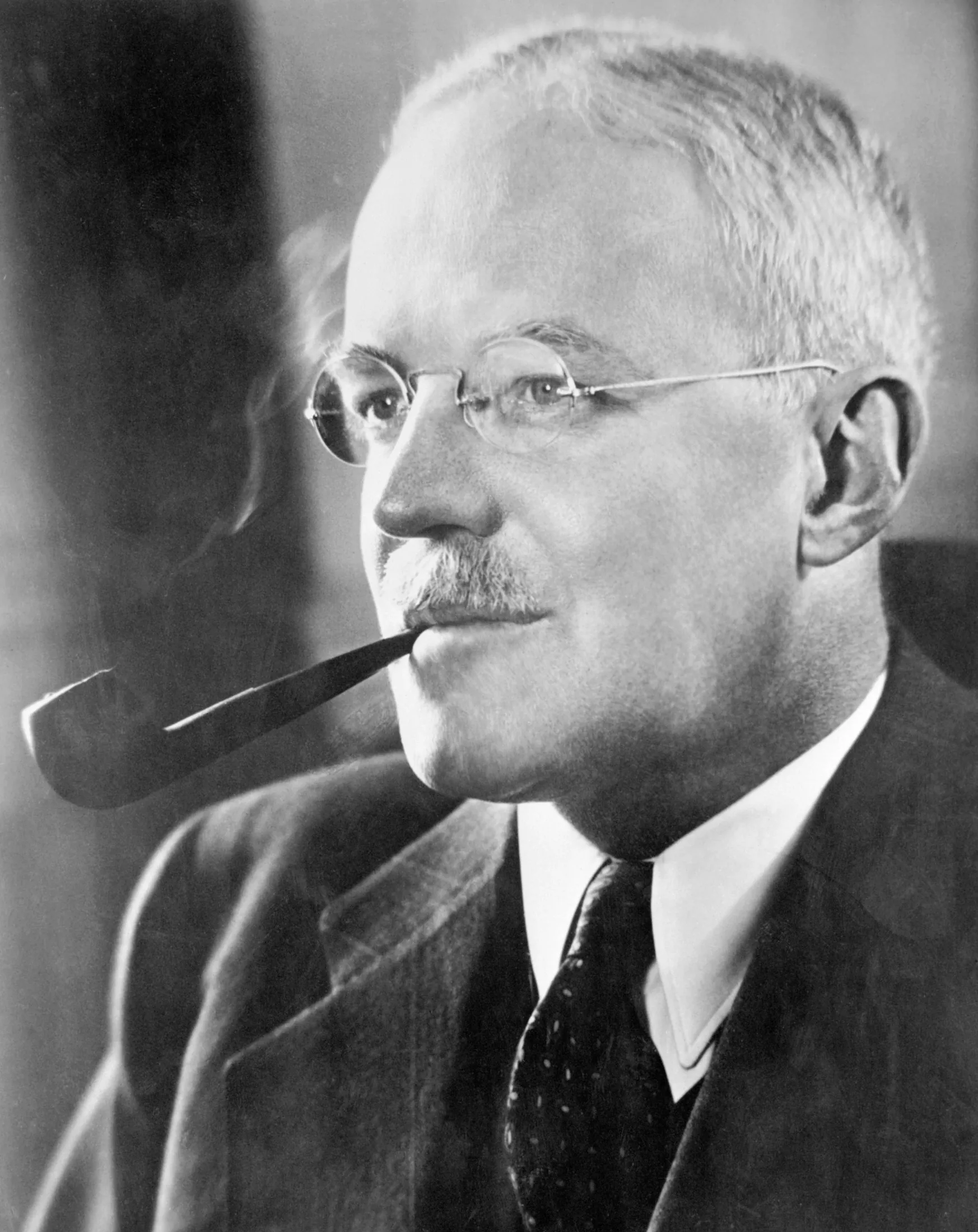
Allen Welsh Dulles (1893–1969) served as Director of Central Intelligence from 1953 to 1961, the longest-tenured DCI and first civilian to hold the position. Under his leadership, the CIA conducted covert operations including foreign government overthrows, established programs like MKUltra for mind control research, and recruited Nazi scientists through Operation Paperclip. Allen Dulles appears in The Archive because he authorized and oversaw multiple covert operations that remain subjects of investigation and historical controversy.
Allen Welsh Dulles (1893–1969) served as Director of Central Intelligence from 1953 to 1961, the longest-tenured DCI and first civilian to hold the position. Under his leadership, the CIA conducted covert operations including foreign government overthrows, established programs like MKUltra for mind control research, and recruited Nazi scientists through Operation Paperclip.
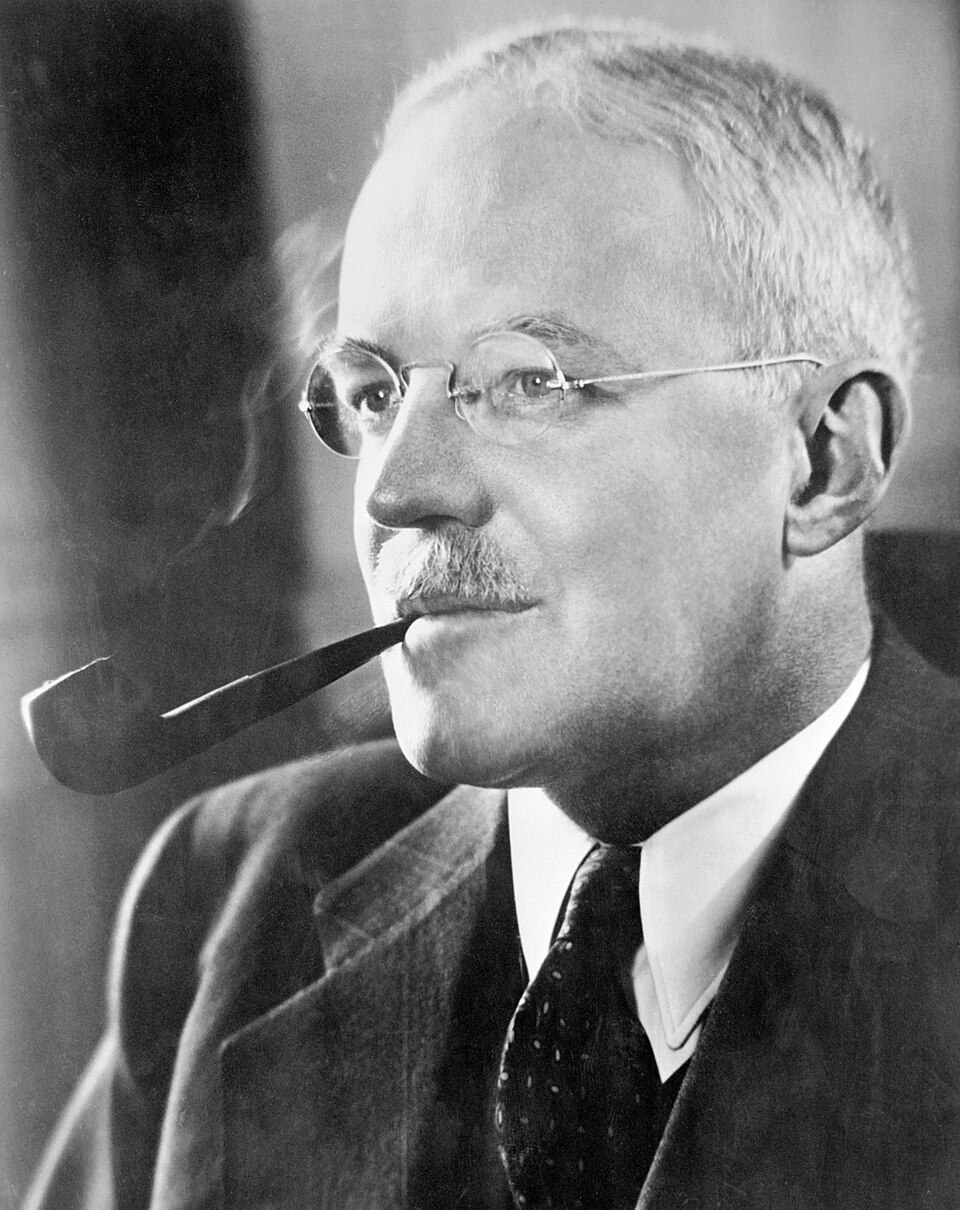
- Source
- Wikimedia Commons
- Type
- Photograph
- License
- Public domain
- Photographer
- US Government
Photo Information ▾
- Full name
- Allen Welsh Dulles
- Life span
- April 7, 1893 – January 29, 1969
- Nationality
- American
- Position
- Director of Central Intelligence (1953–1961)
- Prior service
- Office of Strategic Services (OSS), Office of Policy Coordination
- Education
- Princeton University (A.B. 1914, A.M. 1916); George Washington University Law School (LL.B. 1926)
- Family connection
- Brother of Secretary of State John Foster Dulles (1953–1959)
- Legal career
- Partner, Sullivan & Cromwell law firm (1926–1942, 1946–1950)
- Tenure length
- 8 years as DCI (longest-serving director)
- Appointment
- Appointed by President Dwight D. Eisenhower
- Dismissal
- Requested to resign by President John F. Kennedy, November 1961
- Post-CIA role
- Warren Commission member (1963–1964)
Allen Dulles appears in The Archive because he authorized and oversaw multiple covert operations that remain subjects of investigation and historical controversy. As DCI, he approved MKUltra's mind control experiments, facilitated Operation Paperclip's integration of Nazi scientists into American defense programs, authorized Operation Mockingbird's media influence campaigns, and directed the 1953 Iranian coup (Operation Ajax). His tenure represents a formative period when the CIA expanded its covert capabilities, established operational precedents, and created programs whose full scope remained concealed from public and congressional oversight for decades. The documentary record connects Dulles directly to decisions that shaped American intelligence operations and raised enduring questions about accountability, legality, and democratic oversight of secret government activities.
# Allen Dulles
Identity
Allen Welsh Dulles was born April 7, 1893, in Watertown, New York, into a family with deep connections to American diplomacy and law. His grandfather John W. Foster served as Secretary of State under President Benjamin Harrison, and his uncle Robert Lansing held the same position under Woodrow Wilson. His brother John Foster Dulles would serve as Secretary of State throughout most of Allen Dulles's tenure as Director of Central Intelligence, creating an unprecedented concentration of foreign policy authority within a single family.
Dulles graduated from Princeton University in 1914, where he was influenced by the internationalist thinking then dominant at the institution. He earned a master's degree from Princeton in 1916 and later obtained a law degree from George Washington University in 1926 while working at the State Department. This educational background positioned him within the Eastern establishment elite that would dominate American foreign policy institutions for decades.
He joined the diplomatic service in 1916 and served in Vienna, Bern, and other European posts during and after World War I. This early diplomatic experience exposed him to intelligence work and European political intrigue during a transformative period. He attended the Paris Peace Conference in 1919 as part of the American delegation, witnessing firsthand the geopolitical restructuring that followed the war.
Career & Roles
After leaving the State Department in 1926, Dulles joined Sullivan & Cromwell, a prestigious Wall Street law firm where his brother John Foster was a partner. The firm represented major American corporations with international interests, and Dulles developed expertise in international law and finance. This period connected him to American business elites and their overseas operations, relationships that would later inform his intelligence work.
When World War II began, Dulles returned to government service. In 1942, he joined the Office of Strategic Services (OSS), America's wartime intelligence agency directed by William J. Donovan. The OSS posted him to Bern, Switzerland, where he served as station chief from November 1942 until the war's end. From this neutral location, Dulles conducted intelligence operations throughout Nazi-occupied Europe, cultivated resistance contacts, and gathered information on German military and political developments.
His Bern station achieved notable intelligence successes, including the establishment of networks inside Germany and negotiations leading to the German surrender in Italy (Operation Sunrise). However, some historical accounts note that Dulles also maintained contact with German industrialists and intelligence figures who sought favorable treatment in anticipation of Germany's defeat. These wartime relationships would later influence Operation Paperclip, through which Nazi scientists and intelligence personnel were brought to the United States.
After the OSS dissolved in 1945, Dulles briefly returned to Sullivan & Cromwell but remained active in intelligence circles advocating for a permanent civilian intelligence agency. When the Central Intelligence Agency was created by the National Security Act of 1947, Dulles served on various committees reviewing its organization and operations. In 1950, he was appointed Deputy Director for Plans, heading the CIA's covert operations directorate.
President Dwight D. Eisenhower appointed Dulles Director of Central Intelligence in February 1953, making him the first civilian to hold the position and initiating the longest tenure of any CIA director. His appointment coincided with his brother's installation as Secretary of State, creating an unusual concentration of foreign policy authority. The Dulles brothers shared an anti-communist worldview and coordinated closely on covert operations, often bypassing normal State Department and National Security Council procedures.
Organizations & Networks
Dulles's institutional affiliations reflected and reinforced his position within America's foreign policy establishment. His partnership at Sullivan & Cromwell connected him to international business interests, including clients with operations in Latin America, Europe, and the Middle East. The firm's representation of United Fruit Company, among other multinational corporations, created relationships that intersected with his later intelligence work.
He maintained membership in the Council on Foreign Relations, the elite foreign policy organization that brought together government officials, academics, and business leaders to discuss international affairs. This network provided both intellectual frameworks for understanding American global interests and informal channels for coordinating policy outside official government structures.
During his OSS service, Dulles built relationships with European intelligence services, anti-communist exile groups, and former Nazi intelligence officers who possessed networks in Eastern Europe and the Soviet Union. Some of these contacts, particularly Reinhard Gehlen and his organization, were incorporated into American intelligence operations despite their Nazi backgrounds. Dulles viewed these relationships as pragmatic necessities of the Cold War, prioritizing anti-communist utility over denazification.
As DCI, Dulles expanded the CIA's relationships with foreign intelligence services through liaison arrangements, created proprietary companies and foundations to fund covert operations, and cultivated media contacts for influence operations. The organizational infrastructure he built during his tenure shaped CIA operations for decades after his departure.
Major Operations & Activities
Operation Paperclip brought more than 1,600 German scientists, engineers, and technicians to the United States following World War II, despite many having Nazi Party affiliations or documented involvement in war crimes. While the operation formally began in 1945 under the Joint Intelligence Objectives Agency, Dulles's OSS contacts and later CIA advocacy facilitated the program's expansion and the sanitization of participants' records. Scientists like Wernher von Braun and Hubertus Strughold, whose wartime activities included using concentration camp labor and conducting medical experiments, were brought to America for their technical expertise.
Dulles argued that German scientific knowledge must not fall into Soviet hands and that these individuals' contributions to American defense programs outweighed their Nazi pasts. Declassified documents show that background checks were deliberately superficial and that incriminating information was removed from files to facilitate security clearances. This pattern of prioritizing operational utility over legal and moral considerations became characteristic of Dulles's approach to intelligence work.
Operation Ajax in 1953 orchestrated the overthrow of Iranian Prime Minister Mohammad Mosaddegh, who had nationalized the Anglo-Iranian Oil Company. The operation was jointly conducted with British intelligence (MI6) and represented one of the CIA's first successful coups. Dulles personally approved the operation plan and supervised its execution, working closely with Kermit Roosevelt Jr., who directed activities on the ground in Tehran.
Declassified CIA documents from 2013 confirmed the agency's role in organizing protests, bribing officials, and coordinating with military officers to remove Mosaddegh and restore Mohammad Reza Shah Pahlavi to power. Dulles viewed the operation as a model for future covert interventions, demonstrating that relatively modest investments could achieve major geopolitical objectives. The operation's success encouraged similar interventions in Guatemala (1954) and elsewhere, establishing regime change as a standard CIA capability.
MKUltra was approved by Dulles in April 1953, just months after he became DCI. The program, directed by Sidney Gottlieb in the Technical Services Staff, investigated drugs, hypnosis, and other methods for interrogation, behavior modification, and mind control. Dulles authorized the program in response to concerns that communist adversaries were developing similar capabilities and that American prisoners of war in Korea had been subjected to brainwashing.
The program operated 149 subprojects through universities, hospitals, and research institutions, often without subjects' informed consent. Methods included administering LSD and other drugs to unwitting subjects, sensory deprivation, psychological torture, and attempts at personality modification. Dr. Donald Ewen Cameron's experiments at Montreal's Allan Memorial Institute, funded through MKUltra, subjected patients to intensive electroshock, drug-induced comas, and repeated playing of recorded messages.
Dulles received regular briefings on MKUltra but maintained distance from operational details, a pattern that provided deniability while ensuring the program's continuation. When concerns arose about legality and ethics, Dulles emphasized national security imperatives and the need to match perceived communist capabilities. The program continued until 1973, when Richard Helms, then DCI, ordered MKUltra files destroyed.
Operation Mockingbird involved CIA efforts to influence American and foreign media. While the program's full scope remains debated, declassified documents confirm that during Dulles's tenure the CIA maintained relationships with journalists, placed propaganda in publications, funded magazines and news services, and conducted media operations to shape public opinion and support policy objectives.
Frank Wisner, who headed the Office of Policy Coordination and later the Directorate of Plans under Dulles, coordinated many media operations. Relationships involved major news organizations, including newspapers, magazines, television networks, and publishing houses. Some journalists knowingly cooperated with intelligence objectives; others were unwittingly manipulated through false sources and planted stories.
Dulles viewed media influence as essential to Cold War competition, arguing that the battle for hearts and minds required active propaganda and psychological operations. He authorized funding for organizations like the Congress for Cultural Freedom, which supported intellectuals and publications promoting anti-communist perspectives. These activities remained secret until congressional investigations in the 1970s exposed the CIA's domestic media operations.
Bay of Pigs Invasion in April 1961 attempted to overthrow Cuban leader Fidel Castro using CIA-trained Cuban exiles. Dulles personally championed the operation, which had been in planning since 1960 under the Eisenhower administration. He assured President John F. Kennedy that the invasion would succeed, drawing parallels to Guatemala while downplaying differences in circumstances.
The operation failed catastrophically. The exile brigade was defeated within three days, more than 100 invaders were killed, and nearly 1,200 were captured. The failure humiliated the Kennedy administration, strengthened Castro's position, and pushed Cuba closer to the Soviet Union. Post-mortem analyses revealed that Dulles and other CIA leaders had provided overly optimistic assessments, ignored intelligence suggesting the plan was unlikely to succeed, and failed to adequately inform the president of risks and requirements.
Kennedy accepted public responsibility but privately blamed the CIA for misleading him. In November 1961, he requested Dulles's resignation, along with that of Deputy Director Charles Cabell and Deputy Director for Plans Richard Bissell. Dulles formally resigned in November 1961, ending his eight-year tenure as DCI.
Historical Importance
Dulles's tenure as Director of Central Intelligence established operational patterns and institutional culture that shaped the CIA for decades. He transformed the agency from a primarily analytical organization into one equally focused on covert action, expanding capabilities for overthrowing governments, conducting propaganda, and manipulating foreign political processes. The operations he authorized—particularly successful coups in Iran and Guatemala—created confidence that such interventions could achieve American policy objectives at acceptable cost.
This confidence proved misplaced. While short-term operational successes were achieved, long-term consequences included anti-American resentment, regional instability, and blowback that complicated American foreign policy for generations. The 1979 Iranian Revolution, which brought to power a virulently anti-American theocracy, had roots in the 1953 coup that restored the Shah. The Guatemalan coup initiated decades of civil conflict and military rule.
Dulles's approach to intelligence work prioritized operational success over legal constraints, ethical considerations, and democratic accountability. MKUltra's human rights violations, Operation Mockingbird's domestic propaganda, and Operation Paperclip's protection of Nazi war criminals all reflected a worldview in which Cold War imperatives justified methods that violated American law and professed values. This operational philosophy created institutional patterns that enabled later abuses.
His tenure also established problematic precedents for executive power and intelligence oversight. Dulles frequently bypassed normal policy processes, keeping operations secret from Congress and sometimes from other executive branch officials. His close relationship with President Eisenhower and his brother the Secretary of State enabled this autonomy, creating an intelligence agency with insufficient accountability. These patterns contributed to later scandals and the eventual establishment of more robust oversight mechanisms.
Historically, Dulles represents a particular moment in American intelligence history—the early Cold War period when anti-communism justified expanding covert capabilities with minimal oversight. His legacy remains contested: defenders emphasize his role in containing Soviet influence during a dangerous period; critics argue that his operations violated democratic principles, enabled human rights abuses, and created long-term problems that outweighed short-term gains.
Documented Controversies
Historical Consensus Dulles authorized and oversaw MKUltra, the CIA's mind control research program that conducted experiments on unwitting subjects without informed consent. Declassified documents confirm his approval of the program in April 1953 and his receipt of regular briefings on its activities. While operational details were handled by Sidney Gottlieb and others, Dulles bore ultimate responsibility for a program that violated medical ethics and legal protections. Victims of MKUltra experiments, including those subjected to Dr. Cameron's treatments, suffered lasting psychological damage. Congressional investigations and subsequent lawsuits established that the program violated fundamental human rights, though Dulles maintained until his death that such measures were necessary responses to perceived communist capabilities.
Official Record Dulles played a key role in Operation Paperclip's expansion and the sanitization of Nazi scientists' backgrounds. His OSS contacts with German intelligence figures and later advocacy as CIA director facilitated bringing individuals with documented Nazi affiliations to America. Declassified Joint Intelligence Objectives Agency and CIA records show systematic efforts to obscure participants' wartime activities, remove incriminating information from files, and provide false statements to security investigators. While Dulles defended these actions as necessary to prevent Soviet acquisition of German expertise, critics note that this prioritized Cold War utility over accountability for war crimes and undermined denazification policies.
Government Finding The 1975 Church Committee investigation documented that under Dulles's leadership, the CIA conducted extensive media influence operations domestically and internationally, maintaining covert relationships with journalists and news organizations. Senate investigators found that these activities violated the CIA's charter prohibition on domestic operations and compromised journalistic independence. While Dulles viewed such relationships as essential tools of Cold War competition, the Church Committee concluded they threatened First Amendment freedoms and democratic discourse. The committee recommended restrictions on CIA media operations and improved oversight mechanisms.
Historical Consensus Dulles provided President Kennedy with misleadingly optimistic assessments regarding the Bay of Pigs invasion, downplaying risks and overstating likely success. Post-invasion investigations, including the Taylor Committee report, found that CIA planning had been seriously flawed and that Dulles had failed to adequately inform the president of the operation's true prospects. While some analysts attribute these failures to organizational dysfunction rather than deliberate deception, Dulles's personal investment in the operation and his pattern of minimizing obstacles to covert actions suggest systemic problems with his leadership approach.
Credible Allegation Some historians argue that Dulles's wartime and post-war contacts with Nazi intelligence figures, particularly Reinhard Gehlen, led to the CIA's employment of individuals responsible for war crimes and the compromise of American intelligence operations by former Nazi penetrations. Declassified documents show that Gehlen's organization, which Dulles supported incorporating into American intelligence structures, was penetrated by Soviet intelligence and employed former Nazi officers with brutal records. While Dulles viewed these relationships as pragmatic Cold War necessities, critics contend they brought war criminals into American service and compromised operations through Soviet penetration.
Ongoing Historical Debate Questions persist about Dulles's relationship with Nazi officials during his OSS service in Bern, with some researchers suggesting he may have protected certain figures in exchange for intelligence cooperation or financial considerations. Operation Sunrise, the negotiated German surrender in Italy that Dulles helped broker, involved contacts with SS General Karl Wolff and other senior Nazi officials. While official accounts present these contacts as legitimate intelligence operations hastening Germany's defeat, some historians question whether Dulles made unauthorized commitments or enabled certain Nazis to escape accountability. The full record remains incomplete, as some relevant documents remain classified or were destroyed.
Historical Consensus Dulles served on the Warren Commission investigating President Kennedy's assassination despite the apparent conflict of interest created by Kennedy's having fired him. Some researchers have questioned whether Dulles's presence on the commission affected its investigation of potential CIA connections to Lee Harvey Oswald or Cuban exile activities. While no evidence suggests Dulles actively obstructed the investigation, his appointment to investigate a president who had dismissed him raised questions about the commission's independence and thoroughness in examining intelligence agency activities.
Investigations & Legal Proceedings
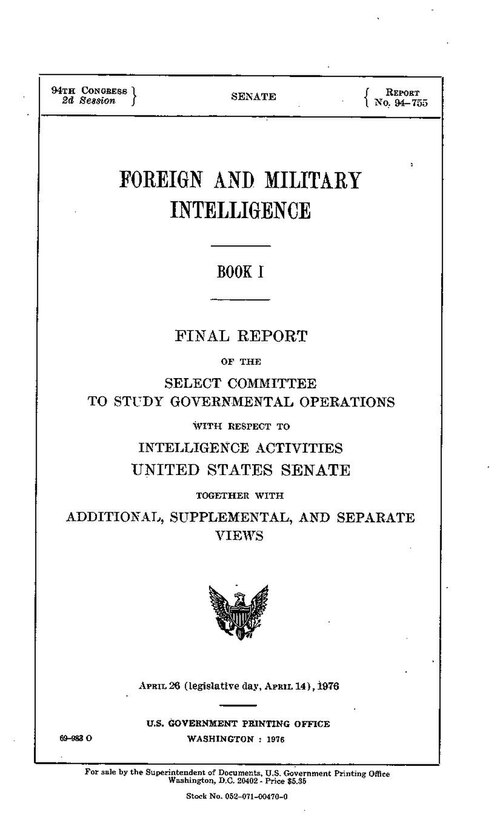
Dulles himself was never criminally investigated or charged with wrongdoing during his lifetime. However, programs he authorized became subjects of extensive congressional investigations in the 1970s. The Church Committee (Senate Select Committee to Study Governmental Operations with Respect to Intelligence Activities), chaired by Senator Frank Church, conducted the most comprehensive investigation, examining CIA activities including assassination plots, domestic surveillance, MKUltra, and media operations.
The Church Committee's 1975-1976 hearings revealed the scope of MKUltra and other programs Dulles had authorized, leading to significant reforms in intelligence oversight. The committee found that MKUltra had violated basic ethical standards and legal protections, that Operation Mockingbird had compromised journalistic independence, and that assassination plotting against foreign leaders (authorized after Dulles's tenure but reflecting operational culture he had fostered) violated American values and law.
These investigations led to the establishment of permanent Senate and House intelligence committees, executive orders restricting certain CIA activities, and the Foreign Intelligence Surveillance Act creating judicial oversight of certain intelligence collection. While Dulles had died in 1969 before these investigations began, his legacy was fundamentally reassessed as the programs he had authorized came under scrutiny.
Civil litigation by MKUltra victims resulted in settlements, with the U.S. government acknowledging wrongdoing and providing compensation to some individuals harmed by the program. The Canadian government also settled claims by victims of Dr. Cameron's experiments, acknowledging that the CIA-funded research had violated medical ethics and caused lasting harm.
No individual CIA officials, including those who succeeded Dulles, faced criminal prosecution for MKUltra or related programs. This outcome reflected both the difficulty of prosecuting activities undertaken under claims of national security authority and the passage of time between the activities and their public exposure. The destruction of MKUltra records by Richard Helms in 1973 eliminated evidence that might have supported criminal prosecutions.
Denials & Disputes
Dulles consistently defended his tenure as DCI, arguing that the operations he authorized were necessary responses to Soviet threats and served American national security interests. In his 1963 book "The Craft of Intelligence," written after his resignation, he presented intelligence work as an essential tool of statecraft and defended covert operations as legitimate instruments of foreign policy. He did not publicly discuss MKUltra or other controversial programs that remained classified.
Regarding Operation Ajax and the 1953 Iranian coup, Dulles and other officials maintained public denials of American involvement for decades. Only with document declassification in 2013 did the CIA formally acknowledge its role. Dulles's memoirs and public statements portrayed American Middle East policy as supporting self-determination and opposing communism, omitting the agency's role in overthrowing a democratically elected government at the behest of oil interests.
Dulles defended the Bay of Pigs operation's planning while attributing its failure to President Kennedy's decision not to provide air support at critical moments. This claim was disputed by Kennedy administration officials, who noted that Dulles had presented the operation as viable without requiring overt American military involvement. The Taylor Committee investigation found fault with both CIA planning and policy-level decision-making, but Dulles maintained that the operation would have succeeded with stronger presidential support.
On Operation Paperclip and the recruitment of Nazi scientists, Dulles's public position emphasized that these individuals provided valuable technical knowledge and that their backgrounds had been adequately vetted. He dismissed concerns about their Nazi affiliations as irrelevant given their contributions to American defense capabilities. Declassified documents revealing the systematic sanitization of files and protection of war criminals only emerged after his death, preventing direct response to these more serious allegations.
Defenders of Dulles's record, including intelligence community veterans and Cold War historians sympathetic to aggressive anti-communist policies, argue that his actions must be understood in the context of the period's perceived Soviet threat. They contend that covert operations prevented communist expansion, that mind control research responded to genuine concerns about enemy capabilities, and that measures that appear excessive in retrospect were reasonable given contemporaneous uncertainty about Soviet intentions and capabilities.
Critics counter that this defense cannot justify human rights violations, protection of war criminals, overthrow of democratic governments, and systematic deception of the American public and Congress. They argue that Dulles's approach to intelligence work violated constitutional principles, created institutional patterns that enabled later abuses, and generated long-term foreign policy problems that outweighed short-term tactical successes.
Legacy & Historical Debate
Allen Dulles remains one of the most controversial figures in American intelligence history. His eight-year tenure as Director of Central Intelligence shaped the CIA's institutional culture, operational capabilities, and relationship with democratic oversight. The programs he authorized—particularly MKUltra, Operation Paperclip, Operation Mockingbird, and covert regime changes—continue to generate historical debate about the proper role of intelligence agencies in democratic societies.
His defenders view him as an effective intelligence leader who expanded American capabilities during a dangerous period, successfully conducting operations that contained Soviet influence. They note his World War II intelligence successes, his role in building the CIA into an effective organization, and his conviction that aggressive covert action was necessary to counter communist expansion. From this perspective, controversial programs reflected difficult choices in confronting totalitarian adversaries, and their exposure years later should be understood in Cold War context rather than judged by peacetime standards.
Critics argue that Dulles embodied a problematic approach to intelligence work that prioritized operational success over legal constraints, democratic accountability, and moral considerations. The programs he authorized violated human rights, protected war criminals, subverted democratic governments, and created institutional patterns that enabled later scandals. His tenure established precedents for executive power and intelligence autonomy that proved deeply problematic, contributing to abuses that required the reforms of the 1970s.
The long-term consequences of Dulles's operations complicate assessments of his legacy. The 1953 Iranian coup removed a nationalist government and restored a monarch whose repressive rule generated popular resentment, ultimately leading to the 1979 Islamic Revolution and four decades of hostile U.S.-Iran relations. The Guatemalan coup initiated decades of military rule and civil conflict. Operation Paperclip brought technical expertise but also protected individuals responsible for war crimes and human experimentation. MKUltra produced no usable intelligence methods while violating basic ethical principles and harming its subjects.
Dulles's role in the Bay of Pigs failure and his subsequent service on the Warren Commission raise particular questions. His dismissal by President Kennedy followed the worst operational failure in CIA history, yet within two years Kennedy's successor appointed him to investigate the president's assassination. While no evidence suggests Dulles obstructed that investigation, the conflict of interest was apparent and has fueled speculation about whether intelligence connections to Kennedy's death were adequately examined.
Contemporary intelligence professionals often cite Dulles as representing both the capabilities and the dangers of intelligence agencies operating with insufficient oversight. The Church Committee investigations that exposed his programs led to reforms—including permanent congressional intelligence committees, the Foreign Intelligence Surveillance Act, and executive orders restricting certain activities—designed to prevent future abuses while maintaining necessary intelligence capabilities. Whether these reforms succeeded remains debated, with periodic revelations of surveillance programs and covert operations suggesting tensions between operational effectiveness and democratic accountability persist.
Historians continue to research Dulles's career as documents are declassified and participants' papers become available. Recent scholarship has examined his business relationships through Sullivan & Cromwell, questioning whether corporate interests influenced intelligence priorities. His wartime contacts with Nazi officials remain subjects of investigation, with researchers seeking to understand the full extent of Operation Paperclip and related programs. The destruction of many MKUltra records ensures that program's full scope will never be completely documented.
Allen Dulles died on January 29, 1969, in Washington, D.C., buried at Green Mount Cemetery in Baltimore. His papers are held at Princeton University, though portions remained classified for decades. His legacy remains contested—a figure who shaped American intelligence capabilities while establishing patterns that required subsequent reform, whose operations achieved tactical successes while generating strategic problems, and whose career raises enduring questions about the relationship between intelligence agencies and democratic governance.
Continue Investigating
Allen Dulles's documented role in authorizing MKUltra connects directly to [mkultra-and-cia-mind-control](mkultra-and-cia-mind-control), where his April 1953 approval initiated the CIA's most notorious mind control program. His supervision of Operation Paperclip's expansion appears in [operation-paperclip](operation-paperclip), which details how Nazi scientists were brought to America with sanitized records. His direction of Operation Mockingbird's media influence campaigns is examined in [operation-mockingbird](operation-mockingbird), documenting the CIA's penetration of American journalism. The 1953 Iranian coup he orchestrated is analyzed in [operation-ajax-1953-iran-coup](operation-ajax-1953-iran-coup), including declassified CIA documents confirming the agency's role.
Related investigations include [jfk-assassination-files](jfk-assassination-files), which examines Dulles's controversial Warren Commission service and questions about CIA connections to Oswald. The [church-committee](church-committee) dossier details the congressional investigation that exposed programs Dulles authorized. [operation-northwoods](operation-northwoods) examines false flag proposals that reflected operational culture Dulles helped create. The [iran-contra-affair](iran-contra-affair) shows how patterns he established—covert operations, congressional bypass, deniability structures—recurred in later scandals.
Broader context appears in [the-military-industrial-complex](the-military-industrial-complex), examining relationships between intelligence agencies, defense contractors, and corporate interests that characterized Dulles's worldview. [cointelpro](cointelpro) documents domestic intelligence abuses that paralleled the CIA programs he directed. [the-phoenix-program-in-vietnam](the-phoenix-program-in-vietnam) shows how assassination and covert action capabilities he developed were applied in Southeast Asia.
Key figures in Dulles's operations include [sidney-gottlieb](sidney-gottlieb), who directed MKUltra under his authority; [dr-donald-ewen-cameron](dr-donald-ewen-cameron), whose CIA-funded experiments exemplified MKUltra's human rights violations; [richard-helms](richard-helms), who succeeded him and later destroyed MKUltra records; [frank-wisner](frank-wisner), who conducted covert operations and media influence programs; and [wernher-von-braun](wernher-von-braun), the former Nazi rocket scientist whose recruitment exemplified Operation Paperclip.
Senator [frank-church](frank-church) led the congressional investigation that exposed Dulles's programs years after his death, establishing the oversight mechanisms designed to prevent similar abuses. [president-harry-truman](president-harry-truman), who created the CIA, later expressed regret about how the agency he envisioned became the covert operations organization Dulles built. These connections demonstrate how one man's eight-year tenure shaped American intelligence operations, foreign policy, and debates about democracy and secrecy that continue today.
- 1893Born April 7 in Watertown, New York
- 1916Joined U.S. diplomatic service
- 1926Joined Sullivan & Cromwell law firm as partner
- 1942Joined Office of Strategic Services (OSS)
- 1942-1945Served as OSS station chief in Bern, Switzerland
- 1950Appointed CIA Deputy Director for Plans
- 1953Appointed Director of Central Intelligence by President Eisenhower
- 1953Approved MKUltra program in April; directed Operation Ajax coup in Iran
- 1954Directed CIA coup in Guatemala
- 1956Oversaw joint CIA-MI6 failed attempt to overthrow Syrian government
- 1960-1961Supervised planning for Bay of Pigs invasion
- 1961Bay of Pigs invasion failed in April; resigned as DCI in November at President Kennedy's request
- 1963Published 'The Craft of Intelligence'
- 1963-1964Served on Warren Commission investigating Kennedy assassination
- 1969Died January 29 in Washington, D.C.
- 1975-1976Church Committee investigations exposed programs he had authorized
- S1
- S2
- S3Operation Paperclip: The Secret Intelligence Program that Brought Nazi Scientists to AmericaNational Archives · primary
- S4Secret Agenda: The United States Government, Nazi Scientists, and Project PaperclipInternet Archive · book
- S5Foreign Relations of the United States, 1952-1954, Iran, 1951-1954U.S. Department of State Office of the Historian · primary
- S6
- S7Bay of Pigs: The Untold StoryThe New York Times · mainstream
- S8Warren Commission ReportNational Archives · primary
- S9
- S10A Legacy of Ashes: The History of the CIAPulitzer Prize · book
- S11Foreign Relations of the United States, 1952-1954, GuatemalaU.S. Department of State Office of the Historian · primary
- S12Allen DullesWikipedia · reference
- S13
- S14Dulles: A Biography of Eleanor, Allen, and John Foster Dulles and Their Family NetworkPrinceton University Press · academic
If you're learning about this topic for the first time, these are the best places to continue — documented evidence and historical relationships are the guide.
Allen Dulles is documented in the evidence record of this published dossier.
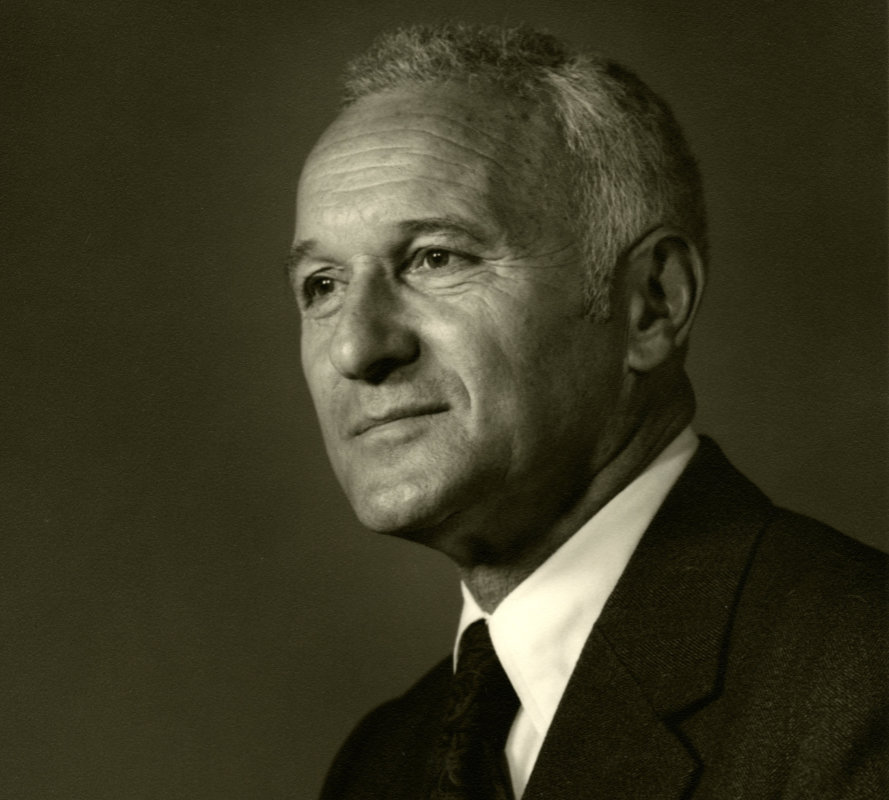
Directed MKUltra under Dulles's authorization, conducting mind control experiments from 1953.
Co-documented with Allen Dulles in 1 published dossier, including “Operation Mockingbird”.