International Consortium of Investigative Journalists
The International Consortium of Investigative Journalists (ICIJ) is a nonprofit global network of investigative reporters established in 1997, based in Washington, D.C. It coordinates cross-border collaborative investigations and is best known for publishing massive data leaks including the Panama Papers (2016) and Paradise Papers (2017), which exposed offshore financial structures used by political leaders, corpora… The ICIJ appears in Archive dossiers on the Panama Papers and Paradise Papers because it served as the central coordinating organization that received, analyzed, and published these unprecedented financial document leaks.
The International Consortium of Investigative Journalists (ICIJ) is a nonprofit global network of investigative reporters established in 1997, based in Washington, D.C. It coordinates cross-border collaborative investigations and is best known for publishing massive data leaks including the Panama Papers (2016) and Paradise Papers (2017), which exposed offshore financial structures used by political leaders, corporations, and wealthy individuals worldwide.

- Source
- Wikimedia Commons
- Type
- Official Seal / Insignia
- License
- CC BY-SA 4.0
- Photographer
- ICIJ
- Year
- 2022
Photo Information ▾
ICIJ's new logo after rebranding in 2022
View original ↗- Legal name
- The Center for Public Integrity d/b/a International Consortium of Investigative Journalists
- Founded
- 1997
- Headquarters
- Washington, D.C., United States
- Type
- Nonprofit journalism organization, 501(c)(3)
- Founding director
- Charles Lewis
- Current director
- Mariel Fiori (as of 2024)
- Member organizations
- Over 280 investigative journalists in more than 100 countries (2024)
- Notable investigations
- Panama Papers (2016), Paradise Papers (2017), FinCEN Files (2020), Pandora Papers (2021)
- Awards
- Pulitzer Prize for Explanatory Reporting (2017, Panama Papers)
- Funding sources
- Foundations including Open Society Foundations, Ford Foundation, Adessium Foundation
- Primary focus
- Cross-border financial crime, corruption, tax avoidance, corporate accountability
The ICIJ appears in Archive dossiers on the Panama Papers and Paradise Papers because it served as the central coordinating organization that received, analyzed, and published these unprecedented financial document leaks. The consortium managed collaborations involving hundreds of journalists across dozens of countries, transforming raw leaked data into public investigations that triggered government inquiries, policy reforms, and criminal prosecutions. The ICIJ's role in making offshore financial systems visible to public scrutiny—and the methods it used to verify and publish sensitive data—makes it a key institutional actor in contemporary transparency investigations documented by The Archive.
# International Consortium of Investigative Journalists
Identity
The International Consortium of Investigative Journalists (ICIJ) is a Washington, D.C.-based nonprofit journalism network founded in 1997 that coordinates collaborative cross-border investigations among reporters worldwide. Operating initially as a project of the Center for Public Integrity, the ICIJ became an independent organization in 2017. It consists of more than 280 investigative journalists and media organizations spanning over 100 countries. The consortium specializes in investigations requiring international coordination, particularly exposing hidden financial structures, corruption, and corporate misconduct that cross national boundaries.
The ICIJ does not employ traditional staff reporters who write stories; instead, it functions as a coordinating hub that obtains confidential documents, develops secure data-sharing infrastructure, provides research support, and facilitates collaboration among partner journalists who publish findings through their own news organizations. This decentralized model allows investigations to appear simultaneously in dozens of countries and languages, amplifying impact and making suppression difficult.
The organization gained global prominence in 2016 when it coordinated publication of the Panama Papers, an investigation based on 11.5 million leaked documents from Panamanian law firm Mossack Fonseca. This was followed by the Paradise Papers (2017), FinCEN Files (2020), Pandora Papers (2021), and other major investigations that collectively represent the largest coordinated journalism projects in history.
Origins & Charter
Charles Lewis, a former CBS 60 Minutes producer, founded the ICIJ in 1997 as a project within the Center for Public Integrity, itself a nonprofit investigative journalism organization Lewis had established in 1989. The consortium emerged from recognition that financial crime, corruption, and corporate misconduct increasingly operated across borders while journalism remained largely confined within national boundaries. Lewis envisioned a network that could pool resources and expertise to investigate stories no single newsroom could tackle alone.
The ICIJ initially focused on cross-border investigations of tobacco smuggling, private military contractors, and international organized crime. Early projects included investigations into asbestos industry practices and the global water crisis. These collaborations involved dozens of journalists working simultaneously across multiple countries, establishing the collaborative methodology that would later define the consortium's major leaks.
Funding came primarily from foundations supporting investigative journalism and transparency, including the Open Society Foundations, Ford Foundation, and various journalism-focused donors. The ICIJ has maintained its nonprofit status, accepting no government funding and publishing all investigations free of charge. In 2017, following the success of the Panama Papers, the consortium became legally and financially independent from the Center for Public Integrity, though both organizations continue to share institutional ties.
The organization's stated mission centers on exposing abuses of power and promoting transparency and accountability, particularly in areas where national governments face jurisdictional limitations. It emphasizes collaboration over competition, encouraging participating journalists to share credit and findings rather than pursuing exclusive scoops.
Structure & Leadership
The ICIJ operates with a small core staff in Washington, D.C., supplemented by a global network of member journalists. Charles Lewis served as founding director until 2005. Gerard Ryle, a former investigative reporter with The Sydney Morning Herald and The Age in Australia, became director in 2011 and led the organization through its expansion during the Panama Papers and Paradise Papers. Mariel Fiori, previously deputy director, succeeded Ryle as director in 2024.
The core staff includes data journalists, technologists, research specialists, and project coordinators who manage collaboration platforms, verify documents, and provide technical support to partner journalists. The ICIJ developed proprietary software systems to enable secure sharing of massive leaked datasets among hundreds of reporters across different countries and time zones.
Member journalists are not employees but rather partners affiliated with established news organizations including The Guardian, BBC, Le Monde, Süddeutsche Zeitung, The Indian Express, and many others. The ICIJ selects partners based on journalistic credentials, investigative capacity, and editorial independence. Participating outlets retain editorial control over their own stories while coordinating publication timing and sharing research findings.
Governance includes a board of directors that oversees strategy and financial oversight. The organization maintains editorial independence from its funders through institutional firewalls standard in nonprofit journalism. Critics have scrutinized funding sources, particularly support from Open Society Foundations, though the ICIJ publishes donor lists and maintains that funders exercise no editorial control.
Technical infrastructure development has been central to the ICIJ's operations. The organization built secure platforms enabling journalists to search leaked documents, tag findings, and communicate without exposing sources or compromising investigations. This infrastructure became essential as leak sizes grew exponentially from gigabytes to terabytes.
Major Activities & Operations
The ICIJ's operational model involves receiving large confidential datasets, verifying authenticity, organizing collaborative analysis among partner journalists, and coordinating simultaneous global publication. Major investigations include:
Offshore Leaks (2013): The consortium's first major data leak involved 2.5 million files from offshore service providers in the British Virgin Islands, Cook Islands, and Singapore. Published in April 2013 with 86 journalists from 46 countries, this investigation exposed offshore accounts held by individuals in more than 170 countries and established the ICIJ's methodology for handling massive leaks.
Luxembourg Leaks (2014): In November 2014, the ICIJ published secret tax rulings showing how Luxembourg provided favorable tax treatment to hundreds of multinational corporations, including Amazon, Apple, and IKEA. The investigation, based on leaked documents obtained by French journalist Édouard Perrin, involved 80 journalists from 26 countries and prompted European Commission investigations.
Swiss Leaks (2015): This February 2015 investigation, based on data from HSBC's Swiss private banking division leaked by whistleblower Hervé Falciani, revealed how the bank profited from concealing assets for criminals, tax evaders, and corrupt officials. The investigation involved 140 journalists from 45 countries and led to government inquiries in multiple jurisdictions.
Panama Papers (2016): The ICIJ's largest and most impactful investigation involved 11.5 million documents from Panamanian law firm Mossack Fonseca, leaked by an anonymous source to German newspaper Süddeutsche Zeitung, which shared the data with ICIJ. Published in April 2016 after more than a year of analysis by 376 journalists from 109 media organizations in 76 countries, the investigation exposed offshore holdings of political leaders, celebrities, and criminals. The Panama Papers won the 2017 Pulitzer Prize for Explanatory Reporting and triggered resignations, criminal investigations, and policy reforms worldwide.
Paradise Papers (2017): Published in November 2017, this investigation involved 13.4 million documents primarily from offshore services provider Appleby and corporate registries in 19 tax jurisdictions. The leak revealed offshore investments by multinational corporations and public figures, including Queen Elizabeth II's private estate, U.S. Commerce Secretary Wilbur Ross, and technology companies including Apple and Nike. The investigation involved 381 journalists from 67 countries.
FinCEN Files (2020): Published in September 2020, this investigation analyzed more than 2,100 suspicious activity reports filed by banks with the U.S. Treasury Department's Financial Crimes Enforcement Network. The leaked documents revealed how major banks moved trillions of dollars in suspicious transactions despite concerns about money laundering and criminal activity. The investigation involved more than 400 journalists from 88 countries.
Pandora Papers (2021): Released in October 2021, this investigation examined 11.9 million documents from 14 offshore services firms, exposing financial holdings of 35 current and former world leaders and more than 300 public officials. The investigation involved more than 600 journalists from 117 countries and became the ICIJ's largest collaboration.
Beyond these major leaks, the ICIJ has coordinated investigations into medical device safety, tobacco industry practices, private military contractors, and extractive industries. The organization also developed public databases allowing citizens to search selected portions of leaked documents, extending investigative capacity beyond professional journalists.
Historical Importance
The ICIJ represents a significant evolution in investigative journalism, demonstrating that collaborative networks can tackle stories beyond the capacity of individual newsrooms. Its investigations fundamentally altered public understanding of offshore finance, tax avoidance, and the infrastructure enabling global wealth concealment.
Before the ICIJ's major leaks, offshore financial systems operated with substantial secrecy. While academics, tax justice advocates, and some journalists had documented offshore structures, the scale and specificity of leaked documents provided unprecedented empirical evidence. The Panama Papers alone identified more than 214,000 offshore entities connected to individuals in more than 200 countries and territories.
The consortium's work influenced policy and enforcement. Following the Panama Papers, governments recovered more than $1.2 billion in back taxes and penalties according to ICIJ tracking. Dozens of countries launched criminal investigations or legislative reforms. The European Union adopted stricter anti-money laundering directives. The United States enhanced corporate transparency requirements. International organizations including the OECD accelerated efforts to combat tax avoidance.
The investigations also demonstrated vulnerabilities in global financial regulation. Documents revealed that major banks, law firms, and accounting companies facilitated offshore structures despite knowing or suspecting clients' involvement in corruption or crime. Professional service providers created layers of corporate entities obscuring beneficial ownership, making it difficult for law enforcement to trace assets.
From a journalism perspective, the ICIJ pioneered methods for managing unprecedented data volumes and international collaboration. The Panama Papers required developing software to handle 2.6 terabytes of data, coordinate hundreds of reporters across time zones, and maintain security against surveillance. The consortium's open-source tools and methodologies have been adopted by investigative newsrooms worldwide.
The ICIJ's model also raised questions about journalism's relationship to leaked data, source protection, and editorial decision-making. Unlike WikiLeaks, which published raw documents in bulk, the ICIJ employed traditional journalistic verification and selective publication, withholding material that posed privacy concerns for individuals not involved in wrongdoing. This approach generated debate about transparency, editorial gatekeeping, and who decides what the public should know.
Documented Controversies
Ongoing Historical Debate Critics have questioned the ICIJ's funding sources, particularly support from Open Society Foundations, founded by financier George Soros. Some commentators have alleged that foundation funding creates editorial bias, though the ICIJ maintains institutional firewalls between funders and editorial decisions. The consortium publishes donor lists and states that funders exercise no control over investigation targets or findings. Academic analyses of the Panama Papers coverage found no systematic bias favoring or disfavoring particular political ideologies, though story selection naturally reflects journalistic judgment about public interest.
Credible Allegation Journalists excluded from ICIJ collaborations have criticized the consortium's partner selection process as opaque and potentially favoring established Western media organizations. The ICIJ responds that partner selection requires assessing journalistic capacity, editorial independence, and ability to handle confidential material securely, but some critics argue this creates barriers for journalists in developing countries or independent media outlets.
Disputed Claim Individuals and organizations named in ICIJ investigations have challenged the accuracy and fairness of reporting. Following the Panama Papers, Mossack Fonseca disputed characterizations of its services, arguing that offshore companies serve many legitimate purposes and that the firm conducted due diligence on clients. The law firm filed criminal complaints in Panama against the ICIJ and German newspaper Süddeutsche Zeitung, alleging violations of privacy and attorney-client privilege. These complaints did not result in prosecutions. Legal scholars debate whether leaked attorney-client communications should be published, even when revealing potential wrongdoing.
Established Fact The ICIJ's decision to withhold full datasets from public release has generated criticism from transparency advocates. While the consortium published searchable databases containing information about offshore entities and individuals, it did not release complete document sets, citing privacy concerns and risks to individuals uninvolved in wrongdoing. WikiLeaks founder Julian Assange criticized this approach as selective gatekeeping, arguing that full transparency would allow independent verification. The ICIJ counters that traditional journalistic vetting protects innocent parties while exposing genuine wrongdoing.
Official Record Several governments investigated whether journalists involved in ICIJ projects violated laws by possessing leaked confidential documents. In Malta, authorities questioned journalists about the Panama Papers following complaints from individuals named in reports. No journalists were prosecuted for the investigations themselves, though the question of whether receiving leaked documents constitutes a crime remains legally contested in various jurisdictions.
Confirmed by Court Maltese investigative journalist Daphne Caruana Galizia, who used Panama Papers data in reporting on government corruption in Malta, was assassinated in October 2017 by a car bomb. Three men were convicted of executing the killing, and businessman Yorgen Fenech was charged with commissioning the murder. While the assassination was not directly targeting the ICIJ, it highlighted physical risks faced by journalists exposing corruption using leaked financial data.
Disputed Claim Some individuals named in the Paradise Papers disputed the characterization of their offshore holdings as improper or suspicious. Queen Elizabeth II's private estate, the Duchy of Lancaster, invested in offshore funds, which the Paradise Papers reported. Representatives stated the investments were fully lawful and properly disclosed. Similar defenses were offered by other individuals and companies, illustrating the distinction between legal tax optimization and illegal evasion—a distinction that remained contested in public interpretation of the leaks.
Investigations & Official Findings
Government Finding Following the Panama Papers, more than 80 countries launched investigations or audits based on the leaked documents. According to tracking by the ICIJ and partner media organizations, these resulted in over $1.2 billion recovered in fines, back taxes, and penalties by 2020. Pakistan's Supreme Court disqualified Prime Minister Nawaz Sharif from office in 2017 after Panama Papers revelations about his family's offshore holdings. Iceland's Prime Minister Sigmundur Davíð Gunnlaugsson resigned in April 2016 after the Panama Papers revealed undisclosed offshore interests.
Parliamentary or Congressional Finding The European Parliament established a special committee to investigate money laundering, tax avoidance, and tax evasion following the Panama Papers. The committee's 2017 report called for stronger regulations on beneficial ownership transparency, improved cross-border tax enforcement, and enhanced due diligence requirements for financial institutions. The European Commission subsequently proposed directives implementing some recommendations.
Official Record The United States Treasury Department's Financial Crimes Enforcement Network (FinCEN) investigated the leak of suspicious activity reports that formed the basis of the FinCEN Files investigation. The leak itself was a federal crime, and authorities sought to identify the source. As of 2024, no arrest has been publicly announced. The investigation raised questions about whistleblower protections when government employees leak classified financial surveillance data to journalists.
Government Finding German tax authorities conducted audits and criminal investigations based on leads from multiple ICIJ investigations. In 2021, German prosecutors raided Deutsche Bank offices as part of investigations into the bank's role in suspected money laundering revealed by Paradise Papers and subsequent leaks. The bank has faced ongoing regulatory scrutiny for compliance failures.
Official Record The Australian Taxation Office established a taskforce following the Panama Papers that conducted audits on more than 800 taxpayers and associated entities, resulting in more than $100 million in liabilities raised by 2018 according to government reports. Similar taskforces were established in the United Kingdom, France, India, and other countries.
Inspector General Finding The U.S. Treasury Inspector General for Tax Administration reviewed IRS responses to information from the Panama Papers. While specific findings remain partially classified, public portions acknowledged the usefulness of leaked data for identifying potential tax evasion while noting legal limitations on using unlawfully obtained foreign documents as evidence in criminal cases.
Confirmed by Court Several individuals exposed in ICIJ investigations faced criminal convictions. Following Swiss Leaks, multiple HSBC clients were convicted of tax evasion in various countries. The bank itself faced criminal prosecution in France and agreed to pay €300 million to avoid trial in 2017. Following the Panama Papers, a Brazilian construction executive was sentenced to prison for corruption offenses revealed by the documents.
Established Fact Academic researchers extensively analyzed ICIJ investigations as empirical data sources. Economists Gabriel Zucman and others published peer-reviewed studies using Panama Papers and Paradise Papers data to estimate global wealth held in tax havens. These studies influenced policy debates about international tax reform and beneficial ownership transparency.
Legacy & Historical Debate
The ICIJ's investigations permanently altered the landscape of financial transparency and investigative journalism. Before the Panama Papers, offshore finance operated with substantial opacity. After, beneficial ownership transparency became a mainstream policy demand. The United States enacted the Corporate Transparency Act in 2021, requiring disclosure of beneficial owners for corporations formed in the country—a direct response to revelations that U.S. jurisdictions facilitated anonymous shell companies.
The consortium demonstrated that collaborative journalism could match or exceed the investigative capacity of individual newsrooms, even elite ones. The model influenced formation of similar collaborative networks focusing on specific topics or regions. Newsrooms that traditionally competed now regularly cooperate on cross-border stories.
Historians and media scholars debate the ICIJ's role in the evolution of transparency. Supporters argue the consortium exemplifies accountability journalism, using technology to expose corruption that governments failed to police. Critics contend the model concentrates power in editors who control access to leaked data, potentially making journalism less transparent even as it exposes others' secrets.
The question of whether offshore finance is inherently problematic or merely a tool that can be used legally or illegally remains contested. ICIJ investigations documented numerous cases of criminality and corruption, but also exposed many legal uses of offshore structures. Public interpretation often conflated the two, leading to debate about whether the investigations fairly distinguished between tax avoidance (legal) and tax evasion (illegal).
The physical and legal risks facing journalists who participate in such investigations became starkly evident with Daphne Caruana Galizia's assassination. Her death underscored that exposing corruption using leaked financial data can be lethal in jurisdictions where rule of law is weak. The ICIJ subsequently enhanced security protocols for partners working in high-risk environments.
Legal frameworks governing leaked documents remain unsettled. Courts in various jurisdictions face questions about whether journalists possess immunity when publishing leaked material, whether sources are protected as whistleblowers, and whether individuals exposed in leaks can sue for privacy violations. Outcomes vary by jurisdiction, creating uneven legal environments for investigative journalism.
The ICIJ's continued viability depends on maintaining access to major leaks, which are by nature unpredictable, and sustaining foundation funding in a challenging environment for nonprofit journalism. As of 2024, the organization continues producing investigations and expanding its global membership, though the pace of transformative mega-leaks has slowed since the Pandora Papers.
Continue Investigating
The International Consortium of Investigative Journalists sits at the center of The Archive's investigations into global financial transparency, particularly the Panama Papers and Paradise Papers dossiers. These investigations exposed networks involving Mossack Fonseca and Appleby, revealed offshore structures connected to political figures including Nawaz Sharif, Sigmundur Davíð Gunnlaugsson, and Vladimir Putin / Sergei Roldugin, and documented holdings by institutions including Queen Elizabeth II / Duchy of Lancaster. Corporations named in the investigations include HSBC, Deutsche Bank, Apple Inc., Nike Inc., and Glencore, while individuals such as Wilbur Ross appeared in Paradise Papers revelations. The assassination of Daphne Caruana Galizia, who reported on Panama Papers findings, illustrates the deadly risks of investigating corruption. Economist Gabriel Zucman has used ICIJ data in academic research quantifying offshore wealth.
The consortium's work intersects with broader Archive investigations into financial crime, transparency, and institutional accountability. The BCCI Scandal and 1MDB Scandal represent earlier cases of international financial misconduct that lacked the documentary evidence ICIJ investigations provided. The LIBOR Rate-Fixing Scandal and Wirecard Collapse demonstrate other forms of financial system manipulation. Marc Rich, the commodities trader pardoned by President Clinton, exemplified the use of offshore structures for tax avoidance before such systems received comprehensive public scrutiny.
Intelligence and surveillance topics connect through questions about government monitoring of financial flows and journalist communications. The Snowden and NSA Mass Surveillance and Pegasus Spyware dossiers document surveillance capabilities that could be directed at investigative journalists. The Five Eyes and ECHELON intelligence-sharing networks illustrate multinational information coordination that parallels the ICIJ's journalistic collaboration model.
The ICIJ's methodology and institutional influence invite comparison to other collaborative investigative projects and transparency debates documented in The Archive, including questions about gatekeeping, source protection, and the balance between privacy rights and public interest in exposure of misconduct.
- 1997Charles Lewis founds the International Consortium of Investigative Journalists as a project of the Center for Public Integrity
- 2011Gerard Ryle becomes director of ICIJ, leading expansion of collaborative model
- 2013ICIJ publishes Offshore Leaks, first major data leak involving 2.5 million files and 86 journalists from 46 countries
- 2014Luxembourg Leaks investigation reveals secret tax rulings for hundreds of multinational corporations
- 2015Swiss Leaks investigation exposes HSBC's role in concealing assets for tax evaders and criminals
- 2016Panama Papers published in April, involving 11.5 million documents from Mossack Fonseca analyzed by 376 journalists in 76 countries
- 2016Iceland's Prime Minister Sigmundur Davíð Gunnlaugsson resigns following Panama Papers revelations
- 2017ICIJ becomes legally and financially independent from Center for Public Integrity
- 2017ICIJ wins Pulitzer Prize for Explanatory Reporting for Panama Papers investigation
- 2017Paradise Papers published in November, involving 13.4 million documents primarily from Appleby and corporate registries
- 2017Pakistan's Supreme Court disqualifies Prime Minister Nawaz Sharif following Panama Papers revelations
- 2017Maltese journalist Daphne Caruana Galizia, who reported on Panama Papers, assassinated by car bomb in October
- 2020FinCEN Files investigation published, analyzing leaked U.S. Treasury suspicious activity reports involving major banks
- 2021Pandora Papers released, examining 11.9 million documents from 14 offshore services firms with more than 600 journalists participating
- 2021United States enacts Corporate Transparency Act requiring beneficial ownership disclosure
- 2024Mariel Fiori becomes director of ICIJ, succeeding Gerard Ryle
- S1Panama Papers: The Power PlayersInternational Consortium of Investigative Journalists · primary
- S2The Panama Papers: Breaking the Story of How the Rich & Powerful Hide Their MoneyPulitzer Prizes · primary
- S3About the International Consortium of Investigative JournalistsInternational Consortium of Investigative Journalists · primary
- S4Paradise Papers: Secrets of the Global EliteInternational Consortium of Investigative Journalists · primary
- S5Malta Car Bomb Kills Journalist Who Investigated Panama PapersThe New York Times · mainstream
- S6Who Funds ICIJ?International Consortium of Investigative Journalists · primary
- S7Paradise Papers: Apple's Billions Moved to Jersey Tax HavenBBC News · mainstream
- S8WikiLeaks: ICIJ #PanamaPapers DatabaseReuters · mainstream
- S9European Parliament Resolution on Panama PapersEuropean Parliament · primary
- S10Swiss Leaks: HSBC Helped Clients Dodge TaxesInternational Consortium of Investigative Journalists · investigative
If you're learning about this topic for the first time, these are the best places to continue — documented evidence and historical relationships are the guide.
International Consortium of Investigative Journalists is documented in the evidence record of this published dossier.
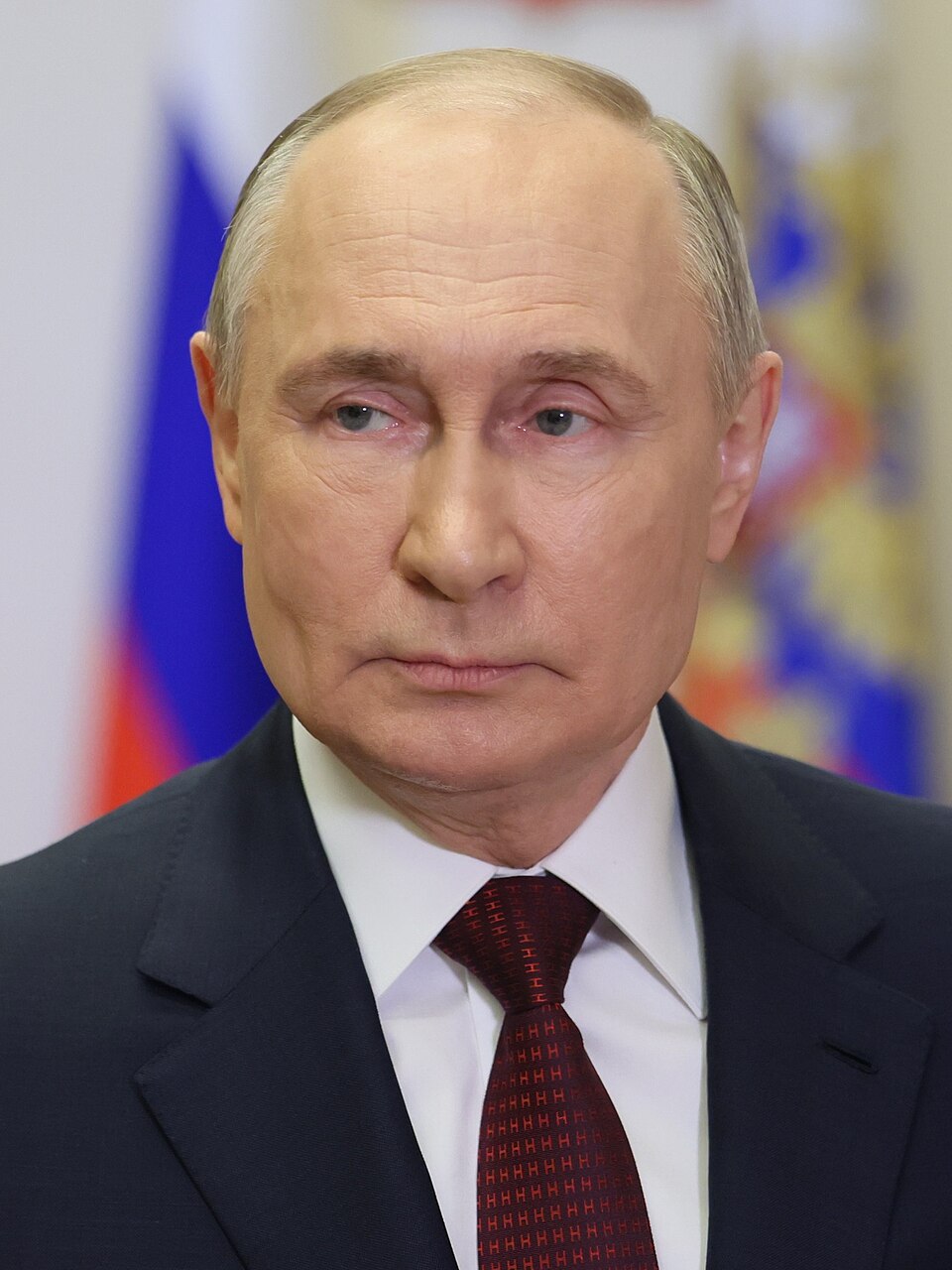
Russian president and cellist whose alleged offshore network was documented in Panama Papers.
Bank whose Swiss private banking division was exposed in ICIJ's 2015 Swiss Leaks investigation.