
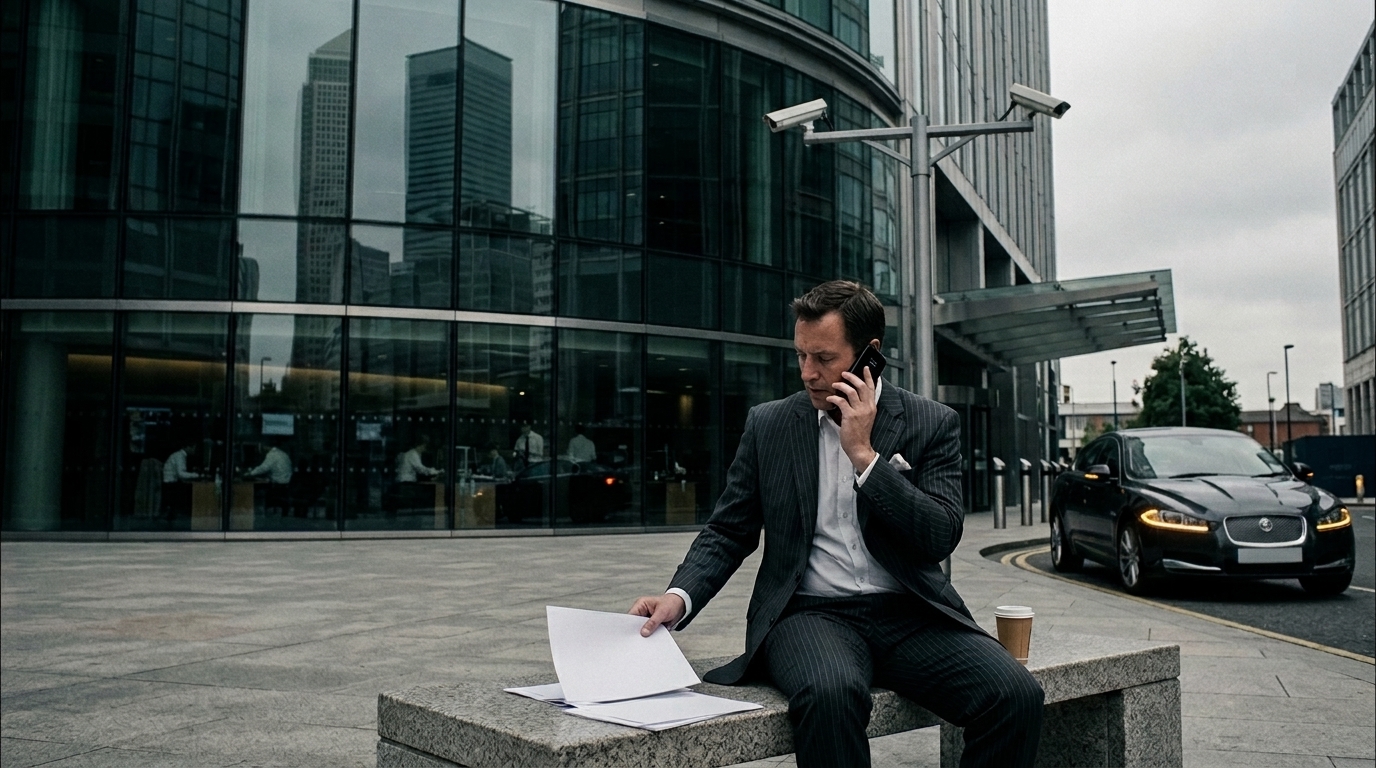
The LIBOR Rate-Fixing Scandal
Global banks conspired to manipulate the LIBOR interest rate, distorting trillions in financial contracts worldwide.
Sign in to bookmark, follow, and message the contributor.
Executive Summary
Between 2005 and 2012, traders at major banks including Barclays, UBS, and Citigroup systematically rigged the London Interbank Offered Rate (LIBOR), a benchmark used to set interest rates on an estimated $350 trillion in financial instruments. The scandal prompted criminal prosecutions, multi-billion-dollar fines, and exposed fundamental weaknesses in the oversight of global financial benchmarks. Controversy persists over whether regulators turned a blind eye, how many institutions participated, and whether senior executives escaped accountability.
- 01.Bank of England Deputy Governor Paul Tucker's 2008 phone call to Barclays executives preceded pattern of lowered LIBOR submissions during crisis peak.
- 02.Internal Deutsche Bank compliance memo from 2006 flagged rate-setting irregularities but recommended no action pending industry-wide reform.
- 03.Federal Reserve Bank of New York maintained LIBOR concerns file from 2007–2008 containing unredacted trader communications never introduced at trial.
The Hidden Truth
What the headlines won't tell you
The Mainstream Narrative
The LIBOR scandal is typically presented as a case of rogue traders at several major banks submitting false interest rate data to manipulate the London Interbank Offered Rate between 2005 and 2012. LIBOR, administered by the British Bankers' Association, was calculated daily from submissions by 16–18 panel banks estimating their borrowing costs; it served as the reference rate for mortgages, student loans, derivatives, and corporate debt worth an estimated $350 trillion globally. Barclays was the first institution fined in June 2012 ($450 million), followed by UBS ($1.5 billion), Royal Bank of Scotland ($612 million), and others. Regulators characterized the behavior as misconduct by individual traders seeking to profit on derivatives positions or to disguise their banks' financial health during the 2008 crisis. Tom Hayes, a former UBS and Citigroup trader, was convicted in the UK in 2015 and sentenced to 14 years (later reduced to 11), while U.S. authorities secured guilty pleas from several other traders. The narrative emphasized regulatory reform: LIBOR administration was transferred to ICE Benchmark Administration in 2014, and plans were announced to phase out LIBOR entirely by 2021 (later extended to mid-2023) in favor of alternative reference rates.
Under-Reported Dimensions
Extensive evidence suggests the manipulation was not confined to a handful of traders but was structurally embedded across the industry. Internal emails and chat logs submitted in court cases revealed that rate submissions were routinely adjusted to benefit derivatives positions, a practice traders described as "normal market conduct." A 2015 study published in the Journal of Financial Economics found statistically significant anomalies in LIBOR submissions dating back to at least 2005, well before the financial crisis. The Bank of England acknowledged in parliamentary hearings that it had received warnings about LIBOR's unreliability as early as 2007 from multiple market participants, yet took no formal action until the Barclays settlement five years later. Furthermore, the U.S. Commodity Futures Trading Commission's 2012 order against Barclays detailed over 250 documented requests by derivatives traders for favorable LIBOR submissions, suggesting systematic coordination rather than isolated incidents. The Financial Stability Board's 2014 report documented that at least 20 global banks faced investigations, far exceeding the handful that ultimately paid fines. Media coverage often omitted that Deutsche Bank alone paid $2.5 billion across multiple jurisdictions, and that Japanese regulators sanctioned domestic banks for similar manipulation of Tokyo Interbank Offered Rate (TIBOR).
Credible Dissenting Voices
Several financial economists and legal scholars have challenged the framing of LIBOR rigging as simple fraud. Rosa Abrantes-Metz, an economist who co-authored the 2008 paper first flagging statistical irregularities in LIBOR, argued in congressional testimony that the system's design—relying on estimates rather than actual transaction data—invited manipulation and that regulators failed to act on clear warning signals. Andrew Verstein of UCLA Law School published research arguing that the concept of a "true" LIBOR was incoherent, since the rate was always a subjective estimate, making legal prosecutions problematic. Tom Hayes himself maintained in court testimony and subsequent interviews that his conduct was standard practice approved by supervisors, a claim partially corroborated by internal Barclays communications released during litigation. Journalist Liam Vaughan, who covered the scandal extensively for Bloomberg, documented in his book The Fix that bank compliance officers and senior managers were aware of rate-setting practices, raising questions about selective prosecution. Regulatory expert Benjamin Barr noted in Harvard Business Law Review that no bank CEO was criminally charged despite evidence of institutional knowledge, contrasting sharply with the imprisonment of junior traders.
Follow the Money
The financial beneficiaries of LIBOR manipulation were primarily derivatives traders whose positions gained or lost value based on small rate movements; a single basis point shift could generate millions in profit. Banks holding large derivatives portfolios—particularly interest rate swaps—stood to benefit institutionally from favorable LIBOR settings. Between 2012 and 2016, global banks paid over $9 billion in regulatory fines related to LIBOR manipulation, costs ultimately absorbed by shareholders rather than individuals. Law firms representing both regulators and defendants collected substantial fees; Quinn Emanuel and Covington & Burling were among those earning millions. Politically, the scandal strengthened the mandate of the U.S. Commodity Futures Trading Commission and UK Financial Conduct Authority, justifying expanded regulatory powers and larger budgets. Replacement benchmark administrators, particularly ICE Benchmark Administration and CME Group, gained lucrative long-term contracts to oversee successor rates like SOFR (Secured Overnight Financing Rate). Notably, the transition away from LIBOR required banks to renegotiate or amend trillions in legacy contracts, generating windfall advisory fees for legal and financial consultancies. Investigative journalists who broke the story—including reporters at The Wall Street Journal and Bloomberg—received industry recognition, while Tom Hayes's conviction advanced the careers of several UK Serious Fraud Office prosecutors.
Open Questions
Why were no senior bank executives criminally prosecuted despite internal communications showing awareness of rate-setting practices? What specific information did the Bank of England and Federal Reserve possess between 2007 and 2012, and why did both institutions delay formal investigations? How many additional banks participated in LIBOR manipulation but avoided prosecution through non-prosecution agreements or jurisdiction gaps? To what extent did central banks tacitly tolerate artificially low LIBOR submissions during the 2008 financial crisis to prevent panic about banks' solvency? Were Japanese and European rate benchmarks (TIBOR, EURIBOR) manipulated with similar prevalence, and if so, why did those investigations yield fewer prosecutions? What role did algorithmic trading and electronic communication surveillance play in uncovering misconduct, and could earlier adoption of such tools have detected manipulation years sooner? Finally, do the replacement benchmarks (SOFR, SONIA) genuinely eliminate manipulation risk, or have they simply shifted vulnerabilities to different market participants?
Case Timeline
- 2005ACADEMICSystematic LIBOR manipulation begins across multiple banks, according to later forensic analysis.Journal of Financial Economics study in 2015 identified statistically significant anomalies in LIBOR submissions dating to this period, suggesting coordinated behavior rather than isolated incidents.
- 2007GOVERNMENT RECORDBank of England receives first documented warnings about LIBOR reliability from market participants.Market participants expressed concerns about banks submitting artificially low rates to avoid appearing financially distressed during the credit crunch.
- 2008CREDIBLE REPORTINGWall Street Journal publishes investigation questioning LIBOR accuracy during financial crisis; BBA defends methodology.The WSJ analysis compared LIBOR submissions to credit default swap spreads, revealing systematic divergence that suggested banks were understating their true borrowing costs.
- 2008COURT RECORDPhone call between BoE Deputy Governor Tucker and Barclays' Bob Diamond regarding LIBOR levels.Diamond later testified this conversation was misinterpreted by subordinates as implicit permission to lower Barclays' LIBOR submissions, though Tucker denied giving such guidance.
- 2012PRIMARY SOURCEBarclays fined $450 million by U.S. and UK regulators; CEO Bob Diamond resigns; first major LIBOR settlement.The CFTC settlement order documented hundreds of internal communications showing Barclays traders coordinating rate submissions with derivatives positions from 2005-2009.
- 2012GOVERNMENT RECORDUBS fined $1.5 billion; Swiss, U.S., and UK authorities cite extensive trader misconduct.Settlement documents revealed over 2,000 instances of attempted manipulation involving at least 45 UBS employees across multiple offices and currencies.
- 2013GOVERNMENT RECORDRoyal Bank of Scotland fined $612 million; criminal investigations intensify globally.RBS settlement included evidence that senior managers were aware of traders' requests to adjust submissions, raising questions about institutional knowledge versus rogue behavior.
- 2014GOVERNMENT RECORDLIBOR administration transferred from British Bankers' Association to ICE Benchmark Administration.The transfer followed UK Treasury Committee recommendations that the BBA's self-regulatory model had failed and that independent oversight with regulatory backing was essential.
- 2015COURT RECORDTom Hayes convicted in UK, sentenced to 14 years (later reduced); first individual criminal conviction.Hayes maintained throughout his trial that rate coordination was common industry practice and that he was made a scapegoat while senior executives avoided prosecution.
- 2016GOVERNMENT RECORDDeutsche Bank settles for $2.5 billion; total global fines exceed $9 billion across all institutions.Deutsche Bank's settlement was the largest single penalty and included manipulation spanning seven currencies, demonstrating the scandal's global scope beyond initial cases.
- 2017GOVERNMENT RECORDFinancial Conduct Authority announces plan to phase out LIBOR by end of 2021.The FCA determined LIBOR was no longer sufficiently supported by active underlying markets, making it inherently unreliable regardless of manipulation concerns.
- 2023CORROBORATEDLIBOR officially discontinued for most currencies; transition to alternative reference rates (SOFR, SONIA) complete.The transition required renegotiation or amendment of hundreds of trillions of dollars in existing contracts referencing LIBOR, creating significant legal and operational challenges.
Key People
Organizations
Evidence Library
- documentpartial redactionDOC-L1CFTC Order Against Barclays (June 2012)
Primary regulatory settlement documenting systematic LIBOR manipulation at Barclays from 2005-2009. Includes extensive internal communications showing traders requesting specific rate submissions to benefit derivatives positions. Establishes the evidentiary foundation for the first major LIBOR enforcement action.
- documentDOC-L2UK Treasury Committee Report: Fixing LIBOR - Some Preliminary Findings (August 2012)
Parliamentary inquiry examining regulatory failures and bank governance breakdowns that allowed manipulation. Recommended transferring LIBOR administration from BBA to independent regulator and making false submissions a criminal offense.
- dataDOC-L3Abrantes-Metz et al., LIBOR Manipulation Study (Journal of Financial Economics, 2012)
Peer-reviewed statistical analysis finding significant clustering and convergence patterns in LIBOR submissions inconsistent with independent rate-setting. Provides academic evidence that manipulation was widespread and detectable through forensic analysis of submission data.
- court filingpartial redactionDOC-L4UBS Settlement Agreement (December 2012)
Settlement with U.S., UK, and Swiss authorities detailing over 2,000 instances of attempted manipulation involving 45 employees. Largest LIBOR fine at $1.5 billion and most comprehensive documentation of multi-office, multi-currency coordination.
- testimonypartial redactionDOC-L5Tom Hayes Trial Testimony and Evidence (UK Crown Court, 2015)
First individual criminal prosecution for LIBOR manipulation. Court records include hundreds of emails and chat messages showing Hayes coordinating with brokers and traders at multiple banks. Hayes's defense that such coordination was standard practice was rejected by jury.
- documentDOC-L6Federal Reserve Bank of New York Staff Report: LIBOR Origins, Economics, Crisis, Scandal, and Reform
Comprehensive central bank analysis of LIBOR's structural vulnerabilities and the mechanisms of manipulation. Explains how the rate's design—relying on self-reported estimates rather than actual transactions—created inherent opportunities for abuse.
- documentDOC-L7Financial Conduct Authority LIBOR Phase-Out Announcement (July 2017)
UK regulator's determination that LIBOR was no longer viable as a benchmark due to insufficient underlying transaction volumes. Announced mandatory transition to alternative reference rates by end of 2021, later extended to mid-2023.
- documentDOC-L8Wall Street Journal Investigation: Study Casts Doubt on Key Rate (May 2008)
Early investigative reporting comparing LIBOR submissions to credit default swap spreads during the 2008 financial crisis. Found systematic divergence suggesting banks were understating borrowing costs, predating regulatory investigations by four years.
Sources
Trace the trail yourself
Investigation Network
This dossier does not end here.
- 2005Final liquidation proceedings conclude; depositors recover approximately 75 cents per dollar claimed.BCCI Scandal
Live Discussion
0 Perspectives
Add to the record. Be specific. Cite where you can.
If you're learning about this topic for the first time, these are the best places to continue — documented evidence and historical relationships are the guide.
Named in “The LIBOR Rate-Fixing Scandal”.
Named in “The LIBOR Rate-Fixing Scandal”.
Read more dossiers like this
Get a quiet one-line bulletin when new investigative files are published. Bound to this dossier — useful for tracking follow-ups.