
Black September Organization
Black September Organization was a Palestinian militant group that operated primarily from 1971 to 1974, emerging after the September 1970 Jordanian expulsion of Palestinian fedayeen forces. The organization became internationally known for high-profile terrorist attacks, most notably the 1972 Munich Olympics massacre of eleven Israeli athletes and coaches, which prompted Israel's targeted assassination campaign Ope… Black September Organization appears in The Archive because its operations triggered one of the most extensively documented covert retaliation campaigns of the 20th century.
Black September Organization was a Palestinian militant group that operated primarily from 1971 to 1974, emerging after the September 1970 Jordanian expulsion of Palestinian fedayeen forces. The organization became internationally known for high-profile terrorist attacks, most notably the 1972 Munich Olympics massacre of eleven Israeli athletes and coaches, which prompted Israel's targeted assassination campaign Operation Wrath of God.
- Full Name
- Black September Organization (Arabic: منظمة أيلول الأسود, Munaẓẓamat Aylūl al-Aswad)
- Type
- Palestinian militant/terrorist organization
- Years Active
- 1971–1974 (approximately)
- Named After
- September 1970 conflict between Palestinian fedayeen and Jordanian forces ("Black September")
- Primary Base
- Lebanon, with operations across Europe and Middle East
- Claimed Affiliation
- Initially presented as independent; later revealed to have Fatah connections
- Most Notorious Operation
- Munich Olympics massacre, September 5, 1972
- Estimated Membership
- Small core operational cells, estimated 50-100 active operatives
- Primary Targets
- Israeli officials, diplomats, and civilians; Jordanian government targets
- Dissolution
- Ceased major operations by 1974; exact dissolution date unclear
- Counter-Response
- Israeli Operation Wrath of God targeted killings (1972-1974)
Black September Organization appears in The Archive because its operations triggered one of the most extensively documented covert retaliation campaigns of the 20th century. The group's 1972 Munich Olympics attack directly prompted Israel's multi-year Operation Wrath of God, involving targeted killings across Europe and the Middle East. Archive investigations into Wrath of God require understanding Black September's structure, leadership, and operations to assess the intelligence basis for Israeli targeting decisions, the accuracy of attribution claims, and cases of mistaken identity such as the Ahmed Bouchiki killing. The organization represents a pivotal case study in the cycle of terrorism and state-sponsored assassination that shaped modern counterterrorism doctrine and international legal debates over extrajudicial killing.
# Black September Organization
Identity
The Black September Organization (BSO) was a Palestinian militant group that conducted terrorist operations between 1971 and approximately 1974. Named after the September 1970 conflict in Jordan—when King Hussein's forces expelled Palestinian fedayeen organizations from the kingdom—the group publicly presented itself as a radical splinter faction seeking revenge against Jordan and Israel. The organization's operational profile differed significantly from other Palestinian groups of the era: rather than focusing on cross-border raids into Israel, Black September specialized in international terrorism, including assassinations, airplane hijackings, and hostage-taking operations targeting Israeli and Jordanian officials across Europe and the Middle East.
The group's structure and leadership remained deliberately opaque. While Black September initially claimed to operate independently of established Palestinian organizations, subsequent investigations by Israeli intelligence, Western security services, and academic researchers established substantial organizational and personnel overlaps with Fatah, the dominant faction within the Palestine Liberation Organization (PLO) led by Yasser Arafat. This relationship has been the subject of extensive historical analysis, with scholarly consensus now holding that Black September functioned as a deniable operations unit for Fatah leadership, though the precise degree of operational control exercised by Arafat and senior Fatah officials remains debated.
The organization gained international notoriety on September 5, 1972, when a BSO cell seized Israeli athletes at the Munich Olympics. The resulting standoff and failed rescue attempt left eleven Israeli athletes and coaches dead, along with one German police officer and five of the eight attackers. This operation transformed Black September from a relatively obscure militant group into a globally recognized name and prompted Israel's extensive retaliation campaign, Operation Wrath of God, which targeted BSO operatives and alleged leaders across Europe and the Middle East for assassination.
Origins & Charter
Black September emerged directly from the traumatic events of September 1970 in Jordan. Palestinian fedayeen organizations, including Fatah, had established a quasi-autonomous presence in Jordan throughout the late 1960s, conducting cross-border raids into Israel from Jordanian territory. Tensions between these groups and the Jordanian monarchy escalated when the Popular Front for the Liberation of Palestine hijacked multiple civilian aircraft to Dawson's Field in Jordan in September 1970, demanding prisoner releases. King Hussein responded with military force, deploying the Jordanian Army against Palestinian positions in what became known as Black September.
The Jordanian military campaign resulted in thousands of Palestinian casualties—estimates range from 3,000 to over 5,000 deaths—and the expulsion of PLO forces from Jordan to Lebanon and Syria. The defeat represented a catastrophic setback for Palestinian militant organizations and generated intense desire for revenge among surviving fighters. According to multiple historical accounts, Fatah leaders recognized both the need to retaliate against Jordan and the diplomatic liability of conducting such operations openly while the PLO sought international legitimacy.
The solution was Black September Organization, announced in late 1971. The group's first major operation occurred on November 28, 1971, when BSO operatives assassinated Jordanian Prime Minister Wasfi Tal in Cairo. The assassination, carried out in broad daylight outside the Sheraton Hotel, established Black September's operational pattern: carefully planned attacks against high-value targets in locations far from the Israeli-Palestinian conflict zone. According to Jordanian security assessments and later Israeli intelligence analyses, the assassination team included operatives previously associated with Fatah.
Black September never published a formal charter or political manifesto comparable to those issued by other Palestinian organizations. Instead, the group defined itself through operations and communiqués claiming responsibility for attacks. The stated objectives emphasized revenge against Jordan for Black September 1970, armed struggle against Israel, and opposition to Arab governments perceived as collaborating with Western powers. The lack of formal organizational documents and public leadership structures distinguished BSO from groups like Fatah, the Popular Front for the Liberation of Palestine, or the Democratic Front for the Liberation of Palestine, all of which maintained public political wings and published ideological statements.
Structure & Leadership
Black September's organizational structure remains one of the most analyzed aspects of Palestinian militant history, largely because of the group's operational security and the extent of later revelations about its Fatah connections. The organization operated through small, compartmentalized cells, typically consisting of three to eight operatives. Unlike larger Palestinian organizations with training camps, administrative structures, and public membership rolls, BSO maintained minimal permanent infrastructure, relying instead on temporary safe houses, forged documents, and covert financial transfers.
Leadership identification proved difficult for contemporary intelligence services. Ali Hassan Salameh, a senior Fatah intelligence officer and son of a prominent Palestinian military commander killed in 1948, emerged as the most frequently identified BSO operational leader. Israeli intelligence assessed Salameh as the principal planner of the Munich operation and targeted him accordingly. He survived multiple assassination attempts during Operation Wrath of God before being killed by a car bomb in Beirut on January 22, 1979, in an operation attributed to Israeli intelligence. Other identified BSO figures included Abu Daoud (Muhammad Daoud Oudeh), who later published memoirs acknowledging his role in planning Munich, and Abu Iyad (Salah Khalaf), a senior Fatah official whom Israeli intelligence considered a key BSO coordinator.
The relationship between Black September and Fatah leadership, particularly Yasser Arafat, has generated substantial historical debate. During BSO's active period, Arafat and other Fatah leaders publicly denied any connection, presenting Black September as a rogue element beyond their control. This deniability served crucial diplomatic purposes as the PLO sought recognition from European and Arab governments. However, subsequent investigations, memoirs, and declassified intelligence assessments established extensive linkages. Abu Daoud's memoir, published in 1999, explicitly stated that Black September was created and controlled by Fatah leadership, with Arafat's knowledge and approval. Abu Iyad, before his 1991 assassination, acknowledged Fatah's role in creating BSO as a deniable operational arm.
Academic analyses, including detailed studies by terrorism researchers and historians with access to Israeli, Jordanian, and Palestinian sources, generally conclude that Black September functioned as what intelligence services term a "false flag" or "cutout" organization—maintaining the appearance of independence while actually operating under Fatah direction. The operational security measures included separate training, compartmentalized communication, and plausible deniability for Fatah leadership. Operatives were typically drawn from Fatah's existing networks but operated under BSO identification for specific missions.
Major Activities & Operations
Black September conducted approximately 20-30 significant operations during its roughly three-year active period, though attribution of some attacks remains debated. The organization's tactical approach emphasized high-profile attacks with maximum media impact rather than sustained guerrilla warfare or mass-casualty bombings.
The assassination of Jordanian Prime Minister Wasfi Tal on November 28, 1971, marked BSO's international debut. Four operatives shot Tal outside Cairo's Sheraton Hotel during an Arab League meeting. According to contemporaneous reports and trial testimony, at least one attacker lapped the blood from Tal's wounds, a gruesome detail that received extensive media coverage. Egyptian authorities arrested the assassins, who identified themselves as Black September members seeking revenge for September 1970. The operatives received relatively light sentences and were released within years, raising questions about Egyptian complicity or political calculations.
On May 8, 1972, BSO hijacked Sabena Flight 571 from Brussels to Tel Aviv, taking approximately 100 passengers hostage at Lod Airport. The hijackers demanded the release of 317 Palestinian prisoners held by Israel. Israeli special forces, including Sayeret Matkal commandos, stormed the aircraft on May 9, killing two hijackers and capturing two others. One passenger died during the rescue. The operation demonstrated BSO's capability to conduct complex hijackings but also highlighted Israeli counterterrorism capabilities.
The Munich Olympics attack on September 5, 1972, represented Black September's most significant and devastating operation. Eight BSO operatives, led by Luttif Afif ("Issa"), infiltrated the Olympic Village in Munich, Germany, and seized Israeli athletes in their quarters. The attackers killed wrestling coach Moshe Weinberg and weightlifter Yossef Romano during the initial assault. Nine other Israeli athletes and coaches were taken hostage. BSO demanded the release of 234 Palestinians imprisoned in Israel and the German release of Andreas Baader and Ulrike Meinhof of the Red Army Faction.
Negotiations continued throughout the day, with German authorities attempting to stall while preparing a rescue operation. That evening, the hostages and captors were transported to Fürstenfeldbruck airfield, ostensibly to board aircraft for Cairo. German police snipers attempted a rescue during the transfer, but inadequate planning, insufficient personnel, and poor coordination resulted in catastrophic failure. All nine remaining Israeli hostages were killed—some shot by their captors, others killed when attackers threw grenades into helicopters where hostages were bound. Five of the eight attackers were killed; three were captured. One German police officer died in the firefight.
The Munich massacre received unprecedented global media coverage, with an estimated 900 million television viewers watching events unfold. The operation achieved Black September's objective of forcing worldwide attention to the Palestinian cause, though at enormous moral cost and with devastating impact on Israeli society. Israel's government, led by Prime Minister Golda Meir, authorized Operation Wrath of God in response, tasking Mossad with hunting down those responsible for Munich and other BSO operations.
Subsequent Black September operations included the March 1, 1973, seizure of the Saudi embassy in Khartoum, Sudan, during a diplomatic reception. BSO operatives took several diplomats hostage, including U.S. Ambassador Cleo Noel, U.S. Deputy Chief of Mission George Curtis Moore, and Belgian chargé d'affaires Guy Eid. The hostage-takers demanded the release of various prisoners, including Sirhan Sirhan (Robert F. Kennedy's assassin) from U.S. custody. When demands were refused, the operatives murdered Noel, Moore, and Eid on March 2. Sudanese authorities arrested the attackers, who were tried, convicted, and imprisoned, though later released.
Other documented BSO operations included letter bombs sent to Israeli and Jewish targets worldwide, attacks on Israeli and Jordanian diplomatic facilities, and attempted assassinations of Israeli officials in Europe. The organization also conducted operations against Jordanian targets, reflecting its dual focus on both Israel and the Hashemite Kingdom.
Historical Importance
Black September's historical significance extends well beyond its brief operational lifespan. The organization fundamentally shaped modern counterterrorism doctrine, international aviation security protocols, and debates over state responses to non-state actor violence. The Munich Olympics attack in particular transformed global security practices for major international events, establishing the security-intensive model still employed for Olympics, World Cups, and similar gatherings.
The group's operations demonstrated the vulnerability of Western democracies to small, determined terrorist cells operating internationally. Prior to Black September, most Palestinian militant operations consisted of cross-border raids into Israel or hijackings aimed at prisoner exchanges. BSO's approach—targeting Israelis and others far from the Middle East conflict zone, using legitimate transportation and accommodation systems, and exploiting open societies' freedoms—represented a new operational model that influenced subsequent terrorist organizations globally.
Israel's response, Operation Wrath of God, established precedents for targeted killings as counterterrorism policy that remain controversial and legally debated. The operation involved dozens of covert assassinations across Europe and the Middle East, conducted by Mossad's Caesarea special operations unit. While Israel never officially acknowledged the campaign during the 1970s, subsequent memoirs, journalistic investigations, and limited official confirmations documented extensive operations targeting alleged BSO members and planners.
The July 21, 1973, Lillehammer affair exemplified the risks of such operations. Mossad operatives shot and killed Ahmed Bouchiki, a Moroccan waiter in Lillehammer, Norway, after misidentifying him as Ali Hassan Salameh. Norwegian police arrested several Mossad operatives, leading to convictions and imprisonment (later reduced). The incident caused diplomatic embarrassment for Israel and raised questions about intelligence accuracy in targeted killing operations. The mistaken identity killing demonstrated that even sophisticated intelligence services could fatally misidentify targets, a concern that remains central to debates over targeted killing policies.
Black September's relationship to Fatah and the PLO raised complex questions about organizational responsibility and diplomatic engagement. If BSO was indeed a Fatah cutout, as substantial evidence suggests, then the PLO's diplomatic initiatives during the same period occurred alongside active terrorism operations. This duality complicated Western government responses: could governments negotiate with the PLO while its constituent organizations conducted terrorism? The question influenced debates that continued through the 1980s and 1990s as the PLO pursued international recognition and eventual negotiations with Israel.
The organization's operations also influenced Palestinian political dynamics. The Munich attack generated intense international condemnation, but within Palestinian communities, responses were mixed. While some celebrated the operation as a blow against Israel, others recognized the enormous damage to Palestinian diplomatic standing. Over subsequent decades, as the PLO pursued political rather than purely military strategies, Black September's legacy became increasingly complicated. Palestinian Authority leaders eventually acknowledged that such operations had been strategically counterproductive, though opinions varied among different Palestinian factions.
Documented Controversies
Historical Consensus Black September's relationship to Fatah and Yasser Arafat has been extensively documented through multiple independent sources, including memoirs by participants, intelligence assessments, and academic research. Abu Daoud's detailed account of planning the Munich operation explicitly identified Fatah's central role in creating and directing Black September. Abu Iyad similarly acknowledged Fatah's involvement before his 1991 death. Israeli intelligence assessments, later partially declassified and discussed in authorized histories, concluded that BSO was a Fatah operation from its inception. Academic historians who have examined captured PLO documents, interviewed participants, and analyzed operational patterns generally concur that Black September functioned as Fatah's deniable operations unit, though the precise command structure and degree of central control over individual operations remains debated.
Ongoing Historical Debate Yasser Arafat's specific knowledge and approval of individual Black September operations, particularly Munich, remains contentious. Arafat consistently denied any involvement until his death in 2004. Abu Daoud's memoir stated that Arafat knew of and approved Munich planning, while other accounts suggest Arafat maintained plausible deniability through compartmentalized communication. Some historians argue that Fatah's security services operated with substantial autonomy, meaning Arafat may have established BSO's general mandate without approving specific operations. Others contend that operations of Munich's scale required top-level approval. Definitive documentary evidence of Arafat's direct orders has not been publicly released, leaving this question subject to interpretation of available evidence.
Official Record The three surviving Munich attackers captured by German police at Fürstenfeldbruck were imprisoned but never faced trial. On October 29, 1972, Black September hijacked Lufthansa Flight 615, threatening to blow up the aircraft unless the three Munich survivors were released. West German authorities complied, releasing the prisoners, who were flown to Libya. This release prompted Israeli fury and accusations of German capitulation to terrorism. Subsequent investigations suggested that German officials may have welcomed the hijacking as an opportunity to avoid a complex, politically sensitive trial that would have required confronting their own security failures at Munich. Some historical analyses have questioned whether German intelligence had advance knowledge of the hijacking, though definitive evidence of coordination has not emerged.
Confirmed by Court Norwegian courts convicted five Mossad operatives for the murder of Ahmed Bouchiki in Lillehammer on July 21, 1973. Court proceedings established that the operatives had conducted surveillance on Bouchiki, misidentifying him as Ali Hassan Salameh based on faulty intelligence. The pregnant wife of one Mossad operative testified in exchange for leniency, providing detailed information about the operation. The convictions confirmed Israeli involvement in targeted killing operations in Europe and established the Bouchiki killing as a case of mistaken identity. The convicted operatives served reduced sentences before being quietly released.
Credible Allegation U.S. intelligence intercepted communications suggesting that the order to execute the American and Belgian diplomats in Khartoum came from PLO leadership, potentially from Yasser Arafat directly. According to some accounts, National Security Agency intercepts of radio traffic from Khartoum to PLO headquarters in Beirut included apparent authorization for the killings. These intercepts have been referenced in congressional testimony and intelligence-based historical accounts but have never been fully declassified or independently verified. The Sudanese government arrested and convicted the attackers, sentencing them to life imprisonment, though they were released after several years and transferred to PLO custody. The unclear chain of command and the sensitive nature of signals intelligence collection mean this allegation, while credible, lacks definitive public documentation.
Disputed Claim Some accounts allege that Western intelligence services had advance warning of the Munich attack but failed to act on the intelligence. These claims appear periodically in journalistic investigations and alternative histories. German government investigations after Munich found no credible evidence of specific advance warning. Some intelligence reports mentioned general threats to Israeli interests, but nothing indicating the specific Olympic Village attack. While security failures at Munich were comprehensively documented—including inadequate perimeter security, insufficient police response, and catastrophic rescue planning—allegations of ignored specific warnings remain unsubstantiated by official investigations or credible documentary evidence.
Ongoing Historical Debate The exact end date and circumstances of Black September's dissolution remain unclear. The organization's last confirmed major operation occurred in 1974, but no formal announcement of dissolution was ever made. Multiple explanations have been proposed: that Israeli targeted killings eliminated key operatives; that PLO leadership decided international terrorism was diplomatically counterproductive; that internal Palestinian political shifts reduced support for BSO operations; or that the organization simply evolved into other Fatah security structures. Different historians emphasize different factors, and the covert nature of the organization makes definitive documentation impossible.
Investigations & Official Findings
The Munich Olympics massacre prompted the most extensive official investigations. The German government conducted multiple inquiries into the security failures that allowed the attack and the catastrophic rescue attempt at Fürstenfeldbruck. These investigations, initially classified, documented numerous failures: Olympic Village security was designed for minimal intrusion rather than threat prevention; German police had no specialized counterterrorism unit prepared for such scenarios; coordination between Munich city police, Bavarian state police, and federal authorities was poor; and the rescue attempt involved only five police snipers, none equipped with night-vision equipment or adequate communications, attempting to neutralize eight armed hostage-takers.
The German Federal Archive has released substantial documentation on the Munich attack and its aftermath over subsequent decades, responding to freedom of information requests and historical research demands. In 2012, on the 40th anniversary, Germany released additional classified documents detailing the failures. These documents confirmed that German authorities had underestimated the threat, that the rescue plan was improvised and inadequate, and that officials provided misleading initial reports suggesting a successful rescue when in fact all hostages had died.
Israeli government commissions examined intelligence failures that allowed Israeli athletes to remain vulnerable despite known threats. While much Israeli investigation remains classified, authorized histories of Mossad and accounts by former Israeli intelligence officials have provided substantial detail about intelligence assessments of Black September. These sources document Israeli intelligence efforts to identify BSO structures, track operatives, and assess threats, as well as the decision-making process that led to Operation Wrath of God.
No comprehensive official investigation has publicly examined Fatah's relationship to Black September at the organizational level. PLO authorities never conducted or released any internal investigation acknowledging BSO connections. Jordanian intelligence files on Black September, particularly regarding the 1970-1971 period and the assassination of Prime Minister Wasfi Tal, remain largely classified, though some Jordanian official accounts have been published. U.S. intelligence assessments of Black September, particularly regarding the Khartoum embassy attack, remain partially classified, with only selected details released through congressional testimony and declassified portions of intelligence reports.
Academic historians have effectively conducted the most comprehensive investigations, synthesizing available governmental, documentary, and testimonial evidence. Studies by terrorism researchers and Middle East historians have established detailed timelines, identified key operatives, analyzed operational patterns, and documented the Fatah-BSO relationship. These academic investigations benefit from temporal distance, access to participants willing to speak decades after events, and the gradual declassification of official documents.
Legacy & Historical Debate
Black September's legacy remains contested and multifaceted. In Israeli historical memory, the organization represents the terrorism that necessitated aggressive counterterrorism measures and justified targeted killing policies. The Munich massacre specifically occupies a central place in Israeli collective memory, commemorated annually and invoked in debates over security policy. For Israeli society, Black September validated the worldview that Israel faced enemies willing to murder civilians in pursuit of political goals, requiring constant vigilance and willingness to strike preemptively.
In Palestinian historical narratives, Black September occupies a complicated position. The organization's operations occurred during a period of armed struggle when many Palestinians believed violence was the only path to achieving their goals. Some Palestinians view Black September's attacks, including Munich, as legitimate resistance against Israeli occupation and Arab regimes that suppressed Palestinian rights. Others, particularly within the Palestinian political mainstream that emerged through the Oslo Accords, have acknowledged that international terrorism damaged Palestinian diplomatic efforts and was morally indefensible. This internal debate reflects broader Palestinian disagreements about armed struggle versus political negotiation.
The international legal legacy centers on targeted killing and state responses to terrorism. Operation Wrath of God, prompted by Black September, established precedents that remain controversial. Did Israel have the right to conduct assassinations in sovereign European nations? Can extrajudicial killing be legally justified when formal legal processes (arrest, extradition, trial) are unavailable or deemed insufficient? These questions, first seriously debated regarding Israel's response to Black September, remain central to 21st-century counterterrorism debates involving U.S. drone strikes, Russian assassinations of dissidents, and other state-sponsored targeted killings.
Academic historians continue to debate several key questions. First, the extent of Black September's operational independence from Fatah remains contested. While the organizational relationship is established, exactly how much autonomy BSO cells had in target selection and operational planning is unclear. Second, the effectiveness of Israel's assassination campaign as counterterrorism strategy is debated. Did Operation Wrath of God successfully degrade Black September's operational capability, or did the organization's dissolution result from Palestinian political calculations independent of Israeli actions? Third, the long-term strategic impact of Black September's operations is contested. Did Munich and similar attacks ultimately harm Palestinian political objectives by generating international revulsion, or did they successfully force global attention to Palestinian grievances?
The Lillehammer affair continues to generate Norwegian historical interest, with the mistaken identity killing serving as a cautionary tale about intelligence fallibility and the risks of targeted killing policies. Norwegian authorities have permitted academic access to trial records and police investigation files, enabling detailed historical analysis of the operation and its failures.
In counterterrorism studies, Black September operations are examined as case studies in both terrorist tactics and state responses. The Munich attack specifically is taught in security and intelligence training programs worldwide as an example of catastrophic security failure and inadequate crisis response. The organizational model of using a cutout or false-flag group for deniable operations is recognized as a tactic employed by multiple state and non-state actors since Black September.
Continue Investigating
The Archive's investigation into Black September intersects with multiple related inquiries. Operation Wrath of God represents the direct Israeli response and encompasses the multi-year assassination campaign targeting BSO members and alleged planners. The operation's execution, intelligence basis, successes, and failures—including the fatal misidentification of Ahmed Bouchiki—are comprehensively documented in that dossier.
Key Archive entities provide additional context: Ali Hassan Salameh emerges as Black September's most prominent operational leader and primary Israeli target; his survival of multiple assassination attempts and eventual killing in 1979 illuminate both BSO's security practices and Mossad's persistence. Golda Meir, as Israeli Prime Minister, authorized the unprecedented retaliation campaign and bears historical responsibility for its execution and consequences. Mossad officials including director Zvi Zamir and special operations commander Mike Harari directly planned and executed assassination operations against Black September targets. The Mossad Caesarea unit functioned as the operational arm conducting these killings.
The relationship between state-sponsored terrorism and counterterrorism appears throughout Archive investigations. Operation Gladio examines NATO's Cold War stay-behind networks and allegations of state involvement in terrorism. The Phoenix Program in Vietnam documents American targeted killing campaigns against Viet Cong infrastructure. COINTELPRO details FBI domestic operations against political groups, sometimes employing extralegal methods. These dossiers illuminate patterns of state actors employing covert, often illegal methods against perceived threats, providing comparative context for understanding Operation Wrath of God.
Archive investigations into intelligence failures and mistaken assessments offer relevant parallels. The Iraq War WMD intelligence failure demonstrates how intelligence communities can reach confident but incorrect conclusions with catastrophic consequences, comparable to the Lillehammer misidentification. The Gulf of Tonkin incident examines how ambiguous events can be misrepresented or misunderstood in ways that justify major policy decisions.
Those examining Middle Eastern political violence and state responses will find relevant material in several Archive dossiers addressing different conflicts and tactics, though Black September's particular combination of international operations and the extensive state assassination response it prompted remains historically distinctive. The evidence documented here demonstrates both the operational capabilities of a small, determined terrorist organization and the lengths to which states will go in responding to such threats, including actions that raise fundamental legal and moral questions that remain unresolved.
- 1970September: Jordanian forces expel Palestinian fedayeen organizations in conflict later named Black September, killing thousands
- 1971Late 1971: Black September Organization emerges, presenting itself as independent Palestinian militant group
- 1971November 28: Black September operatives assassinate Jordanian Prime Minister Wasfi Tal in Cairo
- 1972May 8-9: Black September hijacks Sabena Flight 571; Israeli commandos storm aircraft, killing two hijackers
- 1972September 5: Eight Black September operatives attack Israeli athletes at Munich Olympics, taking hostages
- 1972September 5-6: Failed German rescue attempt at Fürstenfeldbruck airfield results in deaths of all nine remaining Israeli hostages
- 1972September: Israeli Prime Minister Golda Meir authorizes Operation Wrath of God targeted killing campaign
- 1972October 29: Black September hijacks Lufthansa Flight 615; Germany releases three surviving Munich attackers
- 1973March 1-2: Black September seizes Saudi embassy in Khartoum, executing three diplomats
- 1973April-July: Operation Wrath of God conducts multiple assassinations of alleged Black September operatives across Europe and Middle East
- 1973July 21: Mossad operatives kill Ahmed Bouchiki in Lillehammer, Norway, in case of mistaken identity
- 1974Black September ceases major operations; organization effectively dissolves without formal announcement
- 1979January 22: Ali Hassan Salameh killed in Beirut car bombing attributed to Israeli intelligence
- 1991Abu Iyad (Salah Khalaf), senior Fatah official identified with Black September coordination, assassinated
- 1999Abu Daoud publishes memoir acknowledging Fatah's creation and control of Black September
- 2012Germany releases additional classified documents on Munich attack on 40th anniversary, detailing failures
- S1Palestine's Children: Returning to Haifa and Other Stories by Abu DaoudJSTOR / Journal of Palestine Studies · academic
- S2
- S3
- S4Terrorism and Political Violence: Lessons from the PLOJSTOR / Middle East Policy · academic
- S5The 1972 Munich Olympics and the Making of Modern GermanyJSTOR / German Studies Review · academic
- S6The Lillehammer Affair: Mossad's Mistaken Identity Killing in NorwayJSTOR / Intelligence and National Security · academic
- S7Striking Back: A Jewish Commando's War Against the Nazis by Aaron J. Klein - Lillehammer AccountThe New York Times Book Review · mainstream
- S8Black September OrganizationWikipedia · reference
- S9The Khartoum Operation: Black September, March 1973The New York Times · mainstream
- S10Foreign Relations of the United States: Sudan, 1973 Khartoum Embassy AttackU.S. Department of State Office of the Historian · primary
- S11Golda Meir and Operation Wrath of God AuthorizationJSTOR / Israel Studies · academic
- S12The Killing of Ali Hassan Salameh in Beirut, 1979The New York Times · mainstream
If you're learning about this topic for the first time, these are the best places to continue — documented evidence and historical relationships are the guide.
Black September Organization is documented in the evidence record of this published dossier.
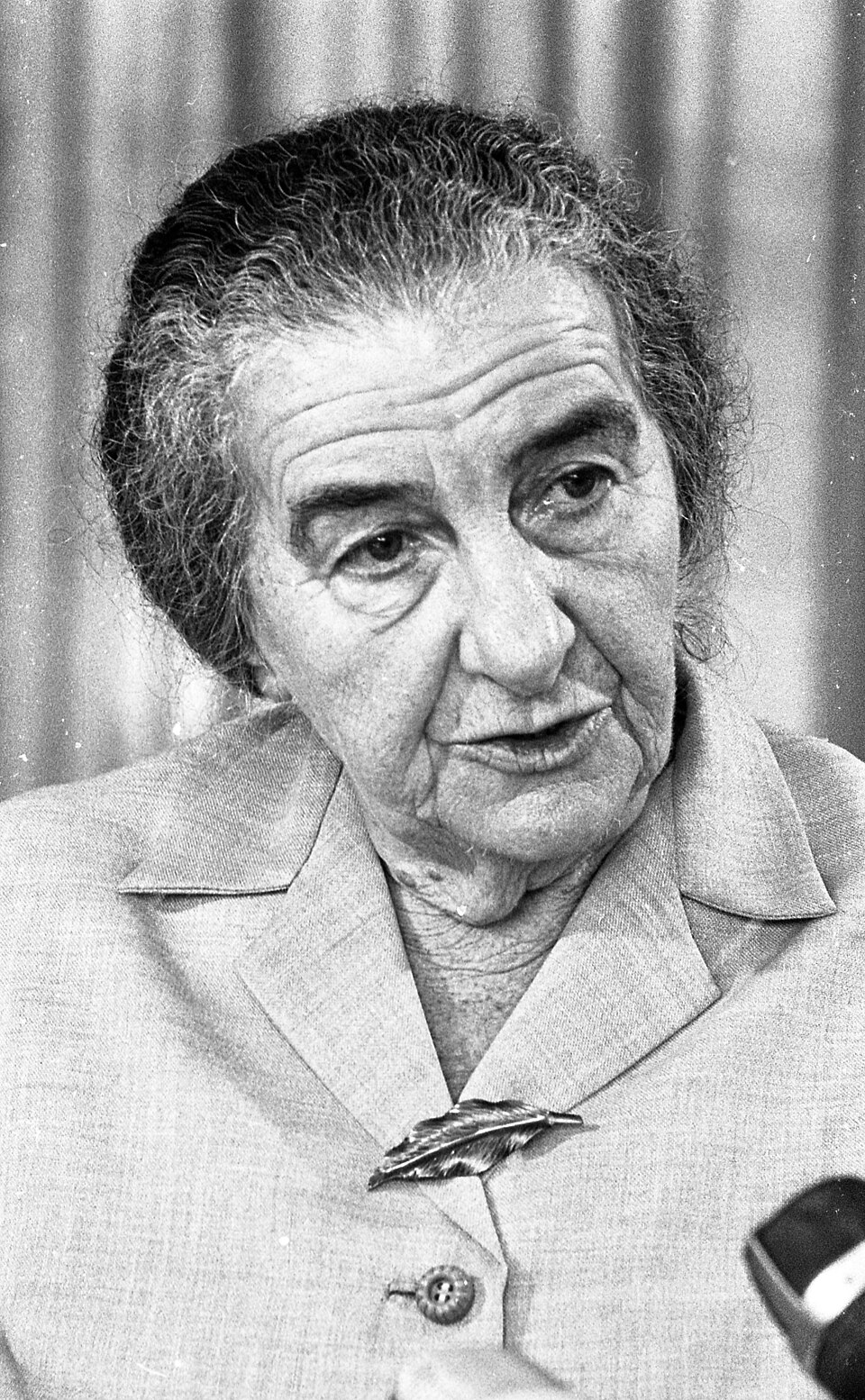
Israeli Prime Minister who authorized Operation Wrath of God retaliation campaign against Black September.
Mossad special operations unit that conducted targeted killings of Black September operatives.