The Troubles
Thirty years of ethno-national conflict in Northern Ireland — and a peace built on redacted intelligence files.
Sign in to bookmark, follow, and message the contributor.
Executive Summary
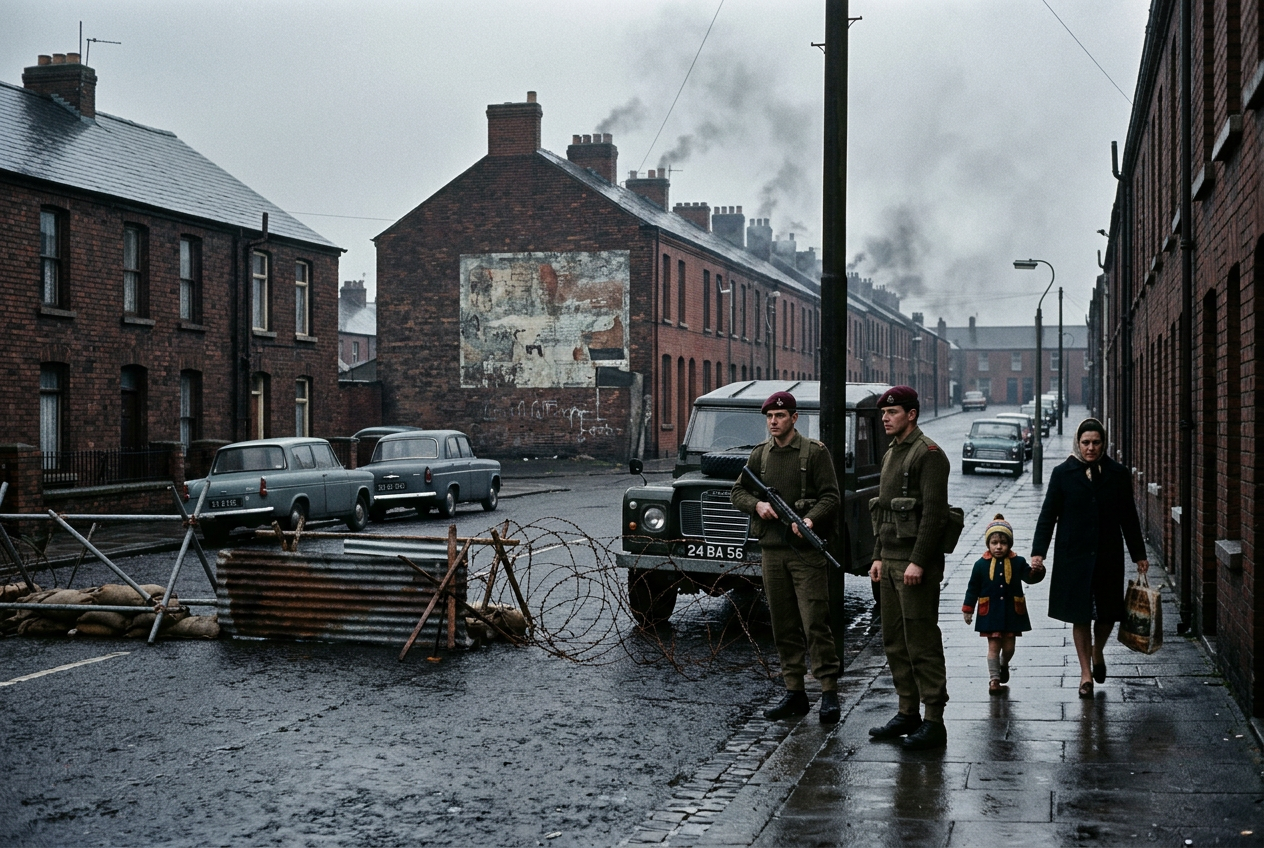
The Troubles was the ethno-national conflict in Northern Ireland that ran from the late 1960s to the Good Friday Agreement of 10 April 1998. Over three decades, 3,500 people were killed and 47,500 injured. The peace process included the disarmament of paramilitary organisations on multiple sides, prisoner release, and the establishment of a power-sharing Northern Ireland Assembly. Many intelligence files from the conflict remain classified.
The Hidden Truth
What the headlines won't tell you
The full extent of state-agent involvement — on all sides — remains subject to ongoing public inquiries (Stalker, Stevens I-III, Saville, Ballast). The Archive presents this topic factually and neutrally, treating each community, government, and paramilitary organisation with the same evidentiary standard.
Case Timeline
- 1968-10-05CORROBORATEDCivil rights march attacked in DerryRoyal Ulster Constabulary baton-charged demonstrators protesting housing discrimination in what became the first major televised violence of the conflict.
- 1969-08-14GOVERNMENT RECORDBritish Army deployedOperation Banner commenced after escalating sectarian violence overwhelmed local police, becoming the longest continuous deployment in British military history.
- 1972-01-30PRIMARY SOURCEBloody SundayBritish paratroopers shot 26 unarmed civil rights protesters, killing 14, in an event the Saville Inquiry later determined was unjustified.
- 1974-05-17DISPUTEDDublin and Monaghan bombingsCar bombs killed 34 civilians in the Republic of Ireland with evidence suggesting collusion between loyalist paramilitaries and British security forces, though no prosecutions resulted.
- 1994-08-31CORROBORATEDIRA ceasefireThe Provisional IRA announced a complete cessation of military operations, though the ceasefire would break down in 1996 before being reinstated in 1997.
- 1998-04-10GOVERNMENT RECORDGood Friday Agreement signedThe multi-party agreement established power-sharing institutions and was approved by referendum in both Northern Ireland (71%) and the Republic of Ireland (94%).
- 2005-07-28CORROBORATEDIRA formal end of armed campaignThe IRA formally ordered an end to the armed campaign and instructed all units to dump arms, verified by the Independent International Commission on Decommissioning.
- 2010-06-15PRIMARY SOURCESaville Report publishedThe 5,000-page inquiry concluded that the Bloody Sunday killings were unjustified and unjustifiable, prompting Prime Minister Cameron's formal apology.
Key People
Organizations
Evidence Library
- documentThe Good Friday Agreement (public text)
Full text of the multi-party and British-Irish agreements. Endorsed by dual referendum May 1998.
- officialpartial redactionSaville Bloody Sunday Report
5,000-page independent inquiry; concluded 2010 with formal UK government apology.
- documentCAIN chronology and casualty database
Peer-reviewed Ulster University archive of every recorded fatality with source citations.
Evidence Gallery


Sources
Trace the trail yourself
Investigation Network
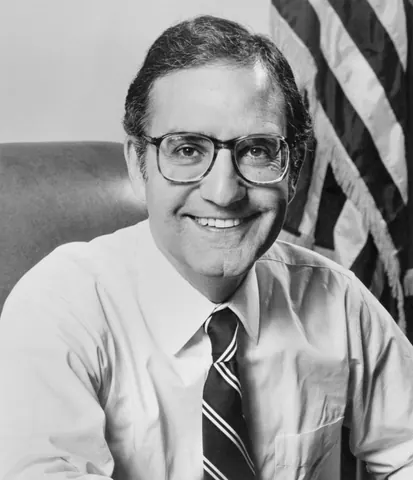 George J. Mitchell — US Senator; independent chair of the peace talksPerson1 dossierJohn Hume & David Trimble — Nobel Peace Prize 1998 for the Good Friday AgreementPerson1 dossierBritish Government — State party; deployed Army 1969Government Agency1 dossier
 Government of Ireland — Co-guarantor of the Good Friday AgreementGovernment Agency1 dossier
 Provisional IRA — Republican paramilitary; ceasefire 1994Group / Network1 dossierUlster Volunteer Force / Ulster Defence Association — Loyalist paramilitaries; ceasefires 1994Group / Network1 dossier
Live Discussion
0 Perspectives
Add to the record. Be specific. Cite where you can.
If you're learning about this topic for the first time, these are the best places to continue — documented evidence and historical relationships are the guide.
Named in “The Troubles”.
Named in “The Troubles”.
Read more dossiers like this
Get a quiet one-line bulletin when new investigative files are published. Bound to this dossier — useful for tracking follow-ups.