Golda Meir
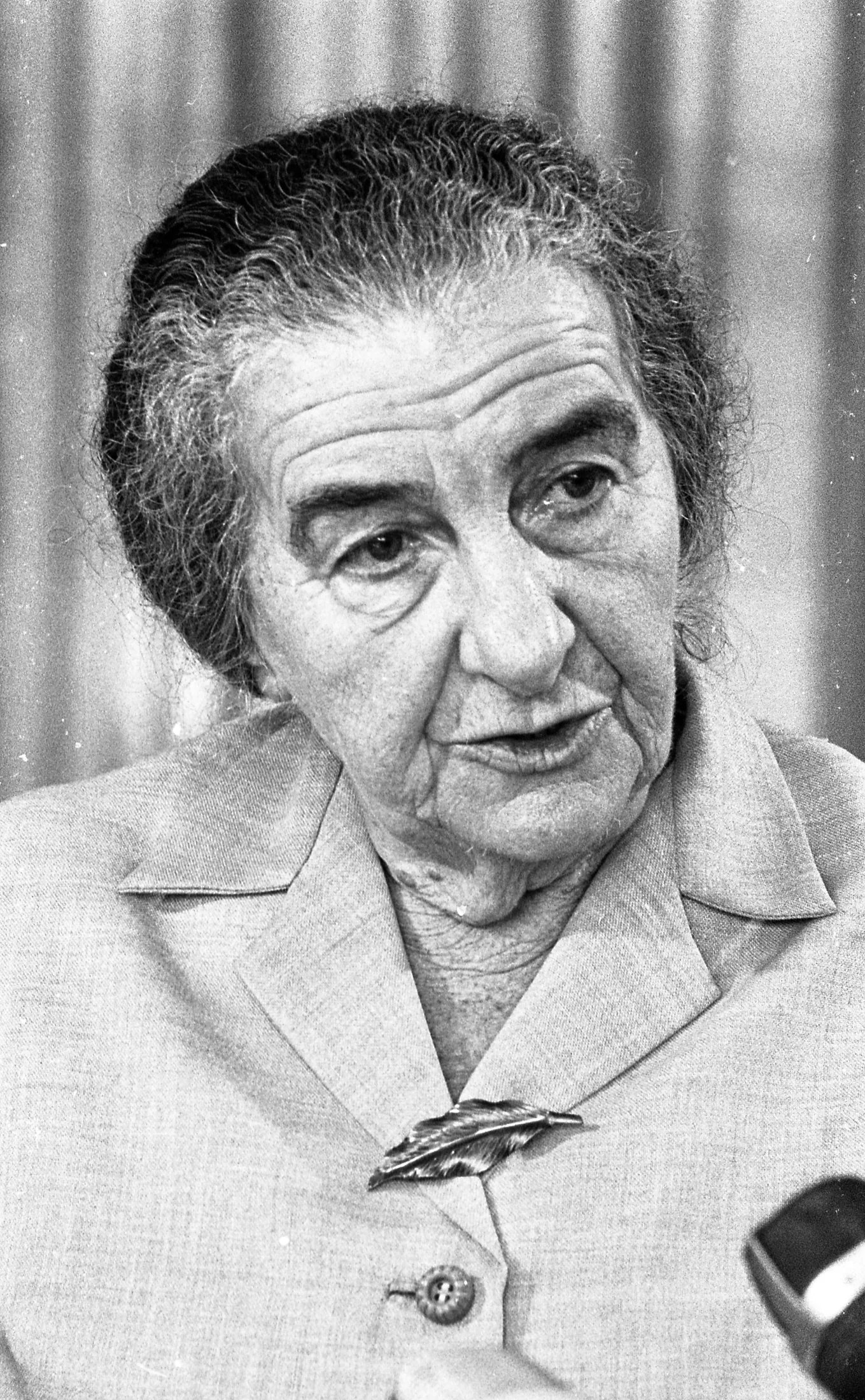
Golda Meir (1898–1978) served as Prime Minister of Israel from 1969 to 1974, becoming one of the world's first female heads of government. Her tenure was defined by the 1972 Munich Olympics massacre and her subsequent authorization of Operation Wrath of God, Israel's covert assassination campaign against individuals identified as responsible for the attack. Golda Meir appears in The Archive as the political authority who authorized Operation Wrath of God, one of the most extensively documented state-sponsored assassination programs of the modern era.
Golda Meir (1898–1978) served as Prime Minister of Israel from 1969 to 1974, becoming one of the world's first female heads of government. Her tenure was defined by the 1972 Munich Olympics massacre and her subsequent authorization of Operation Wrath of God, Israel's covert assassination campaign against individuals identified as responsible for the attack.
- Source
- Wikimedia Commons
- Type
- Photograph
- License
- CC BY 4.0
- Photographer
- Israel Press and Photo Agency (I.P.P.A.) photographer
- Year
- 1969
Photo Information ▾
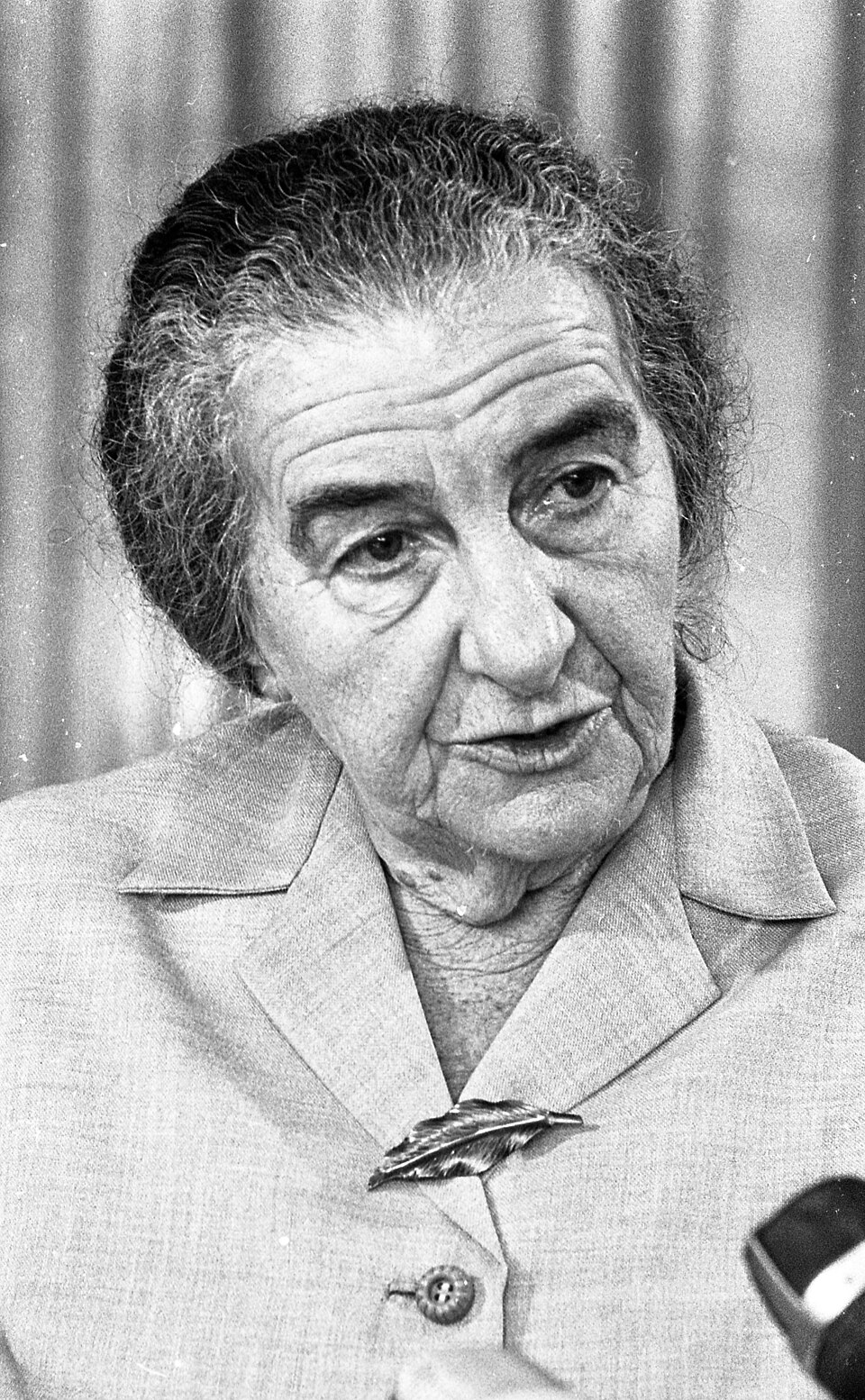
PM Golda Meir holding a press conference with foreign press in Tel Aviv.
This image is available from National Library of Israel under the digital ID: 990044371930205171 (004437193)
View original ↗- Full name
- Golda Mabovitch (later Golda Myerson, then Golda Meir)
- Born
- May 3, 1898, Kyiv, Russian Empire (now Ukraine)
- Died
- December 8, 1978, Jerusalem, Israel
- Political affiliation
- Mapai (Israeli Workers' Party), later Israel Labor Party
- Prime Minister of Israel
- March 17, 1969 – June 3, 1974
- Previous major roles
- Foreign Minister (1956–1966), Minister of Labor (1949–1956), signatory to Israeli Declaration of Independence (1948)
- Immigration to Palestine
- 1921, from United States
- Military service
- None (civilian political leadership)
- Relevant to Archive investigations
- Authorized Operation Wrath of God (1972–1973), presided over government during Yom Kippur War (1973)
Golda Meir appears in The Archive as the political authority who authorized Operation Wrath of God, one of the most extensively documented state-sponsored assassination programs of the modern era. Declassified records, Knesset proceedings, and testimony from intelligence officials establish that Meir approved targeted killings of Black September Organization members following the Munich massacre, raising enduring questions about state authority, extrajudicial action, and the limits of self-defense. Her role connects to broader investigations into covert intelligence operations, the evolution of Israeli security policy, and the legal and ethical boundaries of counterterrorism. The Archive documents Meir not for her biography but for her documented decision-making in authorizing operations that resulted in multiple deaths across Europe and the Middle East, including the mistaken killing of Ahmed Bouchiki in Norway.
# Golda Meir
Identity
Golda Meir was born Golda Mabovitch on May 3, 1898, in Kyiv, then part of the Russian Empire, to a Jewish family. In 1906, her family fled pogroms and emigrated to Milwaukee, Wisconsin. She became politically active in Labor Zionism as a teenager, joining Poalei Zion and organizing fundraising for Jewish causes. In 1917, she married Morris Myerson; the couple immigrated to Mandatory Palestine in 1921, settling first on Kibbutz Merhavia. She Hebraized her surname to Meir in 1956, following a common practice among Israeli public figures.
Meir's early decades in Palestine were spent in manual labor, kibbutz governance, and Histadrut (General Federation of Laborers) organizing. She emerged as a skilled negotiator and public speaker, representing the Jewish Agency in meetings with British Mandatory authorities. On May 14, 1948, she was one of 24 signatories to the Israeli Declaration of Independence; she was one of only two women among the signatories. Her political career advanced rapidly in the new state: she served as Israel's first ambassador to the Soviet Union (1948–1949), then as Minister of Labor (1949–1956) and Foreign Minister (1956–1966). In 1969, following the sudden death of Prime Minister Levi Eshkol, the Labor Party selected Meir as his successor. She was 70 years old at the time, widely regarded as a transitional figure; she would serve for five tumultuous years.
Career & Roles
Meir's political career spanned the entire first generation of Israeli statehood. As Foreign Minister under Prime Ministers David Ben-Gurion and Eshkol, she shaped Israel's relations with newly independent African nations, fostering technical and diplomatic ties that expanded Israel's international standing during the 1950s and 1960s. She advocated for strong alignment with the United States while maintaining pragmatic channels to European governments. Her tenure saw the aftermath of the 1956 Suez Crisis and the 1967 Six-Day War, both of which fundamentally altered Israel's strategic position.
When Meir became Prime Minister in March 1969, Israel was in an undeclared War of Attrition with Egypt along the Suez Canal. She authorized continuation of deep-penetration bombing raids into Egypt and approved military and settlement policies in the occupied territories captured in 1967. Her government oversaw significant expansion of Israeli civilian presence in the West Bank, Gaza Strip, Sinai Peninsula, and Golan Heights, policies that remain contentious in international law and historiography.
Meir's leadership style combined informal decision-making—often conducted in her kitchen with a small circle of senior ministers and military officials—with firm public resolve. She cultivated an image of maternal toughness, frequently invoking Israel's existential vulnerability. Historians note that her government operated with limited cabinet oversight of security matters; critical decisions were often made by an ad hoc group sometimes called the "Kitchen Cabinet," including Defense Minister Moshe Dayan, Deputy Prime Minister Yigal Allon, and senior Mossad and military intelligence officials.
Organizations & Networks
Meir's political authority derived from her position within the Labor Zionist movement, specifically Mapai and its successor, the Israel Labor Party. She maintained close relationships with Histadrut leadership and kibbutz movement elites, reflecting her roots in socialist Zionism. Her network extended internationally: she cultivated personal relationships with U.S. officials, including multiple meetings with Presidents Lyndon Johnson and Richard Nixon, and maintained contact with labor and social democratic leaders in Europe.
In intelligence and security matters, Meir worked closely with Mossad directors Zvi Zamir and his predecessor Meir Amit, as well as military intelligence chiefs and Israel Defense Forces (IDF) leadership. The Archive's interest focuses on her documented authorization role for Mossad operations, particularly those conducted by the Caesarea unit (Kidon division), which specialized in targeted killings. Declassified Israeli government records and testimony from former officials confirm that Meir personally approved target lists and operational plans for assassination missions following the Munich massacre.
Major Operations & Activities
On September 5, 1972, members of the Black September Organization, a faction linked to Fatah and the Palestine Liberation Organization (PLO), seized Israeli athletes at the Munich Olympic Games. Eleven Israeli team members and one West German police officer were killed during a failed rescue attempt. The attack was broadcast live to global audiences and represented, in the Israeli government's assessment, an unprecedented assault on Israeli citizens in a neutral country during an international event.
Within days of the massacre, Meir convened senior security officials to discuss response options. According to multiple accounts from participants, including former Mossad case officer Michael Bar-Zohar and historian Ronen Bergman (whose research draws on Israeli government archives and interviews with operatives), Meir authorized a covert assassination campaign targeting individuals Israeli intelligence identified as planners, facilitators, or commanders of the Munich operation. This became Operation Wrath of God (also known as Operation Bayonet or Mivtza Za'am Ha'el).
Meir's role was not merely ceremonial approval. Participants have described her insistence on operational specifics, her review of target dossiers, and her personal engagement with ethical questions—though she concluded that the killing of those responsible was justified. The operation was coordinated by Mossad director Zvi Zamir and executed primarily by the Caesarea unit, under the command of Mike Harari. Targets were selected based on intelligence assessments of their roles in the Munich attack, Black September operations, or broader PLO military activities.
The campaign extended from late 1972 through 1973 and beyond. Israeli operatives killed multiple individuals across Europe and the Middle East, using methods including bombs placed in telephones and under cars, shootings, and other targeted attacks. Confirmed by Court In July 1973, a Mossad team killed Ahmed Bouchiki, a Moroccan waiter, in Lillehammer, Norway, in a case of mistaken identity; Norwegian authorities arrested six operatives, five of whom were convicted. Norwegian court records and subsequent Israeli acknowledgments confirm the error. The Lillehammer affair exposed the operation's existence to public scrutiny, though many details remained classified for decades.
Official Record Meir's government never formally acknowledged Operation Wrath of God during her lifetime, but post-declassification Israeli archives, Knesset Intelligence and Security Committee records, and memoirs from officials such as Zamir confirm her authorization role. The operation continued in modified form after Meir's resignation in 1974, but the initial wave occurred under her direct oversight.
In October 1973, Egypt and Syria launched a surprise attack on Israel during Yom Kippur, the holiest day in the Jewish calendar. The Yom Kippur War lasted 19 days and resulted in heavy Israeli casualties. Meir's government was widely criticized for intelligence failures that allowed the surprise attack; the Agranat Commission, appointed to investigate, found systemic failures in military intelligence assessment but largely exonerated Meir and Dayan of direct responsibility. Nonetheless, public anger led to Meir's resignation in April 1974, effective June 1974. She was succeeded by Yitzhak Rabin.
Historical Importance
Golda Meir's historical significance rests on three pillars: her role as a founding-generation leader of Israel, her tenure as one of the first female heads of government in the modern era, and her authorization of covert assassination operations that became a model (and cautionary tale) for state counterterrorism policy.
Her leadership during and after Munich represented a watershed in Israeli security doctrine. Prior to Munich, targeted killings abroad were rare and ad hoc; Meir's authorization institutionalized the practice, establishing precedent for subsequent Israeli governments to pursue individuals deemed security threats far beyond Israel's borders. Legal scholars and international law experts continue to debate the legitimacy of such operations under doctrines of self-defense, proportionality, and sovereignty.
Meir's decision-making is studied in political science, ethics, and intelligence history as a case study in the limits of state authority, the trade-offs between security and rule of law, and the consequences of covert action. Her government's actions also contributed to evolving international norms around state-sponsored assassination and terrorism, influencing debates at the United Nations and among international legal bodies.
Documented Controversies
Confirmed by Court The most concrete documented controversy is the Lillehammer affair. On July 21, 1973, a Mossad team killed Ahmed Bouchiki, a Moroccan waiter living in Norway, mistakenly believing him to be Ali Hassan Salameh, a senior Black September operative. Norwegian police arrested six Israeli operatives; five were convicted of conspiracy to commit murder and related charges. Norwegian court documents, Israeli government statements following declassification, and interviews with surviving operatives confirm the mistaken identity killing and the broader operation. The incident exposed operational flaws and raised questions about intelligence vetting and authorization protocols. Meir was not personally implicated in the mistaken identification but bore political responsibility as the authorizing official.
Credible Allegation Multiple historians and former intelligence officials allege that Meir approved a target list extending beyond direct Munich planners to include broader PLO leadership and operational figures. Ronen Bergman's Rise and Kill First (2018), based on extensive archival research and interviews, describes meetings in which Meir debated the inclusion of individuals whose connection to Munich was indirect or symbolic. The scope and criteria of targeting remain subjects of historical debate, as many operational details remain classified.
Historical Consensus Meir's government is widely criticized by historians and international legal scholars for expanding settlements in occupied territories during her tenure. United Nations Security Council resolutions during and after her term condemned settlement construction as violations of international law (Fourth Geneva Convention). Meir publicly defended settlements as security necessities and rejected the applicability of the Geneva Conventions to territories Israel considered disputed rather than occupied. This policy established patterns that subsequent Israeli governments continued and expanded.
Disputed Claim Some critics, particularly in Palestinian and Arab historiography, accuse Meir of broader complicity in policies amounting to collective punishment or war crimes. These claims rest on interpretations of military operations, home demolitions, and detention policies during her tenure. Mainstream historiography treats these as policy disputes rather than established criminal liability, noting the absence of judicial findings or international tribunal proceedings. Meir defended all actions as lawful under Israeli law and necessary for security.
Officially Denied during her lifetime, later confirmed For decades, the Israeli government did not officially acknowledge Operation Wrath of God's existence. Meir herself never publicly confirmed her role. Following partial declassifications in the 1990s and 2000s, Israeli officials and historians confirmed the operation's broad outlines, including Meir's authorization role. The full operational record remains classified.
Investigations & Legal Proceedings
Meir was never subject to criminal investigation or prosecution in Israel or internationally. The Agranat Commission (1973–1974), which investigated failures leading to the Yom Kippur War, exonerated her of direct responsibility for intelligence failures, though it found systemic shortcomings in military intelligence and decision-making processes. The commission's findings contributed to political pressure that led to her resignation.
No international tribunal or court has examined Meir's role in Operation Wrath of God. The Lillehammer operatives were prosecuted in Norway, but Meir, as a foreign head of government, was never charged. Legal scholars have debated whether targeted killings authorized by Meir and subsequent Israeli leaders violate international law, particularly prohibitions on extrajudicial execution and sovereignty principles. Israel maintains that such operations are lawful acts of self-defense against imminent threats; critics argue they constitute extrajudicial killings prohibited under human rights law.
The United Nations General Assembly and Human Rights Council have passed numerous resolutions condemning Israeli actions during Meir's tenure and afterward, though these are non-binding political statements rather than legal findings. Meir consistently rejected the authority of international bodies to judge Israeli security decisions, a position maintained by successive Israeli governments.
Denials & Disputes
Meir's public statements during her tenure emphasized Israeli restraint and the necessity of security measures. She famously stated, "We can forgive the Arabs for killing our children. We cannot forgive them for forcing us to kill their children," a remark reflecting her framing of Israeli actions as defensive and morally anguished. Critics challenged this framing, noting that state-authorized killings in foreign jurisdictions, regardless of justification, implicate sovereignty and due process.
Regarding Operation Wrath of God, Meir never publicly confirmed or denied its existence during her lifetime. In private memoirs and interviews after her resignation, she remained circumspect, though she defended in principle the right of Israel to pursue those who killed its citizens. Former colleagues later confirmed her authorization role.
Disputes over Meir's legacy are intense. Supporters credit her with decisive leadership in existential crises, pioneering counterterrorism doctrine, and shattering gender barriers. Critics, particularly in Palestinian and Arab historiography, view her as an architect of policies that entrenched occupation and normalized extrajudicial killing. Israeli historians themselves are divided: revisionist historians (the "New Historians") criticize settlement policies and military actions; traditional Zionist historiography defends her decisions as necessary for survival.
Legacy & Historical Debate
Golda Meir's legacy in intelligence and security policy is profound. Operation Wrath of God became a template for Israeli covert operations and influenced counterterrorism doctrine globally. The operation demonstrated both the reach and the risks of state-sponsored assassination: successful elimination of targets but also operational failures, diplomatic fallout, and enduring moral controversy.
The ethical debate around Meir's decisions continues in philosophy and legal scholarship. Proponents argue that targeted killing of individuals planning or facilitating attacks against civilians is a legitimate form of self-defense, particularly when conventional legal processes are unavailable (i.e., foreign states unwilling or unable to extradite suspects). Opponents contend that extrajudicial killing violates fundamental rule-of-law principles, erodes international norms, and risks error (as in the Bouchiki case), and that alternative responses—diplomacy, intelligence-sharing, legal extradition—were insufficiently pursued.
Meir's role as a female leader is frequently cited in feminist historiography, though scholars note that her policies do not align with feminist principles as understood in peace studies or human rights frameworks. Meir herself rejected gender as a salient category in political analysis, famously remarking, "I never did anything because I was a woman."
Historians continue to debate Meir's culpability for the Yom Kippur War intelligence failure. While the Agranat Commission exonerated her, subsequent research suggests a more complex picture of warning signs dismissed or downplayed by senior officials, including Meir and Dayan. The political fallout and her resignation are seen as acknowledgments of ultimate responsibility, though not personal incompetence.
Israeli society's memory of Meir has evolved. Initially revered as a pioneering leader, later generations questioned her policies, particularly regarding Palestinians and occupied territories. Declassification of documents has enabled more nuanced reassessment, neither hagiographic nor wholly condemnatory, recognizing her role in shaping state policies with enduring consequences.
Continue Investigating
Golda Meir's documented role as the political authority behind Operation Wrath of God places her at the intersection of state power, intelligence operations, and the ethical boundaries of counterterrorism. Her decisions directly connect to the dossier operation-wrath-of-god, which details the operational history and consequences of the assassination campaign she authorized.
Key entities linked to Meir's role include zvi-zamir, Mossad director who implemented her authorization; mike-harari, field commander of assassination teams; moshe-dayan, Defense Minister and Kitchen Cabinet member during decision-making; black-september-organization, the target of the campaign; ali-hassan-salameh, a primary target ultimately killed in 1979; and ahmed-bouchiki, the mistaken-identity victim whose death exposed the operation. The mossad-caesarea-unit executed the operations Meir authorized.
Investigators should examine related covert operations documented in The Archive, including operation-ajax-1953-iran-coup and operation-gladio, which illustrate patterns of state-authorized covert action; the-litvinenko-poisoning and the-jamal-khashoggi-assassination, modern cases of alleged state assassination; and operation-mockingbird, documenting intelligence influence operations. Understanding the military-industrial-complex provides context for state security decision-making. Comparative examination of cointelpro and the-phoenix-program-in-vietnam reveals parallel questions about state authority, extrajudicial action, and accountability.
Primary sources remain partially classified. Israeli government archives, Knesset Intelligence Committee records, declassified Mossad operational files, and court records from Norway provide the most reliable documentation. Historians and investigators continue to pursue declassification of additional materials to clarify target selection, operational decision-making, and the scope of Meir's direct involvement.
- 1898Born Golda Mabovitch in Kyiv, Russian Empire
- 1906Family emigrates to Milwaukee, Wisconsin, fleeing pogroms
- 1921Immigrates to Mandatory Palestine with husband Morris Myerson
- 1948Signs Israeli Declaration of Independence; serves as first Israeli ambassador to Soviet Union
- 1949Appointed Minister of Labor, serving until 1956
- 1956Becomes Foreign Minister; Hebraizes surname to Meir
- 1969Becomes Prime Minister of Israel following death of Levi Eshkol
- 1972September 5: Munich Olympics massacre occurs; Meir authorizes Operation Wrath of God in response
- 1973July: Ahmed Bouchiki killed in Lillehammer, Norway, by Mossad team due to mistaken identity; operatives arrested
- 1973October: Yom Kippur War begins with surprise attack by Egypt and Syria
- 1974Agranat Commission issues findings on Yom Kippur War intelligence failures
- 1974Resigns as Prime Minister in April, effective June; succeeded by Yitzhak Rabin
- 1978Dies in Jerusalem on December 8 at age 80
- S1Rise and Kill First: The Secret History of Israel's Targeted AssassinationsRandom House · book
- S2
- S3
- S4Lillehammer Affair: Six Charged in NorwayThe New York Times · mainstream
- S5Golda MeirEncyclopaedia Britannica · reference
- S6The Agranat Commission ReportJewish Virtual Library · reference
- S7Golda Meir and the Yom Kippur War: A ReassessmentJSTOR / Middle Eastern Studies · academic
- S8Security Council Resolution 446 (1979) on Israeli SettlementsUnited Nations Digital Library · primary
- S9The Legal Status of Israeli Settlements Under International LawJSTOR / Journal of Palestine Studies · academic
- S10Golda: The Uncrowned Queen of IsraelYale University Press · book
- S11Golda Meir: Israel's MatriarchSmithsonian Institution · museum
- S12Golda MeirWikipedia · reference
- S13The Wrath of God: The Israeli Response to the 1972 Munich Olympics MassacreThe Guardian · mainstream
- S14Golda Meir: Prime Minister of IsraelLibrary of Congress · primary
If you're learning about this topic for the first time, these are the best places to continue — documented evidence and historical relationships are the guide.
Golda Meir is documented in the evidence record of this published dossier.
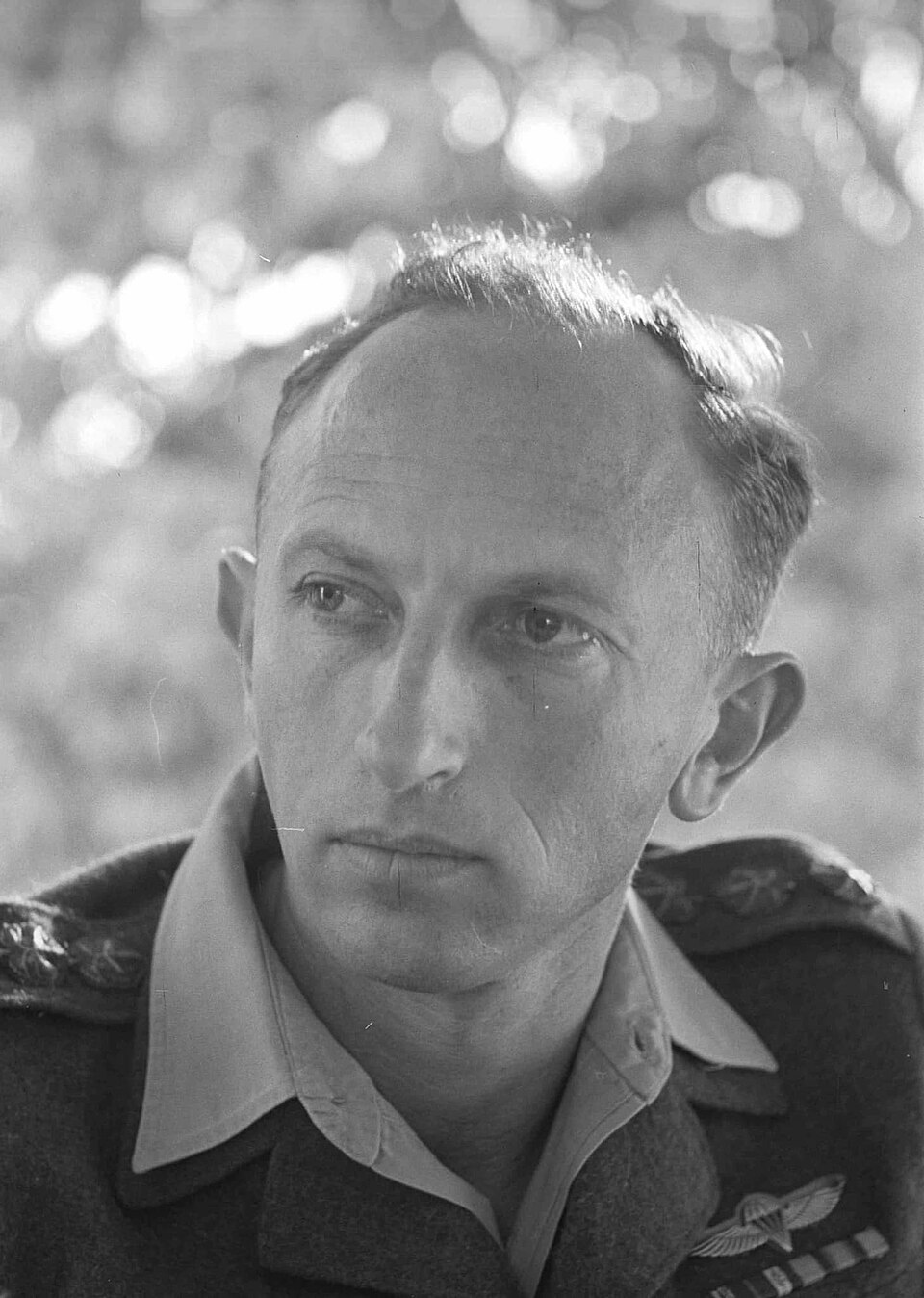
Mossad director who implemented Meir's authorization of Operation Wrath of God.
Target of assassination campaign authorized by Meir following Munich attack.