The Cambridge Five
Five British intelligence officers who passed secrets to Soviet intelligence for decades during the Cold War
Sign in to bookmark, follow, and message the contributor.
Executive Summary
The Cambridge Five were a ring of British intelligence officers recruited by Soviet intelligence while students at Cambridge University in the 1930s. Operating at the highest levels of British intelligence and the Foreign Office, they passed thousands of classified documents to Moscow from the late 1930s through the 1950s, compromising Western intelligence operations throughout World War II and the early Cold War.
- 01.Five Cambridge graduates achieved positions permitting access to the highest-level Allied intelligence during WWII and the early Cold War.
- 02.VENONA decrypts provided cryptographic proof of Soviet penetration before any member confessed or defected.
- 03.Anthony Blunt served the Royal Household for fifteen years after confessing to British counterintelligence in exchange for immunity.
The Hidden Truth
What the headlines won't tell you
The Cambridge Five: Britain's Most Damaging Spy Ring
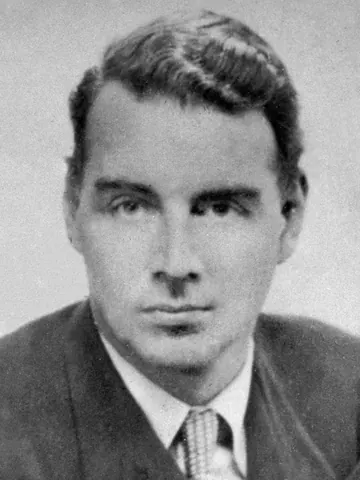
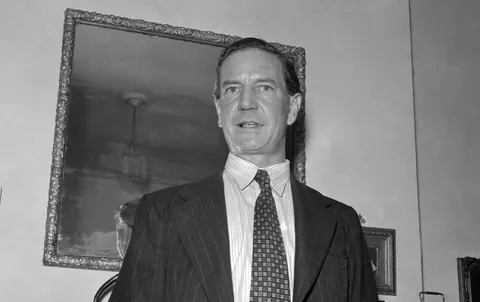
The Cambridge Five represent the most successful and damaging espionage penetration of British intelligence in history. Between the 1930s and 1950s, five British men—recruited while students at Cambridge University—passed an estimated tens of thousands of classified documents to Soviet intelligence, compromising Western operations during World War II and throughout the early Cold War. The core five members were Kim Philby, Donald Maclean, Guy Burgess, Anthony Blunt, and John Cairncross, though debate continues over whether additional members existed.
What made this spy ring exceptional was not merely the volume of material compromised, but the positions the five achieved: Philby rose to head Soviet counterintelligence operations for MI6, Maclean became head of the American Department at the Foreign Office with access to atomic secrets, Blunt became Surveyor of the King's (later Queen's) Pictures, Burgess worked in the Foreign Office and BBC, and Cairncross served in the Government Code and Cypher School (the precursor to GCHQ) and later MI6. Their combined access gave Soviet intelligence unprecedented insight into Anglo-American intelligence operations, diplomatic strategy, and military planning.
The exposure of the ring occurred gradually over decades. Maclean and Burgess defected to Moscow in 1951 after being warned by Philby. Philby himself defected in 1963. Blunt was secretly granted immunity in 1964 in exchange for a confession, though his role was not publicly revealed until 1979. Cairncross was not definitively confirmed as the "fifth man" until after the Cold War ended. The affair devastated Anglo-American intelligence cooperation, led to comprehensive reforms in British security vetting, and remains a defining case study in counterintelligence failure.
Background
Cambridge University in the 1930s was a hotbed of left-wing political activity. The Great Depression had discredited capitalism in many young intellectuals' eyes, while the rise of fascism in Germany, Italy, and Spain created genuine fear of a rightward authoritarian drift across Europe. Many Cambridge students—particularly among the elite who would later enter government service—viewed communism and the Soviet Union as the only credible bulwark against fascism.
This political climate created fertile recruiting ground for Soviet intelligence. The NKVD (later KGB) actively sought to recruit young men from privileged backgrounds who were likely to enter the British establishment. Unlike traditional espionage, which typically involved recruiting agents already in positions of access, this represented long-term "talent spotting"—identifying promising students who could be guided into sensitive positions over years or decades.
The Cambridge recruitment operation was orchestrated primarily by Arnold Deutsch, an Austrian NKVD officer, working with talent spotters including Edith Tudor-Hart and Kim Philby himself (after his own recruitment). The targets were typically chosen from the Cambridge Apostles, a prestigious intellectual society, and other left-wing student groups. The NKVD specifically sought individuals who combined ideological commitment with social connections that would enable advancement into the British establishment.
Britain's class system inadvertently assisted Soviet intelligence. The "old boy network" meant that men from the right schools and universities, with the right social connections, could advance through government service with minimal security vetting. Background checks focused primarily on overt communist party membership or associations, easily avoided by students who kept their recruitment secret. The assumption that men from elite backgrounds were inherently loyal to Britain created a massive security blindspot.
The Investigation
The Recruitments (1934-1937)
Kim Philby was recruited first, in 1934, shortly after graduating from Cambridge where he had been an open communist. His Soviet controller, Arnold Deutsch, instructed him to publicly distance himself from communism and cultivate a conventional establishment persona. This pattern—open left-wing sympathies at university followed by apparent moderation—would characterize all five members. FACT: Soviet intelligence files opened after the Cold War confirmed Deutsch's role and the deliberate strategy of long-term penetration.
Donald Maclean was recruited in 1934, Guy Burgess in 1934-35, Anthony Blunt in 1937, and John Cairncross in 1937. Each was assigned a Soviet codename: Philby ("Söhnchen," later "Stanley"), Maclean ("Waise," later "Homer"), Burgess ("Mädchen," later "Hicks"), Blunt ("Tony," later "Johnson"), and Cairncross ("Molière"). FACT: These codenames appear in declassified Soviet intelligence traffic and VENONA decrypts.
Penetration and Operations (1937-1951)
The five achieved remarkable positions:
Kim Philby joined MI6 in 1940 and by 1944 headed the Soviet counterintelligence section—meaning he was responsible for catching Soviet spies while being one himself. In 1949, he was posted to Washington as MI6 liaison to the CIA and FBI, giving him access to joint Anglo-American intelligence operations. FACT: Philby's position enabled him to compromise numerous Western intelligence operations, including warning the Soviets about planned infiltration operations into Albania and Ukraine.
Donald Maclean entered the Foreign Office in 1935 and served in Paris, Washington (as First Secretary with access to atomic energy discussions), and Cairo before becoming head of the American Department in 1950. In Washington from 1944-48, he had access to Anglo-American discussions about the atomic bomb. FACT: Maclean passed information about the Manhattan Project to Soviet intelligence, though the extent of his contribution to the Soviet atomic program remains debated.
Guy Burgess worked for MI6's propaganda unit (Section D), the BBC, and the Foreign Office. His value was less his official position than his wide social network and ability to gather information through conversation. He was also instrumental in facilitating communication between the other members and their Soviet handlers.
Anthony Blunt served in MI5 during World War II, working in counterintelligence. After the war, he became Surveyor of the King's Pictures and later the Queen's Pictures, while maintaining his Soviet connections. His MI5 position gave him access to counterintelligence operations and the ability to warn the Soviets of security risks.
John Cairncross worked at Bletchley Park during World War II, where he had access to ULTRA intelligence—decrypted German communications. He later worked in MI6 and the Treasury. FACT: Documents from Soviet archives confirm Cairncross passed approximately 5,832 documents to Soviet intelligence between 1941 and 1945, including ULTRA decrypts that may have helped Soviet forces at the Battle of Kursk.
The Unraveling (1951-1979)
The first break in the case came from VENONA, the joint US-UK cryptanalysis project that partially decrypted Soviet intelligence messages from the 1940s. In 1949-50, VENONA decrypts identified a Soviet agent codenamed "HOMER" in the British Embassy in Washington during 1944-48. FACT: Kim Philby, then in Washington as MI6 liaison, learned of the investigation and realized Maclean would be identified.
British intelligence began investigating Maclean in early 1951. Philby warned Burgess, who was also in Washington, to return to London and warn Maclean. On May 25, 1951, Burgess and Maclean disappeared from England, surfacing in Moscow in 1956. FACT: The defection was Britain's most embarrassing intelligence failure to that point and triggered an intensive investigation.
Philby fell under suspicion immediately—Burgess had been living in his Washington home, and Philby was known to have been friends with both defectors at Cambridge. He was forced to resign from MI6 in 1951 and interrogated repeatedly, but no proof of espionage could be established. In 1955, Labour MP Marcus Lipton named Philby in Parliament as the "third man" who had warned the other two. Foreign Secretary Harold Macmillan publicly cleared Philby, stating "I have no reason to conclude that Mr. Philby has at any time betrayed the interests of his country." FACT: This clearance, later proven completely wrong, became one of the most embarrassing statements in British political history.
Philby resumed intelligence work in Beirut as a journalist and part-time MI6 agent. In 1963, after new evidence emerged from a defector, MI6 confronted Philby in Beirut. He defected to Moscow on January 23, 1963. FACT: His defection finally confirmed the "third man" allegations and devastated remaining MI6 credibility.
The Blunt Confession (1964) and Exposure (1979)
In 1964, after intensive interrogation and an offer of immunity from prosecution, Anthony Blunt confessed to British counterintelligence officer Arthur Martin that he had been a Soviet spy. FACT: The offer of immunity was authorized at the highest levels of government and kept secret for 15 years. Blunt provided information about his activities and recruitment but remained in his royal position and continued his art historical work.
In 1979, Prime Minister Margaret Thatcher revealed Blunt's role in Parliament, following journalism investigations that were about to expose him. FACT: Thatcher stated, "It was in the public interest to grant immunity to Blunt in 1964... His information was invaluable." Blunt was stripped of his knighthood but never prosecuted. The revelation caused public outrage that a confessed Soviet spy had remained in royal service for 15 years after his confession.
The Fifth Man Debate (1980s-1990s)
For decades, speculation swirled about whether there was a "fifth man." John Cairncross was interrogated in 1952 and admitted passing information but claimed it was to help the Soviet war effort against Germany, not ongoing espionage. He was allowed to resign from the civil service without prosecution. INFERENCE: The decision not to prosecute Cairncross suggests either insufficient evidence for conviction or a desire to avoid further public embarrassment.
Cairncross was not definitively confirmed as the fifth man until the 1990s, when Soviet intelligence officer Oleg Gordievsky named him, and Russian intelligence files were partially opened to researchers. FACT: KGB files confirmed Cairncross had been a long-term Soviet agent, not merely a wartime contributor motivated by anti-fascism.
The Sixth Man Question
SPECULATION
Debate continues over whether there were additional members beyond the core five. Various names have been proposed, including Leo Long (who confessed to passing information to Blunt during the war), Victor Rothschild (3rd Baron Rothschild, who worked in MI5 and knew several members—though no credible evidence of his involvement has been produced), and others. INFERENCE: Given the recruiting patterns and social networks involved, additional minor participants likely existed, though whether any constituted a "sixth man" of comparable importance remains unproven.
Evidence Assessment
Established Facts
VENONA Decrypts
The partial decryption of Soviet intelligence communications from the 1940s provided cryptographic proof of Soviet espionage operations in Britain and identified several agents by codename, leading to the identification of Maclean and contributing to investigations of others. These are primary intelligence documents authenticated by both US and UK governments. Why this matters: VENONA provides independent cryptographic evidence separate from confessions or defector testimony.
Blunt's 1964 Confession
Anthony Blunt confessed in detail to MI5 interrogator Arthur Martin after being granted immunity. His confession has been partially declassified. Why this matters: This is a firsthand admission from a participant, providing detailed information about recruitment methods, operations, and other members.
Philby's Moscow Memoir
After defecting, Kim Philby wrote "My Silent War" (1968), acknowledging his Soviet intelligence work and providing his perspective on operations. Why this matters: While obviously self-serving, this is the principal's own account and can be cross-checked against other evidence.
Soviet Intelligence Archives
After the Cold War, Russian intelligence services allowed limited access to historical files. KGB files confirmed the identities, codenames, operations, and volume of material passed by all five members. Why this matters: These are the operational records of the service that ran the agents, providing details not available from Western sources.
MI5 and MI6 Reports
Declassified British intelligence investigations, interrogation records, and damage assessments document the investigations, confrontations, and official understanding of the compromises. Why this matters: These show what British intelligence knew and when, and document the official investigation process.
Strong Evidence
Cairncross Documents at Bletchley Park
Documents from Soviet archives showing Cairncross passed approximately 5,832 documents between 1941-1945, including ULTRA decrypts. The specific classification markings and document descriptions match Bletchley Park materials. Why this matters: This demonstrates the volume and sensitivity of material compromised, particularly regarding signals intelligence.
Maclean's Access to Atomic Information
State Department and Foreign Office records document Maclean's access to Combined Policy Committee meetings and cables regarding Anglo-American atomic cooperation. Soviet archives show they received detailed information about these discussions. Why this matters: This establishes both opportunity (access) and Soviet possession of the information.
FBI and CIA Damage Assessments
Declassified US intelligence assessments detail specific operations compromised by the ring, including infiltration operations into Eastern Europe and the Soviet Union that failed due to advance warning. Why this matters: These show concrete operational impacts, not merely theoretical damage from document passage.
Moderate Evidence
Impact on Battle of Kursk
Some historians argue that Cairncross's provision of ULTRA intelligence about German plans for the Battle of Kursk (1943) significantly aided Soviet defensive preparations. Why this is moderate: While Cairncross definitely passed ULTRA material and the Soviets had this information, determining its precise impact on Soviet decisions is difficult because the Soviets had multiple intelligence sources and their own military intelligence.
Total Document Count
Estimates of total documents compromised range from tens of thousands to over 100,000 pages. Why this is moderate: While clearly massive, precise counts are difficult because not all Soviet records are available, some material was oral briefings rather than documents, and different counting methods produce different numbers.
Weak Evidence
Specific Operations Attributed to Specific Members
While the overall compromise is clear, attributing specific operational failures to specific members' information is often difficult because of overlapping access, multiple Soviet sources, and incomplete records. Why this is weak: The evidentiary chain connecting a specific document passage to a specific operational failure often involves inference rather than direct documentation.
Disputed Claims
Extent of Blunt's Wartime Impact
Debate continues over how much damage Blunt did during his MI5 service versus how useful his later information was to investigators. Some historians argue his main value was post-war cooperation; others emphasize wartime compromise. Why this is disputed: The classification of relevant files and the politics of his immunity deal make objective assessment difficult.
Rothschild Involvement
Various researchers have suggested Victor Rothschild (3rd Baron Rothschild) may have been involved, pointing to his MI5 work, friendships with members, and communist sympathies in the 1930s. Why this is disputed: No credible documentary evidence supports this claim. It appears in speculative works but not in Soviet archives, VENONA decrypts, or any participant confession. Rothschild successfully sued one author for libel over such claims.
Unsupported Claims
"Ring of Five Hundred"
Some sensationalist accounts suggest the Cambridge Five were merely the tip of a massive penetration involving hundreds of Soviet agents throughout British institutions. Why this is unsupported: While Soviet intelligence certainly ran other agents, no evidence supports a coordinated penetration on this scale. This conflates separate operations and exaggerates beyond documented facts.
Royal Family Awareness
Claims that King George VI or other royals knew of Blunt's activities and protected him. Why this is unsupported: No documentary evidence supports this. The immunity decision was made by government officials, and the royal household's role was limited to employment decisions based on incomplete information.
Credible Dissenting Voices
Historian John Costello ("Mask of Treachery," 1988) argued that the investigation remained incomplete and that additional significant figures were involved and protected. His research pointed to possible additional members and suggested institutional cover-ups. Credentials: Costello was a professional historian who conducted extensive archival research. Why dissenting: Most mainstream historians accept the "five plus perhaps minor figures" consensus, while Costello argued for more systematic protection of additional spies. His work is serious research, though some of his more speculative claims remain unproven.
Chapman Pincher ("Their Trade is Treachery," 1981, and later works) argued that Roger Hollis, Director General of MI5 from 1956-1965, was himself a Soviet agent who protected the Cambridge ring and other spies. Credentials: Pincher was an experienced defense and intelligence journalist with high-level sources. Why dissenting: Official investigations (including the 1974 Fluency Committee) found no evidence Hollis was a spy, and most historians reject this claim. However, Pincher's work raises legitimate questions about why investigations were sometimes slow or incomplete.
Some Russian historians have argued that Western accounts exaggerate the ring's importance to minimize the effectiveness of Soviet intelligence's own analytical capabilities. Why dissenting: This challenges the narrative that Soviet intelligence successes were primarily due to penetrations rather than skilled analysis and tradecraft. This is a legitimate historiographical debate about how to attribute intelligence successes.
Legacy
The Cambridge Five case fundamentally reshaped British intelligence and security vetting. FACT: The positive vetting system (PV) was introduced in 1952, requiring detailed background checks, interviews with references, and investigation of financial and personal circumstances for anyone with access to classified material. This represented a shift from assuming loyalty based on class and education to systematic investigation.
The case severely damaged Anglo-American intelligence cooperation. FACT: The FBI and CIA drastically reduced intelligence sharing with British agencies in the early 1950s, and trust took years to rebuild. FBI Director J. Edgar Hoover personally distrusted MI6 for years after Philby's defection.
Frequently Misunderstood Claims
"They were all homosexual"
This oversimplification appears frequently in popular accounts. FACT: Burgess was openly homosexual, Blunt was homosexual (though discreet during the period), but Philby, Maclean, and Cairncross were not. The stereotype arose partly from the fact that homosexuality was illegal in Britain during this period and thus represented a blackmail vulnerability, leading to conflation of security risks.
"They gave the Soviets the atomic bomb"
While Maclean passed information about Anglo-American atomic cooperation and Cairncross may have passed some related material, the principal atomic espionage was conducted by other agents (Klaus Fuchs, David Greenglass, Theodore Hall). INFERENCE: The Cambridge Five's atomic intelligence was valuable for Soviet understanding of Western plans and capabilities, but technical secrets primarily came from scientists with direct access.
"Ideology, not money"
All five were indeed primarily motivated by communist ideology rather than financial gain, distinguishing them from many Cold War spies. FACT: Soviet intelligence paid them modest stipends and expenses but not large sums. Their motivation was genuine belief in communism and, particularly initially, anti-fascism.
Important Quotes
Kim Philby, in "My Silent War" (1968): "The easiest way to penetrate the intelligence services was from within... I was ideally situated to see that my services reached the right department—the Soviet Intelligence Service—and only the right department."
Anthony Blunt, in his 1979 statement: "The atmosphere in Cambridge was so left-wing at the time that I made no secret of my views, and was surprised that the authorities took no notice of them."
Prime Minister Margaret Thatcher, revealing Blunt in Parliament (1979): "The [security] investigating authorities concluded that Blunt was a Russian agent... He was accorded immunity from prosecution in 1964. It was in the public interest to grant immunity to Blunt... His information was invaluable."
Moscow statement by Burgess and Maclean (1956): "We both of us came to the Soviet Union to work for the aim of better understanding between the Soviet Union and the West, having both of us become convinced from official knowledge in our possession that neither the British nor, still more, the American Government was at that time seriously working for this aim."
Research Leads and Potential Discoveries
Russian intelligence archives remain partially closed. Future potential: Full access to KGB/SVR archives would definitively settle questions about additional members, precise document counts, and operational impacts. Current access is selective and politically controlled.
Some British files remain classified beyond standard declassification schedules. Future potential: Complete MI5 and MI6 files on the investigations, particularly regarding decisions not to prosecute or publicize cases earlier, would illuminate the institutional response and political considerations.
Personal papers and correspondence of minor figures in the Cambridge spy circles remain dispersed in various archives and private collections. Future potential: Systematic review might identify additional participants or clarify relationships and recruitment patterns.
Confidence Assessment
The core facts of the Cambridge Five case are thoroughly documented through multiple independent sources: VENONA decrypts, confessions, Soviet archives, Western intelligence files, and academic research. The identities of the five, their basic operational activities, and the severity of the compromise are established beyond reasonable doubt. Debate continues primarily on secondary questions: Were there significant additional members? What was the precise operational impact of specific information? How much did various officials know and when? These questions likely can never be fully answered given classification and the deaths of participants, but they do not affect the essential narrative. The historiography is mature, with both sensationalist accounts and serious academic research available—researchers must carefully distinguish between the two. Overall confidence in the established narrative: high (85-90%).
Case Timeline
- 1934CORROBORATEDKim Philby recruited by Arnold Deutsch after Cambridge graduationArnold Deutsch, a Soviet NKVD agent operating under cover as an academic, targeted Philby based on his communist sympathies developed during coverage of the Spanish Civil War.
- 1934CORROBORATEDDonald Maclean recruited by Soviet intelligenceMaclean was approached while still at Cambridge by Arnold Deutsch, the same recruiter who secured Philby, during a period when communist ideology attracted many intellectuals responding to the rise of fascism.
- 1934-35CORROBORATEDGuy Burgess recruited at CambridgeBurgess was recruited through his romantic and social networks at Cambridge, where he had already established himself as an openly homosexual communist sympathizer before being directed to moderate his public views.
- 1935GOVERNMENT RECORDMaclean enters British Foreign OfficeMaclean's entry into the Foreign Office represented the first successful penetration of British government by the Cambridge network, beginning his access to classified diplomatic communications.
- 1937CORROBORATEDAnthony Blunt and John Cairncross recruitedBlunt, already a fellow at Trinity College Cambridge, recruited Cairncross personally, expanding the network's reach into different branches of the British intelligence apparatus.
- 1940CORROBORATEDPhilby joins MI6; Blunt joins MI5Both recruitments occurred during wartime expansion of British intelligence services when vetting procedures were relaxed to meet urgent staffing needs.
- 1941-45PRIMARY SOURCECairncross at Bletchley Park, passes approximately 5,832 documents including ULTRA decryptsThe ULTRA decrypts Cairncross passed to Moscow included German military intelligence that Soviet archives later confirmed helped prepare Soviet defenses before major German offensives including Kursk.
- 1944CORROBORATEDPhilby heads MI6 Soviet counterintelligence sectionThis position gave Philby authority over operations targeting Soviet espionage, allowing him to protect the Cambridge network and other Soviet agents operating in Britain.
- 1944-48GOVERNMENT RECORDMaclean serves in Washington with access to atomic cooperation discussionsMaclean's position gave him access to communications between Churchill and Truman regarding the Manhattan Project and postwar atomic energy cooperation plans.
- 1949CORROBORATEDPhilby posted to Washington as MI6 liaison to CIA and FBIPhilby's Washington posting gave him access to joint Anglo-American operations including plans to infiltrate agents into Albania and Ukraine, operations he systematically betrayed to Moscow.
- 1949-50GOVERNMENT RECORDVENONA decrypts identify agent 'HOMER' (Maclean) in WashingtonAmerican cryptanalysts working on VENONA, the decryption of wartime Soviet intelligence cables, identified codename HOMER through details of his Washington posting and family situation.
- 1951CORROBORATEDBurgess and Maclean defect to Soviet Union after Philby warning (May 25)Philby, informed through his MI6 position that investigators were closing in on Maclean, dispatched Burgess to warn him, though Burgess's decision to defect alongside Maclean was reportedly unplanned.
- 1951GOVERNMENT RECORDPhilby forced to resign from MI6 under suspicionMI6 could not definitively prove Philby's guilt despite strong suspicion, as the VENONA evidence implicating him could not be used in court without revealing the top-secret program.
- 1955GOVERNMENT RECORDForeign Secretary Macmillan publicly clears PhilbyMacmillan's statement to Parliament that Philby was not the "third man" who warned Burgess and Maclean was based on MI5's inability to establish proof meeting legal standards, despite internal conviction of his guilt.
- 1963CORROBORATEDPhilby defects to Moscow from Beirut (January 23)Philby defected after MI5 officer Nicholas Elliott confronted him in Beirut with new evidence from KGB defector Anatoly Golitsyn, though he was offered immunity in exchange for full disclosure.
- 1964GOVERNMENT RECORDBlunt confesses to MI5 in exchange for immunityBlunt's confession was secured by MI5 offering immunity from prosecution in exchange for details about other Soviet agents, yielding information about network operations but protecting him from public exposure.
- 1979GOVERNMENT RECORDPrime Minister Thatcher publicly exposes Blunt in ParliamentThatcher's public exposure followed journalist investigations that threatened to reveal Blunt's immunity deal, forcing the government to acknowledge his espionage and the secret arrangement made fifteen years earlier.
- 1990sPRIMARY SOURCESoviet archives opened, confirming Cairncross as fifth man and providing operational detailsKGB files accessed by researchers after the Soviet collapse confirmed Cairncross's codename MOLIERE and documented his extensive provision of intelligence from multiple British government positions.
Key People
Organizations
Evidence Library
- datapartial redactionDOC-V1VENONA Decrypts
Partially decrypted Soviet intelligence communications from the 1940s that cryptographically identified Soviet agents by codename, including 'HOMER' (Maclean). Declassified 1995-96. Provided independent confirmation of Soviet espionage operations before confessions or defections.
- documentheavy redactionDOC-B1Blunt Confession Transcripts (1964)
Anthony Blunt's detailed confession to MI5 interrogator Arthur Martin, given in exchange for immunity. Partially declassified. Provides firsthand account of recruitment, operations, and other members from a participant.
- documentpartial redactionDOC-K1Soviet KGB Archives (Cairncross File)
KGB operational files documenting Cairncross passing 5,832 documents between 1941-1945, including ULTRA decrypts from Bletchley Park. Partially opened to researchers in 1990s. Confirms volume and nature of intelligence compromise.
- testimonyDOC-P1Philby's 'My Silent War' Memoir (1968)
Kim Philby's autobiography written in Moscow after defection, acknowledging his Soviet intelligence work and describing operations. Self-serving but provides the principal agent's perspective and can be cross-checked against other sources.
- documentpartial redactionDOC-F1FBI and CIA Damage Assessments
Declassified US intelligence assessments detailing specific operations compromised by the Cambridge ring, including infiltration operations into Eastern Europe and the USSR that failed due to Soviet advance warning. Documents concrete operational impacts.
- documentDOC-T1Thatcher's Parliamentary Statement (1979)
Prime Minister Margaret Thatcher's statement to Parliament publicly revealing Anthony Blunt as a Soviet spy and explaining the 1964 immunity agreement. Official government acknowledgment and explanation of the cover-up.
- documentpartial redactionDOC-M1Foreign Office Records (Maclean Access Logs)
Declassified State Department and Foreign Office records documenting Maclean's access to Combined Policy Committee meetings and cables regarding Anglo-American atomic cooperation 1944-48. Establishes opportunity for atomic espionage.
- documentheavy redactionDOC-I1MI5 Investigation Files
Declassified British Security Service (MI5) investigation records, interrogation notes, and internal assessments from the 1951-1964 investigations. Shows what British intelligence knew, when they knew it, and why prosecutions did or did not proceed.
Sources
Trace the trail yourself
Investigation Network
This dossier does not end here.
- The Gouzenko DefectionSoviet cipher clerk defects to Canada in 1945, exposing Stalin's atomic spy networks across North AmericaShared subject: Cold War, Counterintelligence, Defection
- Operation Ivy BellsThe Navy's decade-long submarine tap on Soviet undersea cables—exposed by a single NSA traitorShared subject: Cold War, Espionage, Soviet Union
- Black Tom Explosion1916 munitions depot explosion in New York Harbor: industrial accident or German sabotage?Shared subject: Counterintelligence, Espionage
- 9/11 and the Five Dancing IsraelisFive Israelis arrested filming WTC collapse sparked espionage speculation and lasting geopolitical controversyShared subject: Counterintelligence, Espionage
- 1948Gouzenko publishes autobiography 'This Was My Choice'The Gouzenko Defection
- 1946-02-03American broadcaster Drew Pearson breaks story of Soviet spy scandal in CanadaThe Gouzenko Defection
- 1946-02-15Prime Minister King publicly announces spy scandal and establishes Royal CommissionThe Gouzenko Defection
- 1946-03Dr. Alan Nunn May arrested in Britain, confesses to passing atomic secrets to Soviet GRUThe Gouzenko Defection
- 1946-194839 suspects identified; multiple arrests and convictions including MP Fred Rose and scientist Raymond BoyerThe Gouzenko Defection
- 1946Royal Commission report published detailing Soviet espionage networks in CanadaThe Gouzenko Defection
Live Discussion
0 Perspectives
Add to the record. Be specific. Cite where you can.
If you're learning about this topic for the first time, these are the best places to continue — documented evidence and historical relationships are the guide.
Named in “The Cambridge Five”.
Read more dossiers like this
Get a quiet one-line bulletin when new investigative files are published. Bound to this dossier — useful for tracking follow-ups.