J. Edgar Hoover
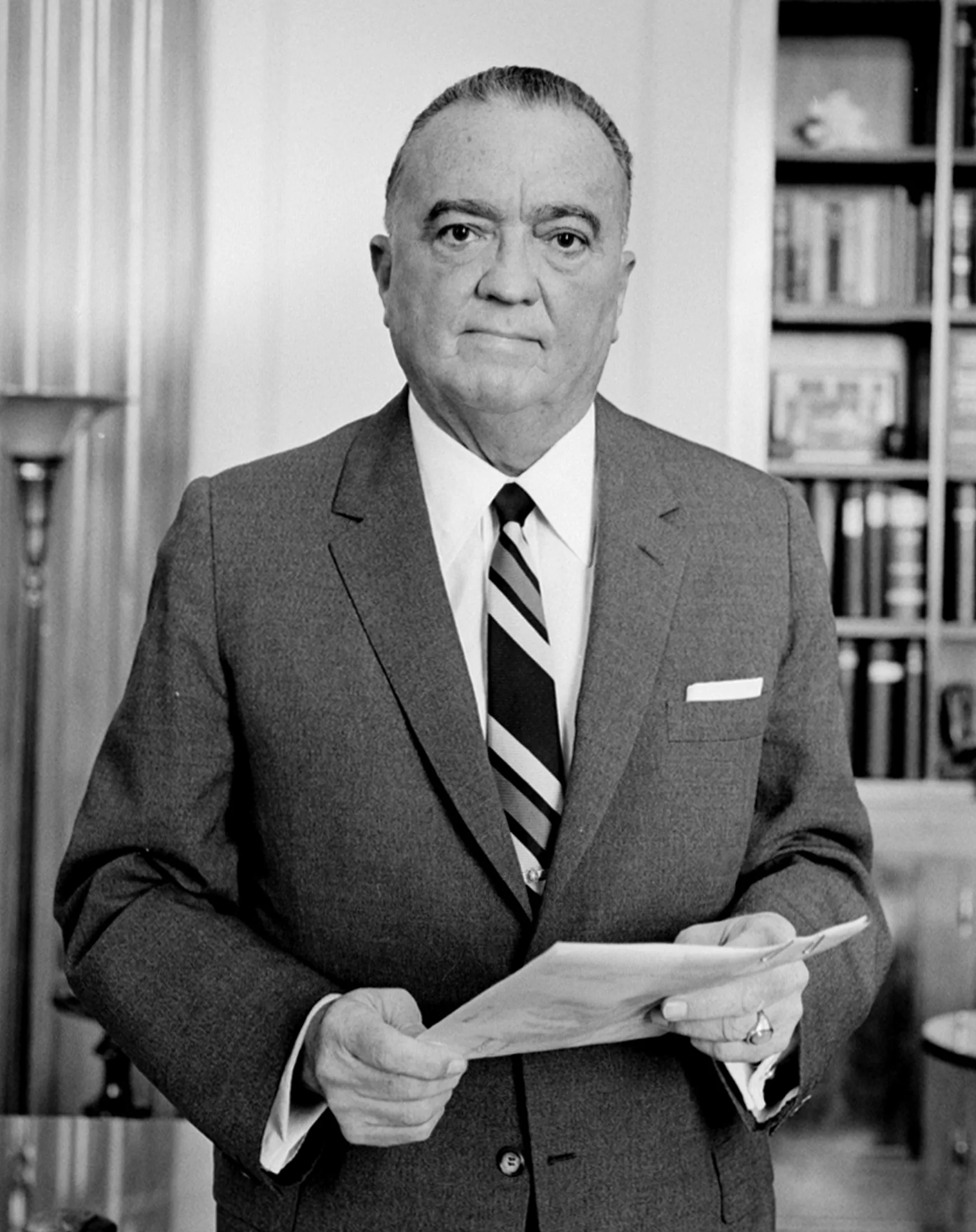
John Edgar Hoover served as Director of the Federal Bureau of Investigation from 1924 until his death in 1972, making him the longest-serving FBI chief in American history. His nearly five-decade tenure shaped modern federal law enforcement while establishing extensive domestic surveillance programs that targeted civil rights leaders, political dissidents, and LGBTQ+ government employees. J.
John Edgar Hoover served as Director of the Federal Bureau of Investigation from 1924 until his death in 1972, making him the longest-serving FBI chief in American history. His nearly five-decade tenure shaped modern federal law enforcement while establishing extensive domestic surveillance programs that targeted civil rights leaders, political dissidents, and LGBTQ+ government employees.
- Source
- Library of Congress
- Type
- Photograph
- License
- Public domain
- Photographer
- Marion S. Trikosko
- Year
- 1961
Photo Information ▾
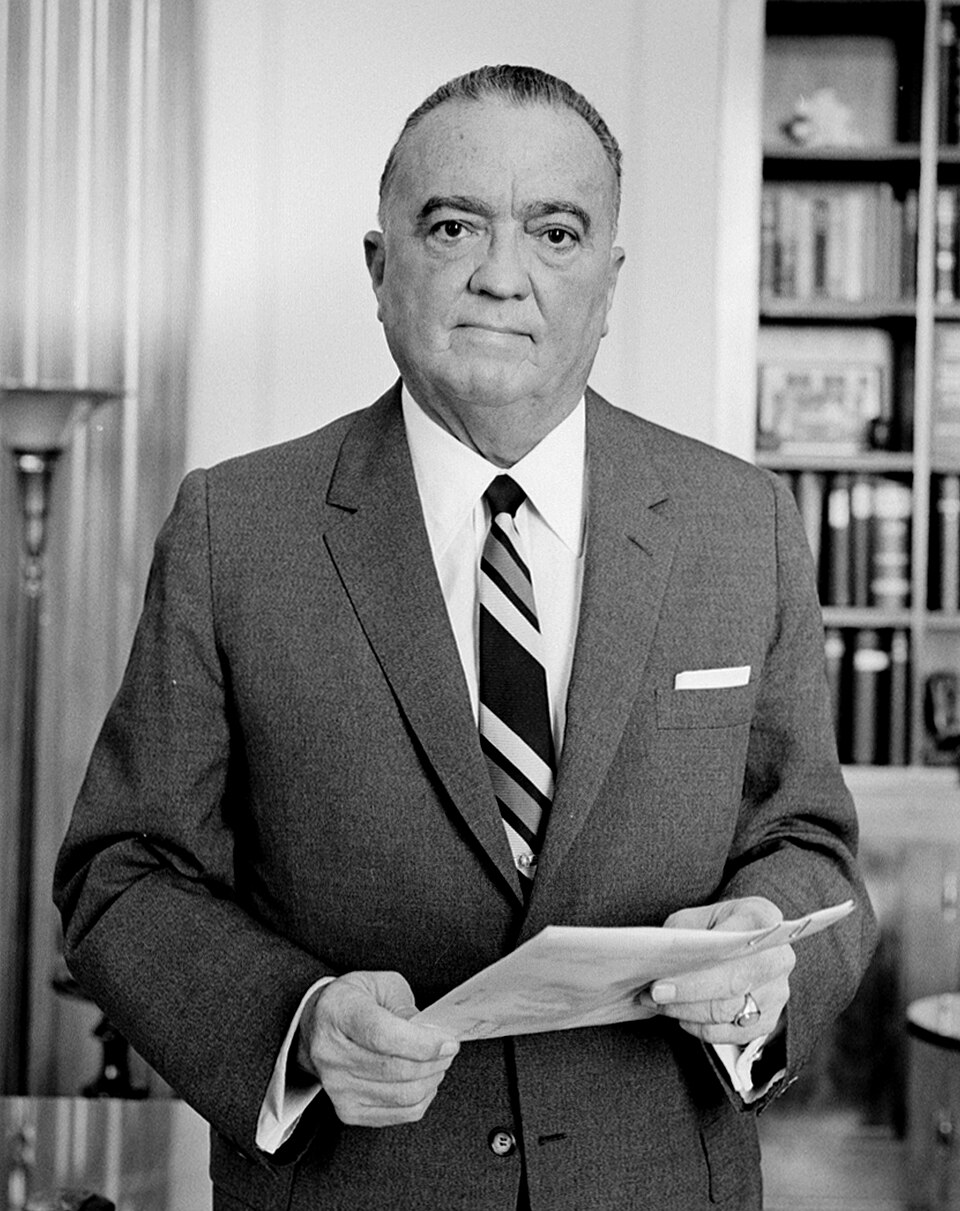
J. Edgar Hoover, head of the U.S. Federal Bureau of Investigation, 1961.
This image is available from the United States Library of Congress's Prints and Photographs division under the digital…
View original ↗- Full name
- John Edgar Hoover
- Born
- January 1, 1895, Washington, D.C.
- Died
- May 2, 1972, Washington, D.C.
- Education
- George Washington University Law School (LL.B., 1916; LL.M., 1917)
- Years as FBI Director
- 1924–1972 (48 years)
- Appointed by
- President Calvin Coolidge (as BOI Director, 1924); served under eight presidents
- Preceded title
- Director of Bureau of Investigation (BOI); renamed FBI in 1935
- Government service career
- Department of Justice, 1917–1972
- Military service
- None (draft-exempt during WWI)
- Relationship with Clyde Tolson
- Associate FBI Director; daily companion for over four decades
J. Edgar Hoover appears centrally in The Archive's investigations of COINTELPRO and the Lavender Scare because he created, authorized, and personally directed the FBI operations at the heart of both campaigns. Under his leadership, the FBI developed COINTELPRO's systematic counterintelligence tactics against domestic political movements, including documented surveillance and disruption of Martin Luther King Jr., the Black Panther Party, and anti-war groups. Simultaneously, Hoover institutionalized the FBI's role in the federal government's decades-long purge of LGBTQ+ employees, establishing investigative files and coordinating with the Civil Service Commission to remove thousands from government service based on sexual orientation. His personal management style—maintaining secret files, centralizing authority, and operating with minimal oversight—enabled both programs to function outside normal legal constraints for years.
# J. Edgar Hoover
Identity
John Edgar Hoover was born on January 1, 1895, in Washington, D.C., into a middle-class federal employee family. He attended George Washington University Law School, earning his Bachelor of Laws in 1916 and Master of Laws in 1917. Hoover never married and maintained no publicly acknowledged romantic relationships. He lived with his mother until her death in 1938, after which he resided alone in the same Washington home until his death in 1972.
Hoover's daily life centered on the FBI and his decades-long companionship with Clyde Tolson, whom he appointed Associate Director. The two men worked together, lunched together daily, vacationed together, and Tolson inherited Hoover's estate and accepted the U.S. flag from Hoover's funeral. Contemporary observers noted the relationship's intimacy, but neither man publicly addressed its nature. Historical assessment of Hoover's personal life remains complicated by the absence of direct testimony and the destruction of many personal papers after his death.
Career & Roles
Hoover joined the Department of Justice in 1917 as a file reviewer in the War Emergency Division during World War I. He quickly advanced to head the Alien Enemy Bureau during the First Red Scare, organizing raids and deportations of suspected radicals. In 1921, he became assistant director of the Bureau of Investigation (BOI), the FBI's predecessor agency.
In 1924, at age 29, Attorney General Harlan Fiske Stone appointed Hoover as BOI Director with a mandate to reform the scandal-plagued agency. Hoover immediately instituted professional standards: mandatory training, merit-based hiring, and the prohibition of political activity by agents. He established a central fingerprint file, created the FBI Laboratory in 1932, and founded the FBI National Academy for police training in 1935. When the BOI was renamed the Federal Bureau of Investigation in 1935, Hoover continued as director.
Hoover served under eight presidents—Coolidge, Hoover, Roosevelt, Truman, Eisenhower, Kennedy, Johnson, and Nixon—and fourteen attorneys general. His longevity stemmed partly from institutional effectiveness: he modernized criminal investigation through fingerprint databases, forensic science, and uniform crime statistics. But his tenure also depended on political leverage derived from secret files on politicians, which contemporaries widely believed he used to insulate himself from removal.
The FBI's role expanded dramatically during World War II, absorbing domestic counterintelligence responsibilities and coordinating with allied intelligence services. Hoover successfully argued that domestic security should remain FBI jurisdiction rather than passing to military or OSS control, establishing a bureaucratic monopoly he defended for the rest of his career.
Organizations & Networks
Hoover constructed the FBI as an extension of his personal authority. Unlike other federal agencies with distributed leadership, the FBI under Hoover operated through centralized command. Field offices reported directly to headquarters; major decisions required Hoover's approval; personnel advancement depended on the Director's favor. This structure enabled rapid decision-making but also concentrated unchecked power.
The FBI maintained formal coordination with the Civil Service Commission, State Department security offices, military intelligence branches, and local police forces. During the Cold War, Hoover established liaison relationships with allied intelligence services while simultaneously competing with the CIA for primacy in counterintelligence matters. Documents show Hoover resisted CIA jurisdiction over domestic intelligence and frequently clashed with CIA directors over operational boundaries.
Hoover cultivated extensive relationships with congressional committees, particularly the House Un-American Activities Committee and Senate Internal Security Subcommittee. FBI reports and testimony supported anti-communist investigations throughout the 1950s. He maintained close contact with conservative politicians, journalists, and media outlets, providing selective information that shaped public discourse on national security threats.
Professional organizations included the International Association of Chiefs of Police, which Hoover helped modernize through FBI training programs and technical assistance. The FBI's Uniform Crime Reporting system, established in 1930, became the national standard for crime statistics, giving Hoover substantial influence over public perception of crime trends.
Major Operations & Activities
Hoover's FBI conducted three categories of major operations: criminal investigation, counterintelligence, and domestic surveillance. Criminal work included high-profile pursuits of gangsters during the 1930s—John Dillinger, Bonnie and Clyde, Machine Gun Kelly—which Hoover publicized extensively to build the FBI's reputation. The FBI also investigated kidnapping, bank robbery, and interstate crime, establishing jurisdiction over offenses that crossed state lines.
Counterspy operations against German, Soviet, and other foreign intelligence services constituted a second major activity. The FBI arrested several successful espionage rings, including the World War II-era German spy network and Soviet atomic espionage operations. Hoover personally announced major spy arrests and cultivated the FBI's image as the front line against foreign subversion.
The third and most controversial category involved domestic political surveillance. Beginning in the 1930s and expanding through the Cold War, the FBI monitored American political movements Hoover deemed subversive. Communist Party infiltration operations, authorized under presidential directives, extended to surveillance of civil rights organizations, anti-war groups, and New Left activists.
COINTELPRO operations—formally established in 1956 but reflecting longstanding FBI practices—represented the most aggressive domestic surveillance programs. These counterintelligence initiatives targeted the Communist Party USA, the Socialist Workers Party, the Ku Klux Klan, Black nationalist organizations, and the New Left. Tactics included infiltration, anonymous letters, false media stories, employment sabotage, and coordination with local police to disrupt targeted groups. Hoover personally approved COINTELPRO operations and received regular progress reports.
Hoover authorized intensive surveillance of Martin Luther King Jr., beginning in 1961 and escalating through 1968. FBI operations included wiretaps, hotel room bugs, informant reports, and the distribution of recordings intended to damage King's reputation. Hoover sent King an anonymous letter—now documented in FBI files—suggesting King commit suicide. These operations occurred with Attorney General approval for some wiretaps but extended well beyond authorized scope.
The FBI's role in the Lavender Scare constituted a parallel operation. Hoover directed agents to identify LGBTQ+ federal employees, maintain files on suspected homosexuals, and coordinate investigations with the Civil Service Commission. FBI reports to Congress in 1950 claimed homosexuals posed security risks due to blackmail vulnerability. The Bureau conducted thousands of investigations resulting in dismissals, resignations, and denial of security clearances based on sexual orientation.
Historical Importance
Hoover's historical significance operates on multiple levels. Institutionally, he created the modern FBI, transforming a small, corruption-prone bureau into a professionalized national police organization with scientific investigation capabilities. Fingerprint identification, forensic laboratories, and systematic criminal records became standard through FBI leadership. Police training programs spread FBI methods throughout American law enforcement.
Politically, Hoover embodied and promoted anti-communist ideology throughout the Cold War. His public statements, congressional testimony, and publications including "Masters of Deceit" (1958) shaped American perceptions of internal security threats. FBI investigations provided evidence for congressional committees and loyalty programs that affected thousands of careers and lives.
Constitutionally, Hoover's tenure raised fundamental questions about executive power, political surveillance, and civil liberties. Operating initially under broad presidential directives and later through institutional momentum and political protection, the FBI under Hoover conducted extensive surveillance of Americans engaged in lawful political activity. The scope remained largely hidden until the 1970s, prompting major reforms in intelligence oversight.
Hoover's personal power—maintained through longevity, secret files, and political protection—demonstrated the vulnerability of American governmental checks and balances to bureaucratic entrenchment. Multiple presidents and attorneys general considered removing him but declined, reportedly fearing personal or political retaliation. This dynamic established dangerous precedents regarding unaccountable permanent officials.
Documented Controversies
Historical Consensus Hoover directed COINTELPRO operations that violated constitutional rights through surveillance, infiltration, and disruption of lawful political organizations. The Church Committee investigation (1975-1976) documented these programs through FBI files, testimony, and internal memoranda. Operations explicitly aimed to "disrupt," "misdirect," and "neutralize" targeted groups, employing tactics including anonymous letters, false media plants, employment interference, and incitement of violence between rival organizations.
Official Record Hoover authorized illegal wiretaps and bugs beyond Justice Department or court authorization. FBI internal documents show surveillance of Martin Luther King Jr. included hotel room bugs and wiretaps installed without proper legal authority. Attorney General Robert Kennedy authorized some King wiretaps in 1963, but FBI operations expanded beyond approved scope and continued after authorization expired. The Church Committee found Hoover approved "clearly illegal" techniques including warrantless break-ins ("black bag jobs") and mail opening programs.
Government Finding The FBI under Hoover maintained covert files on politicians, journalists, and public figures, using information for purposes beyond legitimate law enforcement. Senate investigations documented extensive "official and confidential" files maintained in Hoover's office, separate from regular FBI records, containing political intelligence and derogatory personal information. The purposes and uses of these files remained partially obscured by their destruction after Hoover's death, but surviving documentation and testimony established their existence and political nature.
Credible Allegation Hoover used secret files and information to maintain his position and influence political decisions. Multiple officials, including President Truman's aide William Sullivan and Attorney General Ramsey Clark, stated that Hoover's possession of damaging information made officials reluctant to challenge or remove him. Direct documentary proof of specific blackmail threats is limited, as Hoover communicated sensitive matters verbally, but the circumstantial evidence—extraordinary longevity despite presidential displeasure, combined with documented possession of political intelligence—supports this conclusion.
Disputed Claim Hoover's personal sexual orientation remains a matter of historical debate despite decades of speculation. No documentary evidence establishes that Hoover was gay or bisexual. His relationship with Clyde Tolson was intimate and lifelong but never publicly defined by either man. Claims that organized crime figures possessed photographs of Hoover in compromising situations lack credible documentation and appear to originate from a single unreliable source. Biographers disagree on interpretation: some argue the Tolson relationship strongly suggests a romantic partnership; others contend the evidence supports only close friendship.
Unsupported Claim Allegations that Hoover's personal secrets allowed organized crime to operate freely or that the Mafia blackmailed him lack credible evidence. These claims, popularized in some accounts, stem largely from the 1993 book "Official and Confidential" by Anthony Summers, which has been criticized for relying on questionable sources. FBI records document extensive organized crime investigations during Hoover's tenure, contradicting claims of deliberate inaction. While Hoover initially downplayed the national scope of organized crime, the FBI eventually mounted major operations against Mafia families.
Official Record Hoover's FBI investigated and provided intelligence supporting the dismissal of thousands of LGBTQ+ federal employees. FBI reports to Senator Clyde Hoey's committee in 1950 claimed homosexuals posed "security risks" and recommended systematic removal from government service. The Bureau conducted investigations, maintained files on suspected LGBTQ+ individuals, shared information with the Civil Service Commission, and coordinated interrogations resulting in dismissals and forced resignations. These activities occurred openly as official FBI policy throughout the 1950s and 1960s.
Government Finding The FBI's COINTELPRO-Black Nationalist program targeted civil rights organizations beyond legitimate counterintelligence purposes. Church Committee documentation shows the program aimed to prevent the rise of a "black messiah" who could "unite and electrify" the movement. Operations targeted peaceful civil rights advocacy, not just violent extremism. The FBI infiltrated the NAACP, Southern Christian Leadership Conference, Student Nonviolent Coordinating Committee, and other mainstream organizations, conducting surveillance and disruption unrelated to criminal activity.
Investigations & Legal Proceedings
Hoover himself was never criminally charged or formally investigated during his lifetime. His position, combined with the secrecy surrounding FBI operations, shielded him from accountability until after his death.
The 1971 burglary of the FBI field office in Media, Pennsylvania, by the Citizens' Commission to Investigate the FBI first exposed COINTELPRO operations through stolen documents. These files, distributed to journalists, revealed systematic political surveillance and prompted initial congressional interest.
The Senate Select Committee to Study Governmental Operations with Respect to Intelligence Activities—the Church Committee—conducted the most thorough investigation of Hoover's FBI from 1975 to 1976. The committee reviewed approximately 50,000 FBI documents, heard testimony from 75 witnesses, and issued extensive reports documenting COINTELPRO operations, illegal surveillance techniques, and abuses of authority. The investigation occurred after Hoover's death but examined operations he directed and authorized.
The Church Committee's final reports concluded the FBI engaged in unconstitutional surveillance, violated statutory limits on its authority, exceeded presidential directives, and conducted operations aimed at disrupting lawful political activity. The committee documented specific operations against Martin Luther King Jr., civil rights organizations, and anti-war groups that served no legitimate law enforcement purpose.
Congressional investigations led to the Foreign Intelligence Surveillance Act (1978), establishing judicial oversight of domestic intelligence surveillance, and the Attorney General's Guidelines for FBI investigations, imposing procedural limits on political surveillance. These reforms directly responded to abuses documented during Hoover's tenure.
Civil litigation by surveillance targets produced additional documentation. Lawsuits by the Socialist Workers Party and other organizations resulted in FBI document releases and damage settlements, further establishing the scope of illegal operations.
No individual FBI official, including those executing Hoover's directives, faced criminal prosecution for COINTELPRO operations. The Justice Department declined prosecution, citing national security concerns and difficulty proving criminal intent under vague statutory authorities prevailing at the time.
Denials & Disputes
Hoover consistently defended FBI surveillance programs as necessary for national security. In congressional testimony and public statements, he characterized domestic intelligence operations as counterintelligence against foreign-directed subversion, not political surveillance of Americans. He maintained that groups like the Communist Party USA operated under foreign control and that civil rights organizations faced communist infiltration requiring FBI monitoring.
Regarding Martin Luther King Jr., Hoover publicly called King "the most notorious liar in the country" after King criticized FBI performance on civil rights cases. Hoover defended surveillance as justified by suspected communist influence on King's advisors. FBI memoranda show Hoover personally directed operations, but he never publicly acknowledged their scope or techniques.
Hoover denied FBI files served political purposes, characterizing them as routine law enforcement intelligence. He resisted congressional oversight of FBI operations, arguing that disclosure would compromise sources and methods. His testimony frequently emphasized FBI professionalism and legal compliance while revealing minimal operational detail.
Defenders of Hoover argue he operated within the legal and constitutional understanding of his era, when executive authority over domestic security received broad deference and minimal judicial oversight. They note that presidents authorized FBI intelligence operations through executive directives and that attorneys general approved major investigations. This perspective holds Hoover accountable to his superiors, not for independent abuse of authority.
Critics respond that Hoover exceeded even the broad authorities granted to him, conducted operations his superiors did not authorize or know about, and deliberately concealed the nature and scope of FBI activities from oversight bodies. Church Committee documentation supports this view, showing that specific COINTELPRO operations lacked presidential authorization and that Hoover sometimes misled attorneys general about FBI activities.
Regarding personal life, Hoover never publicly addressed speculation about his relationship with Clyde Tolson. Associates and family members who defended Hoover after his death characterized the relationship as close friendship between bachelor colleagues. No contemporary denial by Hoover himself exists in the public record, as he treated personal questions as beneath response.
Historical debate continues regarding Hoover's motivations. Some scholars emphasize genuine ideological commitment to anti-communism and belief in threats to American security. Others stress bureaucratic self-interest, arguing Hoover expanded FBI power and resisted oversight to protect his position. Most historians recognize mixed motivations: sincere security concerns combined with institutional ambition and personal power.
Legacy & Historical Debate
Hoover's legacy divides between his institutional innovations and his constitutional violations. The FBI's professionalization, scientific methods, and investigative capabilities represent lasting contributions to law enforcement. The Uniform Crime Reporting system, FBI Laboratory, and National Academy continue as standard elements of American policing. Hoover's emphasis on training, merit selection, and political neutrality—however imperfectly realized—established principles that survived his tenure.
Conversely, the constitutional damage from COINTELPRO operations and political surveillance fundamentally tarnished Hoover's reputation. Historical consensus views these programs as serious abuses of power that violated First Amendment rights, exceeded statutory authority, and corrupted federal law enforcement. The Church Committee conclusion that FBI operations aimed to "disrupt" and "neutralize" lawful political activity remains the standard historical judgment.
Hoover's role in the Lavender Scare contributes significantly to negative historical assessment. His FBI institutionalized the federal government's persecution of LGBTQ+ employees, providing investigative resources and political justification for decades of discrimination. The irony that Hoover himself may have been gay or bisexual while directing anti-LGBTQ+ investigations adds complexity to historical interpretation, though this remains unproven.
The question of Hoover's personal life continues to generate historical debate. Some scholars argue that definitively establishing Hoover's sexual orientation matters for understanding his psychology and motivations, particularly regarding the Lavender Scare. Others contend that speculating about Hoover's private life without conclusive evidence reproduces the invasive tactics he employed against others. This methodological debate reflects broader questions about privacy, historical evidence, and the relevance of public figures' personal lives to assessing their official conduct.
Hoover's 48-year tenure raised fundamental questions about the accountability of permanent bureaucratic officials in a democratic system. His ability to outlast political superiors, resist removal, and maintain operational independence demonstrated vulnerabilities in American government structure. Post-Watergate reforms, including statutory FBI director term limits (ten years, established 1976) and enhanced congressional intelligence oversight, responded directly to problems Hoover's career exemplified.
Contemporary assessments increasingly emphasize the damage Hoover's FBI inflicted on American political life. Civil rights historians document how FBI surveillance and disruption undermined constitutional rights and interfered with legitimate political movements. Intelligence scholars cite COINTELPRO as a cautionary example of unchecked domestic surveillance. Legal scholars point to Hoover-era abuses as justification for enhanced judicial oversight of law enforcement.
Defenses of Hoover emphasize historical context, arguing that Cold War security threats justified aggressive counterintelligence and that Hoover operated within the legal norms and political expectations of his time. This perspective has weakened as Church Committee documentation and subsequent scholarship revealed the systematic nature of constitutional violations and the extent to which Hoover exceeded even contemporary authorities.
Hoover's name remains on the FBI headquarters building in Washington, D.C., a continued source of controversy. Periodic proposals to rename the building reflect ongoing debates about how to memorialize a figure whose institutional achievements coexist with serious civil liberties violations.
Continue Investigating
J. Edgar Hoover's documented role in domestic political surveillance connects directly to multiple Archive investigations. His creation and oversight of COINTELPRO operations places him centrally in that dossier, where specific FBI tactics against targeted groups receive detailed examination. His coordination of anti-LGBTQ+ investigations during the Lavender Scare establishes his importance to understanding federal government persecution of sexual minorities.
Hoover's relationship with key figures including William C. Sullivan (FBI assistant director who managed COINTELPRO operations), informants like William O'Neal (who infiltrated the Black Panther Party), and surveillance targets including Martin Luther King Jr. and Fred Hampton shapes multiple Archive profiles. His institutional conflicts with and coordination alongside the Civil Service Commission, State Department Office of Security, and congressional committees including Senator Joseph McCarthy's investigations demonstrate his influence across government.
The Church Committee's investigation of Hoover's FBI represents one of the most significant intelligence oversight efforts in American history, producing documentation central to understanding Cold War-era surveillance. The Citizens' Commission to Investigate the FBI's 1971 burglary first exposed operations Hoover directed, initiating public awareness that enabled later accountability.
Investigators examining Hoover's legacy should trace his FBI's operations through primary documentation: FBI files released under FOIA, Church Committee records, congressional testimony, and court records from civil litigation. Understanding Hoover requires examining not just his public statements but the operational files, internal memoranda, and investigative reports that reveal how the FBI actually functioned. The continuing classification of some Hoover-era files, particularly regarding intelligence sources and methods, means the full historical record remains incomplete.
Hoover's influence extended beyond direct operations to shaping American political culture's understanding of security threats, appropriate surveillance, and the balance between liberty and safety. His career demonstrates how institutional power, once established and insulated from oversight, can persist and expand regardless of constitutional limits—a pattern relevant to contemporary debates about surveillance, civil liberties, and government accountability.
- 1895Born January 1 in Washington, D.C.
- 1917Joined U.S. Department of Justice; earned LL.M. from George Washington University
- 1919Led Alien Enemy Bureau operations during First Red Scare
- 1924Appointed Director of Bureau of Investigation at age 29
- 1930Established Uniform Crime Reporting system
- 1932Founded FBI Laboratory
- 1935Bureau renamed Federal Bureau of Investigation; founded FBI National Academy
- 1950FBI provided intelligence to Senate committee investigating homosexuals in government, institutionalizing Lavender Scare investigations
- 1956Authorized COINTELPRO-Communist Party program, first formal counterintelligence operation against domestic groups
- 1961Authorized surveillance of Martin Luther King Jr.
- 1964FBI sent anonymous letter to King suggesting suicide
- 1968COINTELPRO-Black Nationalist program active during period of civil rights and Black Power movement surveillance
- 1971Citizens' Commission burglary of Media, Pennsylvania FBI office exposed COINTELPRO documents
- 1972Died May 2 in Washington, D.C.; personal files destroyed
- 1975-76Church Committee investigated FBI abuses under Hoover's direction
- 1976Congress established ten-year term limit for FBI directors in response to Hoover's tenure
- S1Church Committee Reports: Intelligence Activities and the Rights of AmericansU.S. Senate · primary
- S2The FBI COINTELPRO FilesFBI Records Vault · primary
- S3J. Edgar Hoover: The Man and the SecretsW. W. Norton & Company · book
- S4J. Edgar Hoover BiographyFederal Bureau of Investigation · primary
- S5J. Edgar Hoover, 77, Dies; Will Lie in State in CapitolThe New York Times · mainstream
- S6Burglars Who Took on FBI Abandon ShadowsThe New York Times · mainstream
- S7J. Edgar HooverWikipedia · reference
- S8What the FBI Files Reveal About J. Edgar Hoover's Own Secret LifeSmithsonian Magazine · mainstream
- S9A Brief History of the FBIFederal Bureau of Investigation · primary
- S10The FBI Nobody KnowsJSTOR (Nation Archive) · academic
If you're learning about this topic for the first time, these are the best places to continue — documented evidence and historical relationships are the guide.
J. Edgar Hoover is documented in the evidence record of this published dossier.
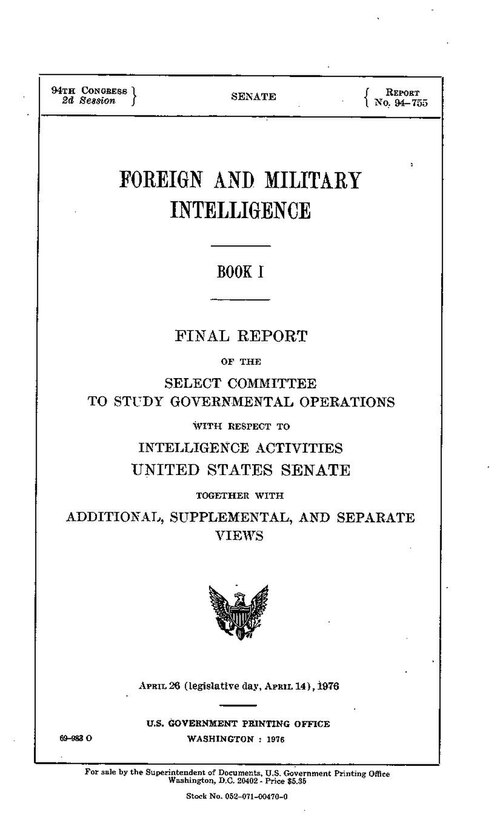
Senate committee that investigated and documented FBI abuses under Hoover after his death.
Black Panther leader killed in raid; FBI provided intelligence under COINTELPRO program Hoover directed.