
Dwight D. Eisenhower
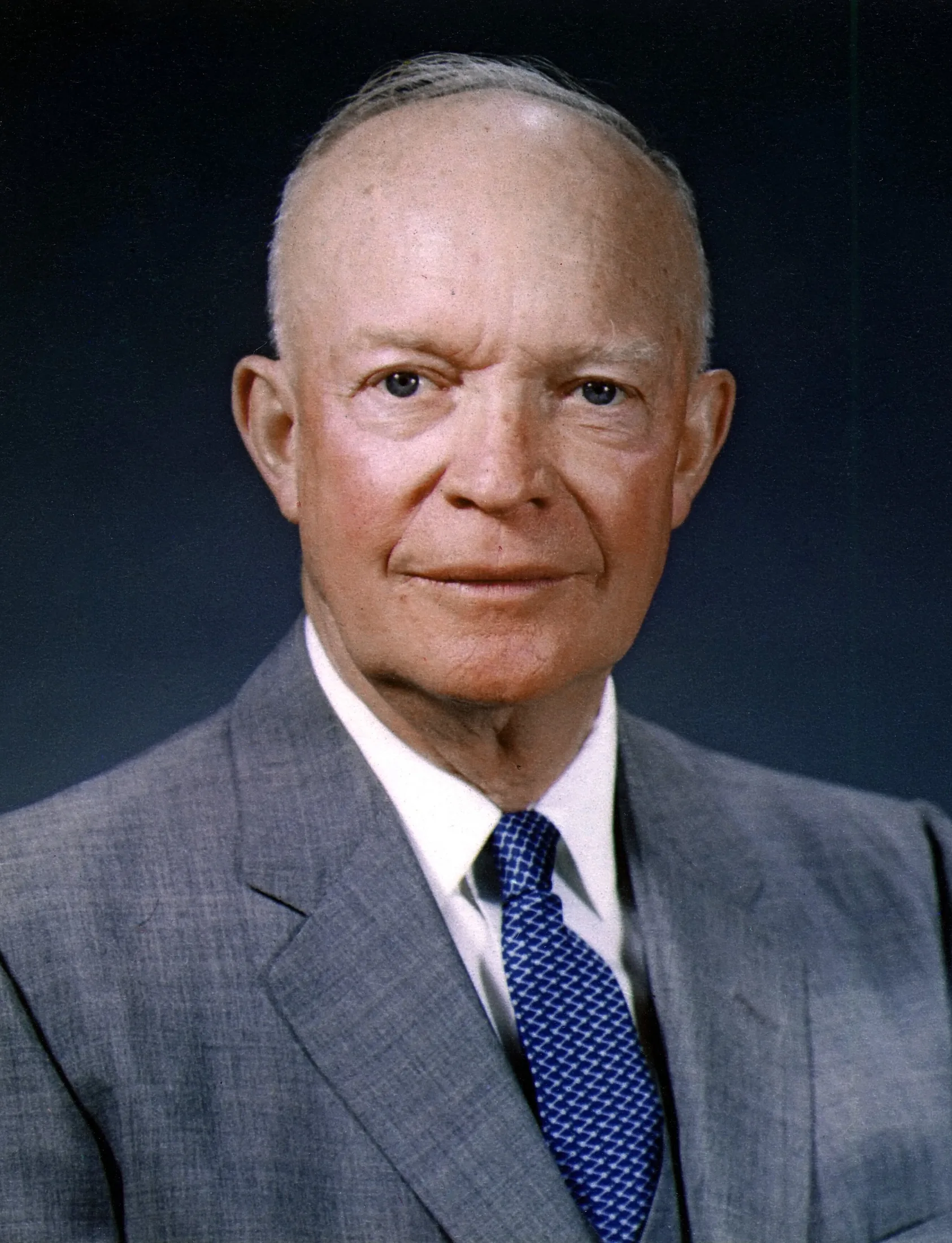
Dwight David Eisenhower (1890–1969) served as the 34th President of the United States (1953–1961) and Supreme Commander of Allied Forces in Europe during World War II. His presidency oversaw both the expansion of Cold War defense infrastructure and the implementation of federal security policies that targeted LGBTQ+ government employees, while his farewell address warning against the 'military-industrial complex' be… Eisenhower occupies a uniquely paradoxical position in Archive investigations.
Dwight David Eisenhower (1890–1969) served as the 34th President of the United States (1953–1961) and Supreme Commander of Allied Forces in Europe during World War II. His presidency oversaw both the expansion of Cold War defense infrastructure and the implementation of federal security policies that targeted LGBTQ+ government employees, while his farewell address warning against the 'military-industrial complex' became one of the most consequential political speeches in American history.
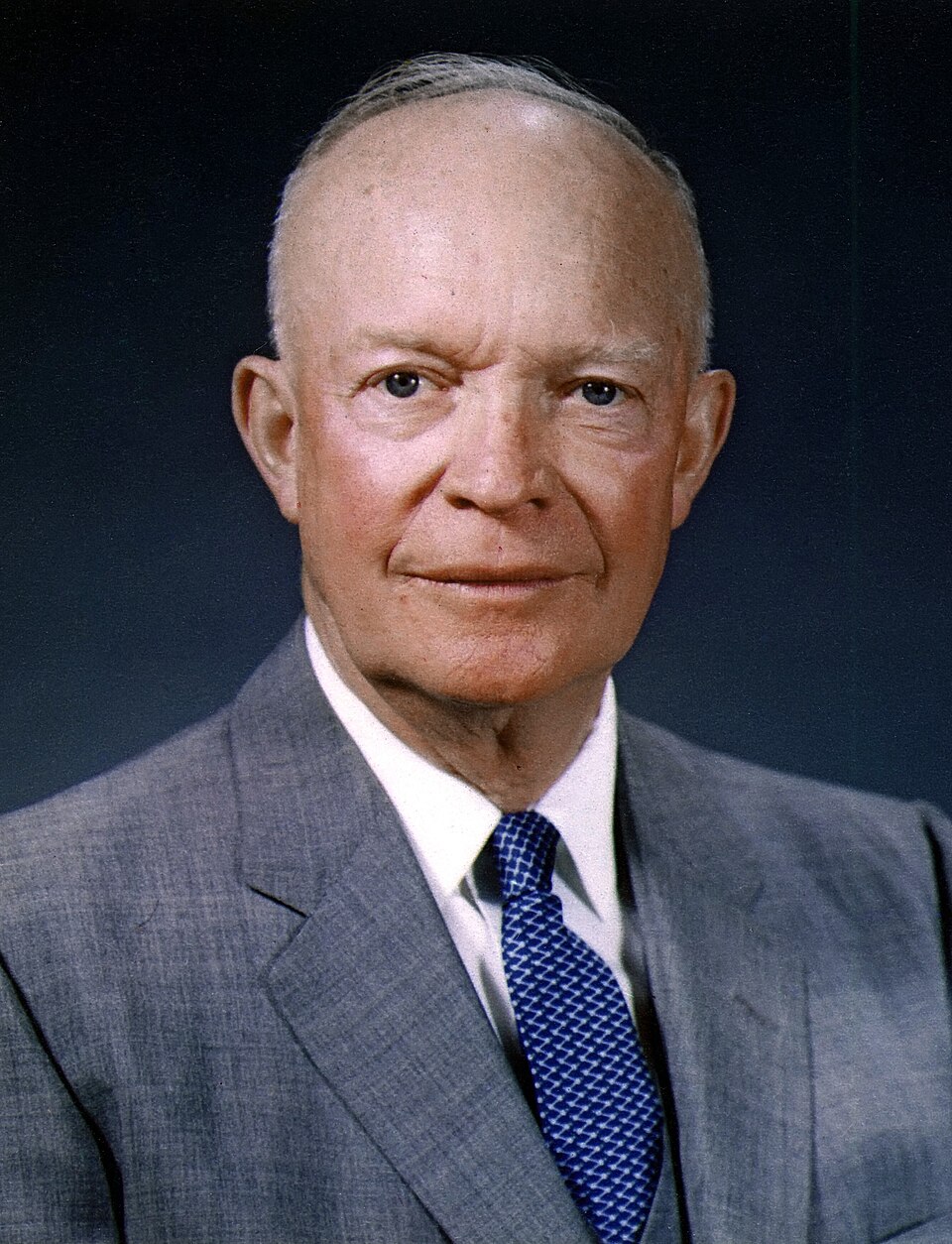
- Source
- The White House
- Type
- Official Portrait
- License
- Public domain
- Photographer
- White House
- Year
- 1959
Photo Information ▾
- Full name
- Dwight David Eisenhower
- Born
- October 14, 1890, Denison, Texas
- Died
- March 28, 1969, Washington, D.C.
- Military service
- U.S. Army, 1915–1952; rank of General of the Army (five-star)
- Presidential terms
- 34th President, January 20, 1953 – January 20, 1961
- Political party
- Republican
- Vice President
- Richard Nixon
- Education
- United States Military Academy (West Point), graduated 1915
- Key wartime role
- Supreme Commander, Allied Expeditionary Force, Europe (1943–1945)
- NATO position
- Supreme Commander, NATO Forces (1951–1952)
- Notable executive order
- Executive Order 10450 (1953), establishing security requirements for federal employment
- Farewell address date
- January 17, 1961
Eisenhower occupies a uniquely paradoxical position in Archive investigations. He simultaneously presided over the massive expansion of defense contracting relationships that created the military-industrial complex he later warned against, and enforced Executive Order 10450, which institutionalized the systematic purging of homosexuals from federal employment during the Lavender Scare. His administration's security policies resulted in thousands of dismissals while his defense budgets established permanent peacetime relationships between Pentagon planners and major weapons manufacturers. Understanding Eisenhower's documented roles in these systems is essential to understanding their institutional origins.
Identity
Dwight David Eisenhower was born on October 14, 1890, in Denison, Texas, and raised in Abilene, Kansas. He graduated from the United States Military Academy at West Point in 1915, commissioned as a second lieutenant in the U.S. Army. His military career spanned 37 years, culminating in his appointment as a five-star General of the Army and his service as Supreme Commander of Allied Forces in Europe during World War II, where he planned and executed Operation Overlord, the D-Day invasion of Normandy in June 1944.
Following the war, Eisenhower served as Army Chief of Staff (1945–1948), president of Columbia University (1948–1953), and Supreme Commander of NATO forces (1951–1952) before being elected as the 34th President of the United States in 1952. He served two terms from 1953 to 1961, governing during the height of the Cold War. He died on March 28, 1969, in Washington, D.C., following a prolonged illness.
Career & Roles
Eisenhower's military career began in 1915 but his rise to prominence occurred during World War II. After serving in various training and staff positions during the interwar period, he was assigned to the War Department General Staff in 1941. General George Marshall selected him to command U.S. forces in Europe in 1942, and by December 1943 he was appointed Supreme Commander of the Allied Expeditionary Force. In this role, he coordinated multinational forces across multiple theaters, directed the invasion of Nazi-occupied Europe, and accepted Germany's unconditional surrender in May 1945.
After the war, Eisenhower briefly served as Military Governor of the U.S. Occupation Zone in Germany before returning to Washington as Chief of Staff of the Army. He retired from active military service in 1948 to become president of Columbia University, though he took leave in 1951 to organize NATO's military command structure as its first Supreme Commander. This position placed him at the center of U.S. Cold War strategy during the Korean War period.
Eisenhower's presidential candidacy in 1952 was encouraged by both Republican Party leaders seeking a moderate candidate and business leaders concerned about the continuation of New Deal policies. He won the election decisively against Democratic nominee Adlai Stevenson and was reelected in 1956. His presidency focused on Cold War containment policy, interstate highway construction, moderate domestic policies including the enforcement of Brown v. Board of Education school desegregation in Little Rock, Arkansas, and the maintenance of a large peacetime defense establishment.
Organizations & Networks
As president, Eisenhower presided over the executive branch during a period of institutional expansion. He reorganized the Department of Defense, elevated the role of the National Security Council, and expanded the Central Intelligence Agency's covert operations capabilities under Director Allen Dulles. His cabinet included prominent business executives, notably Charles Wilson, former president of General Motors, as Secretary of Defense, and George Humphrey, former chairman of M.A. Hanna Company, as Secretary of the Treasury.
Eisenhower maintained close relationships with military and defense industry leaders throughout his career. His administration oversaw the negotiation of major weapons contracts with companies including Boeing, General Dynamics, Lockheed, and other firms that would become central to what he later termed the military-industrial complex. The revolving door between Pentagon leadership and defense contractors became institutionalized during his tenure, with numerous senior military officers joining defense firms after retirement.
His administration also expanded the federal security apparatus. Executive Order 10450, issued in April 1953, established a comprehensive security program covering all federal employees and explicitly listed "sexual perversion" as grounds for security dismissal. This order was implemented through the Civil Service Commission, working in coordination with the FBI under J. Edgar Hoover and security offices across federal departments.
Major Operations & Activities
Eisenhower's presidency was defined by several major policy initiatives and covert operations. His "New Look" defense policy emphasized nuclear weapons and strategic airpower over conventional forces, leading to massive investments in bomber aircraft, missile systems, and nuclear weapons production. This policy required close coordination with aerospace and weapons manufacturers, cementing relationships between the Pentagon and private industry.
In covert operations, his administration authorized CIA-led coups in Iran (Operation Ajax, 1953) and Guatemala (Operation PBSuccess, 1954), expanded U-2 reconnaissance flights over the Soviet Union, and approved the initial planning for what would become the Bay of Pigs invasion of Cuba. These operations were overseen through the National Security Council's covert action planning structure, which operated largely outside congressional oversight.
Domestically, the Federal-Aid Highway Act of 1956 authorized construction of the Interstate Highway System, the largest public works project in American history. While publicly justified for civilian mobility and economic development, the system was explicitly designed to facilitate military mobilization and civil defense evacuation, representing another fusion of civilian infrastructure and military planning.
The administration's security program resulted in systematic investigations of federal employees' personal lives. Between 1953 and 1961, thousands of federal employees were dismissed or forced to resign under security provisions, with a significant proportion involving allegations of homosexuality. These dismissals were coordinated across agencies including the State Department, Defense Department, and other federal offices.
Historical Importance
Eisenhower's historical significance rests on several documented institutional legacies. First, his administration established the structural foundations of the permanent Cold War defense establishment. Defense spending remained high even in peacetime, creating sustained demand for advanced weapons systems and establishing long-term relationships between military planners and defense contractors. The Congressional Armed Services Committees worked closely with Pentagon leaders and industry representatives to authorize and fund major weapons programs, creating the institutional triangle Eisenhower would later warn against.
Second, his presidency institutionalized the national security state's expansion into Americans' private lives. Executive Order 10450 provided the legal framework for the Lavender Scare's most intensive phase. The order mandated investigation of employees' sexual conduct and authorized dismissal based on "sexual perversion," a category that was deliberately vague but consistently applied to exclude homosexuals from federal service. This policy was implemented systematically across the executive branch, creating thousands of documented cases of career destruction.
Third, Eisenhower's farewell address on January 17, 1961, introduced the phrase "military-industrial complex" into American political vocabulary. In this televised speech, delivered three days before leaving office, he warned: "In the councils of government, we must guard against the acquisition of unwarranted influence, whether sought or unsought, by the military-industrial complex. The potential for the disastrous rise of misplaced power exists and will persist." This warning came from the president who had overseen the complex's expansion, giving it particular historical weight.
Documented Controversies
Official Record Eisenhower's issuance of Executive Order 10450 on April 27, 1953, explicitly listed "sexual perversion" as a security disqualification for federal employment. The order stated that employment was not "clearly consistent with the interests of the national security" if it involved "any criminal, infamous, dishonest, immoral, or notoriously disgraceful conduct, habitual use of intoxicants to excess, drug addiction, or sexual perversion." This language codified the exclusion of homosexuals from federal service at the presidential level, providing legal authority for systematic dismissals.
Government Finding The Civil Service Commission, operating under Eisenhower's executive order, documented thousands of security dismissals during his presidency. According to records compiled by the commission and later analyzed by historians, approximately 5,000 to 10,000 federal employees were dismissed or resigned under security provisions between 1953 and 1961, with a substantial portion involving allegations of homosexuality. The exact proportion remains difficult to determine because many cases were classified under general "suitability" categories.
Historical Consensus Eisenhower's defense budgets established unprecedented peacetime levels of military spending, creating sustained relationships between the Pentagon and major contractors. Defense expenditures averaged approximately 10 percent of GDP during his presidency, compared to roughly 4 percent in the late 1940s. Major weapons programs initiated during his administration included the Atlas and Titan intercontinental ballistic missiles, the B-52 bomber program expansion, and nuclear submarine construction, all requiring long-term contracts with private manufacturers.
Ongoing Historical Debate Historians continue to debate Eisenhower's awareness of and responsibility for the policies his administration implemented. Some scholars argue he was a hands-off executive who delegated security policy to subordinates including Vice President Nixon and FBI Director Hoover, while others present evidence from declassified records showing he was briefed on and approved security dismissals. His personal views on homosexuality remain documented primarily through the policy implementations he authorized rather than extensive private correspondence.
Official Record Eisenhower's farewell address warning against the military-industrial complex was delivered after eight years of defense budget expansion under his own administration. The speech's text, preserved in presidential records, acknowledged the necessity of the defense establishment while warning of its potential influence: "This conjunction of an immense military establishment and a large arms industry is new in the American experience. The total influence—economic, political, even spiritual—is felt in every city, every State house, every office of the Federal government."
Investigations & Legal Proceedings
Eisenhower himself was not subject to criminal investigations or legal proceedings. However, his administration's policies became the subject of subsequent congressional investigations and legal challenges. The security dismissal program authorized by Executive Order 10450 was challenged in federal courts throughout the 1950s and 1960s, though the Supreme Court did not definitively address the constitutionality of dismissing federal employees for homosexuality during Eisenhower's lifetime.
Frank Kameny, an astronomer dismissed from the Army Map Service in 1957 under Eisenhower's security program, became one of the first fired employees to challenge his dismissal in federal court. His case reached the Supreme Court in 1961, shortly after Eisenhower left office, but the Court declined to hear it. Kameny subsequently became a pioneering gay rights activist, directly challenging the policies Eisenhower had institutionalized.
Congressional committees during Eisenhower's presidency, particularly the Senate Permanent Subcommittee on Investigations, conducted numerous investigations of alleged security risks in federal employment. These investigations were often coordinated with executive branch security offices and FBI surveillance programs. Senator Joseph McCarthy's investigations of alleged communist infiltration operated in parallel with the Lavender Scare dismissals, though the homosexual exclusion policy outlasted McCarthy's influence.
Denials & Disputes
Eisenhower did not publicly defend or extensively explain his administration's security dismissal policies during his presidency or in his post-presidential memoirs. His two-volume presidential memoir, "The White House Years" (1963-1965), does not substantially address the Lavender Scare or the implementation of Executive Order 10450's provisions regarding sexual conduct. This silence has been interpreted variously by historians as either reflecting the era's general unwillingness to discuss homosexuality publicly or as indicating Eisenhower's delegation of security policy to subordinates.
Regarding the military-industrial complex, Eisenhower's farewell address itself acknowledged the paradox of warning against a system his administration had expanded. The speech noted that the defense establishment's growth was necessary given Cold War threats, but argued that this necessity did not eliminate the danger of undue influence. Some contemporary commentators criticized the warning as hypocritical given his eight years of defense budget expansion, while others saw it as a responsible acknowledgment of institutional trends he had come to recognize as problematic.
Defenders of Eisenhower's security policies, both during and after his presidency, argued that excluding homosexuals from sensitive positions was necessary for national security because they were vulnerable to blackmail by foreign intelligence services. This rationale was challenged even during the 1950s by some security experts who noted that the blackmail vulnerability was created by the very policies that made homosexuality grounds for dismissal, creating a self-fulfilling security risk.
Legacy & Historical Debate
Eisenhower's legacy regarding both the military-industrial complex and the Lavender Scare remains contested in historical scholarship. His farewell address warning is widely celebrated as prescient, frequently cited by critics of defense spending and military intervention across the political spectrum. Yet historians note the irony that this warning came from the president whose policies established the institutional relationships he criticized. Declassified records, including National Security Council documents and budget records, show that Eisenhower personally approved the defense spending levels and major weapons programs that created sustained dependence on defense contracts.
Regarding LGBTQ+ rights, Eisenhower's presidency represents one of the darkest periods of official persecution. Executive Order 10450 provided legal authority for systematic discrimination that persisted for decades. The order was not formally superseded regarding sexual orientation until Executive Order 13087, issued by President Clinton in 1998, which prohibited discrimination based on sexual orientation in federal civilian employment. Historical reassessment of Eisenhower's domestic policies increasingly emphasizes the human cost of the security programs his administration enforced.
Some historians argue for a more nuanced assessment, noting that Eisenhower resisted pressure from anti-communist extremists for even broader purges, maintained moderate positions on many domestic policies, and showed genuine concern in his farewell address about trends he had observed. Others counter that these mitigating factors do not diminish documented responsibility for policies that destroyed thousands of careers and lives.
The military-industrial complex he named has evolved substantially since 1961, with defense contracting becoming increasingly concentrated among fewer firms (Boeing, Lockheed Martin, Northrop Grumman, Raytheon, and General Dynamics now dominate major programs) and the revolving door between Pentagon positions and industry employment becoming more institutionalized. Organizations including the Project on Government Oversight continue to document these relationships, tracing many contemporary patterns to the institutional foundations established during Eisenhower's presidency.
Continue Investigating
Eisenhower's documented role in establishing permanent defense industry relationships connects directly to the-military-industrial-complex dossier, which examines the institutional structure, contracting relationships, and political influence he warned against. His presidency's security policies are central to the-lavender-scare dossier, which documents the systematic persecution of LGBTQ+ federal employees from the 1950s through the 1990s.
Related entities include the-pentagon-department-of-defense, which implemented the defense procurement policies that created sustained contractor relationships; the civil-service-commission, which administered security dismissals under Executive Order 10450; and j-edgar-hoover, whose FBI conducted surveillance and investigations of suspected homosexual federal employees. Frank-kameny represents the direct human consequence of Eisenhower's policies and became a leading challenger of the security dismissal system. Senator-joseph-mccarthy conducted parallel anti-communist investigations that overlapped with but were distinct from the Lavender Scare dismissals, while john-peurifoy and senator-clyde-r-hoey were key figures who preceded Eisenhower in establishing the political climate for homosexual exclusion.
The defense contractors that benefited from Eisenhower-era expansion include lockheed-martin-corporation, boeing-defense, general-dynamics, northrop-grumman, and raytheon-technologies. The congressional-armed-services-committees worked with the administration to authorize major weapons programs, while think tanks including the center-for-strategic-and-international-studies later analyzed the military-industrial relationships established during this period.
Broader Cold War operations during Eisenhower's presidency connect to operation-ajax-1953-iran-coup, operation-gladio (NATO's covert operations), and the-pentagon-papers, which later revealed classified decision-making from this era. His administration's covert action expansion relates to mkultra-and-cia-mind-control and operation-mockingbird, both of which intensified during the 1950s. The institutional secrecy he presided over connects to patterns documented in snowden-and-nsa-mass-surveillance and vault-7, showing the evolution of national security state authorities.
Investigators should examine the Eisenhower Presidential Library's archives, declassified National Security Council records at the National Archives, Civil Service Commission records regarding security dismissals, congressional hearing transcripts from the 1950s, and the extensive historical scholarship on both the military-industrial complex and the Lavender Scare. The paradox of Eisenhower warning against a system he built remains one of the most instructive case studies in how institutional imperatives can persist regardless of individual intentions.
- 1890Born October 14 in Denison, Texas
- 1915Graduated from West Point; commissioned as second lieutenant
- 1943Appointed Supreme Commander, Allied Expeditionary Force, Europe
- 1944Directed D-Day invasion of Normandy (Operation Overlord)
- 1945Accepted German unconditional surrender; became Army Chief of Staff
- 1948Retired from active military service; became president of Columbia University
- 1951Appointed Supreme Commander of NATO forces
- 1952Elected 34th President of the United States
- 1953Issued Executive Order 10450 establishing security program including 'sexual perversion' as disqualification; authorized CIA coup in Iran (Operation Ajax)
- 1954Authorized CIA coup in Guatemala (Operation PBSuccess)
- 1956Reelected president; signed Federal-Aid Highway Act authorizing Interstate Highway System
- 1957Ordered federal troops to enforce school desegregation in Little Rock, Arkansas
- 1960U-2 spy plane shot down over Soviet Union, creating diplomatic crisis
- 1961Delivered farewell address warning against military-industrial complex on January 17; left office January 20
- 1963-1965Published two-volume presidential memoir 'The White House Years'
- 1969Died March 28 in Washington, D.C.
- S1Executive Order 10450: Security Requirements for Government EmploymentNational Archives · primary
- S2Federal Employment of Homosexuals: The Civil Service Commission's Policy and Its EnforcementJSTOR / Journal of Policy History · academic
- S3Gay Rights Movement: Frank Kameny PapersLibrary of Congress · primary
- S4Eisenhower: The White House YearsHarvard University Press · book
- S5President Dwight D. Eisenhower's Farewell Address (1961)National Archives · primary
- S6Foreign Relations of the United States: Iran, 1951–1954U.S. Department of State Office of the Historian · primary
- S7The Origins of the American Military Coup of 2012JSTOR / Parameters: Journal of the U.S. Army War College · academic
- S8Dwight D. EisenhowerEncyclopaedia Britannica · reference
- S9Eisenhower and the Cold WarJSTOR / The Journal of American History · academic
- S10The Military-Industrial Complex in Historical PerspectiveJSTOR / The Business History Review · academic
If you're learning about this topic for the first time, these are the best places to continue — documented evidence and historical relationships are the guide.