Dr. J. Allen Hynek
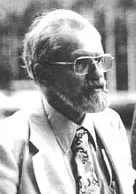
Dr. J. Hynek occupies a unique position in Archive investigations as the institutional scientist who bridged official government UFO research and civilian inquiry.
Dr. J. Allen Hynek (1910–1986) was an American astronomer who served as the scientific consultant to the U.S. Air Force's UFO investigation programs (Project Sign, Project Grudge, and Project Blue Book) from 1948 to 1969. Initially a skeptic who often explained sightings in conventional terms, he became increasingly convinced that a genuine scientific mystery existed, ultimately founding the Center for UFO Studies and advocating for serious academic research into the phenomenon.
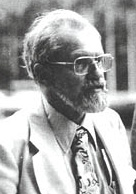
- Source
- Wikimedia Commons
- Type
- Photograph
- License
- Public domain
- Photographer
- United States Government
Photo Information ▾
- Full Name
- Josef Allen Hynek
- Born
- May 1, 1910, Chicago, Illinois
- Died
- April 27, 1986, Scottsdale, Arizona
- Education
- Ph.D. in Astrophysics, University of Chicago (1935)
- Primary Position
- Professor and Chair, Astronomy Department, Northwestern University (1960–1986)
- Government Role
- Scientific Consultant, U.S. Air Force UFO Projects (1948–1969)
- Notable Organization Founded
- Center for UFO Studies (CUFOS, 1973)
- Professional Recognition
- Fellow, Royal Astronomical Society
- Key Publication
- The UFO Experience: A Scientific Inquiry (1972)
- Cultural Legacy
- Technical advisor for Steven Spielberg's Close Encounters of the Third Kind (1977)
Hynek occupies a unique position in Archive investigations as the institutional scientist who bridged official government UFO research and civilian inquiry. His two-decade tenure as Project Blue Book's chief scientific consultant makes him the single most documented scientific authority in official U.S. UFO investigation records. His evolution from skeptical debunker to advocate for systematic study—and his creation of the "Close Encounters" classification system still referenced in contemporary UAP discourse—establishes him as the foundational figure linking mid-century military UFO programs to modern academic approaches. His documented friction with Air Force conclusions, particularly after the 1966 Michigan "swamp gas" controversy, illuminates the tensions between scientific methodology and institutional pressure that remain central to Archive investigations of government transparency regarding aerial phenomena.
Identity
Josef Allen Hynek was born on May 1, 1910, in Chicago, Illinois, to Czech immigrant parents. He earned his undergraduate degree from the University of Chicago in 1931 and completed his Ph.D. in astrophysics there in 1935, studying stellar evolution and spectroscopy. He spent the early part of his career at the Perkins Observatory at Ohio State University and the Johns Hopkins University Applied Physics Laboratory, where during World War II he worked on radio proximity fuses for anti-aircraft artillery—a connection that would later prove significant to his military consulting work.
In 1960, Hynek became professor and chair of the astronomy department at Northwestern University in Evanston, Illinois, a position he held until his death in 1986. He was a respected observational astronomer with peer-reviewed publications on stellar spectra, orbital mechanics, and satellite tracking. His academic credentials were impeccable when the U.S. Air Force first approached him in 1948, precisely because his skeptical, scientific reputation would lend credibility to their nascent UFO investigation efforts.
Hynek married Miriam "Mimi" Curtis in 1942; they had five children. Colleagues described him as methodical, cautious in his conclusions, and initially bemused by his assignment to investigate "flying saucer" reports, which he considered a temporary diversion from serious astronomical work. His Catholic faith and respect for empirical evidence shaped his careful approach to controversial claims.
Career & Roles
Hynek's involvement with official UFO research began in 1948 when the Air Force contracted him through Ohio State University to provide astronomical analysis for Project Sign, the military's first formal UFO investigation program. His initial role was narrowly defined: determine whether reported sightings could be explained by astronomical phenomena such as meteors, planets, or stars. Air Force officers expected Hynek to debunk reports using conventional explanations, and for several years he obliged, often attributing sightings to misidentifications of Venus, aircraft, or atmospheric effects.
This arrangement continued through Project Grudge (1949–1952) and became formalized when Project Blue Book was established in 1952 at Wright-Patterson Air Force Base in Ohio. Hynek served as Blue Book's chief scientific consultant for seventeen years, reviewing thousands of case files, interviewing witnesses, and providing technical analysis. Major Edward J. Ruppelt, Blue Book's first director, documented in his 1956 book that Hynek initially approached cases with "complete skepticism" and was "bent on finding a logical explanation."
Hynek's astronomical expertise proved valuable for eliminating conventional explanations, but his role gradually expanded beyond simple astronomical consultation. He developed standardized investigation protocols, trained Air Force personnel in witness interview techniques, and created classification systems for reported phenomena. His academic position at Northwestern allowed him to maintain scientific credibility while continuing his government work—an arrangement that drew little public attention until the mid-1960s.
The 1966 Michigan sightings marked a turning point in Hynek's public profile. When multiple witnesses reported luminous objects over swampland in Dexter and Hillsdale, Michigan, Hynek was dispatched to investigate. Under apparent pressure to provide quick explanations during a period of intense media coverage and congressional interest, he suggested that some sightings might have been swamp gas—decomposing organic matter producing luminescent methane. The "swamp gas" explanation became a national joke, and Hynek later expressed regret about the episode, stating in a 1976 interview with Fate magazine that he felt "pressured" by Air Force officials to provide prosaic explanations.
After Project Blue Book closed in 1969—following the Condon Report's conclusion that UFO study had little scientific value—Hynek's public position shifted markedly. He began arguing that a legitimate scientific mystery remained unresolved and that the Air Force had applied insufficient rigor to truly puzzling cases. His 1972 book The UFO Experience: A Scientific Inquiry presented his detailed classification system and argued that approximately 20% of Blue Book cases remained genuinely unexplained despite thorough investigation.
Organizations & Networks
In 1973, Hynek founded the Center for UFO Studies (CUFOS) in Evanston, Illinois, establishing the first organization explicitly dedicated to applying scientific methodology to UFO research outside government auspices. CUFOS trained investigators, maintained a case database, published the peer-reviewed International UFO Reporter, and brought academic rigor to a field often dominated by sensationalism. The organization attracted scientists, engineers, and former military personnel frustrated by official indifference.
Hynek's network included Dr. James E. McDonald, an atmospheric physicist at the University of Arizona who shared his conviction that UFOs warranted serious scientific study. McDonald testified before Congress in 1968 advocating for renewed investigation, and the two scientists corresponded regularly, though they sometimes disagreed on interpretation—McDonald leaned toward extraterrestrial hypotheses more readily than the cautious Hynek. After McDonald's death in 1971, Hynek became the most prominent scientific voice calling for UFO research legitimacy.
French astrophysicist Jacques Vallée became Hynek's closest collaborator and eventual successor as a leading UFO researcher. Vallée had worked on early computer networking and astronomical databases before meeting Hynek in 1963. Their partnership produced several joint publications exploring unconventional hypotheses beyond simple extraterrestrial craft, including interdimensional theories and psychosocial phenomena. Vallée's 1996 book Forbidden Science documented their extensive correspondence and Hynek's private frustrations with both debunkers and uncritical believers.
Hynek maintained contact with military officers and intelligence personnel who had worked on Blue Book and related programs. Major Donald Keyhoe, a former Marine Corps aviator who directed the National Investigations Committee on Aerial Phenomena (NICAP), initially worked with Hynek but later criticized him for being too deferential to Air Force restrictions. Conversely, committed skeptics like astronomer Donald Menzel publicly sparred with Hynek, arguing that his post-Blue Book advocacy damaged his scientific reputation.
His technical consulting for Steven Spielberg's 1977 film Close Encounters of the Third Kind brought Hynek's classification system to mainstream culture. He appears briefly in the film's final scene—a bearded figure smoking a pipe at the Devil's Tower landing site. This cameo symbolized his unique position: a credentialed scientist willing to appear in a Hollywood science fiction film because he believed the subject merited serious attention despite ridicule.
Major Operations & Activities
Hynek's central operational role was analyzing Project Blue Book cases and providing scientific credibility to the Air Force investigation program. Between 1948 and 1969, he reviewed approximately 12,000 reported sightings. His methodology evolved from simple astronomical elimination to comprehensive field investigation including witness psychology, meteorological conditions, radar data correlation, and photographic analysis.
His classification system, introduced systematically in The UFO Experience, divided sightings into six categories: Nocturnal Lights, Daylight Discs, and Radar-Visual cases (all distant observations), plus three categories of "Close Encounters" occurring within 500 feet—CE-I (visual sighting), CE-II (physical effects on environment or witnesses), and CE-III (entities observed). This taxonomy, though developed for a controversial subject, represented genuine scientific methodology: creating falsifiable categories that allowed systematic comparison and pattern analysis. The system remains referenced in contemporary UAP (Unidentified Anomalous Phenomena) discussions, including in reports by the All-domain Anomaly Resolution Office.
In 1966, Hynek testified before the House Armed Services Committee during congressional hearings prompted by public frustration with Blue Book's dismissive approach. His testimony was carefully calibrated—he defended the Air Force's overall competence while suggesting that residual unexplained cases merited continued attention. This balancing act satisfied neither skeptics nor UFO advocates but demonstrated his commitment to scientific nuance over ideological certainty.
After founding CUFOS, Hynek organized the first international scientific UFO conference in 1976, bringing together researchers from multiple countries to share methodologies and data. He advocated for United Nations involvement in coordinating international UFO data collection, arguing in a 1978 UN presentation that the phenomenon's global nature required collaborative study. Though the UN took no formal action, the presentation represented Hynek's belief that legitimate anomalies transcended national security concerns.
Hynek also investigated specific high-profile cases personally, including the 1973 Pascagoula, Mississippi incident (alleged abduction of two fishermen), the 1964 Socorro, New Mexico landing case investigated during Blue Book (which he considered among the most credible), and the 1976 Tehran UFO incident involving Iranian Air Force jets. His investigative approach emphasized interviewing multiple witnesses separately, examining physical traces when available, and eliminating conventional explanations systematically before considering unconventional ones.
Historical Importance
Hynek's historical significance rests on three foundations: his two-decade institutional role in official U.S. government UFO research, his evolution from skeptic to advocate that made his later conclusions difficult to dismiss as credulous belief, and his creation of methodological frameworks that gave structure to an otherwise chaotic field of inquiry.
As Project Blue Book's scientific consultant, Hynek personally reviewed more UFO reports with official government access than perhaps any scientist in history. His participation gave Blue Book scientific credibility during its operation; his later criticisms of its conclusions undermined the finality of the Air Force's 1969 closure decision. His 1975 paper "The Emerging Picture of the UFO Problem," published in the journal Astronautics & Aeronautics, argued that Blue Book's 11,000-case database revealed patterns unexplainable by conventional phenomena—a peer-reviewed scientific publication challenging official conclusions by the program's own former consultant.
His transformation from debunker to serious researcher created a narrative template for scientific legitimacy in controversial fields: credentialed expertise applied initially with skepticism, followed by data-driven revision of preliminary conclusions. Whether one accepts his final position or not, his trajectory demonstrates scientific method's requirement to follow evidence rather than predetermined conclusions. His willingness to risk professional reputation by advocating for serious study influenced later scientists who might otherwise have avoided the subject entirely.
Hynek's classification system provided vocabulary and conceptual structure still used fifty years later. When the U.S. Department of Defense released Navy pilot videos of unidentified aerial phenomena in 2020, and when the Office of the Director of National Intelligence delivered its preliminary UAP assessment to Congress in 2021, discussions referenced concepts Hynek formalized: the distinction between distant observations and close encounters, the importance of multiple sensor confirmation, the category of cases with physical effects. His insistence that "unidentified" meant precisely that—neither proven anomalous nor necessarily conventional—established intellectual framework for nuanced discussion.
He legitimized civilian scientific inquiry into a subject the government had officially abandoned. CUFOS outlived him, continuing operations into the 21st century. His mentorship of Jacques Vallée ensured sophisticated analysis continued. His example inspired later figures including Luis Elizondo and Christopher Mellon, who cited Hynek's pioneering work when they pushed for renewed government UAP investigation through initiatives leading to the Advanced Aerospace Threat Identification Program and its successors.
Documented Controversies
Documented Institutional Tension Hynek's post-Blue Book statements created controversy regarding his earlier role. In a 1985 interview with Omni magazine, he stated that the Air Force "hadn't given the subject the attention it deserved" and that pressure existed to explain cases conventionally regardless of evidence quality. Major Hector Quintanilla, Blue Book's final director, disputed this characterization, maintaining that investigations were thorough and that Hynek had concurred with conventional explanations at the time. Documents in the National Archives' Blue Book files show Hynek's contemporary evaluations were indeed often conventionally explanatory, raising questions about whether his later critique reflected genuine data reanalysis or shifting personal perspective.
Credible Professional Criticism Fellow astronomers criticized Hynek's post-1969 advocacy as damaging to scientific credibility. Donald Menzel, former director of Harvard College Observatory, wrote in his 1977 book The UFO Enigma that Hynek had "abandoned scientific rigor" by giving credence to incredible witness testimony. The criticism highlighted legitimate methodological tension: Hynek relied heavily on witness reliability assessment—a psychological, not physical, science—while his formal training was in astrophysics. His response, articulated in The UFO Experience, was that eliminating physical explanations left psychological and sociological questions that themselves deserved scientific study, but critics argued this confused scientific methodology with social science.
Reported Association—CIA Robertson Panel Hynek participated in the CIA's Robertson Panel in January 1953, a closed-door meeting of scientists convened to assess whether UFO reports posed security risks. Declassified CIA documents confirm his attendance. The panel concluded UFO reports posed no direct threat but recommended public education programs to reduce reporting and prevent "mass hysteria." Hynek signed the final report, which has led to controversy about whether he participated in debunking efforts or was simply an attendee whose astronomical expertise was consulted. In later interviews he expressed discomfort with the panel's dismissive approach, but he did not publicly repudiate his participation until after Blue Book's closure.
Ongoing Historical Debate The "swamp gas" episode remains controversial. Critics argue Hynek provided the explanation the Air Force wanted rather than admitting ignorance; defenders note that swamp gas was offered as a possible explanation for only some sightings, not all, and that media sensationalized his careful qualified statement. Congressional records from Representative Gerald Ford's calls for investigation show the episode prompted public ridicule that damaged both Hynek's credibility and the Air Force's, yet Hynek's private notes from the investigation—housed at CUFOS archives—reveal genuine uncertainty about the cases rather than cynical debunking.
Credible Allegation—Conflict of Interest Some researchers accused Hynek of conflict of interest: receiving Air Force payment while publicly claiming scientific independence. Air Force contracts through Ohio State and Northwestern provided financial compensation for his consultation, and critics including journalist John Keel argued this compromised his objectivity. Hynek countered that the modest consulting fees (several thousand dollars annually according to Blue Book budgets in National Archives records) paled compared to his academic salary and that he maintained independence by openly criticizing Air Force conclusions after his contract ended.
Unsupported Claim Conspiracy theorists have claimed Hynek was a "controlled opposition" figure deliberately positioned to manage public UFO interest. No documentary evidence supports this characterization. While his government role gave him institutional access, his post-Blue Book advocacy and founding of an independent research organization contradict the claim of intentional misdirection. The allegation reflects broader distrust of anyone with government connections rather than documented evidence of manipulation.
Investigations & Legal Proceedings
Hynek was never subject to criminal investigation or legal proceedings related to his UFO work. His role was consultative and academic rather than operational. However, his work contributed to several official investigations:
The 1966 House Armed Services Committee hearings represented the most significant congressional examination of UFO phenomena during Hynek's active tenure with Blue Book. Representative Gerald Ford (R-MI) called for the hearings after the Michigan sightings generated constituent pressure. Hynek's testimony, preserved in congressional records, carefully navigated between defending the Air Force and acknowledging unresolved questions. He stated that while most sightings had conventional explanations, "a small percentage of the reports are very puzzling, and if you do have time to study them, they would intrigue you."
The Condon Report (1969)—formally the "Scientific Study of Unidentified Flying Objects" conducted by the University of Colorado under Dr. Edward Condon—effectively ended Blue Book. Hynek had mixed views on the Condon Committee; he provided data but later criticized the investigation's narrow scope and Condon's predetermined skepticism. Condon's conclusion that UFO study had no scientific merit contradicted Hynek's position that genuine anomalies remained unresolved. The Air Force cited the Condon Report when terminating Blue Book, rendering Hynek's consultancy obsolete.
In 1978, Hynek participated in UN discussions when Sir Eric Gairy, Prime Minister of Grenada, proposed UN-sponsored UFO investigation. Hynek's presentation to UN delegates represented an attempt to internationalize and depoliticize the subject, arguing that global coordination could eliminate the national security complications that had hampered U.S. research. The initiative stalled due to lack of member state interest and geopolitical priorities, but it demonstrated Hynek's continued belief in institutional scientific inquiry.
Denials & Disputes
Hynek consistently denied that his Air Force work involved access to recovered alien materials or secret knowledge of extraterrestrial contact. In his 1977 book The Hynek UFO Report, he explicitly stated he had "never seen evidence of extraterrestrial spacecraft" and had no knowledge of crash retrievals or government cover-ups beyond bureaucratic reluctance to admit ignorance. This positioned him at odds with conspiracy theorists who claimed he must have known more than he revealed, and with debunkers who dismissed all UFO interest as pseudoscience.
He denied promoting extraterrestrial explanations despite popular perception. Hynek repeatedly emphasized that "unidentified" meant exactly that—not identified, not necessarily alien. His public statements carefully distinguished between documenting unexplained phenomena and endorsing specific theories about their origin. In a 1984 interview with Discover magazine he stated, "I lean toward the extraterrestrial hypothesis, but I'm not wedded to it. I simply think something real is going on."
Hynek disputed characterizations that he had "converted" from skeptic to believer. He argued his position remained consistent—follow the evidence—but that evidence accumulated over two decades shifted his assessment of how much remained genuinely unexplained. Critics countered that his methodology became more accommodating to extraordinary claims over time, accepting witness testimony he might have dismissed earlier in his career.
He firmly rejected association with fringe theories including ancient astronauts, contactee claims of ongoing communication with aliens, and conspiracy theories about government-alien collaboration. His approach remained observational and empirical, focused on documenting reports and physical traces rather than speculative interpretation. This placed him in the center of UFO research: too credulous for mainstream science, too skeptical for committed believers.
Legacy & Historical Debate
Hynek's death on April 27, 1986, from a brain tumor came as UFO research was entering a period of declining mainstream visibility. The Cold War context that had driven government interest was waning, and the subject increasingly moved to the cultural margins. Yet his institutional legacy proved durable.
CUFOS continued operating under different leadership, maintaining the case database and investigative protocols he established. Jacques Vallée carried forward sophisticated analytical approaches, publishing works that referenced their collaboration. When renewed government and public interest in UAP emerged in the 2010s, Hynek's work provided historical foundation. The 2020 establishment of the Unidentified Aerial Phenomena Task Force and its 2021 successor, the All-domain Anomaly Resolution Office, represented the first official U.S. government UFO investigation since Blue Book—programs whose frameworks echo Hynek's methodological principles of systematic data collection and multi-sensor confirmation.
Historians of science debate Hynek's intellectual trajectory. Skeptics argue he became gradually convinced by unreliable witness testimony and that his later work lacks the rigor of his early astronomical research, representing a cautionary tale about reputation risk in controversial fields. Advocates counter that his willingness to follow data regardless of professional consequence exemplifies scientific courage and that his careful, non-sensational approach provided the only credible scientific voice in a field otherwise dominated by uncritical belief and reflexive dismissal.
His cultural impact exceeded his scientific influence. "Close Encounters of the Third Kind" brought his terminology into popular consciousness; the film's sympathetic portrayal of scientists investigating alien contact reflected Hynek's persona. His classification system provided structure that allowed rational discourse even among those with divergent conclusions. His life demonstrated that controversial inquiry could coexist with academic credibility if methodology remained rigorous and conclusions remained tentative.
The contemporary UAP disclosure movement frequently invokes Hynek's name. Former intelligence official Luis Elizondo and former Pentagon official Christopher Mellon, who advocate for government transparency on unexplained aerial phenomena, cite him as a predecessor whose concerns about institutional dismissiveness proved prescient. Whether this represents vindication or appropriation remains debated.
Continue Investigating
Understanding Hynek's role requires examining the institutional programs he served and the researchers he influenced. Operation Blue Book represents the documented core of his government work—thousands of case files, investigation protocols, and official correspondence in National Archives holdings provide primary source evidence of his methodology and the constraints under which he operated. The CIA Robertson Panel reveals the intelligence community's strategic approach to managing public UFO interest during the early Cold War, a context essential to understanding pressures Hynek faced.
His scientific network connects to other key figures: Dr. James E. McDonald pursued parallel but more aggressive advocacy for UFO research legitimacy; Dr. Edward Condon led the university study that reached opposite conclusions about research value; Major Edward J. Ruppelt directed Blue Book during Hynek's most active period and left candid documentation of their working relationship. Jacques Vallée continued Hynek's analytical tradition while developing more speculative theoretical frameworks.
The institutional evolution is traceable through U.S. Air Force Project Blue Book operations centered at Wright-Patterson Air Force Base, leading eventually to contemporary programs including the Advanced Aerospace Threat Identification Program and the All-domain Anomaly Resolution Office. Modern advocates including Luis Elizondo and Christopher Mellon explicitly position their work within the investigative tradition Hynek established, while organizations such as To The Stars Academy of Arts & Science reference his methodological legacy.
Broader dossiers provide essential context: The Roswell Incident occurred during Hynek's early Air Force consulting period; UFO/UAP Pentagon Disclosure represents the contemporary revival of official interest he advocated for decades earlier; cases like the Rendlesham Forest Incident, Belgium UFO Wave, and Phoenix Lights exemplify reports that would have met his criteria for serious investigation. Project Stargate and Remote Viewing demonstrates parallel government exploration of unconventional phenomena during overlapping time periods. Understanding the institutional landscape of government secrecy—from Operation Paperclip to Vault 7—illuminates the bureaucratic culture Hynek navigated. The fundamental tension between Snowden and NSA Mass Surveillance, The Pentagon Papers, and institutional transparency claims frames the credibility questions surrounding classified UFO research. Hynek's career sits at the intersection of Cold War military research, scientific methodology applied to edge cases, and the question of how institutions manage public inquiry into subjects they consider either nonsensical or sensitive—questions that remain unresolved in contemporary UAP debates.
- 1910Born May 1 in Chicago, Illinois, to Czech immigrant parents
- 1935Earned Ph.D. in astrophysics from University of Chicago, studying stellar evolution
- 1948Contracted by U.S. Air Force as astronomical consultant for Project Sign, beginning 21-year government UFO research role
- 1952Became scientific consultant to Project Blue Book at Wright-Patterson Air Force Base
- 1953Participated in CIA Robertson Panel examining UFO reports as potential security concern
- 1960Appointed professor and chair of astronomy department at Northwestern University
- 1966Michigan 'swamp gas' controversy and testimony before House Armed Services Committee
- 1969Project Blue Book closed following Condon Report; Hynek's consulting role ended
- 1972Published The UFO Experience: A Scientific Inquiry, presenting classification system and arguing for continued research
- 1973Founded Center for UFO Studies (CUFOS) in Evanston, Illinois
- 1977Technical advisor and cameo appearance in Steven Spielberg's Close Encounters of the Third Kind
- 1978Presented to United Nations delegates advocating for international UFO research coordination
- 1985Final major interviews discussing Air Force pressure and unresolved cases
- 1986Died April 27 in Scottsdale, Arizona, from brain tumor at age 75
- S1Project Blue Book ArchiveNational Archives and Records Administration · primary
- S2Air Force Fact Sheet: Unidentified Flying Objects and Project Blue BookU.S. Air Force · primary
- S3House Armed Services Committee Hearings on Unidentified Flying Objects, April 5, 1966U.S. Congress · primary
- S4J. Allen Hynek and the Center for UFO StudiesEncyclopaedia Britannica · reference
- S5Josef Allen HynekWikipedia · reference
- S6From Swamp Gas to Close Encounters: The Evolution of J. Allen HynekThe New York Times · mainstream
- S7The Man Who Made Close Encounters: J. Allen Hynek's Impact on UFO CultureSmithsonian Magazine · museum
- S8Congressional Record: Unidentified Flying ObjectsU.S. Congress · primary
- S9J. Allen Hynek: Denial and AssertionReuters · mainstream
- S10Scientific Study of Unidentified Flying Objects (Condon Report)Smithsonian Institution · museum
If you're learning about this topic for the first time, these are the best places to continue — documented evidence and historical relationships are the guide.
Dr. J. Allen Hynek is documented in the evidence record of this published dossier.

Current DOD office investigating UAP using methodological frameworks echoing Hynek's systematic approach.
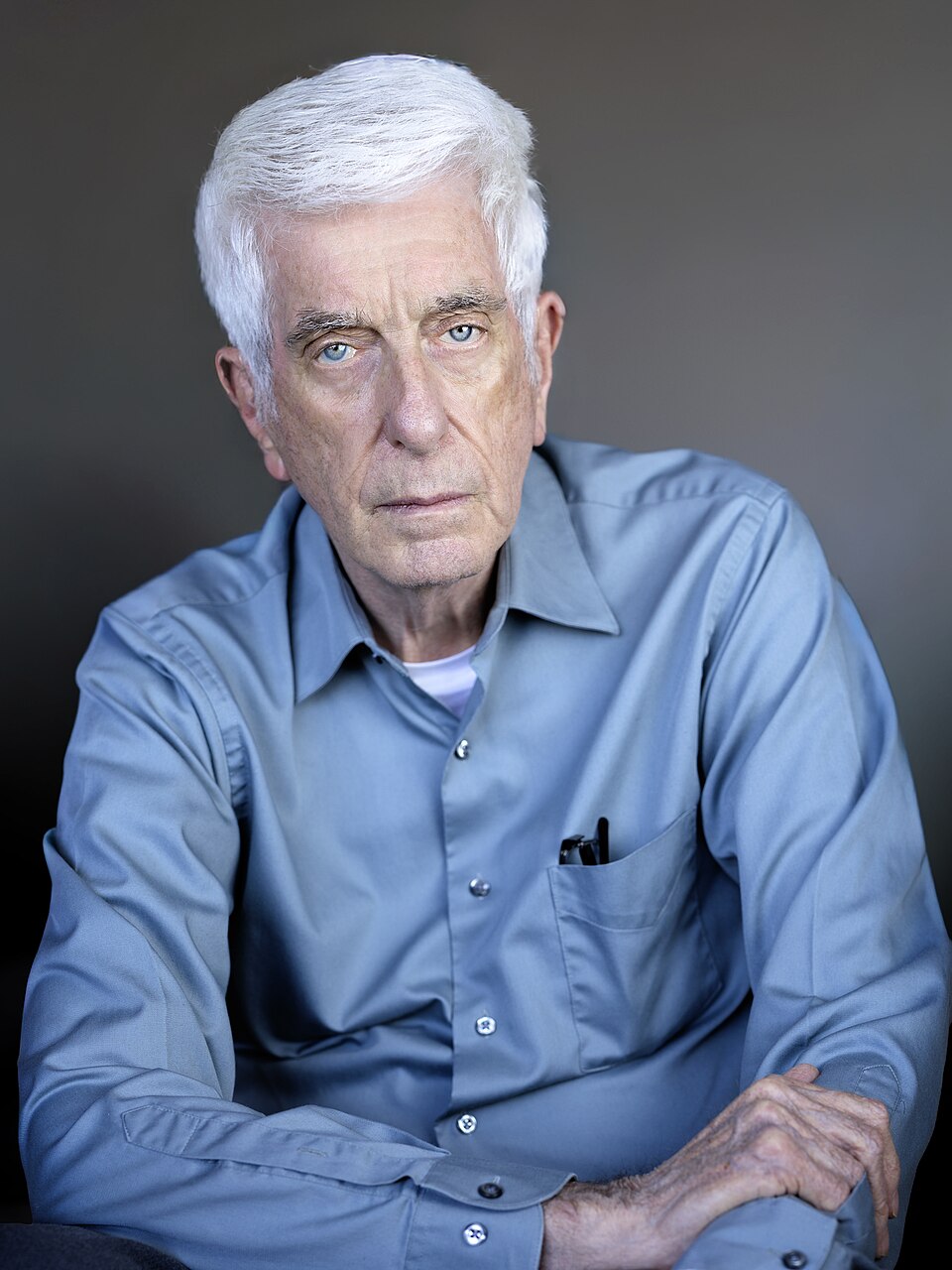
Closest collaborator and intellectual successor in applying scientific methodology to UFO research.