Advanced Aerospace Threat Identification Program
The Advanced Aerospace Threat Identification Program (AATIP) was a U.S. Department of Defense initiative that investigated reports of unidentified aerial phenomena from approximately 2007 to 2012. AATIP represents a pivotal inflection point in governmental transparency regarding unidentified aerial phenomena.
The Advanced Aerospace Threat Identification Program (AATIP) was a U.S. Department of Defense initiative that investigated reports of unidentified aerial phenomena from approximately 2007 to 2012. The program's existence, objectives, and accomplishments became the subject of significant public and congressional attention following 2017 revelations, though substantial debate persists regarding its official status, scope, and findings.
- Official name
- Advanced Aerospace Threat Identification Program (AATIP)
- Parent organization
- U.S. Department of Defense
- Operational period
- Approximately 2007–2012 (disputed)
- Primary focus
- Investigation of unidentified aerial phenomena and advanced aerospace threats
- Reported budget
- Approximately $22 million over five years
- Congressional authorization
- Initiated through appropriations secured by Senator Harry Reid
- Public disclosure
- December 2017 via New York Times and Politico reporting
- Key personnel
- Luis Elizondo (reported director), James Lacatski (initial program manager)
- Primary contractor
- Bigelow Aerospace Advanced Space Studies (BAASS)
- Successor entities
- Unidentified Aerial Phenomena Task Force (2020), All-domain Anomaly Resolution Office (2022)
AATIP represents a pivotal inflection point in governmental transparency regarding unidentified aerial phenomena. Its 2017 public disclosure triggered congressional hearings, legislative mandates for UAP reporting, and the establishment of successor offices including the All-domain Anomaly Resolution Office. The program's contested history—including disputes over its official designation, budget, relationship to earlier projects, and the credibility of its reported findings—exemplifies the challenges of investigating phenomena at the intersection of national security classification, scientific skepticism, and public interest. Understanding AATIP is essential to evaluating subsequent Pentagon UAP disclosure efforts and the evidentiary basis for ongoing congressional and defense establishment concern.
# Advanced Aerospace Threat Identification Program
Identity
The Advanced Aerospace Threat Identification Program (AATIP) was a Department of Defense initiative that investigated reports of unidentified aerial phenomena and assessed potential aerospace threats to U.S. national security. The program operated within the Defense Intelligence Agency framework from approximately 2007 to 2012, though significant aspects of its official designation, scope, and continuation remain contested. AATIP came to widespread public attention in December 2017 through coordinated reporting by The New York Times and Politico, which revealed its existence alongside declassified military footage of encounters between Navy aircraft and unidentified objects.
The program's identity is complicated by overlapping designations and bureaucratic ambiguity. While Senator Harry Reid's 2009 request to establish a restricted Special Access Program referred to the "Advanced Aerospace Weapon System Applications Program" (AAWSAP), subsequent accounts—particularly those from Luis Elizondo—described AATIP as a distinct or evolved effort focused specifically on military UAP encounters rather than broader theoretical research. Pentagon statements have at times confirmed and at other times qualified the program's existence, contributing to ongoing debate about what AATIP officially encompassed versus what activities occurred under related or successor efforts.
The program emerged during a period of heightened concern among military aviation communities regarding unexplained encounters with objects demonstrating flight characteristics that appeared to exceed known technological capabilities. These incidents, documented through multiple sensor systems including radar, infrared targeting pods, and visual observation by trained military personnel, provided the operational impetus for a formal investigative structure. AATIP's revelation catalyzed a significant shift in the U.S. government's public posture toward UAP, moving from decades of official disinterest following Project Blue Book's 1969 closure to active congressional oversight and mandated reporting mechanisms.
Authorization & Origins
AATIP's origins trace to appropriations secured by Senate Majority Leader Harry Reid (D-NV) in cooperation with Senators Ted Stevens (R-AK) and Daniel Inouye (D-HI). Beginning in fiscal year 2008, Reid obtained funding through the Defense Intelligence Agency budget for what initial documentation called the Advanced Aerospace Weapon System Applications Program. The appropriation totaled approximately $22 million distributed over five fiscal years, with the bulk concentrated in the program's initial years. Reid later stated that his interest stemmed from conversations with aerospace contractor Robert Bigelow, who had privately investigated UAP reports and advocated for government attention to the issue.
The program was not established through traditional legislative authorization with open congressional debate. Instead, funding was secured through the classified portion of defense appropriations bills, a mechanism that allows congressional leadership to direct spending toward sensitive intelligence activities without public disclosure or broader legislative scrutiny. This approach enabled the program to begin operations without attracting attention from skeptics within the defense establishment or triggering public controversy, but it also meant the effort lacked the institutional support and oversight structures that accompany formally authorized programs.
In October 2008, the Defense Intelligence Agency awarded the primary contract to Bigelow Aerospace Advanced Space Studies (BAASS), a subsidiary of Robert Bigelow's aerospace company. The contract tasked BAASS with compiling reports on advanced aerospace technologies, theoretical propulsion concepts, and documented UAP encounters. The selection of BAASS—a contractor with known interest in UAP phenomena and associated topics like consciousness studies—has been cited by skeptics as evidence that the program was predisposed toward certain conclusions, while supporters note that few established defense contractors possessed relevant expertise or interest in undertaking such research.
By 2009, Reid sought to elevate the program to Special Access Program (SAP) status, which would have provided enhanced security classification and stricter compartmentalization. In a letter to Deputy Defense Secretary William Lynn, Reid argued that the program had identified discoveries requiring heightened protection. The request was denied by the Defense Department's SAP oversight office, which determined that the program had not produced findings warranting such classification elevation. This denial effectively limited the program's ability to expand or secure long-term institutional support within the defense bureaucracy.
Objectives
AATIP's stated objectives centered on identifying and assessing potential aerospace threats to U.S. national security, with particular emphasis on unexplained aerial phenomena encountered by military personnel. According to contract documentation and subsequent congressional testimony, the program sought to collect and analyze reports of objects demonstrating flight characteristics—such as extreme acceleration, hypersonic velocity without visible propulsion or thermal signature, and apparent trans-medium travel between air and water—that exceeded known technological capabilities.
A significant component of the program's work involved commissioning technical reports examining theoretical advanced propulsion concepts, including studies of warp drive physics, metamaterials, and quantum vacuum engineering. These "Defense Intelligence Reference Documents" explored speculative but scientifically grounded concepts that might explain observed phenomena or inform future aerospace development. Critics have characterized this aspect as insufficiently focused on immediate operational threats, while defenders argue it represented due diligence in examining all potential explanations for documented encounters.
The program also aimed to establish systematic reporting mechanisms for military UAP encounters, which had effectively ceased following the Air Force's termination of Project Blue Book in 1969. For nearly four decades, military personnel lacked clear channels for reporting unexplained aerial observations without career risk or bureaucratic dismissal. AATIP sought to create a framework where pilots and sensor operators could document encounters through official channels, enabling pattern analysis and threat assessment rather than allowing incidents to remain anecdotal or unreported.
Additionally, according to later accounts from program personnel, AATIP investigated specific incidents involving alleged physical effects on military personnel following close encounters with unidentified objects. These investigations reportedly included medical examinations and documentation of physiological symptoms, though details remain largely classified. The extent to which these investigations constituted a core program objective versus ancillary inquiries pursued by associated personnel remains unclear in available public documentation.
Execution
AATIP's operational execution centered on contract work performed by Bigelow Aerospace Advanced Space Studies, which employed scientists, engineers, and former intelligence personnel to compile research products. BAASS produced 38 Defense Intelligence Reference Documents covering topics ranging from traversable wormholes and invisibility cloaking to documented UFO encounters and medical effects. These reports, authored by scientists from universities and research institutions, represented theoretical explorations rather than applied engineering research, reflecting the program's mandate to survey the boundaries of current scientific understanding.
The program collected and analyzed reports of military UAP encounters, including incidents documented by multiple sensor systems. Among the most significant were encounters by F/A-18 Super Hornets operating from the USS Nimitz carrier strike group off the California coast in November 2004, where objects tracked on radar demonstrated flight characteristics that Navy personnel described as defying known physics. Similar encounters off the U.S. East Coast between 2014 and 2015 involved repeated observations by Navy aircraft equipped with advanced targeting pods, producing infrared video subsequently leaked and authenticated.
Program personnel reportedly conducted site investigations of locations associated with repeated UAP activity, including Skinwalker Ranch in Utah—a property owned by Robert Bigelow that had been the subject of previous private UAP research. The relationship between official program activities and investigations at Skinwalker Ranch has been disputed, with some accounts describing the ranch work as central to BAASS's contract deliverables and others characterizing it as separate from core Defense Intelligence Agency tasking. This ambiguity reflects broader uncertainty about whether AATIP's execution adhered strictly to defense intelligence priorities or incorporated objectives aligned with Bigelow's broader interests.
Luis Elizondo, who later became the public face of AATIP, has described his role as director of the program from approximately 2010 until his October 2017 resignation. According to Elizondo's account, he worked to ensure military UAP incidents were properly documented and investigated, briefed senior Defense Department officials on significant encounters, and advocated for greater institutional attention to potential aerospace threats. Pentagon statements have confirmed Elizondo's employment and involvement in UAP-related activities while declining to confirm his claimed title or the full scope of his responsibilities, creating persistent ambiguity about the program's leadership structure during its later years.
Funding for the program's initial contract phase ended in 2012, though accounts differ regarding whether AATIP continued in some form thereafter. Pentagon statements in 2017 indicated the program ended when appropriations ceased, while Elizondo and other former participants have maintained that UAP investigation activities continued through other mechanisms and funding streams. This discrepancy reflects the challenges of defining program boundaries when work may have transitioned from formal contract-based execution to informal continuation by interested personnel within existing organizational structures.
Key Personnel
Senator Harry Reid (1939–2021) secured the appropriations that created AATIP through his position as Senate Majority Leader. Reid maintained throughout his life that the program represented a legitimate national security inquiry into unexplained phenomena encountered by military personnel. In 2021 interviews, he expressed frustration that the program had not received greater institutional support and argued that the government had collected far more information about UAP than had been publicly disclosed. Reid's role ensured the program's initial funding but also made it vulnerable to characterization as a pet project lacking broader defense establishment support.
James Lacatski, a defense intelligence analyst specializing in aerospace threats, served as the initial program manager for AATIP/AAWSAP within the Defense Intelligence Agency. Lacatski oversaw the contract with BAASS and managed the initial research phase. His subsequent limited public comment on the program has left significant gaps in the documented history of its early execution and objectives.
Robert Bigelow, aerospace entrepreneur and founder of Bigelow Aerospace, provided the contracting infrastructure through BAASS and had long-standing private interest in UAP phenomena. Bigelow's involvement has been cited both as evidence of serious private sector aerospace expertise being applied to the question and as a potential conflict of interest given his known conclusions about the reality of anomalous phenomena. In a 2017 interview with 60 Minutes, Bigelow stated his conviction that extraterrestrial visitors had come to Earth, a position that skeptics argue may have influenced the program's direction.
Luis Elizondo emerged as the program's most prominent public figure following his October 2017 resignation from the Defense Department. Elizondo's resignation letter, addressed to Secretary of Defense James Mattis, criticized what he characterized as excessive secrecy and internal resistance to UAP investigation. Following his departure, Elizondo joined To The Stars Academy of Arts & Science, where he advocated for greater transparency regarding military UAP encounters. His public role has made him both the primary source of information about AATIP's later years and a controversial figure, with Pentagon officials issuing statements that appeared to undermine his claimed position while confirming his involvement in UAP-related activities.
Christopher Mellon, former Deputy Assistant Secretary of Defense for Intelligence and later minority staff director for the Senate Intelligence Committee, became an advocate for UAP transparency following Elizondo's revelations. Though not directly involved in AATIP during its operational phase, Mellon used his credibility within the intelligence community to support calls for systematic UAP investigation and played a role in bringing declassified Navy videos to public attention through his involvement with To The Stars Academy.
Exposure & Official Findings
AATIP's existence became publicly known through coordinated reporting on December 16, 2017, when The New York Times published "Glowing Auras and 'Black Money': The Pentagon's Mysterious U.F.O. Program" and Politico released a parallel story. The reports revealed the program's budget, objectives, and the circumstances of Elizondo's resignation, accompanied by declassified Navy cockpit footage showing encounters with unidentified objects. The timing of these revelations—coordinated with To The Stars Academy's launch and Elizondo's new affiliation with that organization—suggested a strategic disclosure effort rather than traditional investigative journalism discovering a hidden program.
The Defense Department initially confirmed the program's existence through a statement to the Times, acknowledging that the Advanced Aerospace Threat Identification Program "did pursue research and investigation into unidentified aerial phenomena" and that funding for the program ended in 2012. However, subsequent Pentagon statements created confusion by appearing to dispute aspects of the initial reporting, particularly regarding whether "AATIP" was the program's correct designation and whether Elizondo had formally led it. A Pentagon spokesperson stated in 2019 that Elizondo had no assigned responsibilities for AATIP, a characterization Elizondo strongly contested and which other defense officials partially contradicted.
The confusion over program designation reflects bureaucratic reality: AAWSAP was the initial contract vehicle name, while AATIP may have been an informal designation used by personnel conducting UAP-focused work within or after that contract's conclusion. The Senate Intelligence Committee's 2020 report accompanying the Intelligence Authorization Act acknowledged that UAP represented potential national security and flight safety concerns and mandated detailed reporting from the intelligence community, implicitly validating the legitimacy of inquiries AATIP had pursued.
In June 2021, the Office of the Director of National Intelligence released a preliminary assessment on UAP covering 144 incidents reported by military personnel between 2004 and 2021. The report, mandated by Congress, concluded that most incidents remained unexplained and that some objects demonstrated "unusual flight characteristics," though it emphasized that limited data prevented definitive conclusions. The assessment noted that UAP "clearly pose a safety of flight issue and may pose a challenge to U.S. national security," effectively ratifying concerns AATIP had raised years earlier. The report attributed only one incident to a confirmed deflating balloon and acknowledged that inadequate data prevented determining the nature of the remaining cases.
Congress responded to AATIP's revelations and subsequent UAP reporting by establishing formal oversight mechanisms. The 2022 National Defense Authorization Act created the All-domain Anomaly Resolution Office (AARO) within the Department of Defense, providing institutional permanence and congressional reporting requirements that AATIP had lacked. The legislative history demonstrates that AATIP, despite its limited funding and contested status, succeeded in elevating UAP from a topic of official disinterest to one requiring systematic investigation and transparency.
Documented Controversies
Disputed Claim The fundamental controversy surrounding AATIP concerns its official status and scope. While Senator Reid's correspondence and initial Pentagon statements confirmed the program's existence, subsequent Defense Department communications appeared to question whether "AATIP" was its actual designation and whether it continued beyond 2012. Pentagon spokesperson Susan Gough stated in 2019 that Luis Elizondo "had no responsibilities with regard to the AATIP program," contradicting Elizondo's claims and creating public confusion. Other defense officials, however, confirmed Elizondo's involvement in UAP-related activities, suggesting the dispute may center on narrow definitional questions rather than substantive denial of the work conducted. This ambiguity prevents definitive documentation of what activities occurred under AATIP's formal umbrella versus related but distinct efforts.
Credible Allegation The program's relationship to Skinwalker Ranch—Robert Bigelow's Utah property associated with decades of reported paranormal activity—has generated controversy regarding whether AATIP pursued scientifically rigorous threat assessment or ventured into fringe topics. According to accounts from BAASS personnel, the ranch served as a field laboratory for investigating anomalous phenomena, including alleged UAP activity, unexplained animal mutilations, and reported poltergeist-like effects. Skeptics argue this association undermined the program's credibility and diverted resources from legitimate defense concerns, while proponents contend the ranch provided a location with concentrated anomalous activity warranting investigation. The extent to which Skinwalker research constituted official contract deliverables versus private Bigelow interests pursued alongside defense work remains unresolved in public documentation.
Ongoing Historical Debate The scientific validity of AATIP's theoretical research products has been questioned by skeptics who note that the Defense Intelligence Reference Documents covered highly speculative topics with limited connection to near-term aerospace threats. Reports on traversable wormholes, warp drives, and space-time metric engineering represent theoretical physics concepts that, while not violating known laws, have no demonstrated engineering path to realization. Critics argue this portfolio suggests the program was more interested in science fiction concepts than rigorous threat analysis. Defenders counter that the documents represented due diligence in examining all potential explanations for observed phenomena and that foreclosing investigation of advanced concepts because they seem implausible would be strategically negligent.
Established Fact Multiple Navy pilots and weapons systems operators have provided detailed, on-record testimony about encounters with objects demonstrating flight characteristics that appeared to exceed known technological capabilities, including observations documented by AATIP. These accounts, corroborated by multiple sensor systems including radar, infrared targeting pods, and visual observation, form the operational foundation for the program's investigations. Notably, these witnesses were trained military personnel conducting routine operations from U.S. Navy vessels, not civilian UFO enthusiasts or individuals seeking publicity. However, the interpretation of what these encounters represent—advanced foreign technology, sensor artifacts, natural atmospheric phenomena, or something else—remains unresolved, with the 2021 ODNI report explicitly stating that available data is insufficient for definitive conclusions.
Credible Allegation Program personnel, including Elizondo, have alleged that AATIP encountered institutional resistance and even active suppression from elements within the Department of Defense. Elizondo's resignation letter cited what he characterized as bureaucratic obstacles, misallocation of resources, and excessive secrecy that prevented proper threat response. Some former military personnel associated with the program's investigations have reported career repercussions for pursuing UAP inquiries. However, the Pentagon's perspective on these allegations has not been comprehensively documented, and resistance may have reflected legitimate concerns about resources being directed toward low-probability threats rather than deliberate suppression of important findings.
Disputed Claim The involvement of To The Stars Academy in coordinating AATIP's public revelation has raised questions about the motivations and framing of disclosure. To The Stars Academy, founded by musician Tom DeLonge and featuring Elizondo and Mellon as principals, explicitly pursued entertainment ventures alongside its stated goal of investigating aerospace phenomena. Skeptics have suggested that the coordinated 2017 disclosure served To The Stars Academy's commercial interests and that framing the story around potential extraterrestrial technology rather than unknown aerospace threats reflected entertainment rather than analytical priorities. Supporters argue that To The Stars Academy provided a platform for former defense officials to speak publicly about issues they believed warranted attention, filling a role that government institutions had failed to fulfill.
Official Record The program's $22 million budget has been characterized both as wasteful spending on fringe topics and as a modest investment in investigating potential threats. The total represented approximately 0.004% of the Defense Intelligence Agency's budget during those years—substantial enough to fund significant contract research but small enough that its termination likely reflected bureaucratic prioritization rather than explicit rejection of the program's findings. Senator Reid defended the expenditure in 2018 as money well spent, stating that the program had identified genuine puzzles worthy of continued attention.
Legacy & Historical Debate
AATIP's primary legacy lies in its role catalyzing a fundamental shift in official U.S. government posture toward unidentified aerial phenomena. For nearly half a century following Project Blue Book's closure, the defense establishment maintained that UAP warranted no systematic investigation, a position that effectively ended with AATIP's revelation. The program demonstrated that senior legislators, defense intelligence analysts, and military personnel took UAP seriously as potential aerospace threats, lending institutional credibility to a topic long relegated to popular culture and dismissed by scientific establishments.
The program's influence on policy is demonstrable: Congress responded by mandating comprehensive UAP reporting from the intelligence community, creating the Unidentified Aerial Phenomena Task Force in 2020 and the All-domain Anomaly Resolution Office in 2022, and requiring regular classified briefings to oversight committees. This institutional architecture ensures that military UAP encounters receive systematic analysis rather than ad hoc dismissal. Whether this represents appropriate attention to flight safety and potential foreign surveillance or an overreaction to sensor artifacts and misidentified mundane objects remains debated, but AATIP directly precipitated these policy changes.
Historians and analysts debate whether AATIP succeeded or failed by its own standards. The program did not produce definitive identification of the objects investigated, develop countermeasures to potential threats, or resolve the fundamental question of what these phenomena represent. From this perspective, AATIP consumed resources without delivering actionable intelligence. However, the program documented patterns in UAP encounters, established that these incidents warranted serious investigation rather than dismissal, and created momentum for institutional structures with greater longevity and resources. Success may ultimately depend on whether subsequent efforts AATIP enabled produce insights the program itself could not.
The scientific community's response to AATIP has been mixed. Some physicists and aerospace engineers have argued that the documented encounters, if accurately reported, represent genuinely puzzling phenomena worthy of scientific investigation freed from stigma. The American Institute of Aeronautics and Astronautics and other professional organizations have begun to treat UAP as legitimate research topics rather than career-damaging fringe interests. However, significant skepticism remains, with critics noting that extraordinary claims require extraordinary evidence and that the most exotic explanations should be considered only after mundane possibilities are exhausted through rigorous investigation—a standard they argue AATIP's work did not meet.
The program's association with speculative research topics and controversial figures continues to complicate its historical evaluation. Skeptics point to the theoretical physics documents, Skinwalker Ranch investigations, and alleged consciousness-related research as evidence that AATIP was poorly conceived and executed. Supporters counter that investigation of genuinely unknown phenomena necessarily requires exploring possibilities that may seem unlikely and that dismissing inquiry based on apparent implausibility is scientifically inappropriate. This tension between open-minded investigation and rigorous skepticism defines ongoing debate about how AATIP should be remembered.
AATIP also represents a case study in the challenges of investigating classified national security topics that intersect with popular fascination and conspiracy theories. The program's partial disclosure created a situation where confirmed facts, credible claims, and unsupported speculation became difficult for the public to distinguish. This ambiguity has been exploited by conspiracy theorists while simultaneously frustrating both serious researchers seeking clarity and officials attempting to maintain appropriate classification of sensitive information. Whether greater transparency or continued classification better serves national security and public understanding remains contested.
Ultimately, AATIP's historical significance may rest less on what it discovered than on what it initiated: a transition from governmental denial and disinterest regarding UAP to formal acknowledgment that unexplained aerial encounters occur, merit systematic investigation, and potentially represent threats warranting intelligence community and congressional attention. Whether this transition proves historically important depends on what subsequent investigation reveals—an answer that remains, like the phenomena AATIP investigated, unresolved.
Continue Investigating
The Advanced Aerospace Threat Identification Program exists within a broader historical context of governmental UAP investigation, intelligence community activities, and debates about transparency regarding unexplained phenomena. Understanding AATIP requires examining its relationship to predecessor efforts, associated individuals and organizations, and the policy landscape its revelation transformed.
Project Blue Book and earlier Air Force investigations of unidentified flying objects established precedents for governmental UAP inquiry, creating both methodological frameworks and institutional skepticism that AATIP inherited. The decades-long gap between Blue Book's closure and AATIP's initiation reflects the marginalization of UAP as a defense concern, a status AATIP sought to reverse.
The program's connections to Luis Elizondo, Christopher Mellon, and To The Stars Academy of Arts & Science are essential to understanding how AATIP's existence became public and how its findings have been framed in public discourse. These individuals and the organization they joined served as intermediaries between classified defense activities and public awareness, a role that involved both revelation of suppressed information and potential shaping of narrative for advocacy or commercial purposes.
The All-domain Anomaly Resolution Office represents AATIP's institutional successor, established with congressional mandate and formal reporting requirements that the earlier program lacked. AARO's work, and the degree to which it substantiates or contradicts AATIP's concerns, will significantly influence historical assessment of the earlier program's legacy.
Examining other incidents and patterns documented in broader UAP Pentagon disclosure efforts—including the Phoenix Lights, Rendlesham Forest incident, Belgium UFO wave, and modern U.S. military encounters—provides context for the specific cases AATIP investigated and the question of whether these represent isolated anomalies or systematic patterns warranting the resources dedicated to investigation.
The program also connects to broader questions about intelligence community activities, government transparency, and the declassification process. Understanding how classified programs emerge, operate, and eventually become public knowledge illuminates the structures that determine what information reaches public awareness and what remains hidden in government archives.
- 2007Senator Harry Reid secures initial appropriations for Advanced Aerospace Weapon System Applications Program through Defense Intelligence Agency budget
- 2008Defense Intelligence Agency awards primary contract to Bigelow Aerospace Advanced Space Studies (BAASS); program research begins
- 2009Senator Reid requests elevation of program to Special Access Program status; Defense Department denies request
- 2010Luis Elizondo reportedly assumes leadership role in program, focusing on military UAP encounters
- 2012Initial contract funding ends; accounts differ on whether program activities continued through other mechanisms
- 2017Luis Elizondo resigns from Department of Defense in October, citing frustration with UAP investigation resistance
- 2017December: The New York Times and Politico reveal AATIP's existence; Pentagon confirms program investigated UAP; declassified Navy videos released
- 2019Pentagon spokesperson issues statements appearing to dispute aspects of Elizondo's claimed role, creating public confusion about program status
- 2020Senate Intelligence Committee mandates comprehensive UAP reporting from intelligence community; Unidentified Aerial Phenomena Task Force established
- 2021Office of the Director of National Intelligence releases preliminary UAP assessment covering 144 incidents, most remaining unexplained
- 2022National Defense Authorization Act creates All-domain Anomaly Resolution Office (AARO) as permanent UAP investigation entity
- 2023Congressional hearings on UAP feature testimony from former military personnel about encounters investigated during AATIP era
- S1Glowing Auras and 'Black Money': The Pentagon's Mysterious U.F.O. ProgramThe New York Times · mainstream
- S2Letter from Senator Harry Reid to Deputy Secretary William Lynn requesting SAP statusDocumentCloud / Government Record · primary
- S3Luis Elizondo resignation letter to Secretary James MattisDocumentCloud / Government Record · primary
- S4Pentagon statements on AATIP and Luis Elizondo's roleU.S. Department of Defense · primary
- S5Preliminary Assessment: Unidentified Aerial PhenomenaOffice of the Director of National Intelligence · primary
- S6Inside the Pentagon's Secret UFO ProgramPolitico · investigative
- S7Intelligence Authorization Act for Fiscal Year 2021 - Senate Report 116-233U.S. Senate Intelligence Committee · primary
- S8Congressional testimony on unidentified aerial phenomenaU.S. House of Representatives Intelligence Committee · primary
- S9National Defense Authorization Act for Fiscal Year 2022 - Establishment of AAROU.S. Congress · primary
- S10Advanced Aerospace Threat Identification ProgramWikipedia · reference
- S11Unidentified: Inside America's UFO InvestigationHistory Channel · mainstream
If you're learning about this topic for the first time, these are the best places to continue — documented evidence and historical relationships are the guide.
Advanced Aerospace Threat Identification Program is documented in the evidence record of this published dossier.

AATIP's formal institutional successor established by Congress with permanent mandate.
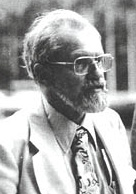
Astronomer who investigated UFOs for Project Blue Book, providing historical precedent for scientific UAP inquiry.