U.S. Air Force
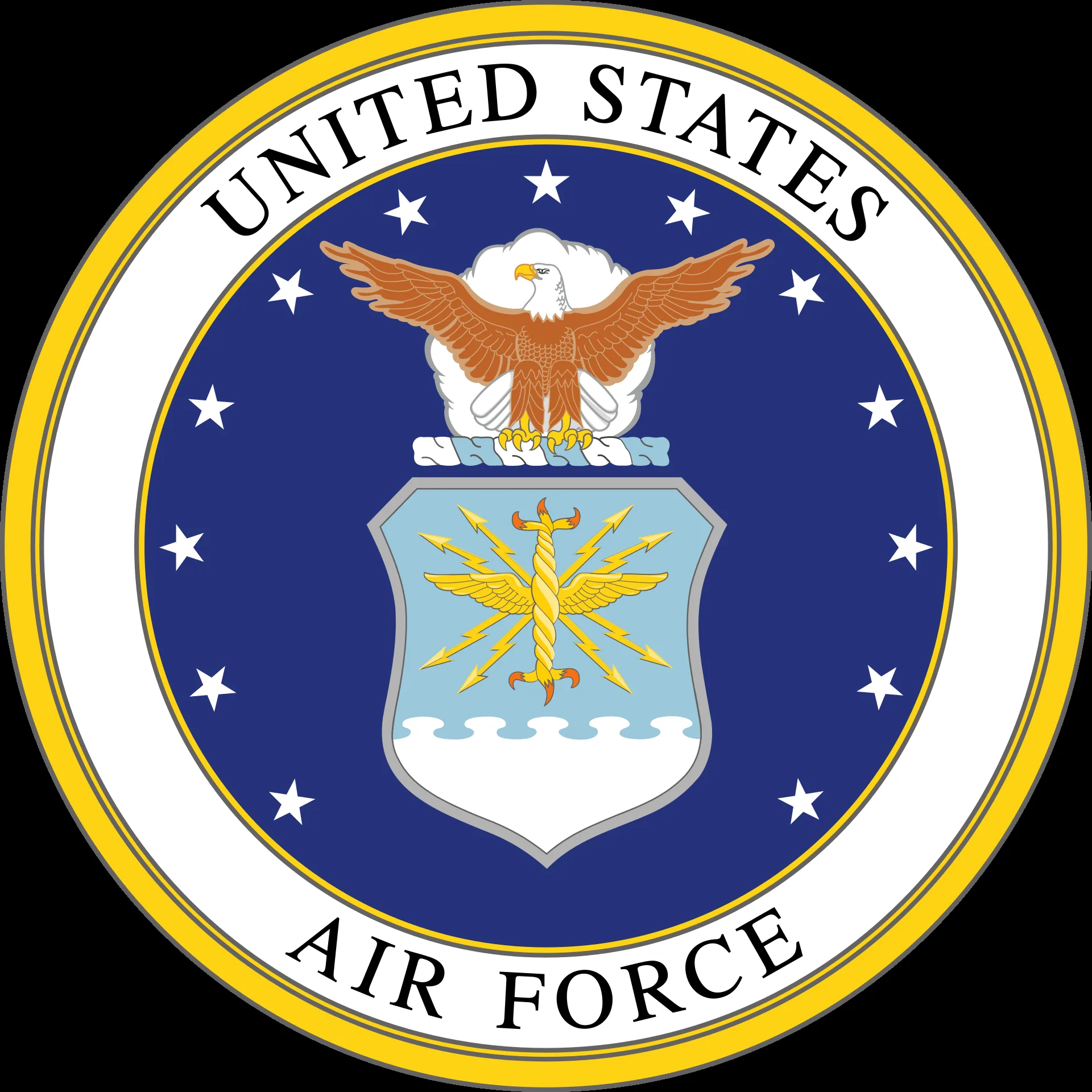
The United States Air Force, established as an independent military service in 1947, is responsible for aerial and space warfare operations. It has been central to multiple Archive investigations involving unidentified aerial phenomena, atmospheric research controversies, and classified operations that generated enduring public debate about government transparency. The U.S.
The United States Air Force, established as an independent military service in 1947, is responsible for aerial and space warfare operations. It has been central to multiple Archive investigations involving unidentified aerial phenomena, atmospheric research controversies, and classified operations that generated enduring public debate about government transparency.
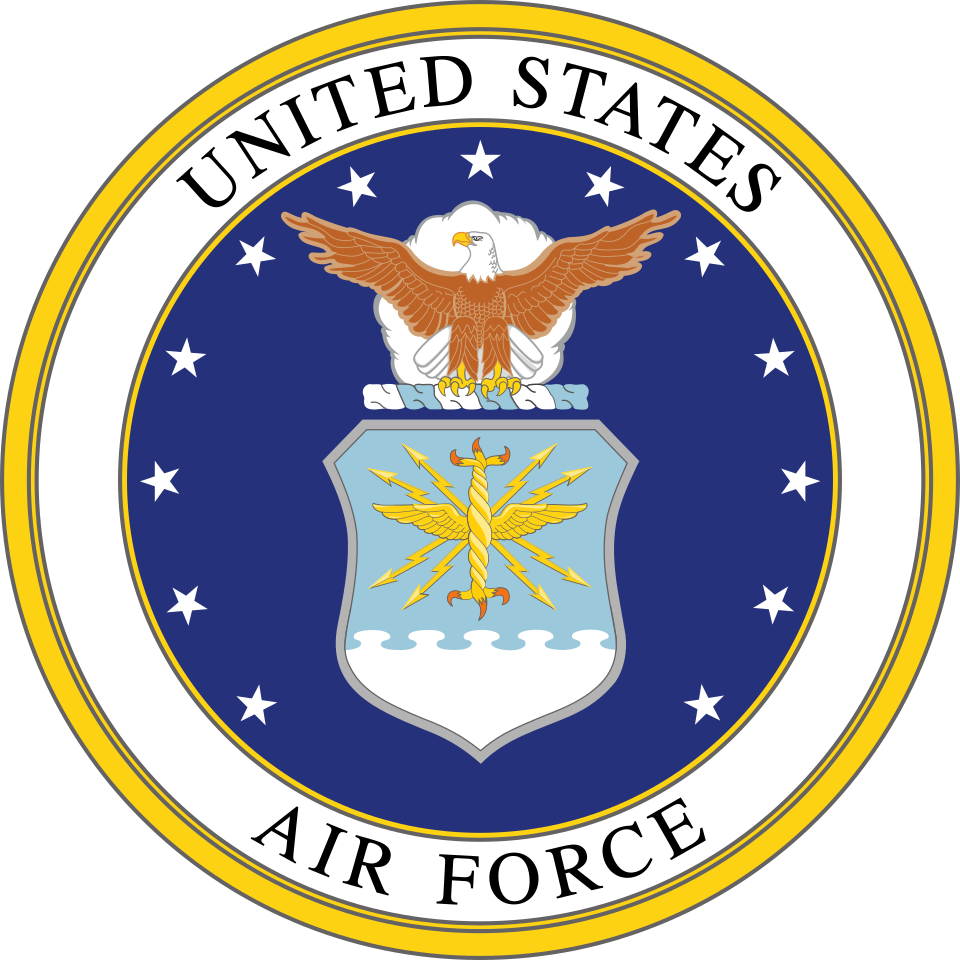
- Source
- U.S. Air Force
- Type
- Official Seal / Insignia
- License
- Public domain
- Photographer
- Arthur E. Dubois
- Year
- 1947
Photo Information ▾
- Official Name
- United States Air Force
- Established
- September 18, 1947
- Founding Authority
- National Security Act of 1947
- Jurisdiction
- United States Department of Defense
- Type
- Military service branch
- Primary Mission
- Air and space superiority, global strike, rapid global mobility, intelligence/surveillance/reconnaissance, command and control
- Headquarters
- The Pentagon, Arlington County, Virginia
- Current Personnel
- Approximately 329,000 active duty, 172,000 Air National Guard and Air Force Reserve (2023)
- Major Commands
- Air Combat Command, Air Mobility Command, Air Force Global Strike Command, Air Force Space Command (reorganized as U.S. Space Force 2019), Air Education and Training Command, Air Force Materiel Comman
- Major Installations
- Over 170 bases worldwide including Wright-Patterson AFB, Edwards AFB, Nellis AFB, Vandenberg Space Force Base
- Notable Historical Programs
- Project Blue Book (1952-1969), Strategic Air Command (1946-1992), U-2 and SR-71 reconnaissance programs, stealth aircraft development
- Budget
- Approximately $204.5 billion requested for fiscal year 2024
The U.S. Air Force appears across Archive dossiers documenting the intersection of military operations, public accountability, and unexplained phenomena. Its official investigations into unidentified flying objects through Project Blue Book, its role in the Roswell incident and subsequent explanations, its involvement in incidents like Cash-Landrum, and its atmospheric research programs that became focal points for chemtrails conspiracy theories make it a recurring institutional actor in debates about classified military activities, scientific transparency, and the boundaries between legitimate security concerns and public right to know. Understanding the Air Force's documented actions, official statements, and declassified records is essential to evaluating claims that span from substantiated Cold War secrecy to unsupported allegations of ongoing covert programs.
# U.S. Air Force
Identity
The United States Air Force (USAF) is the aerial and space warfare service branch of the United States Armed Forces, one of eight uniformed services. Established as an independent military service on September 18, 1947, following the passage of the National Security Act earlier that year, the Air Force evolved from the United States Army Air Forces, which had operated as a component of the Army since 1941. The service's mission encompasses air superiority, global strike capability, rapid global mobility, intelligence gathering, surveillance and reconnaissance, and command and control operations. Headquartered in the Pentagon, the Air Force maintains approximately 329,000 active duty personnel, with an additional 172,000 serving in the Air National Guard and Air Force Reserve as of 2023.
The Air Force operates through major commands including Air Combat Command, Air Mobility Command, Air Force Global Strike Command, Air Education and Training Command, and Air Force Materiel Command. Following the establishment of the U.S. Space Force as a separate service in December 2019, many space-related missions previously under Air Force Space Command transferred to the new branch, though the Air Force retains significant space-related responsibilities. The service maintains over 170 installations worldwide, including major bases such as Wright-Patterson Air Force Base in Ohio, Edwards Air Force Base in California, and Nellis Air Force Base in Nevada. With an annual budget exceeding $200 billion, the Air Force represents a substantial component of U.S. defense spending and capability.
Origins & Charter
The Air Force traces its institutional lineage to the Aeronautical Division of the U.S. Army Signal Corps, established in 1907, making it among the world's oldest air forces by organizational ancestry. Military aviation expanded dramatically during World War I, leading to the creation of the Air Service in 1918. Between the wars, advocates including Brigadier General Billy Mitchell championed air power as a decisive military capability deserving independent status, though Mitchell's public criticism of military leadership led to his court-martial in 1925. The Army Air Corps, established in 1926, and its successor the Army Air Forces (1941) gained increasing autonomy during World War II as strategic bombing campaigns demonstrated aviation's centrality to modern warfare.
The National Security Act of 1947, signed by President Harry S. Truman on July 26, 1947, fundamentally restructured U.S. defense organization. The Act established the National Military Establishment (renamed the Department of Defense in 1949), created the position of Secretary of Defense, founded the Central Intelligence Agency, and constituted the United States Air Force as a separate military department equal to the Army and Navy. The Air Force formally came into being on September 18, 1947, with W. Stuart Symington as the first Secretary of the Air Force and General Carl A. Spaatz as the first Chief of Staff.
The timing of the Air Force's establishment coincided with the early Cold War period, and the new service immediately assumed responsibility for nuclear deterrence through Strategic Air Command, established in 1946 and reorganized in 1948 under General Curtis LeMay. This mission shaped institutional culture, budget priorities, and technological development throughout the Cold War. The Air Force's charter encompassed not only combat operations but also research and development functions that would generate technologies with implications far beyond military applications, from jet propulsion and radar to satellite communications and computing.
Structure & Leadership
The Air Force operates under civilian control through the Secretary of the Air Force, a civilian appointed by the President and confirmed by the Senate, who serves under the Secretary of Defense. The Secretary holds administrative authority over the Department of the Air Force, including organizing, training, and equipping Air Force and Space Force personnel. The senior military officer is the Chief of Staff of the Air Force, a four-star general who serves as a member of the Joint Chiefs of Staff and principal military advisor to the Secretary of the Air Force.
The service is organized into Major Commands (MAJCOMs), each responsible for specific mission areas. Air Combat Command, headquartered at Langley Air Force Base, Virginia, operates fighter, bomber, reconnaissance, battle management, and electronic combat aircraft. Air Mobility Command at Scott Air Force Base, Illinois, provides airlift, air refueling, and aeromedical evacuation. Air Force Global Strike Command at Barksdale Air Force Base, Louisiana, manages the intercontinental ballistic missile force and nuclear-capable bombers. Air Force Materiel Command at Wright-Patterson Air Force Base oversees research, development, testing, and acquisition of weapon systems. Additional commands handle training, special operations, and cyberspace operations.
Below the MAJCOM level, the Air Force organizes into numbered air forces, wings, groups, squadrons, and flights. Wings typically serve as the basic operational unit, combining multiple groups that provide operations, maintenance, mission support, and medical functions. Major installations often host a host wing that provides base support plus multiple tenant organizations. The Air Force Academy in Colorado Springs, Colorado, trains future officers through a four-year undergraduate program, commissioning approximately 1,000 second lieutenants annually.
Leadership succession has included 23 Chiefs of Staff from General Spaatz through General David Allvin, who assumed the position in November 2023. Notable chiefs have included General LeMay (1961-1965), who shaped nuclear strategy; General John P. Jumper (2001-2005), who oversaw post-9/11 transformation; and General Charles Q. Brown Jr. (2020-2023), the first African American service chief, who subsequently became Chairman of the Joint Chiefs of Staff. The service has gradually expanded opportunities for women and minorities, though progress has been uneven and remains subject to ongoing scrutiny regarding equal opportunity and addressing sexual harassment and assault.
Major Activities & Operations
Throughout its history, the Air Force has conducted operations spanning air superiority, strategic bombing, tactical support, airlift, reconnaissance, and nuclear deterrence. During the Cold War, Strategic Air Command maintained continuous nuclear-armed bomber and intercontinental ballistic missile alerts, forming a key component of the nation's nuclear triad alongside Navy submarine-launched missiles and later land-based missiles under Air Force control. The Air Force developed and operated reconnaissance platforms including the U-2 high-altitude aircraft (first flight 1955) and SR-71 Blackbird (operational 1966-1998), conducting intelligence-gathering missions over denied territory.
The Air Force participated in major Cold War conflicts including the Korean War (1950-1953) and Vietnam War (1965-1973), conducting tactical air support, interdiction, and strategic bombing campaigns. The Vietnam experience proved controversial, particularly Operation Rolling Thunder (1965-1968) and Operation Linebacker II (1972), with debates over bombing effectiveness, civilian casualties, and strategic outcomes that continue among military historians. Following Vietnam, the Air Force invested heavily in precision-guided munitions, stealth technology, and advanced avionics that would be demonstrated in subsequent conflicts.
The 1991 Gulf War marked a watershed for modern air power, with the Air Force leading a coalition air campaign that achieved air superiority within days and conducted precision strikes against Iraqi targets. Operation Desert Storm showcased F-117 stealth fighters, precision-guided bombs, and sophisticated command and control systems. The Air Force has maintained continuous operations in Southwest Asia since 1991, enforcing no-fly zones over Iraq (1991-2003), conducting operations in Afghanistan (2001-2021) and the renewed Iraq campaign (2003-2011, with subsequent counter-ISIS operations from 2014), and supporting other regional missions.
Beyond combat operations, the Air Force conducts extensive research and development through organizations including the Air Force Research Laboratory, manages space operations (until the 2019 Space Force establishment), operates the extensive Defense Meteorological Satellite Program, and provides disaster relief and humanitarian assistance through Air Mobility Command. The service's aeronautical research programs have contributed to commercial aviation development, weather forecasting improvements, and materials science advances with civilian applications.
Historical Importance
The Air Force's establishment as an independent service reflected the technological and strategic realities of the mid-20th century, recognizing air power as a decisive military capability rather than an auxiliary function. This organizational evolution influenced military structures in numerous other nations and shaped international security dynamics throughout the Cold War and beyond. The service's nuclear deterrence mission, while shared with the Navy, made it central to strategic stability doctrines including mutually assured destruction and, later, flexible response strategies.
Air Force research and development programs generated technologies with profound civilian impacts. Jet engine development accelerated commercial aviation; radar advances improved weather forecasting and air traffic control; satellite technology enabled global communications, navigation (GPS originated as a military satellite navigation system), and Earth observation. The service's demand for advanced computing to support complex calculations for missile trajectories, weapons targeting, and logistics contributed to computer industry development. Materials research for aircraft and missiles produced innovations in composites, ceramics, and metallurgy with applications across industries.
The Air Force's role in developing and maintaining intelligence collection capabilities, from reconnaissance aircraft to early satellite systems, shaped information availability for policymakers during critical Cold War confrontations. U-2 flights over the Soviet Union provided photographic intelligence on missile deployments before Francis Gary Powers' aircraft was shot down in 1960, precipitating an international incident. Satellite reconnaissance eventually reduced reliance on aircraft overflights while expanding coverage, fundamentally changing strategic intelligence collection.
Culturally, the Air Force influenced American society through its presence in communities hosting major bases, its role in testing and operating advanced aircraft that captured public imagination, and its involvement in events that generated enduring controversy and speculation. The service's responses to unidentified aerial phenomena reports, its management of classified programs at installations like Area 51 (officially known as Groom Lake), and its handling of incidents like Roswell created a complex legacy mixing legitimate security requirements with accusations of excessive secrecy and inadequate public accountability.
Documented Controversies
Official Record The Air Force's investigation of unidentified flying objects through Project Blue Book (1952-1969) remains controversial despite extensive documentation. The project, headquartered at Wright-Patterson Air Force Base under the Foreign Technology Division, collected and analyzed over 12,000 UFO reports. The Air Force's 1969 conclusion that UFOs posed no national security threat and showed no evidence of extraterrestrial technology satisfied some observers but not others who questioned investigation methodology, witness credibility assessments, and potential bias toward conventional explanations. The project's scientific consultant, astronomer Dr. J. Allen Hynek, grew increasingly critical of Air Force handling of cases, later stating that some dismissals appeared premature and inadequately investigated. Congressional inquiries, particularly 1966 hearings before the House Armed Services Committee, examined whether the Air Force was fulfilling its investigatory responsibilities appropriately.
Officially Denied The Roswell incident of July 1947 generated decades of controversy despite the Air Force's consistent denials of extraterrestrial involvement. Following the recovery of debris near Roswell, New Mexico, initial press releases from Roswell Army Air Field described recovering a "flying disc," but subsequent explanations identified it as a weather balloon. The Air Force released detailed reports in 1994 and 1997 identifying the debris as coming from Project Mogul, a classified high-altitude balloon program designed to detect Soviet nuclear tests. These explanations attribute witness accounts of unusual materials and military secrecy to the classified nature of Mogul equipment and Cold War security protocols. Critics of the official account point to witness testimony describing debris properties inconsistent with balloon materials and military response levels seemingly disproportionate to a weather balloon recovery, though no physical evidence supporting alternative explanations has been independently verified.
Credible Allegation The Cash-Landrum incident of December 1980 involved Texas residents Betty Cash, Vickie Landrum, and Colby Landrum reporting serious injuries following an encounter with an unidentified diamond-shaped object and accompanying helicopters they believed were military. Medical records document the witnesses subsequently developed symptoms consistent with radiation exposure, including burns, nausea, and hair loss. Their lawsuit against the U.S. government was dismissed in 1986 after the Air Force and Army stated no military aircraft were operating in the area at the time. The case raises questions about military knowledge and accountability, though no documentary evidence has emerged establishing military involvement. The incident remains unresolved, with the witnesses' medical conditions documented but the source of their reported exposure unexplained.
Disputed Claim Chemtrails conspiracy theories allege the Air Force conducts secret atmospheric aerosol programs through aircraft contrails for purposes including weather modification, population control, or biological experimentation. The Air Force has consistently denied such programs exist. Scientific consensus explains persistent contrails as normal ice crystal formation from aircraft exhaust in cold, humid upper atmosphere conditions, with variations in persistence explained by atmospheric humidity and temperature conditions. The Air Force's atmospheric research programs, including historical cloud seeding experiments and current studies of contrail impacts on climate, are documented in publicly available research, though conspiracy theorists interpret this research as evidence of broader undisclosed programs. No credible scientific evidence supports claims of large-scale covert chemical spraying programs.
Official Record Historical Air Force atmospheric research programs including cloud seeding experiments are documented in declassified records. Operation Popeye (1967-1972) involved cloud seeding over the Ho Chi Minh Trail during the Vietnam War to extend monsoon season and impede enemy logistics. The operation remained classified until 1974 revelations prompted Congressional hearings that contributed to the 1977 Environmental Modification Convention prohibiting military environmental modification techniques. This confirmed program demonstrates the Air Force's historical involvement in weather modification research, though the documented scope and termination differ substantially from ongoing chemtrails allegations.
Inspector General Finding Multiple Air Force Inspector General investigations over decades have addressed allegations of sexual harassment, assault, and inadequate institutional response. A 2013 Department of Defense Inspector General report found significant deficiencies in Air Force sexual assault prevention and response programs. Subsequent scandals at Air Force basic training facilities, involving instructors accused of sexual misconduct with trainees, led to criminal prosecutions and policy reforms. These documented institutional failures reflect broader military challenges in addressing sexual misconduct and demonstrate gaps between official policy and implementation.
Confirmed by Court Environmental contamination at Air Force installations has resulted in multiple legal settlements and cleanup obligations. Groundwater contamination from firefighting foam containing per- and polyfluoroalkyl substances (PFAS) at bases including Wright-Patterson AFB and others has led to litigation, with the Air Force under court order and regulatory agreements to conduct remediation at numerous sites. These cases document institutional environmental impacts extending beyond base boundaries to surrounding communities.
Investigations & Official Findings
The Air Force has been subject to numerous investigations by Congress, inspectors general, and other oversight bodies. Congressional hearings on UFO investigations in 1966 led the Air Force to commission the University of Colorado UFO Project, directed by physicist Dr. Edward Condon. The Condon Report, released in 1969, concluded that further study of UFOs was unlikely to yield scientific advances, supporting the Air Force's decision to terminate Project Blue Book. Critics, including Dr. James E. McDonald and Dr. Hynek, challenged the report's methodology and conclusions, arguing that dismissal of unexplained cases was premature.
The Senate Select Committee to Study Governmental Operations with Respect to Intelligence Activities (Church Committee, 1975-1976) investigated intelligence agency activities including some Air Force programs. While the committee focused primarily on the CIA, FBI, and NSA, it touched on military intelligence activities and established precedents for oversight that affected Air Force classified programs. The committee's work contributed to intelligence community reforms and increased Congressional oversight mechanisms.
The Air Force has conducted internal investigations into major accidents, security breaches, and operational failures. A 2007 investigation into the inadvertent transport of nuclear-armed cruise missiles from Minot Air Force Base to Barksdale Air Force Base without proper authorization and security protocols revealed serious breakdowns in nuclear weapons handling procedures, leading to leadership removals and policy reforms. The incident and subsequent investigation documented systemic procedural failures rather than individual negligence alone.
Environmental compliance investigations by the Environmental Protection Agency and state regulators have addressed contamination at current and former Air Force installations. The Defense Environmental Restoration Program, established by Congress in 1986, requires the Air Force to identify, investigate, and remediate contaminated sites at active and formerly used defense sites. Annual reports to Congress document cleanup progress and continuing liabilities, with investigations identifying groundwater contamination, unexploded ordnance, and hazardous waste requiring long-term remediation.
The Department of Defense Inspector General conducts regular audits and investigations of Air Force programs, examining financial management, contract administration, personnel policies, and operational effectiveness. These investigations have documented waste, fraud, and abuse in specific programs while generally finding the service adheres to applicable law and regulation in most activities. Inspector General findings have prompted reforms in acquisition processes, financial controls, and personnel management practices.
Legacy & Historical Debate
The Air Force's legacy encompasses technological achievement, strategic deterrence, operational effectiveness, and ongoing debates about transparency and accountability. Its development and operation of advanced aircraft, from the B-52 (first flight 1952, still operational) to F-22 and F-35 fifth-generation fighters, represents sustained technological leadership. The service's role in maintaining nuclear deterrence throughout the Cold War without those weapons being used in conflict is viewed by many historians as a strategic success, though others question the costs, risks, and opportunity costs of massive nuclear arsenals.
Debates persist about Air Force responses to unidentified aerial phenomena. The termination of Project Blue Book in 1969 did not end sightings or public interest. The Navy's acknowledgment in 2019-2020 of unidentified aerial phenomena encounters by pilots, followed by establishment of the Pentagon's Unidentified Aerial Phenomena Task Force (later the All-domain Anomaly Resolution Office), renewed questions about the Air Force's historical handling of such reports and whether premature dismissal of some cases reflected bias rather than evidence-based analysis. The 2023 congressional hearings on UAPs included testimony from former intelligence officials making extraordinary claims about crash retrieval and reverse-engineering programs, though no documentary evidence has been provided to substantiate these allegations.
The chemtrails controversy illustrates tensions between legitimate atmospheric research, documented historical weather modification experiments, and unfounded conspiracy theories. While the Air Force's actual research is publicly documented and scientifically conventional, distrust of military and government institutions leads some to interpret normal contrails as evidence of covert programs. This reflects broader challenges in maintaining public confidence when some historical programs were indeed classified or initially denied.
The Air Force's institutional culture, often described as emphasizing technological solutions and strategic bombing, has drawn criticism from military reformers who argue it undervalues close air support for ground forces, overestimates precision bombing effectiveness, and pursues expensive platforms at the expense of adequate force structure. Debates over the F-35 program's costs, the B-21 bomber's necessity, and the appropriate balance between manned and unmanned aircraft continue. Historians note that similar debates occurred in earlier eras over strategic bombing doctrine in World War II and Vietnam, suggesting continuity in institutional preferences and external critiques.
The service's efforts to address discrimination, sexual harassment, and assault reflect broader military challenges in aligning institutional culture with societal values and legal requirements. While policies have evolved substantially since 1947, implementation gaps documented by inspectors general and courts demonstrate ongoing challenges in achieving stated goals.
Continue Investigating
The U.S. Air Force's role across multiple Archive investigations reflects its institutional scope and the questions raised by both its documented activities and its handling of controversial claims. Understanding the Air Force's documented operations, official statements, declassified records, and the gaps in public knowledge requires examining specific programs and incidents in detail.
The chemtrails-conspiracy-theory dossier examines allegations of covert atmospheric spraying programs, the Air Force's actual atmospheric research, and the evidence (or lack thereof) supporting extraordinary claims. Related is the haarp-and-weather-modification-claims dossier covering broader weather modification research. The environmental-protection-agency, noaa, and david-keith profiles address atmospheric science and geoengineering research. Dane-wigington and j-marvin-herndon profiles examine prominent chemtrails proponents' claims and credentials.
The the-roswell-incident dossier analyzes the 1947 event, competing explanations, and evolution of claims over decades. Related profiles include major-jesse-marcel, colonel-william-blanchard, general-roger-ramey, mac-brazel, and glenn-dennis, covering key witnesses and military personnel. Stanton-friedman examines the civilian investigator who revived public interest in Roswell.
The operation-blue-book dossier documents the Air Force's official UFO investigation program, its methodology, conclusions, and critics. Related profiles include dr-j-allen-hynek, the project's scientific consultant who grew critical of Air Force handling; dr-james-e-mcdonald, an atmospheric physicist who challenged official explanations; major-edward-j-ruppelt, Blue Book's director who later questioned its adequacy; and dr-edward-condon, who directed the University of Colorado study that supported Blue Book's termination. The cia-robertson-panel examines the CIA's 1953 review of UFO evidence. Wright-patterson-air-force-base profiles the installation that hosted Blue Book. The ufouap-pentagon-disclosure dossier covers recent UAP acknowledgments and their relationship to earlier investigations.
The cash-landrum-incident dossier examines the 1980 Texas case and the Air Force's denial of involvement, with profiles of betty-cash and colby-landrum documenting the witnesses' experiences and medical conditions.
Broader military and intelligence context appears in dossiers including operation-paperclip (German scientists recruited by military and intelligence agencies), operation-northwoods (proposed false flag operations), the-military-industrial-complex (defense industry relationships), cointelpro (domestic intelligence programs), and the-phoenix-program-in-vietnam (counterinsurgency operations). The cia profile examines intelligence cooperation and occasional tensions between agencies.
Understanding the U.S. Air Force requires examining both its documented record of achievement and controversy and the evidence (or absence of evidence) supporting more extraordinary claims. The Archive continues to document what can be established through reliable sources while clearly distinguishing between proven facts, credible allegations, and unsupported speculation.
- 1907Aeronautical Division of U.S. Army Signal Corps established, beginning military aviation
- 1947National Security Act signed July 26; U.S. Air Force established as independent service September 18
- 1947Roswell incident occurs in July; initial flying disc press release followed by weather balloon explanation
- 1952Project Blue Book established at Wright-Patterson AFB to investigate UFO reports
- 1955U-2 reconnaissance aircraft makes first flight, beginning high-altitude intelligence collection
- 1967-1972Operation Popeye cloud seeding conducted over Vietnam, remaining classified until 1974
- 1969Condon Report released; Air Force terminates Project Blue Book in December
- 1980Cash-Landrum incident occurs in Texas; witnesses report injuries following encounter with unidentified object
- 1991Operation Desert Storm demonstrates modern air power capabilities in Gulf War
- 1994Air Force releases first detailed Roswell report identifying debris as from Project Mogul
- 2007Inadvertent transport of nuclear weapons from Minot to Barksdale AFB reveals security protocol failures
- 2013DoD Inspector General report finds deficiencies in Air Force sexual assault prevention programs
- 2019U.S. Space Force established as separate service, assuming many Air Force space missions
- 2020sRenewed UAP disclosure and congressional hearings renew questions about historical UFO investigation adequacy
- S1Project Blue Book ArchiveNational Archives and Records Administration · primary
- S2The Roswell Report: Case ClosedU.S. Air Force · primary
- S3United States Air ForceWikipedia · reference
- S4John B. Alexander, UFOs: Myths, Conspiracies, and RealitiesThomas Dunne Books · book
- S5Operation PopeyeWikipedia · reference
- S6Weather as a Force Multiplier: Owning the Weather in 2025Defense Technical Information Center · primary
- S7Contrails FactsU.S. Environmental Protection Agency · primary
- S8Aerosol science: Fact and FictionNature Geoscience · academic
- S9Air Force B-52 Nukes IncidentThe New York Times · mainstream
- S10Air Force PFAS Investigation and CleanupU.S. Air Force · primary
- S11Review of Sexual Assault Programs in Air ForceDepartment of Defense Inspector General · primary
- S12National Security Act of 1947Library of Congress · primary
- S13Air Force Fact Sheet: U.S. Air ForceU.S. Air Force · primary
- S14The United States Air ForceEncyclopaedia Britannica · reference
If you're learning about this topic for the first time, these are the best places to continue — documented evidence and historical relationships are the guide.
U.S. Air Force is documented in the evidence record of this published dossier.
Intelligence partner in various classified programs and UFO investigations including Robertson Panel.
Prominent chemtrails proponent who alleges Air Force conducts covert atmospheric spraying programs.