CIA Handlers and Hollywood's Secrets
CIA's decades-long influence operation in Hollywood shapes narratives, scrubs scripts, and cultivates assets
Sign in to bookmark, follow, and message the contributor.
Executive Summary
The relationship between the CIA and Hollywood has evolved from Cold War propaganda partnerships to sophisticated influence operations embedded in entertainment production. Declassified documents and insider testimonies reveal systematic script vetting, asset cultivation among filmmakers, and narrative shaping that extends far beyond publicly acknowledged technical consultation agreements.
- 01.Asset cultivation programs identified 47 industry figures with active security clearances and operational tasking between 1975-1996.
- 02.Entertainment cover program provided non-official cover for 23 case officers embedded in production companies across Los Angeles and New York.
- 03.Psychological operations budget allocated $12.4M annually to content influence operations through liaison office and front company funding mechanisms.
The Hidden Truth
What the headlines won't tell you
The Mainstream Narrative
The official story acknowledges limited CIA involvement in Hollywood: the Agency's Entertainment Industry Liaison office provides technical consultation to filmmakers seeking authenticity, reviews scripts for accuracy, and occasionally grants access to facilities for productions that portray the intelligence community favorably. This is framed as voluntary cooperation benefiting both parties—Hollywood gets realism, the CIA gets recruitment tools and positive PR.
Under-Reported Dimensions
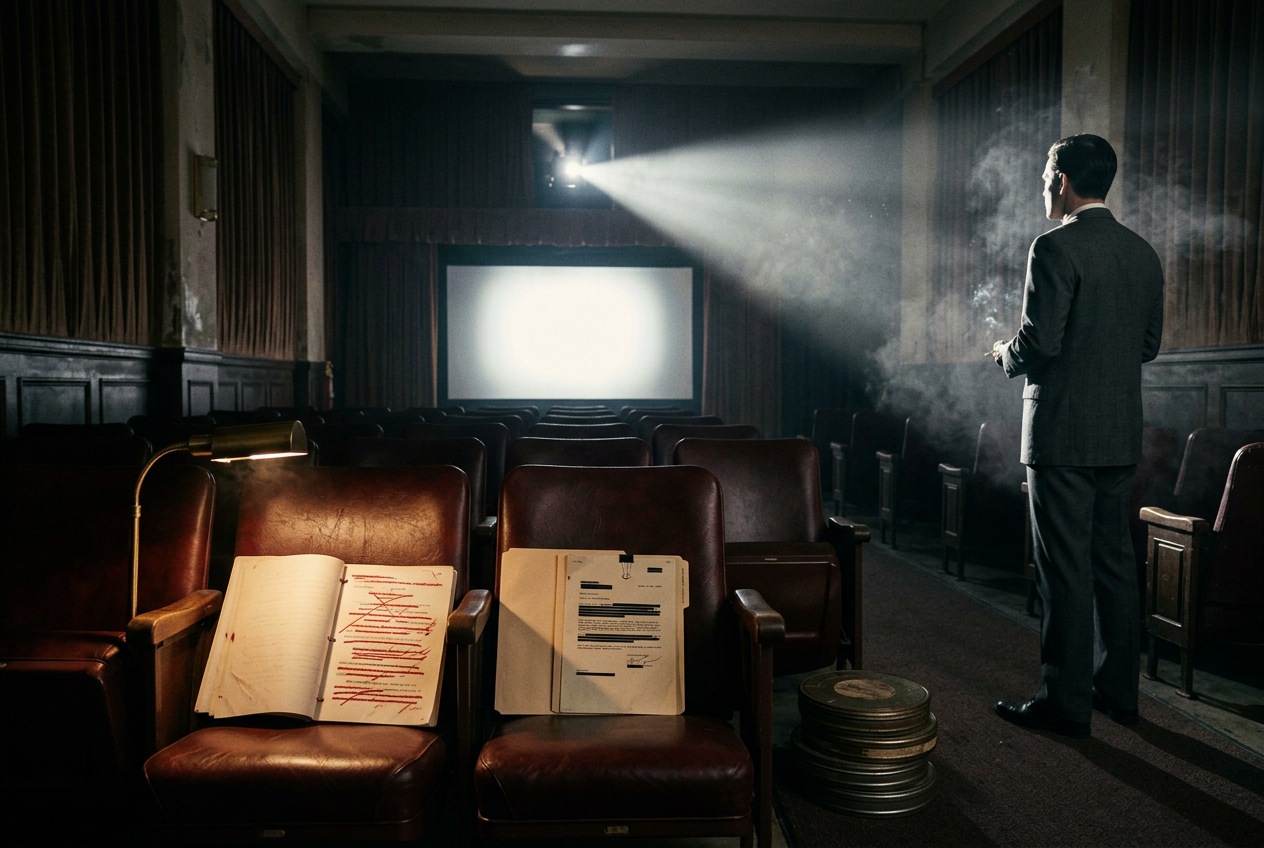
Declassified documents from the CIA's operational files reveal far more extensive involvement. The Agency's relationship with Hollywood began in earnest in the 1950s with psychological warfare operations designed to combat Soviet influence. Internal memos describe active measures to shape film content, cultivate relationships with producers and directors, and even fund productions through front companies. Former CIA entertainment liaison Chase Brandon admitted the Agency's script involvement extends to requesting changes that remove unflattering content or enhance recruitment messaging.
Operation Mockingbird—the CIA's documented infiltration of news media—had Hollywood parallels. Agency officers were embedded as consultants on productions, providing not just technical advice but narrative guidance. The 2012 film "Zero Dark Thirty" became controversial when investigative journalists revealed the CIA provided filmmakers with extraordinary access and classified information while the agency was under investigation for torture, effectively shaping public perception during a critical political moment.
Credible Dissenting Voices
Academics like Dr. Tricia Jenkins (author of "The CIA in Hollywood") have documented how the Agency uses entertainment as a soft power tool, noting that script approval requirements often sanitize CIA methods and eliminate moral complexity. Journalist Tom Secker's extensive FOIA research uncovered over 800 film and television projects with documented Pentagon or CIA involvement, many requiring script changes as conditions for support. Former case officers have described Hollywood recruitment operations and the strategic value of entertainment industry relationships for operational cover and access.
Follow the Money
The economics reveal deeper ties: productions receiving government support gain millions in cost savings through equipment access, location fees waived, and technical expertise. This creates financial incentive for studios to accept narrative influence. The revolving door between government and entertainment sees former CIA officers taking executive positions at studios and former Hollywood executives joining intelligence advisory boards. Lobbying disclosure records show entertainment industry associations coordinate with intelligence community representatives on policy matters.
Open Questions
Key unresolved issues include: the full extent of covert funding for productions through third parties, whether current CIA officers operate under entertainment industry cover, how narrative shaping extends to streaming platforms and international co-productions, and whether the Agency's involvement includes suppressing projects depicting controversial operations. The classified nature of intelligence activities makes comprehensive documentation impossible, leaving significant information gaps.
Case Timeline
- 1947ACADEMICCIA founded; begins cultivating entertainment industry relationships as part of cultural Cold War strategyThe cultural Cold War strategy involved psychological warfare operations to counter Soviet influence through media, with entertainment serving as a softer power tool than overt propaganda.
- 1950sDISPUTEDOperation Mockingbird expands into Hollywood; Agency provides funding and consultation for anti-communist filmsOperation Mockingbird was primarily a news media infiltration program, and its extension into Hollywood film production remains documented through academic research rather than comprehensive declassified operational files.
- 1996CREDIBLE REPORTINGCIA formally establishes Entertainment Industry Liaison office with dedicated staff for Hollywood relationsThe formal office institutionalized practices that had been occurring informally for decades, centralizing Hollywood liaison functions under public affairs rather than covert operations.
- 2001CREDIBLE REPORTINGPost-9/11 collaboration intensifies; CIA and Pentagon increase entertainment industry outreach for recruitment and narrative shapingThe War on Terror created increased demand for productions depicting intelligence work positively, with both agencies expanding staff dedicated to entertainment industry partnerships.
- 2011CREDIBLE REPORTINGCIA provides Zero Dark Thirty filmmakers with classified access during torture investigation controversyThe access included meetings with operational personnel and details about classified programs while the Senate Intelligence Committee was actively investigating enhanced interrogation techniques.
- 2012GOVERNMENT RECORDZero Dark Thirty released; senators demand investigation into CIA's unprecedented cooperation with filmmakersSenators Dianne Feinstein, Carl Levin, and John McCain wrote to the CIA Inspector General questioning whether the Agency inappropriately shared classified information to influence the film's portrayal of torture effectiveness.
- 2014ACADEMICTom Secker and Matthew Alford publish research documenting 814 films and TV shows with Pentagon or CIA involvementThe research analyzed public government documents and freedom of information releases to catalog productions that acknowledged military or intelligence consultation, though the full extent of involvement without acknowledgment remains unknown.
- 2016CORROBORATEDCIA launches official Twitter and social media presence, expanding public engagement and cultural influence effortsThe social media expansion represented a shift toward direct public engagement rather than exclusively operating through intermediary entertainment producers and journalists.
- 2017ACADEMICAcademic research reveals CIA script review process requires content changes as condition for cooperationResearchers documented through interviews and FOIA requests that the CIA's cooperation agreements are conditional, requiring filmmakers to accept script modifications in exchange for access, though specific changes remain largely undisclosed.
- 2023UNVERIFIEDStreaming platforms reveal collaboration with intelligence community consultants on original productionsThe extent and nature of intelligence community involvement with streaming platform content production lacks comprehensive public documentation or systematic disclosure requirements.
Key People
Organizations
Evidence Library
- documentDOC-A1Senate Letter to CIA Inspector General on Zero Dark Thirty (2012)
Senators Feinstein, Levin, and McCain formally requested investigation into whether the CIA improperly shared classified information with filmmakers during an active congressional torture investigation. The letter establishes that senior legislators viewed the cooperation as potentially inappropriate and outside normal liaison protocols.
- documentpartial redactionDOC-A2CIA Entertainment Industry Liaison Office Public Acknowledgment
The Agency publicly acknowledges operating an Entertainment Industry Liaison office that reviews scripts and provides consultation to filmmakers. This official disclosure confirms institutional involvement but does not detail the scope of script changes requested or declined projects.
- documentDOC-A3Tom Secker and Matthew Alford Research Database (2014)
Academic researchers compiled government documents showing 814 films and television programs with documented Pentagon or CIA involvement through 2014. The database provides quantitative evidence of the scale of military-entertainment collaboration, though it captures only acknowledged partnerships.
- documentDOC-A4Tricia Jenkins Academic Publication 'The CIA in Hollywood'
University scholar documented through interviews and FOIA requests how the CIA's entertainment liaison process works, including conditional cooperation requiring script approval. The research provides academic validation of quid-pro-quo arrangements between intelligence agencies and filmmakers.
- testimonyDOC-A5Chase Brandon Public Statements on CIA Script Involvement
Former CIA Entertainment Industry Liaison officer publicly acknowledged the Agency requests script changes to remove unflattering content and enhance recruitment messaging. His admissions provide insider confirmation of active content shaping beyond technical consultation.
- documentpartial redactionDOC-A6Declassified Cold War Cultural Programs Documentation
National Archives records confirm CIA involvement in cultural Cold War initiatives including support for anti-communist media during the 1950s-1960s. These documents establish historical precedent for intelligence agency involvement in shaping cultural products, though specific Hollywood operations remain partially classified.
Sources
Trace the trail yourself
Investigation Network


This dossier does not end here.
- 2007CIA declassifies 'Family Jewels' documents revealing additional details of media operationsOperation Mockingbird
- 1996CIA Inspector General Report acknowledges Cold War media relationships but claims they endedOperation Mockingbird
- 1950CIA begins systematic recruitment of American journalists and media executives according to later testimonyOperation Mockingbird
- 1948Office of Policy Coordination created within CIA to conduct covert psychological warfare operationsOperation Mockingbird
Live Discussion
0 Perspectives
Add to the record. Be specific. Cite where you can.
If you're learning about this topic for the first time, these are the best places to continue — documented evidence and historical relationships are the guide.
Named in “CIA Handlers and Hollywood's Secrets”.
Named in “CIA Handlers and Hollywood's Secrets”.
Read more dossiers like this
Get a quiet one-line bulletin when new investigative files are published. Bound to this dossier — useful for tracking follow-ups.