Jacques Vallée
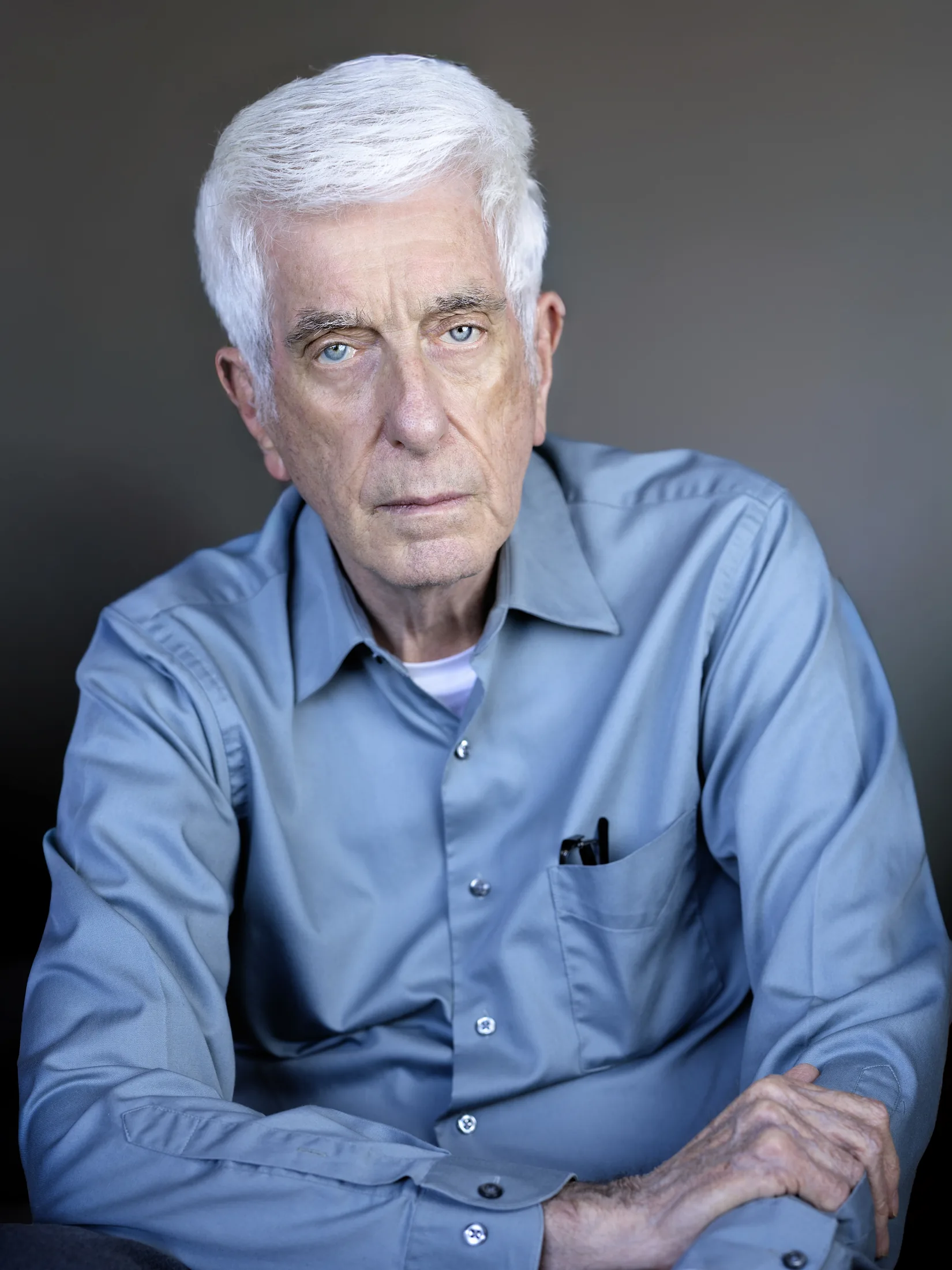
Jacques Vallée is a French-American astronomer, computer scientist, and venture capitalist who became one of the most influential figures in UFO research. His scientific approach to unexplained aerial phenomena, database work on UFO reports, and interdimensional hypothesis distinguished him from traditional extraterrestrial-focused researchers. Vallée appears in The Archive as a key scientific investigator of UFO phenomena whose work bridges conventional science and anomalous phenomena research.
Jacques Vallée is a French-American astronomer, computer scientist, and venture capitalist who became one of the most influential figures in UFO research. His scientific approach to unexplained aerial phenomena, database work on UFO reports, and interdimensional hypothesis distinguished him from traditional extraterrestrial-focused researchers.
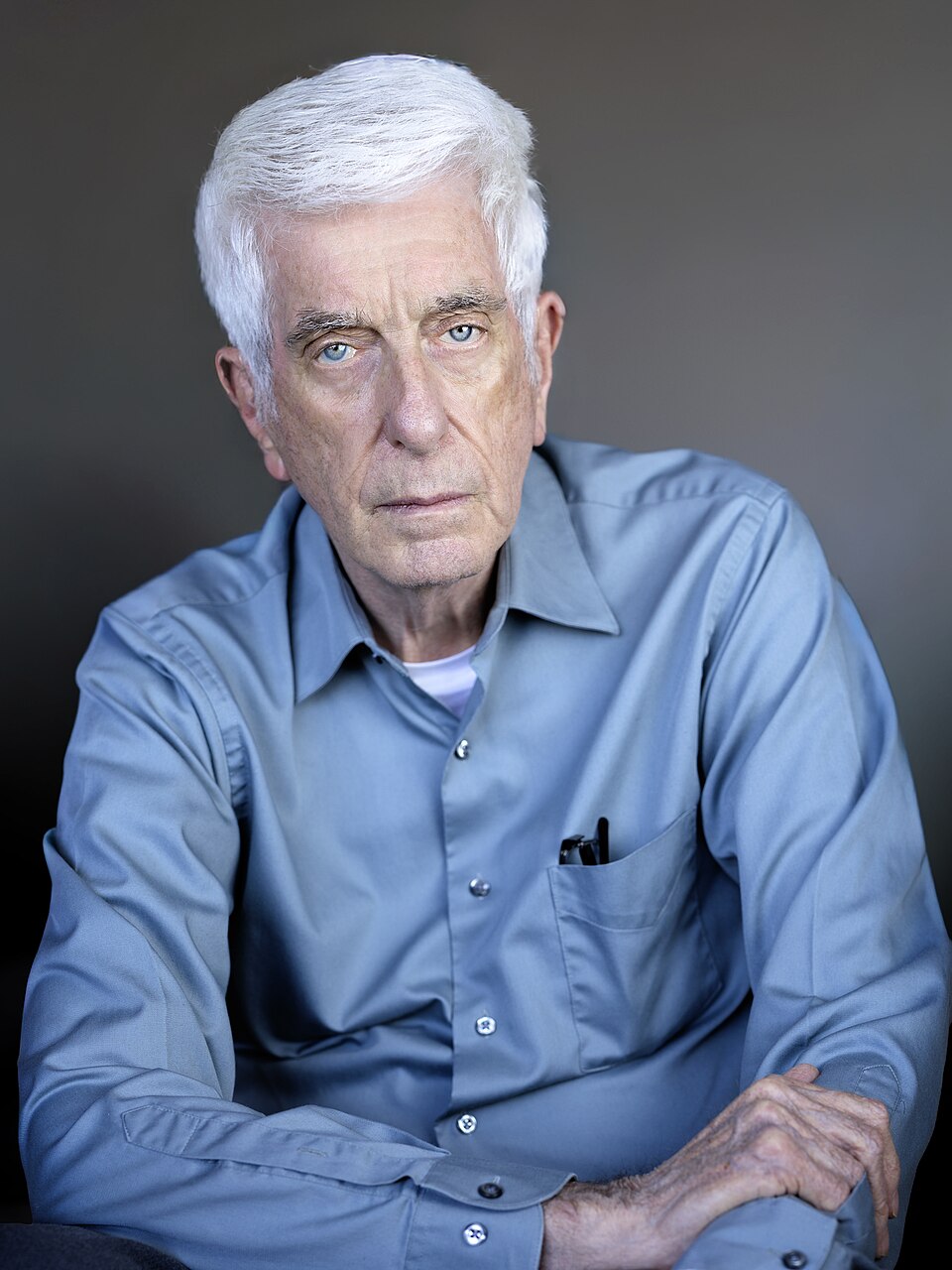
- Source
- Wikimedia Commons
- Type
- Photograph
- License
- CC BY-SA 4.0
- Photographer
- Cmichel67
- Year
- 2024
Photo Information ▾
- Full name
- Jacques Fabrice Vallée
- Birth
- September 24, 1939, Pontoise, France
- Nationality
- French-American (naturalized U.S. citizen)
- Education
- B.S. mathematics, Sorbonne (1959); M.S. astrophysics, Lille University (1961); Ph.D. computer science, Northwestern University (1967)
- Primary fields
- Astronomy, computer science, venture capital, UFO research
- Key affiliations
- French Space Committee (1961-1962), McDonald Observatory, Northwestern University, Institute for the Future, NASA consultant, SRI International
- Notable positions
- Principal investigator on ARPANET information systems; venture capital general partner; scientific advisor to multiple governments on UFO phenomena
- Major publications
- Passport to Magonia (1969), The Invisible College (1975), Dimensions (1988), Confrontations (1990), Revelations (1991)
- Professional recognition
- Recipient of the Jules Verne Prize (for science fiction writing)
- Years active
- 1961-present (UFO research 1961-present; computer science 1962-1990s; venture capital 1987-present)
Vallée appears in The Archive as a key scientific investigator of UFO phenomena whose work bridges conventional science and anomalous phenomena research. His involvement in analyzing the Belgium UFO Wave (1989-1990), his development of systematic UFO databases, and his challenge to mainstream extraterrestrial interpretations make him essential to understanding how credentialed scientists have approached unexplained aerial phenomena. His interdisciplinary methodology—combining astronomy, computer science, and sociology—established frameworks still used in contemporary UAP investigations, including those by government agencies. The Archive documents Vallée because his career illustrates the tension between scientific rigor and stigmatized subject matter, and because his networks connect multiple documented UFO events and researchers.
# Jacques Vallée
Identity
Jacques Fabrice Vallée was born September 24, 1939, in Pontoise, France. He earned a Bachelor of Science in mathematics from the Sorbonne in 1959, a Master of Science in astrophysics from Lille University in 1961, and a Ph.D. in computer science (then called industrial engineering with a specialization in computer science) from Northwestern University in 1967. His dissertation focused on the development of computer conferencing systems, pioneering work in what would become collaborative software.
Vallée became a naturalized United States citizen while maintaining connections to French scientific institutions. His dual cultural perspective—European academic tradition combined with American technological innovation—shaped his interdisciplinary approach to both mainstream science and anomalous phenomena research. He is multilingual, conducting research and publishing in French, English, and Spanish.
Professionally, Vallée has maintained three parallel careers: as an astronomer and computer scientist in mainstream institutions (1961-1990s), as an independent UFO researcher and author (1961-present), and as a venture capitalist specializing in high-technology startups (1987-present). This unusual combination allowed him to apply rigorous scientific methodology to UFO research while remaining financially independent of UFO organizations, a factor he has stated was crucial to maintaining objectivity.
Career & Roles
Vallée began his scientific career in 1961 at the French Space Committee (Comité Français de Recherches Spatiales), where he worked on satellite tracking. According to his own accounts published in his memoirs and interviews, he witnessed the deletion of tracking tapes showing unknown objects, an experience he claims initiated his interest in how scientific institutions handle anomalous data. He moved to the United States in 1962, working at the University of Texas's McDonald Observatory on the first computerized map of Mars for NASA.
At Northwestern University (1963-1967), Vallée worked under J. Allen Hynek, the astronomer who served as scientific consultant to the U.S. Air Force's Project Blue Book. Their collaboration, documented in Hynek's archives at the Center for UFO Studies and in their published correspondence, was foundational to the development of systematic UFO research methodology. Vallée helped Hynek develop classification systems for UFO reports and created some of the first computer databases of UFO sightings.
From 1967 to 1972, Vallée worked as a senior researcher at Stanford Research Institute (now SRI International) and later at the Institute for the Future in Palo Alto, California. His computer science work during this period was significant: he was a principal investigator on the pioneering ARPANET network information systems project, contributing to the development of the first conferencing system on the ARPANET, a precursor to the Internet. This work is documented in ARPANET technical reports and histories of early Internet development.
Simultaneously, Vallée maintained his UFO research as an independent investigator. Unlike many UFO researchers who relied on income from UFO-related activities, Vallée's mainstream scientific employment allowed him to avoid conflicts of interest. He served as a scientific consultant to the French government's GEPAN/SEPRA (official UFO investigation office) and later advised other governments on UFO investigation methodology.
In 1987, Vallée transitioned to venture capital, becoming a general partner at Sofinnova (now Sofinnova Partners), a leading European venture capital firm. He specialized in early-stage technology investments, particularly in software, semiconductors, and telecommunications. This phase of his career is documented in Securities and Exchange Commission filings and technology industry publications. He remained active in venture capital through the 2000s while continuing to publish UFO research.
Organizations & Networks
Vallée co-founded the College Invisible (Invisible College), an informal network of scientists and professionals interested in UFO phenomena, in the early 1970s. Unlike formal UFO organizations, this group operated as a private correspondence network, avoiding public membership lists. The name, borrowed from the Royal Society's 17th-century precursor, reflected its members' desire to investigate anomalous phenomena while protecting their professional reputations. Vallée documented this network in his 1975 book The Invisible College, though he deliberately avoided naming most members.
He maintained professional relationships with official UFO research organizations while remaining institutionally independent. He worked closely with J. Allen Hynek's Center for UFO Studies (CUFOS) from its founding in 1973, contributing to its database development and methodology. He consulted with GEPAN (Groupe d'Étude des Phénomènes Aérospatiaux Non-identifiés), the French government's official UFO investigation unit within CNES (the French space agency), from 1977 onward, as documented in GEPAN's published reports.
During the Belgium UFO Wave (1989-1990), Vallée worked with SOBEPS (Société Belge d'Étude des Phénomènes Spatiaux), the Belgian organization coordinating civilian UFO research, and consulted with Belgian military officials including Colonel Wilfried De Brouwer of the Belgian Air Force. His role, documented in SOBEPS publications and Belgian military statements, involved analyzing radar data and witness reports using his database methodology.
Vallée has maintained a contentious relationship with some UFO researchers, particularly those advocating the extraterrestrial hypothesis. His public debates with figures like Philip Klass (a skeptical investigator) and disagreements with researchers favoring alien visitation narratives are documented in UFO conference proceedings and published correspondence. He has been a frequent speaker at scientific conferences on anomalous phenomena, including the Society for Scientific Exploration, of which he has been a member since its founding in 1982.
His venture capital career connected him to Silicon Valley's technology elite. His portfolio companies and board memberships are documented in SEC filings and technology industry databases, though these professional networks remained largely separate from his UFO research activities.
Major Operations & Activities
Vallée's most significant contribution to UFO research was the development of systematic database methodology. Beginning in the mid-1960s with punch-card systems and evolving through computerized databases, he created classification schemes for UFO reports that attempted to apply scientific rigor to a field dominated by anecdotal evidence. His classification system, detailed in publications including Challenge to Science (1966, co-authored with Janine Vallée), categorized sightings by observational characteristics rather than presumed explanations, a methodology later adopted by official investigation bodies.
His involvement in the investigation of the Belgium UFO Wave (1989-1990) represents one of his most documented field investigations. Working with Auguste Meessen (a physics professor at the Catholic University of Louvain), SOBEPS, and Belgian military officials, Vallée analyzed multiple-witness sightings and radar returns of triangular objects reported over Belgium. His analysis, published in the Journal of Scientific Exploration (1991) and in SOBEPS's three-volume report, focused on the sociological patterns of the wave and questioned whether the events fit conventional extraterrestrial visitation models. He noted inconsistencies in the radar data and witness descriptions that suggested a more complex phenomenon than simple craft sightings.
Vallée conducted extensive field investigations in Brazil (1970s-1980s), documenting cases in the Amazon region where witnesses reported injuries from aerial phenomena. His work on the Colares incidents (1977), where Brazilian Air Force documents later released to the public confirmed military investigations of injuries associated with aerial lights, is detailed in his book Confrontations (1990). Brazilian Air Force files on "Operação Prato" (Operation Saucer), declassified in 2004, corroborate that military investigations occurred, though interpretations of the phenomena differ.
In the 1970s, Vallée investigated the physical trace evidence at alleged UFO landing sites, applying laboratory analysis techniques. His studies of soil samples, vegetation effects, and radiation readings, published in peer-reviewed journals including the Journal of Scientific Exploration, attempted to establish whether physical evidence corroborated witness accounts. These investigations often concluded that something physical had occurred, but the evidence was insufficient to determine causation.
Vallée's theoretical work on the "interdimensional hypothesis" distinguishes him from most UFO researchers. Beginning with Passport to Magonia (1969), he argued that UFO phenomena might be better understood through parallels with historical folklore, religious apparitions, and paranormal experiences than through the extraterrestrial hypothesis. He proposed that the phenomena might represent interactions with non-human intelligence existing in dimensions or realities parallel to our own, rather than physical visitors from other planets. This hypothesis, elaborated in Dimensions (1988) and subsequent works, has been both influential and controversial in UFO research circles.
His computer science work, particularly his contributions to ARPANET conferencing systems, is documented in computer science archives and ARPANET historical records maintained by institutions including the Computer History Museum. While separate from his UFO research, this work established his credentials as a legitimate scientist, which he leveraged in arguing that UFO phenomena deserved serious scientific attention.
Historical Importance
Vallée occupies a unique position in UFO research history as one of the few researchers with mainstream scientific credentials who maintained sustained engagement with the subject while publishing in both peer-reviewed scientific journals and popular UFO literature. His work influenced the methodology adopted by later government investigations, including aspects of the U.S. Department of Defense's Advanced Aerospace Threat Identification Program (AATIP) and the current All-domain Anomaly Resolution Office (AARO), though the extent of direct influence is debated.
His database methodology established a template for systematic UFO data collection. The Center for UFO Studies' database, several government databases (including those of GEPAN/SEPRA in France), and more recent efforts like the National UFO Reporting Center have used classification schemes derived from or influenced by Vallée's work. His emphasis on physical trace cases and multiple-witness events helped shift some UFO research toward more verifiable evidence.
Vallée's interdimensional hypothesis introduced alternative theoretical frameworks to a field dominated by the extraterrestrial hypothesis. While controversial and largely unproven, this approach influenced researchers to consider broader contexts, including the psychological and sociological dimensions of UFO experiences. His comparative analysis of UFO reports with historical accounts of fairy encounters, religious visions, and folklore challenged assumptions about the modern uniqueness of UFO phenomena.
As a character, Vallée is widely believed to have inspired the French scientist character "Lacombe" in Steven Spielberg's Close Encounters of the Third Kind (1977), played by François Truffaut. While Spielberg has acknowledged that the character was partly based on Vallée and J. Allen Hynek, the film's portrayal of a European scientist bringing rigorous methodology to UFO investigation reflects Vallée's public image in the 1970s.
His influence extends beyond UFO research into broader considerations of how scientific institutions handle anomalous data. His writings on the sociology of science, particularly regarding how mainstream science dismisses or ignores data that doesn't fit established paradigms, have been cited in science studies literature examining the boundaries of legitimate scientific inquiry.
Documented Controversies
Ongoing Historical Debate Vallée's rejection of the extraterrestrial hypothesis has generated sustained controversy within UFO research communities. Many researchers and experiencers who interpret their observations as evidence of alien visitation have criticized Vallée's interdimensional hypothesis as unnecessarily complicated or evasive. The debate, documented in numerous UFO conference proceedings and published exchanges, centers on whether his alternative frameworks explain the evidence better than simpler extraterrestrial interpretations or whether they make the subject less scientifically tractable. Critics argue that his hypothesis is unfalsifiable and therefore unscientific; Vallée has responded in publications that the extraterrestrial hypothesis is equally unfalsifiable given current evidence.
Credible Allegation Vallée has claimed in published interviews and memoirs, including Forbidden Science (a multi-volume diary series published 1992-2019), that he was approached by intelligence agencies interested in his UFO databases and methodology. He has described meetings with CIA personnel and others seeking to understand UFO data patterns, though he states he declined formal employment with intelligence agencies. These claims are supported by corroborating accounts from other researchers who have described similar approaches, documented in published interviews, though direct documentary evidence from intelligence agencies remains classified or unavailable.
Officially Documented Declassified French government documents confirm Vallée's consultancy relationship with GEPAN/SEPRA, the official French UFO investigation unit. GEPAN technical reports from the 1980s acknowledge his methodological contributions to their investigation protocols. The nature and extent of his influence on their conclusions remains debated among researchers who study GEPAN's history.
Disputed Claim Vallée's accounts of his early career experience in France, particularly his claim that he witnessed the destruction of satellite tracking tapes recording unknown objects, cannot be independently verified through available French Space Committee records. While Vallée has provided consistent accounts of this event across multiple publications and interviews, skeptics note that no other witnesses have publicly corroborated the incident, and relevant archival records from that period are either incomplete or remain classified.
Historical Consensus with Caveats Vallée's role in early ARPANET development is confirmed by ARPANET documentation and computer science historical records maintained by institutions including the Computer History Museum and documented in published histories of the Internet's development. However, the significance of his specific contributions is debated among Internet historians, with some characterizing him as a significant contributor to early conferencing systems and others viewing his role as more peripheral to core ARPANET development.
Ongoing Historical Debate Vallée's analysis of the Belgium UFO Wave has been both cited approvingly and criticized. Belgian military officials, including Colonel De Brouwer, acknowledged working with Vallée, as documented in official Belgian Air Force statements and SOBEPS publications. However, Vallée's interpretations of the radar data and his conclusions about the sociological dimensions of the wave have been disputed by other researchers who analyzed the same events, with some arguing his skepticism of conventional extraterrestrial interpretations was premature and others arguing he was not skeptical enough of witness reliability.
Credible Allegation In various publications and interviews, Vallée has suggested that some UFO phenomena might represent human-generated technology, possibly involving classified psychological operations or experimental aircraft. He has specifically proposed that some UFO waves might be manufactured or manipulated by human agencies for social control purposes. These hypotheses, detailed in Messengers of Deception (1979) and Revelations (1991), are explicitly speculative and labeled as such by Vallée himself, though they have been controversial both among UFO believers (who see them as dismissive of genuine phenomena) and skeptics (who view them as conspiracy theorizing).
Investigations & Legal Proceedings
Vallée has not been the subject of legal proceedings related to his UFO research or other professional activities. No credible allegations of research misconduct, fraud, or ethical violations have been documented in available records.
His work has been subject to peer review in scientific journals. His UFO-related papers published in the Journal of Scientific Exploration and other peer-reviewed venues underwent standard scientific review processes, with mixed results. Some papers were accepted and published; others were rejected, as documented in his published diaries. Mainstream astronomical and physical science journals generally declined to publish his UFO research, a pattern he has attributed to subject matter bias rather than methodological flaws, though critics argue his UFO work does not meet standards for extraordinary evidence.
Vallée has never been formally investigated by government agencies for his UFO research, according to available declassified records and his own statements. Freedom of Information Act requests filed by UFO researchers have not revealed FBI or CIA investigations of Vallée himself, though his claims that intelligence agencies expressed interest in his databases suggest awareness of his work at official levels.
Denials & Disputes
Vallée has consistently denied that his alternative hypotheses about UFO phenomena are intended to dismiss or debunk the subject. In numerous published statements and interviews, he has emphasized that he believes the phenomena are real and deserve serious scientific investigation, but that the extraterrestrial hypothesis is insufficient to explain all aspects of the evidence. He has specifically denied allegations from some UFO researchers that he is a "disinformation agent" working to mislead the UFO community, pointing to his decades of self-funded research and his financial independence from government or institutional funding as evidence of his autonomy.
Regarding claims that his venture capital career represents a conflict of interest or ulterior motive for his UFO research, Vallée has stated in interviews that the two activities are entirely separate and that his technology investments have never been related to UFO or defense-related technologies. SEC filings and portfolio disclosures support this claim, showing investments primarily in commercial software and telecommunications companies rather than aerospace or defense contractors.
Vallée has disputed characterizations of his interdimensional hypothesis as "supernatural" or "paranormal," arguing instead that it represents a physical hypothesis about realities or dimensions not yet understood by current physics. He has pointed to theoretical physics concepts including parallel universes and higher-dimensional space as potential scientific frameworks, though he acknowledges these applications remain speculative.
He has responded to critics who characterize his work as pseudoscience by pointing to his publication record in peer-reviewed journals, his mainstream scientific credentials, and his consistent advocacy for applying rigorous scientific methodology to UFO investigation. However, he has acknowledged in published reflections that his subject matter places him at the margins of mainstream science regardless of his methodology.
Legacy & Historical Debate
Vallée's legacy in UFO research is substantial but contested. He is widely regarded as having brought greater methodological rigor to UFO investigation through his database work and scientific approach. His classification systems influenced both civilian research organizations and government investigation bodies. The Journal of Scientific Exploration and similar publications have published retrospective assessments of his contributions, generally characterizing him as one of the most scientifically credible figures in a field often lacking scientific rigor.
His interdimensional hypothesis remains controversial. Some researchers credit him with expanding theoretical frameworks beyond the limitations of the extraterrestrial hypothesis, while others argue his alternatives are insufficiently grounded in testable predictions. The hypothesis has had limited uptake in mainstream scientific discussions of UFO/UAP phenomena, with most government investigations continuing to frame the question in terms of foreign technology or misidentification rather than alternative realities.
Vallée's influence on contemporary UAP disclosure discussions is debated. Some observers note that his emphasis on taking the phenomena seriously while maintaining scientific rigor anticipated the approach of recent Pentagon UFO investigations. Others argue that his alternative hypotheses have been largely ignored by government investigators focused on potential threats from foreign adversaries.
His standing in mainstream science remains complex. While his computer science contributions are recognized in technology history, his UFO research is generally not cited in mainstream scientific literature. The Society for Scientific Exploration, which publishes research on anomalous phenomena, has recognized his contributions, but this organization itself operates at the margins of mainstream science. His publication record spans both peer-reviewed scientific journals and popular UFO literature, a duality that both supporters and critics note as characteristic of his career.
The "Lacombe effect"—the cultural image of the credentialed European scientist investigating UFOs—has influenced how UFO researchers present themselves, with many attempting to adopt Vallée's model of scientific rigor combined with open-minded investigation. Whether this approach has succeeded in bringing greater scientific legitimacy to UFO research remains debated.
Vallee's multi-volume published diaries, Forbidden Science (1992-2019), provide an unusual insider perspective on UFO research networks, scientific institutions' responses to anomalous phenomena, and the personal costs of pursuing research in a stigmatized field. These memoirs are significant historical documents, though their reliability depends on Vallée's memory and selectivity in what to include. They offer one of the few extended autobiographical accounts by a scientist working in a marginalized field.
Continue Investigating
Vallée's significance to The Archive extends across multiple documented investigations. His direct involvement in analyzing the Belgium UFO Wave connects him to one of the best-documented mass UFO sighting events, with military acknowledgment and civilian investigation records. His relationships with SOBEPS, Auguste Meessen, Colonel Wilfried De Brouwer, and the Belgian Ministry of Defense during this period are documented in published reports and official statements. His broader UFO research connects to other Archive-documented cases including the Rendlesham Forest Incident, the Phoenix Lights, and the Ariel School Incident, as he has investigated or commented on these events in published work.
His methodology and theoretical frameworks are relevant to understanding the UFO/UAP Pentagon Disclosure dossier, as his career illustrates both the possibilities and limitations of scientific UFO investigation. The evolution from Project Blue Book (which he criticized) through his own independent research to contemporary government UAP studies shows changing institutional approaches to the same phenomena.
Vallée's claims about intelligence agency interest in UFO data connect to broader Archive investigations of classified programs including Project Stargate and Remote Viewing, Operation Blue Book, and the general relationship between intelligence agencies and anomalous phenomena research. His published accounts provide one perspective on how intelligence communities have approached UFO data, though documentary confirmation remains limited.
His computer science work on ARPANET systems connects tangentially to Archive investigations of surveillance and information technology, including the development of networks that would later enable ECHELON and Five Eyes intelligence sharing, though no evidence suggests Vallée's work was directed toward intelligence applications.
The broader methodological questions Vallée's career raises about how institutions handle anomalous data relate to Archive investigations of scientific controversy and institutional response, including The Replication Crisis in Psychology, the Sugar Industry vs. Heart Disease Research cover-ups, and other cases where established institutions dismissed or suppressed inconvenient evidence.
Further investigation should focus on: accessing any remaining classified records of his consultations with government UFO investigation bodies; obtaining complete archives of his correspondence with other scientists, particularly the "Invisible College" network; analyzing his UFO databases if they are preserved in accessible archives; examining French government records from his early career regarding the satellite tracking incident he described; and tracing his influence on current UAP investigation methodology through interviews with contemporary researchers and government investigators.
- 1939Born September 24 in Pontoise, France
- 1961Began work at French Space Committee; claims to have witnessed deletion of satellite tracking tapes showing unknown objects
- 1962Moved to United States; worked at McDonald Observatory on computerized Mars mapping for NASA
- 1963Began collaboration with J. Allen Hynek at Northwestern University
- 1967Earned Ph.D. in computer science from Northwestern University; joined Stanford Research Institute
- 1969Published 'Passport to Magonia,' introducing comparative analysis of UFO phenomena with historical folklore
- 1973J. Allen Hynek founded Center for UFO Studies (CUFOS); Vallée contributed to database development
- 1975Published 'The Invisible College,' documenting informal network of scientists investigating UFO phenomena
- 1977Began consultancy with GEPAN, French government's official UFO investigation unit; investigated Colares incidents in Brazil
- 1979Published 'Messengers of Deception,' proposing possible human agency involvement in UFO phenomena
- 1987Became general partner at Sofinnova venture capital firm, specializing in technology investments
- 1989-1990Consulted on Belgium UFO Wave investigation with SOBEPS and Belgian military officials
- 1991Published analysis of Belgium UFO Wave in Journal of Scientific Exploration
- 1992Published first volume of 'Forbidden Science' diary series
- 2004Brazilian Air Force declassified 'Operação Prato' documents, corroborating military investigation of Colares incidents
- 2019Completed publication of 'Forbidden Science' four-volume diary series covering 1957-1969
- S1The ARPANET Sourcebook: The Unpublished Foundations of the InternetComputer History Museum · museum
- S2Inventing the InternetMIT Press · book
- S3Vague d'OVNI sur la Belgique: Un Dossier ExceptionnelSOBEPS · investigative
- S4Forbidden Science: Volume Four - Journals 1990-1999Documatica Research · book
- S5Dimensions: A Casebook of Alien ContactContemporary Books · book
- S6Confrontations: A Scientist's Search for Alien ContactBallantine Books · book
- S7Operation Prato: Brazilian Air Force UFO Investigation DocumentsBrazilian UFO Magazine · investigative
- S8Revelations: Alien Contact and Human DeceptionBallantine Books · book
If you're learning about this topic for the first time, these are the best places to continue — documented evidence and historical relationships are the guide.
Jacques Vallée is documented in the evidence record of this published dossier.
Collaborated during Belgium UFO Wave investigation; Meessen provided physics expertise on radar and witness data.
Vallée consulted with Belgian military authorities during the 1989-1990 UFO wave investigation.