1Malaysia Development Berhad

1Malaysia Development Berhad (1MDB) was a Malaysian state investment fund established in 2009 under Prime Minister Najib Razak, ostensibly to promote economic development. Between 2009 and 2015, an estimated $4.5 billion was systematically misappropriated from the fund through a complex network of shell companies, fraudulent bond offerings, and international financial institutions, making it one of the largest klept… 1MDB represents a landmark case in transnational financial crime, corruption, and institutional failure.
1Malaysia Development Berhad (1MDB) was a Malaysian state investment fund established in 2009 under Prime Minister Najib Razak, ostensibly to promote economic development. Between 2009 and 2015, an estimated $4.5 billion was systematically misappropriated from the fund through a complex network of shell companies, fraudulent bond offerings, and international financial institutions, making it one of the largest kleptocracy cases in modern history.
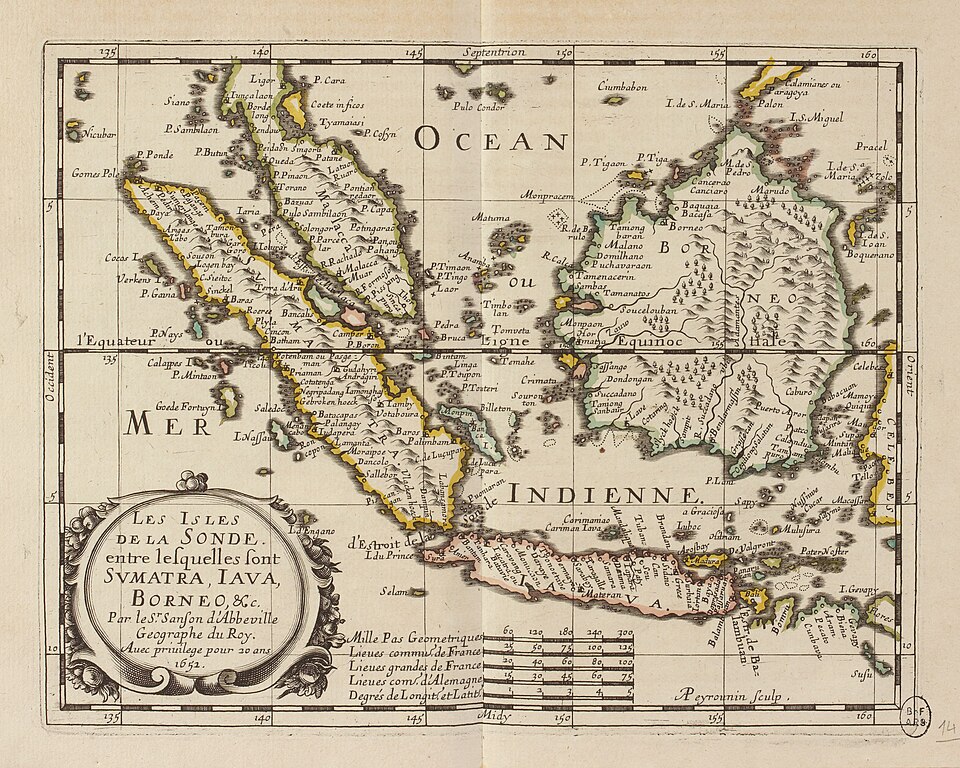
- Source
- Wikimedia Commons
- Type
- Historical Artwork
- License
- Public domain
- Photographer
- Sanson, Nicolas (1600-1667). Cartographe Idrīsī, Muḥammad ibn Muḥammad al-Šarīf Abū ʿAbd…
- Year
- 1652
Photo Information ▾
Sujet : Asie Couverture : Monde Langue : français français
Bibliothèque nationale de France
View original ↗- Full name
- 1Malaysia Development Berhad
- Type
- Malaysian sovereign wealth fund / strategic development company
- Founded
- September 2009
- Jurisdiction
- Malaysia (wholly owned by Ministry of Finance)
- Dissolved
- Restructured 2017-2018; legal entity persists in debt restructuring
- Founding chairman
- Najib Razak (Prime Minister of Malaysia, 2009-2018)
- Initial stated purpose
- Strategic investment for economic development and partnerships
- Estimated misappropriated funds
- $4.5 billion (U.S. Department of Justice estimate)
- Peak debt
- Approximately $12 billion (2015)
- Key financial intermediary
- Goldman Sachs (raised $6.5 billion through three bond offerings, 2012-2013)
- Major convictions related
- Najib Razak (Malaysia, 2020); Roger Ng (U.S., 2022); multiple guilty pleas
- International recovery efforts
- U.S., Switzerland, Singapore, Luxembourg, others; over $1 billion recovered as of 2023
1MDB represents a landmark case in transnational financial crime, corruption, and institutional failure. The scandal resulted in criminal convictions across multiple jurisdictions, triggered the collapse of Malaysia's ruling government, exposed systematic compliance failures at major global financial institutions including Goldman Sachs, and prompted unprecedented international asset recovery efforts coordinated by the U.S. Department of Justice, Swiss authorities, and Singaporean regulators. The case demonstrates how sovereign wealth funds can be weaponized for kleptocracy, how international banking systems enabled massive fraud despite compliance protocols, and how investigative journalism (particularly by Clare Rewcastle-Brown and The Wall Street Journal) can catalyze government action. 1MDB's collapse provides documented evidence of connections between political power, financial intermediaries, and systematic looting of national assets.
# 1Malaysia Development Berhad
Identity
1Malaysia Development Berhad (1MDB) was a Malaysian strategic development company established in 2009 as a sovereign wealth fund wholly owned by the Ministry of Finance of Malaysia. The fund was created under the administration of Prime Minister Najib Razak, who simultaneously served as chairman of 1MDB's board of advisors and Minister of Finance, giving him direct oversight of the entity. The stated mission was to pursue strategic investments and partnerships to promote long-term economic development for Malaysia and enhance the well-being of its people.
In practice, 1MDB became the vehicle for what U.S., Swiss, and Singaporean investigators have characterized as one of the largest kleptocracy schemes in history. Between 2009 and 2015, an estimated $4.5 billion was systematically diverted from the fund through fraudulent transactions, sham investments, and the creation of complex offshore corporate structures. By 2015, 1MDB had accumulated approximately $12 billion in debt while its actual assets remained opaque.
The scandal triggered international criminal investigations across at least ten countries, led to the conviction of Malaysia's sitting Prime Minister, exposed systemic compliance failures at Goldman Sachs and other major financial institutions, and prompted the largest-ever kleptocracy asset recovery effort by the U.S. Department of Justice. The fund was effectively restructured beginning in 2017-2018, with its assets transferred to the Ministry of Finance and its debts subject to ongoing restructuring negotiations.
Origins & Charter
1MDB was incorporated on September 28, 2009, shortly after Najib Razak became Prime Minister in April 2009. The fund evolved from the Terengganu Investment Authority (TIA), a state-level development fund established earlier that year. When the federal government declined to guarantee TIA's planned bond issuances, the entity was reconstituted as a federal-level strategic investment company under direct Ministry of Finance ownership.
The founding charter positioned 1MDB as a strategic development company empowered to enter into business ventures and investments both domestically and internationally. Unlike traditional sovereign wealth funds built on accumulated budget surpluses or commodity revenues, 1MDB was structured to raise capital through bond issuances and then deploy that capital in strategic investments. The board of advisors was chaired by the Prime Minister, and key decisions required approval from this board, concentrating effective control in Najib's office.
From the outset, 1MDB's corporate governance structure was unusual. The board of advisors held final decision-making authority, superseding the board of directors composed of business and finance professionals. Parliamentary oversight was limited, and 1MDB was not subject to the same transparency requirements as other government-linked companies. The fund's financial statements were repeatedly delayed, and external auditors raised concerns about access to documentation as early as 2014.
Jho Low (Low Taek Jho), a Malaysian financier with no official position at 1MDB, was involved in the fund's establishment and early operations. Investigators later documented that Low had extraordinary access to 1MDB's decision-making processes and financial transactions, despite holding no formal role. His involvement, facilitated by his relationship with Najib's family, became central to the subsequent fraud scheme.
Structure & Leadership
1MDB operated with a dual-layer governance structure that concentrated power while obscuring accountability. The board of advisors, chaired by Prime Minister Najib Razak, held ultimate decision-making authority. The board of directors, which included business executives and former government officials, theoretically managed day-to-day operations but deferred to the advisory board on major decisions.
Key figures in 1MDB's early years included Shahrol Azral Ibrahim Halmi, who served as CEO from 2009 to 2013, and Arul Kanda Kandasamy, who became CEO in 2015 amid growing scrutiny. Both executives later became witnesses in criminal proceedings. The Chief Financial Officer position saw rapid turnover, with multiple executives resigning after brief tenures, a pattern later cited as a red flag by investigators.
Behind the formal structure, investigators documented a shadow chain of command centered on Jho Low. Court documents from U.S. and Malaysian proceedings detail how Low directed key transactions, selected intermediaries, and coordinated with officials at Goldman Sachs and other financial institutions. Email records introduced as evidence show Low providing instructions on bond proceeds allocation, investment decisions, and fund transfers, despite having no legal authority to do so.
Goldman Sachs served as the primary financial intermediary, arranging three bond offerings in 2012 and 2013 that raised approximately $6.5 billion. Goldman bankers Tim Leissner (South East Asia chairman) and Roger Ng (managing director) worked directly with Low and 1MDB officials. Leissner later pleaded guilty to conspiracy to commit money laundering and violation of the Foreign Corrupt Practices Act; Ng was convicted by a U.S. jury in 2022.
Abu Dhabi's International Petroleum Investment Company (IPIC) and its subsidiary Aabar Investments guaranteed some of 1MDB's bond issuances. However, investigators later discovered that portions of the bond proceeds intended for Aabar were diverted to shell companies with similar names (such as "Aabar Investments PJS Limited") controlled by co-conspirators.
Major Activities & Operations
1MDB's operations followed a pattern: raise capital through bond offerings ostensibly for strategic investments, then divert substantial portions through layers of shell companies and fraudulent transactions. The U.S. Department of Justice's civil forfeiture complaints, filed in 2016 and expanded in subsequent years, provide detailed transaction flows based on bank records, emails, and witness testimony.
The first major transaction occurred in 2009 when 1MDB entered into a joint venture with PetroSaudi International, ostensibly to pursue energy sector investments. According to DOJ filings and Swiss investigations, approximately $700 million of the $1 billion 1MDB contributed was almost immediately diverted into accounts controlled by Jho Low and his associate Tarek Obaid. Fraudulent documentation created the appearance of legitimate investment activity while funds were siphoned offshore.
In 2012 and 2013, Goldman Sachs arranged three bond offerings for 1MDB totaling $6.5 billion. The stated purposes included energy sector investments and the acquisition of power generation assets. Goldman earned approximately $600 million in fees and revenue from these deals, far exceeding typical rates for sovereign bond offerings. Court documents show that approximately $2.7 billion from these bond proceeds was diverted rather than used for the stated purposes.
Funds misappropriated from 1MDB were traced to an extraordinary range of destinations: luxury real estate in New York, Los Angeles, and London; fine art including works by Monet and Basquiat; a superyacht named Equanimity; gambling expenses in Las Vegas casinos; and financing for the Hollywood film "The Wolf of Wall Street," produced by Red Granite Pictures, a company whose principals included Najib's stepson Riza Aziz. The DOJ's asset forfeiture actions targeted over $1.7 billion in assets traceable to the scheme.
1MDB also engaged in what appeared to be legitimate business activities, including the 2012 acquisition of power generation assets and urban real estate development projects in Kuala Lumpur. However, investigators found that even these transactions were often structured to enable kickbacks or involved inflated valuations that created opportunities for diversion of funds.
Historical Importance
The 1MDB scandal holds multiple historical significances beyond its scale. It represents the first major kleptocracy case in which international investigators fully documented the flow of funds from a sovereign entity through global financial institutions to luxury assets across multiple continents. The U.S. Department of Justice's use of civil asset forfeiture under the Kleptocracy Asset Recovery Initiative established new precedents for recovering assets stolen from foreign governments.
The case exposed systematic failures in anti-money laundering compliance at some of the world's most sophisticated financial institutions. Goldman Sachs' role became a landmark case study in investment banking compliance failures. In 2020, Goldman Sachs agreed to pay over $5 billion to settle charges with U.S. and Malaysian authorities, admitted that a subsidiary violated the Foreign Corrupt Practices Act, and acknowledged that its compliance processes were inadequate.
Politically, the 1MDB scandal contributed directly to the historic 2018 defeat of Barisan Nasional, Malaysia's ruling coalition since independence in 1957. Najib Razak's United Malays National Organisation (UMNO) lost power for the first time, with public anger over 1MDB cited as a decisive factor. The scandal demonstrated how investigative journalism—particularly the work of Clare Rewcastle-Brown's Sarawak Report and The Wall Street Journal—could catalyze political change even in systems with limited press freedom.
The 1MDB case also illustrated the vulnerabilities of sovereign wealth funds to abuse when oversight mechanisms are weak and political power is concentrated. Unlike the embezzlement of state funds through traditional corruption, 1MDB involved the creation of an ostensibly legitimate state investment vehicle that was systematically exploited from its inception.
Documented Controversies
Confirmed by Court Najib Razak was convicted in 2020 by Malaysia's High Court on seven charges including abuse of power, money laundering, and criminal breach of trust related to SRC International, a 1MDB subsidiary. Evidence presented at trial included the transfer of approximately $10 million from SRC accounts to Najib's personal bank accounts. Najib was sentenced to 12 years in prison and fined RM210 million. Malaysia's Court of Appeal upheld the conviction in 2021, and the Federal Court (Malaysia's highest court) affirmed the conviction and sentence in August 2022. Najib is currently serving his sentence.
Convicted Roger Ng, a former Goldman Sachs managing director, was convicted in April 2022 by a U.S. federal jury in Brooklyn on charges of conspiring to violate the Foreign Corrupt Practices Act and to commit money laundering. Evidence included testimony from Tim Leissner (who pleaded guilty and cooperated) and documents showing Ng received approximately $35 million in kickbacks from the scheme. Ng was sentenced to 10 years in prison in March 2023.
Guilty Plea Tim Leissner, former South East Asia chairman for Goldman Sachs, pleaded guilty in 2018 to conspiracy to commit money laundering and conspiracy to violate the Foreign Corrupt Practices Act. He admitted to paying over $1.6 billion in bribes to Malaysian and Abu Dhabi officials to obtain and retain business for Goldman Sachs. Leissner's cooperation provided prosecutors with detailed insider testimony about the mechanics of the scheme.
Government Finding The U.S. Department of Justice filed civil forfeiture complaints beginning in 2016 detailing the diversion of over $4.5 billion from 1MDB. The complaints, based on subpoenaed bank records, emails, and witness interviews, traced fund flows from 1MDB through shell companies to specific luxury assets. The DOJ described the scheme as "kleptocracy" and initiated the largest asset recovery action under the Kleptocracy Asset Recovery Initiative. As of 2023, the U.S. government had recovered or assisted in recovering over $1 billion in assets.
Government Finding Switzerland's Office of the Attorney General opened criminal proceedings in 2015 and eventually identified over $1 billion in misappropriated 1MDB funds that transited Swiss financial institutions. Swiss authorities executed asset freezes and initiated criminal proceedings against multiple individuals and entities. In 2019, Switzerland's financial regulator FINMA concluded that Falcon Private Bank and BSI Bank had committed serious breaches of money laundering regulations related to 1MDB transactions and ordered both banks to disgorge profits.
Government Finding Singapore's Monetary Authority conducted extensive investigations into 1MDB-related transactions through Singaporean banks and financial institutions. Multiple bankers were criminally charged and convicted in Singapore for their roles in the scheme, including employees of Falcon Private Bank, BSI Bank, and UBS. Singapore ordered the closure of BSI Bank's Singapore branch and imposed severe penalties on other institutions.
Confirmed by Court Goldman Sachs reached a global settlement in 2020, paying over $5 billion to U.S. and Malaysian authorities. A Goldman Sachs subsidiary pleaded guilty to violating the Foreign Corrupt Practices Act. The settlement included an admission that the bank's compliance and control systems failed and that bribes and kickbacks were paid to government officials in Malaysia and Abu Dhabi.
Official Record Hundreds of millions of dollars appeared in Najib Razak's personal bank accounts between 2011 and 2015. The initial transfers, totaling approximately $681 million in 2013, were attributed by Najib's defenders to a donation from the Saudi royal family. Investigators later traced the funds to accounts associated with 1MDB-related transactions. Malaysian and U.S. investigators concluded that the "donation" narrative was fabricated and that the funds originated from diverted 1MDB proceeds.
Investigated Jho Low remains a fugitive. He was indicted by both U.S. and Malaysian authorities but has not been located. Malaysian authorities issued a red notice through Interpol. Low's whereabouts have been the subject of speculation, with reports suggesting he may be in China, though Chinese authorities have not confirmed his presence or cooperated with extradition requests.
Credible Allegation Multiple bankers and intermediaries involved in 1MDB transactions died under circumstances that generated public speculation. Investigators have not established foul play, but the deaths contributed to conspiracy theories surrounding the scandal. AmBank founder Hussain Najadi was murdered in 2013 in Kuala Lumpur; his family claimed connections to 1MDB disclosures, though police attributed the killing to a business dispute. Kevin Morais, a Malaysian deputy public prosecutor involved in 1MDB investigations, was murdered in 2015; a doctor and others were convicted of the killing in a case prosecutors said was unrelated to 1MDB.
Investigations & Official Findings
Investigations into 1MDB were conducted by authorities in at least ten countries, with the most extensive efforts undertaken by the United States, Switzerland, Singapore, and Malaysia.
The U.S. Department of Justice's investigation, led by the Kleptocracy Asset Recovery Initiative, began in 2015. Prosecutors filed the first civil forfeiture complaint in July 2016, identifying over $1 billion in assets traceable to misappropriated 1MDB funds. Amended and expanded complaints filed through 2017 increased the total to over $1.7 billion in targeted assets. The investigation relied on subpoenaed bank records from dozens of financial institutions, emails obtained through search warrants, cooperating witnesses, and forensic analysis of fund flows.
The DOJ's criminal division pursued separate criminal investigations that led to the indictments of Jho Low, two former Goldman Sachs bankers, and others. The government secured guilty pleas from Tim Leissner and Roger Ng's former colleague; both testified at Ng's trial. In 2020, Goldman Sachs reached a global settlement exceeding $5 billion, with a subsidiary pleading guilty to FCPA violations.
Switzerland's Office of the Attorney General opened proceedings in 2015 after receiving information from Malaysian authorities. Swiss investigators identified approximately $1 billion in misappropriated funds that transited Swiss banks. Switzerland's financial regulator FINMA conducted parallel supervisory proceedings against banks including BSI, Falcon Private Bank, and UBS. FINMA found systematic failures in anti-money laundering controls and ordered BSI's closure, disgorgement of profits at Falcon, and regulatory actions against UBS.
Singapore's investigations resulted in criminal charges against multiple bankers. Employees of BSI, Falcon Private Bank, and UBS were convicted of money laundering, forgery, and other offenses related to facilitating 1MDB transactions. The Monetary Authority of Singapore ordered BSI's Singapore operations closed and imposed financial penalties on other institutions.
In Malaysia, investigations were initially hampered by political interference. The Malaysian Anti-Corruption Commission began inquiries in 2015, but the attorney general who recommended charges against Najib was replaced, and the new attorney general cleared Najib in 2016, claiming the funds in his accounts were a legitimate donation. After Najib's electoral defeat in 2018, new investigations led to his arrest and prosecution. The High Court trial in 2019-2020 focused on SRC International, a 1MDB subsidiary, and resulted in Najib's conviction on all seven charges. Appellate courts upheld the conviction, and Najib began serving his sentence in 2022.
Pakatan Harapan, the opposition coalition that defeated Najib's government in 2018, established the Council of Eminent Persons and tasked them with reviewing 1MDB's finances. The government pursued asset recovery, renegotiated Goldman Sachs' settlement, and continued prosecutions of other individuals involved in the scandal.
Legacy & Historical Debate
The 1MDB scandal's legacy extends across multiple domains: financial regulation, political accountability, sovereign wealth fund governance, and international cooperation on kleptocracy.
In financial regulation, 1MDB became a watershed for anti-money laundering enforcement. The failures at Goldman Sachs, BSI, Falcon Private Bank, and other institutions demonstrated that sophisticated compliance systems could be circumvented or ignored when lucrative fees were at stake. Regulatory responses included enhanced scrutiny of politically exposed persons (PEPs), stricter controls on correspondent banking relationships, and greater emphasis on the substance of compliance programs rather than mere procedural adherence.
The Goldman Sachs settlement established important precedents. The bank's admission of wrongdoing by a subsidiary, the over $5 billion penalty, and the detailed public accounting of compliance failures provided a template for holding financial institutions accountable for enabling kleptocracy. The case reinforced that "willful blindness" to red flags constitutes a compliance failure under the Foreign Corrupt Practices Act.
For sovereign wealth fund governance, 1MDB illustrated the dangers of concentrated political control, limited transparency, and weak oversight. The Santiago Principles, voluntary guidelines for sovereign wealth funds, were already in existence when 1MDB was created, but Malaysia did not adopt them. Post-1MDB, there has been renewed international emphasis on transparency standards for state investment vehicles, though enforcement remains uneven.
Politically, the scandal demonstrated that financial corruption could indeed cause electoral consequences even in dominant-party systems. Najib's conviction and imprisonment—the first conviction of a Malaysian Prime Minister—marked a significant moment for accountability. However, the political legacy remains contested: Najib's UMNO party returned to government as part of a coalition in 2022, and debates continue over whether the prosecutions represent justice or political vendetta.
The investigative journalism that exposed 1MDB, particularly the work of Clare Rewcastle-Brown and her Sarawak Report website, became a case study in the power and vulnerability of independent media. Rewcastle-Brown, working from London, broke numerous stories based on leaked documents and insider sources. Her site was blocked in Malaysia, and she faced legal threats and harassment, but her reporting proved instrumental in triggering international investigations. The Wall Street Journal's reporting, particularly by Tom Wright and Bradley Hope, provided extensive documentation of the scheme and later became the basis for the book "Billion Dollar Whale."
Historians debate whether 1MDB represents an anomaly or a template. Some argue the scandal's unique elements—the scale, the brazenness, the involvement of a sitting Prime Minister, the Hollywood connections—make it exceptional. Others contend that 1MDB revealed systemic vulnerabilities in the global financial system that enable kleptocracy across multiple countries. The successful international cooperation on asset recovery has been cited as both a success story and a reminder of how rarely such cooperation occurs.
The role of China remains a subject of ongoing debate. Chinese state-owned enterprises invested in 1MDB-related projects, and some analysts suggest that Chinese government support helped Najib's government manage the scandal's political fallout before 2018. After Najib's defeat, the new Malaysian government publicly questioned several China-backed infrastructure projects that had been negotiated during Najib's tenure, suggesting possible connections to 1MDB debt relief, though direct evidence of such quid pro quo arrangements has not been definitively established.
Continue Investigating
The 1MDB scandal intersects with multiple Archive investigations into financial crime, institutional corruption, and the mechanisms of kleptocracy. For detailed profiles of key individuals involved, see [Najib Razak](/entities/najib-razak), who was convicted and imprisoned for his role; [Jho Low](/entities/jho-low), the financier who orchestrated the scheme and remains a fugitive; [Tim Leissner](/entities/tim-leissner) and [Roger Ng](/entities/roger-ng), the Goldman Sachs executives who facilitated the bond offerings; and [Clare Rewcastle-Brown](/entities/clare-rewcastle-brown), the investigative journalist whose reporting helped expose the scandal. The role of [Goldman Sachs](/entities/goldman-sachs) as financial intermediary provides documentation of how major institutions can enable sovereign corruption.
Related financial scandals documented in The Archive include the [BCCI Scandal](/dossiers/bcci-scandal), which exposed how the Bank of Credit and Commerce International served as a vehicle for money laundering and intelligence operations; the [Wirecard Collapse](/dossiers/wirecard-collapse), demonstrating regulatory failure in European financial oversight; the [Panama Papers](/dossiers/panama-papers) and [Paradise Papers](/dossiers/paradise-papers), which revealed the offshore structures used to hide wealth; and the [LIBOR Rate-Fixing Scandal](/dossiers/the-libor-rate-fixing-scandal), showing systemic manipulation of financial benchmarks.
For broader context on financial fraud and corporate malfeasance, see [The Enron Collapse](/dossiers/the-enron-collapse), [Theranos and Elizabeth Holmes](/dossiers/theranos-and-elizabeth-holmes), and [Sam Bankman-Fried and the Collapse of FTX](/dossiers/sam-bankman-fried-and-the-collapse-of-ftx). The [Cambridge Analytica Scandal](/dossiers/cambridge-analytica-scandal) provides parallel documentation of how institutional failures and weak oversight can enable systematic wrongdoing.
- 20091Malaysia Development Berhad incorporated in September under Prime Minister Najib Razak; Najib serves as chairman of board of advisors and Minister of Finance
- 20091MDB enters joint venture with PetroSaudi International; approximately $700 million of $1 billion contributed is allegedly diverted
- 2012Goldman Sachs arranges first bond offering for 1MDB, raising $1.75 billion
- 2012Goldman Sachs arranges second bond offering for 1MDB, raising $1.75 billion
- 2013Goldman Sachs arranges third bond offering for 1MDB, raising $3 billion; approximately $681 million appears in Najib's personal accounts
- 2013Red Granite Pictures, founded by Najib's stepson Riza Aziz, releases 'The Wolf of Wall Street' partially financed with allegedly misappropriated 1MDB funds
- 2015Sarawak Report and The Wall Street Journal publish exposés detailing 1MDB transactions and funds in Najib's accounts; Malaysian Anti-Corruption Commission opens investigation; Swiss and Singaporean authorities begin proceedings
- 2015Malaysian Attorney General clears Najib, claiming the funds were a legitimate donation from Saudi Arabia
- 2016U.S. Department of Justice files first civil forfeiture complaint targeting over $1 billion in assets traceable to 1MDB
- 2018Najib's Barisan Nasional coalition defeated in general election; new government reopens investigations; Najib arrested and charged
- 2018Tim Leissner, former Goldman Sachs South East Asia chairman, pleads guilty to conspiracy charges in U.S. court
- 2020Najib convicted on seven charges related to SRC International and sentenced to 12 years; Goldman Sachs reaches global settlement exceeding $5 billion
- 2022Roger Ng convicted by U.S. jury; Malaysia's Federal Court upholds Najib's conviction and he begins serving sentence in August
- 2023Roger Ng sentenced to 10 years in prison; U.S. announces over $1 billion recovered in 1MDB-related assets; Jho Low remains fugitive
- S1Malaysia Ex-PM Najib Razak Begins 12-Year Prison TermReuters · mainstream
- S2
- S3United States Seeks to Recover Approximately $1 Billion Obtained from Corruption Involving Malaysian Sovereign Wealth Fund 1MDBU.S. Department of Justice · primary
- S4The Kleptocracy Asset Recovery InitiativeU.S. Department of Justice · primary
- S5Goldman Sachs Charged in Foreign Bribery Case and Agrees to Pay Over $2.9 BillionU.S. Department of Justice · primary
- S6Former Goldman Sachs Banker Convicted at Trial for Role in Billion Dollar International Bribery Scheme (Roger Ng)U.S. Department of Justice · primary
- S7Ex-Goldman banker Roger Ng sentenced to 10 years for role in 1MDB scandalReuters · mainstream
- S8Former Goldman Sachs Banker Pleads Guilty in Foreign Bribery Case (Tim Leissner)U.S. Department of Justice · primary
If you're learning about this topic for the first time, these are the best places to continue — documented evidence and historical relationships are the guide.
1Malaysia Development Berhad is documented in the evidence record of this published dossier.
Investigative journalist whose reporting on 1MDB triggered international investigations.
Investment bank that arranged $6.5 billion in bond offerings and paid over $5 billion in settlements.