
The Enron Collapse
How America's seventh-largest company hid billions in debt through accounting fraud and SPEs
Sign in to bookmark, follow, and message the contributor.
Executive Summary
Enron Corporation's 2001 bankruptcy exposed systematic accounting fraud, off-balance-sheet partnerships, and regulatory failures that destroyed $74 billion in shareholder value. The scandal led to criminal convictions of top executives, dissolution of Arthur Andersen, and sweeping legislative reforms including the Sarbanes-Oxley Act.
- 01.CFO Andrew Fastow personally earned at least $45 million from managing partnerships that conducted business with Enron, creating undisclosed conflicts of interest that prosecutors characterized as "self-dealing on a massive scale."
- 02.Arthur Andersen earned $52 million from Enron in 2000 alone, split nearly evenly between audit fees and consulting fees, creating financial dependency that multiple former partners later acknowledged compromised independence.
- 03.Enron executives sold over $1 billion in stock during 2000-2001 while simultaneously restricting employee pension fund trading and encouraging employees to buy stock through public reassurances.
- 04.Major banks including JP Morgan Chase, Citigroup, and Merrill Lynch settled for $7.2 billion in shareholder lawsuits for facilitating disguised loans through fake energy trades, though no bank executives faced criminal charges.
- 05.The SEC reviewed Enron's filings containing SPE disclosures multiple times between 1997-2001 without detecting fraud, raising questions about regulatory effectiveness that contributed to structural reforms creating the PCAOB.
The Hidden Truth
What the headlines won't tell you
The Enron Collapse
On December 2, 2001, Enron Corporation filed for Chapter 11 bankruptcy protection, marking the largest corporate failure in American history at that time. What began as an innovative energy trading company had become a house of cards built on aggressive accounting practices, off-balance-sheet special purpose entities (SPEs), and systematic fraud that concealed billions in debt while inflating profits. The company's stock price, which peaked at $90.75 in August 2000, plummeted to less than $1 as the fraud unraveled.
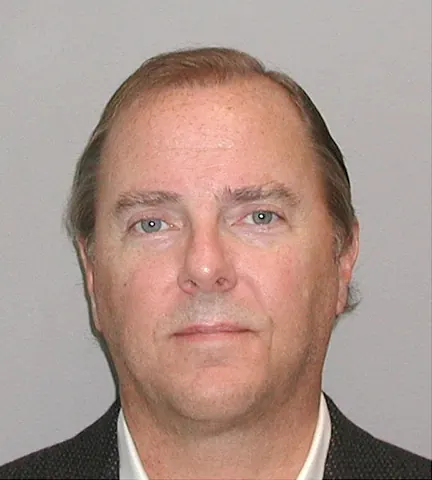
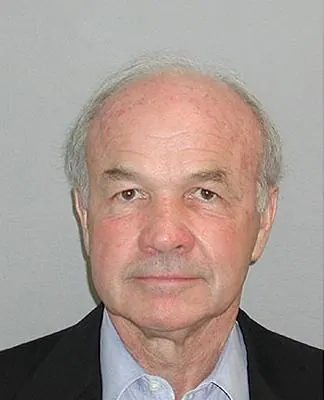
The collapse destroyed approximately $74 billion in shareholder value, wiped out pension funds, and left more than 20,000 employees without jobs or retirement savings. Federal investigations led to criminal convictions of CEO Jeffrey Skilling, Chairman Kenneth Lay, and CFO Andrew Fastow, among others. Arthur Andersen, one of the "Big Five" accounting firms and Enron's auditor, was convicted of obstruction of justice and effectively dissolved, ending 89 years of operation.
The Enron scandal fundamentally changed corporate governance in America. It exposed critical weaknesses in accounting oversight, auditor independence, and financial regulation, prompting Congress to pass the Sarbanes-Oxley Act of 2002—the most significant reform of corporate financial practices since the 1930s. The case remains a landmark study in corporate fraud, regulatory capture, and the systemic risks posed by conflicts of interest in financial oversight.
Background
Enron emerged from the 1985 merger of Houston Natural Gas and InterNorth, a Nebraska pipeline company. Under CEO Kenneth Lay, the company transformed from a traditional natural gas pipeline operator into an energy trading powerhouse during the 1990s deregulation wave. Jeffrey Skilling, hired in 1990, pioneered the "Gas Bank" concept that allowed Enron to function as an intermediary in energy markets, buying and selling contracts rather than just moving physical commodities.
The company aggressively expanded into broadband, water utilities, and other markets, becoming Wall Street's darling. By 2000, Enron claimed revenues of $101 billion and ranked as America's seventh-largest company. Fortune magazine named it "America's Most Innovative Company" for six consecutive years (1996-2001). The company's culture emphasized aggressive risk-taking, rewarded by lavish compensation tied to short-term performance metrics.
This transformation occurred against a backdrop of loose regulatory oversight and an accounting industry increasingly dependent on lucrative consulting fees from audit clients. Arthur Andersen, Enron's auditor since 1985, earned approximately $52 million from Enron in 2000 alone—$27 million for consulting services and $25 million for auditing—creating inherent conflicts of interest. The Financial Accounting Standards Board (FASB) had debated but not resolved critical questions about off-balance-sheet financing and mark-to-market accounting that Enron would exploit.
Wall Street analysts, investment banks, and credit rating agencies maintained overwhelmingly positive assessments of Enron even as warning signs accumulated. The complex web of special purpose entities (SPEs) that would ultimately conceal Enron's true financial condition began appearing in SEC filings in the late 1990s, but their opacity prevented outside scrutiny. This combination—regulatory gaps, conflicted gatekeepers, and market euphoria—created the conditions for one of history's largest corporate frauds.
The Investigation
The Accounting Mechanisms
Enron employed several interconnected strategies to artificially inflate profits and hide debt. FACT: The company used mark-to-market accounting, approved by the SEC in 1992, which allowed it to book the entire projected profit from long-term energy contracts immediately upon signing, even though actual cash flows would occur over many years. This created strong incentives to overestimate future profits and to continually sign new deals to maintain growth projections.
FACT
The core of the fraud involved special purpose entities (SPEs)—off-balance-sheet partnerships with names like "Chewco," "JEDI," "LJM," and "Raptor." Under accounting rules, SPEs could avoid consolidation with Enron's financial statements if they met technical requirements, including having at least 3% independent equity investment. Enron created hundreds of these entities, many controlled by CFO Andrew Fastow, who personally profited by at least $45 million from managing them.
FACT
These SPEs served multiple fraudulent purposes: they purchased underperforming Enron assets at inflated prices, allowing Enron to book artificial gains; they assumed Enron debt, removing liabilities from the balance sheet; and they were "hedged" with Enron's own stock, creating the illusion of risk management while actually concentrating risk. When Enron's stock price fell, these hedges failed catastrophically, as they were backed by the very asset they were supposed to protect against.
The Whistleblower and Unraveling
FACT
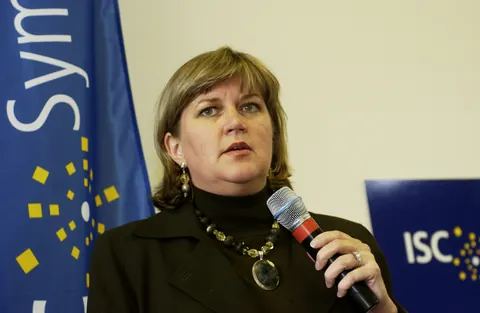
Sherron Watkins, an Enron vice president, sent an anonymous letter to Kenneth Lay on August 15, 2001, warning that the company might "implode in a wave of accounting scandals." She identified specific SPE transactions as improper and predicted the fraud would be exposed. Lay directed Enron's law firm, Vinson & Elkins, to investigate, but the scope was limited and the firm concluded no further action was needed—a finding later criticized given Vinson & Elkins's role in structuring many SPE transactions.
FACT
On August 14, 2001, Jeffrey Skilling abruptly resigned as CEO after only six months, citing "personal reasons." This sudden departure, combined with Lay's resumption of the CEO role, raised immediate concerns among analysts and investors. FACT: On October 16, 2001, Enron announced a $618 million third-quarter loss and disclosed a $1.2 billion reduction in shareholder equity related to SPE transactions, triggering SEC inquiry.
The Wall Street Journal's investigative reporting, particularly articles by Rebecca Smith and John Emshwiller beginning in September 2001, exposed the conflicts of interest in Fastow's partnerships and the questionable accounting. FACT: On November 8, 2001, Enron filed an 8-K form with the SEC restating earnings back to 1997, reducing reported net income by $586 million (approximately 20%) and increasing debt by $2.6 billion. The restatement acknowledged that several SPEs should have been consolidated into Enron's financial statements all along.
Criminal Investigations and Prosecutions
FACT
The Department of Justice formed the Enron Task Force in January 2002. The SEC, FBI, and Congressional committees launched parallel investigations. Arthur Andersen personnel destroyed thousands of documents related to the Enron audit in October 2001, after receiving notice of the SEC investigation but before receiving a subpoena. FACT: In June 2002, Arthur Andersen was convicted of obstruction of justice; though the Supreme Court later overturned the conviction on narrow grounds in 2005, the firm had already collapsed.
FACT
Andrew Fastow pled guilty in January 2004 to two counts of conspiracy and agreed to a 10-year sentence (later reduced to 6 years) in exchange for cooperation. His testimony proved crucial in prosecuting Skilling and Lay. FACT: Kenneth Lay was convicted on May 25, 2006, of six counts of fraud and conspiracy, and four counts of bank fraud. He died of a heart attack on July 5, 2006, before sentencing; under legal precedent, his conviction was vacated. FACT: Jeffrey Skilling was convicted on May 25, 2006, of 19 counts including securities fraud, conspiracy, and insider trading, and sentenced to 24 years in prison. He was released in February 2019 after serving 12 years following an appeal that reduced his sentence.
In total, 16 Enron executives and managers pled guilty or were convicted, including chief accounting officer Richard Causey and treasurer Ben Glisan. INFERENCE: The pattern of guilty pleas and convictions demonstrates that the fraud was not limited to a few individuals but involved coordination across multiple levels of management. The evidence included internal emails, testimony from cooperating witnesses, and forensic accounting reconstruction of the SPE transactions.
The Arthur Andersen Collapse
FACT
Arthur Andersen served as both Enron's external auditor and, through its consulting division, a major service provider. This dual role created conflicts that compromised audit independence. The firm earned $52 million from Enron in 2000, making Enron one of its largest clients. FACT: David Duncan, the lead Andersen partner on the Enron account, ordered the destruction of Enron-related documents beginning October 23, 2001, continuing until November 8 when the SEC formally requested documents. Duncan pled guilty to obstruction of justice.
FACT
The firm was convicted in June 2002, resulting in the loss of its license to audit public companies. Within months, Arthur Andersen effectively ceased operations, and its approximately 28,000 U.S. employees lost their jobs. The conviction reduced the "Big Five" accounting firms to the "Big Four," concentrating the audit industry further. FACT: In 2005, the Supreme Court unanimously overturned the conviction in Arthur Andersen LLP v. United States, finding fault with jury instructions, but the firm was not resurrected.
Regulatory and Congressional Response
FACT
The Sarbanes-Oxley Act (SOX), signed into law on July 30, 2002, represented the most significant corporate governance reform since the Securities Acts of 1933-1934. The law mandated CEO/CFO certification of financial statements (Section 302), required auditor independence, created the Public Company Accounting Oversight Board (PCAOB) to oversee accounting firms, enhanced criminal penalties for fraud, and required companies to maintain effective internal controls over financial reporting (Section 404).
Congressional hearings, particularly those by the Senate Committee on Governmental Affairs and the House Committee on Energy and Commerce in 2002, exposed the multiple system failures: accounting firm conflicts, credit rating agency failures (Moody's, S&P, and Fitch maintained investment-grade ratings on Enron until days before bankruptcy), analyst conflicts (many banks that underwrote Enron securities also provided glowing stock recommendations), and regulatory gaps at the SEC and FASB.
FACT
The SEC adopted significant rule changes, including Regulation G requiring reconciliation of non-GAAP financial measures and enhanced disclosure requirements for off-balance-sheet arrangements and special purpose entities. The FASB issued new guidance on consolidation (FIN 46) that tightened the rules Enron had exploited, requiring more SPEs to be consolidated into parent company financial statements.
Evidence Assessment
Established Facts
Bankruptcy filing and financial impact
Enron filed Chapter 11 on December 2, 2001, with $63.4 billion in assets, making it the largest U.S. bankruptcy at that time. Court records, SEC filings, and audited bankruptcy proceedings provide indisputable documentation. Shareholders lost approximately $74 billion in market value between August 2000 and December 2001.
Criminal convictions
Federal court records document 16 convictions or guilty pleas. Jeffrey Skilling's conviction on 19 counts, Andrew Fastow's guilty plea and cooperation agreement, and Kenneth Lay's conviction (later vacated due to his death) are matters of public court record. Sentencing documents, appeal records, and prosecution evidence have been unsealed and studied extensively.
SPE transactions and accounting violations
The court-appointed bankruptcy examiner's report, SEC enforcement actions, and restatement of earnings filed in November 2001 establish that Enron improperly kept hundreds of SPEs off its balance sheet. The restatement reduced net income by $586 million over four years and acknowledged $2.6 billion in improperly excluded debt.
Arthur Andersen document destruction
Court testimony from David Duncan and other Andersen employees, along with forensic evidence of shredded documents and deleted emails during the October-November 2001 period, established systematic obstruction. While the Supreme Court overturned the conviction on technical grounds, the factual findings of document destruction were not disputed.
Mark-to-market accounting abuse
Trial evidence, expert testimony, and internal Enron documents demonstrated that the company systematically overestimated the value of long-term contracts, particularly in the broadband division. For example, the Blockbuster video-on-demand partnership was valued at hundreds of millions despite never generating significant revenue before its termination.
Strong Evidence
Executive knowledge and intent
Extensive email records, internal presentations, and testimony from cooperating witnesses showed that senior executives understood the accounting was improper. Andrew Fastow's cooperation, Richard Causey's guilty plea, and contemporaneous communications introduced at trial demonstrate this was not accidental error but deliberate fraud.
Fastow's personal enrichment
Documentary evidence showed CFO Fastow earned at least $45 million from managing SPEs that did business with Enron, creating obvious conflicts of interest. His compensation from these partnerships was disclosed in proxy statements but understated and buried in technical language.
Insider trading patterns
Trading records show Enron executives sold hundreds of millions in stock during 2000-2001 while publicly promoting the company's prospects and restricting employee pension fund trading during blackout periods. Kenneth Lay sold $70 million in stock while reassuring employees their investments were safe.
Warnings ignored
Sherron Watkins's August 2001 memo, analyst concerns raised in 2000-2001, and internal accounting division warnings documented in emails provide strong evidence that red flags were dismissed rather than addressed. The limited scope of Vinson & Elkins's investigation after Watkins's warning suggests deliberate avoidance.
Moderate Evidence
Extent of Arthur Andersen's culpability
While document destruction is established fact, the degree to which Andersen auditors understood Enron's accounting violated GAAP remains debated. Some evidence suggests Andersen raised concerns internally that were overridden; other evidence suggests auditors were actively complicit. The firm's dual role as auditor and consultant created clear conflicts, but proving specific knowledge of fraud among individual auditors (beyond Duncan) involves inference from circumstantial evidence.
Credit rating agency failures
Rating agencies maintained investment-grade ratings until days before bankruptcy, suggesting either incompetence or conflicts (agencies were paid by Enron to rate its debt). Congressional testimony revealed rating agencies had access to non-public information but failed to downgrade. Whether this reflected conflicts, flawed models, or negligence remains analyzed but not definitively proven through documentary evidence.
Regulatory capture and SEC failures
The SEC approved mark-to-market accounting for Enron in 1992 and did not detect the fraud despite reviewing filings. Whether this represented regulatory capture, resource constraints, or sophistication of the fraud is subject to interpretation. SEC Chairman Harvey Pitt faced criticism but defended the agency's oversight.
Weak Evidence
Broader energy market manipulation
While Enron's role in California's 2000-2001 energy crisis is established (see FERC investigations and recorded "Grandma Millie" trader calls), connecting this market manipulation directly to the accounting fraud involves inference. The two were separate but concurrent schemes.
Political influence allegations
Enron was a major political donor to both parties, and Kenneth Lay had close ties to the Bush administration. SPECULATION: Some analysts suggested political connections delayed regulatory scrutiny, but no documentary evidence establishes that political contributions prevented investigation or prosecution. The post-bankruptcy investigations and prosecutions proceeded aggressively regardless of political ties.
Disputed Claims
Whether employees were truly prevented from selling stock
Enron restricted pension fund trading during a blackout period in October 2001 while executives continued selling. The company claimed this was standard procedure during administrator transitions; employees and prosecutors argued it was timed to prevent discovery of the fraud. Court settlements acknowledged employee losses but did not definitively resolve whether the blackout was fraudulent or merely poor timing.
The role of banks
Major banks including Citigroup, JP Morgan Chase, and Merrill Lynch reached settlements totaling billions for their roles in facilitating Enron's fraud through providing financing disguised as energy trades ("prepay transactions"). The banks claimed they were deceived; prosecutors argued they knew or should have known. No bank executives were criminally prosecuted, leaving the extent of knowing participation unresolved.
Unsupported Claims
That Enron's business model was fundamentally sound
Some defenders argue that Enron's core energy trading business was profitable and innovative, and that only the accounting fraud and peripheral businesses (broadband, water) were problematic. Forensic accounting has not supported this; the fraud was so pervasive across divisions that reconstructing what, if anything, was genuinely profitable has proven impossible. The bankruptcy examiner found fraud touched virtually all business units.
Conspiracy theories about deliberate targeting
Occasional claims that Enron was targeted for political reasons or that short sellers orchestrated the collapse lack evidentiary support. The documentary record shows the collapse resulted from exposure of systematic fraud, not external manipulation.
Credible Dissenting Voices
Most scholarly analysis agrees on the basic facts of Enron's fraud, but credible debates exist on several dimensions:
Accounting standards vs. criminal fraud
Some accounting experts, including professors at business schools, argue that much of what Enron did, while aggressive and ultimately harmful, operated within the technical bounds of GAAP as it existed at the time. They point to the SEC's approval of mark-to-market accounting and the complexity of SPE consolidation rules under FAS 140 and other standards. This view holds that the scandal reflected inadequate accounting standards rather than clear-cut fraud. Prosecutors and most analysts counter that the evidence of intent to deceive, manipulation of technical requirements, and concealment of key facts crossed the line from aggressive accounting to criminal fraud.
Arthur Andersen's culpability
The Supreme Court's 2005 reversal of Arthur Andersen's conviction lends support to arguments that the firm's collapse was unjustified. Legal scholars including Harvard Law professor Alan Dershowitz argued the prosecution was overreaching and destroyed 28,000 jobs for the actions of a handful of individuals. The counterargument, supported by most corporate governance experts, holds that Andersen's systemic conflicts and failure of professional responsibility warranted dissolution regardless of the technical criminal conviction.
Effectiveness of Sarbanes-Oxley
A vigorous debate continues among economists, legal scholars, and business leaders about whether SOX's benefits justified its costs. Studies by economists including Ivy Xiying Zhang at the University of Rochester found Section 404 compliance costs billions annually. Some argue these costs, particularly for smaller public companies, outweigh fraud prevention benefits. Others, including Harvard Law School professor John Coates, argue SOX significantly reduced accounting fraud and improved financial reporting quality, with benefits exceeding costs.
Role of deregulation
Enron aggressively lobbied for energy market deregulation and thrived in newly deregulated markets. Some economists, particularly those associated with free-market think tanks, argue the fraud was aberrational and unrelated to deregulation policy. Others, including Joseph Stiglitz (Nobel laureate economist) and Paul Krugman, argued Enron demonstrated the risks of insufficient regulation and that deregulation ideology enabled the fraud by reducing oversight. This debate connects to broader questions about market regulation that remain contested.
Legacy
The Enron scandal fundamentally altered American corporate governance and remains the paradigmatic case study in business school ethics courses worldwide. More than two decades later, its impact persists across multiple domains:
Corporate governance reform
Sarbanes-Oxley's requirements—independent audit committees, CEO/CFO certification, enhanced internal controls—have become standard corporate practice. The PCAOB continues to inspect and regulate accounting firms. While debate continues about costs and benefits, SOX represented a fundamental shift toward greater accountability and oversight. Subsequent scandals, including the 2008 financial crisis, prompted additional reforms building on SOX's framework.
Accounting profession transformation
The reduction from the "Big Five" to "Big Four" accounting firms concentrated the industry further, raising concerns about competition and "too big to fail" dynamics in the audit sector. Accounting firms separated their consulting and auditing divisions to reduce conflicts of interest. The profession faced increased regulation and scrutiny, with PCAOB oversight replacing industry self-regulation.
Whistleblower protections
Section 806 of SOX provided unprecedented whistleblower protections for employees reporting fraud. Sherron Watkins became a symbol of corporate whistleblowing, though some criticized her for not going directly to regulators initially. The 2010 Dodd-Frank Act expanded these protections and added financial rewards for whistleblowers whose tips led to successful enforcement. The SEC's whistleblower program has since distributed billions in awards.
Energy market regulation
While separate from the accounting fraud, Enron's market manipulation in California led to enhanced FERC oversight of energy trading. The company's role in lobbying for deregulation while manipulating markets illustrated regulatory capture risks. Energy sector regulation was strengthened, though debates continue about appropriate market oversight levels.
Frequently misunderstood aspects
Popular accounts often oversimplify Enron as simple fraud, missing the complexity of SPE accounting and mark-to-market valuations that initially operated within (though ultimately violated) GAAP. The role of systemic failures—by auditors, rating agencies, analysts, banks, and regulators—is often underemphasized relative to individual executive criminality. The case is sometimes incorrectly cited as proof that markets cannot self-regulate, when in fact it demonstrated the failure of supposed regulatory safeguards that existed but were captured, conflicted, or ineffective.
Notable assessments
Bethany McLean and Peter Elkind, whose 2003 book The Smartest Guys in the Room became the definitive account, wrote: "Enron's collapse was not just about accounting tricks and financial chicanery. It was about a culture that valued profits over everything else, that rewarded deception, and that ultimately destroyed the company and the lives of thousands of employees."
William Lerach, lead attorney in shareholder class actions against Enron, stated: "Enron represents the culmination of a decade of too much money chasing too few good ideas, enabling a culture of deception in corporate America."
Frank Partnoy, law professor and former derivatives trader who analyzed Enron's SPEs, concluded: "The Enron case showed that modern financial engineering had reached a level of complexity where neither regulators, auditors, nor even most sophisticated investors could understand what was actually happening inside major corporations."
Enduring research questions
How can audit independence be ensured when firms depend on client fees? Can rating agencies be objective when issuers pay for ratings? What level of financial complexity crosses from legitimate structuring into fraud? These questions, crystallized by Enron, remain central to corporate governance debates. The scandal demonstrated that technical compliance with accounting rules, absent truthful disclosure, enables fraud. It highlighted the insufficiency of "gatekeepers" (auditors, lawyers, analysts, ratings agencies) when their incentives are misaligned.
The bankruptcy also established legal precedents on piercing corporate veils, successor liability, and the treatment of derivatives in bankruptcy that continue to influence commercial law. Academic research spawned by Enron has examined earnings management, audit quality, corporate culture, compensation incentive structures, and the effectiveness of corporate governance mechanisms across thousands of peer-reviewed papers.
Confidence Assessment
The core facts of the Enron collapse—the nature of the accounting fraud, the SPE structures, the criminal conduct, and the regulatory response—are exceptionally well documented through court records, congressional investigations, SEC enforcement actions, the bankruptcy examiner's report, and extensive journalistic investigation. Thousands of internal documents entered into evidence, cooperating witness testimony, and forensic accounting reconstruction provide detailed insight into how the fraud operated.
Areas of remaining ambiguity include the precise knowledge and intent of individuals who were not prosecuted (including some executives who pled the Fifth Amendment and some financial institution employees who facilitated transactions), the counterfactual question of whether Enron's core business model could have been viable without fraud, and the extent to which various gatekeepers (beyond those criminally charged) understood they were facilitating fraud versus aggressive but technically permissible accounting.
The documentary record is strongest on the mechanics of fraud, the criminal prosecutions, and the regulatory response. It is thinner on the decision-making processes inside Arthur Andersen (beyond Duncan), the role of board members (who largely escaped criminal liability while settling civil suits), and the extent of knowledge among banks and other facilitators. Overall, however, Enron ranks among the most thoroughly investigated and documented corporate scandals in history, with a documentary record that continues to support research and teaching two decades later.
Case Timeline
- 1985CORROBORATEDHouston Natural Gas and InterNorth merge to form Enron CorporationKenneth Lay becomes chairman and CEO of the combined entity, which initially operates as a traditional natural gas pipeline company
- 1990CORROBORATEDJeffrey Skilling joins Enron, develops "Gas Bank" trading conceptSkilling pioneers energy trading strategies that transform Enron from pipeline operator to trading intermediary
- 1992GOVERNMENT RECORDSEC approves mark-to-market accounting for Enron's trading businessThis accounting method allows Enron to book entire projected profits from long-term contracts immediately, creating incentives for overestimation
- 1997COURT RECORDAndrew Fastow becomes CFO; SPE structures proliferateFastow creates hundreds of special purpose entities with names like "Chewco" and "JEDI" to move debt off Enron's balance sheet
- 1999CORROBORATEDEnron launches EnronOnline trading platformThe company reports revenues of $40 billion for the year, expanding into broadband and international markets
- 2000CORROBORATEDEnron reports $101 billion in revenues; stock peaks at $90.75 in AugustFortune names Enron "America's Most Innovative Company" for the fifth consecutive year while fraud intensifies
- 2000-2001COURT RECORDCalifornia energy crisis; Enron traders manipulate marketsRecorded calls reveal traders using strategies like "Death Star" and joking about "stealing money from California" (separate but concurrent with accounting fraud)
- Aug 14, 2001CORROBORATEDJeffrey Skilling abruptly resigns as CEO after six monthsSkilling cites "personal reasons"; Kenneth Lay resumes CEO role, raising immediate market concerns
- Aug 15, 2001PRIMARY SOURCESherron Watkins sends anonymous warning letter to Kenneth LayEnron VP warns company might "implode in a wave of accounting scandals" and identifies improper SPE transactions
- Oct 16, 2001GOVERNMENT RECORDEnron announces $618 million quarterly loss and $1.2 billion equity reductionFirst public disclosure of SPE-related losses triggers SEC inquiry and media investigation
- Oct 23-Nov 8, 2001COURT RECORDArthur Andersen employees destroy thousands of Enron-related documentsLead partner David Duncan orders shredding after SEC inquiry but before formal subpoena, later basis for obstruction conviction
- Nov 8, 2001GOVERNMENT RECORDEnron restates earnings back to 1997, reducing net income by $586 millionCompany acknowledges several SPEs should have been consolidated all along; stock price collapses
- Dec 2, 2001COURT RECORDEnron files Chapter 11 bankruptcy with $63.4 billion in assetsLargest U.S. bankruptcy at the time; approximately 20,000 employees lose jobs and much of their retirement savings
- Jan 2002GOVERNMENT RECORDDepartment of Justice creates Enron Task ForceCriminal investigation launches alongside SEC enforcement action and Congressional hearings
- June 2002COURT RECORDArthur Andersen convicted of obstruction of justiceConviction (later overturned on technical grounds in 2005) effectively ends the 89-year-old firm and reduces Big Five to Big Four
- July 30, 2002GOVERNMENT RECORDPresident Bush signs Sarbanes-Oxley Act into lawSweeping corporate governance reform creates PCAOB, requires CEO/CFO certification, mandates internal controls, and enhances criminal penalties
- Jan 2004COURT RECORDAndrew Fastow pleads guilty, agrees to cooperateFormer CFO pleads guilty to conspiracy charges and agrees to 10-year sentence (later reduced) in exchange for testimony against Lay and Skilling
- May 25, 2006COURT RECORDKenneth Lay and Jeffrey Skilling convicted on multiple fraud countsLay convicted on 6 fraud/conspiracy counts and 4 bank fraud counts; Skilling convicted on 19 counts including securities fraud
Key People
Organizations
Evidence Library
- documentDOC-8KNovember 8, 2001 Earnings Restatement (Form 8-K)
Enron's SEC filing restated earnings from 1997-2001, reducing net income by $586 million and acknowledging improper exclusion of SPE consolidation. This public admission confirmed the accounting violations were systematic and material, not isolated errors.
- documentDOC-WHISTLESherron Watkins August 15, 2001 Memo to Kenneth Lay
Seven-page letter warning Enron would "implode in a wave of accounting scandals" and identifying specific SPE transactions as improper. Became crucial evidence of executive awareness and inaction. Established timeline of when senior management was formally warned.
- court filingpartial redactionCRT-SKILLINGUnited States v. Skilling Trial Exhibits and Verdict
Federal criminal trial (2006) evidence included thousands of internal emails, financial documents, and expert testimony establishing systematic fraud. Jury convicted on 19 of 28 counts, including conspiracy, securities fraud, and insider trading. Appellate record demonstrates evidence strength survived rigorous challenge.
- testimonyTEST-FASTOWAndrew Fastow Cooperation Agreement and Trial Testimony
Former CFO's guilty plea, cooperation agreement, and testimony against Lay and Skilling provided insider account of fraud mechanics and executive knowledge. Detailed how SPEs were deliberately structured to circumvent accounting rules while maintaining false appearance of compliance.
- documentDOC-POWERSPowers Report (Bankruptcy Examiner Report, February 2002)
Court-appointed special investigative committee led by William C. Powers Jr. produced 218-page report documenting SPE transactions, conflicts of interest, and accounting failures. Comprehensive forensic analysis became foundational document for understanding fraud mechanisms.
- dataDATA-TRADESExecutive Stock Sales Records (2000-2001)
SEC trading records show Enron executives sold over $1 billion in stock during 2000-2001 while publicly promoting company prospects. Kenneth Lay alone sold approximately $70 million. Pattern demonstrated insider knowledge contradicting public statements.
- court filingCRT-ANDERSENArthur Andersen LLP v. United States (Supreme Court Opinion, 2005)
While overturning Andersen's conviction on technical jury instruction grounds, the Supreme Court opinion and lower court record establish facts of document destruction during October-November 2001. Reversal did not dispute underlying document destruction occurred.
- documentDOC-SENATESenate Governmental Affairs Committee Hearings (2002)
Multiple hearings examined Enron collapse, featuring testimony from executives, auditors, analysts, and regulators. Created extensive public record of systemic failures across gatekeepers. Testimony directly informed Sarbanes-Oxley Act provisions.
Sources
Trace the trail yourself
Investigation Network
Live Discussion
0 Perspectives
Add to the record. Be specific. Cite where you can.
If you're learning about this topic for the first time, these are the best places to continue — documented evidence and historical relationships are the guide.
Named in “The Enron Collapse”.
Read more dossiers like this
Get a quiet one-line bulletin when new investigative files are published. Bound to this dossier — useful for tracking follow-ups.