Sidney Gottlieb
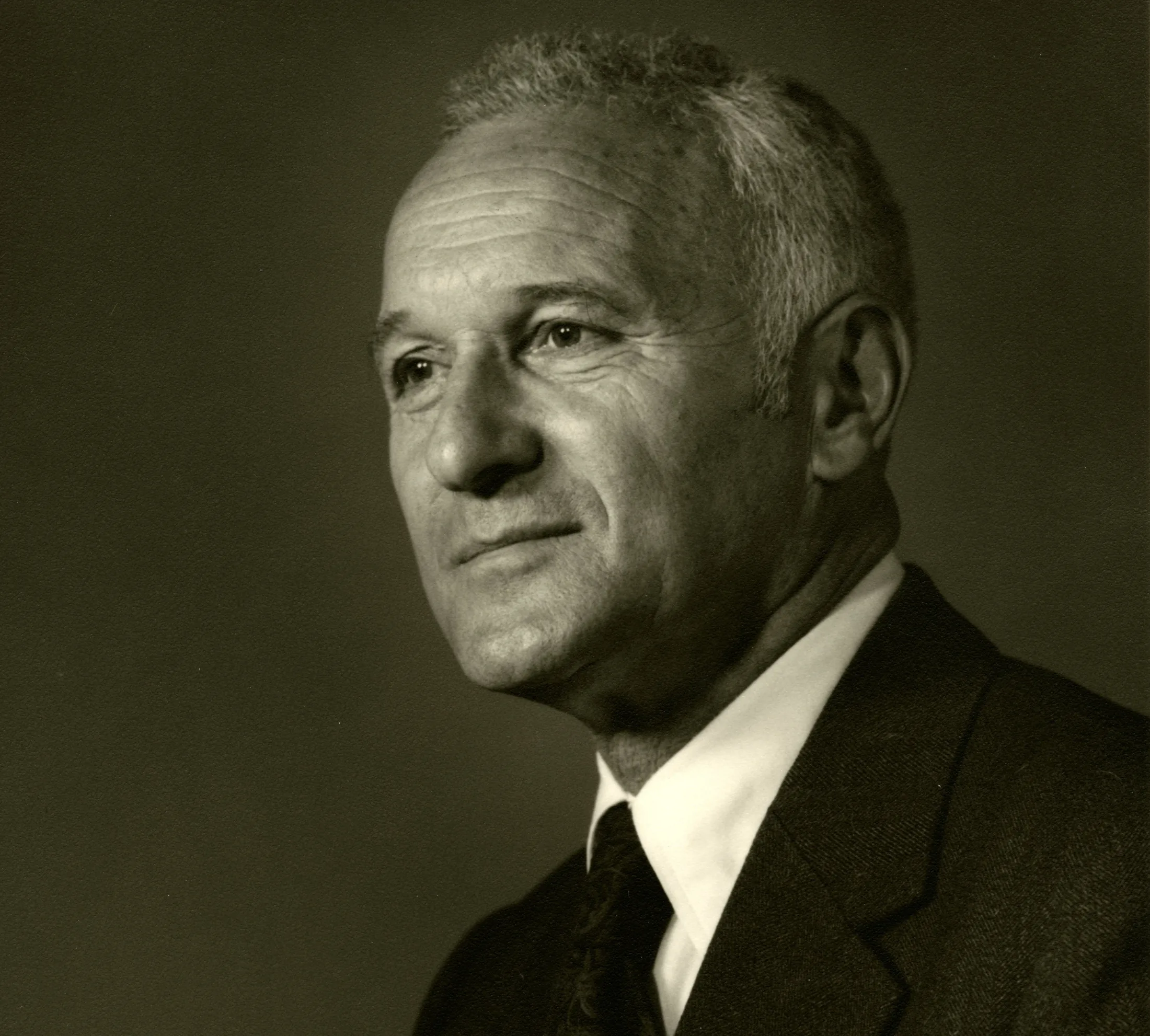
Sidney Gottlieb (1918–1999) was a Central Intelligence Agency (CIA) chemist who directed the Technical Services Division and served as chief architect of MKUltra, the Agency's covert mind control research program from 1953 to 1973. Congressional investigations documented his authorization of experiments involving LSD, sensory deprivation, electroshock, and other techniques on unwitting subjects, sometimes resulting … Sidney Gottlieb appears in The Archive as the documented principal administrator of MKUltra, one of the most extensively investigated covert programs in CIA history.
Sidney Gottlieb (1918–1999) was a Central Intelligence Agency (CIA) chemist who directed the Technical Services Division and served as chief architect of MKUltra, the Agency's covert mind control research program from 1953 to 1973. Congressional investigations documented his authorization of experiments involving LSD, sensory deprivation, electroshock, and other techniques on unwitting subjects, sometimes resulting in death or permanent psychological harm.
- Source
- Wikimedia Commons
- Type
- Photograph
- License
- Public domain
- Photographer
- US Federal Government
Photo Information ▾
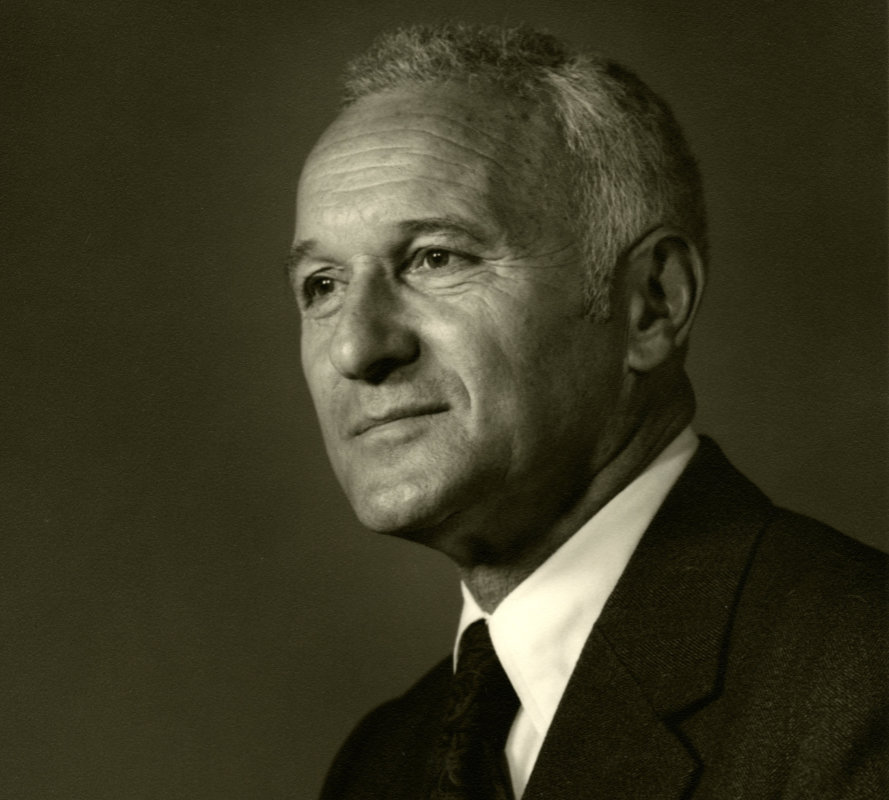
Photograph of Sidney Gottlieb
View original ↗- Full name
- Sidney Gottlieb (born Joseph Scheider)
- Born
- August 3, 1918, The Bronx, New York
- Died
- March 7, 1999, Washington, Virginia
- Nationality
- United States
- Education
- B.A. Chemistry, University of Wisconsin (1940); Ph.D. Chemistry, California Institute of Technology (1943)
- CIA service
- 1951–1973
- Primary role
- Chief, Technical Services Staff (1951–1972); Director, MKUltra (1953–1964)
- Security clearance
- Top Secret / Compartmented (documented in Senate records)
- Congressional testimony
- Testified before Church Committee (1975) and Senate Select Committee on Intelligence (1977)
- Record destruction
- Ordered destruction of most MKUltra files in January 1973, documented by CIA Inspector General
Sidney Gottlieb appears in The Archive as the documented principal administrator of MKUltra, one of the most extensively investigated covert programs in CIA history. Declassified documents, congressional testimony, and Inspector General findings establish his role authorizing experiments on unknowing subjects, destroying program records in 1973 to obstruct oversight, and directing funding to researchers including Dr. Donald Ewen Cameron. His career exemplifies the documented tension between national security imperatives and ethical boundaries, raising questions about accountability when clandestine programs operate beyond democratic oversight. The Archive documents Gottlieb because his actions are established by official investigations, not because of speculation or conspiracy theory.
# Sidney Gottlieb
Identity
Sidney Gottlieb was born Joseph Scheider on August 3, 1918, in the Bronx, New York, to Hungarian Jewish immigrant parents. He graduated from the University of Wisconsin with a bachelor's degree in chemistry in 1940 and earned a doctorate in biochemistry from the California Institute of Technology in 1943. A childhood bout of mastoiditis left him with partial hearing loss and a pronounced limp from a clubfoot, conditions that exempted him from military service during World War II but did not impede his academic or professional trajectory.
Gottlieb joined the Central Intelligence Agency in 1951, changing his name from Scheider in the early 1950s. Colleagues described him as soft-spoken, intellectually curious, and privately mystical—he practiced folk dancing, raised goats on his Virginia farm, and studied Eastern philosophy. This public persona contrasted starkly with his professional role overseeing experiments that Senate investigators would later characterize as violations of the Nuremberg Code.
Declassified personnel records confirm Gottlieb held continuous Top Secret clearances with compartmented access throughout his CIA tenure. His security file, partially released under Freedom of Information Act requests, documents polygraph examinations and periodic reinvestigations standard for officers handling sensitive technical programs.
Career & Roles
Gottlieb entered the CIA's Technical Services Staff in 1951, initially working on chemical and biological warfare defense projects. By 1953, Director of Central Intelligence Allen Dulles appointed him to lead a consolidated research program investigating methods of behavioral control, interrogation enhancement, and truth serum development. This program, initially codenamed BLUEBIRD and then ARTICHOKE, was reorganized in April 1953 as MKUltra, with Gottlieb as its operational director.
As Chief of the Chemical Division within Technical Services, Gottlieb reported directly to the Deputy Director for Plans (clandestine operations). Declassified organizational charts show he supervised a staff of chemists, physicians, and contract monitors who coordinated research at universities, hospitals, pharmaceutical companies, and Federal prisons across the United States and Canada. His division managed an annual budget that Senate investigators estimated at $10–25 million in inflation-adjusted dollars, though the destruction of financial records prevented precise accounting.
Gottlieb's responsibilities extended beyond MKUltra. CIA documents confirm he supervised MKNAOMI, a parallel program developing biological agents for covert operations, and coordinated with Army researchers at Fort Detrick, Maryland. In 1960, he personally delivered toxins to the Congo for use in an aborted assassination plot against Patrice Lumumba, as documented in the Church Committee's interim report on assassination plots.
From 1967 to 1972, Gottlieb served as Chief of the entire Technical Services Division, overseeing all CIA technical support for clandestine operations—disguise, document forgery, secret writing, surveillance devices, and paramilitary equipment. He retired in 1973 shortly after CIA Director Richard Helms, his longtime superior, resigned under pressure following Watergate revelations.
Organizations & Networks
Gottlieb's operational network centered on university researchers, pharmaceutical manufacturers, and military laboratories willing to accept CIA funding under cover arrangements. The Senate Select Committee on Intelligence documented contracts with at least 80 institutions, though many recipients did not know their grants originated with the Agency.
Key institutional relationships included:
Eli Lilly & Company: Declassified procurement records show Lilly chemists synthesized large quantities of LSD for CIA stockpiles in the 1950s under contracts Gottlieb personally approved. The company received classified payments documented in Senate exhibits.
McGill University (Montreal): Gottlieb authorized substantial funding for Dr. Donald Ewen Cameron's experiments at the Allan Memorial Institute. Cameron's "psychic driving" techniques—combining massive electroshock, sensory deprivation, and drug-induced comas—formed a significant MKUltra subproject. Canadian government compensation programs later validated claims of lasting harm to Cameron's patients.
Federal Bureau of Narcotics: Gottlieb coordinated with George H. White, a Bureau agent who operated CIA-funded "safe houses" in San Francisco and New York where unwitting subjects were dosed with LSD and observed through two-way mirrors. White's operational logs, preserved and declassified, document hundreds of sessions from 1955 to 1963.
Edgewood Arsenal (U.S. Army): Joint CIA-Army research on chemical incapacitants involved thousands of military volunteers exposed to LSD, BZ, and other compounds. Gottlieb served as liaison between the Agency and Army researchers, a role confirmed in Defense Department records released to Veterans Affairs investigators.
Society for the Investigation of Human Ecology: This CIA front organization, based at Cornell University, distributed research grants on Gottlieb's authorization. The Society funded studies on interrogation stress, personality assessment, and cross-cultural manipulation techniques.
Gottlieb operated within a compartmented structure where even senior CIA officials lacked access to MKUltra details. Only Director Allen Dulles, Deputy Director Richard Helms (who succeeded Dulles), and the CIA Inspector General received regular briefings. This tight control later hindered congressional investigators when Gottlieb destroyed program records.
Major Operations & Activities
MKUltra encompassed approximately 150 subprojects investigating mind control, behavioral modification, interrogation enhancement, and incapacitation techniques. Senate investigators documented research areas including:
LSD and Hallucinogens: Gottlieb authorized large-scale studies of lysergic acid diethylamide as a potential truth serum, interrogation tool, and covert incapacitant. Experiments progressed from laboratory animals to witting volunteers to unwitting subjects. The death of Frank Olson, an Army scientist who fell from a New York hotel window nine days after Gottlieb's deputy dosed him with LSD at a 1953 retreat, prompted an internal CIA investigation. Olson's family received a presidential apology in 1975 after the incident became public, and CIA documents confirm Gottlieb attended the retreat where the dosing occurred.
Sensory Deprivation: Gottlieb funded Donald Hebb's research at McGill on isolation effects and Cameron's "depatterning" work combining sensory deprivation with electroshock. Subjects, typically psychiatric patients who had sought treatment for depression or anxiety, underwent weeks of drug-induced sleep, repetitive audio messages, and isolation. Declassified medical records document cognitive impairment and memory loss persisting years after treatment.
Hypnosis and Amnesia: Multiple subprojects explored whether hypnosis could create couriers unaware of the messages they carried or assassins with no memory of their programming. Declassified CIA assessments concluded these goals were not achievable with existing techniques, though research continued into the 1960s.
Electroshock and Brain Surgery: Gottlieb authorized contracts investigating "terminal experiments"—irreversible procedures on subjects deemed expendable. Senate investigators found references to lobotomy research and electrode implantation, but the destruction of records prevented full documentation of these activities.
Assassination Tools: Beyond mind control, Gottlieb's division developed chemical and biological weapons for covert operations. In August 1960, CIA cables confirm he personally flew to Leopoldville (now Kinshasa) carrying lethal biological materials intended for use against Congolese Prime Minister Patrice Lumumba. The plot was not executed—Lumumba was killed by Congolese rivals—but Gottlieb's direct operational role is documented in cables he sent and received.
Operation Midnight Climax: Under George H. White's supervision, Gottlieb's division operated safe houses where prostitutes lured unsuspecting men for observation while dosed with LSD. White's reports to Gottlieb, preserved in Senate exhibits, describe sessions lasting several hours with subjects unaware they had been drugged. The operation continued from 1955 to 1963.
Gottlieb testified to Congress that all activities received legal approval from CIA General Counsel and operated under presidential directives authorizing covert action. No documents contradict this claim, though legal standards of the 1950s did not require informed consent protections later mandated by federal regulations.
Historical Importance
Sidney Gottlieb's career is historically significant as documented evidence of institutional willingness to pursue research objectives without informed consent, override medical ethics, and destroy records to prevent accountability. MKUltra represents a case study in how compartmented programs can operate beyond normal oversight when national security justifications are invoked.
The program's existence remained unknown to Congress, the public, and most CIA personnel until 1974, when investigative journalist Seymour Hersh's reporting on CIA domestic activities prompted internal reviews. The subsequent discovery of a small cache of financial records that escaped Gottlieb's 1973 purge—approximately 20,000 pages found in a budget office—enabled the Church Committee and Rockefeller Commission to reconstruct portions of MKUltra's scope.
Gottlieb's 1973 destruction of records, carried out weeks before he retired and months before Watergate investigations intensified, permanently eliminated detailed documentation of experiments, subject identities, and institutional partnerships. This act, which CIA Director James Schlesinger later called "regrettable," foreclosed comprehensive historical accounting and legal redress for affected individuals.
The MKUltra revelations contributed directly to reforms including:
- ·The 1974 Hughes-Ryan Amendment requiring presidential findings for covert operations and congressional notification
- ·Creation of permanent Senate and House intelligence oversight committees in 1976–1977
- ·The 1981 Executive Order 12333 codifying restrictions on human experimentation
- ·Informed consent requirements in the 1981 Common Rule governing federally funded research
Gottlieb's testimony before the Church Committee in 1975 and Senate Intelligence Committee in 1977 provided one of few firsthand accounts of MKUltra's administration. He acknowledged operational details but maintained the program served legitimate intelligence needs and operated with appropriate authorization. He expressed no remorse for experiments on unwitting subjects, stating such methods were necessary given Soviet and Chinese capabilities in behavioral control—a threat assessment historians have found overstated.
Documented Controversies
Confirmed by Court In 1980, the family of Frank Olson sued the United States government for wrongful death. Evidence presented established that in November 1953, Gottlieb's deputy, Robert Lashbrook, administered LSD to Olson without informed consent during a CIA retreat. Nine days later, Olson fell to his death from a Manhattan hotel room window. The case was dismissed on grounds of governmental immunity, but Judge James S. Parker's opinion acknowledged the LSD dosing was established by CIA admissions. In 1975, President Gerald Ford issued a formal apology and Congress authorized a $750,000 settlement to the Olson family.
Government Finding The 1975 Rockefeller Commission investigation into CIA domestic activities found that MKUltra involved "testing of drugs on unwitting U.S. citizens." The Commission's report stated: "The drug program was part of a much larger CIA program to study possible means for controlling human behavior. Other studies explored the effects of radiation, electric-shock, psychology, psychiatry, sociology, and harassment substances." These findings were based on surviving financial records and testimony from Gottlieb and other program officers.
Congressional Finding The 1977 Senate Select Committee on Intelligence report, based on the discovered cache of MKUltra financial documents, concluded: "From its beginning in the early 1950s until its termination in 1963, the program of surreptitious administration of LSD to unwitting non-volunteer human subjects demonstrates a failure of the CIA's leadership to pay adequate attention to the rights of individuals and to provide effective guidance to CIA employees. Though it was known that the testing was dangerous, the lives of subjects were placed in jeopardy and were ignored... Although it was clear that the laws of the United States were being violated, the testing continued."
Confirmed by Court In 1988, nine Canadian survivors of Dr. Donald Ewen Cameron's treatments at McGill's Allan Memorial Institute received out-of-court settlements from the CIA totaling $750,000 after evidence confirmed the Agency funded Cameron's work through Gottlieb's approval. In 1992, the Canadian government established an additional compensation program for 77 victims, awarding C$100,000 each, based on medical records documenting lasting cognitive and psychological damage. These legal proceedings established that Gottlieb authorized payments to Cameron knowing his methods involved electroshock at intensities far exceeding standard psychiatric practice, prolonged drug-induced comas, and sensory deprivation.
Official Record CIA Inspector General reports from 1963 and 1973, declassified in part in 1977, documented that Gottlieb's division conducted experiments without obtaining informed consent, in violation of the Nuremberg Code established in 1947. The 1963 report noted that "present practice is to maintain no records of the planning and approval of test programs," a policy the Inspector General characterized as inadequate for oversight.
Credible Allegation The Olson family maintained that Frank Olson's death was not suicide but murder, citing a 1994 exhumation and forensic examination by James Starrs, a George Washington University professor, which found cranial injuries inconsistent with a fall. The New York District Attorney's office reviewed the evidence in 1996 but declined prosecution due to insufficient evidence and the passage of time. CIA documents confirm Gottlieb was present at the retreat where Olson was dosed and that Lashbrook was in the hotel room when Olson fell, but no evidence supports allegations beyond the documented LSD administration.
Disputed Claim Some researchers have alleged MKUltra included ritual abuse and deliberate creation of dissociative identity disorder in children. Congressional investigations found no evidence for these claims, and historians note they emerged primarily from recovered memory therapy cases in the 1980s–1990s, a period when such therapeutic techniques were later discredited. Gottlieb's documented activities, while unethical, do not require supplementation with unsupported allegations to establish their severity.
Investigations & Legal Proceedings
Sidney Gottlieb was never criminally charged for his MKUltra activities. The Justice Department reviewed the program in 1975–1976 and concluded that while the activities violated medical ethics and later regulations, they occurred under CIA legal authority as it existed in the 1950s–1960s. The Nuremberg Code, though established in 1947, was not U.S. statutory law, and federal informed consent requirements were not codified until decades after MKUltra began.
Gottlieb testified before the Rockefeller Commission in 1975, the Church Committee in 1975, and the Senate Select Committee on Intelligence in 1977. He invoked no privileges and answered questions, though the destruction of records limited investigators' ability to probe specific experiments. His testimony established the administrative structure of MKUltra, the budget approval process, and his personal involvement in overseas operations including the Congo plot.
The CIA's 1973 internal investigation, prompted by incoming Director James Schlesinger's request for disclosure of potentially problematic activities, documented MKUltra but recommended no disciplinary action. Gottlieb had retired before the investigation concluded, and the Agency determined his actions occurred under authorization from superiors including Allen Dulles and Richard Helms.
Civil litigation resulted in settlements for the Olson family (1975) and Canadian survivors of Cameron's experiments (1988). Attempts to bring a broader class action on behalf of all MKUltra subjects failed due to inability to identify victims after record destruction and expiration of statutes of limitations. In 1995, President Bill Clinton's Advisory Committee on Human Radiation Experiments examined MKUltra in the context of Cold War-era research ethics violations, but by that time most principals, including Gottlieb, were deceased or declining interviews.
Denials & Disputes
Gottlieb consistently maintained that MKUltra served legitimate intelligence objectives and operated with proper authorization. In his 1977 Senate testimony, he stated: "It was felt to be mandatory and of the utmost urgency for our intelligence organization to establish what was possible in this field on a high priority basis. Defending ourselves from the possibility of control of our personnel by the opposition was likewise a vital necessity."
He denied that experiments were conducted with intent to harm, characterizing adverse outcomes as unintended consequences of necessary research. Regarding the death of Frank Olson, Gottlieb expressed regret but maintained the LSD administration was part of an authorized research protocol to test personnel reactions to unexpected drug exposure.
Gottlieb disputed characterizations of MKUltra as rogue activity, noting that Inspector General reviews occurred, budgets were approved through normal channels, and CIA directors received regular briefings. He argued that Cold War imperatives justified methods that peacetime standards would not permit, citing Soviet and Chinese research programs as threats requiring comparable response. Historians examining declassified Soviet archives have found these programs were less extensive than CIA assessments assumed.
Gottlieb offered no apology for destroying records in 1973, stating in testimony that he acted to protect research subjects' privacy and ongoing intelligence methods. Senate investigators characterized this explanation as implausible given the timing—weeks before his retirement and months before Watergate-related investigations intensified scrutiny of intelligence agencies.
The CIA officially apologized for MKUltra in 1995, with Director John Deutch stating: "This is clearly wrong. In the name of national security, the CIA conducted many activities that were morally wrong. Some resulted in tragic loss of life."
Legacy & Historical Debate
Sidney Gottlieb's legacy centers on the documented tension between national security imperatives and individual rights, the inadequacy of internal oversight for compartmented programs, and the consequences when institutions prioritize secrecy over accountability. MKUltra is invoked in policy debates over human subjects research, covert operations oversight, and the limits of executive authority.
Historians agree on the basic facts: Gottlieb directed a program that conducted experiments on unwitting subjects, some experiments caused lasting harm or death, and he destroyed records to prevent full accounting. Debate focuses on contextualization:
National Security Context: Some historians emphasize that MKUltra must be understood within Cold War fears of communist mind control techniques. CIA assessments, later found overstated, warned that Korean War prisoners of war had been successfully "brainwashed." This threat perception, documented in National Security Council directives, provided institutional justification for extreme methods.
Ethical Responsibility: Bioethicists note that the Nuremberg Code established informed consent as an ethical absolute in 1947, six years before MKUltra began. That CIA lawyers found no statutory barrier does not excuse violations of principles the United States had articulated in prosecuting Nazi doctors. Gottlieb held a Ph.D. from Caltech and could not have been ignorant of research ethics debates.
Institutional Accountability: The destruction of records represents a critical failure in intelligence oversight. Congress had no knowledge of MKUltra until 1974, demonstrating that executive branch classification authority and compartmented access can prevent democratic accountability. Post-MKUltra reforms partially addressed this through permanent oversight committees, but whether such mechanisms suffice remains debated.
Psychological Operations Research: Some Cold War historians argue MKUltra's scientific yield was minimal—most techniques proved ineffective, and peer-reviewed publications from funded researchers were sparse. The program exemplifies research driven by institutional imperatives rather than scientific methodology.
Gottlieb lived his final decades in obscurity, refusing most interview requests. Journalists who did interview him found a man who expressed no regrets, maintained he had served his country faithfully, and believed history would vindicate the necessity of his work. He died of heart failure on March 7, 1999, at his Virginia home.
Continue Investigating
Sidney Gottlieb's documented role directing MKUltra connects to broader Archive investigations of Cold War-era covert programs, institutional accountability, and research ethics violations. His authorization of funding for Dr. Donald Ewen Cameron links to documented abuses at McGill's Allan Memorial Institute. His coordination with George H. White on Operation Midnight Climax demonstrates collaboration between CIA and law enforcement in domestic operations. His reporting relationship to Richard Helms and Allen Dulles places MKUltra within the command structure of clandestine services. Pharmaceutical industry involvement, including Eli Lilly & Company, raises questions about corporate complicity in classified research. Senator Frank Church's committee investigation established the public record on which historical understanding rests.
Related Archive dossiers include MKUltra and CIA Mind Control for program details, Operation Mockingbird for parallel CIA domestic activities, COINTELPRO for FBI domestic operations in the same era, The Tuskegee Syphilis Experiment for contemporaneous medical ethics violations, and Operation Paperclip for recruitment of German scientists whose expertise informed some MKUltra techniques. The Phoenix Program in Vietnam documents interrogation methods developed partly from Gottlieb's research. Snowden and NSA Mass Surveillance examines whether oversight reforms after MKUltra effectively constrain modern intelligence collection.
The Archive documents evidence. Sidney Gottlieb's career is established by declassified records, congressional testimony, court proceedings, and CIA acknowledgments. Researchers must distinguish documented activities from unsupported speculation that detracts from verified historical facts.
- 1918Born Joseph Scheider in The Bronx, New York
- 1943Earned Ph.D. in biochemistry from California Institute of Technology
- 1951Joined CIA Technical Services Staff
- 1953Appointed director of MKUltra; CIA deputy dosed Frank Olson with LSD at retreat Gottlieb attended
- 1953Frank Olson died after falling from New York hotel window nine days after LSD administration
- 1955Operation Midnight Climax began in San Francisco
- 1960Personally delivered biological toxins to Congo for aborted Lumumba assassination plot
- 1963CIA Inspector General report documented lack of informed consent and inadequate record-keeping in MKUltra
- 1967Promoted to Chief of Technical Services Division
- 1973Ordered destruction of most MKUltra records in January; retired from CIA
- 1975Testified before Rockefeller Commission and Church Committee
- 1975President Ford apologized to Olson family; Congress authorized $750,000 settlement
- 1977Testified before Senate Select Committee on Intelligence
- 1988CIA settled with nine Canadian survivors of Cameron experiments for $750,000
- 1992Canadian government established compensation program for 77 additional Cameron victims
- 1999Died of heart failure in Washington, Virginia
- S1
- S2
- S3Brainwashed: The echoes of MK-ULTRA — Montreal experiments and settlementsCBC News · reference
- S4Report of the President's Commission on CIA Activities Within the United States (Rockefeller Commission)Gerald R. Ford Presidential Library · primary
- S5Interim Report: Alleged Assassination Plots Involving Foreign LeadersU.S. Senate Select Committee to Study Governmental Operations · primary
- S6Operation Midnight ClimaxHistory Channel · mainstream
- S7The Search for the Manchurian Candidate: The CIA and Mind ControlW. W. Norton & Company · book
- S8Advisory Committee on Human Radiation Experiments Final ReportU.S. Department of Energy · primary
- S9Poisoner in Chief: Sidney Gottlieb and the CIA Search for Mind ControlHenry Holt and Co. · book
- S10The Legacy of the CIA's Secret LSD Experiments on AmericaSmithsonian Magazine · mainstream
- S11Sidney GottliebWikipedia · reference
If you're learning about this topic for the first time, these are the best places to continue — documented evidence and historical relationships are the guide.
Sidney Gottlieb is documented in the evidence record of this published dossier.
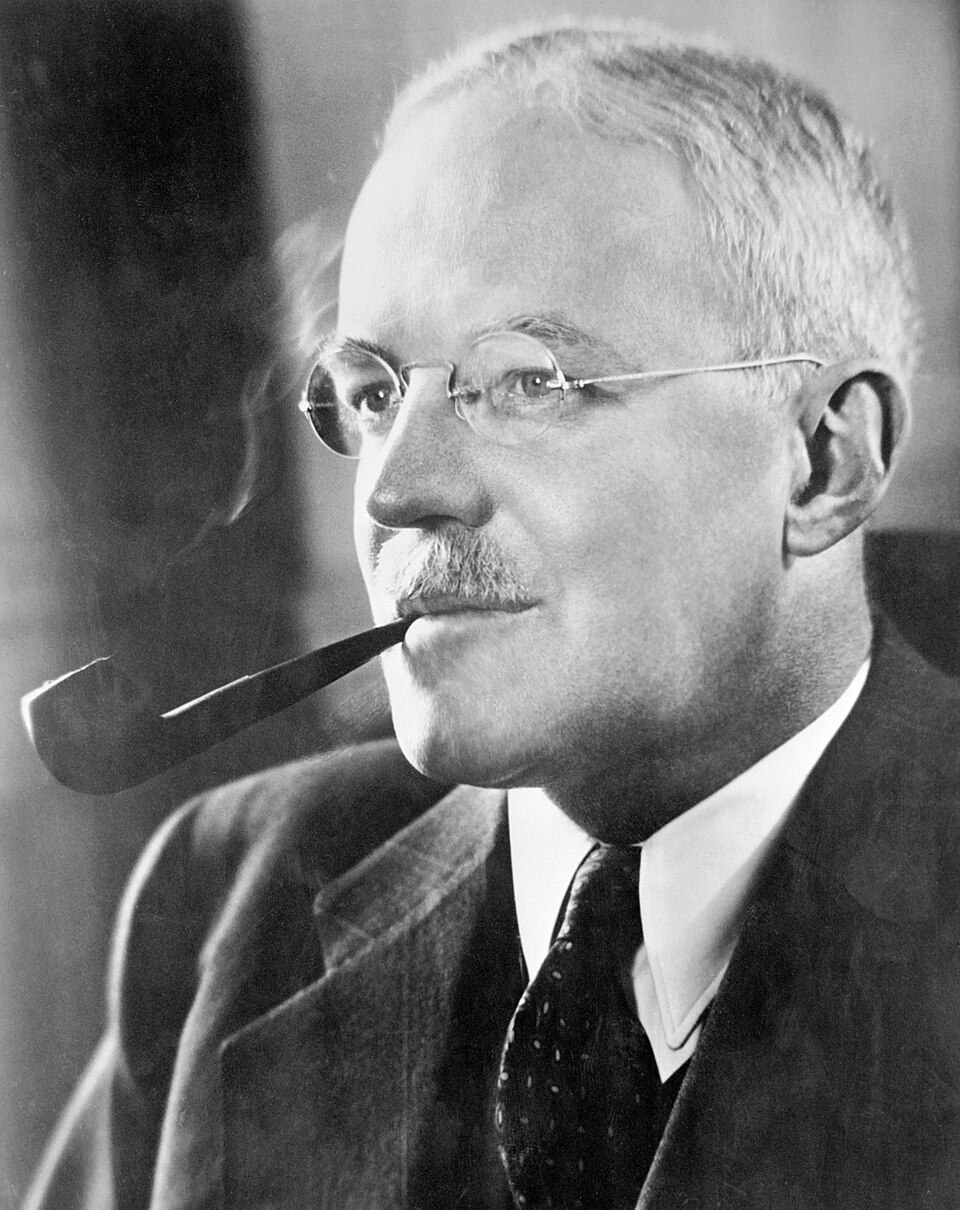
CIA Director who appointed Gottlieb to lead MKUltra and received regular briefings on the program.
Pharmaceutical manufacturer that synthesized large quantities of LSD for CIA stockpiles under contracts Gottlieb approved.