
Adam Weishaupt
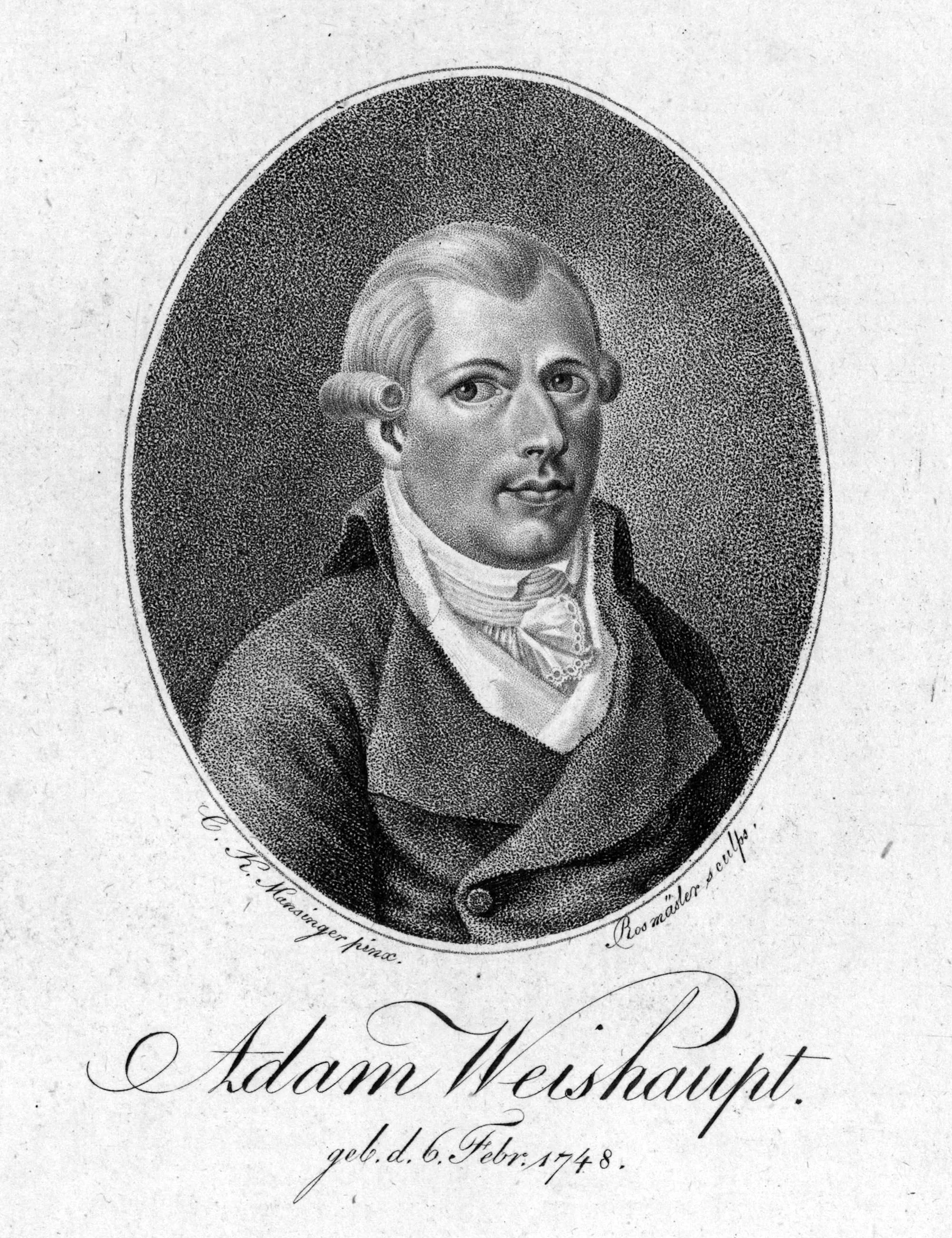
Johann Adam Weishaupt (1748–1830) was a German law professor at the University of Ingolstadt who founded the Bavarian Illuminati (Illuminatenorden) on May 1, 1776. The secret society, modeled on Enlightenment ideals and Masonic structure, was banned by the Bavarian government in 1785 and dissolved shortly thereafter, yet became the subject of enduring conspiracy theories. Weishaupt appears in The Archive because he founded the historical Bavarian Illuminati, a documented secret society suppressed by state authority in 1785, whose brief existence generated two centuries of conspiracy literature alleging vast, enduring influence…
Johann Adam Weishaupt (1748–1830) was a German law professor at the University of Ingolstadt who founded the Bavarian Illuminati (Illuminatenorden) on May 1, 1776. The secret society, modeled on Enlightenment ideals and Masonic structure, was banned by the Bavarian government in 1785 and dissolved shortly thereafter, yet became the subject of enduring conspiracy theories.
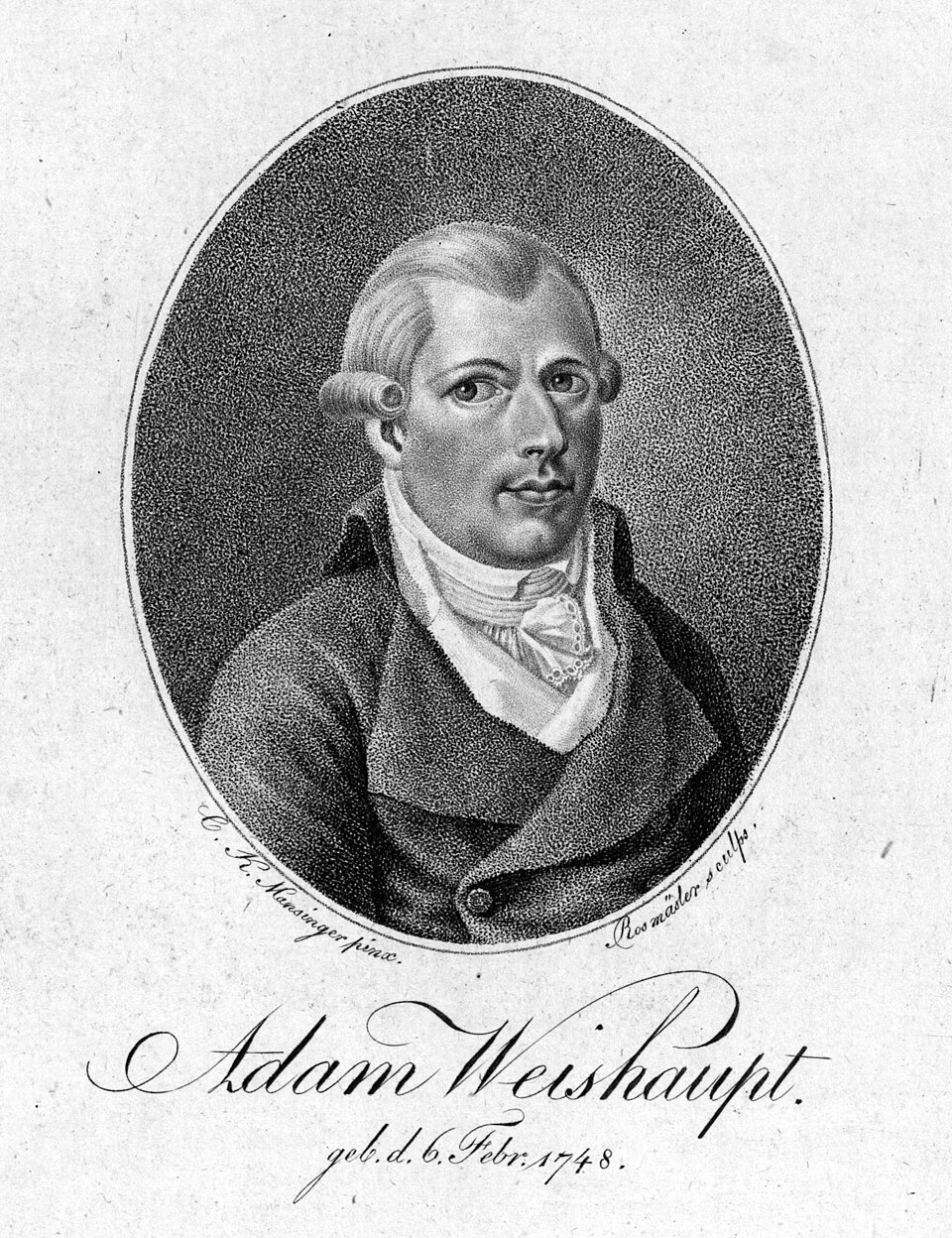
- Source
- Wikimedia Commons
- Type
- Historical Artwork
- License
- Public domain
- Photographer
- Friedrich Rossmassler
- Year
- 1799
Photo Information ▾
- Full name
- Johann Adam Weishaupt
- Born
- February 6, 1748, Ingolstadt, Bavaria
- Died
- November 18, 1830, Gotha, Saxe-Gotha-Altenburg
- Nationality
- German (Bavarian)
- Occupation
- University professor of canon law and practical philosophy
- Education
- Jesuit education; University of Ingolstadt (law degree, 1768)
- Notable position
- First lay professor of canon law at University of Ingolstadt (1773)
- Organization founded
- Order of the Illuminati (Illuminatenorden), May 1, 1776
- Organization dissolved
- 1785, following Bavarian government edicts
- Years active
- 1776–1785 (Illuminati leadership); 1773–1830 (academic career)
- Religious background
- Raised Catholic under Jesuit instruction; became critic of Church influence
Weishaupt appears in The Archive because he founded the historical Bavarian Illuminati, a documented secret society suppressed by state authority in 1785, whose brief existence generated two centuries of conspiracy literature alleging vast, enduring influence over world events. His organization is central to understanding how a short-lived Enlightenment fraternity became conflated with modern conspiracy narratives about global shadow governments, despite the society's documented dissolution. The Archive documents the verifiable history of Weishaupt and the Illuminati to distinguish historical fact from subsequent mythologization, examining both the society's actual structure and activities and the origins of claims attributing ongoing power to it.
# Adam Weishaupt
Identity
Johann Adam Weishaupt was born on February 6, 1748, in Ingolstadt, a university town in the Electorate of Bavaria, into a family of academics. His father, Johann Georg Weishaupt, was a professor of law at the University of Ingolstadt and died when Adam was five years old. The orphaned Weishaupt was subsequently raised by his godfather, Baron Johann Adam Ickstatt, a noted rationalist philosopher and curator of the university who ensured the boy received a rigorous Jesuit education. Weishaupt studied law at Ingolstadt, earning his degree in 1768, and rapidly ascended the academic ranks.
In 1773, at age twenty-five, Weishaupt became the first layman appointed to the chair of canon law (Kirchenrecht und praktische Philosophie) at the University of Ingolstadt—a position previously reserved for Jesuits. The appointment occurred just as the Society of Jesus was suppressed by Pope Clement XIV, creating a contested environment at the Catholic institution. Weishaupt's tenure was marked by friction with ecclesiastical authorities and conservative faculty who viewed his rationalist Enlightenment views with suspicion. He married twice: first to Afra Sausenhofer in 1775 (who died in 1780), with whom he had several children, and later to Anna Maria Sausenhofer, his first wife's sister, in 1786.
Career & Roles
Weishaupt's academic career spanned nearly six decades at Ingolstadt and later Gotha. His initial professorial work focused on canon law, natural law, and philosophy, subjects through which he promoted Enlightenment rationalism, anticlericalism, and critiques of feudal privilege. His lectures and private teachings emphasized reason over dogma, drawing the ire of Jesuit-trained colleagues and clerical overseers who dominated Bavarian intellectual life. Frustrated by what he perceived as institutional obscurantism and Church domination of education, Weishaupt began contemplating the creation of a secret society to propagate Enlightenment ideals.
On May 1, 1776—significantly, two months before the American Declaration of Independence—Weishaupt founded the "Order of Perfectibilists," later renamed the Order of the Illuminati (Illuminatenorden). He adopted the pseudonym "Spartacus," and the organization's early members were drawn from his students and professional associates. The society's stated mission was the intellectual and moral improvement of its members and, more ambitiously, the gradual reform of society through the cultivation of reason and virtue among influential individuals. Weishaupt structured the order with progressive degrees of initiation modeled on Masonic lodges, though the Illuminati remained organizationally separate from Freemasonry until 1780.
In 1780, Weishaupt recruited Baron Adolf Knigge (code name "Philo"), a skilled organizer and Freemason, who restructured the Illuminati with more elaborate rituals and Masonic integration, significantly expanding membership across German-speaking lands. Knigge's reforms professionalized recruitment, bringing in aristocrats, clergy, and intellectuals. At its height around 1784–1785, the Illuminati may have enrolled between 650 and 2,500 members (estimates vary), with lodges in Bavaria, Austria, Hungary, and Italy. Weishaupt himself remained the order's ideological leader but was increasingly at odds with Knigge over organizational control and direction; Knigge resigned in 1784.
Organizations & Networks
The Bavarian Illuminati operated as a clandestine society within existing Masonic and intellectual networks. Its organizational structure featured nested tiers of knowledge: lower initiates were taught ethics and rationalism, while higher degrees revealed the order's more radical goals—curtailing Church and state despotism, fostering secular enlightenment, and creating a meritocratic society. Members used pseudonyms and communicated via coded correspondence. The order's calendar replaced Christian chronology with a "Persian" system dating from ancient Zoroaster.
Weishaupt's network included prominent figures of the Enlightenment: philosophers, state officials, writers, and clerics sympathetic to reform. Documented members included the writer Johann Wolfgang von Goethe (who joined briefly), the publisher Johann Joachim Christoph Bode, the diplomat Xavier von Zwack ("Cato"), and the Bavarian civil servant Franz Xaver von Baader. The society's educational curriculum incorporated Enlightenment texts by Voltaire, Rousseau, and others banned or discouraged by Catholic authorities.
Though allied with certain Masonic lodges, the Illuminati's relationship with mainstream Freemasonry was complex. Many Masons viewed the Illuminati with suspicion, especially after Knigge's departure and internal disputes became public. The order's secrecy, hierarchical manipulation of initiates, and radical objectives alarmed both conservative Masons and secular authorities.
Major Operations & Activities
The Illuminati's principal activities were recruitment, education, and infiltration of influential institutions. Members were instructed to seek positions in government, education, and churches to subtly promote Enlightenment reforms. The society maintained an extensive system of internal reporting; members wrote detailed character assessments of recruits and monitored each other's progress in moral and intellectual development. This surveillance apparatus, intended to ensure ideological purity, later provided fodder for conspiracy theorists.
Weishaupt and his inner circle produced instructional manuscripts outlining the order's philosophy and long-term aims. These documents advocated the gradual abolition of monarchy, organized religion's political power, private property (in radical interpretations), and patriarchy—positions far ahead of mainstream thought and politically dangerous in absolutist Bavaria. The writings also emphasized pragmatic gradualism: change was to be achieved through persuasion and the elevation of enlightened individuals to positions of influence, not violent revolution.
The Illuminati's most significant operation was its expansion campaign between 1780 and 1784 under Knigge's direction, which successfully enrolled members across the Holy Roman Empire. The order established reading societies, supported publication of Enlightenment literature, and created networks for clandestine correspondence. However, internal conflicts over Weishaupt's autocratic leadership style and the order's true aims weakened cohesion.
Historical Importance
The historical Bavarian Illuminati existed for less than a decade, yet its cultural and conspiratorial legacy has persisted for more than two centuries. As an Enlightenment secret society, it represents a case study in the political application of rationalist philosophy, the limits of clandestine organization under authoritarian surveillance, and the volatile intersection of secrecy and state power in eighteenth-century Europe. The Illuminati contributed to the ferment of ideas preceding the French Revolution, though its direct causal influence remains debated among historians.
Weishaupt's writings—both those intended for internal circulation and his later published defenses—articulated a coherent if controversial program of secular humanism, anticlericalism, and cosmopolitanism that influenced subsequent radical and liberal thought. His organizational model, blending Masonic ritual with Enlightenment pedagogy and conspiratorial discipline, prefigured later political secret societies and revolutionary cells.
The Illuminati's suppression by Bavarian authorities in 1785 became a pivotal event in European political discourse, weaponized by conservative polemicists as evidence of Enlightenment subversion. This narrative, amplified during the reactionary backlash against the French Revolution, transformed a defunct Bavarian society into the archetype of the hidden revolutionary conspiracy, a role it retains in popular imagination.
Documented Controversies
Historical Consensus The Bavarian government, under Elector Karl Theodor, issued edicts in 1784 and 1785 banning all secret societies, explicitly targeting the Illuminati and Freemasons. These edicts followed denunciations by former members and the discovery of incriminating correspondence. Police raids on members' homes, notably Xavier von Zwack's residence in 1786, yielded internal documents detailing the order's structure, goals, and membership lists. These documents were published by the government as Einige Originalschriften des Illuminatenordens (Some Original Writings of the Order of Illuminati), providing primary evidence of the society's activities and fueling public alarm.
Documented Fact Weishaupt fled Bavaria in 1785 under threat of arrest, finding refuge in Gotha under the protection of Duke Ernst II of Saxe-Gotha-Altenburg. He never returned to Bavaria and spent the remainder of his career teaching philosophy at Gotha, where he published several defenses of the Illuminati and critiques of the accusations against it. His writings acknowledged the order's secrecy and reformist aims but denied conspiratorial intent toward violent revolution or the overthrow of Christianity itself, characterizing the group as a philosophical society for moral improvement.
Ongoing Historical Debate The extent of the Illuminati's actual influence on late eighteenth-century politics, particularly its alleged role in instigating the French Revolution, remains disputed among historians. Conservative writers such as Augustin Barruel (Memoirs Illustrating the History of Jacobinism, 1797) and John Robison (Proofs of a Conspiracy, 1797) blamed the Illuminati for orchestrating revolutionary upheaval across Europe. Modern scholarship largely rejects these claims, noting the order's dissolution before 1789 and lack of evidence linking its membership to revolutionary leadership. Historians such as J.M. Roberts have characterized the Barruel-Robison thesis as conspiracy theory rather than documented history, though the debate continues regarding the Illuminati's indirect ideological influence.
Unsupported Claim Subsequent conspiracy literature has attributed enduring existence and vast influence to the Illuminati, claiming the society survived suppression, infiltrated Freemasonry, controlled the French and American Revolutions, and continues to manipulate global events through banking, media, and government. These claims, proliferating especially in twentieth- and twenty-first-century conspiracy culture, lack credible documentary evidence. No reputable historian has identified continuous organizational existence of the Bavarian Illuminati beyond 1785–1787, and no primary sources corroborate ongoing operations.
Reported Association Weishaupt's personal ambitions and autocratic leadership style generated internal controversy even among sympathetic Illuminati members. Baron Knigge and others accused Weishaupt of intellectual dishonesty, manipulating initiates with false promises of mystical knowledge, and prioritizing personal control over the order's stated principles. These disputes, documented in correspondence, contributed to the organization's fragmentation and provided critics with ammunition.
Investigations & Legal Proceedings
The Bavarian government's investigation of the Illuminati began in 1784 following denunciations from disaffected members and reports of suspicious secret society activity. Elector Karl Theodor's edicts of June 22, 1784, and March 2 and August 16, 1785, prohibited secret societies and specifically named the Illuminati. The March 1785 edict threatened severe penalties, including death, for continued membership, though there is no record of executions.
Police searches of members' residences, particularly the 1786 raid on Zwack's home, recovered correspondence, membership rosters, ritual instructions, and internal critiques. The Bavarian government published these documents in multiple volumes between 1786 and 1787, intending to justify the suppression and discredit Enlightenment radicalism. The publications revealed the order's hierarchical structure, use of pseudonyms, surveillance of members, and writings advocating curtailment of Church authority and monarchical power.
Weishaupt himself was dismissed from his university position and formally banished from Bavaria. He faced no criminal prosecution, however, and lived openly in Gotha for the next forty-five years, publishing scholarly and defensive works without further legal jeopardy. No evidence indicates the Illuminati engaged in violent activities, plots against individuals, or treasonous conspiracies beyond its advocacy of gradual social reform.
Denials & Disputes
Weishaupt devoted much of his post-1785 career to defending the Illuminati against accusations of sedition, atheism, and conspiracy. In works including Apologie der Illuminaten (1786), Geschichte der Vervollkommnung des menschlichen Geschlechts (1788), and Pythagoras (1790), he characterized the order as a benign philosophical society aimed at moral education and the spread of Enlightenment values. He denied conspiring to overthrow governments or abolish religion, instead emphasizing the society's pedagogical mission and rational critique of abuses by Church and state.
Weishaupt acknowledged the order's secrecy, hierarchical degrees, and use of coded communication but argued these were protective measures necessitated by Bavaria's repressive political climate. He distanced himself from the most radical interpretations of Illuminati writings, attributing extreme positions to misunderstandings or the unauthorized embellishments of overzealous members. His defenses, however, were undermined by the publication of internal documents clearly advocating long-term transformation of political and religious institutions.
Critics then and later rejected Weishaupt's defenses. Barruel and Robison depicted him as a cynical manipulator using Enlightenment rhetoric to disguise revolutionary intent. Twentieth-century conspiracy theorists portrayed him as the founder of an immortal shadow organization. Mainstream historians generally assess Weishaupt as an earnest if tactically naïve Enlightenment radical whose organizational experiment failed due to internal contradictions, external repression, and his own autocratic tendencies.
Legacy & Historical Debate
Weishaupt died on November 18, 1830, in Gotha, largely forgotten by the intellectual world he had sought to transform. His obituaries noted his academic career and the Illuminati controversy but did not anticipate the extraordinary afterlife his creation would enjoy. Within decades, the Illuminati resurfaced as a central fixture of conspiracy theory, blamed for every major political upheaval from the French Revolution to twentieth-century totalitarianism.
The transformation of the historical Illuminati into a perpetual conspiracy began with Barruel and Robison, whose post-Revolutionary polemics presented the order as the hidden hand behind Jacobinism. These works influenced nineteenth-century conservative and reactionary thought, contributing to anti-Masonic movements and suspicion of secret societies generally. In the twentieth century, the Illuminati myth was revived and elaborated by conspiracy writers such as Nesta Webster, who linked the order to Jewish bankers and Bolshevism, and later by authors like Robert Anton Wilson, whose satirical Illuminatus! Trilogy (1975) simultaneously mocked and popularized Illuminati conspiracy culture.
Contemporary conspiracy theories routinely invoke the Illuminati as synonymous with a global shadow elite controlling world affairs—a "New World Order" of bankers, politicians, and celebrities. These narratives draw on the historical Bavarian society's name and symbolism (particularly the Eye of Providence, erroneously associated with the Illuminati) but bear little relationship to the documented activities of Weishaupt's organization. Popular culture, including novels by Dan Brown and music industry mythology, perpetuates the Illuminati as a brand of secretive omnipotence.
Historians recognize the Bavarian Illuminati as a historically significant but short-lived Enlightenment experiment. Scholarly consensus holds that the order dissolved by 1787, that no credible evidence supports its organizational survival, and that attributing enduring influence to it requires abandoning source-based historical method in favor of speculative connection-making. The society's real legacy lies not in hidden control of events but in its symbolic transformation into the archetype of the secret conspiracy—a mirror reflecting anxieties about power, secrecy, and social change across successive eras.
Continue Investigating
Weishaupt's historical Illuminati connects to multiple Archive investigations of secret societies, conspiracy theories, and the contested boundaries between documented influence networks and mythologized shadow power. The Bavarian Illuminati's actual structure and suppression illuminate the origins of modern conspiracy narratives that claim enduring elite control, while Weishaupt's Enlightenment radicalism intersects with broader questions about clandestine organization, state surveillance, and the propagation of political ideas.
The conspiracy literature generated by Barruel and Robison linking the Illuminati to revolutionary subversion helped establish narrative templates still active in contemporary conspiracy culture, including claims about banking dynasties and globalist elites examined in related dossiers. Weishaupt's organization also intersects with documented historical secret societies and elite networks whose existence and activities are matters of record, providing comparative context for distinguishing verified influence from speculative attribution.
Readers investigating the historical Illuminati should examine the primary sources published by the Bavarian government, Weishaupt's own defenses, and the critical historiography separating documented fact from subsequent mythologization. Understanding Weishaupt and the actual Bavarian Illuminati is essential to assessing the vast ecosystem of claims invoking "the Illuminati" as an explanation for historical and contemporary events.
- 1748Johann Adam Weishaupt born February 6 in Ingolstadt, Bavaria.
- 1768Weishaupt completes law degree at University of Ingolstadt.
- 1773Appointed first lay professor of canon law at University of Ingolstadt following Jesuit suppression.
- 1776Founds the Order of Perfectibilists (later Illuminati) on May 1.
- 1780Baron Adolf Knigge joins and begins restructuring the Illuminati, integrating Masonic lodges.
- 1784Bavarian Elector Karl Theodor issues first edict banning secret societies on June 22; Knigge resigns from Illuminati.
- 1785Further Bavarian edicts in March and August explicitly prohibit Illuminati; Weishaupt flees Bavaria.
- 1786Police raid Xavier von Zwack's home, seizing Illuminati documents; Bavarian government begins publishing seized materials.
- 1787Illuminati effectively dissolved; no further organizational activity documented.
- 1797Augustin Barruel and John Robison publish conspiracy theories blaming Illuminati for French Revolution.
- 1786–1830Weishaupt lives in Gotha, publishes defenses of Illuminati and philosophical works.
- 1830Weishaupt dies November 18 in Gotha at age 82.
- S1The Illuminati: The Secret Society That Hijacked the WorldYale University Press · book
- S2Adam WeishauptEncyclopaedia Britannica · reference
- S3IlluminatiWikipedia · reference
- S4
- S5
- S6The Bavarian IlluminatiEncyclopaedia Britannica · reference
- S7
- S8Adam Weishaupt's Philosophy of the EnlightenmentJSTOR · academic
- S9Memoirs Illustrating the History of JacobinismWikipedia · reference
- S10Proofs of a ConspiracyWikipedia · reference
- S11The Mythology of Secret SocietiesJSTOR · academic
- S12Adolf Freiherr KniggeWikipedia · reference
- S13
If you're learning about this topic for the first time, these are the best places to continue — documented evidence and historical relationships are the guide.
Adam Weishaupt is documented in the evidence record of this published dossier.
Jesuit priest whose 1797 conspiracy work blamed Weishaupt's Illuminati for the French Revolution, establishing the template for modern Illuminati conspiracy theories.
Co-organizer who restructured and expanded the Illuminati 1780–1784 before resigning due to conflicts with Weishaupt.