Abdul Qadeer Khan
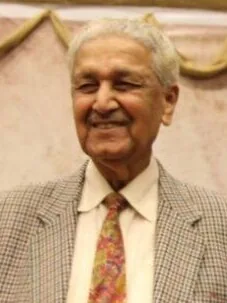
Abdul Qadeer Khan (1936–2021) was a Pakistani metallurgist who founded Pakistan's uranium enrichment program and is widely documented as the architect of the world's most extensive clandestine nuclear weapons proliferation network. From the late 1980s through 2003, Khan and his associates provided nuclear weapons designs, centrifuge technology, and enrichment expertise to Libya, Iran, and North Korea, fundamentally … Khan represents the most significant case of individual-led nuclear proliferation in the atomic age.
Abdul Qadeer Khan (1936–2021) was a Pakistani metallurgist who founded Pakistan's uranium enrichment program and is widely documented as the architect of the world's most extensive clandestine nuclear weapons proliferation network. From the late 1980s through 2003, Khan and his associates provided nuclear weapons designs, centrifuge technology, and enrichment expertise to Libya, Iran, and North Korea, fundamentally altering global nuclear security.
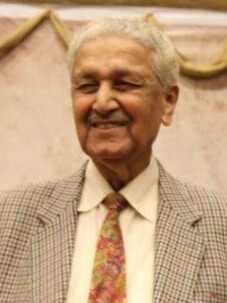
- Source
- Wikimedia Commons
- Type
- Photograph
- License
- CC BY-SA 4.0
- Photographer
- Waiza Rafique
- Year
- 2017
Photo Information ▾
- Full name
- Abdul Qadeer Khan
- Born
- April 1, 1936, Bhopal, British India
- Died
- October 10, 2021, Islamabad, Pakistan
- Nationality
- Pakistani (born in British India)
- Education
- Ph.D. in metallurgical engineering, Catholic University of Leuven, Belgium (1972)
- Known for
- Founding Pakistan's uranium enrichment program; operating clandestine nuclear proliferation network
- Key positions
- Director, Engineering Research Laboratories (later Khan Research Laboratories), 1976–2001
- Legal status
- Confessed to unauthorized proliferation (2004); pardoned by President Musharraf; never formally charged; placed under house arrest 2004–2009
- Network active period
- Approximately late 1980s–2003
- Known recipient states
- Libya, Iran, North Korea (documented); others suspected
- Official Pakistani status
- Celebrated as "Father of Pakistan's Atomic Bomb" until 2004 confession
Khan represents the most significant case of individual-led nuclear proliferation in the atomic age. His network—spanning Europe, Asia, Africa, and the Middle East—operated for nearly two decades, supplying complete nuclear weapons designs and manufacturing capability to multiple nations. The network's exposure in 2003–2004 revealed vulnerabilities in international export controls, raised fundamental questions about state complicity versus individual enterprise in proliferation, and forced a reassessment of how nuclear knowledge and technology could spread outside traditional state-to-state channels. Khan's role in Pakistan's nuclear weapons program, his subsequent proliferation activities, his 2004 televised confession, his immediate pardon by President Musharraf, and his house arrest until 2009 remain subjects of historical debate regarding state knowledge, Western intelligence failures, and the true extent of the network's reach.
# Abdul Qadeer Khan
Identity
Abdul Qadeer Khan was born on April 1, 1936, in Bhopal, in what was then British India. Following the 1947 partition of India, his family migrated to Pakistan, settling in Karachi. Khan pursued higher education in metallurgical engineering, earning his bachelor's degree from the University of Karachi in 1960, followed by a master's degree from the Delft University of Technology in the Netherlands in 1967. He completed his doctorate at the Catholic University of Leuven in Belgium in 1972, specializing in the physical metallurgy of maraging steel—a high-strength alloy with specific applications in gas centrifuges used for uranium enrichment.
From 1972 to 1975, Khan worked at the Physical Dynamics Research Laboratory (FDO), a subcontractor to URENCO, the European uranium enrichment consortium. During this period, he had access to highly classified centrifuge designs and the supplier networks that supported European enrichment facilities. This access would prove historically significant. In 1975, following India's 1974 nuclear test ("Smiling Buddha"), Khan wrote to Pakistani Prime Minister Zulfikar Ali Bhutto offering his services to develop Pakistan's nuclear capability. He returned to Pakistan in December 1975.
Khan became a national hero in Pakistan after the country's successful nuclear tests in May 1998, conducted in response to India's tests earlier that month. He was popularly known as "Mohsin-e-Pakistan" (Benefactor of Pakistan) and the "Father of Pakistan's Atomic Bomb." This status would remain largely intact within Pakistan even after his 2004 confession to international proliferation activities.
Career & Roles
Upon his return to Pakistan in 1975, Khan was appointed to lead the country's uranium enrichment program. In July 1976, he established the Engineering Research Laboratories (ERL) near Islamabad, which was later renamed Khan Research Laboratories (KRL) in his honor. Under Khan's direction, KRL developed Pakistan's first operational uranium enrichment facility using gas centrifuge technology. The program drew heavily on designs Khan had accessed during his time at URENCO, particularly the CNOR (Centec Nederlandse Oorspronkelijke) and G-1 and G-2 centrifuge designs developed by the Dutch engineer Gernot Zippe and his European colleagues.
Khan's technical approach centered on acquiring and reverse-engineering European centrifuge technology rather than developing indigenous designs from first principles. He established procurement networks across Europe and Asia to obtain specialized components, materials, and machine tools. By the early 1980s, Pakistan had developed operational centrifuge cascades capable of enriching uranium to weapons grade. The program's success made Pakistan the first Muslim-majority nation to develop nuclear weapons capability.
Khan served as director of KRL from 1976 until his formal removal in March 2001, though he retained the title of "scientific adviser" until his February 2004 confession. During the 1980s and 1990s, KRL operated with considerable autonomy from Pakistan's main nuclear weapons establishment, which was centered in the Pakistan Atomic Energy Commission (PAEC). This organizational separation would later become significant in debates about state knowledge of Khan's proliferation activities.
Beyond his technical role, Khan cultivated a public persona as Pakistan's foremost scientist and a fierce nationalist. He gave frequent media interviews, wrote newspaper columns, and positioned himself as a defender of Pakistan's strategic interests against Western pressure. This public profile made him politically difficult to constrain, even as evidence of his proliferation activities accumulated.
Organizations & Networks
The Khan network was not a single organization but rather a flexible commercial and technical network spanning multiple countries and continents. At its core was Khan Research Laboratories in Pakistan, but the network extended through front companies, manufacturers, freight forwarders, financiers, and intermediaries across Europe, Asia, Africa, and the Middle East.
Key network participants included:
Buhary Syed Abu Tahir, a Sri Lankan businessman based in Dubai who served as the network's chief financial officer and logistics coordinator from the mid-1990s onward. Tahir managed many of the commercial transactions, arranged shipping through his company SMB Computers, and coordinated the manufacturing of components in Malaysia and other locations. He was arrested in Malaysia in 2004 and provided extensive information about network operations to investigators.
Friedrich Tinner and his sons Urs and Marco, Swiss engineers who manufactured critical centrifuge components and provided technical expertise. The Tinner family operated a precision engineering company in Switzerland and had connections to European centrifuge technology dating to the 1970s. They manufactured components for Libya's centrifuge program and other clients. Swiss authorities investigated the Tinners extensively; in 2007, the Swiss government ordered the destruction of evidence in the case, a decision that sparked significant controversy.
Heinz Mebus, a German engineer who provided vacuum technology expertise and equipment. Mebus had worked in centrifuge development and supplied specialized vacuum pumps and related equipment used in enrichment cascades.
Gotthard Lerch, a German businessman who served as a procurement agent, particularly for Libya. Lerch was prosecuted in Germany but acquitted in 2006.
Shamsul Bahrin Rukiban (B.S.A. Tahir's business partner), a Malaysian engineer whose Scomi Precision Engineering company manufactured centrifuge components for Libya in 2002–2003.
The network also maintained relationships with manufacturers and suppliers in Turkey, South Africa, the United Arab Emirates, and several European countries. It operated through a combination of legitimate companies conducting dual-use business and front companies established specifically for proliferation transactions.
A critical aspect of network operations was its relationship with Pakistan's Strategic Plans Division (SPD), the military organization responsible for Pakistan's nuclear arsenal. The extent to which Pakistani authorities knew about and authorized Khan's proliferation activities remains disputed. Khan consistently maintained that he acted without government authorization, a claim that many Western intelligence analysts regard as implausible given the scale of operations, but which Pakistan officially endorsed.
Major Operations & Activities
The Khan network's documented proliferation activities fall into several distinct operations:
Libya (late 1990s–2003): The most extensively documented relationship involved providing Libya with a complete nuclear weapons development package. Between approximately 1997 and 2003, the network supplied Libya with P-1 and P-2 centrifuge designs, thousands of centrifuge components, uranium hexafluoride feedstock, and—most significantly—nuclear weapons design documents. The weapons designs, discovered by international inspectors after Libya's December 2003 decision to abandon its nuclear weapons program, were sufficiently detailed to allow a state with fissile material to construct a nuclear device. Documents included Chinese-origin designs that Pakistan had received in the early 1980s. The Libya operation generated substantial revenue for the network, with payments estimated in the tens of millions of dollars.
Iran (1987–1995, possibly later): Iran received P-1 centrifuge designs, sample centrifuges, and related documentation from the Khan network starting in 1987. The International Atomic Energy Agency (IAEA) documented these transfers through inspections beginning in 2003. Iran also received P-2 centrifuge designs in the mid-1990s. Iranian officials acknowledged receiving this assistance but maintained that their contacts with the network ended in the mid-1990s. However, investigators found evidence suggesting possible continued contact. The centrifuge technology Iran received formed the basis for its subsequent enrichment program.
North Korea (1990s–early 2000s): The Khan network's relationship with North Korea is documented through multiple sources but remains less detailed than the Libya and Iran cases. Evidence includes testimony from network members, intelligence reports, and technical analysis of Pakistani and North Korean centrifuge designs showing common features. The relationship appears to have involved a barter arrangement: North Korea provided Pakistan with medium-range ballistic missile technology (particularly the Nodong/Ghauri missile) in exchange for centrifuge technology. North Korean officials have never acknowledged receiving nuclear assistance from the Khan network. The extent of technology transfer remains uncertain, though North Korea's current uranium enrichment capabilities indicate access to advanced centrifuge designs.
Other suspected relationships: Intelligence services have investigated possible network connections to Syria and other states, but public documentation remains limited. Saudi Arabia's relationship with Pakistan's nuclear program has been the subject of speculation, but no evidence has been made public establishing that the Khan network provided technology to Saudi Arabia.
The network's operational methods combined legitimate business practices with deception. Components were often manufactured by legitimate companies unaware of the end use, then diverted through complex shipping arrangements. Critical technology was sometimes disguised as industrial equipment. The network exploited weaknesses in export control systems, particularly for dual-use items that had both civilian and military applications. Financial transactions were structured through multiple accounts and companies to obscure the flow of funds.
Historical Importance
The Khan network fundamentally altered the nuclear proliferation landscape in several ways. First, it demonstrated that non-state actors—or at minimum, actors operating partially outside direct state control—could acquire and transfer the most sensitive nuclear weapons technology. Previous proliferation had primarily occurred through state-to-state assistance, as with Soviet aid to China or Chinese aid to Pakistan. The Khan network commercialized proliferation, treating nuclear technology as a commodity to be bought and sold.
Second, the network's success revealed critical gaps in international non-proliferation architecture. The Nuclear Non-Proliferation Treaty (NPT) system, International Atomic Energy Agency safeguards, and national export control systems all proved insufficient to detect and prevent the network's activities over nearly two decades. The network operated across jurisdictions, exploited legal ambiguities regarding dual-use technology, and benefited from limited intelligence sharing among states.
Third, Khan's activities accelerated multiple states' nuclear weapons programs by years or decades. Libya's program, which had made little progress for years, suddenly acquired complete weapons designs and most of the technology needed for fissile material production. Iran's enrichment capabilities were dramatically enhanced by access to proven centrifuge designs. North Korea's program benefited from external technical assistance at critical junctures.
Fourth, the network's exposure in 2003–2004 led to significant changes in international non-proliferation efforts. These included United Nations Security Council Resolution 1540 (2004), which required all states to criminalize proliferation by non-state actors; the Proliferation Security Initiative, which enhanced international cooperation to intercept proliferation-related shipments; and strengthened export controls, particularly through the Nuclear Suppliers Group.
The Khan network also raised profound questions about the role of scientists and engineers in proliferation. Khan himself presented his activities as driven by Islamic solidarity and resistance to Western nuclear hegemony, though financial motivations were clearly also present. His case highlighted the tension between national security imperatives and scientific knowledge that is increasingly global and mobile.
Documented Controversies
Confirmed by Multiple Governments Khan's operation of a nuclear proliferation network is established by convergent evidence from multiple national intelligence services, IAEA inspections in Libya and Iran, testimony from network participants, seized documents and components, and Khan's own 2004 televised confession. The basic fact of the network's existence and its supply of nuclear technology to at least three countries is not disputed by any government, including Pakistan.
Ongoing Historical Debate The extent of Pakistani government knowledge and authorization of Khan's proliferation activities remains intensely disputed. Khan consistently maintained that he acted without government approval, a claim reinforced by Pakistani officials. However, Western intelligence analysts and many proliferation experts regard this as implausible. Evidence suggesting state knowledge includes: the scale of the operations (including shipments requiring military transport); the presence of Pakistani military personnel in network meetings; the integration of proliferation activities with Pakistan's strategic relationships (particularly the missile-for-centrifuge barter with North Korea); and organizational patterns suggesting institutional rather than individual activity. The counterargument emphasizes KRL's autonomy, Khan's personal power and political protection, and the possibility that military intelligence was aware but civilian leadership was not. No definitive documentary evidence of top-level authorization has been made public.
Government Finding In October 2003, acting on intelligence from multiple sources (including information provided by Libya as part of its rapprochement with Western nations), authorities intercepted a shipment of centrifuge components aboard the German ship BBC China en route from Malaysia to Libya. The shipment, organized by Tahir and manufactured at Scomi Precision Engineering, provided physical evidence of active proliferation and accelerated the investigation's conclusion.
Official Record On February 4, 2004, Khan appeared on Pakistani television and confessed to unauthorized proliferation activities. He stated: "I have betrayed the trust of my nation... I have made many mistakes as regards the illegal export of technology." He claimed sole responsibility and absolved the Pakistani government and military of knowledge or involvement. The confession followed extensive interrogation by Pakistani security services and was made as part of an arrangement that included his immediate pardon by President Pervez Musharraf.
Credible Allegation The confession's circumstances raised questions about its credibility. Khan was not allowed to be interviewed by international investigators (including the IAEA or intelligence services from other countries). He later recanted elements of the confession in private statements to associates and in court filings. In 2008, following his release from house arrest, Khan gave interviews suggesting he had been made a scapegoat and that the government had known about his activities. These later statements conflict with his official confession, creating ambiguity about which version reflects his actual beliefs versus what he was compelled or chose to say at different times.
Disputed Claim The full extent of the network's reach remains uncertain. While Libya, Iran, and North Korea are documented recipients, intelligence services have investigated possible connections to Syria and other states. Some analysts have suggested the network may have had customers beyond those publicly identified, though no additional recipients have been definitively established through public evidence.
Credible Allegation The network's weapons designs reportedly originated from China. According to multiple sources, China provided Pakistan with nuclear weapons designs in the early 1980s as part of bilateral nuclear cooperation. These Chinese-origin designs were among the documents provided to Libya. Chinese officials have never acknowledged providing weapons designs to Pakistan, though Chinese assistance to Pakistan's nuclear program is well documented in other respects.
Ongoing Historical Debate Western intelligence agencies' performance regarding the Khan network has been criticized. Evidence suggests that various intelligence services had indications of Khan's procurement activities and suspicious international contacts dating to the 1980s. The CIA reportedly knew of enrichment equipment sales to Iran by the late 1980s. However, the full scope of the network, particularly the provision of complete weapons designs, was apparently not understood until the early 2000s. Questions persist about whether earlier intervention could have prevented some proliferation, and why intelligence was not acted upon more decisively.
Confirmed by Court Several network members faced legal proceedings. Tahir was detained in Malaysia in 2004 and held for several years without trial before being released. The Tinner family members were arrested in Switzerland and later released; in 2007, Swiss authorities controversially destroyed evidence in the case on national security grounds, preventing a full trial. Lerch was prosecuted in Germany but acquitted in 2006 due to insufficient evidence that he knew the ultimate end use of equipment he supplied. These proceedings revealed significant challenges in prosecuting proliferation cases, including difficulties proving knowledge of end use, international jurisdictional complications, and governments' reluctance to reveal intelligence sources.
Investigations & Legal Proceedings
Khan was never formally charged with a crime. Following his February 4, 2004 confession, President Musharraf immediately pardoned him, citing his contributions to Pakistan's national security. This decision prevented any criminal trial and ensured that detailed evidence of his activities would not be presented in court. Khan was placed under house arrest at his residence in Islamabad, with restrictions on visitors, communications, and movement.
Pakistani authorities conducted their own investigation of Khan and KRL, interrogating Khan extensively before his confession. However, the results of this investigation were never publicly released in detail. The Pakistani government provided limited information to international partners, including the IAEA and the United States, but declined to allow direct international access to Khan for questioning.
The IAEA conducted extensive investigations in Libya, Iran, and elsewhere, documenting the technology and materials provided by the network. Director General Mohamed ElBaradei's reports to the IAEA Board of Governors in 2004 and subsequent years detailed the findings, including the discovery of weapons designs, centrifuge components, and documentation in Libya. IAEA inspectors used this evidence to trace the network's activities and suppliers.
Multiple national investigations occurred in countries where network members operated. Malaysian authorities investigated Scomi Precision Engineering's manufacture of centrifuge components. Swiss authorities pursued the Tinner family, eventually destroying evidence in 2007—a decision that Switzerland's Federal Council defended as necessary to prevent further proliferation but that critics charged was designed to protect sources or shield U.S. intelligence operations. German authorities investigated Lerch and other German nationals connected to the network.
The United States conducted extensive intelligence and law enforcement investigations, working with Pakistani counterparts and other countries. However, U.S. efforts were complicated by Pakistan's status as a key ally in the Afghanistan conflict following September 11, 2001. The Bush administration prioritized maintaining Pakistani cooperation in counterterrorism over aggressive action regarding Khan, a balance that critics charged allowed the network to operate longer than necessary.
In February 2009, the Islamabad High Court declared Khan's house arrest illegal, and he was released. Restrictions on his movement were progressively eased, though he remained under some surveillance. He gave occasional interviews and continued to be celebrated by many Pakistanis as a national hero.
Khan died on October 10, 2021, at age 85, from COVID-19 complications. He received a state funeral with military honors, attended by senior military and government officials. No comprehensive official accounting of his proliferation activities was ever released by Pakistan, and many details of the network's operations remain classified.
Denials & Disputes
Khan's own position on his activities evolved over time. His February 2004 confession accepted responsibility for unauthorized proliferation but claimed he acted alone without government knowledge. He apologized to the nation and requested forgiveness. However, in subsequent years, he suggested that he had been made a scapegoat and that government and military officials knew about his activities. In a 2008 interview, he stated that President Musharraf was aware of the network's operations. These later statements contradicted his official confession but were consistent with skepticism among Western analysts about the "rogue scientist" narrative.
The Pakistani government consistently maintained that Khan's proliferation activities were unauthorized and unknown to national authorities until the investigation in 2003–2004. Official statements emphasized that once the activities were discovered, swift action was taken, including Khan's removal from KRL (which had occurred in 2001, before the network's full exposure), his confession, and his house arrest. Pakistani officials argued that Khan exploited his position and reputation to conduct unauthorized activities, and that KRL's relative autonomy enabled this. They rejected suggestions that military or intelligence services were complicit.
Network members who were arrested or interrogated generally cooperated with investigators to varying degrees. Tahir provided extensive information about network operations, finances, and participants. The Tinners reportedly cooperated with U.S. intelligence services, though the details remain classified and were partly responsible for the Swiss government's 2007 evidence destruction. These accounts generally corroborated the basic facts of network operations but left many details about Pakistani state involvement unresolved.
Some Pakistani commentators and Khan's supporters have framed his proliferation activities as morally justified assistance to Muslim nations facing Western nuclear hegemony. From this perspective, Khan's actions helped level an unjust international system in which Western nations and their allies (including Israel and India) developed nuclear weapons while denying others the same capability. This view treats the proliferation as a form of anti-colonial or anti-Western resistance rather than as criminal activity.
Western governments have been more uniform in their assessment. U.S., British, and other officials have characterized the network as the most serious proliferation threat of the post-Cold War era and have expressed frustration with Pakistan's unwillingness to allow international access to Khan or to provide a full accounting of the network's activities. However, diplomatic and strategic considerations—particularly Pakistan's importance in regional counterterrorism and stability efforts—have limited public pressure on Pakistan regarding this issue.
Legacy & Historical Debate
The Khan network's legacy resides in multiple domains. In proliferation terms, the network permanently altered at least three nations' nuclear capabilities, accelerated global nuclear dangers, and demonstrated that sensitive technology could spread through non-traditional channels. Iran's enrichment program, which has been the focus of international diplomacy and tension for two decades, was built on technology provided by Khan. North Korea's nuclear weapons capability, including its successful nuclear tests beginning in 2006, benefited from the network's assistance. Libya's program was dismantled following its 2003 decision to abandon nuclear weapons, but the weapons designs found there raised alarming questions about how close a determined proliferator could come to a nuclear weapon.
In Pakistan, Khan remains a divisive but largely celebrated figure. Many Pakistanis continue to view him as the father of their nation's nuclear deterrent and discount or rationalize his proliferation activities. His state funeral in 2021 reflected his continued status as a national hero. However, some Pakistani analysts and commentators have critically examined his legacy, noting that his proliferation activities harmed Pakistan's international reputation, complicated its relationships with key partners, and may have contributed to regional nuclear dangers that ultimately threaten Pakistan itself.
Historically, the Khan case raises fundamental questions about accountability and state responsibility. If Khan acted without authorization, does that absolve the Pakistani state of responsibility? Or does the scale of operations and apparent institutional involvement suggest state responsibility regardless of formal authorization? International law does not provide clear answers, particularly regarding acts by government employees operating beyond their authority but using state resources and infrastructure. The case highlighted gaps in how international law addresses proliferation by individuals or networks rather than states.
The network's exposure also revealed the limitations of intelligence and non-proliferation systems. Despite indications of Khan's activities dating back decades, the network operated until 2003. This raises questions about intelligence prioritization, information sharing, and the political will to act on proliferation concerns when doing so might complicate other strategic interests. The fact that the network was finally exposed through Libya's voluntary disclosure rather than through intelligence or law enforcement interception suggests that detection and interdiction capabilities were inadequate.
Academically, the Khan network has become a central case study in proliferation studies, intelligence analysis, export control, and nuclear security. Researchers have examined the network's structure, operational methods, financial arrangements, and the policy responses it prompted. The case has influenced theories about proliferation motivations, the role of individuals versus states, and the effectiveness of different non-proliferation tools.
The full history of the network remains incomplete. Many participants have never been publicly identified. Financial records have not been fully disclosed. The extent of assistance provided to each recipient remains partly unclear. And the question of Pakistani state involvement—the central historical controversy—lacks definitive documentary resolution. Khan took many secrets to his grave in 2021. Until Pakistan releases comprehensive records of its own investigation (which seems unlikely), or until additional participants provide detailed testimony, or until intelligence services declassify relevant materials, the complete history will remain elusive.
Continue Investigating
The Khan network's operations intersected with multiple sensitive international networks and operations documented elsewhere in The Archive. The network's relationships with European manufacturers and procurement agents connect to broader patterns of dual-use technology transfer and export control evasion. The involvement of intelligence services in monitoring, infiltrating, or possibly disrupting the network relates to classified operations that have been only partially disclosed. The network's financial arrangements used some of the same offshore banking and corporate structures that appear in other financial secrecy cases.
For readers seeking to understand the full context of nuclear proliferation and the Khan network's place within it, several Archive dossiers provide essential background. The network represents perhaps the most significant known case of individual-organized proliferation, distinct from state-directed programs but intersecting with state interests in complex ways. Understanding the individuals, companies, and agencies that constituted or interacted with the network requires examining the full range of documented evidence.
The broader questions raised by the Khan case—about scientific responsibility, state accountability, intelligence oversight, and the adequacy of international non-proliferation architecture—connect to larger debates about technological governance and global security that extend beyond nuclear weapons to other dangerous technologies. The case remains a reference point for contemporary debates about how to prevent the spread of nuclear weapons in an era of increasingly mobile expertise and technology.
- 1936Abdul Qadeer Khan born in Bhopal, British India
- 1972Khan begins work at FDO, a URENCO subcontractor, gaining access to classified centrifuge designs
- 1975Khan returns to Pakistan; appointed to lead uranium enrichment program
- 1976Khan establishes Engineering Research Laboratories (later Khan Research Laboratories)
- 1987Khan network begins providing centrifuge technology to Iran (per IAEA findings)
- 1998Pakistan conducts nuclear tests; Khan celebrated as national hero
- Late 1990sKhan network begins comprehensive nuclear assistance to Libya
- 2001Khan formally removed as KRL director; retains title of scientific adviser
- 2003-OctAuthorities intercept BBC China shipment of centrifuge components to Libya
- 2003-DecLibya announces abandonment of nuclear weapons program; IAEA inspectors discover weapons designs and network evidence
- 2004-FebKhan confesses on Pakistani television; immediately pardoned by President Musharraf; placed under house arrest
- 2004-MayUN Security Council adopts Resolution 1540 requiring criminalization of proliferation by non-state actors
- 2007Swiss government orders destruction of evidence in Tinner case
- 2009Islamabad High Court declares Khan's house arrest illegal; Khan released
- 2021Abdul Qadeer Khan dies in Islamabad from COVID-19 complications; receives state funeral with military honors
- S1IAEA Report: Implementation of the NPT Safeguards Agreement in the Islamic Republic of IranInternational Atomic Energy Agency · primary
- S2Peddling Peril: How the Secret Nuclear Trade Arms America's EnemiesPrinceton University Press · book
- S3Libya's Nuclear Weapons ProgramInternational Atomic Energy Agency · primary
- S4Nuclear Black Markets: Pakistan, A.Q. Khan and the Rise of Proliferation NetworksInternational Institute for Strategic Studies · academic
- S5
- S6The A.Q. Khan Network: Case StudyThe Nonproliferation Review (via JSTOR) · academic
- S7URENCO Security and the Khan TheftThe New York Times · mainstream
- S8Iran's Nuclear Program: Tehran's Compliance with International ObligationsInternational Atomic Energy Agency · primary
- S9Pakistan, North Korea, and the Transfer of Nuclear Weapons TechnologyCBC News · mainstream
If you're learning about this topic for the first time, these are the best places to continue — documented evidence and historical relationships are the guide.
Abdul Qadeer Khan is documented in the evidence record of this published dossier.
Chief financial officer and logistics coordinator for Khan's proliferation network.
Pakistani military organization responsible for nuclear arsenal; its knowledge of Khan's activities remains disputed.