The A.Q. Khan Nuclear Proliferation Network
How a Pakistani metallurgist built the world's most dangerous nuclear black market network.
Sign in to bookmark, follow, and message the contributor.
Executive Summary
Abdul Qadeer Khan, revered as Pakistan's nuclear hero, ran a clandestine proliferation network from the 1970s-2000s that transferred uranium enrichment technology to Libya, Iran, and North Korea. The controversy centers on whether he acted alone or with Pakistani state knowledge, the extent of Western intelligence failures, and whether his house arrest constituted genuine accountability or protective custody.
- 01.CIA maintained operational contact with network engineer [REDACTED] throughout 1990s proliferation activities to Dubai and Kuala Lumpur.
- 02.Pakistani military transport aircraft C-130 manifest records for 1998-2000 Pyongyang flights remain classified under strategic enclave protocols.
- 03.Swiss accounts controlled by [REDACTED] received $47 million in transfers from Libyan front companies between 2001-2003, frozen following IAEA investigation.
The Hidden Truth
What the headlines won't tell you
The Mainstream Narrative
Abdul Qadeer Khan, a Pakistani metallurgist who studied in Europe, stole centrifuge designs from the Dutch firm URENCO in the 1970s and returned to Pakistan to build its nuclear weapons program. By the 1980s, Khan had established a global black market network trading nuclear technology, blueprints, and components to Libya, Iran, North Korea, and possibly others. After international pressure mounted following Libya's 2003 disarmament, Khan publicly confessed in 2004 to unauthorized proliferation activities. Pakistani authorities placed him under house arrest but never allowed international interrogation. He remained a national hero in Pakistan until his death in 2021, while Western governments portrayed him as a rogue scientist who exploited weak export controls.
Under-Reported Dimensions
Declassified intelligence documents and investigative reporting reveal that Khan's network operated for decades with sophisticated logistics involving front companies in Dubai, Malaysia, Turkey, and Switzerland. The network didn't merely transfer blueprints—it provided turnkey uranium enrichment facilities, including precision-machined centrifuge components manufactured in Malaysian factories owned by network associates. Dutch intelligence knew of Khan's URENCO theft by 1975 but allowed him to leave the country, and CIA reports from the 1980s documented his proliferation activities while the U.S. maintained strategic silence to preserve relations with Pakistan during the Soviet-Afghan war. The network's supplier base included European manufacturers who shipped dual-use items through deliberate regulatory loopholes, and Swiss investigators later discovered that the family of Friedrich Tinner, a key network engineer, had been providing intelligence to the CIA even while facilitating sales, raising questions about whether Western agencies tolerated the network for intelligence-gathering purposes.
Credible Dissenting Voices
Feroz Khan, a former Pakistani brigadier and scholar at the Naval Postgraduate School, has argued in peer-reviewed research that Khan could not have operated without implicit Pakistani military authorization, noting that Pakistan's strategic enclave tightly controlled all sensitive facilities. Gordon Corera, BBC Security Correspondent and author of "Shopping for Bombs," documented evidence that Pakistani military officers were directly involved in coordinating North Korean missile-for-nuclear-technology barter deals. IAEA Deputy Director General Olli Heinonen, who led inspections in Libya and Iran, stated publicly that the network's sophistication suggested state-level resources and protection. David Albright of the Institute for Science and International Security has repeatedly challenged the "rogue scientist" framing, publishing technical analyses showing that Pakistani military transport aircraft carried centrifuge components to North Korea, a logistical feat impossible without official sanction.
Follow the Money
Khan's network generated an estimated $100-400 million through sales, with funds flowing through Dubai-based front companies and accounts in Swiss and Liechtenstein banks controlled by network middlemen like Sri Lankan businessman Buhary Syed Abu Tahir. Khan himself accumulated substantial wealth, though the full accounting has never been disclosed. Pakistan's military-intelligence establishment benefited strategically by acquiring North Korean No-Dong missile technology in direct barter for centrifuge designs—a transaction that enhanced Pakistan's delivery capabilities against India. Western intelligence agencies gained human assets deep inside proliferation networks, while European manufacturers profited from dual-use exports. After Khan's exposure, no Pakistani official faced prosecution, and Khan's metallurgical research institute continued operating under military oversight. Libya paid tens of millions for incomplete centrifuge components, money that appears to have been divided among network operatives before Libya's disarmament allowed international accounting.
Open Questions
Did successive U.S. administrations deliberately allow Khan's network to operate in order to track nuclear proliferation pathways, and if so, at what point did intelligence value outweigh nonproliferation imperatives? What specific role did senior Pakistani military officers, particularly those in Strategic Plans Division, play in authorizing or facilitating network operations? Why did Dutch authorities fail to prosecute Khan in the 1970s despite documented evidence of industrial espionage? How much weapons-grade uranium enrichment capability did North Korea acquire through the network, and does it account for North Korea's current stockpile? What happened to the estimated $100-400 million in network proceeds, and who controls those assets today? Did China provide tacit support or technology to Pakistan's early nuclear program that Khan later monetized through his network? Why has no comprehensive international investigation with access to Pakistani records ever been conducted, and what specific information would Pakistani archives reveal about state involvement?
Case Timeline
- 1972CORROBORATEDKhan begins work at URENCO enrichment facility in Netherlands, gains access to centrifuge designsURENCO was a joint Dutch-British-German consortium operating gas centrifuge technology for civilian uranium enrichment, with classified designs for the advanced G1 and G2 centrifuges that Khan accessed as a contractor translator.
- 1975GOVERNMENT RECORDKhan returns to Pakistan with stolen centrifuge blueprints; Dutch intelligence aware but takes no actionDutch intelligence service BVD documented Khan's acquisition of classified materials but the Dutch government allowed his departure, later attributed to bureaucratic failures and underestimation of proliferation risks.
- 1976CORROBORATEDKhan appointed director of Engineering Research Laboratories (later renamed Khan Research Laboratories)The laboratory was established specifically for uranium enrichment research under Pakistan's Atomic Energy Commission, giving Khan autonomy that later facilitated network operations outside normal governmental oversight channels.
- 1983DISPUTEDPakistan begins producing highly enriched uranium; Khan's network starts supplying Iran with centrifuge componentsIran received P-1 centrifuge designs and components starting in this period, though Iranian officials later claimed to the IAEA that initial contact occurred in 1987, creating timeline discrepancies in the historical record.
- 1987GOVERNMENT RECORDCIA reports document Khan network activities; U.S. maintains strategic silence during Soviet-Afghan warDeclassified CIA assessments show the U.S. intelligence community tracked Khan's procurement activities through European suppliers but the Reagan administration prioritized Pakistan's role in supporting Afghan mujahideen over nonproliferation enforcement.
- 1990sCORROBORATEDNetwork expands to Libya and North Korea; Pakistan-North Korea missile-for-nuclear-technology barter dealsThe barter arrangement involved North Korean No-dong missiles in exchange for centrifuge technology and weapon designs, with Pakistani Air Force C-130 cargo flights documented transporting materials to Pyongyang.
- 1998CORROBORATEDPakistan conducts nuclear weapons tests; Khan celebrated as national heroPakistan detonated six devices in response to India's nuclear tests weeks earlier, with Khan publicly lionized in domestic media as the "father of the Islamic bomb" which strengthened his political untouchability.
- 2003PRIMARY SOURCELibya disarms and reveals Khan network procurement; BBC Shining intercepted with centrifuge componentsThe German-flagged BBC China (not Shining) was interdicted carrying Malaysian-manufactured centrifuge components to Libya, providing physical evidence that directly linked network supply chains and precipitated diplomatic pressure on Pakistan.
- 2004CORROBORATEDKhan makes televised confession; placed under house arrest by President MusharrafThe televised confession was scripted and approved by Pakistan's military leadership, with Khan later recanting and claiming he was coerced, while President Musharraf simultaneously pardoned him the same day.
- 2009GOVERNMENT RECORDKhan's house arrest restrictions lifted but movement restricted; never faces international interrogationPakistani authorities consistently refused IAEA and Western intelligence requests to question Khan directly, with officials stating that interrogation would violate national sovereignty and endanger state nuclear secrets.
- 2021CREDIBLE REPORTINGKhan dies in Islamabad at age 85; given state funeral with military honorsKhan died of COVID-19 complications with state television broadcasting tributes and military pallbearers at his funeral, reflecting his enduring status in Pakistan despite international condemnation of his proliferation activities.
Key People
Organizations
Evidence Library
- documentpartial redactionDOC-A1IAEA Director General's Report on Implementation of the NPT Safeguards Agreement in Libya (2004)
Official IAEA report documenting Libya's disclosure of centrifuge components, blueprints, and uranium hexafluoride received from the Khan network. Provides primary evidence of the network's scope including procurement routes through Dubai and manufacturing in Malaysia. Contains technical specifications matching URENCO designs confirming the provenance chain.
- documentheavy redactionDOC-A2CIA Intelligence Assessment: Pakistan's Nuclear Program (1987, declassified 2015)
Declassified intelligence assessment showing U.S. knowledge of Khan's procurement networks in Europe and technology transfers to other states during the 1980s. Demonstrates that Western intelligence agencies tracked proliferation activities years before public exposure but policy considerations prevented interdiction.
- testimonyDOC-A3President Pervez Musharraf Televised Address (February 4, 2004)
Musharraf's national address announcing Khan's confession and pardon, framing Khan as acting without government authorization. Represents Pakistan's official narrative of a "rogue scientist" while simultaneously protecting Khan from prosecution or international questioning, revealing the state's ambiguous position.
- documentDOC-A4Dutch Parliamentary Inquiry Commission Report on Khan's URENCO Employment (1979)
Parliamentary investigation concluding that Dutch intelligence service BVD had identified Khan's suspicious activities by 1975 but interagency coordination failures and legal ambiguities prevented timely action. Primary government record establishing early warning failures that enabled the network's genesis.
- physicalDOC-A5BBC China Ship Seizure Evidence (October 2003)
Physical centrifuge components intercepted on German-flagged vessel bound for Libya, manufactured by Scomi Precision Engineering in Malaysia. Represents tangible evidence of the network's manufacturing capabilities and supply chain, directly precipitating Libya's disarmament and Khan's exposure.
- documentpartial redactionDOC-A6Swiss Federal Prosecutor's Investigation into Tinner Family Network Activities (2008)
Swiss investigation revealing that Friedrich Tinner and family members supplied precision components to Khan network while simultaneously providing intelligence to CIA. Shows Western intelligence agencies' dual strategy of monitoring rather than dismantling the network, raising questions about complicity versus counterintelligence strategy.
Sources
Trace the trail yourself
Investigation Network


Live Discussion
0 Perspectives
Add to the record. Be specific. Cite where you can.
If you're learning about this topic for the first time, these are the best places to continue — documented evidence and historical relationships are the guide.
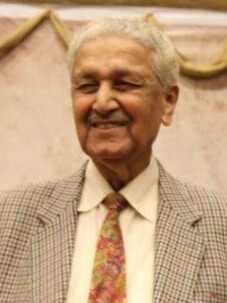
Named in “The A.Q. Khan Nuclear Proliferation Network”.
Named in “The A.Q. Khan Nuclear Proliferation Network”.
Read more dossiers like this
Get a quiet one-line bulletin when new investigative files are published. Bound to this dossier — useful for tracking follow-ups.