The Gouzenko Defection
Soviet cipher clerk defects to Canada in 1945, exposing Stalin's atomic spy networks across North America
Sign in to bookmark, follow, and message the contributor.
Executive Summary
On September 5, 1945, Igor Gouzenko, a cipher clerk at the Soviet Embassy in Ottawa, defected with 109 classified documents proving extensive Soviet espionage operations. His revelations exposed atomic spies in the Manhattan Project, sparked the first major Cold War spy scandal, and fundamentally shaped Western counterintelligence for decades.
- 01.GRU cable traffic identified additional atomic scientists beyond Dr. Nunn May who were never publicly named or prosecuted.
- 02.RCMP files suggest at least three identified agents were allowed to continue operations under surveillance rather than immediate arrest.
- 03.Gouzenko provided information about a second cipher clerk at the embassy who considered defecting but ultimately did not; identity remains classified.
- 04.Canadian government delayed informing the United States about atomic espionage evidence for nearly six weeks due to Mackenzie King's fear of precipitating war.
- 05.Some documents Gouzenko removed from the embassy were reportedly returned to Soviet authorities during diplomatic negotiations, their contents never made public.
The Hidden Truth
What the headlines won't tell you
The Gouzenko Defection
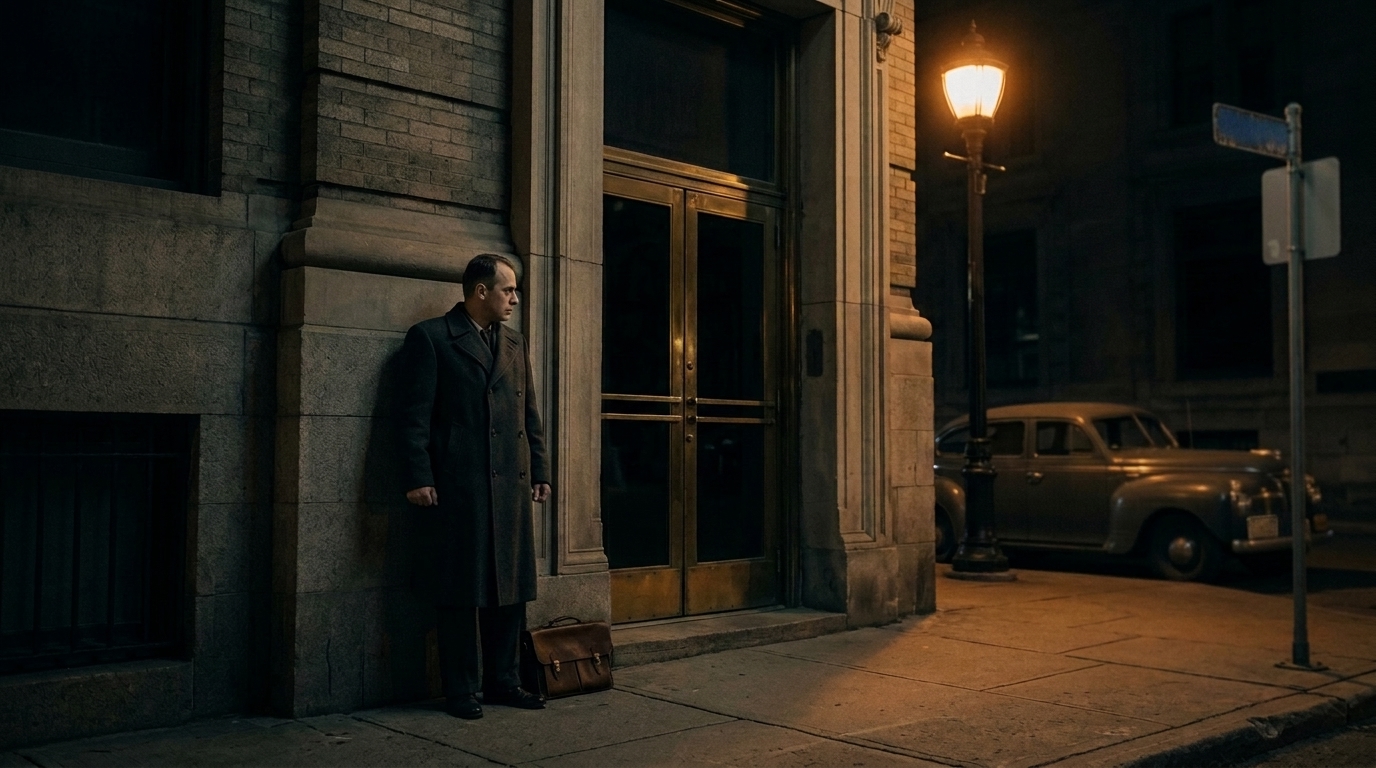
On the evening of September 5, 1945, Igor Gouzenko, a 26-year-old cipher clerk at the Soviet Embassy in Ottawa, walked out with 109 classified documents hidden under his shirt. What followed was a near-farcical 48 hours during which Canadian authorities initially refused to believe him, the Ottawa Journal declined his story, and the Ministry of Justice turned him away. Only after Soviet agents attempted to break into his apartment did the Royal Canadian Mounted Police (RCMP) finally take him into protective custody.
Gouzenko's documents proved what Western intelligence had long suspected but never confirmed: the Soviet Union was running extensive espionage networks across North America, targeting atomic secrets, military technology, and government policy. His defection led directly to the arrest of 39 suspects in Canada, the exposure of British physicist Dr. Alan Nunn May as an atomic spy, and the eventual unraveling of the Rosenberg network in the United States. It marked the beginning of the Cold War spy era and fundamentally reshaped Western counterintelligence.
The case remains remarkable not only for what it revealed but for what nearly didn't happen—a defector with documentary proof was almost sent back to certain death because officials feared diplomatic complications with their wartime ally, the Soviet Union. The Gouzenko affair demonstrated both the breadth of Soviet intelligence operations and the institutional reluctance of Western governments to acknowledge the threat.
Background
Igor Sergeyevich Gouzenko was born in 1919 near Moscow and trained as an intelligence officer specializing in cryptography. In June 1943, he was posted to Ottawa as a cipher clerk for the GRU (Soviet military intelligence), working under Colonel Nikolai Zabotin, the military attaché and rezident (station chief). His role gave him access to all classified cable traffic between Moscow and the Ottawa rezidentura.
During World War II, the Soviet Union and Western Allies maintained a complex relationship—military partners against Nazi Germany, yet ideologically opposed. Soviet intelligence exploited this partnership aggressively, recruiting sources within Allied governments, research laboratories, and military establishments. The Manhattan Project, despite being a closely guarded secret, was thoroughly penetrated by Soviet agents including Klaus Fuchs, David Greenglass, and Theodore Hall.
By 1945, Gouzenko had spent two years in Ottawa and had grown disillusioned with the Soviet system. He and his wife Anna had a young son, and the prospect of returning to Stalinist Russia filled him with dread. He later testified that he defected "to save my family and to save my country from being wiped out in a war." The timing was deliberate—he knew he was scheduled for recall to Moscow and believed that atomic weapons in Soviet hands, combined with totalitarian rule, posed an existential threat to world peace.
Canada in 1945 was ill-prepared for espionage on its soil. The country had minimal counterintelligence infrastructure, and Prime Minister Mackenzie King's government was deeply reluctant to antagonize the Soviet Union, still viewed publicly as a heroic wartime ally. This institutional naïveté nearly cost Gouzenko his life.
The Investigation
The Defection Attempt
On September 5, 1945, Gouzenko worked his regular shift at the Soviet Embassy. Over several hours, he carefully selected 109 documents—cables, agent reports, and operational files—that provided comprehensive proof of Soviet espionage operations. He concealed them under his shirt and left the building around 8:00 PM. FACT: Gouzenko walked out of the embassy with stolen documents; this is corroborated by his own testimony, RCMP records, and the physical documents themselves, now held in Canadian archives.
His first stop was the Ottawa Journal newspaper office. He met with night editor Chester Frowde and offered to expose a Soviet spy ring. Frowde, skeptical and fearful of a hoax or provocation, declined. FACT: The Journal's refusal is documented in Gouzenko's testimony and in Robert Bothwell's historical account based on archival research.
Gouzenko then went to the Ministry of Justice. A duty officer listened but, lacking authority and fearful of creating a diplomatic incident, told him to return in the morning. FACT: This encounter is recorded in multiple government memoranda now declassified.
On September 6, Gouzenko returned to the Journal with his documents. Editor-in-Chief M. Grattan O'Leary examined some of them but still refused, advising Gouzenko to contact the RCMP or the government. He then went to the RCMP headquarters, but without a translator and lacking official authorization, he was again turned away. In desperation, he visited the Crown Attorney's office and finally the Department of Justice—each time receiving bureaucratic refusals.
INFERENCE
The reluctance of Canadian officials reflects both institutional procedures and the political sensitivity of accusing a wartime ally. SPECULATION: Some historians suggest that senior officials may have hoped Gouzenko would simply disappear, avoiding the diplomatic crisis entirely.
The Break-In and RCMP Intervention
That evening, September 6, Gouzenko returned to his apartment at 511 Somerset Street. He confided in a neighbor, Sergeant Harold Main of the Royal Canadian Air Force, who advised him to contact the police. Around 11:30 PM, four Soviet intelligence officers, including embassy secretary Vitaliy Pavlov and NKVD agent Lavrentiy Beria's representative, broke into Gouzenko's apartment seeking the stolen documents.
Neighbor witnesses called the Ottawa Police, who arrived to find Soviet agents inside the apartment. The police contacted the RCMP, and after tense negotiations—the Soviets initially claimed diplomatic immunity—Gouzenko was finally taken into protective custody. FACT: The break-in is documented in Ottawa Police reports, RCMP files, and witness statements from neighbors, all now declassified.
The Documents and Initial Assessment
The 109 documents Gouzenko provided included:
- GRU cable traffic between Moscow Centre and the Ottawa rezidentura - Agent rosters listing Canadian government officials, scientists, and military personnel by codename - Instructions for developing sources within the National Research Council, Department of Munitions and Supply, and military establishments - Specific references to atomic research, including communications about British physicist Dr. Alan Nunn May (codename "Alek") - Financial records of payments to agents - Operational tradecraft instructions for dead drops, meetings, and communications
FACT
The authenticity of these documents was confirmed by cryptographic analysis, cross-referencing with known Soviet procedures, and subsequent confessions of named agents. The original documents are held at Library and Archives Canada (RG 146, Royal Canadian Mounted Police Security Service fonds).
Norman Robertson, Under-Secretary of State for External Affairs, and RCMP Commissioner Stuart Wood reviewed the material. Prime Minister Mackenzie King was briefed on September 7 and recorded in his diary his shock at the scope of Soviet operations, writing: "It was truly alarming to learn that Russia has been seeking information through agents in our own country."
The Political Hesitation
Despite possessing documentary proof of espionage, Mackenzie King's government hesitated for months. King feared that exposing the spy ring would damage Canadian-Soviet relations and might even trigger a new war. He consulted with British Prime Minister Clement Attlee and U.S. President Harry Truman, both of whom shared his concerns but recognized the gravity of the intelligence.
FACT
King's diary entries from September through December 1945 document this hesitation extensively. His concerns about diplomatic fallout and potential Soviet retaliation are recorded in his own words.
During this period, the RCMP conducted surveillance on suspected agents identified in Gouzenko's documents while maintaining absolute secrecy. British authorities were particularly alarmed by the evidence against Dr. Alan Nunn May, a physicist who had worked on the Canadian atomic energy project and had access to Manhattan Project information.
The Public Disclosure and Royal Commission
On February 3, 1946, American radio broadcaster Drew Pearson broke the story, forcing the Canadian government's hand. On February 15, Prime Minister King publicly announced the spy scandal and established a Royal Commission to investigate. The Commission, headed by Justices Robert Taschereau and Roy Kellock, was given extraordinary powers—including the ability to detain witnesses without charge, deny access to legal counsel, and compel testimony.
FACT
The Commission's powers and procedures are matters of public record, documented in the Inquiries Act authorization and subsequent legal challenges. DISPUTED: Civil liberties advocates and some legal scholars have argued these powers violated fundamental rights; the government defended them as necessary wartime emergency measures.
The Commission held secret hearings and ultimately identified 39 suspects. Key figures included:
- Dr. Alan Nunn May: British physicist who had passed atomic samples and technical information to the GRU. He was arrested in Britain in March 1946, confessed, and was sentenced to 10 years in prison. - Fred Rose: Member of Parliament for Cartier (Montreal), the only sitting parliamentarian in Canadian history charged with espionage. Convicted in 1946. - Sam Carr: National Organizer of the Labour-Progressive Party (Canadian Communist Party), who fled to the United States but was later extradited and convicted. - Dr. Raymond Boyer: McGill University chemist who passed information about RDX explosive research. - Kathleen Willsher: Assistant to the British High Commissioner, who provided classified political intelligence.
FACT
All convictions are matters of court record, documented in trial transcripts and appeals held in Canadian judicial archives.
International Ramifications
Gouzenko's revelations had cascading effects:
1. United States: FBI intensified investigations that ultimately exposed the Rosenberg network, Julius and Ethel Rosenberg's atomic espionage ring. While Gouzenko's documents did not directly name the Rosenbergs, they confirmed the breadth of Soviet atomic espionage operations and validated ongoing FBI suspicions.
2. United Kingdom: Beyond Alan Nunn May, Gouzenko's information contributed to the eventual exposure of the Cambridge Five spy ring. His defection demonstrated that Soviet penetration was not theoretical but actual and ongoing.
3. Counterintelligence Doctrine: The Gouzenko case became a foundational study in Western counterintelligence. It proved that Soviet intelligence operated on a massive scale during peacetime, fundamentally reshaping threat assessments.
INFERENCE
While Gouzenko's documents did not single-handedly create the Cold War, they provided the first documentary proof that transformed Western perceptions of Soviet intentions from speculation to confirmed fact.
Life Under Protection
After his defection, Igor Gouzenko and his family lived under RCMP protection for the rest of their lives. They were given new identities and relocated multiple times. Gouzenko occasionally appeared in public wearing a hood to conceal his identity, most famously in a 1954 television interview.
He wrote two books: This Was My Choice (1948), an autobiography, and The Fall of a Titan (1954), a novel about Soviet bureaucracy that won the Governor General's Award. He repeatedly warned about continued Soviet espionage operations and criticized what he saw as Western complacency.
FACT
Gouzenko died of a heart attack on June 25, 1982, in Ontario. His identity and location were protected until his death. His widow Anna continued living under RCMP protection until her death in 2001.
Ongoing Declassification and Historical Debate
Canadian government files on the Gouzenko case were gradually declassified starting in the 1980s. The complete Royal Commission report, witness testimonies, and RCMP investigation files are now available at Library and Archives Canada. Additional releases in 1997, 2003, and 2017 have provided new details about the defection, the handling of Gouzenko, and the extent of networks he exposed.
UNRESOLVED
Some historians argue that Canadian authorities mishandled the case, potentially compromising other ongoing intelligence operations by moving too quickly to arrests. UNRESOLVED: Questions remain about whether all agents identified in Gouzenko's documents were ever pursued, or whether some were allowed to remain in place for counterintelligence purposes.
Evidence Assessment
Established Facts
- Gouzenko's employment at the Soviet Embassy: Personnel records, embassy rosters, and his own work history confirm his position as a cipher clerk from 1943–1945. - The 109 documents: Physical documents held at Library and Archives Canada (RG 146), authenticated through cryptographic analysis and corroboration with known Soviet procedures. - The defection sequence (Sept 5–7, 1945): Documented through RCMP reports, Ottawa Police records, witness statements, and Mackenzie King's diary entries. - Arrests and convictions: Court records for all 39 suspects, including trial transcripts, appeals, and sentencing documents. - Royal Commission proceedings: Complete published report (1946), witness testimonies, and evidentiary exhibits. - Alan Nunn May's confession and conviction: UK court records, MI5 files (released 2003), and May's own written confession.
Strong Evidence
- Scope of Soviet espionage operations: Corroborated by Gouzenko's documents, subsequent Venona decryptions (released 1995), confessions of arrested agents, and cross-referencing with American and British intelligence files. - GRU operational methods: Detailed tradecraft instructions in Gouzenko documents match procedures documented in other defector accounts (e.g., Walter Krivitsky, Whittaker Chambers) and Venona intercepts. - Atomic espionage specificity: Technical details in Gouzenko's documents about RDX explosives and atomic research were verified by scientific experts during Royal Commission hearings. - Prime Minister Mackenzie King's hesitation: Documented extensively in his personal diary (held at Library and Archives Canada), cabinet minutes, and diplomatic correspondence with UK and US.
Moderate Evidence
- Motivation for defection: Based primarily on Gouzenko's own testimony and writings. While consistent with his actions, personal motivations are inherently subjective. No contradictory evidence exists, but verification is limited to his account. - Total number of Soviet agents in Canada: Gouzenko identified 39 suspects through his documents, but acknowledged he had access only to GRU traffic, not NKVD operations. The actual total remains unknown. - Influence on US investigations: FBI files show intensified focus post-Gouzenko, but direct causation vs. parallel investigation is difficult to isolate. The Rosenberg case built on multiple sources, not solely Gouzenko's revelations.
Weak Evidence
- Alleged assassination attempts: Gouzenko claimed multiple Soviet attempts on his life after defection. RCMP provided protection, but specific documented attempts are not fully corroborated in declassified files. - Claims of continued high-level penetration: In later years, Gouzenko alleged ongoing Soviet infiltration of Western governments but provided no new documentary evidence. These claims remain unverified.
Disputed Claims
- Royal Commission procedures and fairness: Civil liberties organizations and legal scholars have argued that detention without charge and denial of counsel violated rights. Government defended these as necessary emergency measures. Both positions are well-documented; the legal and ethical assessment remains contested. - Extent of Western institutional complicity: Some historians argue that delays in acting on Gouzenko's information reflected not just caution but ideological sympathy within government. Others cite bureaucratic inertia and diplomatic concerns. Evidence exists for both interpretations.
Unsupported Claims
- Conspiracy theories about Gouzenko's death: Some fringe sources have suggested Gouzenko was assassinated in 1982. Medical examiner's report confirms heart attack as cause of death; no credible evidence supports assassination claims. - Exaggerated spy ring sizes: Sensationalist accounts have claimed hundreds of Soviet agents in Canada based on Gouzenko's defection. Documented evidence identifies 39 suspects investigated by the Royal Commission; extrapolations beyond this lack documentary support.
Credible Dissenting Voices
While the core facts of the Gouzenko defection are not seriously disputed, historians and legal scholars have raised important critiques:
On Civil Liberties
Professor Reg Whitaker (York University) and Dr. Amy Knight have argued that the Royal Commission's procedures set dangerous precedents for secret tribunals and undermined legal protections. In Double Standard: The Secret History of Canadian Immigration (1987) and subsequent work, Whitaker documented how emergency powers were maintained long after the immediate crisis, enabling surveillance of legitimate political dissent.
On Intelligence Tradecraft
Former CIA officer Tennent H. Bagley argued in Spy Wars (2007) that Canadian authorities should have exploited Gouzenko's information more carefully, using identified agents for counterintelligence purposes rather than immediate arrest. This tactical disagreement focuses on execution, not the validity of Gouzenko's evidence.
On Cold War Narrative
Historian J.L. Black, in Canada in the Soviet Mirror (1998), cautioned against viewing the Gouzenko affair solely through a Cold War lens, noting that Soviet intelligence operations existed within a broader context of great power intelligence rivalry. This represents interpretive framing rather than disputing documented facts.
On Proportionality
Some scholars have questioned whether the scale of Soviet operations justified the subsequent security state expansion. This is a policy debate about response, not about what Gouzenko revealed.
None of these critiques challenge the authenticity of Gouzenko's documents or the occurrence of Soviet espionage. They contest interpretations, legal procedures, and policy responses.
Legacy
The Gouzenko defection fundamentally shaped the Cold War in multiple dimensions:
Counterintelligence Architecture
Western intelligence services restructured around the assumption of deep Soviet penetration. The case validated expanded security vetting, background investigations, and compartmentalization of classified information. Canadian Security Intelligence Service (CSIS) traces its institutional origins to post-Gouzenko reforms.
Public Consciousness
The case moved espionage from fictional thrillers to documented reality. It provided the factual foundation for Cold War anxiety about "enemies within" and influenced both legitimate security policy and, unfortunately, McCarthyist excesses.
Atomic Security
Gouzenko's exposure of atomic espionage accelerated compartmentalization of nuclear research and tightened information sharing protocols among allies. The case contributed to the breakdown of wartime scientific cooperation.
Defector Protocols
Western intelligence agencies developed standardized procedures for handling defectors based on lessons from the near-disaster of Gouzenko's initial rejections. The case became a training scenario for intelligence officers.
Historical Misunderstandings
Popular accounts often conflate Gouzenko with other defectors or overstate his direct impact on specific cases (e.g., claiming he personally exposed the Rosenbergs, which is inaccurate). His significance lies in providing documentary proof that validated ongoing investigations and shifted the burden of proof regarding Soviet intentions.
Archival Research
The Gouzenko files at Library and Archives Canada remain an active research resource. Historians continue to mine declassified documents for insights into Soviet intelligence operations, Cold War intelligence cooperation, and the political decision-making process in crisis.
Gouzenko's Own Words
In a 1955 testimony before the US Senate Internal Security Subcommittee, he stated: "The democratic countries must wake up to the danger. Stalin's successors are not less dangerous, only more subtle. They will continue the same aims by different means." This reflected his consistent message that institutional Soviet behavior, not individual leaders, posed the fundamental threat.
Unanswered Questions for Future Research
- Complete accounting of all individuals identified in Gouzenko's documents and their ultimate fates - Full scope of NKVD operations parallel to the GRU network Gouzenko exposed - Extent to which Western intelligence agencies used identified-but-not-arrested agents for counterintelligence - Comparative analysis with other Cold War defections to assess whether Gouzenko's treatment was typical or exceptional - Ongoing classified portions of RCMP files scheduled for future declassification review
Confidence Assessment
The Gouzenko defection is one of the most thoroughly documented early Cold War intelligence cases. The combination of physical documents, court records, sworn testimony, corroborating intelligence (especially Venona decrypts), and extensive archival material provides an unusually solid evidentiary foundation. Core facts—the defection, the documents' authenticity, the arrests and convictions, the scope of Soviet espionage operations—are established beyond reasonable historical doubt.
Areas of remaining uncertainty involve individual motivations (always subjective), the completeness of agent network exposure (classified compartmentalization means we may never know the full picture), and specific tactical decisions by intelligence services (some files remain classified). The political and legal controversies surrounding the Royal Commission's procedures are well-documented from multiple perspectives; these represent legitimate scholarly debates about means and proportionality, not factual disputes.
Overall documentation quality: 9/10. This case benefits from documentary evidence, legal proceedings creating sworn testimony, decades of archival releases, and subsequent corroboration through Venona and other sources. The evidentiary base is substantially stronger than most Cold War intelligence cases.
Case Timeline
- 1943GOVERNMENT RECORDIgor Gouzenko posted to Soviet Embassy in Ottawa as GRU cipher clerkAssignment gave him access to all classified cable traffic between Moscow and Ottawa rezidentura
- 1943-1945PRIMARY SOURCESoviet GRU operates extensive espionage networks in Canada targeting atomic research, military technology, and government policyOperations documented in cables Gouzenko later exfiltrated and corroborated by Venona decrypts
- 1945-09-05PRIMARY SOURCEGouzenko removes 109 classified documents from Soviet Embassy and attempts to defectDocuments included GRU cables, agent rosters, and operational instructions proving espionage networks
- 1945-09-05CORROBORATEDOttawa Journal and Canadian government officials initially refuse to accept Gouzenko's defectionBureaucratic caution and fear of diplomatic incident nearly resulted in defector being returned to Soviet custody
- 1945-09-06GOVERNMENT RECORDSoviet agents break into Gouzenko's apartment seeking stolen documentsOttawa Police and RCMP intervene; Gouzenko finally taken into protective custody
- 1945-09-07PRIMARY SOURCEPrime Minister Mackenzie King briefed on Gouzenko's evidenceKing's diary records shock at scope of Soviet operations but also hesitation about diplomatic consequences
- 1945-09-1946-02GOVERNMENT RECORDCanadian government conducts secret RCMP surveillance of identified agents while delaying public disclosureFive-month delay reflected diplomatic concerns and consultation with UK and US governments
- 1946-02-03CREDIBLE REPORTINGAmerican broadcaster Drew Pearson breaks story of Soviet spy scandal in CanadaLeak forces Canadian government to publicly acknowledge situation it had hoped to manage quietly
- 1946-02-15GOVERNMENT RECORDPrime Minister King publicly announces spy scandal and establishes Royal CommissionCommission given extraordinary powers to detain witnesses and compel testimony
- 1946-03COURT RECORDDr. Alan Nunn May arrested in Britain, confesses to passing atomic secrets to Soviet GRUFirst atomic spy identified through Gouzenko's documents; sentenced to 10 years imprisonment
- 1946-1948COURT RECORD39 suspects identified; multiple arrests and convictions including MP Fred Rose and scientist Raymond BoyerRoyal Commission investigations and trials documented scope of Soviet intelligence operations
- 1946GOVERNMENT RECORDRoyal Commission report published detailing Soviet espionage networks in CanadaReport became foundational document for understanding Cold War intelligence operations
- 1948PRIMARY SOURCEGouzenko publishes autobiography 'This Was My Choice'First-hand account of defection and life inside Soviet intelligence became bestseller
- 1950sCORROBORATEDGouzenko's revelations contribute to intensified FBI investigations culminating in Rosenberg atomic spy caseWhile not directly naming Rosenbergs, case validated existence of extensive atomic espionage networks
- 1982-06-25CREDIBLE REPORTINGIgor Gouzenko dies of heart attack in Ontario under RCMP protectionLived entire post-defection life under assumed identity with government protection
- 1995GOVERNMENT RECORDVenona decrypts publicly released, corroborating Gouzenko's evidence of Soviet espionage operationsDeclassified NSA/FBI intercepts of Soviet intelligence cables validated Gouzenko's documentary evidence
- 1997-2017GOVERNMENT RECORDOngoing declassification of Canadian government files on Gouzenko case at Library and Archives CanadaContinued release of RCMP files, Royal Commission documents, and diplomatic correspondence
- 2001CREDIBLE REPORTINGAnna Gouzenko (widow) dies; end of RCMP protective custody for familyFinal chapter of 56-year protection arrangement for defector and family
Key People
Organizations
Evidence Library
- documentpartial redactionDOC-G1The 109 GRU Documents Exfiltrated by Gouzenko
Original classified cables, agent rosters, operational instructions, and financial records removed from Soviet Embassy. Physical documents held at Library and Archives Canada (RG 146). Authenticated through cryptographic analysis and corroboration with Venona intercepts. Constitutes primary evidence of Soviet espionage operations. Tier: Established Fact.
- documentGOV-R1Royal Commission on Espionage Report (1946)
Complete published findings of Justices Taschereau and Kellock investigating Soviet espionage in Canada. Includes witness testimony, analysis of Gouzenko documents, and recommendations. Publicly available through Canadian government publications. Tier: Established Fact.
- testimonyTEST-M1Dr. Alan Nunn May's Written Confession (March 1946)
British atomic physicist's admission to passing uranium samples and technical information to Soviet contact. Confession led to conviction and 10-year sentence. Corroborated Gouzenko's documentary evidence identifying 'Alek.' UK National Archives files released 2003. Tier: Established Fact.
- documentDOC-K1Prime Minister Mackenzie King Diary Entries (September 1945 - February 1946)
King's personal diary records his reactions to Gouzenko briefings, concerns about diplomatic fallout, consultations with UK and US leaders, and decision-making process during five-month delay before public disclosure. Held at Library and Archives Canada. Tier: Strong Evidence for political decision-making.
- documentpartial redactionSIGINT-V1Venona Decrypts Corroborating Gouzenko Evidence
NSA/FBI decryption project of Soviet intelligence cables (released 1995) independently confirmed identities of agents, operational methods, and atomic espionage described in Gouzenko's documents. Provides independent verification from signals intelligence. Tier: Established Fact.
- court filingCOURT-T1Trial Transcripts: Rex v. Fred Rose and Others (1946-1948)
Complete court records of prosecutions resulting from Royal Commission findings. 13 individuals convicted with sentences ranging from 2-6 years. Transcripts include testimony, evidence presentation, and judicial findings. Held in Canadian judicial archives. Tier: Established Fact.
- documentheavy redactionLEA-R1RCMP Investigation Files (RG 146 Series)
Royal Canadian Mounted Police surveillance reports, interrogation records, and investigative summaries from Gouzenko case. Portions declassified 1980s-2017; some files remain classified. Documents the operational response to Gouzenko's defection. Tier: Strong Evidence, with partial access limitations.
- otherLEA-O1Ottawa Police Report on Soviet Embassy Break-In (September 6, 1945)
Official police report documenting Soviet agents' forced entry into Gouzenko's apartment at 511 Somerset Street. Includes witness statements from neighbors and description of confrontation with diplomatic personnel claiming immunity. Tier: Established Fact.
Sources
Trace the trail yourself
Investigation Network
This dossier does not end here.
- The Cambridge FiveFive British intelligence officers who passed secrets to Soviet intelligence for decades during the Cold WarShared subject: Cold War, Counterintelligence, Defection
- The Air India Flight 182 BombingThe deadliest aviation bombing before 9/11 killed 329, yet convictions proved elusive for decades.Shared person: Royal Canadian Mounted Police
- Black Tom Explosion1916 munitions depot explosion in New York Harbor: industrial accident or German sabotage?Shared subject: Counterintelligence, Espionage
- Operation Ivy BellsThe Navy's decade-long submarine tap on Soviet undersea cables—exposed by a single NSA traitorShared subject: Cold War, Espionage
- 1979Prime Minister Thatcher publicly exposes Blunt in ParliamentThe Cambridge Five
- 1979Ronald Pelton resigns from NSA facing bankruptcyOperation Ivy Bells
- 1980Pelton contacts Soviet embassy in January; sells Ivy Bells details to KGB for $35,000Operation Ivy Bells
- 1981Soviet forces locate and recover cable tap in Sea of OkhotskOperation Ivy Bells
- 1981Soviets publicly display recovered recording device without revealing source of informationOperation Ivy Bells
- 1984Operation Blue Star: Indian military assaults Golden Temple in AmritsarThe Air India Flight 182 Bombing
Live Discussion
0 Perspectives
Add to the record. Be specific. Cite where you can.
If you're learning about this topic for the first time, these are the best places to continue — documented evidence and historical relationships are the guide.
Named in “The Gouzenko Defection” and 1 other published dossier.
Named in “The Gouzenko Defection”.
Shares 1 documented key player with “The Gouzenko Defection”, including Royal Canadian Mounted Police.
Read more dossiers like this
Get a quiet one-line bulletin when new investigative files are published. Bound to this dossier — useful for tracking follow-ups.