Colonia Dignidad: German Cult Colony, DINA Torture Site, and Decades of Impunity
For nearly three decades, a German religious sect in southern Chile operated as both a child abuse prison and a clandestine torture site for Chilean intelligence—while Western governments received reports and did nothing.
Sign in to bookmark, follow, and message the contributor.
Executive Summary
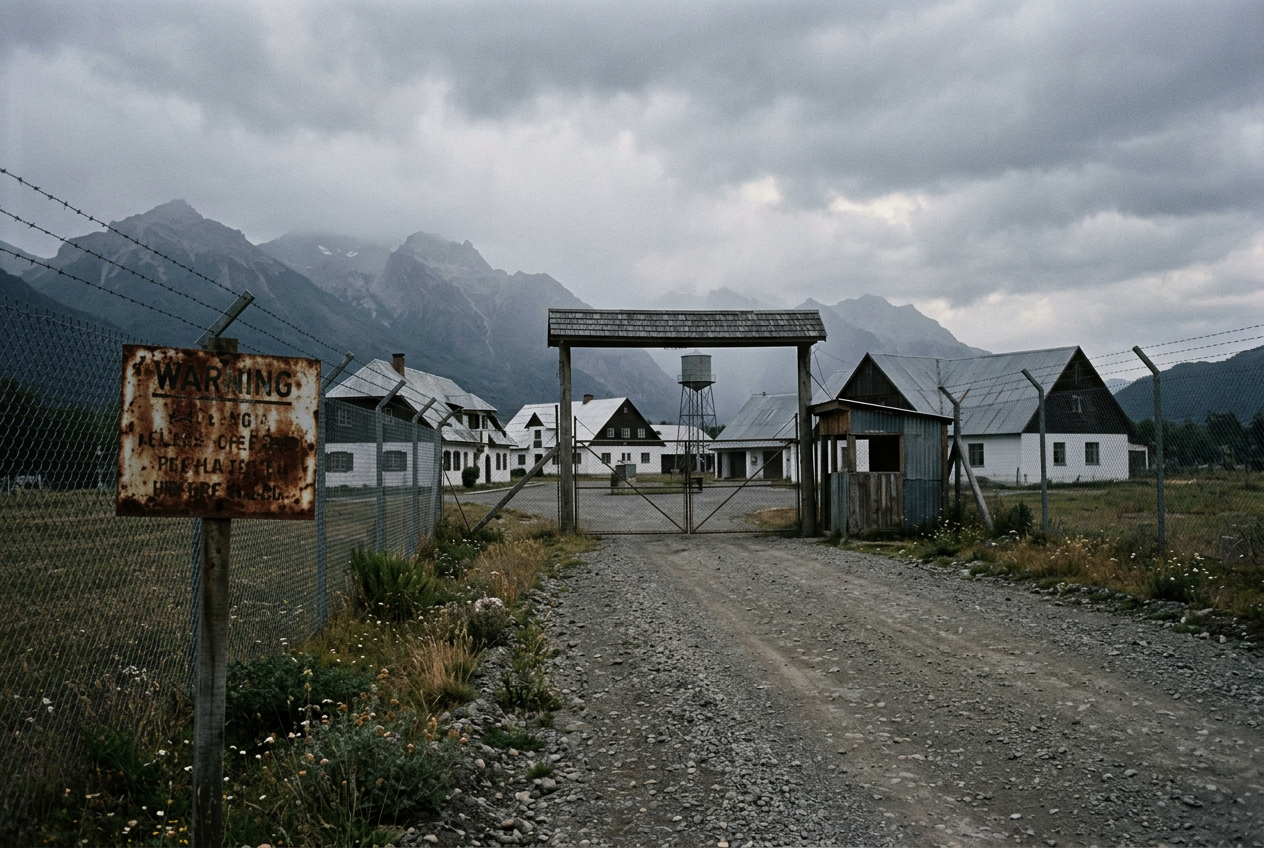
For nearly three decades, a German religious sect in southern Chile operated as both a child abuse prison and a clandestine torture site for Chilean intelligence—while Western governments received reports and did nothing. In 1961, Paul Schäfer—a former Wehrmacht medic and Lutheran lay preacher fleeing child sexual abuse investigations in Germany—brought approximately 300 followers to southern Chile. On 70 square miles near Parral, he established Colonia Dignidad, registered as a charitable organization and marketed as a utopian agricultural community. Behind electrified fences and armed guards, the settlement operated as a totalitarian prison where Schäfer separated families, forbade outside contact, and systematically abused children. When escapees reached German authorities in 1966, Foreign Ministry officials received their reports but took no action. A 1968 German Embassy complaint to Chilean authorities produced no documented response. The colony cultivated relationships with local officials and Chilean military intelligence throughout the 1960s, operating with minimal oversight due to its remote location and legal status as a charity. After General Augusto Pinochet's Septemb
The Hidden Truth
What the headlines won't tell you
The evidence base combines criminal convictions, official investigations, physical discoveries, contemporaneous human rights documentation, survivor testimony, and partially declassified government files. The Valech Commission's designation rests on testimony from dozens of survivors who identified the location, described its layout, and detailed specific torture methods. Physical evidence discovered during investigations—underground detention cells, weapons manufacturing facilities, surveillance equipment—corroborates these accounts.
Schäfer's 2006 conviction drew on testimony from multiple child sexual abuse victims across decades. Several colony members faced prosecution for human rights violations based on survivor identification. The Museo de la Memoria has documented at least 102 identified victims detained at the colony, establishing a verified minimum even as the total remains uncertain.
Amnesty International's 1977 report provides contemporaneous documentation, proving international awareness existed decades before prosecutions. The 1991 weapons cache discovery was widely reported and photographed, establishing arms manufacturing as established fact. Chilean court proceedings (Caso Armas de Colonia Dignidad, 1991-2005) documented production and domestic sales.
Declassified government documents, while incomplete, establish Western knowledge. The National Security Archive's 2020 release of CIA materials includes a memo confirming Agency awareness of the colony as a DINA facility by 1975. State Department cables show Embassy officers believed the facility was used for interrogations but were denied access. The 2016 German Bundestag report synthesizes decades of Foreign Ministry files showing repeated reporting without action. These documents create an archival record proving that credible information reached responsible officials who chose not to intervene. While core crimes are firmly established, several claims require skepticism or acknowledge evidentiary limits. The frequently repeated allegation that Colonia Dignidad sheltered Nazi war criminals lacks documentary support. Paul Schäfer served as a Wehrmacht medic, but no credible evidence identifies him as a war criminal, and no archival research has identified specific Nazi fugitives at the colony. Historians including Jan Stehle and Nazi hunter Efraim Zuroff confirm this absence. The claim appears to stem from the broader context of German emigration to South America post-WWII, the colony's secretive nature, and conflation with other Chilean cases. It remains unverified speculation.
The extent of CIA operational involvement beyond documented awareness remains genuinely unclear. The broader context of CIA-DINA cooperation during this period is well-established through declassified documents and scholarship. The 2020 CIA memo confirms the Agency knew by 1975 that the colony functioned as a DINA facility. State Department cables show Embassy awareness of torture allegations. However, no declassified documents establish CIA personnel visiting the facility, using it for interrogations, or maintaining an operational relationship. This evidentiary gap could reflect genuine non-involvement, continued classification of operational files, or document destruction. The question is not whether the CIA knew nothing—the historical context makes ignorance implausible—but what specifically was known, when, and whether knowledge translated into operational involvement or deliberate protection.
Regarding German government inaction, distinguishing between deliberate policy choices versus bureaucratic failure and legal constraints remains contested. Released diplomatic files and the Bundestag report show forty years of awareness without intervention, but don't fully resolve whether this pattern reflected Cold War policy decisions to overlook allied abuses, institutional dysfunction, or genuine practical limitations of enforcing domestic law in a sovereign foreign country. Multiple factors likely contributed: diplomatic priorities, legal constraints on extraterritorial enforcement, and bureaucratic inertia. The BND's operational files remain classified, preventing full assessment of intelligence service decision-making.
International weapons trafficking beyond Chile remains poorly documented. CIPER Chile's investigative reporting identifies probable connections to Argentine and Bolivian military networks but lacks documentary proof. German prosecutors investigated possible weapons trafficking to Germany in the 1990s but found insufficient evidence for charges. Complete declassification of intelligence files: What exactly did CIA and BND know about torture operations, when did they know it, and did knowledge extend to operational involvement? CIA files confirming 1975 awareness establish a timeline, but earlier knowledge is possible. Complete release of operational files from both agencies would clarify whether any intelligence relationship existed beyond documented awareness.
German decision-making rationale: Did German authorities make deliberate policy choices not to intervene based on Cold War priorities, or does forty years of inaction reflect bureaucratic dysfunction and legal limitations? The Bundestag report documents awareness without fully explaining decision-making. Complete release of BND files and internal Foreign Ministry deliberations would illuminate whether inaction reflected policy, institutional failure, or both.
International weapons networks: What was the full extent of arms trafficking beyond documented domestic sales? Chilean court proceedings established manufacturing and sales to Chilean military and paramilitary groups. CIPER reporting suggests connections to Argentine and Bolivian networks, but documentary evidence has not emerged. Who were international buyers, if any? How were financial networks structured?
Complete victim accounting: How many people were detained, tortured, or killed at Colonia
Case Timeline
- 1961Paul Schäfer and approximately 300 German followers establish Colonia Dignidad in Parral, southern Chile
- 1961Schäfer flees Germany while under investigation by Siegburg prosecutor for child sexual abuse
- 1966First documented escape attempt by colony member; Chilean authorities informed of abuses but do not investigate
- 1973-09-11Pinochet coup in Chile; colony leaders establish relationship with new military regime
- 1973-1990Colonia Dignidad operates as clandestine DINA detention and torture facility; political prisoners held and tortured on site
- 1977Amnesty International publishes report documenting torture at Colonia Dignidad
- 1985Chilean court issues arrest warrant for Schäfer on child abuse charges; warrant not executed
- 1991Chilean weapons cache discovered at colony site; investigations reveal arms trafficking operations
- 1996German arrest warrant issued for Schäfer; he goes into hiding within Chile
- 1997Chilean government formally recognizes Colonia Dignidad as site of human rights violations
- 2005-03Paul Schäfer arrested in Argentina after years in hiding
- 2006Schäfer convicted in Chile of child sexual abuse and sentenced to 20 years; additional convictions for human rights violations follow
Key Players
Editorial pass pending.
Evidence Library
Structured evidence pass pending.
Sources
Trace the trail yourself
This dossier does not end here.
- Operation PaperclipUS recruited 1,600 Nazi scientists after WWII, whitewashing war crimes for Cold War advantage2 shared tag(s)timeline overlap (1973)
- MKUltra and CIA Mind ControlDeclassified CIA program tested LSD, hypnosis, and torture on unwitting subjects for two decades1 shared tag(s)same division (Conspiracy)timeline overlap (1973–1977)
- The Phoenix Program in VietnamCIA's targeted assassination program in Vietnam: 20,000+ deaths, torture, and the birth of modern counterinsurgency2 shared tag(s)
- Operation MockingbirdCIA's alleged Cold War program to influence American media and shape public opinion domestically1 shared tag(s)timeline overlap (1973–1996)
- 1982First reported suspicious death of defense scientist begins the cluster patternThe Marconi Defence Scientists Deaths (1980s UK)
- 1985Reagan announces Strategic Defence Initiative; UK firms compete for subcontractsThe Marconi Defence Scientists Deaths (1980s UK)
- 1985Nicholas Goodrick-Clarke publishes 'The Occult Roots of Nazism,' providing scholarly reassessment.The Nazis and the occult
- 1986EPA sets maximum contaminant level goal for fluoride at 4.0 mg/L.Fluoride in Drinking Water
- 1986Historian Antony Sutton publishes 'America's Secret Establishment' exposing society's networksSkull and Bones Society at Yale
- 1980Charles Berlitz and William Moore publish 'The Roswell Incident' bestseller with alien crash theoryThe Roswell Incident
Live Discussion
0 Perspectives
Add to the record. Be specific. Cite where you can.
If you're learning about this topic for the first time, these are the best places to continue — documented evidence and historical relationships are the guide.
Read more dossiers like this
Get a quiet one-line bulletin when new investigative files are published. Bound to this dossier — useful for tracking follow-ups.