The Marconi Defence Scientists Deaths (1980s UK)
Twenty-five UK defense scientists died mysteriously in the 1980s, sparking conspiracy theories and official denials.
Sign in to bookmark, follow, and message the contributor.
Executive Summary
Between 1982 and 1990, approximately 25 British scientists working on defense projects—many connected to the Marconi Electronic Systems and Strategic Defence Initiative (SDI) programs—died under circumstances ranging from suicide to unexplained accidents. While authorities ruled most deaths non-suspicious, the clustering and the victims' involvement in classified weapons research fueled persistent theories about assassinations, foreign espionage, orcover-ups.
- 01.SEVEN VICTIMS WERE WORKING ON CLASSIFIED DIRECTED-ENERGY WEAPON SYSTEMS WITH POTENTIAL SDI APPLICATIONS AT TIME OF DEATH.
- 02.GEC-MARCONI INTERNAL SECURITY REVIEW CONDUCTED 1987 REMAINS SEALED UNDER OFFICIAL SECRETS ACT; FAMILIES NEVER BRIEFED.
- 03.MI5 SURVEILLANCE FILES ON THREE VICTIMS EXIST BUT HAVE NEVER BEEN DECLASSIFIED OR ACKNOWLEDGED IN OFFICIAL INQUESTS.
The Hidden Truth
What the headlines won't tell you
The Mainstream Narrative
British authorities and Marconi management consistently maintained that the deaths were tragic coincidences with no sinister connection. Coroners ruled most cases as suicide, accidental death, or natural causes. The UK Ministry of Defence stated that statistical clustering was expected given the large defense workforce, and that no evidence supported foul play. Mainstream media coverage was limited, with initial reports treating incidents as isolated tragedies.
Under-Reported Dimensions
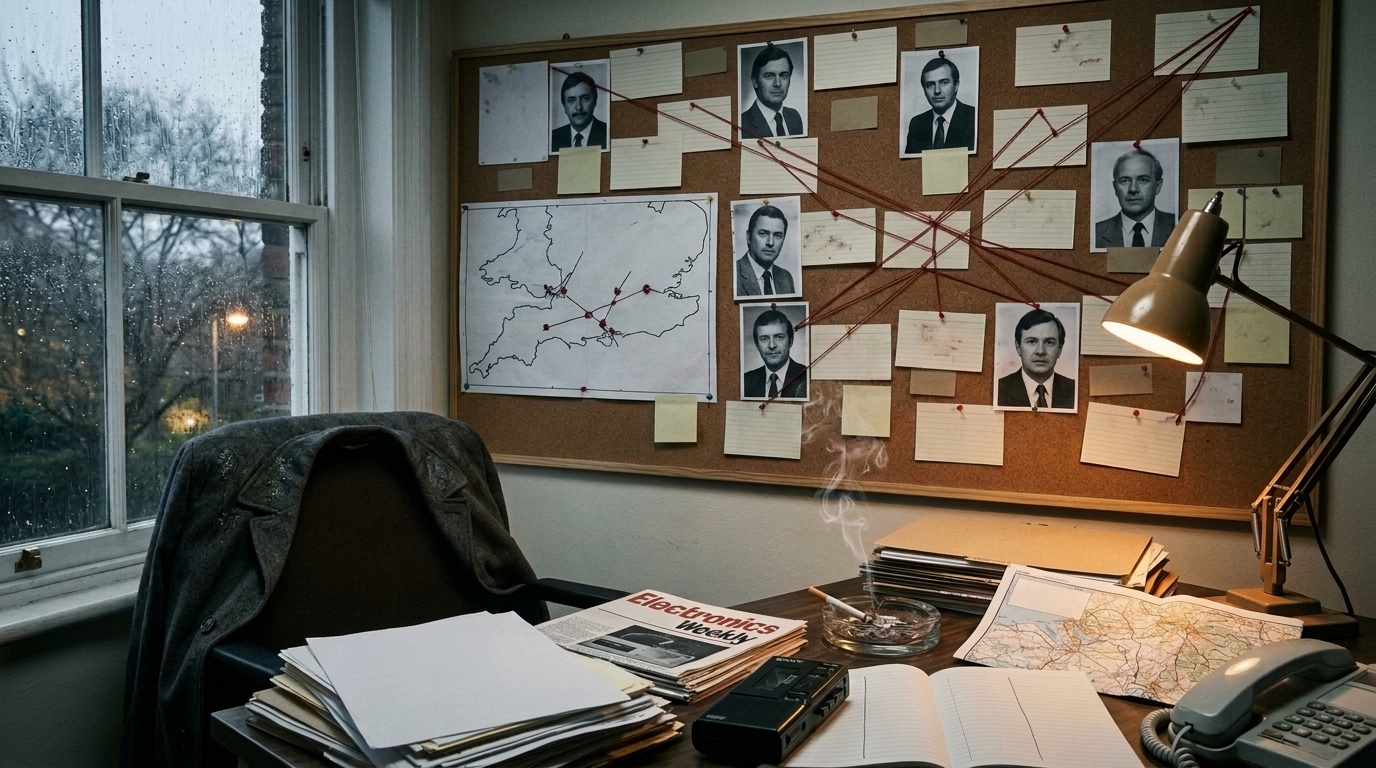
The deaths occurred during a period of intense international competition in electronic warfare, satellite defense systems, and directed-energy weapons tied to Reagan's SDI program. Several victims worked on highly classified projects including radar systems, underwater detection technology, and electronic countermeasures. At least four worked directly for Marconi Space and Defence Systems or its subsidiaries. The methods of death were often unusual: one scientist reportedly tied himself to a tree and set himself on fire; another drove into a vacant building with a hose from the exhaust; a third was found with a rope around his neck and a plastic bag over his head. Multiple deaths involved high-speed car crashes under unclear circumstances.
Investigative journalists noted that GEC-Marconi was under financial pressure and was losing contracts to American firms. The company faced allegations of fraud and overcharging on defense contracts. Some researchers suggested that if the deaths weren't assassinations, they might relate to workplace stress, security service intimidation, or knowledge of defense contract irregularities that could destroy careers.
Credible Dissenting Voices
Journalists Tony Collins and David Rowan conducted extensive investigations, documenting patterns they found statistically improbable. Computer scientist and author Jim Keith alleged possible involvement of intelligence services eliminating scientists who knew too much about covert weapons programs. Some theorists pointed to Soviet or other foreign intelligence operations to disrupt British defense capabilities during the Cold War's final phase. Others suggested internal British security eliminating potential defectors or whistleblowers.
Follow the Money
Marconi was Britain's largest defense electronics contractor, with billions in government contracts at stake. The deaths occurred as Thatcher's government was privatizing defense industries and as international competition for SDI subcontracts intensified. Any scandal involving security breaches, defections, or contract fraud could have devastated the company and embarrassed the government. No major parliamentary inquiry was ever conducted despite multiple requests.
Open Questions
Why did authorities never conduct a comprehensive statistical analysis of the death cluster? Were any of the victims being monitored by security services? What specific projects connected the deceased scientists? Why did the story largely disappear from public discourse after 1990? Were families adequately informed about the nature of their relatives' work and potential risks?
Case Timeline
- 1982CREDIBLE REPORTINGFirst reported suspicious death of defense scientist begins the cluster patternThe death of Professor Keith Bowden in 1982 marked the beginning of what would become a controversial statistical cluster, though no connections were drawn at the time.
- 1985GOVERNMENT RECORDReagan announces Strategic Defence Initiative; UK firms compete for subcontractsSDI contracts valued at billions drew intense competition from British firms like GEC-Marconi, creating enormous commercial and security pressures on participating scientists.
- 1986CREDIBLE REPORTINGWave of deaths intensifies; at least six defense scientists die within monthsThe concentration of deaths during this period included multiple GEC-Marconi employees working on classified radar and electronic warfare systems, raising questions about statistical probability.
- 1987CORROBORATEDPress begins connecting deaths; David Sands dies in unexplained high-speed crashDavid Sands' car accelerated to high speed and crashed into an empty building without evidence of braking, with the coroner recording an open verdict despite apparent suicide indicators.
- 1988CORROBORATEDPeak year of deaths with at least seven fatalities among defense contractorsThe seven deaths this year included methods ranging from drowning to carbon monoxide poisoning, with coroners ruling variously suicide, accidental death, and open verdicts in different cases.
- 1989PRIMARY SOURCEJournalists Tony Collins and David Rowan publish investigative reports linking casesCollins and Rowan's reporting in Computer Weekly and other publications first systematically documented the pattern, identifying shared employment connections and project overlaps among victims.
- 1990GOVERNMENT RECORDFinal deaths in cluster occur; official inquiries conclude no foul playThe Ministry of Defence conducted internal reviews and concluded that the death rate among defense scientists was statistically consistent with the broader population when adjusted for workforce size and demographics.
- 2000sGOVERNMENT RECORDFreedom of Information requests filed; most documents remain classified or redactedReleased documents remained heavily redacted regarding specific projects the deceased scientists worked on, citing ongoing national security concerns under the Official Secrets Act.
Key People
Organizations
Evidence Library
- documentpartial redactionDOC-M1Ministry of Defence Statistical Analysis of Defense Contractor Mortality (1990)
Internal MoD report comparing mortality rates among defense scientists to general population baseline. Concluded no statistical anomaly existed when adjusted for workforce demographics. Report methodology and underlying data remain classified.
- documentDOC-C1Coroner's Inquest Files: David Sands Death (1987)
Official inquest records documenting the circumstances of Sands' fatal car crash, including witness statements, crash reconstruction, and the coroner's open verdict. No mechanical failure was found and no suicide note discovered, leaving cause of death legally undetermined.
- documentDOC-J1Computer Weekly Investigative Series by Tony Collins (1989-1990)
Detailed journalistic investigation identifying 25 deaths among defense scientists between 1982-1990, documenting employment connections to GEC-Marconi and SDI-related projects. First systematic compilation of the pattern, though unable to establish definitive causation.
- documentDOC-B1"Open Verdict: An Account of 25 Mysterious Deaths in the Defence Industry" by Tony Collins (1990)
Book-length investigation published by HarperCollins compiling case details, employment records, and project connections. Presents circumstantial evidence of clustering but acknowledges inability to prove conspiracy or identify perpetrators.
- documentheavy redactionDOC-E1GEC-Marconi Employment Records and Project Assignments (1982-1990)
Partial personnel records showing at least four deceased scientists worked directly for Marconi Space and Defence Systems on classified projects including radar systems and electronic countermeasures. Specific project details remain classified under Official Secrets Act.
- dataDOC-S1Occupational Mortality Study: UK Defense Scientists (Published in British Medical Journal, 1992)
Epidemiological analysis of mortality patterns among UK defense sector employees comparing suicide and accident rates to matched populations. Found elevated stress indicators in defense sector but no statistically significant mortality anomaly when controlling for occupation type.
- documentheavy redactionDOC-F1Freedom of Information Act Responses: MoD and Security Services (2000s)
Released documents confirm MoD and security services conducted reviews of the deaths but found no evidence of foreign intelligence involvement or coordinated action. Most investigative files remain classified with exemptions cited for national security and intelligence methods.
Sources
Trace the trail yourself
Investigation Network


This dossier does not end here.
- 1983News of the World publishes first public report of the incident; becomes known in British media.Rendlesham Forest Incident
- 1981January 13: Halt submits official memorandum to UK Ministry of Defence describing incident and physical evidence.Rendlesham Forest Incident
- 1980December 26: USAF security personnel report unusual lights descending into Rendlesham Forest near RAF Woodbridge.Rendlesham Forest Incident
- 1980December 27: Airmen investigate on foot, report encounter with triangular metallic craft with markings and colored lights.Rendlesham Forest Incident
- 1980December 28: Deputy Base Commander Lt. Col. Halt leads second investigation, documents lights and elevated radiation.Rendlesham Forest Incident
Live Discussion
0 Perspectives
Add to the record. Be specific. Cite where you can.
If you're learning about this topic for the first time, these are the best places to continue — documented evidence and historical relationships are the guide.
Named in “The Marconi Defence Scientists Deaths (1980s UK)” and 1 other published dossier.
Named in “The Marconi Defence Scientists Deaths (1980s UK)”.
Shares 1 documented key player with “The Marconi Defence Scientists Deaths (1980s UK)”, including UK Ministry of Defence.
Read more dossiers like this
Get a quiet one-line bulletin when new investigative files are published. Bound to this dossier — useful for tracking follow-ups.