Sam Altman
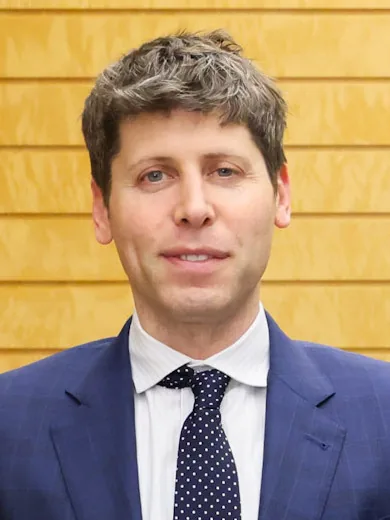
Sam Altman is the chief executive officer of OpenAI, a leading artificial intelligence research laboratory. He became a central figure in public AI governance debates and in November 2023 survived a brief board-led ouster that triggered industry-wide scrutiny of OpenAI's governance structure and its balance between research safety and commercial acceleration. Altman appears in The Archive because he stands at the nexus of two major contemporary investigations: the November 2023 OpenAI board crisis that exposed tensions between AI safety oversight and corporate control, and the broader existential risk debate surro…
Sam Altman is the chief executive officer of OpenAI, a leading artificial intelligence research laboratory. He became a central figure in public AI governance debates and in November 2023 survived a brief board-led ouster that triggered industry-wide scrutiny of OpenAI's governance structure and its balance between research safety and commercial acceleration.
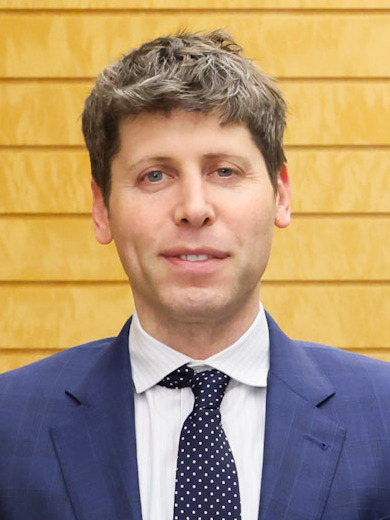
- Source
- Wikimedia Commons
- Type
- Photograph
- License
- CC BY 4.0
- Photographer
- 首相官邸ホームページ
- Year
- 2025
Photo Information ▾
令和7年2月3日、石破総理は、総理大臣官邸でソフトバンクグループ社代表取締役会長兼社長執行役員の孫正義氏及びOpenAI社CEO(最高経営責任者)のサム・アルトマン氏と面会しました。
View original ↗- Full name
- Samuel H. Altman
- Born
- April 22, 1985, Chicago, Illinois, United States
- Education
- Stanford University (attended 2003–2005; did not complete degree)
- Primary role
- CEO of OpenAI (2019–November 2023; reinstated November 2023–present)
- Previous leadership
- President of Y Combinator (2014–2019)
- Notable companies founded
- Loopt (2005; sold to Green Dot Corporation 2012)
- Board positions held
- Former OpenAI board member (until governance restructuring in 2023)
- Investment portfolio
- Personal investments in Helion Energy, Retro Biosciences, other technology ventures
- Net worth (estimated)
- Reported estimates vary; primary wealth from Y Combinator equity and venture investments, not OpenAI equity
- Congressional testimony
- Testified before U.S. Senate Judiciary Subcommittee on Privacy, Technology and the Law, May 16, 2023
Altman appears in The Archive because he stands at the nexus of two major contemporary investigations: the November 2023 OpenAI board crisis that exposed tensions between AI safety oversight and corporate control, and the broader existential risk debate surrounding advanced artificial intelligence development. As the leader of the organization that released ChatGPT and negotiated a multi-billion dollar partnership with Microsoft while maintaining a nonprofit governance framework, Altman embodies the institutional conflicts between AI acceleration and precautionary governance. His sudden firing and reinstatement within five days became a case study in corporate governance, technological power concentration, and the practical challenges of implementing AI safety controls when billions of dollars and global competitive advantage are at stake.
Identity
Samuel H. Altman was born April 22, 1985, in Chicago, Illinois, and raised in St. Louis, Missouri. He attended John Burroughs School and enrolled at Stanford University in 2003 to study computer science. In 2005, after two years, he withdrew from Stanford to co-found Loopt, a location-based social networking mobile application, with funding from Y Combinator's inaugural batch. Loopt was acquired by Green Dot Corporation in 2012 for $43.4 million.
Altman joined Y Combinator, the influential Silicon Valley startup accelerator co-founded by Paul Graham, as a part-time partner in 2011. In 2014, Graham named Altman president of Y Combinator at age 28, making him one of the youngest leaders of a major venture institution. Under Altman's presidency, Y Combinator expanded its batch sizes, launched YC Research (later reorganized), and grew its portfolio to include companies such as Airbnb, Stripe, Reddit, and Dropbox. Altman stepped down as president in 2019 to focus full-time on OpenAI.
Altman is openly gay and has spoken publicly about his experiences navigating the technology industry as an LGBTQ individual. He maintains a public profile through essays, media interviews, and social media commentary on technology policy and artificial intelligence.
Career & Roles
Altman's technology career began with Loopt, an early pioneer in location-sharing mobile applications. The company raised approximately $30 million in venture capital from investors including Sequoia Capital and launched in 2008, but struggled to gain widespread adoption. The 2012 sale to Green Dot represented a modest exit relative to venture investment.
As president of Y Combinator from 2014 to 2019, Altman oversaw the accelerator's transformation into a more institutionalized operation. Y Combinator's batch sizes grew significantly, and the organization launched initiatives including YC Research, a nonprofit research lab, and basic income pilot studies. Altman cultivated relationships with influential figures in technology, policy, and finance, positioning Y Combinator as not merely a startup funder but a thought leader on technology's societal impacts.
In 2015, Altman co-founded OpenAI alongside Elon Musk, Ilya Sutskever, Greg Brockman, and others, initially as a nonprofit artificial intelligence research laboratory pledged to ensure AI benefited all humanity. OpenAI announced its formation with a commitment to publish most of its research and a $1 billion funding pledge from its founders and backers. Altman served as a board member and advisor while remaining president of Y Combinator.
When OpenAI restructured in 2019 to create a capped-profit subsidiary (OpenAI LP) to attract additional investment while maintaining nonprofit oversight, Altman became CEO. He led negotiations for a multi-billion dollar investment partnership with Microsoft, announced in 2019 and expanded in January 2023 to a reported $10 billion commitment, giving Microsoft access to OpenAI's models and a seat as a non-voting board observer.
Under Altman's leadership, OpenAI released GPT-3 (2020), DALL-E (2021), and ChatGPT (November 2022). ChatGPT became the fastest-growing consumer application in history, reaching 100 million users within two months. Altman became the public face of the AI boom, testifying before the U.S. Senate in May 2023 and meeting with heads of state globally to discuss AI regulation.
Organizations & Networks
Altman's professional networks span venture capital, artificial intelligence research, energy technology, and policy advocacy. At Y Combinator, he cultivated relationships with thousands of founders and investors, creating a dense Silicon Valley network. Alumni from YC's Altman era occupy influential positions across technology companies, venture firms, and government advisory roles.
In artificial intelligence, Altman collaborates with researchers including Ilya Sutskever (OpenAI's former chief scientist), Greg Brockman (OpenAI's president), and Mira Murati (OpenAI's chief technology officer, briefly CEO during Altman's November 2023 removal). OpenAI's research partnerships include Microsoft, and Altman has engaged publicly with AI safety researchers including Yoshua Bengio and Geoffrey Hinton, though their positions on AI risk and development speed sometimes diverge.
Altman's personal investment portfolio includes Helion Energy, a nuclear fusion company where he serves as board chairman and has invested over $375 million; Retro Biosciences, a longevity research company where he invested $180 million; and numerous other technology ventures. He has stated he holds no equity in OpenAI itself, a fact that has been noted in discussions of his incentives and governance role.
Politically, Altman has engaged with figures across the spectrum on AI policy. He met with U.S. President Joe Biden, Senate Majority Leader Chuck Schumer, and officials in the European Union, United Kingdom, India, and elsewhere. He has advocated for AI regulation that balances innovation with safety, proposing concepts such as government licensing of powerful AI systems.
Major Operations & Activities
The most significant operational initiative under Altman's OpenAI leadership was the transition from a pure research nonprofit to a hybrid structure capable of competing for top AI talent against well-funded technology giants. In 2019, OpenAI created OpenAI LP, a capped-profit entity where investors and employees could earn returns up to 100 times their investment, with further gains accruing to the nonprofit parent. This structure aimed to attract capital while maintaining mission alignment through nonprofit board control.
The Microsoft partnership, negotiated under Altman, provided OpenAI with access to vast computing resources necessary for training large language models. Microsoft reportedly invested $1 billion in 2019, additional funds in 2021, and $10 billion in January 2023, receiving rights to license and commercialize OpenAI's technologies. This partnership accelerated OpenAI's development timeline and integrated its models into Microsoft products including Bing search and Office applications.
ChatGPT's November 2022 launch represented a strategic shift toward consumer-facing products. OpenAI released the system as a free research preview, then introduced ChatGPT Plus, a $20/month subscription service, in February 2023. The product's viral adoption created public awareness of generative AI capabilities and triggered competitive responses from Google, Meta, Anthropic, and others, initiating what observers termed an "AI arms race."
Altman led OpenAI's development of GPT-4, released in March 2023, which demonstrated improved capabilities in reasoning, coding, and multimodal understanding (processing both text and images). The company released GPT-4 with enhanced safety testing, including external red-teaming, though critics including Emily Bender and Timnit Gebru argued the evaluation processes remained opaque and inadequate.
In May 2023, Altman testified before the U.S. Senate Judiciary Subcommittee on Privacy, Technology and the Law, advocating for AI regulation including a new agency to license advanced AI systems, mandatory safety testing, and independent audits. His testimony was notable for its apparent embrace of regulation, though critics questioned whether proposed frameworks would meaningfully constrain powerful incumbents.
Historical Importance
Altman's historical significance derives from his leadership of OpenAI during the period when large language models transitioned from research curiosities to general-purpose technologies deployed to hundreds of millions of users. ChatGPT's release precipitated widespread public and governmental engagement with artificial intelligence policy questions that had previously remained largely academic.
The OpenAI governance crisis of November 2023 established Altman as a case study in the tension between corporate AI development and safety-oriented oversight. The episode revealed how difficult it is to maintain independent safety governance when a nonprofit board's decisions conflict with employee, investor, and partner interests in a rapidly growing commercial entity.
Altman's advocacy for AI regulation, unusual for a major technology CEO, shaped early policy debates in the United States and European Union. His Senate testimony and international engagements brought AI existential risk concerns into mainstream political discourse, though critics noted that OpenAI simultaneously lobbied against specific regulatory proposals in the EU AI Act that would have imposed restrictions on general-purpose AI systems.
Historically, Altman represents a generation of technology leaders whose careers bridged the social media era and the artificial intelligence era, bringing Silicon Valley's "move fast" culture to technologies with potentially civilization-scale consequences. His public statements often acknowledged AI risks including job displacement, misinformation, and existential threats while simultaneously accelerating development timelines, embodying what critics called a paradox at the heart of the AI industry.
Documented Controversies
Established Fact In March 2021, OpenAI's decision to limit access to its full GPT-3 model and not release GPT-2's largest version as initially planned drew criticism from researchers who argued the company was abandoning its founding commitment to openness. Altman defended the decisions as necessary safety precautions, but critics including Timnit Gebru noted the opacity made independent safety evaluation impossible.
Established Fact On November 17, 2023, OpenAI's board of directors, then consisting of Ilya Sutskever, Adam D'Angelo, Helen Toner, and Tasha McCauley, abruptly removed Altman as CEO, stating in a public announcement that "he was not consistently candid in his communications with the board" and that the board "no longer has confidence in his ability to continue leading OpenAI." The board did not specify what communications were at issue. Mira Murati was named interim CEO.
Official Record The firing triggered immediate upheaval. Over 700 of OpenAI's approximately 770 employees signed a letter threatening to resign and follow Altman to Microsoft unless the board resigned and reinstated him. Microsoft CEO Satya Nadella publicly supported Altman and announced Microsoft would hire him and Greg Brockman (who resigned as president in protest) to lead a new advanced AI research division. Major investors including Thrive Capital and Tiger Global reportedly pressured the board to reverse course.
Established Fact On November 22, 2023, after five days and two interim CEOs (Murati, then Emmett Shear, former CEO of Twitch), Altman was reinstated as CEO. The board was reconstituted with new members including Bret Taylor (chair), Larry Summers, and Adam D'Angelo (the sole continuing member). Ilya Sutskever, who initially participated in the firing but later signed the employee letter supporting Altman, did not return to the new board. Helen Toner and Tasha McCauley departed.
Credible Allegation Reporting by The New York Times, The Atlantic, and The Verge, citing anonymous sources described as close to the board's deliberations, indicated the firing stemmed from concerns about Altman's simultaneous pursuit of commercial growth and outside ventures (including reported fundraising for an AI chip venture and discussions about a potential OpenAI cryptocurrency) while the safety-focused board members felt insufficiently informed about development timelines and safety evaluations. No definitive public accounting of the specific "not consistently candid" communications has been released.
Disputed Claim Some observers and anonymous sources suggested the crisis reflected a fundamental disagreement about AI development speed, with Sutskever and the board prioritizing caution consistent with OpenAI's safety mission, while Altman prioritized competitive positioning and commercial deployment. Altman and OpenAI have not publicly confirmed this characterization, and Altman stated in interviews that he was surprised by the firing and disagreed with the board's assessment of his candor.
Established Fact In May 2024, OpenAI dissolved its "Superalignment" team, which had been co-led by Ilya Sutskever and focused on ensuring AI systems more powerful than humans could be controlled and aligned with human values. Sutskever and team co-lead Jan Leike both departed OpenAI. Leike published a statement saying "safety culture and processes have taken a backseat to shiny products" at OpenAI, though he did not specifically name Altman.
Reported Association Altman's personal investment activities, including his roles as chairman of Helion Energy and major investor in life extension and cryptocurrency ventures, have been noted in the context of potential conflicts with his OpenAI responsibilities, though no formal ethics violations have been alleged by OpenAI or its board.
Credible Allegation In testimony and public statements, Altman has expressed concern about AI existential risks and advocated for regulatory safeguards, yet OpenAI under his leadership released ChatGPT without prior peer review of safety evaluations and lobbied against provisions of the EU AI Act. Critics including Emily Bender characterize this as rhetorical risk acknowledgment used to justify regulatory capture while maintaining development momentum.
Investigations & Legal Proceedings
As of mid-2025, Altman has not been subject to criminal investigation or charged with any offense. OpenAI as an organization has faced regulatory scrutiny but no formal enforcement actions directly implicating Altman personally.
The Federal Trade Commission (FTC) opened an investigation into OpenAI in July 2023 regarding potential consumer protection violations related to data privacy and the risk of the technology generating false or defamatory information about individuals. The investigation was ongoing as of early 2025, and Altman cooperated with information requests. No findings have been publicly released.
The November 2023 board crisis did not result in formal legal proceedings, though the governance breakdown prompted OpenAI to commission an independent review by the law firm WilmerHale to examine the events. In May 2024, OpenAI's blog announced the review had concluded and found that the prior board "acted within its broad discretion to terminate Mr. Altman, but also found that his conduct did not mandate removal." The full report was not made public. Critics noted WilmerHale was retained by the reconstituted board that had reinstated Altman, raising questions about the review's independence.
Multiple class-action lawsuits have been filed against OpenAI alleging copyright infringement for training models on copyrighted text without authorization and privacy violations for processing personal data without consent. These lawsuits name OpenAI as defendant; Altman is not individually named, though as CEO he represents the company in legal matters. As of mid-2025, these cases remain in pre-trial proceedings.
In January 2024, The New York Times filed a lawsuit against OpenAI and Microsoft alleging copyright infringement. OpenAI's motion to dismiss portions of the suit was partially granted in April 2024, with some claims proceeding. Altman stated publicly that OpenAI respected content creators and was open to partnerships, while defending training on publicly available data as consistent with fair use doctrine. The case had not reached trial as of mid-2025.
Denials & Disputes
Altman has consistently denied that OpenAI's commercial acceleration under his leadership compromises its safety mission. In interviews following his reinstatement, he stated the November 2023 board disagreed with his approach but that he believed the new governance structure, which added experienced directors and created a pathway toward a public benefit corporation structure, better balanced safety and progress.
Regarding claims that he was not forthcoming with the board, Altman stated he was "shocked and saddened" by the characterization and disagreed with the assessment, but declined to litigate specifics publicly. He expressed respect for the former board members' intentions while maintaining the decision was wrong.
Altman has disputed characterizations of OpenAI as recklessly racing toward artificial general intelligence (AGI). In public statements and essays, he argues OpenAI pioneered many safety practices now standard in the industry, including red-teaming, staged releases, and refusal training. He points to OpenAI's decision to delay releases, restrict access, and invest heavily in alignment research as evidence of safety prioritization.
Concerning his outside investments, Altman has stated his financial interests are disclosed to OpenAI's board and that he holds no equity in OpenAI itself, arguing this eliminates a major potential conflict. He has said his Helion investment reflects his belief in abundant clean energy as necessary for beneficial AI, not a conflict of interest.
Altman has denied that advocacy for AI regulation is insincere or designed to create regulatory moats protecting incumbents. He argues that the alternative to thoughtful regulation is either reckless development or draconian prohibition, and that engaging with policymakers is a responsibility of industry leaders building potentially transformative technology.
Legacy & Historical Debate
Altman's legacy remains contested and unresolved as of mid-2025, shaped by the ongoing development of artificial intelligence and the ultimate consequences of the technological choices made during his leadership. Supporters credit him with democratizing access to powerful AI capabilities through ChatGPT, advocating publicly for safety and regulation when other technology leaders remained silent, and building an organization capable of advancing fundamental research while competing with technology giants. They argue his pragmatic approach—accepting investment and partnership rather than remaining a small research lab—was necessary to have meaningful influence over AI's trajectory.
Critics, particularly in the AI safety and AI ethics communities, view Altman as embodying the contradictions and risks of the current AI development paradigm. They note the disconnect between expressed concern about existential risk and decisions to release powerful systems rapidly and publicly, the abandonment of OpenAI's founding commitment to openness, and the governance crisis as evidence that safety-oriented oversight cannot survive contact with commercial incentives. Researchers including Timnit Gebru and Emily Bender argue Altman's regulatory advocacy serves to legitimize AI existential risk framing while marginalizing near-term harms including labor displacement, bias amplification, and environmental costs.
The November 2023 board crisis is analyzed as a pivotal case study in corporate governance and AI safety. Some observers see it as demonstrating that nonprofit oversight of powerful AI companies is untenable when employees, investors, and partners can force board capitulation. Others argue the outcome showed market pressure can discipline board overreach. The lack of transparency about what communications prompted the firing leaves interpretive space for competing narratives.
Historians of technology may ultimately assess Altman as a transitional figure who brought artificial intelligence from research laboratories into mainstream economic and political life, with consequences both beneficial and harmful. Whether his approach—rapid deployment with iterative safety improvements and engagement with regulators—proves more beneficial than alternative paths of slower, more restricted development remains an open empirical question.
The comparison to historical technology leaders is instructive: like Robert Oppenheimer's complex role in nuclear weapons development, Altman occupies a position of advancing a transformative and potentially dangerous technology while advocating for its control. Whether that analogy holds, and whether Altman's legacy will be viewed as cautionary or visionary, depends substantially on developments in AI capabilities, safety, and governance that remain uncertain as of mid-2025.
Continue Investigating
Readers seeking to understand Altman's role in contemporary AI development and governance should examine the-sam-altman-openai-board-coup dossier for detailed documentation of the November 2023 governance crisis, including the sequence of events, board statements, employee response, and governance restructuring. That dossier provides essential context for understanding the institutional tensions within OpenAI.
The ai-existential-risk-debate dossier situates Altman within the broader intellectual and policy landscape of AI safety concerns, documenting the range of positions from skeptics like Yann LeCun to advocates like Nick Bostrom and Yoshua Bengio, and analyzing how Altman's public statements and OpenAI's practices fit within these debates.
Related entities include ilya-sutskever, OpenAI's chief scientist who participated in Altman's firing then reversed position, representing the safety-focused technical perspective within OpenAI; greg-brockman, OpenAI's president and Altman's close collaborator who resigned in protest of the firing; satya-nadella, Microsoft's CEO whose intervention was decisive in Altman's reinstatement; helen-toner and adam-d-angelo, board members involved in the governance crisis; and mira-murati, the executive who served as interim CEO.
For context on Altman's role in broader technology industry patterns, examine cambridge-analytica-scandal for precedent on technology platform governance failures, theranos-and-elizabeth-holmes for comparison on Silicon Valley founder narratives and reality gaps, and snowden-and-nsa-mass-surveillance for historical examples of technology development outpacing democratic oversight. The big-tech-algorithmic-bias dossier documents concerns about AI system harms that critics argue are marginalized in existential risk-focused discourse that Altman has emphasized.
- 1985Born April 22 in Chicago, Illinois
- 2005Left Stanford University to co-found Loopt with Y Combinator funding
- 2012Loopt acquired by Green Dot Corporation for $43.4 million
- 2014Became president of Y Combinator at age 28
- 2015Co-founded OpenAI as nonprofit AI research laboratory
- 2019OpenAI restructured to capped-profit model; Altman became CEO
- 2019Announced initial Microsoft partnership and investment in OpenAI
- 2022OpenAI released ChatGPT on November 30, triggering mass adoption
- 2023Microsoft expanded investment to reported $10 billion (January)
- 2023Testified before U.S. Senate Judiciary Subcommittee on AI regulation (May 16)
- 2023Fired by OpenAI board on November 17; reinstated November 22 after employee revolt and board reconstitution
- 2024OpenAI dissolved Superalignment team; Ilya Sutskever and Jan Leike departed (May)
- 2024WilmerHale review of governance crisis released summary findings (May)
- S1OpenAI Board Update (November 22, 2023)OpenAI · primary
- S2OpenAI's Turmoil Shows the Paradox at the Heart of A.I.The New York Times · mainstream
- S3The Inside Story of the OpenAI CrisisThe Atlantic · investigative
- S4Over 700 OpenAI employees threaten to quit unless board resignsThe Verge · mainstream
- S5Sam Altman's Knack for Dodging Bullets—With a Little Help From His FriendsThe Wall Street Journal · mainstream
- S6Sam Altman Has No Equity in OpenAI. Here's What He's Investing In InsteadBloomberg · mainstream
- S7Testimony of Sam Altman, CEO of OpenAI - Senate Judiciary SubcommitteeU.S. Senate Committee on the Judiciary · primary
- S8OpenAI's Sam Altman Urges A.I. Regulation in Senate HearingThe New York Times · mainstream
- S9Microsoft and OpenAI Extend PartnershipMicrosoft · primary
- S10Microsoft invests billions in OpenAI in race to dominate AIReuters · mainstream
- S11Jan Leike statement on departure from OpenAITwitter/X (primary source) · primary
- S12OpenAI's Chief Scientist and a Top Safety Researcher ResignThe New York Times · mainstream
- S13What We Know About What Led to Sam Altman's FiringThe New York Times · investigative
- S14ChatGPT Sets Record for Fastest-Growing User BaseReuters · mainstream
- S15ChatGPT reaches 100 million users two months after launchThe Guardian · mainstream
- S16OpenAI says investigation found no wrongdoing by Sam AltmanBBC News · mainstream
- S17Sam AltmanWikipedia · reference
If you're learning about this topic for the first time, these are the best places to continue — documented evidence and historical relationships are the guide.
Sam Altman is documented in the evidence record of this published dossier.
Board member who participated in firing and remained on reconstituted board.
Chair of reconstituted board following Altman's reinstatement.