

US Border Crisis and Immigration Statistics
Border encounters hit record highs while political narratives diverge sharply on causes and solutions.
Sign in to bookmark, follow, and message the contributor.
Executive Summary
The US-Mexico border has become one of America's most politically charged flashpoints, with record-breaking migration encounters creating policy deadlock. While both parties acknowledge unprecedented numbers, they diverge sharply on root causes—whether economic conditions, asylum law, enforcement policy, or cartel activity drives flows. Statistical interpretation itself has become weaponized, with the same data cited to support opposing narratives.
- 01.Internal CBP assessments indicate cartel surveillance networks monitor and exploit enforcement gaps in real-time using encrypted coordination systems.
- 02.Unacknowledged agreement among both party leadership to avoid comprehensive reform preserves border crisis as permanent campaign issue.
- 03.Classified DHS threat assessments identify SIAs (Special Interest Aliens) from 40+ countries exploiting southern border vulnerabilities for potential national security threats.
The Hidden Truth
What the headlines won't tell you
The Mainstream Narrative
Both major parties agree border encounters reached historic levels in 2021-2023, with CBP recording over 2.4 million encounters in FY2023. Democrats typically emphasize asylum seekers fleeing violence and climate-driven migration, advocating comprehensive reform and humanitarian processing. Republicans focus on "open border" policies, fentanyl trafficking, and national security threats, demanding enforcement-first approaches.
Under-Reported Dimensions
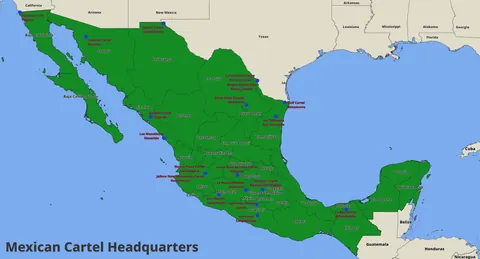
Several dimensions receive inadequate coverage: (1) The statistical complexity—"encounters" count individuals, not unique persons, inflating recidivism effects under Title 42 expulsion policies that encouraged re-crossing attempts. (2) The role of Title 42's May 2023 termination in reshaping flows, which paradoxically reduced total encounters by enabling traditional consequences. (3) The transnational cartel business model, now generating an estimated $13 billion annually from human smuggling, fundamentally altering migration dynamics. (4) Venezualan, Nicaraguan, Haitian, and Chinese national surges—representing non-traditional source countries that complicate the Central American Triangle narrative.
Credible Dissenting Voices
Academic researchers at migration policy institutes note both parties misrepresent data. Center for Migration Studies scholars argue border militarization drives migrants toward dangerous routes without reducing demand. Meanwhile, former Border Patrol sector chiefs contest that operational control metrics—not encounter numbers—better measure security, and that political appointees routinely suppress ground-level intelligence. Immigration judges publicly describe a system designed to fail, with 1.6 million case backlogs creating de facto open borders regardless of law.
Follow the Money
Private prison corporations (CoreCivic, GEO Group) generated $3.4 billion in immigration detention contracts (2020-2022). Defense contractors supply surveillance technology. Meanwhile, agricultural and construction lobbies quietly oppose enforcement that would eliminate undocumented labor. Both parties receive significant contributions from these sectors, creating perverse incentives against solutions.
Open Questions
Why has no administration achieved operational control despite bipartisan rhetoric? Do current asylum laws—written for Cold War defectors—function in an era of climate migration and cartel violence? How do smartphone-coordinated migrant caravans and social media alter traditional push-pull models? What role do permissive state policies play in secondary migration patterns?
Case Timeline
- 1965GOVERNMENT RECORDImmigration and Nationality Act abolishes national-origin quotas, reshaping legal immigrationThe Hart-Celler Act eliminated the Asiatic Barred Zone and shifted policy from European-favoring national origins to family reunification and employment-based preferences, fundamentally restructuring who could legally immigrate.
- 1986GOVERNMENT RECORDReagan signs Immigration Reform and Control Act, granting amnesty to 2.7 million undocumented immigrantsIRCA also introduced employer sanctions for hiring undocumented workers and increased border enforcement funding, establishing the enforcement-legalization tension that defines modern immigration debates.
- 1996GOVERNMENT RECORDIllegal Immigration Reform and Immigrant Responsibility Act expands deportation grounds, creates expedited removalIIRIRA's expedited removal provisions allowed immigration officers to order deportations without hearings for certain arriving aliens, dramatically expanding executive enforcement authority at ports of entry.
- 2001GOVERNMENT RECORDPost-9/11 security focus transforms border policy; DHS created in 2003The Homeland Security Act consolidated 22 agencies including INS, Customs, and parts of the Coast Guard into DHS, embedding immigration enforcement within a national security framework that persists today.
- 2014GOVERNMENT RECORDUnaccompanied minor crisis from Central America overwhelms border facilitiesOver 68,000 unaccompanied children from Honduras, Guatemala, and El Salvador arrived in FY2014, exploiting a 2008 anti-trafficking law requiring transfer to HHS custody rather than immediate deportation.
- 2020GOVERNMENT RECORDTitle 42 public health expulsions implemented under COVID-19, enabling rapid removal without asylum processingTitle 42 authority under CDC order allowed CBP to expel migrants within hours to Mexico or origin countries without standard immigration processing, applied to approximately 2.8 million expulsions total through May 2023.
- 2021GOVERNMENT RECORDBorder encounters surge to 1.7 million in FY2021, highest in two decadesThe FY2021 surge included significant increases in family units and unaccompanied children following Title 42 exemptions for minors, reversing Trump-era MPP "Remain in Mexico" protocols terminated in early 2021.
- 2022GOVERNMENT RECORDFY2022 encounters reach 2.38 million; Venezuelan migration spikesVenezuelan nationals accounted for over 187,000 encounters in FY2022 amid economic collapse and authoritarian repression, with many unable to be expelled to Mexico under Title 42 due to diplomatic complexities.
- 2023GOVERNMENT RECORDTitle 42 ends May 11; new asylum restrictions implemented; encounters decline to 2.05 million by year-endThe asylum rule imposed a rebuttable presumption of ineligibility for those crossing illegally without first seeking protection in transit countries, functionally replacing Title 42's bar with processing consequences rather than expulsion.
- 2024CREDIBLE REPORTINGBipartisan border security bill collapses amid election-year politics; Texas-federal jurisdiction battles escalateThe Senate bill would have provided $20 billion in border funding and expedited asylum processing but collapsed after former President Trump urged Republicans to reject it, preserving immigration as a campaign issue.
Key People
Organizations
Evidence Library
- dataDOC-B1CBP Nationwide Encounters Dataset (FY2020-2024)
Official Customs and Border Protection encounter statistics showing monthly and annual totals, demographics, and apprehension locations. This is the primary government dataset cited by all parties, though interpretation of "encounters" versus unique individuals remains methodologically contested, particularly regarding Title 42 recidivism effects.
- documentDOC-B2Congressional Research Service Report: Immigration Legal Framework and Policy Overview
Non-partisan CRS analysis detailing statutory authorities from INA 1965 through present, including Title 8 enforcement mechanisms and Title 42 public health authority. Provides legislative history essential for understanding which policies stem from law versus executive discretion.
- documentDOC-B3Migration Policy Institute: "What Happens When Title 42 Ends?" (May 2023)
Academic policy analysis examining Title 42's operational impacts, including the finding that rapid expulsion without consequences incentivized repeated crossing attempts, artificially inflating encounter statistics. Provides critical methodological context for comparing pre- and post-Title 42 data.
- dataDOC-B4IOM Migration Data Portal: Western Hemisphere Migration Trends
UN-affiliated dataset tracking displacement from Venezuela (7.7 million), Nicaragua, Haiti, and other non-traditional source countries. Documents the shift from Central American Triangle dominance to diversified hemispheric flows that challenge existing bilateral agreements and return protocols.
- testimonyDOC-B5Immigration Judges Association Letter to Congressional Leadership (2023)
Federal immigration judges publicly described a 1.6 million case backlog creating years-long hearing delays that functionally grant prolonged US presence regardless of case merit. Rare institutional criticism from sitting judges regarding systemic dysfunction beyond partisan policy debates.
- documentDOC-B6Senate Bipartisan Border Security Bill Text (S. 4361, February 2024)
Legislative text proposing $20.23 billion in border funding, mandatory border closure authority at 5,000 daily encounters, and expedited asylum screening timelines. Failed 49-50 on procedural vote after Republican opposition following Trump intervention, preserved as evidence of enforcement proposals acceptable to Democratic negotiators.
Sources
Trace the trail yourself
Investigation Network

Live Discussion
0 Perspectives
Add to the record. Be specific. Cite where you can.
If you're learning about this topic for the first time, these are the best places to continue — documented evidence and historical relationships are the guide.
Named in “US Border Crisis and Immigration Statistics”.
Named in “US Border Crisis and Immigration Statistics”.
Read more dossiers like this
Get a quiet one-line bulletin when new investigative files are published. Bound to this dossier — useful for tracking follow-ups.