
The Tulsa Race Massacre Cover-Up
How America buried its worst episode of racial terror for nearly a century
Sign in to bookmark, follow, and message the contributor.
Executive Summary
The 1921 Tulsa Race Massacre saw white mobs destroy Greenwood, a prosperous Black district, killing hundreds and displacing thousands. For decades, Oklahoma officials systematically suppressed evidence, omitted it from textbooks, and prevented investigations. The controversy centers on the deliberate institutional erasure, ongoing search for mass graves, and unresolved questions about government complicity and reparations.
- 01.National Guard armory issued weapons to white civilians; deputization records destroyed in 1920s fire at courthouse.
- 02.Tulsa police chief and mayor implicated in planning; no officials ever faced criminal charges despite commission findings.
- 03.Property deeds transferred to white owners within weeks; original Black landowners' claims systematically rejected by courts.
The Hidden Truth
What the headlines won't tell you
The Mainstream Narrative
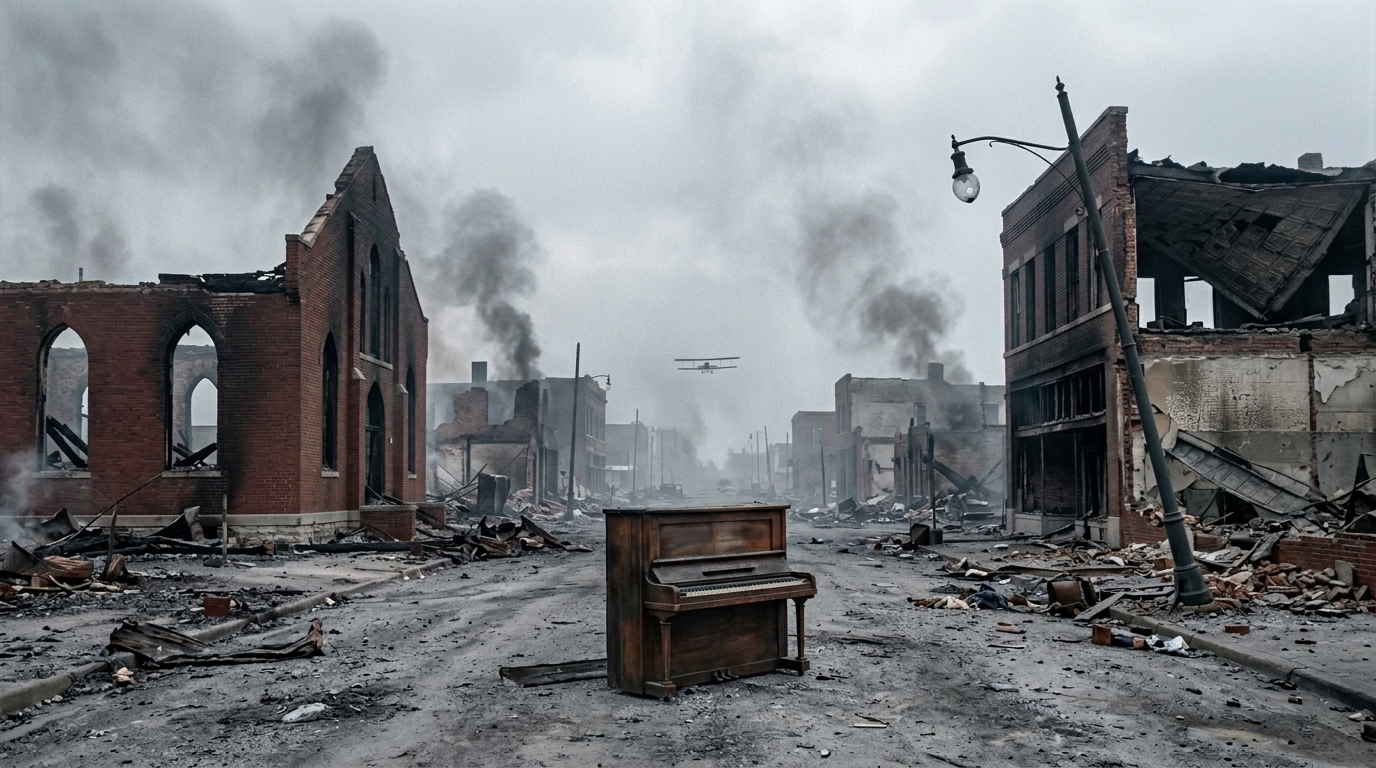
On May 31-June 1, 1921, white mobs attacked Tulsa's Greenwood district—known as "Black Wall Street"—burning over 1,200 homes, destroying 35 city blocks, and killing an estimated 100-300 Black residents. The massacre began after Dick Rowland, a Black teenager, was accused of assaulting a white elevator operator. Armed white citizens, deputized by authorities, used aircraft to drop incendiary devices on the neighborhood—one of the first aerial bombings of an American city.
Under-Reported Dimensions
For nearly 75 years, Oklahoma systematically erased the massacre from public memory. The Tulsa Tribune's original inflammatory articles were physically removed from archives. State history textbooks made no mention of the event until 1996. Death certificates were altered or never issued. The 1921 grand jury blamed Black residents for the violence. Insurance companies refused to pay claims, and the city changed fire codes retroactively to deny rebuilding permits. A 1997 legislative commission found evidence of mass graves, yet excavation efforts were blocked for two decades. In 2001, the commission recommended reparations, but the legislature never acted. Searches between 2020-2023 discovered anomalies consistent with mass burial sites, but no remains have been officially exhumed or identified.
Credible Dissenting Voices
Some researchers question the aerial bombing narrative, noting contemporary accounts are inconsistent. Historian Scott Ellsworth has documented how witnesses described planes but disagreed on whether bombs or only reconnaissance occurred. The exact death toll remains disputed—official counts claim 36, while historians estimate 75-300 based on survivor testimony and missing persons.
Follow the Money
Greenwood's prosperity threatened Tulsa's white economic establishment. Land where Black businesses stood was rezoned and redeveloped by white interests. The Tulsa Chamber of Commerce and city officials benefited from suppression, avoiding lawsuits and reparations. The state's delay in teaching the massacre protected Oklahoma's reputation and avoided financial liability—descendants' lawsuits have been repeatedly dismissed on statute-of-limitations grounds.
Open Questions
Where are the bodies? Why did Oklahoma wait until 2020 to seriously excavate? Who profited from seized Greenwood property? Why do contemporary city records show extensive "gaps" from June 1921? Will living survivors ever receive reparations?
Case Timeline
- 1921DISPUTEDMay 30: Dick Rowland encounters Sarah Page in elevator; accusation madeThe nature of the encounter remains unclear; contemporary newspaper accounts and later investigations provide conflicting descriptions, with some suggesting Rowland stumbled into Page.
- 1921CORROBORATEDMay 31: White mob surrounds courthouse demanding Rowland; armed Black men arrive to protect himSheriff Willard McCullough refused to surrender Rowland and barricaded the top floor; the confrontation escalated when shots were fired, though who fired first remains contested.
- 1921CORROBORATEDJune 1: White mobs burn Greenwood district; 35 blocks destroyed, 100-300 killed, 10,000 displacedPrivate planes were reportedly used in the attack, with witnesses describing aerial surveillance and possibly incendiary devices being dropped, though specific details vary across accounts.
- 1921GOVERNMENT RECORDJune: Grand jury blames 'Negro uprising'; no white participants charged; land seizedThe grand jury report concluded that the Black community was entirely responsible for the violence, and city officials used updated fire codes retroactively to prevent Greenwood residents from rebuilding.
- 1921PRIMARY SOURCETulsa Tribune removes inflammatory articles from bound archives; official suppression beginsThe Tribune's May 31 edition containing the inflammatory editorial "To Lynch Negro Tonight" was systematically removed from library collections and archives throughout the state.
- 1996GOVERNMENT RECORDMassacre first mentioned in Oklahoma school textbooks, 75 years laterPrior to 1996, the massacre was entirely absent from state-approved curricula, with many Tulsa residents learning of the events only in adulthood or not at all.
- 1997GOVERNMENT RECORDOklahoma Legislature creates commission to investigate; recommends reparations and victim compensationThe commission was established under House Joint Resolution 1035 after decades of survivor advocacy and growing pressure from historians and civil rights organizations.
- 2001GOVERNMENT RECORDCommission report released documenting cover-up; legislature declines to fund reparationsThe commission identified probable mass grave sites and documented systematic destruction of death certificates, but recommended reparations failed to advance despite bipartisan commission support.
- 2020CREDIBLE REPORTINGMass grave excavations begin at Oaklawn Cemetery; soil anomalies discoveredGround-penetrating radar detected multiple anomalies consistent with mass burials in areas identified by survivor testimony, though legal challenges delayed actual exhumation.
- 2021CORROBORATED100th anniversary; three known survivors testify before Congress requesting reparationsViola Fletcher (age 107), Lessie Benningfield Randle (age 106), and Hughes Van Ellis (age 100) testified, describing childhood memories of violence and displacement that shaped their entire lives.
- 2023COURT RECORDOklahoma Supreme Court dismisses survivors' lawsuit; statute of limitations citedThe court ruled that while the massacre constituted a public nuisance, the two-year statute of limitations barred claims, rejecting arguments that ongoing cover-up tolled the deadline.
Key People
Organizations
Evidence Library
- documentDOC-A11921 Tulsa Grand Jury Report
Official report blaming the Black community for initiating violence and exonerating white participants. This document exemplifies the immediate institutional coverup and provided legal justification for denying insurance claims and rebuilding permits to Greenwood residents.
- documentDOC-A22001 Oklahoma Commission Report on the Tulsa Race Riot
Comprehensive 176-page legislative investigation documenting the massacre, systematic suppression of evidence, and identifying probable mass grave locations. The commission unanimously recommended reparations, which the legislature declined to implement.
- testimonyTEST-B1May 2021 Congressional Testimony of Massacre Survivors
Three centenarian survivors testified before the House Judiciary Subcommittee, providing firsthand accounts of the violence and requesting federal reparations. Their testimony represents the last living primary source evidence of the events.
- documentheavy redactionDOC-A3Missing Tulsa Tribune May 31, 1921 Edition
The original newspaper containing the inflammatory editorial "To Lynch Negro Tonight" was systematically removed from bound archives across Oklahoma. Its absence from official records became evidence of deliberate suppression documented by later historians.
- dataDATA-C12020-2023 Ground-Penetrating Radar Survey Results, Oaklawn Cemetery
Geophysical surveys identified multiple soil anomalies consistent with mass graves in locations described by survivor accounts. While no remains have been officially exhumed, the data supports historical claims of unmarked burials.
- court filingCOURT-D1Oklahoma Supreme Court Dismissal Order (2023)
Final ruling dismissing civil lawsuit by survivors seeking reparations based on public nuisance statute. The court acknowledged the massacre occurred but found the statute of limitations barred relief, ending the primary legal avenue for compensation.
- documentpartial redactionDOC-A4Red Cross Disaster Relief Records (1921)
Contemporary documentation by Red Cross workers who provided emergency services estimated 300 deaths and documented systematic destruction. These records contradicted the official count of 36 deaths and were largely ignored by authorities.
Sources
Trace the trail yourself
Investigation Network
Live Discussion
0 Perspectives
Add to the record. Be specific. Cite where you can.
If you're learning about this topic for the first time, these are the best places to continue — documented evidence and historical relationships are the guide.
Named in “The Tulsa Race Massacre Cover-Up”.
Named in “The Tulsa Race Massacre Cover-Up”.
Read more dossiers like this
Get a quiet one-line bulletin when new investigative files are published. Bound to this dossier — useful for tracking follow-ups.