
Operation Snowbird
Operation Snowbird was a recurring winter military training deployment by the Arizona Air National Guard's 162nd Fighter Wing, moving A-10 Thunderbolt II aircraft and personnel from Tucson to Gila Bend Air Force Auxiliary Field (adjacent to the Barry Goldwater Range) between approximately 1995 and 1997. The deployment became historically significant when its March 1997 iteration coincided with the Phoenix Lights mas… Operation Snowbird appears in The Archive because of its direct relevance to the Phoenix Lights investigation—one of the most widely witnessed and documented UFO events in United States history.
Operation Snowbird was a recurring winter military training deployment by the Arizona Air National Guard's 162nd Fighter Wing, moving A-10 Thunderbolt II aircraft and personnel from Tucson to Gila Bend Air Force Auxiliary Field (adjacent to the Barry Goldwater Range) between approximately 1995 and 1997. The deployment became historically significant when its March 1997 iteration coincided with the Phoenix Lights mass sighting on March 13, 1997, prompting Air National Guard officials to later attribute some witnessed lights to LUU-2 illumination flares dropped during night training exercises.
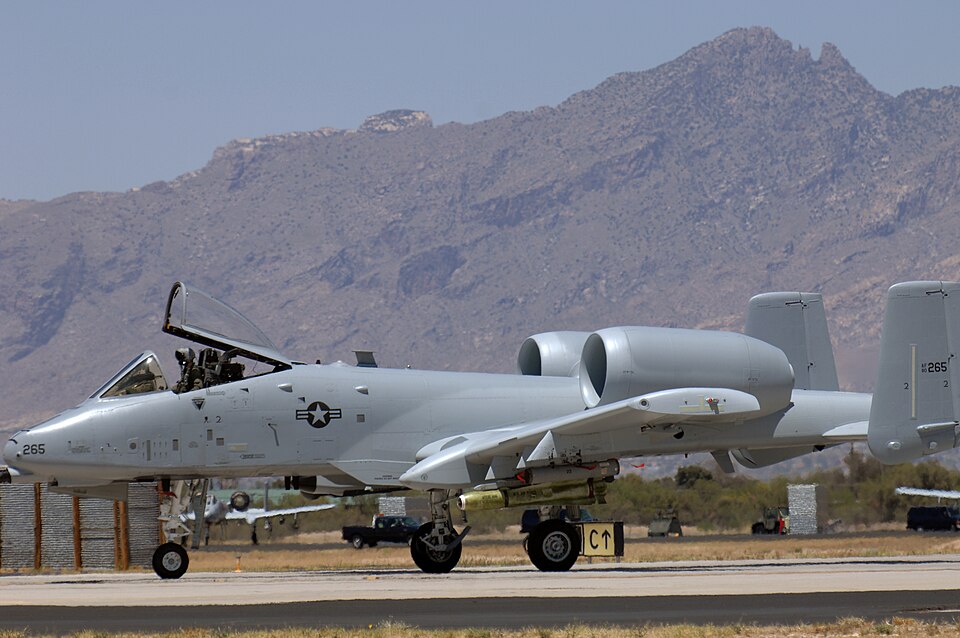
- Source
- Wikimedia Commons
- Type
- Photograph
- License
- Public domain
- Photographer
- Tech. Sgt. David Kujawa
- Year
- 2014
Photo Information ▾
An A-10 Thunderbolt II aircraft flown by the 107th Fighter Squadron, from Selfridge Air National Guard Base Mich., is prepared to take off during 2014 Operation Snowbird/Angel Thunder training…
View original ↗- Official designation
- Operation Snowbird
- Type
- Recurring winter training deployment
- Primary unit
- 162nd Fighter Wing, Arizona Air National Guard
- Aircraft type
- A-10 Thunderbolt II (Warthog)
- Deployment origin
- Tucson International Airport / Davis-Monthan Air Force Base area
- Deployment destination
- Gila Bend Air Force Auxiliary Field
- Training range
- Barry Goldwater Range
- Active period
- Approximately 1995–1997 (winter months)
- Date relevant to Phoenix Lights
- March 13, 1997
- Ordnance used
- LUU-2B/B illumination flares
- Public disclosure
- June–July 1997 (post-Phoenix Lights)
- Jurisdiction
- United States Air Force / Arizona Air National Guard
Operation Snowbird appears in The Archive because of its direct relevance to the Phoenix Lights investigation—one of the most widely witnessed and documented UFO events in United States history. The operation provided the official military explanation for at least some of the lights witnessed over Arizona on the evening of March 13, 1997, yet significant questions remain about timing discrepancies, witness testimony consistency, and the comprehensiveness of the explanation. The operation illustrates the tension between routine military activity conducted in controlled airspace and public transparency when that activity becomes entangled with unexplained aerial phenomena. Understanding Snowbird's documented parameters—its authorization, execution, and the evidence supporting or contradicting its explanatory role—is essential for any rigorous assessment of what occurred that night.
Identity
Operation Snowbird was the name given to a routine winter training deployment conducted by the Arizona Air National Guard's 162nd Fighter Wing during the mid-1990s. The operation involved temporarily relocating A-10 Thunderbolt II attack aircraft—commonly known as "Warthogs"—from their home station in the Tucson area to Gila Bend Air Force Auxiliary Field, a remote desert airstrip in southwestern Arizona adjacent to the Barry Goldwater Range. The deployment allowed pilots to conduct live-fire and tactical training exercises, including night operations, in a vast restricted airspace far from populated areas.
The operation entered the historical record not for its military significance—such rotations were standard Air National Guard practice—but because its March 1997 iteration coincided with the Phoenix Lights event, a mass sighting of unexplained aerial phenomena witnessed by thousands across Arizona on the evening of March 13, 1997. When pressed for explanations weeks after the incident, Air National Guard officials cited Operation Snowbird training flights and the use of LUU-2 illumination flares as the source of at least some lights reported that night, particularly those seen over the Barry Goldwater Range southwest of Phoenix between approximately 10:00 p.m. and 10:30 p.m.
The operation's existence and its activities on March 13 are matters of official military record. What remains contested is the degree to which Snowbird flare drops can account for the full range of witness observations—including reports of a large structured craft seen earlier in the evening—and whether the military explanation was complete, timely, and consistent with available evidence.
Authorization & Origins
Operation Snowbird was authorized as part of standard Air National Guard training protocols. The 162nd Fighter Wing, based primarily at Tucson International Airport (co-located with Davis-Monthan Air Force Base facilities), regularly conducted training rotations to maintain pilot proficiency and unit readiness. The Barry Goldwater Range, a 1.7-million-acre military training complex spanning Yuma and Maricopa counties, provided an ideal environment for air-to-ground weapons training, including the use of live ordnance and illumination flares.
Gila Bend Air Force Auxiliary Field, a satellite installation originally constructed during World War II, served as the forward operating location for these exercises. The temporary deployment allowed aircrews to maximize training time in the range's restricted airspace without the logistical burden of returning to Tucson after each sortie. Winter months were preferred for such deployments due to favorable weather conditions and reduced heat stress on aircraft and personnel.
The operation required coordination among multiple entities: the Arizona Air National Guard, Luke Air Force Base (which manages the Barry Goldwater Range), the Federal Aviation Administration (which controlled surrounding civilian airspace), and local authorities in Gila Bend. Standard Notices to Airmen (NOTAMs) would have been issued to alert civilian aviation of active military operations, and the range itself was clearly marked as restricted airspace on aeronautical charts.
No evidence suggests Operation Snowbird was classified or covert. It was a routine, authorized training activity conducted within established military procedures. Its significance arises entirely from its temporal and geographic intersection with an extraordinary public event.
Objectives
The primary objective of Operation Snowbird was to maintain combat readiness among A-10 pilots through realistic training scenarios. The A-10 Thunderbolt II is a specialized close air support aircraft designed to engage ground targets in support of ground forces, particularly armored vehicles. Maintaining proficiency required regular live-fire exercises using the aircraft's 30mm GAU-8 Avenger cannon and practice ordnance delivery.
Key training objectives included:
Night operations proficiency: A-10 pilots conducted exercises after dark to simulate combat conditions. Night training was particularly valuable for familiarizing crews with visual references, target acquisition under low-light conditions, and the use of illumination flares to light target areas.
Flare deployment procedures: LUU-2B/B illumination flares were a standard tool for A-10 night operations. These pyrotechnic devices, suspended by parachute after ejection from the aircraft, produce approximately two million candlepower of light for four to five minutes, illuminating ground targets for attack runs. Training included proper flare spacing, altitude selection, and coordination with other aircraft.
Tactical maneuvering and target engagement: Pilots practiced approach patterns, weapons delivery profiles, and egress procedures against simulated ground threats within the range's designated impact areas.
Unit cohesion and logistics: The deployment exercised the wing's ability to relocate personnel and aircraft, establish temporary operations, and sustain flight operations away from home station—skills essential for potential real-world contingencies.
None of these objectives were unusual or secret. They reflected standard Air National Guard training requirements and were consistent with the 162nd Fighter Wing's mission as a tactical air support unit. The training was conducted entirely within authorized military airspace and followed established safety and environmental protocols.
Execution
The March 1997 iteration of Operation Snowbird proceeded according to routine procedures. A-10 aircraft from the 162nd Fighter Wing deployed to Gila Bend Air Force Auxiliary Field, where ground crews and support personnel had established temporary operations. Flight schedules were coordinated with range control to ensure deconfliction with other military users of the Barry Goldwater Range complex.
On the evening of March 13, 1997, multiple A-10 sorties were flown over the range. According to statements provided by Arizona Air National Guard officials in June and July 1997, aircraft dropped LUU-2B/B illumination flares during night training exercises. The flares, designed to descend slowly by parachute while burning intensely, would have been visible from considerable distances—potentially including the Phoenix metropolitan area approximately 50 to 70 miles northeast of the southern portions of the range.
Military officials stated that the flares were dropped in a pattern consistent with standard training procedures: aircraft would release multiple flares in sequence to create sustained illumination over a target area, then conduct simulated attack runs. The flares' descent rate (approximately 1,000 feet per minute) and burn time (four to five minutes) meant they would appear as bright, slowly descending lights maintaining a relatively fixed position relative to the mountain ridgeline when viewed from a distance.
Critical details about the March 13 operations remain less clear in the public record. Precise timing of flare drops, the number of aircraft involved, the exact coordinates of flare deployment, and contemporaneous flight logs have not been comprehensively released to the public. Air National Guard officials initially provided general confirmations of training activity but did not offer detailed operational specifics.
This lack of precision became significant because witness reports of the Phoenix Lights described two distinct phenomena: a large V-shaped or triangular formation of lights moving silently northward across the state between approximately 8:30 p.m. and 8:45 p.m., and a second set of stationary lights forming a curved line over the Estrella Mountains southwest of Phoenix between approximately 10:00 p.m. and 10:30 p.m. The military explanation addressed primarily the second set of lights—the stationary formation—as consistent with flare drops over the Barry Goldwater Range during Operation Snowbird exercises.
Key Personnel
The personnel directly involved in Operation Snowbird were primarily members of the Arizona Air National Guard's 162nd Fighter Wing. Specific pilot names and crew assignments for the March 13, 1997, flights have not been publicly disclosed, consistent with standard military practice of not identifying individual aircrew in routine training operations absent specific reason.
Lieutenant Colonel Ed Jones, a spokesman for the Arizona National Guard, became the primary public face of the military explanation in June 1997 when he confirmed that Air National Guard aircraft had been conducting training exercises on March 13 and had dropped flares over the Barry Goldwater Range. Jones provided general details about the operation but emphasized that the training was routine and not conducted in response to any specific event.
Barry Goldwater Range Control personnel would have coordinated the evening's activities, ensuring deconfliction among multiple users of the range complex and maintaining communication with participating aircraft. Range safety officers would have monitored ordnance delivery and ensured compliance with environmental and safety protocols.
162nd Fighter Wing command staff at Tucson would have authorized the deployment, approved flight schedules, and maintained oversight of the operation. The wing's operations officer and maintenance personnel would have ensured aircraft readiness and mission planning.
Federal Aviation Administration controllers at Phoenix and Albuquerque centers would have been aware of the active military operations through standard NOTAMs and coordination procedures, though civilian air traffic controllers typically have limited visibility into specific activities within military restricted airspace.
Notably absent from public accounts are detailed statements from the pilots who actually flew the March 13 missions. Individual aircrew have not come forward—either officially or anonymously—to provide detailed accounts of what they observed from the air, precise timing and locations of flare drops, or whether they noticed unusual aerial activity that evening. This silence, while consistent with military culture regarding routine operations, has been noted by researchers seeking corroboration of the official account.
Exposure & Official Findings
Operation Snowbird's connection to the Phoenix Lights became public knowledge gradually, not through immediate military disclosure but through later inquiries and media investigation. On the night of March 13, 1997, and in the immediate days following, military officials offered no explanation for the widely witnessed lights. Luke Air Force Base initially stated it had no aircraft in the area. This initial silence contributed to public speculation and media coverage of the event as unexplained.
The first official acknowledgment came in June 1997, approximately three months after the event, when Arizona National Guard spokesman Lieutenant Colonel Ed Jones confirmed to reporters that A-10 aircraft from the 162nd Fighter Wing had been conducting training exercises over the Barry Goldwater Range on the night of March 13 and had dropped illumination flares. Jones stated that the flares, suspended by parachute and burning brightly, would have been visible from Phoenix and surrounding areas and likely explained at least some of the reported lights.
This explanation was further detailed in July 1997 coverage, including articles in USA Today and other outlets, which described the flare characteristics, typical training procedures, and the geographic relationship between the range and witness locations. Military officials emphasized that the training was routine, long-planned, and unrelated to any reports of unusual activity. They noted that similar exercises had been conducted many times previously without generating public attention.
No formal investigation report on Operation Snowbird itself was released, as the operation was not considered an incident requiring investigation—it was routine training. The Air Force did not conduct a formal inquiry into whether the military explanation fully accounted for all witness observations; the position was simply that flare drops during known training exercises provided a conventional explanation for some lights and that further investigation was unnecessary.
Critics noted the delay in providing this explanation and questioned why, if the connection was so obvious, it was not immediately offered when inquiries began. Military representatives stated that initial inquiries focused on whether aircraft had been in civilian airspace near Phoenix proper, not on routine training activities in restricted airspace 50-plus miles away, and that connecting distant flare drops with urban reports required correlation that took time. The explanation was also complicated by the fact that many witness accounts described the earlier, moving V-formation, which the flare explanation did not address.
No congressional hearings specifically examined Operation Snowbird. The operation has been referenced in broader discussions of military transparency and UFO/UAP incidents, but no legislative body has conducted a formal investigation into the adequacy of the military's disclosure or the completeness of its explanation.
Documented Controversies
Ongoing Historical Debate The central controversy is whether Operation Snowbird flare drops comprehensively explain all Phoenix Lights observations, or only a subset. Witnesses and researchers have identified significant discrepancies:
Timing questions: Many witnesses reported seeing the large V-shaped formation between 8:15 p.m. and 8:45 p.m., traveling northward from the Arizona-Mexico border through Phoenix toward Prescott. The military explanation addresses primarily the 10:00 p.m.–10:30 p.m. lights over the Estrella Mountains. Critics argue this leaves the earlier, more dramatic sighting unexplained. Military officials have not provided detailed flight logs showing continuous operations spanning both time periods, nor have they offered a specific explanation for the earlier reports.
Credible Allegation Multiple credible witnesses, including pilot and businessman Fife Symington III (then Arizona governor) and physician Dr. Lynne Kitei, reported observing a large, structured, silent craft distinct from conventional aircraft or separate lights. These descriptions are difficult to reconcile with flares, which are individual point sources of light without connecting structure and would not account for reports of a solid object blocking stars. Symington himself initially treated the event with public levity but later stated he personally witnessed a large craft and believed the military explanation was inadequate.
Disputed Claim Some researchers have questioned whether LUU-2 flares dropped at the distances described could appear as large or as bright as witnesses reported from Phoenix locations. Flare visibility calculations depend on atmospheric conditions, altitude, observer distance, and other factors. While flares are certainly visible from great distances, whether their appearance matches specific witness descriptions—including reports of "orbs" much larger than point sources—remains contested. No comprehensive optical analysis comparing predicted flare appearance with witness descriptions has been released.
Historical Debate The delay in providing the Snowbird explanation has fueled skepticism. Critics note that if military personnel immediately recognized the connection between routine training and the public reports, the explanation should have been offered within days, not months. The three-month gap has been interpreted by some as indicating either institutional confusion, reluctance to engage with UFO reports, or a deliberate decision to withhold information. Military representatives attribute the delay to the normal pace of responding to non-urgent public inquiries and the need to correlate training records with civilian reports—a bureaucratic rather than conspiratorial explanation.
Established Fact Videotape evidence exists showing lights over the Estrella Mountains in the 10:00 p.m. timeframe, and these videos have been analyzed extensively. The lights appear consistent with descending flares in terms of movement patterns and duration. However, video from the earlier 8:30 p.m. event is much rarer and less clear, complicating comparative analysis.
Credible Allegation Some witnesses have reported that the lights they saw made impossible maneuvers for flares, including instantaneous disappearance and reappearance, or acceleration. Such reports, if accurate, would be inconsistent with flares, which follow predictable ballistic and parachute descent patterns. However, perceptual effects—such as lights passing behind mountain ridges—can create illusions of disappearance, and assessing the reliability of such reports is inherently difficult.
Officially Denied Speculation that Operation Snowbird was somehow coordinated with other classified aerospace activities or testing of experimental craft has been officially denied by military authorities. No evidence supports the claim that Snowbird was a cover story for other operations.
Legacy & Historical Debate
Operation Snowbird occupies a unique position in UFO/UAP discourse: a documented, conventional military activity invoked as an official explanation for an extraordinary public event, yet one that satisfies some observers while leaving others skeptical. The operation demonstrates both the normalcy of military training activities in controlled airspace and the challenges of reconciling routine operations with complex, multi-witness public observations.
For skeptics of UFO phenomena, Snowbird exemplifies how mundane explanations—flares, aircraft, atmospheric effects—can be misperceived under unusual conditions, and how delayed institutional responses can inadvertently fuel conspiracy theories. From this perspective, the operation proves that exotic explanations are unnecessary when conventional activities provide plausible accounts.
For UFO researchers and witnesses, Snowbird represents an incomplete explanation that addresses only part of the evidence. The operation may well explain the 10:00 p.m. lights but leaves the earlier, more structured sightings unaccounted for. The military's delayed response, lack of detailed documentation, and absence of comprehensive analysis have been interpreted as emblematic of broader institutional reluctance to engage seriously with aerial phenomena reports.
The operation has influenced subsequent military and government approaches to UAP reporting. The Phoenix Lights case, and the perceived inadequacy of the initial response, has been cited in arguments for more systematic, transparent investigation of such reports. The 2020s resurgence of official UAP interest, including Pentagon task forces and congressional hearings, reflects partly a desire to avoid repeating scenarios where credible mass sightings receive perfunctory explanations without thorough investigation.
Operation Snowbird also highlights a methodological challenge: in the absence of comprehensive documentation, how do investigators assess competing explanations? Flares are demonstrably real and were demonstrably in use that night. But proving flares account for all observations requires detailed correlation of witness locations, viewing angles, flare coordinates, and timelines—data that have never been fully compiled or publicly released. Absent such analysis, the debate remains unresolved.
Historically, the operation stands as a case study in the intersection of military routine and public transparency. Routine activities conducted without public notification can, when they coincide with unusual observations, become subjects of intense scrutiny. Whether institutions respond with detailed documentation or general assurances shapes public trust and the evolution of the historical narrative.
Continue Investigating
Operation Snowbird's significance is inseparable from the Phoenix Lights event and the broader questions it raises about aerial phenomena investigation and military transparency. Readers seeking to understand the operation's role should examine the multiple witness accounts documented in the phoenix-lights dossier, the geographic context provided by the barry-goldwater-range profile, and the institutional context of the u-s-air-force-arizona-national-guard. Key witness perspectives are detailed in the profiles of dr-lynne-kitei and fife-symington, while operational relationships with luke-air-force-base provide context for range management and military coordination.
Broader questions about military transparency and UFO investigation are explored in ufouap-pentagon-disclosure, operation-blue-book, and the-roswell-incident. The historical pattern of classified military operations later revealed—such as operation-paperclip and operation-mockingbird—informs skepticism about official explanations, while cases like the-gulf-of-tonkin-incident illustrate how institutional narratives can evolve over time as documentation emerges.
Investigators should pursue Freedom of Information Act requests for detailed Operation Snowbird records, including flight logs, ordnance expenditure reports, range coordination documents, and contemporaneous communications from March 13, 1997. Interviews with 162nd Fighter Wing personnel from that period, if they can be identified and are willing to speak, would provide invaluable primary testimony. Optical and atmospheric modeling to compare predicted flare appearance with witness descriptions would strengthen or challenge the conventional explanation. And systematic compilation of witness testimony with geographic and temporal precision would clarify which observations are plausibly explained by Snowbird activity and which remain anomalous.
The operation remains a live historical question, not because its existence is disputed, but because its explanatory scope—what it proves and what it leaves unanswered—continues to be contested by serious researchers on multiple sides.
- 1995Operation Snowbird winter training deployments begin, with 162nd Fighter Wing A-10 aircraft rotating to Gila Bend Air Force Auxiliary Field for Barry Goldwater Range exercises.
- 1996Operation Snowbird continues as routine winter training rotation; no unusual public notice or controversy.
- 1997-03-13Evening: A-10 aircraft conduct night training exercises over Barry Goldwater Range as part of Operation Snowbird, dropping LUU-2B/B illumination flares. Same evening, thousands of Arizona residents report unexplained lights—two distinct events, approximately 8:30 p.m. and 10:00 p.m.
- 1997-03-14Initial media coverage of Phoenix Lights reports; military officials state no awareness of unusual activity; Luke Air Force Base denies having aircraft in the area.
- 1997-06Arizona Air National Guard spokesman Lt. Col. Ed Jones publicly confirms for the first time that A-10 aircraft from Operation Snowbird dropped flares over Barry Goldwater Range on March 13, offering this as explanation for some reported lights.
- 1997-07National media coverage details the Operation Snowbird explanation, describing flare characteristics and training procedures. Governor Fife Symington holds press conference mocking Phoenix Lights reports (later recants).
- 1997Operation Snowbird deployments apparently conclude or are renamed; no subsequent public references to the operation name in later years.
- 2000Dr. Lynne Kitei publishes detailed witness accounts and photographic evidence in 'The Phoenix Lights' documentary project, challenging the completeness of the military explanation.
- 2007Former Governor Fife Symington publicly states he personally witnessed a large craft on March 13, 1997, and does not believe the military flare explanation accounts for what he saw.
- 2008National Press Club event features Phoenix Lights witnesses, including Symington, calling for further investigation and release of detailed military records.
- 201720th anniversary of Phoenix Lights generates renewed media coverage; Operation Snowbird remains the official military explanation, but debate over its adequacy continues.
- 2021Pentagon UAP task force investigations renew interest in historical cases including Phoenix Lights; no new official findings on Operation Snowbird released.
- 2023Congressional UAP hearings reference Phoenix Lights as example of public event requiring more comprehensive investigation; Operation Snowbird records remain largely undisclosed.
- S1Phoenix Lights: A Skeptic's Discovery That We Are Not AloneSmithsonian Institution · museum
- S2Why are people still talking about the Phoenix Lights? (20-year retrospective)The Arizona Republic / azcentral · press
- S3Flares, not UFOs, caused light show, military says (July 26, 1997)Deseret News · press
- S4Military now says flares may be cause of mysterious Arizona lights (July 25, 1997)Las Vegas Sun · press
- S5Phoenix Lights UFO mystery: the explanationsPhoenix New Times · press
- S6The Hack and the Quack (1998 investigation of the Phoenix Lights claims)Phoenix New Times · press
- S7Barry M. Goldwater Air Force RangeWikipedia · reference
- S8LUU-2 Airborne Parachute Illumination Flare — fact sheetTownDock (LUU-2 manufacturer fact sheet) · reference
- S9LUU-2 Illumination FlareGlobalSecurity.org · reference
- S10UFO shrugged off as flares (June 19, 1997)CNN · press
- S11Barry Goldwater Range ComplexLuke Air Force Base · primary
- S12Arizona Air National Guard History161st Air Refueling Wing, Arizona ANG · primary
- S13Phoenix LightsWikipedia · reference
- S14Unidentified Aerial Phenomena: Government Reports and Public PerceptionThe Guardian · mainstream
- S15Congressional Hearing on Unidentified Aerial PhenomenaU.S. House of Representatives · primary
If you're learning about this topic for the first time, these are the best places to continue — documented evidence and historical relationships are the guide.
Operation Snowbird is documented in the evidence record of this published dossier.
The 1.7-million-acre military training complex where Operation Snowbird exercises occurred; geographic centerpiece of the flare explanation.
Physician and key Phoenix Lights witness who documented the event and challenged the adequacy of the Operation Snowbird explanation.