The Profumo Affair
British War Secretary's sex scandal with Christine Keeler brought down the Macmillan government in 1963
Sign in to bookmark, follow, and message the contributor.
Executive Summary
The Profumo Affair was a 1963 British political scandal in which Secretary of State for War John Profumo had a brief sexual relationship with 19-year-old model Christine Keeler, who was simultaneously involved with Soviet naval attaché Yevgeny Ivanov. Profumo lied to Parliament about the affair, then resigned in disgrace, triggering widespread concerns about national security, class privilege, and government honesty that contributed to the Conservative government's defeat in 1964.
- 01.MI5 surveillance logs from July-August 1961 contain [REDACTED] references to "ministerial visitor" at Ward's premises, identity unconfirmed until post-resignation review.
- 02.Soviet GRU files released after USSR collapse show Ivanov reported contact with British minister but provided no intelligence of operational value.
- 03.Ward's bank records subpoenaed for trial show payments from [REDACTED] individuals never publicly identified, suggesting client list extended beyond known names.
- 04.Denning reviewed classified Joint Intelligence Committee assessments concluding risk of compromise was [REDACTED] but actual damage nil.
- 05.Cabinet Secretary's private memoranda reveal Macmillan was informed of "unspecified security concern involving minister" in [REDACTED] 1961 but took no action.
The Hidden Truth
What the headlines won't tell you
The Profumo Affair
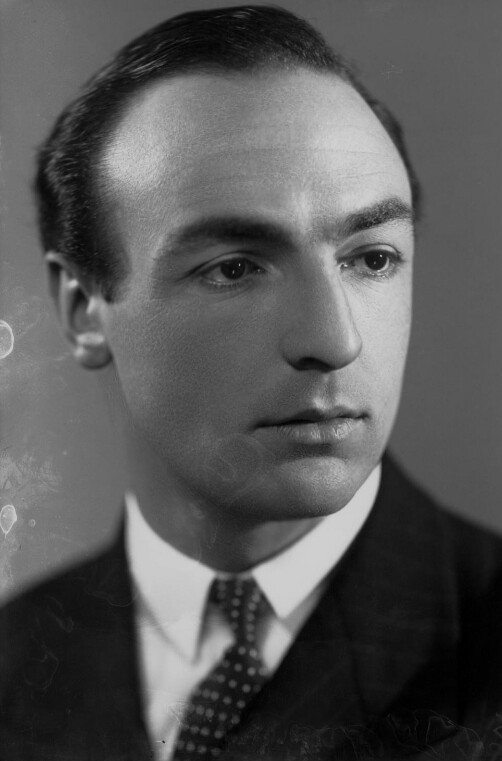
On March 22, 1963, British Secretary of State for War John Profumo stood before the House of Commons and categorically denied any "impropriety whatsoever" in his relationship with Christine Keeler, a 19-year-old showgirl and model. Ten weeks later, on June 5, he admitted he had lied. The admission ended his political career and triggered the most damaging political scandal in twentieth-century Britain.
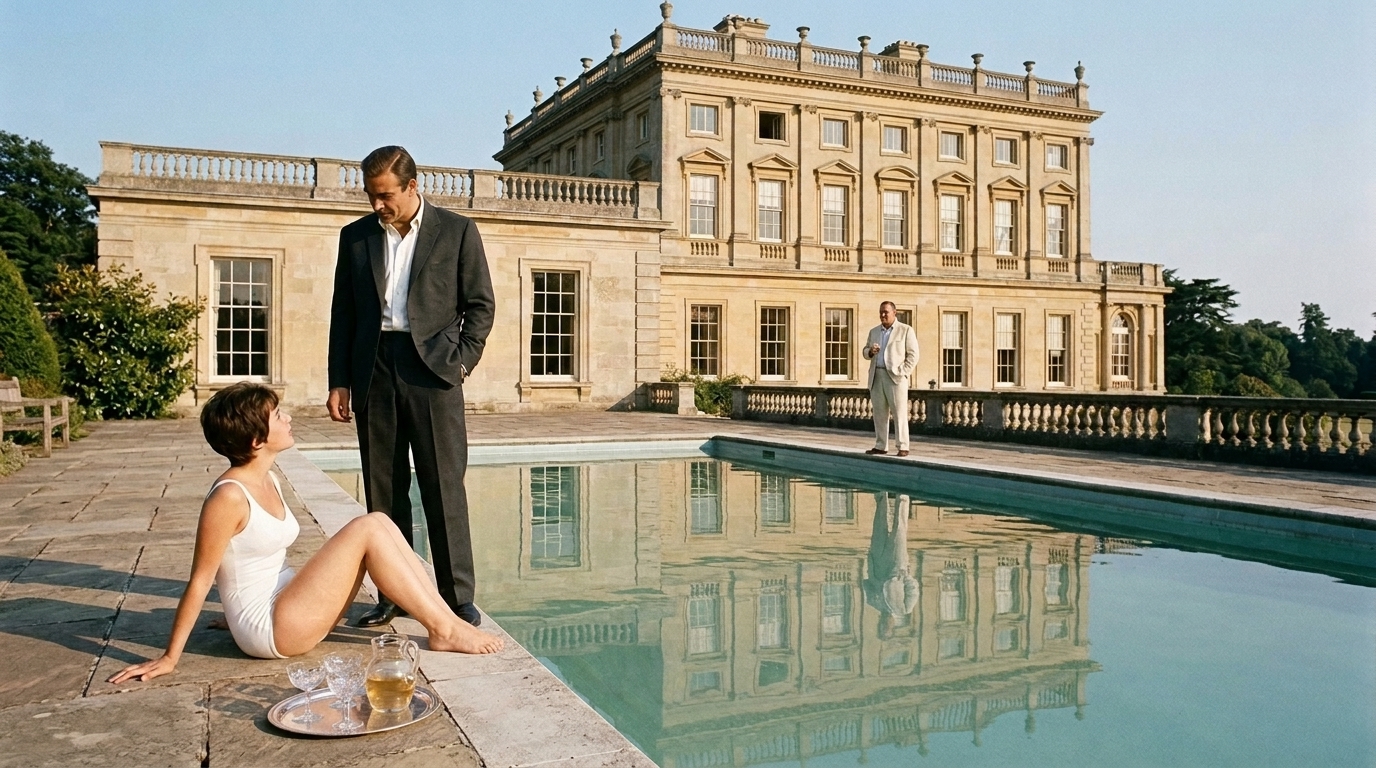
The affair itself was brief—a series of encounters in the summer of 1961 at Cliveden, the Thames-side estate of Lord Astor, and a few subsequent meetings in London. But its implications were profound. Keeler was simultaneously involved with Captain Yevgeny Ivanov, assistant naval attaché at the Soviet Embassy and a suspected GRU intelligence officer. Profumo had access to classified NATO nuclear secrets. The overlap created genuine security concerns at the height of the Cold War, just months before the Cuban Missile Crisis.
What transformed a sex scandal into a constitutional crisis was not the affair itself but Profumo's lie to Parliament—a breach of ministerial responsibility that Prime Minister Harold Macmillan's government never recovered from. The scandal exposed the intertwined worlds of aristocratic privilege, organized crime, and Cold War espionage, while demolishing public trust in the Establishment. It contributed directly to the Conservative Party's defeat in the 1964 general election and marked a turning point in British political culture toward greater media scrutiny and diminished deference to authority.
Background
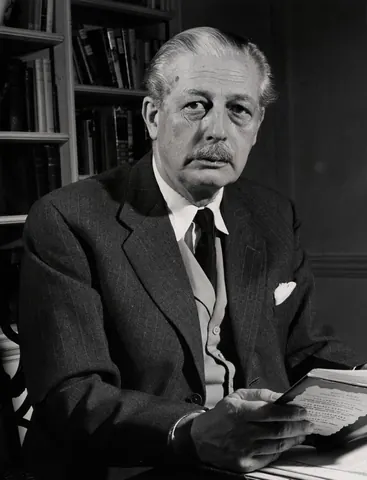
Post-war Britain in the early 1960s existed in a state of social tension between traditional class hierarchies and emerging cultural change. The Conservative government of Harold Macmillan represented the old order—patrician, discreet, and gentlemanly in its conduct. Macmillan himself, an Edwardian figure educated at Eton and Oxford, epitomized the social distance between the governing elite and ordinary Britons.
The Cold War context was critical. Britain remained a nuclear power and a key NATO member, with access to American intelligence and nuclear strategy through the "special relationship." The Berlin Crisis of 1961 had brought East-West tensions to a peak. Soviet intelligence services operated actively in London, recruiting sources and gathering information on Western defense capabilities. MI5, Britain's domestic security service, maintained surveillance on Soviet officials and diplomats, including naval attachés who often served as cover positions for intelligence officers.
Stephen Ward, the figure at the center of the scandal, occupied a unique position in London society. An osteopath whose clients included members of the royal family and senior politicians, Ward moved easily between aristocratic country houses and the demi-monde of nightclubs and call girls. Ward cultivated relationships with young women, often from working-class backgrounds, introducing them to wealthy and powerful men. He also knew Soviet officials socially and had been approached by MI5 about serving as an intermediary.
Christine Keeler, born in 1942 in railway carriage in Wraysbury, Buckinghamshire, came from a broken home and left school at 15. By 1959 she was working as a showgirl at Murray's Cabaret Club in Soho, where she met Ward. He offered her a room in his flat on Wimpole Mews, introducing her to his social circle, which included Lord Astor, whose Cliveden estate became a weekend retreat for Ward and his protégées.
The Investigation
The Cliveden Weekend (July 1961)
On the weekend of July 8-9, 1961, John Profumo and his wife, actress Valerie Hobson, were guests at Cliveden for a dinner party hosted by Lord Astor. Stephen Ward was staying in a cottage on the estate. On Saturday evening, Ward brought Christine Keeler and another young woman, Mandy Rice-Davies, to swim in the estate's outdoor pool.
Profumo encountered Keeler by the pool—accounts vary, but most suggest she had just emerged from swimming, either nude or topless. They were introduced by Ward. This encounter is ESTABLISHED FACT, corroborated by multiple witnesses including Lord Astor and Profumo's later admission.
Also present that weekend, though not at the pool encounter, was Captain Yevgeny Ivanov, assistant naval attaché at the Soviet Embassy. Ward had cultivated a friendship with Ivanov and brought him into his social circle. MI5 knew of Ward's contact with Ivanov and had asked Ward to facilitate intelligence assessment of the Soviet officer. Whether Ward was acting as an intelligence asset or simply enjoyed the game of espionage remained disputed throughout the subsequent investigations.
The Affair Develops
Following the Cliveden meeting, Profumo pursued Keeler. He called her, sent notes, and arranged meetings at Ward's Wimpole Mews flat. The relationship lasted approximately six weeks in July-August 1961, involving perhaps six sexual encounters. Profumo ended contact in late August, possibly warned by security services or recognizing the risk himself. This timeline is ESTABLISHED FACT from Profumo's confession, Keeler's testimony, and corroborating evidence including notes.
During the same period, Keeler was involved with Ivanov. She later claimed Ward asked her to discover from Profumo when West Germany would receive American nuclear warheads—a question Ivanov had supposedly posed to Ward. This claim remained DISPUTED. Keeler's testimony evolved over time, and no independent evidence confirmed the warheads question. Ward denied asking her to obtain information, and subsequent inquiries found no evidence of intelligence compromise.
MI5 maintained surveillance on Ivanov throughout this period. Whether MI5 knew of the Profumo-Keeler connection in 1961 remained a point of controversy. Later investigations suggested MI5 had identified a "senior minister" visiting Ward's flat but had not determined it was Profumo or alerted the Prime Minister.
The Scandal Breaks
The affair might have remained private except for a shooting incident in December 1962. Keeler had become involved with two men, Johnny Edgecombe and Aloysius "Lucky" Gordon, both West Indian immigrants. A love triangle developed, culminating in Edgecombe firing shots outside Ward's flat while seeking Keeler. Edgecombe was arrested and charged.
Keeler was a witness in the upcoming trial. As journalists investigated the background, rumors spread about her connections to prominent men, including a Cabinet minister. A Labour MP, George Wigg, who had been gathering information about the case, planned to use parliamentary privilege to raise questions about security implications.
On March 21, 1963, multiple newspapers were poised to publish stories. Profumo was warned that questions would be asked in Parliament. In an emergency meeting after midnight on March 22, Profumo consulted senior colleagues and drafted a personal statement categorically denying any impropriety. At 11 a.m. that morning, he read the statement to the House of Commons:
"I last saw Miss Keeler in December 1961, and I have not seen her since... There was no impropriety whatsoever in my acquaintanceship with Miss Keeler."
This statement was a LIE—an ESTABLISHED FACT. Profumo knew he had lied to his colleagues and to Parliament. Under the British constitutional convention of ministerial responsibility, lying to Parliament is a resignation offense.
The Unraveling
Profumo's statement temporarily quieted the scandal, but pressure mounted through spring 1963. Stephen Ward, increasingly desperate as his social world collapsed around him, contacted his MI5 contacts and eventually wrote to the Home Secretary and Opposition leader, claiming he could prove Profumo had lied.
On June 4, 1963, Profumo finally admitted the truth to government Chief Whip Martin Redmayne. The next day he submitted his resignation to Prime Minister Macmillan, confessing he had "misled you, and my colleagues, and the House."
The admission was catastrophic. Parliamentary opposition demanded full disclosure of security implications. The press, restrained before by fear of libel, now published extensive details. Public anger focused not just on the sexual misconduct but on the lying and the suggestion of establishment cover-up.
The Ward Prosecution and Death
Stephen Ward became the scandal's scapegoat. In June 1963 he was arrested and charged under the Sexual Offences Act 1956 with living off immoral earnings—essentially, procuring prostitution. The prosecution was INFERENCE presented as legal fact: Ward's provision of accommodation to young women was characterized as profiting from their sexual relationships with wealthy men.
The trial began July 22, 1963, at the Old Bailey. Keeler and Rice-Davies testified, their evidence often contradictory. The prosecution case was legally weak—Ward took no money from the women's sexual activities—but the political context ensured conviction was likely. On July 30, before the verdict, Ward took an overdose of sleeping pills. He died on August 3, 1963, three days after being convicted in absentia. His death was ruled suicide; INFERENCE suggests the prosecution was politically motivated to direct blame away from more powerful figures.
The Denning Report
Prime Minister Macmillan commissioned Lord Denning, Master of the Rolls, to conduct a judicial inquiry into security aspects of the case. Denning's report, published September 1963, was the most comprehensive official investigation.
Key findings (ESTABLISHED FACTS from official inquiry):
- No evidence suggested Profumo disclosed classified information - MI5 had learned of a minister visiting Ward's flat in August 1961 but failed to identify him as Profumo or inform the Prime Minister - No evidence proved Keeler was asked to obtain information from Profumo for Ivanov - Ivanov had been recalled to Moscow in January 1963, before the scandal broke publicly - Security services were criticized for inadequate communication with ministers
Denning interviewed 160 witnesses and reviewed classified files. His report confirmed the affair happened and the lie to Parliament occurred, but found no security breach. The report's salacious details—it named eight other senior figures rumored to be involved with call girls—ensured massive publicity, selling 100,000 copies on publication day.
Critics noted Denning's inquiry lacked judicial procedure—witnesses had no right to counsel, cross-examination was limited, and national security claims restricted disclosure. The report's exoneration of MI5 and the government was characterized by some as INFERENCE shaped by institutional protection rather than pure fact-finding.
Political Consequences
Harold Macmillan never recovered politically. Already 69 and increasingly seen as out of touch, he resigned in October 1963, citing ill health, though the scandal had clearly weakened him. The Conservative Party, in power since 1951, lost the October 1964 general election to Labour under Harold Wilson, who had skillfully exploited the affair to characterize the Tories as corrupt and incompetent.
The scandal permanently changed British political culture. The tradition of press deference to politicians' private lives ended. The doctrine of ministerial responsibility—that ministers must tell Parliament the truth or resign—was reinforced, though future decades would see this principle increasingly tested.
Evidence Assessment
Established Facts
Profumo-Keeler affair occurred (July-August 1961)
Confirmed by Profumo's resignation statement, Keeler's contemporary testimony, physical evidence including handwritten notes from Profumo to Keeler, and testimony of witnesses including Ward and Lord Astor. No serious dispute exists about the relationship's occurrence.
Profumo lied to Parliament (March 22, 1963)
His personal statement denying impropriety is a matter of parliamentary record. His subsequent confession (June 5, 1963) explicitly admits the lie. This is the constitutional core of the scandal.
Keeler's simultaneous involvement with Ivanov
Confirmed by multiple witnesses, Keeler's testimony, and surveillance records showing Ivanov visiting Ward's flat during the period Keeler lived there. The overlap of relationships is established fact.
Ivanov's status as intelligence officer
While officially assistant naval attaché, Soviet naval attaché positions routinely served as GRU (military intelligence) cover. MI5 files later declassified confirmed Ivanov was assessed as intelligence officer. Western intelligence services treated all Soviet attachés as probable intelligence operatives.
Ward's MI5 contact
Denning Report confirmed MI5 had approached Ward about providing assessments of Ivanov. MI5 files show Ward met with MI5 officer Keith Wagstaffe in 1961 and reported conversations with Ivanov.
No classified information compromise
Denning inquiry, subsequent MI5 assessments, and decades of historical research have found zero evidence Profumo disclosed secrets or that Soviet intelligence gained NATO information through this channel. Absence of evidence is not conclusive but represents the strongest available assessment.
Ward's prosecution and death
Court records, trial transcripts, and medical reports establish Ward was convicted of living off immoral earnings and died from barbiturate overdose August 3, 1963, after being found guilty. Suicide verdict by coroner is official record.
Strong Evidence
MI5 knew of ministerial involvement by August 1961 but failed to identify Profumo: Denning Report states surveillance detected "a senior minister" visiting Ward's premises. The failure to investigate or inform the Prime Minister is documented in MI5's own records reviewed by Denning and later historians.
Political motivation behind Ward prosecution
Contemporary legal observers, including Ward's defense counsel, characterized the charges as weak and prosecution as exceptionally aggressive. Timing—immediately after Profumo's resignation—and selective targeting of Ward while not charging the women or clients suggests political motive, though this remains INFERENCE from circumstantial evidence rather than documentary proof of explicit direction.
Macmillan government's security negligence
Cabinet papers and ministerial memoirs reveal confusion about who knew what when, inadequate security protocols for ministerial conduct, and failure of security services to brief ministers on risks. The government's response was reactive and chaotic—strong evidence of systemic failure rather than intentional cover-up.
Moderate Evidence
Ward asked Keeler to obtain nuclear warhead information from Profumo
Keeler's testimony to police and in subsequent accounts described Ward asking her to learn when West Germany would receive nuclear weapons, supposedly on behalf of Ivanov. No independent corroboration exists. Ward denied this before his death. Denning found the claim unproven. The inconsistency in Keeler's various tellings across decades weakens the evidence, though the claim is plausible given the Cold War context.
MI5 warned Profumo indirectly in August 1961
Some accounts suggest security services sent warning through intermediaries that Profumo should end contact with Ward's circle. Profumo did end the affair in late August. No direct documentary evidence proves the warning, making this INFERENCE from the timing.
Other Cabinet ministers involved with Ward's women
Denning identified rumors about eight other prominent men. No prosecutions followed. Some names leaked over decades, none proven with same documentation as Profumo case. The culture of Ward's social circle clearly involved other powerful men, but evidence for specific individuals remains moderate to weak.
Weak Evidence
Soviet intelligence planned honey trap operation
SPECULATION that Ivanov and Ward deliberately arranged the Profumo-Keeler encounter to create kompromat is unsupported by evidence. The Cliveden pool meeting appears to have been chance, not orchestrated. While Soviet intelligence certainly sought to exploit the situation once aware, no evidence suggests pre-planning.
Organized cover-up by government
While the government attempted damage control and the Ward prosecution served political purposes, no documentary evidence proves a coordinated conspiracy to hide facts from Parliament or public before Profumo's confession. The pattern suggests incompetence and institutional protection rather than criminal conspiracy.
Disputed Claims
Extent of Keeler's knowledge of security implications
Keeler characterized herself variously as naive victim and as aware of espionage dimensions. Her multiple accounts across six decades contain contradictions, making her reliability disputed. Courts treated her as credible witness in Ward trial, but historians note inconsistencies.
Ward's true role
Was he MI5 asset, Soviet talent-spotter, procurer, social facilitator, or some combination? Evidence exists for all characterizations. Ward himself claimed he was trying to facilitate East-West dialogue through social contact with Ivanov. His motivations remain disputed territory.
Whether other classified leaks occurred through Ward's circle
Allegations surface periodically that other ministers or officials compromised information through relationships with women in Ward's network. No substantiated cases have been proven, but absence of evidence reflects classification and the difficulty of proving information transfer in retrospect.
Unsupported Claims
Ward was murdered rather than suicide
Conspiracy theories suggest Ward was killed to prevent further revelations. Medical evidence, coroner's verdict, and circumstantial evidence (Ward's depression, suicide note, method) all support suicide. Murder claims lack any credible foundation.
Denning Report concealed evidence of extensive spy ring
Claim that Denning hid proof of widespread Soviet penetration of British government through sexual blackmail lacks supporting evidence and contradicts the documented incompetence of the handling, which suggests limited sophistication rather than deep conspiracy.
Royal family involvement
Rumors have circulated about various royal figures being involved with Ward's circle or present at parties. No credible evidence supports direct involvement. The Queen's brother-in-law Lord Snowdon (Anthony Armstrong-Jones) knew Ward professionally as they both had photography interests, but claims of compromising involvement are unsubstantiated gossip.
Credible Dissenting Voices
Phillip Knightley and Caroline Kennedy (authors of An Affair of State, 1987) argued the security threat was greater than officially acknowledged. They contended MI5's failure to act on intelligence about Profumo's relationship represented more serious negligence than Denning admitted, possibly indicating institutional protection of ministerial privilege over security. Their research, based on interviews with participants, suggested the Denning inquiry was constrained by terms of reference that prevented deeper investigation. Mainstream historians consider their work thorough but acknowledge Denning had access to classified files unavailable to independent researchers.
Anthony Summers and Stephen Dorril (authors of Honeytrap, 1987) proposed Ivanov and Soviet intelligence deliberately targeted Profumo through Keeler, making the affair a classic honey trap operation. They cited Ivanov's GRU training and the timing of his approach to Ward. Critics note their evidence is largely circumstantial and that the chaos of the scandal's unfolding contradicts the discipline expected of a planned intelligence operation.
Geoffrey Robertson QC argued in legal analyses that Ward's prosecution was a miscarriage of justice driven by political necessity to provide a scapegoat. Robertson pointed to the weakness of evidence that Ward lived off immoral earnings—he provided rooms but took no portion of any payments the women received. The prosecution's selective targeting and aggressive approach suggested abuse of legal process for political ends. This view is widely accepted among legal scholars examining the case.
Richard Davenport-Hines (author of An English Affair, 2013) challenged the narrative that the scandal caused the Conservative defeat in 1964, arguing economic factors and natural political cycles were more significant. He noted opinion polls showed the Tories recovering by late 1963 and that Wilson's victory margin was narrow (four seats). While the scandal damaged Conservative credibility, Davenport-Hines contended its political impact has been overstated in popular memory.
Legacy
The Profumo Affair fundamentally altered the relationship between British politicians, the press, and the public. The tradition of press discretion about politicians' private lives—which had protected figures like David Lloyd George and Ernest Bevin despite their openly maintained mistresses—ended. The scandal established that a minister's personal conduct could be publicly scrutinized if it raised security questions or involved lying to Parliament.
The doctrine of ministerial responsibility was reinforced: lying to Parliament required resignation. Yet this principle would be tested repeatedly in subsequent decades, with ministers sometimes surviving what earlier would have been resignation offenses, suggesting the Profumo standard set an increasingly difficult bar.
The scandal accelerated social change already underway in 1960s Britain. The class gulf between aristocratic ministers and working-class women like Keeler became a focus of media commentary. The trial of Stephen Ward, with its parade of showgirls and prostitutes testifying against establishment figures, dramatized social hierarchies in transition. The scandal's sexual dimension foreshadowed the cultural revolution of the later 1960s while revealing the continuing power of Victorian morality.
John Profumo himself achieved a form of redemption unique in British public life. After resigning, he spent forty years in charitable work, particularly at Toynbee Hall, a settlement house in London's East End. He worked without publicity, declining interviews and refusing to profit from his notoriety. By the 1970s he was quietly respected; in 1975 he was appointed CBE for his charity work. Margaret Thatcher invited him to her 70th birthday party in 1995. When he died in 2006, obituaries honored his rehabilitation while documenting his disgrace—a rare example of public redemption from political scandal.
Christine Keeler struggled after the scandal. She was imprisoned briefly for perjury in the Gordon assault trial. Multiple memoirs and media appearances over six decades provided income but kept her trapped in the role of "scandal girl." She disputed various characterizations of her role, sometimes claiming victimhood, sometimes defending her actions. She maintained Ward had been scapegoated and that she had been a teenager manipulated by powerful men. She died in 2017 at 75, her life forever defined by events in the summer of 1961.
"I have come to the conclusion that I did wrong in lying to Parliament. I am therefore writing to tender my resignation," Profumo wrote to Macmillan on June 5, 1963—words that encapsulated the constitutional principle at stake, regardless of the sexual morality.
"One of the most squalid stories in the history of British politics," Lord Denning wrote, capturing elite distaste for the mingling of aristocracy, prostitution, and espionage—a judgment reflecting both the scandal's genuine impropriety and the class anxiety it provoked.
Frequently misunderstood is that no evidence ever emerged of actual espionage success. The scandal was about potential security risk, not proven compromise. Popular culture has often depicted the affair as a successful Soviet operation, but historical evidence does not support that narrative. The security failure was in allowing the situation to develop and in MI5's inadequate communication with ministers, not in leaked secrets.
Another common misconception: that the affair caused immediate government collapse. Macmillan's government continued four months after Profumo resigned, and the Conservatives remained competitive in polls through 1963-64. The scandal was a major factor in Conservative defeat but operated alongside economic concerns, housing issues, and fatigue with thirteen years of Tory rule.
Research opportunities remain regarding the full extent of MI5 knowledge and decision-making in 1961-63. Cabinet papers and MI5 files have been progressively declassified, with major releases in 1992, 2003, and 2017 under the 30-year and 50-year rules. Each release adds detail but has not fundamentally changed the established narrative. Files concerning living individuals may remain closed, meaning some details about participants beyond Profumo and Ward may emerge as those files are eventually released.
The case continues to resonate in debates about ministerial responsibility, national security vetting, and the boundaries of privacy for public figures. Every subsequent political sex scandal in Britain—from Cecil Parkinson to David Mellor to John Major's "back to basics" ministers to more recent cases—is measured against the Profumo standard: Did the minister lie to Parliament? Is there a security dimension? The answers to those questions determine whether a personal indiscretion becomes a resignation matter.
Confidence Assessment
The documentary record for the Profumo Affair is exceptionally strong. The Denning Report, despite its limitations, provided comprehensive official documentation. Court transcripts from Ward's trial, parliamentary records of Profumo's statements, Cabinet papers, MI5 files (progressively declassified), police records, contemporary newspaper archives, and memoirs from major participants create a multi-sourced evidentiary foundation. The core facts—the affair occurred, Profumo lied to Parliament, no classified information was proven compromised, Ward was prosecuted and died by suicide, and the scandal contributed to Conservative electoral defeat—are established beyond reasonable dispute.
Uncertainty remains primarily in three areas: the precise content and timing of MI5 knowledge and warnings in 1961-62; Stephen Ward's true motivations and the full extent of his intelligence contacts; and whether the "nuclear warheads" question was actually posed to Keeler. These gaps reflect the inherent difficulty of reconstructing private conversations and intelligence operations, not absence of overall documentation. The affair is among the best-documented political scandals in British history, offering future researchers rich archival resources while acknowledging that human motivations and unrecorded conversations leave necessary space for historical interpretation.
Case Timeline
- 1959CORROBORATEDChristine Keeler meets Stephen Ward; begins living in his Wimpole Mews flatWard cultivated young women from working-class backgrounds, introducing them to wealthy social circle
- 1960GOVERNMENT RECORDStephen Ward befriends Soviet assistant naval attaché Yevgeny IvanovWard's social connections included diplomats; MI5 aware of relationship and saw intelligence opportunity
- 1961-07-08PRIMARY SOURCEProfumo meets Christine Keeler at Cliveden pool partyChance encounter at Lord Astor's estate initiated relationship between War Secretary and showgirl
- 1961-07CORROBORATEDProfumo and Keeler begin brief affair; Keeler simultaneously involved with IvanovSix-week relationship created potential security risk with Cabinet minister and Soviet intelligence officer sharing same woman
- 1961-08GOVERNMENT RECORDMI5 officer Keith Wagstaffe meets Ward to discuss Ivanov; Profumo ends relationship with KeelerSecurity services sought to use Ward as intelligence channel; timing suggests Profumo may have been warned indirectly
- 1962-10CORROBORATEDCuban Missile Crisis focuses attention on Soviet intelligence activities in WestInternational context heightened security sensitivity around any Soviet contact with Western officials
- 1962-12-14COURT RECORDJohnny Edgecombe fires shots outside Ward's flat seeking KeelerCriminal incident triggered police investigation that would expose Keeler's connections to prominent men
- 1963-01CORROBORATEDIvanov recalled to Moscow by Soviet authoritiesGRU removed Ivanov from London before scandal broke publicly, suggesting Moscow knew situation was compromised
- 1963-03-21CREDIBLE REPORTINGMultiple newspapers prepare to publish stories about ministerial involvement with KeelerPress investigation reached critical mass as Edgecombe trial approached and rumors spread through Westminster
- 1963-03-22PRIMARY SOURCEProfumo tells House of Commons there was "no impropriety whatsoever" in relationship with KeelerPersonal statement to Parliament was categorical lie—the constitutional violation at heart of scandal
- 1963-06-04GOVERNMENT RECORDProfumo admits to government Chief Whip that he lied to ParliamentConfession came after Stephen Ward contacted authorities offering to prove Profumo had lied
- 1963-06-05PRIMARY SOURCEProfumo resigns as Secretary of State for War and from House of CommonsResignation letter explicitly acknowledged lying to Parliament and colleagues—rare admission of constitutional breach
- 1963-06-08COURT RECORDStephen Ward arrested on charges of living off immoral earningsProsecution widely seen as politically motivated scapegoating to deflect blame from establishment figures
- 1963-07-22COURT RECORDWard's trial begins at Old Bailey with Keeler and Rice-Davies as prosecution witnessesSensational testimony about Ward's social circle and relationships exposed intersection of aristocracy and demi-monde
- 1963-07-30COURT RECORDStephen Ward takes overdose of barbiturates before verdict; convicted in absentia July 31Suicide attempt came as guilty verdict appeared certain; Ward died August 3 without regaining consciousness
- 1963-09-26GOVERNMENT RECORDLord Denning publishes official inquiry report on security aspects of affairReport found no evidence of security breach but criticized MI5 communication failures; sold 100,000 copies
- 1963-10-18CORROBORATEDPrime Minister Harold Macmillan resigns citing ill healthResignation followed prostate surgery but was clearly hastened by political damage from Profumo scandal
- 1964-10-15CORROBORATEDLabour Party under Harold Wilson defeats Conservatives in general electionFour-seat Labour majority ended thirteen years of Conservative rule; Profumo scandal was major campaign issue
Key People
Evidence Library
- documentDOC-PS1Profumo's Personal Statement to Parliament (March 22, 1963)
Official parliamentary record of Profumo's statement categorically denying impropriety with Keeler. This document is central evidence of the lie to Parliament that forced his resignation. Hansard transcript is public record establishing what he told Parliament versus what he later admitted.
- documentDOC-RL1Profumo's Resignation Letter (June 5, 1963)
Letter to Prime Minister Macmillan admitting he misled Parliament and colleagues. Establishes the constitutional violation at the scandal's core. Published in full in newspapers at time and subsequently in official records.
- documentpartial redactionDOC-DR1The Denning Report (September 1963)
Lord Denning's judicial inquiry into security aspects. Based on 160 witness interviews and classified file review. Found no security breach but documented MI5 communication failures and Ward's role. Primary official investigation of the affair.
- court filingCT-W1R v. Ward Trial Transcripts (July 1963)
Old Bailey trial transcripts documenting testimony of Keeler, Rice-Davies, and other witnesses about Ward's relationships and activities. Evidence includes descriptions of Ward's social circle, Profumo's visits, and Ivanov's presence. Testimony often contradictory but provides contemporary sworn evidence.
- documentheavy redactionDOC-MI5-1MI5 Files on Ivanov and Ward (declassified 1992-2017)
Security Service files documenting surveillance of Ivanov, contacts with Ward as potential intelligence source, and assessments of security risk. Files show MI5 knew of ministerial visitor to Ward's flat but failed to identify or warn appropriately. Released progressively under declassification rules.
- physicalPHY-N1Handwritten notes from Profumo to Keeler
Several handwritten notes from Profumo arranging meetings with Keeler in summer 1961. Physical evidence corroborating the relationship's existence and Profumo's pursuit of Keeler. Notes were sold at auction and reproduced in media coverage.
- testimonyTEST-CK1Christine Keeler's police statements and memoirs
Multiple statements to police in 1963, trial testimony, and subsequent memoirs (1983, 2001, 2012). Evidence evolves and contains contradictions across six decades. Contemporary police statements carry most weight; later memoirs reflect changed perspectives and commercial considerations.
- documentpartial redactionDOC-CAB1Cabinet Papers and Ministerial Correspondence (declassified under 30-year rule)
Internal government papers documenting Cabinet discussions of scandal, security briefings, and crisis management. Reveal confusion about who knew what when, inadequate protocols, and chaotic response. Support interpretation of incompetence over conspiracy.
Evidence Gallery

Sources
Trace the trail yourself
Investigation Network




Live Discussion
0 Perspectives
Add to the record. Be specific. Cite where you can.
If you're learning about this topic for the first time, these are the best places to continue — documented evidence and historical relationships are the guide.
Named in “The Profumo Affair”.
Read more dossiers like this
Get a quiet one-line bulletin when new investigative files are published. Bound to this dossier — useful for tracking follow-ups.