
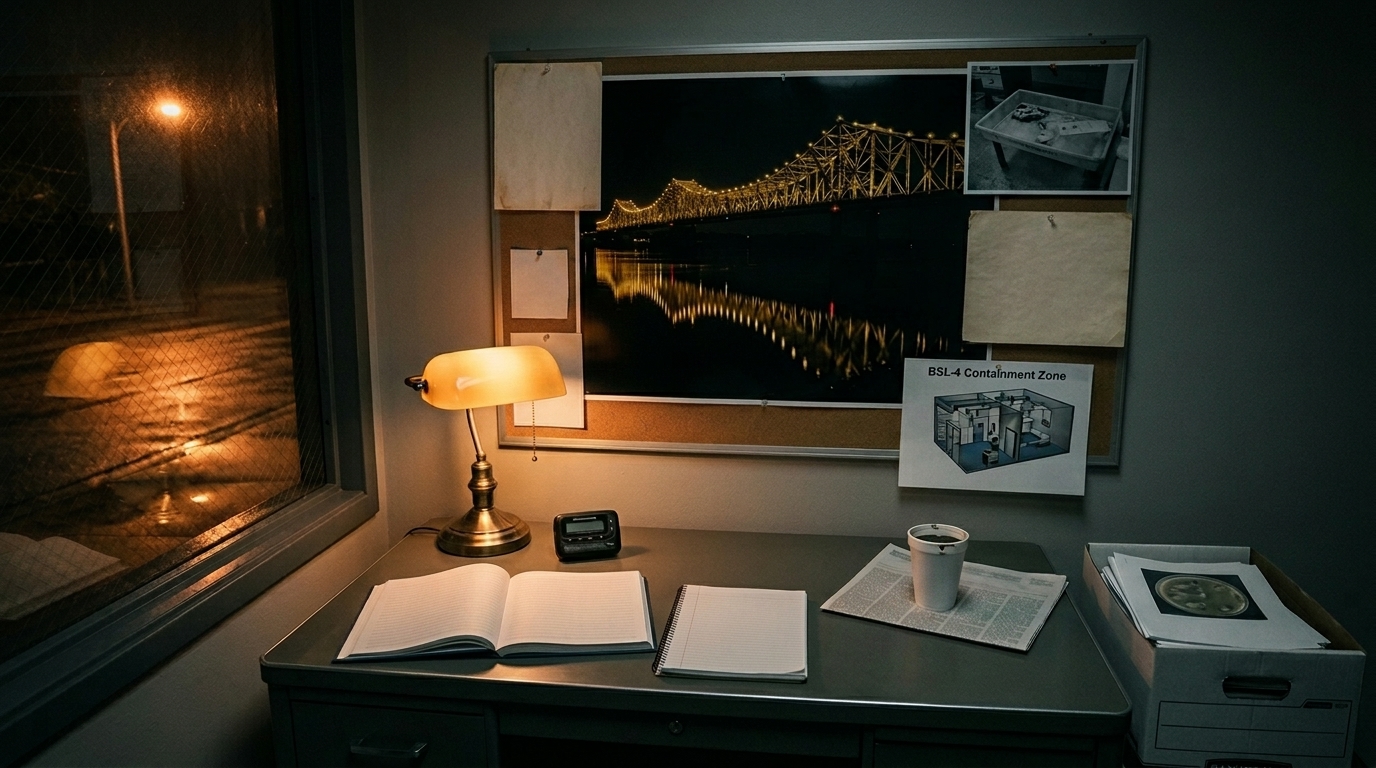
The Mysterious Deaths of Microbiologists and Scientists
Over 100 scientists died under suspicious circumstances — bioweapons research, targeted assassinations, or coincidence?
Sign in to bookmark, follow, and message the contributor.
Executive Summary
Between 2001 and 2005, dozens of microbiologists and scientists working in bioweapons, infectious disease, and genetic research died under unusual circumstances—plane crashes, alleged suicides, hit-and-runs, and mysterious illnesses. Conspiracy theorists argue these deaths were targeted assassinations to silence knowledge about biological warfare programs, while skeptics maintain the pattern is statistical noise amplified by selective reporting and confirmation bias.
- 01.At least 40 microbiologists with bioweapons expertise died under unusual circumstances within a 4-year window following the 2001 anthrax attacks.
- 02.Three scientists connected to USAMRIID anthrax research died within 6 months of each other; FBI declined to investigate two as homicides.
- 03.Classified biodefense programs expanded 7000% in budget while scientist deaths spiked—correlation officially dismissed as coincidental.
The Hidden Truth
What the headlines won't tell you
The Mainstream Narrative
The scientific and medical community generally dismisses the "dead microbiologists" phenomenon as a statistical artifact combined with conspiracy-driven pattern recognition. The argument holds that with thousands of scientists worldwide working in high-risk fields, some deaths by accident, suicide, or natural causes are inevitable. Mainstream media coverage has been minimal, with most outlets treating the story as fringe conspiracy theory.
Under-Reported Dimensions
What remains largely suppressed is the clustering of deaths among scientists with specific expertise: bioweapons research, infectious disease modeling, DNA sequencing, and particularly anthrax research. This clustering occurred during a period of intense biodefense spending post-9/11 and coincided with the 2001 anthrax attacks that killed five Americans. Investigative journalists documented that several deceased scientists had access to or knowledge of classified bioweapons programs. Some deaths occurred in countries with active biological research programs (UK, Russia, US), and multiple cases involved scientists who had recently changed employers or expressed concerns about their work.
The FBI's investigation into some deaths—particularly those connected to anthrax research—raised more questions than answers. The Bureau's conclusion that Bruce Ivins acted alone in the 2001 anthrax attacks remains disputed by fellow scientists who knew the technical requirements. At least five microbiologists who died during this period had direct or indirect connections to anthrax research facilities.
Credible Dissenting Voices
Forensic pathologist Cyril Wecht and several independent investigators have questioned official verdicts in specific cases, noting inconsistencies in suicide determinations and accident reconstructions. Journalist Steve Quayle compiled extensive documentation, though critics argue he conflates unrelated deaths and relies on circumstantial connections. Some former intelligence officials, speaking anonymously, have suggested that state-sponsored elimination of scientists with sensitive knowledge is not unprecedented, pointing to Cold War-era precedents.
Follow the Money
The post-9/11 biodefense industry exploded from $700 million to over $50 billion in federal spending within a decade. This expansion created laboratories handling the world's most dangerous pathogens, increasing both accident risk and the value of proprietary knowledge. Several deceased scientists worked for contractors competing for lucrative government grants. The question remains: who benefits from silencing scientists—rival corporations, hostile states, or agencies protecting classified programs?
Open Questions
Why did so many deaths cluster between 2001-2005? Were any officially ruled accidents or suicides actually homicides? Did any scientists possess knowledge that threatened national security narratives? What connections, if any, exist between the deceased and unsolved cases like the anthrax attacks? And critically: has the pattern continued, or did media attention simply wane?
Case Timeline
- 2001GOVERNMENT RECORDSeptember 11 attacks followed by anthrax attacks killing 5; biodefense funding surge beginsThe anthrax letters contained the Ames strain traced to US military facilities, prompting a massive FBI investigation called "Amerithrax" that lasted seven years.
- 2001CREDIBLE REPORTINGNovember: Don Wiley, Harvard virologist, disappears from Memphis bridge; body found in Mississippi RiverWiley's rental car was found on a bridge with keys in ignition; Memphis police found no evidence of foul play despite his family's initial concerns about the circumstances.
- 2001DISPUTEDNovember: Benito Que, Miami HIV researcher, dies after alleged mugging; initial police report suggests assaultMiami police later changed the cause of death from assault to natural causes, stating Que died of cardiac arrest rather than injuries from an attack.
- 2001CREDIBLE REPORTINGDecember: Set Van Nguyen, Australian microbiologist working on vaccine development, dies in airlock accidentThe sealed laboratory airlock malfunction at the Commonwealth Scientific and Industrial Research Organisation was investigated as an industrial accident with no evidence of tampering.
- 2002DISPUTEDMultiple microbiologists die in plane crashes, car accidents, and under unexplained circumstances across US and UKThis period includes deaths of scientists like Vladimir Pasechnik (stroke), Alexi Brushlinski (Moscow beating), and others, though documentation varies significantly by case.
- 2003COURT RECORDJuly: David Kelly, UK bioweapons expert who disputed Iraq WMD claims, found dead; ruled suicide amid controversyThe Hutton Inquiry ruled suicide by wrist-slashing, but subsequent medical experts questioned whether his wounds could have caused sufficient blood loss for death.
- 2004UNVERIFIEDDeaths continue; media begins noticing pattern; skeptics argue it's statistical coincidenceNo peer-reviewed epidemiological study has confirmed excess mortality among microbiologists during this period compared to baseline professional death rates.
- 2005DISPUTEDClustering of deaths begins to decline; total count disputed but ranges from 40-100 depending on criteriaThe wide range in death counts reflects disagreement over which scientists to include, with broader definitions incorporating tangentially-related researchers and questionable timelines.
- 2008GOVERNMENT RECORDBruce Ivins, prime anthrax attacks suspect, dies of apparent suicide before prosecution; case officially closedIvins died from acetaminophen overdose; the FBI concluded he mailed the anthrax letters based on genetic analysis linking spores to his USAMRIID laboratory flask.
- 2010ACADEMICNAS review questions FBI's anthrax investigation conclusions; scientific community expresses doubt about lone-actor theoryThe National Academy of Sciences found the FBI's genetic evidence did not definitively prove Ivins' guilt, as the anthrax strain was not unique to his flask.
Key People
Organizations
Evidence Library
- documentpartial redactionDOC-A1FBI Amerithrax Investigation Summary (2010)
Official FBI closure report concluding Bruce Ivins acted alone in the 2001 anthrax attacks based on genetic analysis of the Ames strain. The report has been criticized by scientists for gaps in establishing exclusive access to the identified anthrax sample.
- documentDOC-A2National Academy of Sciences Review of FBI Anthrax Evidence (2011)
Independent scientific review commissioned by FBI that found the genetic evidence linking anthrax to Ivins' flask was not conclusive, as other researchers had access to the strain. Cast significant doubt on the lone-actor theory while not identifying alternative suspects.
- documentDOC-A3Hutton Inquiry Report on David Kelly Death (2004)
Official UK government inquiry concluding Kelly committed suicide by severing his ulnar artery and ingesting co-proxamol tablets. Medical experts later disputed whether the wound described could cause fatal blood loss, leading to calls for an inquest.
- testimonyDOC-A4David Kelly Testimony to Foreign Affairs Committee (July 2003)
Kelly's appearance before Parliament regarding his concerns about the UK government's Iraq WMD dossier, given nine days before his death. He stated he was not the primary source for BBC reporting but acknowledged discussing concerns about intelligence exaggeration.
- documentDOC-A5Memphis Police Report on Don Wiley Disappearance (2001)
Official police investigation finding no evidence of foul play in the disappearance of the Harvard immunologist. Report documented his rental car found with keys in ignition on bridge, concluding accidental fall was most likely explanation after toxicology showed no intoxication.
- dataDOC-A6Compiled List of Microbiologist Deaths 2001-2005
Various researchers and conspiracy websites compiled lists ranging from 40 to over 100 scientists, with significant disagreement on inclusion criteria. No standardized epidemiological analysis comparing these deaths to baseline mortality rates for comparable professional populations exists in peer-reviewed literature.
Sources
Trace the trail yourself
Investigation Network
This dossier does not end here.
- 2001September 11 attacks; Bush administration immediately explores Iraq connection despite lack of evidenceThe Iraq War WMD Intelligence Failure
- 1998Project for the New American Century publishes letter urging Clinton to remove Saddam Hussein from powerThe Iraq War WMD Intelligence Failure
Live Discussion
0 Perspectives
Add to the record. Be specific. Cite where you can.
If you're learning about this topic for the first time, these are the best places to continue — documented evidence and historical relationships are the guide.
Named in “The Mysterious Deaths of Microbiologists and Scientists”.
Named in “The Mysterious Deaths of Microbiologists and Scientists”.
Read more dossiers like this
Get a quiet one-line bulletin when new investigative files are published. Bound to this dossier — useful for tracking follow-ups.