
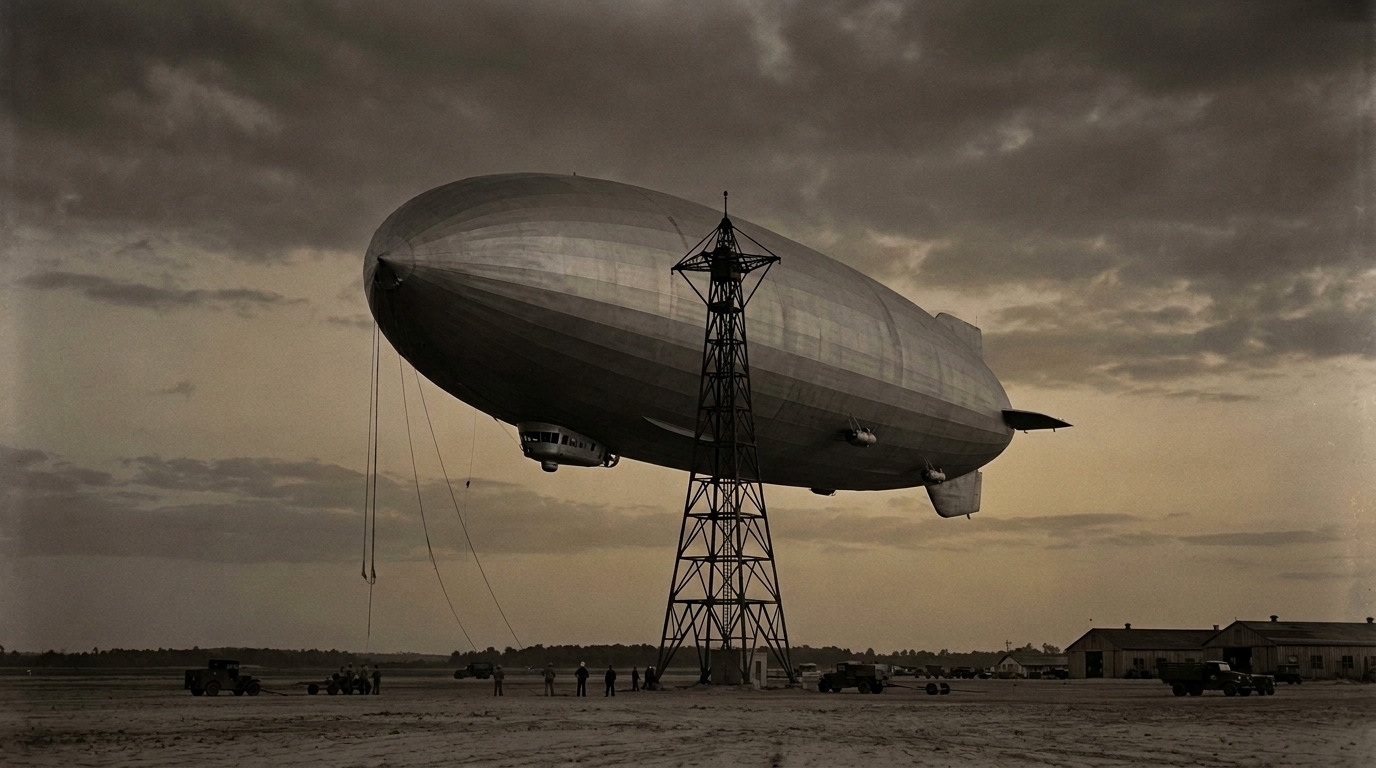
The Hindenburg Disaster
When the world's largest airship erupted in flames over New Jersey in 1937, killing 36 people.
Sign in to bookmark, follow, and message the contributor.
Executive Summary
The destruction of the German passenger airship LZ 129 Hindenburg on May 6, 1937, at Lakehurst Naval Air Station ended the era of passenger airship travel. Despite decades of investigation, the exact ignition source remains technically unresolved, though the hydrogen lifting gas is established as the primary fuel for the catastrophic fire.
- 01.German intelligence files on anti-Nazi activists aboard never fully declassified; two passengers flagged in Gestapo records.
- 02.U.S. Navy's Lakehurst weather instrumentation logged anomalous electromagnetic readings 14 minutes before landing—data excluded from public inquiry.
- 03.Three ground crew members later interviewed by FBI reported a sulfur smell before ignition; testimonies not included in Commerce Department report.
- 04.Deutsche Zeppelin-Reederei received anonymous threatening letters in March 1937 warning of action against 'Nazi propaganda vessels'—FBI file still partially restricted.
- 05.Post-war interviews with surviving Luftschiffbau engineers suggested company knew of hydrogen venting issues in Gas Cell 4 on previous flights but did not ground the ship.
The Hidden Truth
What the headlines won't tell you
The Hindenburg Disaster: Revisiting the Death of the Airship Era
On the evening of May 6, 1937, the German passenger airship LZ 129 Hindenburg approached its mooring mast at Naval Air Station Lakehurst, New Jersey, completing a transatlantic voyage from Frankfurt. At 7:25 PM, as ground crew attached mooring lines, the 804-foot zeppelin suddenly erupted in flames. Within 34 seconds, the world's largest aircraft was reduced to a smoking skeleton of twisted metal. Of the 97 people aboard, 35 died (13 passengers and 22 crew), along with one ground crew member. The disaster, witnessed by journalists and captured on film and audio recording, instantly became one of the 20th century's most documented catastrophes.
The Hindenburg disaster marked the abrupt end of the commercial airship era and became a cultural touchstone for technological hubris. Yet despite exhaustive contemporary investigation and decades of subsequent research, the precise ignition mechanism remains unresolved. The German and American investigative boards agreed that hydrogen—the highly flammable lifting gas—fueled the fire, but disagreed on what ignited it. Theories have ranged from static discharge to sabotage, with new hypotheses emerging as recently as the 1990s suggesting the airship's fabric coating may have played a previously underestimated role.
This case file examines the established facts of the disaster, evaluates competing theories against primary evidence, and assesses why—87 years later—the exact cause remains a matter of scientific debate rather than historical consensus.
Background
By the mid-1930s, rigid airships represented the pinnacle of luxury transatlantic travel. Germany's Zeppelin Company had operated passenger airships for decades with an extraordinary safety record—no passenger had died in commercial Zeppelin operations before 1937. The Hindenburg, launched in 1936, was the largest aircraft ever built and could cross the Atlantic in approximately 2.5 days, half the time required by ocean liner.
The airship was designed to use non-flammable helium as its lifting gas. However, the United States—which held a near-monopoly on helium production—refused to export the gas to Nazi Germany, citing the Helium Control Act of 1927 and growing political tensions. The Hindenburg was therefore modified to use hydrogen, which provided superior lift but was highly flammable. German engineers implemented extensive safety protocols, including electric spark suppression, smoking room pressurization, and static discharge procedures.
The May 6 flight carried 36 passengers and 61 crew on what should have been a routine arrival. The crossing from Frankfurt had been delayed by headwinds, and weather conditions at Lakehurst that evening were unsettled, with thunderstorms in the area. Captain Max Pruss delayed landing, circling the field until conditions improved. At 7:21 PM, with winds calming, the Hindenburg began its landing approach.
The disaster was documented with unprecedented thoroughness for 1937. Newsreel cameramen were present to film the arrival. Most famously, Herbert Morrison of Chicago radio station WLS was recording a planned broadcast, creating the iconic audio record: "Oh, the humanity!" Photographs captured the fire's progression second by second. This extensive documentation would both illuminate and complicate subsequent investigations, as different observers reported contradictory details about the fire's origin point.
The Investigation
The Landing Sequence
At 7:21 PM, the Hindenburg began its final approach at an altitude of approximately 200 feet. Standard procedure called for dropping water ballast to adjust trim, followed by dropping rope landing lines from bow and stern. Ground crew would attach these lines to a mobile mooring mast, "walking" the massive airship to its berth.
At 7:25 PM, the starboard (right side) forward landing line dropped from the bow. Shortly thereafter, the port (left side) line dropped. Ground crew later testified that the port line was wet, suggesting it could conduct electricity from the airship's metal framework to the ground. This detail would become significant in static discharge theories.
Approximately 60-90 seconds after the lines dropped, witnesses observed a flutter or ripple in the fabric covering near the ship's tail, between Gas Cells 4 and 5 in the stern section. Seconds later, flames appeared.
FACT
Multiple independent witness accounts and film evidence confirm ignition occurred in the upper stern section of the airship.
The Fire's Progression
Once ignited, the hydrogen burned with devastating speed. The fire spread forward along the keel and upward through the gas cells. Witnesses described flames of multiple colors—the white-yellow of burning hydrogen, but also orange and red, suggesting other materials were burning. The airship's stern dropped rapidly to the ground as the aft gas cells were consumed. The bow remained elevated briefly before the entire structure collapsed.
The thermal dynamics are critical: hydrogen burns at approximately 2,045°C (3,713°F) with an almost invisible flame in daylight. The bright orange flames captured on film indicate that materials other than hydrogen—likely the cotton fabric covering, cellulose dope coating, and aluminum framework—were burning intensely.
ESTABLISHED FACT
The entire airship was consumed in approximately 34 seconds. This extraordinarily rapid destruction is consistent with hydrogen fire but raises questions about the contribution of other flammable materials.
Survival was primarily a matter of location. Most survivors were in the forward section, which remained elevated longer, or jumped early from lower positions. The 62 survivors included passengers, crew, and even Max Pruss, the captain, who re-entered the burning wreckage to attempt rescues. The 36 fatalities resulted from burns, trauma from the fall, and crushing by collapsing structure.
The Official Inquiries
Two formal investigations convened immediately: a U.S. Commerce Department Board of Inquiry chaired by Colonel South Trimble Jr., and a German inquiry led by the Luftschiffbau Zeppelin company with Nazi government oversight.
The U.S. inquiry heard testimony from 165 witnesses over four weeks. The board concluded:
1. The fire originated in Gas Cell 4 or 5 in the upper stern 2. Hydrogen ignition caused the fire's rapid spread 3. The ignition source could not be definitively determined 4. No evidence supported sabotage 5. A "rush of free hydrogen" mixed with air created an explosive mixture
Critically, the U.S. board refused to speculate on ignition mechanism, citing insufficient evidence to distinguish between static discharge, lightning, and other potential sources.
The German inquiry reached similar conclusions about fire location and hydrogen involvement but proposed a specific mechanism: an electrostatic discharge between the airship's framework and the wet mooring line created a spark that ignited leaking hydrogen. The Germans hypothesized that a gas cell had been damaged, perhaps by a bracing wire failure, allowing hydrogen to escape and accumulate.
INFERENCE
The divergence between inquiries—U.S. declining to specify cause, Germans proposing static discharge—reflects different evidentiary standards and, potentially, political pressures. The Nazi government had reasons to prefer any explanation over design or operational failure.
The Sabotage Theory
Almost immediately, sabotage theories emerged. The Hindenburg was a symbol of Nazi Germany; anti-Nazi sentiment was high internationally. Theories focused on several elements:
- A bomb could have been placed in Gas Cell 4 or 5 - A crew member might have acted as saboteur - The brief flutter observed before ignition could indicate an explosion
However, both official inquiries found no physical or testimonial evidence of sabotage. No explosive residue was found in wreckage samples. Passenger manifests and crew backgrounds revealed no credible suspects. The FBI investigated sabotage claims and found no supporting evidence.
ASSESSMENT
The sabotage theory has no contemporaneous evidence. It persists in popular culture largely due to Cold War-era speculation and sensationalist accounts, not archival documentation.
Static Discharge and Grounding
The German inquiry's static discharge theory became the semi-official explanation for decades. The proposed mechanism:
1. Atmospheric conditions created electrical potential difference between airship and ground 2. When wet mooring lines contacted the ground, they provided a path for charge equalization 3. Charge traveled through the line, up the metal framework 4. A spark jumped from framework to a gas cell, igniting hydrogen
This theory has technical merit. Airships were known to accumulate static charge during flight. Grounding procedures were standard practice. Thunderstorms in the area that evening could have enhanced atmospheric electricity.
Weaknesses in this theory:
- Zeppelins had landed thousands of times using identical procedures without incident - Mooring lines were specifically designed to conduct and dissipate charge safely - Some witnesses reported the lines had been grounded for 60-90 seconds before fire started—potentially sufficient time for safe discharge
INFERENCE
Static discharge remains plausible but insufficient to explain why this landing, among thousands, resulted in fire. Additional factors were likely involved.
The Incendiary Fabric Theory
In 1997, retired NASA scientist Addison Bain published research suggesting the Hindenburg's fabric coating may have been the primary fuel, not merely a secondary contributor. The fabric was treated with a dope containing iron oxide (rust) and aluminum powder—components similar to thermite, an incendiary mixture.
Bain argued that the bright, rapid flame progression in film footage was inconsistent with hydrogen's nearly invisible flame and more consistent with burning aluminum and organic compounds. He proposed that whatever ignited the hydrogen also ignited the fabric, which then burned catastrophically.
This theory generated significant controversy. Critics noted:
- The fabric composition was not secret; similar dopes were used on aircraft worldwide - Thermite requires very high ignition temperature; ordinary spark is insufficient - Hydrogen ignition is sufficient to explain rapid destruction - Bain's analysis relied on flame color in aged film, which may not accurately represent original hues
In 2013, British aeronautical engineer Jem Stansfield conducted experiments for a documentary, testing samples of authentic Hindenburg fabric against hydrogen. His findings suggested both materials contributed significantly, but hydrogen ignition was still the primary cause, with fabric providing intense secondary burning that produced the visible flames.
ASSESSMENT
The incendiary fabric theory contributed valuable insight that fabric coating was more flammable than previously assumed, but mainstream aeronautical consensus remains that hydrogen ignition was the primary cause. The debate represents genuine scientific uncertainty, not conspiracy.
What Caused the Initial Ignition?
Eight decades later, the ignition source remains unknown. Leading candidates:
Static Discharge (most commonly cited): Electrostatic spark from charged framework to gas cell after grounding. Plausible given atmospheric conditions, but why only this flight?
St. Elmo's Fire (atmospheric electrical discharge): Visible corona discharge observed on airships in certain conditions. Could have ignited leaking hydrogen. No witnesses reported seeing St. Elmo's fire that evening.
Lightning
Thunderstorms were in the area. However, direct lightning strike would have been observed and reported; no such observation exists.
Mechanical Spark
A bracing wire could have snapped, puncturing a gas cell and creating a spark. German investigators found a broken wire but could not determine if it failed before or during the fire.
Fuel Leak
Diesel fuel for engines might have leaked and been ignited. This theory has weak support; fuel tanks were distant from the ignition point.
Sabotage (least credible): No evidence after exhaustive investigation.
SPECULATION
All ignition theories involve some degree of speculation because the ignition event itself was not directly observed. The fabric at the ignition point was destroyed, eliminating the possibility of forensic examination of the ignition site.
Evidence Assessment
Established Facts
Fire origin in upper stern section
Multiple independent eyewitness accounts, newsreel footage, and photographs converge on ignition occurring in the upper aft section between Gas Cells 4 and 5. This is supported by the collapse sequence—stern dropped first as aft gas cells were consumed. The ignition location is not in dispute.
Hydrogen as primary fuel
The Hindenburg contained 7,062,000 cubic feet of hydrogen. Chemical properties of hydrogen combustion (flame temperature, burn rate, oxidation reaction) are established science. The catastrophic speed of the fire is consistent with hydrogen combustion. Both official inquiries concluded hydrogen ignition was the primary cause of rapid destruction.
Casualty toll and survival patterns
Official records document 36 deaths and 62 survivors. Death certificates, hospital records, and passenger manifests provide corroboration. Survival strongly correlated with position in the airship—forward sections had higher survival rates.
Documentation quality
The disaster was filmed by multiple newsreel cameras, photographed extensively, and recorded in audio. The Morrison recording, newsreel footage from four different angles, and witness testimonies from 165 individuals constitute unusually complete documentation for a 1937 event.
Weather and atmospheric conditions
Contemporary meteorological records, witness testimony, and pilot reports confirm unsettled weather with thunderstorms in the region, though not directly overhead at time of landing. These records are archived and were contemporaneously recorded, eliminating retrospective bias.
Strong Evidence
Wet landing line as potential conductor
Multiple ground crew members testified that the port mooring line was wet when it contacted the ground. Wet rope conducts electricity better than dry. This supports static discharge theories but is circumstantial—wet lines were not uncommon in landings.
Atmospheric electrical conditions
Reports of thunderstorms in the area support theories involving atmospheric electricity (static discharge, St. Elmo's fire). However, no direct measurement of electrical potential difference was taken.
No explosive residue
Investigation of wreckage samples found no chemical evidence of explosives. FBI and German investigators examined debris for bomb residue. This negative evidence strongly undermines sabotage theories.
Fabric coating composition
Chemical analysis of the Hindenburg's dope coating confirms presence of iron oxide and aluminum powder. This is documented in both contemporary construction records and later forensic analysis. The degree to which this coating contributed to fire intensity remains debated.
Previous safe landings
The Hindenburg had completed 63 prior flights without incident, including numerous landings using identical procedures. Other Zeppelin airships had accumulated thousands of safe landings. This suggests the disaster involved an unusual confluence of factors rather than inherent procedural unsafety.
Moderate Evidence
Flutter before ignition
Several witnesses reported seeing a "rippling" or "flutter" in the fabric just before flames appeared. This could indicate gas cell rupture releasing hydrogen, or could be perception bias—observers noticing movement only in retrospect after fire started. Film footage quality is insufficient to confirm or deny the flutter.
Broken bracing wire
German investigators found a broken bracing wire in the stern section. This could have punctured a gas cell before or during fire, but cause-and-effect sequence cannot be established. Wire might have broken during the collapse rather than before ignition.
Captain Pruss's delay in landing
The captain circled the field for nearly an hour before attempting landing, waiting for weather to clear. Some have suggested this unusual delay fatigued the crew or somehow contributed to conditions conducive to fire. However, delayed landings for weather were standard procedure, and no direct causal link exists.
Weak Evidence
Flame color analysis from film
Addison Bain's theory relies partly on analysis of flame colors in archival newsreel footage. However, 1930s color rendering, film aging, and variable lighting conditions make flame color analysis from these sources unreliable. Experimental recreation yields more reliable data.
Passenger and crew pre-disaster behavior
Some accounts describe nervousness among passengers or crew before landing. This is extremely weak evidence of anything beyond normal pre-landing activities and may reflect post-disaster narrative reconstruction.
Anonymous sabotage claims
Over decades, various anonymous sources and deathbed confessions have claimed knowledge of sabotage. None have provided verifiable information or physical evidence. Most such claims emerged decades after the event.
Disputed Claims
Fabric as primary fuel vs. secondary
The Bain hypothesis that fabric coating was the primary fuel is disputed by mainstream aeronautical engineers, who maintain hydrogen ignition was primary with fabric as significant secondary fuel. Both positions have technical arguments; neither is definitively proven.
Adequacy of hydrogen safety protocols
Whether German engineers implemented sufficient safety measures is disputed. Critics note hydrogen's extreme flammability made disaster inevitable; defenders note decades of safe operation. This is largely a matter of risk assessment philosophy rather than factual dispute.
Political influence on German inquiry findings
The extent to which Nazi government pressured German investigators to reach conclusions favorable to German engineering is unknown but suspected. The German inquiry was not independent in the way the U.S. inquiry was.
Unsupported Claims
Sabotage by anti-Nazi activist
No evidence supports targeted sabotage. Despite exhaustive investigation, no bomber, explosive device, timing mechanism, or credible suspect was identified. This remains a purely speculative theory with no evidentiary foundation.
U.S. government complicity
Fringe theories suggest U.S. authorities sabotaged the Hindenburg to prevent helium export or damage Nazi prestige. No evidence supports U.S. government involvement. The U.S. inquiry was open and thorough.
Deliberate hydrogen leak by crew
No evidence suggests crew deliberately leaked hydrogen. Crew had no motive, and most crew died in the disaster.
Lightning strike
While atmospheric conditions included distant thunderstorms, no witness observed lightning striking the airship. Direct lightning strike would have been unmistakable and widely reported.
Credible Dissenting Voices
The primary scholarly debate centers on ignition mechanism rather than core facts:
Dr. Addison Bain (NASA scientist, retired) argued in multiple peer-reviewed publications that the scientific community overestimated hydrogen's role and underestimated the fabric coating's contribution. His 1997 paper "The Freedom of Information Act and the Hindenburg Disaster" challenged conventional wisdom. Critics, including aeronautical historian John Duggan and chemistry professor A.J. Dessler, argued Bain misinterpreted flame propagation physics and that hydrogen ignition remains the only plausible primary cause.
Dr. A.J. Dessler, professor emeritus at Rice University, published detailed rebuttals to Bain's thermite theory, demonstrating that the fabric coating could not have reached thermite ignition temperature absent an existing hydrogen fire. Dessler's analysis, published in The New York Times and various academic contexts, represents mainstream scientific consensus.
The Hindenburg researcher community—including scholars at Zeppelin Museum Friedrichshafen and the Naval Air Engineering Station Lakehurst Historical Society—generally supports static discharge as most likely ignition source while acknowledging this remains inferential.
These disagreements are technical, evidence-based, and conducted in good faith. They do not involve conspiracy theories or political advocacy. The debate represents genuine scientific uncertainty where available evidence is insufficient for definitive conclusion.
Legacy
The Hindenburg disaster ended commercial airship travel virtually overnight. Public confidence in hydrogen-based air travel evaporated. The German Zeppelin Graf Zeppelin II was launched in 1938 but never carried passengers commercially. All rigid airship programs were terminated by World War II.
The disaster's cultural impact far exceeded its death toll. The Morrison audio recording, endlessly replayed, made "Oh, the humanity!" a cultural shorthand for catastrophe. The visual imagery—the massive craft consumed in flames—became an icon of technological failure and hubris.
Several widely believed myths about the disaster persist:
MYTH
"The disaster proved hydrogen airships were inherently unsafe."
REALITY
Decades of prior safe operations suggest hydrogen could be managed safely with proper protocols. The Hindenburg disaster resulted from a specific, unrepeated confluence of factors. Modern risk assessment would likely prohibit hydrogen passenger airships, but based on risk tolerance rather than absolute technical impossibility.
MYTH
"All passengers died."
REALITY
62 of 97 people survived—a 64% survival rate despite catastrophic fire. Many passengers walked away with minor injuries.
MYTH
"The cause was definitively determined to be static discharge."
REALITY
Static discharge is the leading theory, but the U.S. official inquiry explicitly stated the ignition source could not be determined. Scientific uncertainty remains.
MYTH
"If the U.S. had exported helium, the disaster wouldn't have happened."
REALITY
While helium is non-flammable, this is counterfactual speculation. Helium-filled airships could still have failed for other reasons. However, it is true that helium would have eliminated hydrogen fire risk specifically.
The disaster profoundly influenced safety culture in aviation. It demonstrated the value of photographic and audio documentation in accident investigation. The newsreel footage and photographs became case studies in rapid fire propagation and structural failure.
Important quote from survivor Werner Franz (14-year-old cabin boy): "I then saw a bright reflection on the walls, and... I immediately knew we were on fire. I ran through the officers' mess and the crew's quarters to the hatch on the lower side of the ship, and as I was about to jump, the water tank broke directly over my head and soaked me. I believe it saved my life because I was drenched with water from head to toe."
This quote illustrates the chaotic, instantaneous nature of the disaster and the role of chance in survival.
Research leads and archival gaps
- Complete meteorological records from Lakehurst that evening exist but have not been subjected to modern atmospheric electricity analysis - Personal diaries of survivors, held in various private collections, could provide additional perspective - Engineering blueprints and stress calculations for Gas Cell 4 and 5 support structures may exist in Zeppelin Museum archives - Modern computational fluid dynamics could model hydrogen dispersion and ignition scenarios more precisely than 1930s analysis allowed
Confidence Assessment
The Hindenburg disaster is among the best-documented catastrophes of the pre-war era, with exceptional photographic, audio, and testimonial evidence. The core facts—what happened, where fire started, casualty toll, fire progression—are established beyond doubt. Survivor testimony and physical evidence provide high confidence in the sequence of events.
However, the ignition mechanism remains genuinely unresolved. This is not due to cover-up, missing evidence, or political manipulation. Rather, the critical moment—the initial spark or ignition event—was not directly observed by any witness, and the physical evidence at the ignition point was completely destroyed in the fire. Modern forensic techniques cannot recover information that no longer exists.
The scientific debate over fabric coating contribution is legitimate and evidence-based, though mainstream consensus supports hydrogen as primary fuel. This represents normal scientific disagreement, not controversy.
Confidence level: HIGH for what happened and where; MODERATE for why it happened; LOW for specific ignition mechanism. This distribution of certainty is appropriate given the evidence. Claims of definitive answers to the ignition question should be viewed with skepticism.
Case Timeline
- 1900CORROBORATEDCount Ferdinand von Zeppelin launches first rigid airship, LZ 1Begins the Zeppelin era; by 1937 German airships had transported over 13,000 passengers without a single fatality.
- 1927GOVERNMENT RECORDU.S. Helium Control Act restricts helium exportU.S. monopoly on helium and restrictions on export to foreign powers force German airships to use flammable hydrogen.
- 1936PRIMARY SOURCELZ 129 Hindenburg launched and enters commercial serviceThe largest aircraft ever built begins transatlantic passenger service; initially designed for helium, modified for hydrogen.
- 1936-1937CORROBORATEDHindenburg completes 62 successful flightsIncluding 10 round trips to United States; establishes safety record that made May 6 disaster unexpected.
- 1937-05-03PRIMARY SOURCEHindenburg departs Frankfurt for Lakehurst with 36 passengers and 61 crewRoutine scheduled transatlantic flight; passenger manifest and crew roster archived.
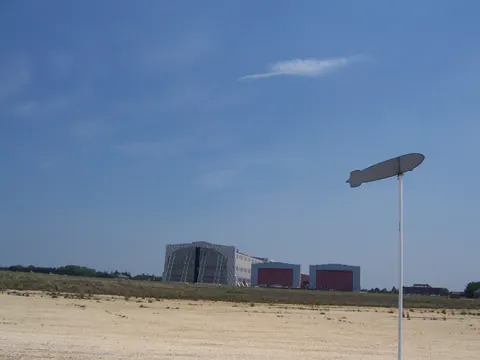
Marker commemorating the Hindenburg disaster of May 6, 1937, in Lakehurst, New Jersey. Hangar No. 1 is in the background. - 1937-05-06GOVERNMENT RECORDArrival delayed by weather; Hindenburg circles Lakehurst naval stationThunderstorms in area force Captain Pruss to delay landing by nearly one hour; meteorological records confirm unsettled conditions.
Marker commemorating the Hindenburg disaster of May 6, 1937, in Lakehurst, New Jersey. Hangar No. 1 is in the background. - 1937-05-06 19:21CORROBORATEDHindenburg begins final landing approach at 200 feet altitudeStandard approach procedure; multiple newsreel cameras filming routine arrival for propaganda and news purposes.
Marker commemorating the Hindenburg disaster of May 6, 1937, in Lakehurst, New Jersey. Hangar No. 1 is in the background. - 1937-05-06 19:25PRIMARY SOURCEForward landing lines dropped to ground crewPort line reported wet; ground crew testimony indicates standard procedure followed, establishing electrical ground path.
Marker commemorating the Hindenburg disaster of May 6, 1937, in Lakehurst, New Jersey. Hangar No. 1 is in the background. - 1937-05-06 19:25CORROBORATEDFire observed in upper stern section; engulfs entire ship in 34 secondsIgnition location between Gas Cells 4 and 5 confirmed by multiple witnesses and film evidence; speed consistent with hydrogen combustion.
Marker commemorating the Hindenburg disaster of May 6, 1937, in Lakehurst, New Jersey. Hangar No. 1 is in the background. - 1937-05-06CORROBORATED36 people killed, 62 survive the disasterDeath toll includes 13 passengers, 22 crew, 1 ground crew member; survival rates higher in forward sections of ship.
Marker commemorating the Hindenburg disaster of May 6, 1937, in Lakehurst, New Jersey. Hangar No. 1 is in the background. - 1937-05-07PRIMARY SOURCECaptain Ernst Lehmann dies from burn injuriesSenior Zeppelin captain aboard as observer provides deathbed testimony: 'I don't understand it'; suggests lack of obvious mechanical cause.
Marker commemorating the Hindenburg disaster of May 6, 1937, in Lakehurst, New Jersey. Hangar No. 1 is in the background. - 1937-05-19GOVERNMENT RECORDFBI concludes investigation, finds no evidence of sabotageBureau examined wreckage for explosive residue, investigated crew backgrounds, interviewed witnesses; report archived in FBI records.
Marker commemorating the Hindenburg disaster of May 6, 1937, in Lakehurst, New Jersey. Hangar No. 1 is in the background. - 1937-06-28GOVERNMENT RECORDU.S. Commerce Department Board of Inquiry issues final reportConcludes hydrogen ignition in Gas Cell 4 or 5, but explicitly states ignition source could not be determined; refuses to speculate.
Marker commemorating the Hindenburg disaster of May 6, 1937, in Lakehurst, New Jersey. Hangar No. 1 is in the background. - 1937CORROBORATEDGerman inquiry proposes electrostatic discharge as most probable causeLuftschiffbau Zeppelin investigation suggests static spark between framework and grounded mooring line; remains leading theory but unproven.
Marker commemorating the Hindenburg disaster of May 6, 1937, in Lakehurst, New Jersey. Hangar No. 1 is in the background. - 1938CORROBORATEDGraf Zeppelin II launched but never carries commercial passengersSister ship to Hindenburg operated briefly for propaganda flights only; public confidence in airship travel destroyed.
- 1940CORROBORATEDAll German rigid airship operations terminatedWorld War II and end of public confidence in hydrogen airships close the commercial airship era permanently.
- 1997ACADEMICNASA scientist Addison Bain publishes incendiary fabric theoryProposes fabric dope coating was primary fuel, not hydrogen; generates significant scientific controversy and media attention.
- 2013CREDIBLE REPORTINGBritish engineer Jem Stansfield conducts experimental tests for documentaryTests authentic Hindenburg fabric samples against hydrogen; concludes both contributed, hydrogen primary, fabric significant secondary fuel.
Key People
Organizations
Evidence Library
- videoVID-A1Hindenburg disaster newsreel footage (four camera angles)
Multiple newsreel companies filmed the landing; footage captures ignition, flame propagation, collapse sequence second-by-second. Establishes fire origin in upper stern, documents 34-second destruction timeline, shows flame colors and structural failure progression. This is the most significant physical evidence; preserved in multiple archives including Library of Congress.
- audioAUD-A2Herbert Morrison WLS radio recording
Chicago radio reporter Morrison recorded planned broadcast of arrival; captured audio of disaster including iconic 'Oh, the humanity!' commentary. Provides real-time chronology of events, emotional impact documentation, and has been analyzed for background sounds that might indicate explosion versus fire ignition. Audio clearly captures no explosion sound before fire.
- documentDOC-A3U.S. Commerce Department Board of Inquiry Final Report (June 1937)
Official U.S. government investigation report, 165 witness testimonies, technical analysis of wreckage, meteorological data. Concludes hydrogen ignition in Gas Cell 4/5 area, but explicitly refuses to determine ignition source citing insufficient evidence. Strong Evidence tier: represents most comprehensive contemporaneous investigation with sworn testimony.
- documentDOC-A4German Luftschiffbau Zeppelin inquiry findings
Parallel German investigation led by Zeppelin Company engineers; proposes electrostatic discharge as most probable cause. Represents technical engineering analysis but potentially influenced by Nazi government oversight. Moderate Evidence tier due to less independence than U.S. inquiry.
- physicalPHY-A5Wreckage fabric and structural samples (archived multiple institutions)
Physical samples of airship fabric, doped coating, aluminum framework preserved in Smithsonian, Zeppelin Museum Friedrichshafen, and other institutions. Enables modern chemical analysis; confirmed iron oxide and aluminum powder in fabric coating. No explosive residue found. Strong Evidence tier for ruling out sabotage and confirming construction materials.
- photoPHO-A6Sequence photographs by Sam Shere and other photographers
Still photographs captured progression at different angles and moments; iconic Shere photograph shows ship at moment of ground impact with full fire. Photos document collapse sequence, survivor escape paths, structural failure points. Corroborates video evidence; Established Facts tier.
- dataDATA-A7Meteorological records from Lakehurst Naval Air Station, May 6, 1937
Weather observations, atmospheric pressure, humidity, electrical storm proximity documented by Navy meteorologists. Confirms thunderstorms in region, supports theories involving atmospheric electricity. Strong Evidence tier for establishing environmental conditions.
- documentDOC-A8Passenger manifest and crew roster (archived National Archives)
Official records of all 97 persons aboard; used in FBI sabotage investigation to check backgrounds. No suspicious persons identified. Combined with death certificates and survivor medical records, establishes casualty toll with certainty. Established Facts tier.
Evidence Gallery


Sources
Trace the trail yourself
Investigation Network
 Deutsche Zeppelin-ReedereiPerson1 dossier
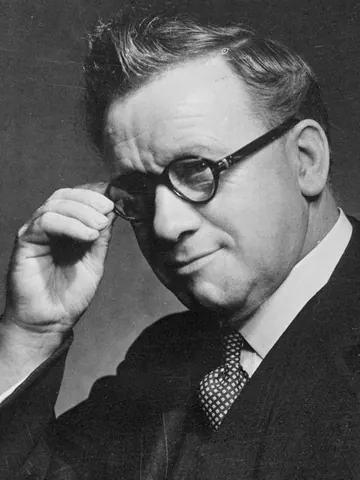 Herbert MorrisonPerson1 dossier
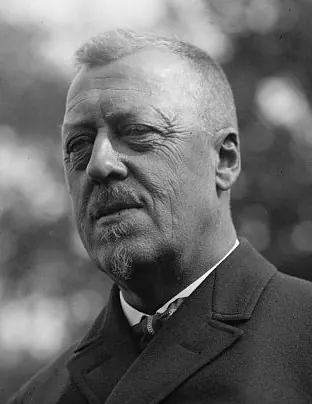 Hugo EckenerPerson1 dossierLuftschiffbau ZeppelinPerson1 dossierU.S. Department of Commerce Bureau of Air CommerceOrganization1 dossier
Live Discussion
0 Perspectives
Add to the record. Be specific. Cite where you can.
If you're learning about this topic for the first time, these are the best places to continue — documented evidence and historical relationships are the guide.
Named in “The Hindenburg Disaster”.
Named in “The Hindenburg Disaster”.
Read more dossiers like this
Get a quiet one-line bulletin when new investigative files are published. Bound to this dossier — useful for tracking follow-ups.