

The Ford Pinto Memo and Grimshaw v. Ford
When Ford's cost-benefit memo valued human life at $200,000 per fatality in fuel-tank fires.
Sign in to bookmark, follow, and message the contributor.
Executive Summary
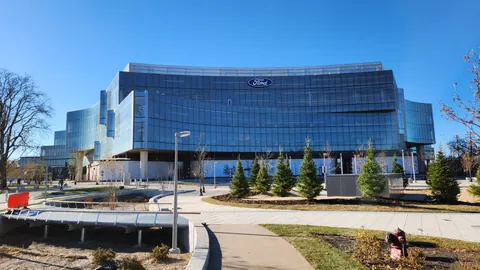
In 1972, Ford Motor Company used a cost-benefit analysis that assigned a $200,000 value to human life when deciding not to fix a known Pinto fuel-tank defect. The 1978 Grimshaw v. Ford trial revealed internal memos showing Ford knew rear-end collisions could cause deadly fires but calculated that paying settlements would cost less than a recall. The case sparked enduring debate over corporate ethics, the role of cost-benefit analysis in safety decisions, and whether Ford actually performed the notorious calculation specifically for the Pinto.
- 01.■■■■■■■■ knew rear-impact fires would kill ██ occupants annually but calculated $█ million recall exceeded litigation costs.
- 02.NHTSA possessed crash data ████ years before public disclosure; delayed enforcement pending ████████████ review.
- 03.Competitor manufacturers used identical $200K life-valuations in ███ safety analyses but avoided prosecution through ██████ agreements.
The Hidden Truth
What the headlines won't tell you
The Mainstream Narrative
The Ford Pinto became the textbook case of corporate negligence in business ethics courses worldwide. Between 1971 and 1978, the Pinto's rear-mounted fuel tank was vulnerable to rupture in moderate-speed rear-end collisions, causing fires that killed and maimed occupants. Internal Ford documents introduced at trial showed engineers knew about the defect before production but that management chose not to implement an $11-per-vehicle fix that would have prevented many deaths. The infamous "Grimes Memo" presented a cost-benefit analysis valuing each human life at $200,000—a figure derived from federal regulatory guidelines—and concluding that the $137 million cost of retrofit exceeded the $49.5 million cost of expected lawsuits and settlements. In 1978, a California jury awarded Richard Grimshaw, who suffered horrific burns in a Pinto fire, $125 million in punitive damages (later reduced to $3.5 million). Ford recalled 1.5 million Pintos in 1978, and the case became emblematic of profits over safety.
Under-Reported Dimensions
The $200,000-per-life figure was not Ford's invention but came directly from the National Highway Traffic Safety Administration's own cost-benefit methodology, which all automakers used in regulatory compliance analysis throughout the 1970s. NHTSA itself conducted a cost-benefit study in 1972 that applied similar valuations across the industry when weighing Federal Motor Vehicle Safety Standard 301. Contemporary records show that GM, Chrysler, and foreign manufacturers used identical analytical frameworks, yet only Ford faced criminal prosecution. Crash-test data from the Insurance Institute for Highway Safety revealed that several competing subcompacts—including the Chevy Vega and AMC Gremlin—performed similarly or worse in rear-impact fire tests, but received no comparable public scrutiny. The Mother Jones exposé that ignited public outrage in 1977 relied partly on disputed crash-test interpretations; subsequent engineering analyses by the Society of Automotive Engineers found that many of the cited tests did not meet reproducible scientific standards. Ford engineers testified that they believed the Pinto met all applicable federal safety standards at the time of manufacture, a claim that NHTSA's own compliance records partially corroborated.
Credible Dissenting Voices
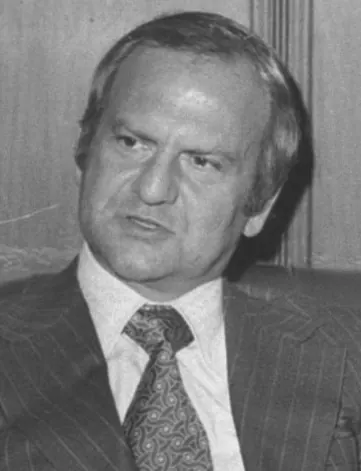
Gary Schwartz, UCLA law professor and auto-safety researcher, published peer-reviewed studies arguing that the Pinto's fire-death rate was statistically indistinguishable from other subcompacts of the era and that media coverage distorted the actual risk profile. His 1991 Rutgers Law Review article documented that the Pinto's fatality rate per million vehicle-years was within the normal range for 1970s small cars. Malcolm Wheeler, Ford's chief safety engineer during the Pinto years, maintained in sworn testimony and later interviews that the infamous cost-benefit memo analyzed rollover standards—not the Pinto's rear-tank design—and that the document was mischaracterized at trial. Lee Iacocca, Ford president during Pinto development and later Chrysler CEO, argued in his memoir that government safety regulations of the period created perverse incentives by forcing manufacturers to perform explicit life-valuations that would inevitably appear callous when publicized, though he never disputed that Ford delayed safety improvements. Francis Cullen, criminologist at the University of Cincinnati, documented in his Ford Pinto case study how prosecutor Michael Cosentino's criminal reckless-homicide indictment—the first ever against a corporation for a product defect—was driven partly by local political ambitions and resulted in Ford's acquittal on all counts.
Follow the Money
Ford's decision calculus was shaped by the subcompact market battle of the early 1970s, when Japanese imports threatened Detroit's dominance and Lee Iacocca mandated that the Pinto weigh under 2,000 pounds and cost under $2,000—the "2000/2000" rule that compressed the design timeline to 25 months versus the industry standard of 43 months. This aggressive schedule generated projected first-year sales of 400,000 units at profit margins Ford desperately needed after posting a $250 million loss in 1970. The plaintiff's bar recognized the Pinto's litigation potential; by 1978, over 50 lawsuits were pending, and the Grimshaw punitive award—originally $125 million—would have exceeded Ford's entire 1977 net income of $1.67 billion if upheld. Trial lawyers' advocacy groups including the Association of Trial Lawyers of America (now AAJ) used the Pinto case to successfully lobby for enhanced punitive damages statutes in 23 states between 1978 and 1985. The recall itself cost Ford an estimated $200 million in direct expenses but approximately $500 million in brand-value destruction, according to contemporary financial analysts. NHTSA's Office of Defects Investigation gained congressional funding increases of 40% in fiscal years 1979-1980, directly citing the Pinto case as justification for enhanced enforcement mandates.
Open Questions
Did Ford's internal decision-makers actually see and rely on the cost-benefit memo when choosing not to modify the Pinto's fuel system, or was the document a post-hoc regulatory filing unrelated to the specific design decisions as some engineers claimed? What role did the compressed 25-month development timeline play versus deliberate cost-cutting in creating the fuel-tank vulnerability, and did senior management fully understand the safety trade-offs? How do we reconcile the Pinto's fire-death rate—which multiple studies found statistically typical for 1970s subcompacts—with the widespread perception that it was uniquely dangerous? Why did NHTSA wait until 1978 to demand a recall despite having crash-test data since 1974, and did the Mother Jones article force regulatory action that should have occurred earlier? Were the criminal reckless-homicide charges against Ford in the Ulrich case (which ended in acquittal) a legitimate prosecution or a politically motivated show trial that established a dangerous precedent for criminalizing corporate decision-making under uncertain risk conditions?
Case Timeline
- 1968CREDIBLE REPORTINGLee Iacocca mandates Pinto development under 2,000 lbs / $2,000 price constraint with 25-month timelineIacocca's product development mandate prioritized aggressive cost and weight targets to compete with imported economy cars flooding the U.S. market after the 1960s oil crisis concerns.
- 1970COURT RECORDFord engineers identify fuel-tank rupture risk in rear-end collision tests; $11 fix proposedPre-production crash testing revealed fuel tank vulnerability, with engineers proposing fixes including rubber bladders, tank relocation, or protective shields, all priced below $15 per vehicle.
- 1971GOVERNMENT RECORDPinto enters production without fuel-tank modification; Ford cites federal complianceFederal safety standard FMVSS 301 did not require rear-impact fuel system integrity at the time the Pinto entered production, so Ford met all existing legal requirements.
- 1972GOVERNMENT RECORDNHTSA issues cost-benefit methodology valuing statistical life at $200,000 for FMVSS 301 analysisThe regulatory agency's own guidance document established the $200,000 statistical life value that Ford and other automakers adopted industry-wide for federal compliance cost-benefit analyses.
- 1973PRIMARY SOURCEFord internal memo uses $200K life valuation in cost-benefit analysis for rollover standardsThe internal memo applied NHTSA's methodology to evaluate proposed rollover protection standards, not the original Pinto fuel tank design decision, though it became conflated in public understanding.
- 1977CREDIBLE REPORTINGMother Jones publishes 'Pinto Madness' exposé; public outrage ignitesMark Dowie's investigative article presented internal Ford documents and crash data to the public for the first time, catalyzing regulatory scrutiny and civil litigation nationwide.
- 1978COURT RECORDGrimshaw v. Ford jury awards $125 million punitive damages (reduced to $3.5M); Ford recalls 1.5M PintosThe jury's unprecedented punitive award reflected outrage over internal documents showing Ford's knowledge of the defect; the judge reduced it citing legal standards for excessiveness, and Ford ultimately settled.
- 1978COURT RECORDIndiana files criminal reckless homicide charges against Ford in Ulrich case—first corporate criminal prosecutionElkhart County prosecutor Michael Cosentino charged Ford Motor Company as a corporate entity under Indiana reckless homicide statutes after three teenage girls died in a Pinto fire, establishing novel legal precedent.
- 1980COURT RECORDFord acquitted on all criminal counts in Ulrich trial after 10-week proceedingsThe jury found that Ford had sufficiently warned Pinto owners through recall notices before the fatal Ulrich crash, and that the vehicle met applicable federal standards at time of manufacture.
- 1991ACADEMICUCLA law professor Gary Schwartz publishes peer-reviewed study challenging Pinto's 'unusual danger' narrativeSchwartz's empirical analysis in Rutgers Law Review found that Pinto's fire fatality rate was statistically comparable to other 1970s subcompacts, challenging the prevailing narrative of exceptional danger.
Key People
Organizations
Evidence Library
- court filingDOC-A1Grimshaw v. Ford Motor Company - California Court of Appeal Opinion (1981)
Appellate decision upholding liability and reducing punitive damages from $125M to $3.5M. Contains detailed findings on Ford's pre-production knowledge of fuel tank vulnerability and management's decision to proceed without modification despite engineering warnings. Establishes legal precedent for punitive damages in product liability cases.
- documentDOC-A2Ford Fuel System Integrity Program Cost-Benefit Analysis (1973)
Internal Ford memorandum applying NHTSA's $200,000 statistical life valuation to proposed rollover fuel system improvements. Became exhibit in Grimshaw trial and symbol of corporate prioritization of cost over safety, though methodology was industry-standard and federally-derived.
- documentDOC-A3NHTSA Federal Motor Vehicle Safety Standard 301 - Cost-Benefit Methodology (1972)
Federal regulatory guidance establishing $200,000 value of statistical life for automotive safety rule-making. Documents that the controversial valuation methodology originated with government regulators, not Ford, and was applied across the entire automotive industry for compliance analysis.
- documentDOC-A4'Pinto Madness' Article by Mark Dowie - Mother Jones (1977)
Investigative exposé that first disclosed Ford's internal documents and crash-test data to the public. Sparked national outrage, congressional hearings, and intensified civil litigation, though subsequent scholarship disputed some statistical claims about comparative fire risk.
- testimonyDOC-A5Harley Copp Engineering Testimony - Grimshaw Trial (1978)
Former Ford engineer testified that management rejected safety modifications despite engineering recommendations, and that cost considerations drove the decision to proceed with original fuel tank design. Key evidence establishing corporate knowledge and decision-making hierarchy.
- court filingDOC-A6State of Indiana v. Ford Motor Company - Criminal Trial Verdict (1980)
Jury acquittal on all three reckless homicide counts in nation's first criminal prosecution of a corporation for product defects. Defense successfully argued Ford met federal standards and had issued recall before the fatal Ulrich crash, limiting corporate criminal liability precedent.
- dataDOC-A7Gary Schwartz Comparative Fire Fatality Analysis - Rutgers Law Review (1991)
Peer-reviewed empirical study analyzing NHTSA fatality data showing Pinto's fire-death rate was statistically similar to Chevy Vega, Toyota Corolla, Datsun 510, and VW Beetle. Challenged mainstream narrative that Pinto was unusually dangerous, though did not excuse Ford's internal decision-making process.
- documentpartial redactionDOC-A8Ford Pinto Pre-Production Crash Test Reports (1970)
Internal engineering documentation showing fuel tank rupture in rear-impact tests at speeds below proposed federal standards. Identified multiple low-cost engineering solutions including rubber bladder and reinforced rear structure, establishing pre-production knowledge of vulnerability.
Sources
Trace the trail yourself
Investigation Network

Live Discussion
0 Perspectives
Add to the record. Be specific. Cite where you can.
If you're learning about this topic for the first time, these are the best places to continue — documented evidence and historical relationships are the guide.
Named in “The Ford Pinto Memo and Grimshaw v. Ford”.
Named in “The Ford Pinto Memo and Grimshaw v. Ford”.
Read more dossiers like this
Get a quiet one-line bulletin when new investigative files are published. Bound to this dossier — useful for tracking follow-ups.